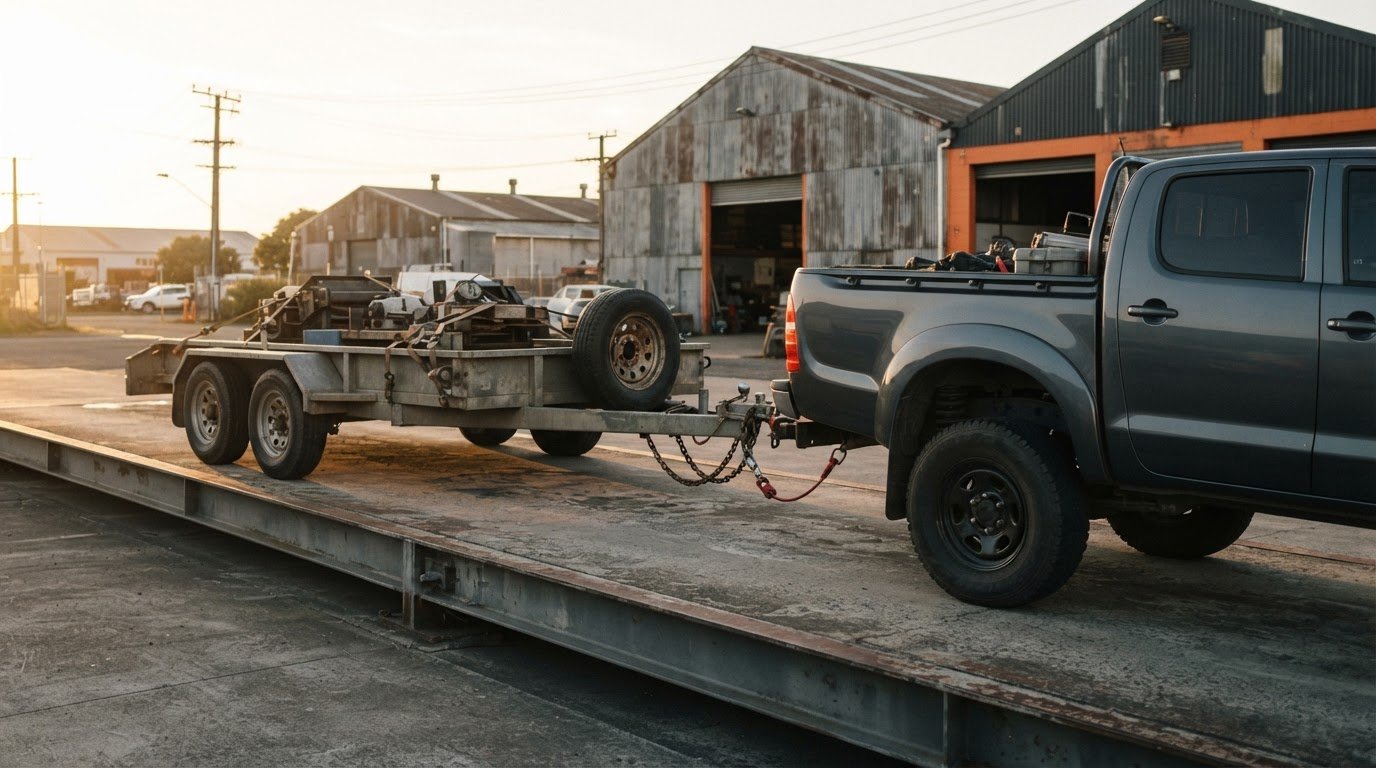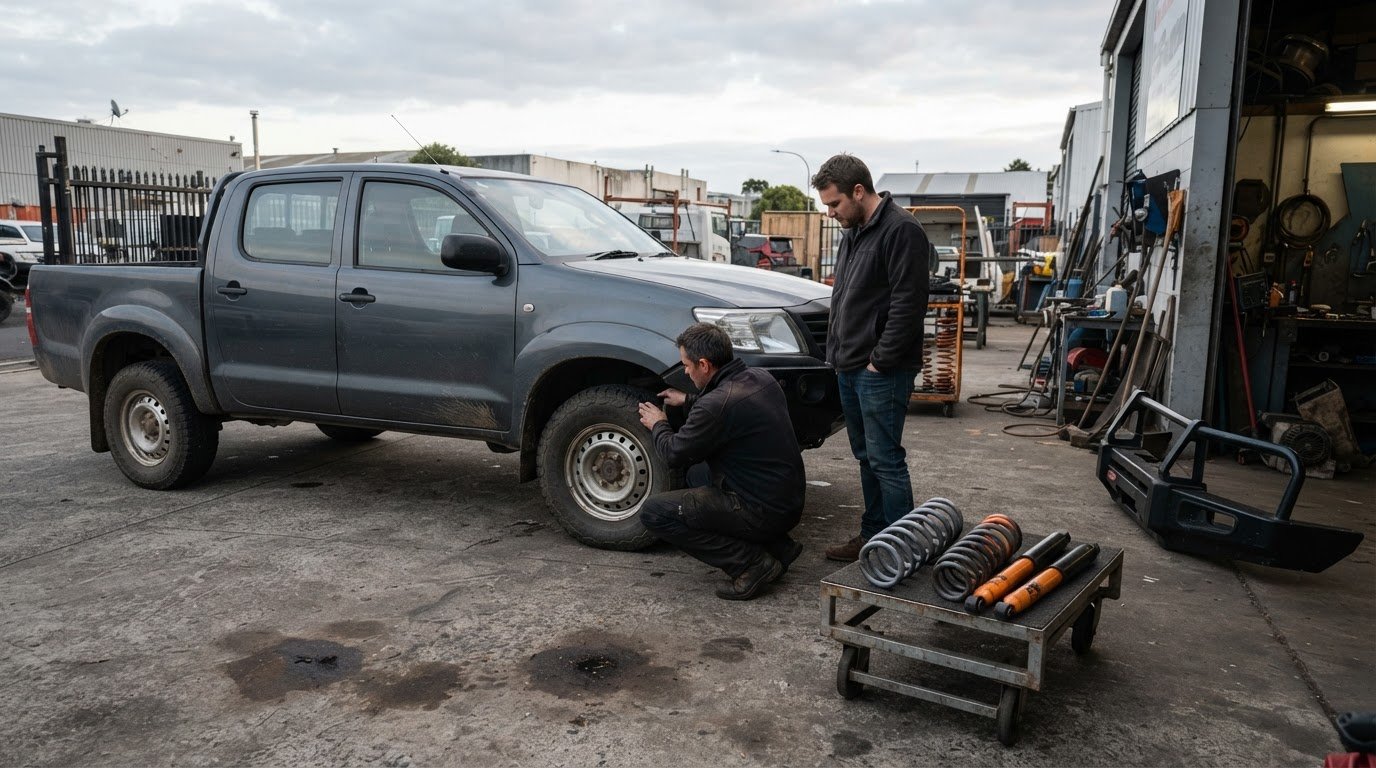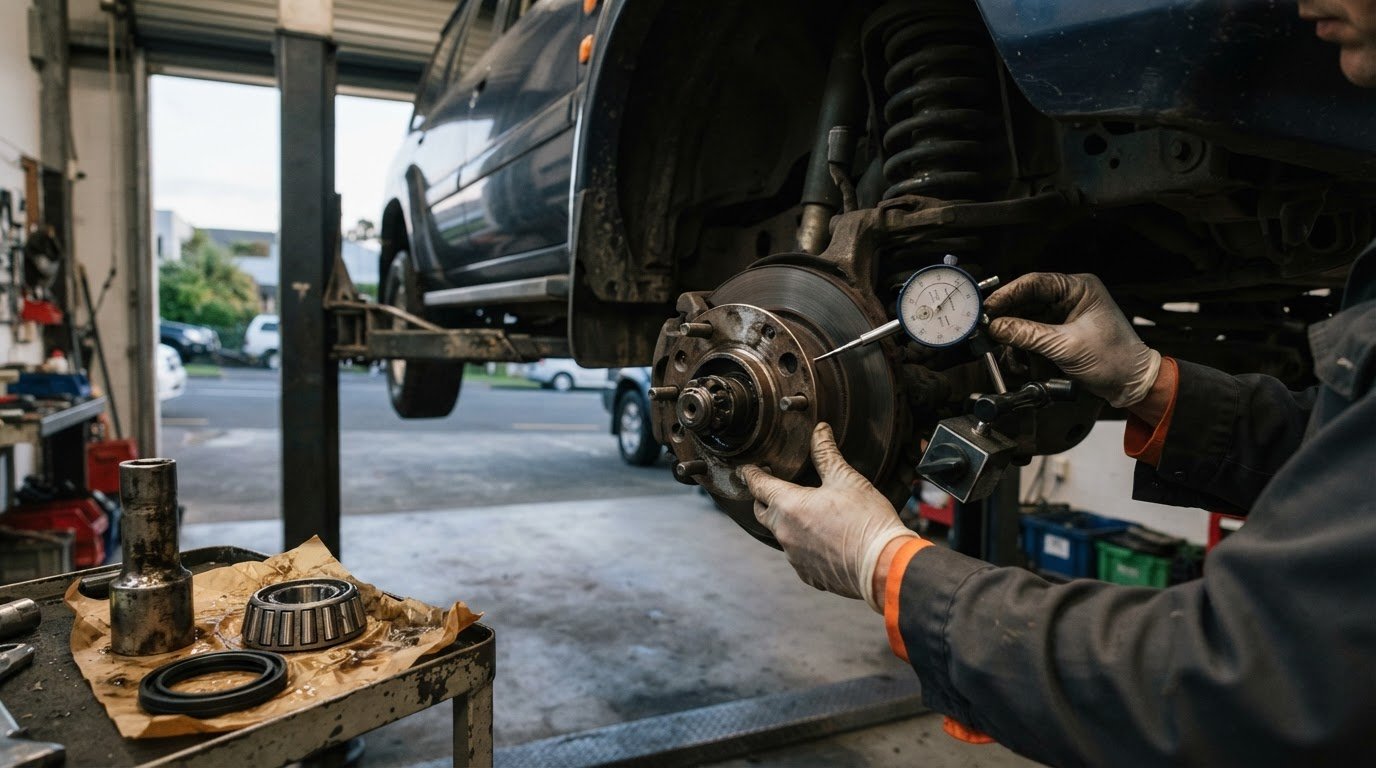
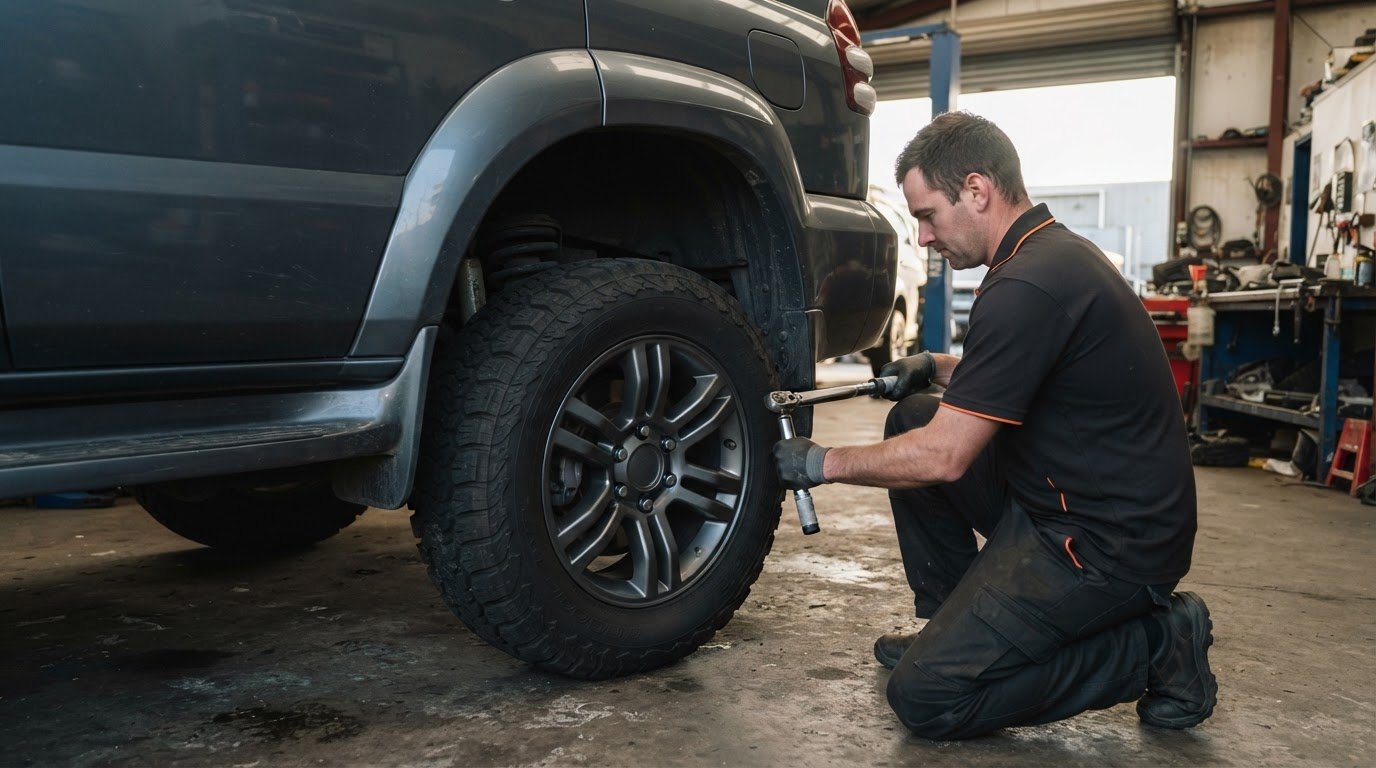
The toughest-looking wheel isn’t automatically the right choice for a touring 4×4. A 1500 kg load-rated wheel is engineered to handle weights up to 1500 kg, but the rating alone doesn’t establish vehicle fitment. Choosing load rated wheels for a 4×4 also means matching the bolt pattern and wheel dimensions to the vehicle.
It’s easy to focus on appearance or wheel size, especially when planning a touring setup. But load capacity, brake clearance and the intended driving conditions all affect whether a wheel is suitable.
This guide explains how to read a wheel load rating and assess the fitment details that matter. It also compares steel and alloy options, outlines how wheel size can affect touring comfort, and covers the questions to consider when choosing wheels for New Zealand roads and tracks. You’ll have a clearer basis for weighing up the options before making a fitment decision.
Key Takeaways
- Match the wheel’s bolt pattern and brake clearance to your 4×4 before weighing up appearance or size.
- Compare wheel brands by their load ratings, testing and construction, not just their styling.
- Weigh up steel and alloy options alongside touring terrain, tyre sidewall and the ride you want.
- Learn what a 1500 kg load rating tells you, and why it still needs to suit your vehicle’s fitment requirements.
4X4 wheel bolt patterns and vehicle fitment
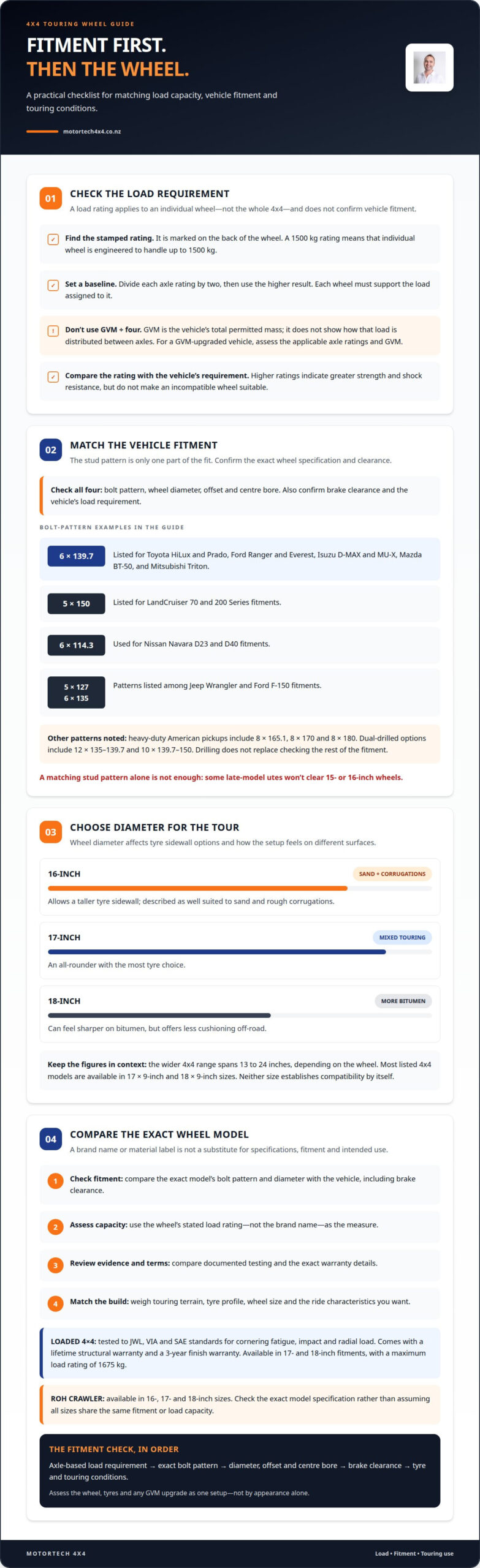
A wheel must match the vehicle’s bolt pattern, load requirement and brake clearance. The load rating is stamped on the back of the wheel. A higher rating indicates greater strength and shock resistance, but it doesn’t make an incompatible wheel suitable. Fitment also depends on wheel diameter, offset and centre bore, which affect how the wheel sits and clears vehicle components.
To calculate a baseline minimum load rating, divide each axle rating by two, then use the higher result. GVM describes the vehicle’s total permitted mass, but doesn’t show how that load is distributed between axles. Don’t calculate the wheel requirement by simply dividing GVM by four. For a GVM-upgraded vehicle, use its applicable axle ratings and GVM when assessing wheel capacity. Each wheel’s rating must support the load assigned to it.
Bolt-pattern figures identify the number of studs and the diameter of the circle they form. A 6×139.7 pattern is listed for the Toyota HiLux and Prado, Ford Ranger and Everest, Isuzu D-MAX and MU-X, Mazda BT-50, and Mitsubishi Triton. LandCruiser 70 and 200 Series fitments are listed at 5×150, while Nissan Navara D23 and D40 fitments use 6×114.3. Jeep Wrangler and Ford F-150 patterns include 5×127 and 6×135.
Match the exact pattern to the vehicle, then assess diameter and brake clearance. Some late-model utes won’t clear 15- or 16-inch wheels, so a matching stud pattern alone doesn’t guarantee fitment. Heavy-duty American pickups use patterns including 8×165.1, 8×170 and 8×180. Dual-drilled options include 12×135-139.7 and 10×139.7-150, but drilling doesn’t replace checking the vehicle’s other fitment requirements. For touring builds, assess the wheel, tyres and any GVM upgrade as one setup, rather than choosing by appearance alone.
4X4 wheel brands
A brand name alone doesn’t establish whether a wheel suits a touring vehicle. Compare its load rating, available fitments, construction and documented testing, then match those details to the vehicle and intended use. A wheel that suits a highway-focused build may not be the best fit for repeated corrugations or loaded touring. Brand comparisons are most useful when they focus on measurable specifications rather than styling claims.
LOADED 4×4 wheels are tested to JWL, VIA and SAE standards for cornering fatigue, impact and radial load. They come with a lifetime structural warranty and a 3-year finish warranty. These details give buyers specific testing and warranty terms to consider alongside fitment. They don’t replace checking the individual wheel’s load rating and vehicle compatibility.
ROH CRAWLER wheels are available in 16-, 17- and 18-inch sizes. That range provides a practical example of how a single wheel model can offer different diameters. The choice still needs to suit brake clearance and the tyre profile required for the vehicle’s use. Check the exact model specification rather than assuming every size shares the same fitment or load capacity.
- Start with fitment: compare the model’s bolt pattern and diameter with the vehicle requirements.
- Assess load capacity: use the wheel’s stated rating, not the brand name, as the measure.
- Review supporting details: note named testing standards and the exact warranty terms.
- Match the build: consider whether the wheel size suits touring terrain, tyres and brake clearance.
These steps help narrow brand options without treating one badge as a guarantee of suitability. A considered wheel and tyre selection brings the brand, vehicle fitment and touring requirements into the same decision. Compare the specifications of the exact wheel model before settling on a setup.
Steel and alloy wheels for touring
Steel and alloy wheels both suit 4×4 touring, but material alone doesn’t determine strength or suitability. Compare the specific wheel’s load rating, size and vehicle fitment. Steel wheels use a steel construction, while alloy wheels use an alloy-based construction; the design and rating of each model matter more than a broad material label. The available 4×4 range spans 13 to 24 inches, depending on the wheel.
For touring, wheel diameter affects tyre sidewall options and how the setup feels across different surfaces. A 16-inch wheel allows a taller sidewall and is described as well suited to sand and rough corrugations. A 17-inch wheel is an all-rounder with the most tyre choice. An 18-inch wheel can feel sharper on bitumen, but offers less cushioning off-road. These are trade-offs to weigh against the route and tyre selection.
- Sand and corrugations: consider 16-inch fitment where a taller tyre sidewall suits the terrain.
- Mixed touring: 17-inch wheels offer broad tyre choice and an all-round option.
- More bitumen driving: 18-inch wheels can prioritise on-road response, with less off-road cushioning.
Wheel sizes in the wider range extend from 13 to 24 inches, while most listed 4×4 models are available in 17×9-inch and 18×9-inch sizes. Those dimensions don’t establish compatibility by themselves. The bolt pattern, brake clearance, tyre dimensions and load requirement still need to suit the vehicle. A size that works on one Ford Ranger or Toyota HiLux fitment may not suit another setup.
LOADED 4×4 wheels are available in 17- and 18-inch fitments, with a maximum load rating of 1675 kg. Most 4×4 rims in the range have higher load ratings than factory-fitted wheels. Compare that rating with the vehicle’s requirements, then choose steel or alloy based on the specific wheel, touring conditions and desired ride characteristics.
1500 Kg load-rated 4×4 wheels
A 1500 kg load rating describes the weight an individual wheel is engineered to handle. It gives touring owners a specification to compare with their vehicle’s requirements, but it isn’t a rating for the whole 4×4. Nor does it establish that every wheel with this figure suits every model. Bolt pattern, wheel dimensions, brake clearance and axle requirements still determine fitment. The key point with load rated wheels for 4×4 touring is matching capacity and compatibility together.
For a loaded touring vehicle, consider the full setup rather than the wheel figure in isolation. Passengers, luggage and touring equipment contribute to vehicle load, while distribution between axles affects demand on each wheel. A 1500 kg-rated wheel is relevant only if its pattern and dimensions also suit the vehicle. Higher capacity doesn’t correct incompatible fitment.
Use this practical sequence to assess a 1500 kg option:
- Identify the wheel rating: read the marked load capacity on the wheel itself.
- Compare the requirement: assess the relevant axle rating and GVM for the vehicle’s setup.
- Match the fitment: check the exact bolt pattern, diameter and brake clearance.
- Consider the touring build: account for the tyres and the vehicle’s intended load and terrain.
These steps separate load capacity from compatibility. For example, a wheel rated at 1500 kg may meet a load requirement but still have the wrong bolt pattern for a Toyota HiLux or Nissan Navara. Conversely, a matching stud pattern doesn’t prove the wheel’s capacity is adequate. Assess both specifications together, then consider the complete touring setup. Suitable load rated wheels for 4×4 use must meet the vehicle’s requirements and fit correctly.
Use the 1500 kg figure as a screening point, not a stand-alone guarantee of suitability. For a coordinated wheel and tyre setup, explore wheel and tyre options that match your vehicle’s fitment and touring requirements.
Motortech 4X4: Wheels and Tyres
Motortech 4X4 offers Wheels and Tyres for drivers choosing a touring setup or replacing wheels. Turn to the team when you need to bring load rating, bolt pattern, wheel size and tyre choice together for your vehicle. These specifications need to work as a complete fitment, rather than being selected on appearance alone.
If your touring build also includes changes to the vehicle, Suspension Kits, Bullbars and Snorkels are available as related 4×4 options. Considering these alongside wheels and tyres helps keep the parts of your vehicle setup in view when planning modifications.
For guidance on your wheel and tyre requirements, contact Motortech 4X4.
Plan your 4×4 touring setup
Before settling on wheels, consider how your vehicle will be used as a complete touring build. A setup intended for long-distance travel may have different priorities from one focused on off-road tracks. Defining the vehicle’s role helps keep your wheel choice aligned with tyre selection and other planned modifications.
That planning can also bring related components into view. Motortech 4X4 offers Suspension Kits, Bullbars and Snorkels, which may form part of a broader 4×4 build. The useful next step is to connect those choices to your vehicle and intended use, rather than treating each modification as a separate decision. The right load rated wheels for a 4×4 need to work within that overall plan.
If you’re ready to discuss how your wheel choice fits your touring setup, talk with Motortech 4X4 about wheel fitment. A considered plan gives you a clear starting point for the next stage of your build.
Frequently Asked Questions
What load rating do wheels need for a 4×4 in New Zealand?
Choose a wheel rating that meets the load required at each wheel for your 4×4’s current setup. Divide each axle rating by two, then use the higher result as the minimum per-wheel figure. For a GVM-upgraded vehicle, base the assessment on its applicable ratings after the upgrade. A wheel’s load figure alone doesn’t establish that its dimensions or fitment suit the vehicle.
What are the differences between steel and alloy 4×4 wheels for load capacity and durability?
Neither steel nor alloy automatically offers a higher load capacity: compare the rating of each specific wheel. Durability also depends on construction and design, not just the material. For example, two alloy wheels for a Toyota HiLux may have different load ratings. Compare their specifications and intended use, then weigh appearance and touring priorities against those details.
How do wheel offset, width and diameter affect 4×4 fitment and load capacity?
Offset affects where the wheel sits relative to the hub, while width influences tyre fit and clearance around vehicle components. Diameter affects brake clearance and the tyre profile available. These dimensions can make a wheel unsuitable even when its bolt pattern matches. They don’t indicate load capacity, so check the rating for the exact wheel model and assess fitment separately.
Do wheel load ratings change with tyre size, pressure or off-road use?
A wheel’s stated load rating is a specification of that wheel, not a value recalculated whenever tyre size or pressure changes. However, tyre choice and inflation affect the overall setup and its performance on-road or off-road. Use tyre specifications suited to the vehicle and driving conditions, and don’t treat a higher wheel rating as permission to exceed the vehicle’s load limits.
How can I check wheel bolt pattern, centre bore and offset before buying replacement wheels?
Start with the exact vehicle make, model and year, then compare those fitment details with the replacement wheel’s specifications. Bolt pattern describes stud count and spacing; the centre bore must suit the hub, and offset determines the wheel’s position. For example, a pattern listed for one Toyota HiLux fitment shouldn’t be assumed to suit every HiLux. Check all three details together.
What are the risks of using wheels rated below a 4×4’s required load?
A wheel rated below the load it must support is being used beyond its stated capacity. That creates a mismatch between the vehicle’s requirements and the wheel’s specification, particularly in a touring build carrying passengers and equipment. Don’t rely on a matching bolt pattern or tyre size to make up for the shortfall. Choose wheels whose stated ratings meet the vehicle’s requirements and whose fitment is suitable.