The biggest rack isn’t automatically the right one for your ute. Choosing ute roof rack systems in Auckland means matching the system to your vehicle, cargo and driving conditions. Carrying capacity depends on the vehicle, rack setup and whether you’re driving on-road or off-road.
Storage space matters, but fitment and load ratings matter just as much. When comparing ute roof rack systems in Auckland, consider whether a roof or tub rack suits your ute’s configuration and intended use.
This guide explains the differences between roof and tub racks, how to compare load ratings, and when professional installation may help. You’ll learn what to consider when selecting ute roof rack systems in Auckland, so you can plan a practical setup for work, travel or both.
Key Takeaways
- Choose a roof or tub rack to suit your ute’s configuration and the way you’ll use the available storage.
- Assess load capacity for the specific vehicle and rack setup, allowing for the difference between on-road and off-road use.
- Understand which fitting steps require careful attention so you can decide whether to install the system yourself or use professional fitting.
- Compare rack options by fitment and intended use, then consider Motortech 4X4’s roof racks as a practical next step for your setup.
DIY fitting and professional installation
DIY fitting can work when the rack instructions match your ute and you can follow each installation step. Professional fitting is another option for vehicle-specific fitment or a more complex setup.
DIY Fitting Requirements
Start by identifying your ute’s make, model, year and roof or tub configuration. Match those details to the rack’s fitting instructions before assembly. A roof-mounted system and a tub-mounted system, for example, use different attachment points, so the correct kit matters. Lay out the supplied components and tools, then follow the instructions in order.
During installation, position each mounting point as directed and tighten fasteners using the method specified in the instructions. Don’t substitute hardware or guess a torque setting. Once fitted, inspect the rack for movement and confirm each fixing is seated correctly. Check the instructions for any required follow-up checks before loading the system.
DIY fitting takes time and care, so keep the instructions available as you work. If a bracket does not align with its intended mounting point, stop rather than forcing it into place. The mismatch may mean the kit or installation step does not suit your vehicle configuration.
Auckland Suppliers and Installers
In Auckland, 4×4 accessory retailers and vehicle-fitment workshops are the relevant places to source ute roof racks and professional installation. The useful distinction is whether the supplier can match the rack to your ute and provide fitting, rather than supply equipment alone. That helps connect product selection with the installation method.
Professional fitting can help when a rack has vehicle-specific brackets, the mounting points are difficult to access, or you want assembly and fitting done as one job. A fitter can follow the installation sequence, align the components and secure the rack according to its instructions. This can be especially useful when combining a rack with other equipment already on the vehicle.
Before choosing how to fit the rack, note your vehicle details and describe what you’ll carry. Regular work equipment, for example, may call for a different arrangement from occasional camping gear. These details help an Auckland specialist match the rack and fitting approach to your intended use.
On-road and off-road load ratings
There isn’t one universal load rating for a ute roof rack. Carrying capacity depends on the vehicle, rack setup and whether it’s used on-road or off-road. Compare the vehicle’s permitted load with the rack’s rating, then account for the mounts, canopy and cargo. The lowest applicable rating limits the complete setup.
On-road and off-road load ratings can differ because rough surfaces place different forces on the rack and its attachment points. Use the rating that matches your driving conditions, not simply the higher figure shown in product information. Include the rack itself and any fitted accessories when calculating the load carried.
A rack can be fitted to a ute canopy if the canopy and mounting system are designed to support it. The allowable load depends on the ratings for the canopy, rack, attachment points and vehicle. A canopy-mounted system must therefore be compatible across every part, not just have a roof that looks suitable.
Capacity, materials and durability are separate comparison points. Steel and aluminium systems differ in construction and weight, while design, finish and vehicle fitment affect how a rack suits your needs. Compare the stated load guidance and material information for each system rather than assuming similar-looking racks perform alike.
Before buying, read the warranty terms and identify what they cover. Look for clear compatibility and load guidance, along with any named certification or test information. Practical safety features include secure mounting points and a design that lets you restrain cargo correctly. A certification claim does not replace checking the vehicle and rack ratings.
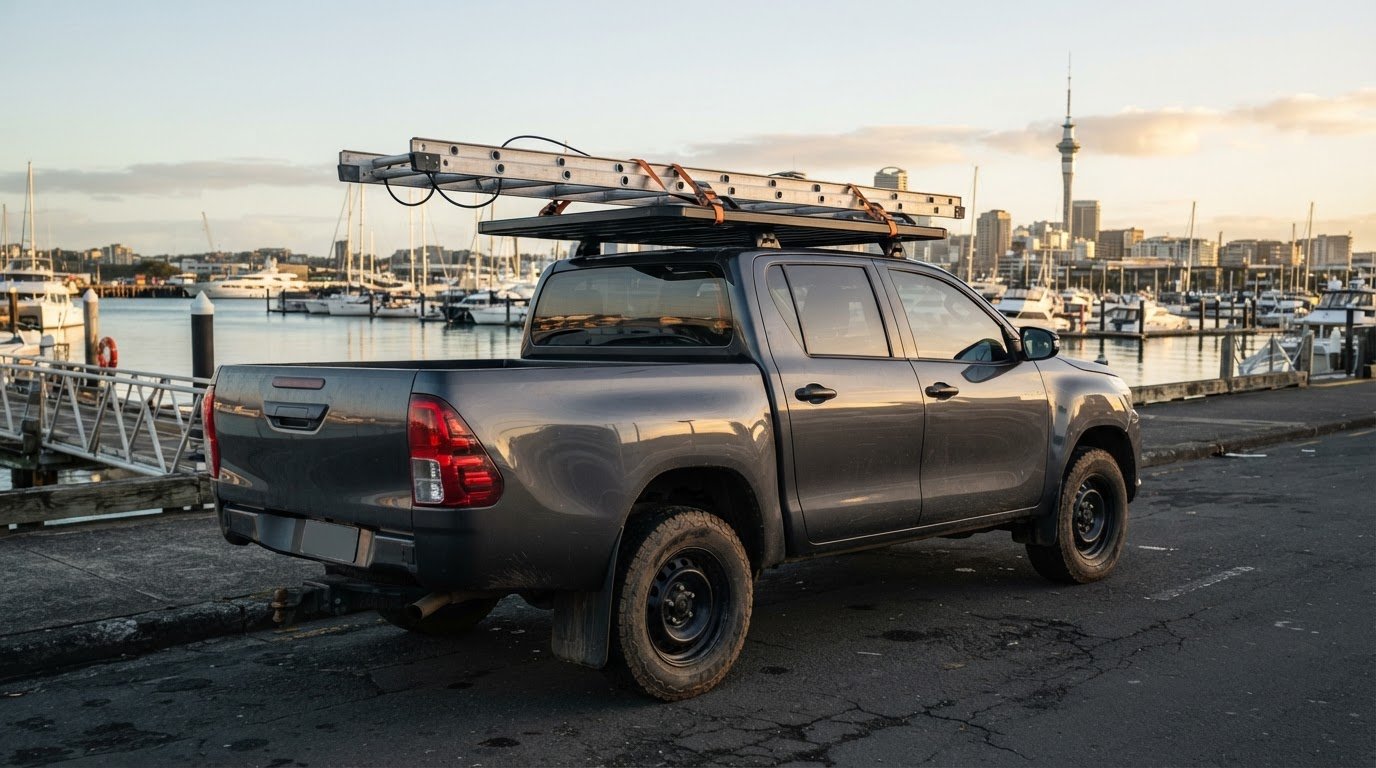
Use straps suited to the cargo and secure them through appropriate rack attachment points. Centre the load, keep it stable, and prevent movement forwards, backwards or sideways. A long item, for example, needs restraint against sliding as well as lifting. Recheck strap tension after loading, and avoid covering lights or obstructing the driver’s view.
For a rack matched to your vehicle and intended use, explore roof rack options.
Vehicle-specific roof and tub fitments
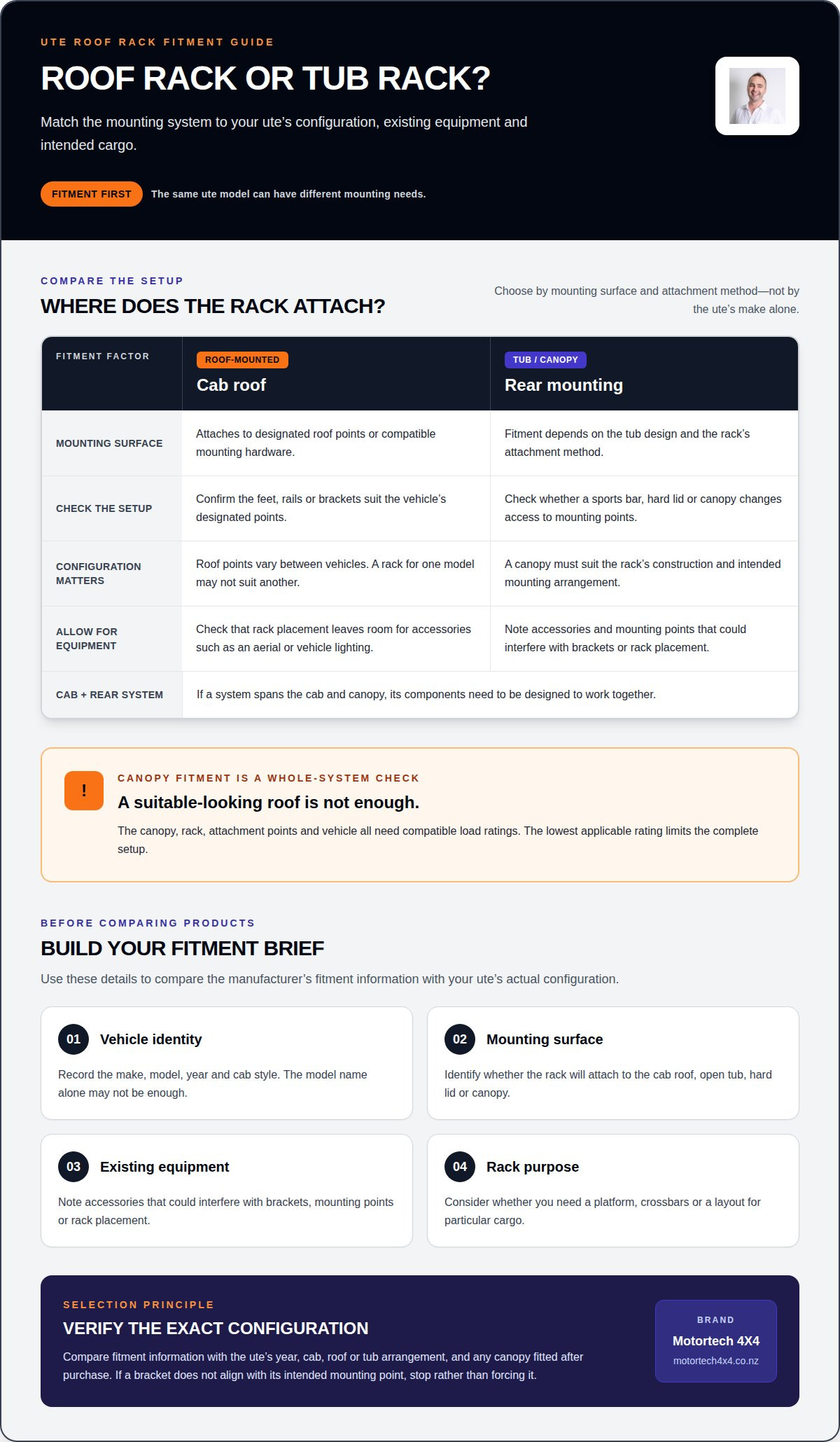
Choose a rack for your ute’s exact configuration, not just its make. Identify the model, year, cab style and roof or tub arrangement before selecting a system. A dual-cab ute with a canopy, for example, needs a different fitment assessment from the same model with an open tub.
Roof-mounted systems attach to designated points or compatible mounting hardware. Those points vary between vehicles, so a rack designed for one model may not suit another. Check how the feet, rails or brackets connect to the roof and whether installation leaves room for existing accessories, such as an aerial or vehicle lighting.
For a tub-mounted setup, assess the tub design and the rack’s attachment method. A sports bar, hard lid or canopy can affect which mounting points are accessible. If your ute has a canopy, the rack must suit its construction and intended mounting arrangement. A system spanning the cab and canopy also needs components designed to work together.
Use these details to narrow the selection:
- Vehicle identity: record the make, model, year and cab style.
- Mounting surface: distinguish between the cab roof, open tub, hard lid and canopy.
- Existing equipment: note accessories that could interfere with brackets or rack placement.
- Rack purpose: consider whether you need a platform, crossbars or a layout for particular cargo.
Compare the manufacturer’s vehicle-fitment information with your ute’s actual configuration. Don’t assume the model name alone is enough if the year, cab or canopy differs. A canopy fitted after purchase, for instance, may have mounting requirements separate from those of the original cab roof.
Vehicle-specific selection also helps preserve practical access. Consider how the rack affects opening doors, reaching the tub and using existing equipment. Choosing mounting positions with these everyday tasks in mind can make the setup more functional for commuting, work gear or weekend equipment.
Roof-rack brands and products
A brand name alone won’t tell you whether a rack suits your ute. Compare the complete system: vehicle fitment, mounting components, intended cargo and available configuration. A crossbar setup and a platform, for example, offer different ways to arrange equipment. Start with the tasks the rack must handle, then narrow your options by fitment.
Product descriptions can use similar terms for different components. Distinguish the bars or platform from the feet, brackets and vehicle-specific fitting hardware. A product may need compatible components to make a complete system. Read the product information as a whole rather than assuming one component’s name means every part will fit your vehicle.
Use the same criteria to compare each brand and product under consideration:
- Vehicle fitment: does the listed application match your ute’s model, year and roof or tub setup?
- Configuration: is it a platform, crossbar arrangement or another rack format suited to your cargo?
- System components: are the required mounts and fittings identified for that arrangement?
- Use and capacity: are the stated guidance and intended conditions appropriate for your planned loads?
Then compare products against a real use case. A tradie carrying long materials may prioritise a layout that holds the cargo securely. Someone packing camping equipment may prefer a broader platform for arranging separate items. These examples reflect different needs, not a universal ranking of brands. The right product is the one whose fitment and configuration suit the vehicle and task.
Keep your comparison tied to the exact product information. Similar-looking racks can use different mounting arrangements, and a brand’s range may include products for different vehicle configurations. Record the product name and matching vehicle application before deciding. This helps distinguish a complete, compatible system from parts that still need suitable fitment.
To discuss rack options for your vehicle and intended use, explore roof-rack solutions.
Motortech 4X4: Roof Racks
Motortech 4X4 offers roof racks for ute owners planning a vehicle-specific storage setup. Turn to Motortech 4X4 when you’re narrowing down roof or tub fitment, comparing rack configurations or planning how your ute will carry work equipment or travel gear.
Bring your ute’s make, model, year and current roof, tub or canopy arrangement into the discussion. Your intended cargo and driving conditions also help define what the rack needs to accommodate. These details keep the selection practical, from the mounting arrangement to how you’ll use the system.
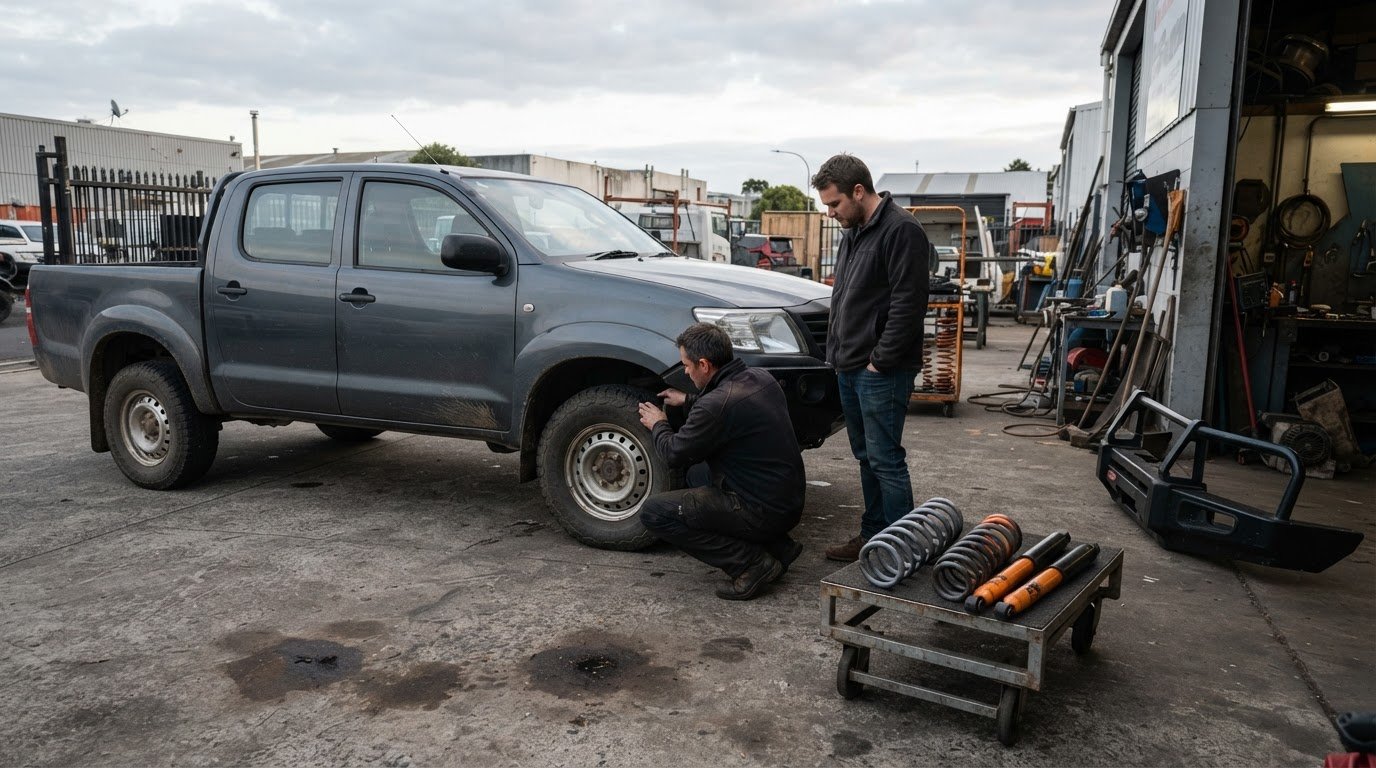
Where a wider vehicle setup matters, Motortech 4X4 also offers suspension kits, bullbars and snorkels. These are separate options to consider alongside a rack, based on your vehicle plans.
Contact Motortech 4X4 to discuss roof racks for your ute.
Plan your next vehicle upgrade
A rack is most useful when it suits how you use your ute now and allows for future changes. When choosing ute roof rack systems in Auckland, consider how storage fits your vehicle’s wider role, whether you’re carrying work equipment or preparing for longer trips.
Choosing ute roof rack systems in Auckland can also be part of a broader upgrade plan. Motortech 4X4 offers suspension kits, bullbars and snorkels as separate options to consider alongside a rack, depending on your vehicle plans.
Contact Motortech 4X4 about your rack to discuss your requirements and plan a practical setup for your vehicle.
Frequently Asked Questions
What types of ute roof rack systems are available in Auckland, NZ?
Common options include roof crossbars, platform racks and tub-mounted systems. Crossbars suit loads that can be secured across bars, while platforms provide a broader surface for arranging separate items. Tub racks use the ute’s load area rather than the cab roof. In Auckland, the right format depends on your vehicle configuration, cargo shape and whether you need the rack for regular work or occasional trips.
Which roof rack systems fit popular ute makes and models in New Zealand?
Fitment depends on the exact vehicle variant, not just its badge. A dual-cab model, single cab or ute with an aftermarket canopy may need different mounting hardware. A rack selected for an open tub, for example, may not suit a hard lid covering it. Match the system to the vehicle’s year and configuration, including modifications that affect mounting points.
What are the NZ legal requirements for roof rack loads, overhang and securement?
Distinguish the rack’s stated capacity from road requirements for carrying cargo. Secure loads so they cannot shift or fall, and avoid placing cargo where it blocks the driver’s view or vehicle lights. A rack rating does not establish a permitted overhang. Before transporting projecting items on New Zealand roads, consult current vehicle-loading guidance for the applicable limits and securement requirements.
How do I choose and measure a roof rack for my ute and intended cargo?
Start with the cargo: measure its length, width and shape in the arrangement you expect to carry it. Note whether it needs support at several points or a broad, flat surface. Compare those measurements with the usable rack area, and consider access to doors, the tub and any canopy. A long ladder, for instance, needs support without obstructing normal vehicle access.
What are the risks of overloading a ute roof rack or affecting vehicle handling?
Excess weight can strain rack components and mounting points, while a heavy load high above the vehicle can affect its balance and response through corners. Bulky items can also catch more wind and change how the vehicle feels on the road. Keep cargo stable and distributed across the rack. If steering or vehicle movement changes, stop safely and reassess the load.