A 4×4 upgrade is priced by the work it needs, not just the part fitted. The cost of 4×4 modifications in NZ depends on your vehicle, the components selected, installation labour and whether custom fabrication is involved. Pricing is set after a quote request, with the scope of work and fitment requirements shaping the total.
It’s understandable to want a clear budget before committing to changes, especially when upgrades can range from a straightforward accessory fitment to more involved engine or suspension work. The right estimate starts with the vehicle and what you need it to do, rather than a one-size-fits-all figure.
This guide explains what affects the cost of bull bars, custom fabrication, exhaust and engine work, and lift kits. You’ll see which details shape each job and how to plan modifications around your vehicle and priorities.
Key Takeaways
- Compare bull bar options by vehicle fitment and the protection features your setup requires.
- Understand how the scope of exhaust or engine work shapes the installation and overall quote.
- Factor in the suspension components and fitting requirements when planning a lift kit.
- Match upgrades to your vehicle and intended use, with Motortech 4X4 offering bullbars and suspension kits.
Bull bars and vehicle protection
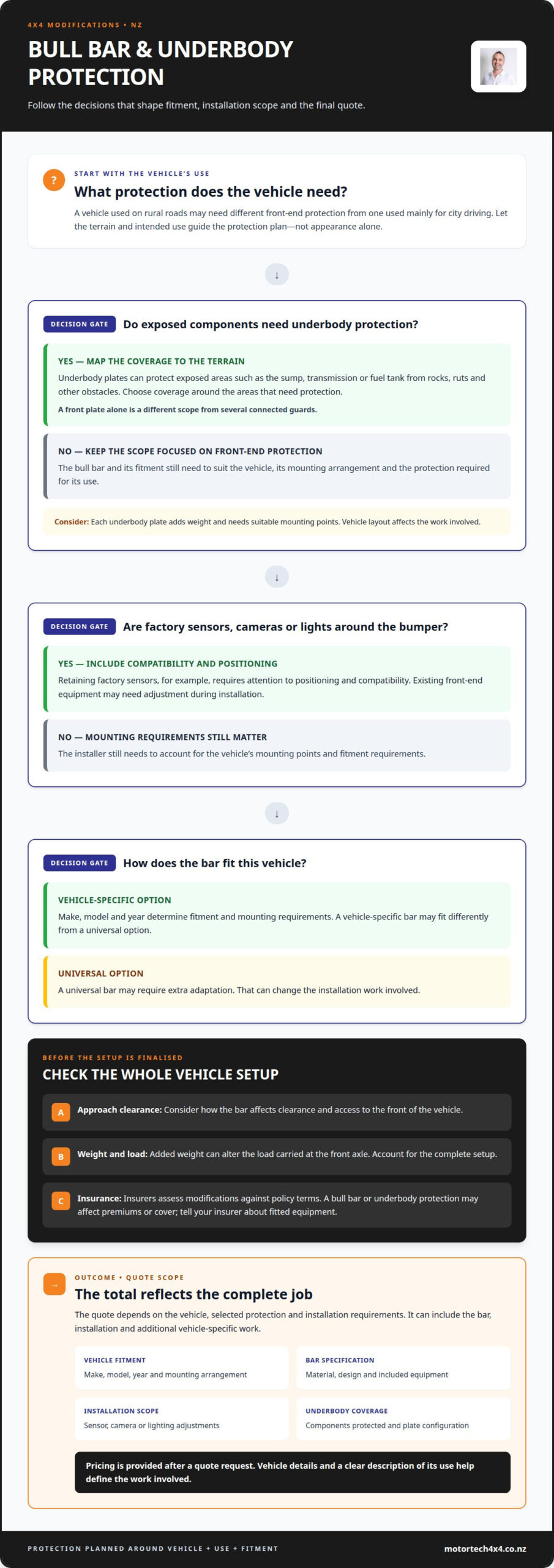
A bull bar’s price reflects more than the bar itself. The vehicle’s make, model and year determine fitment and mounting requirements. Bar material, design and included features also shape the finished package. A vehicle-specific bar may fit differently from a universal option requiring extra adaptation. Installation labour adds to the total, especially if existing front-end equipment needs adjustment.
Start with the intended use. A vehicle travelling on rural roads may need different front-end protection from one used mainly for city driving. Consider how the bar affects approach clearance, vehicle weight and access to the front of the vehicle. Added weight can alter the load carried at the front axle. Those details matter when planning a complete setup, rather than selecting a bar by appearance alone.
Fitment complexity also affects the work involved. The installer must account for mounting points and existing equipment, which may include parking sensors, cameras or lights around the front bumper. Retaining factory sensors, for example, requires attention to positioning and compatibility. Ask for a quote that clearly separates the bar, installation and any additional vehicle-specific work.
Insurers assess modifications against policy terms, and a bull bar or underbody protection may affect premiums or cover. Tell your insurer about fitted equipment so the vehicle’s modified configuration is accurately recorded.
Underbody protection shields exposed components from rocks, ruts and other obstacles. Depending on the vehicle and setup, protection may cover areas such as the sump, transmission or fuel tank. Each plate adds weight and needs suitable mounting points, so the vehicle layout affects the job. A front plate alone is a different scope from several connected guards. Consider the terrain you drive on to decide which areas need protection.
- Vehicle fitment: Make, model, year and mounting arrangement.
- Bar specification: Material, design and included equipment.
- Installation scope: Sensor, camera or lighting adjustments.
- Underbody coverage: Components protected and plate configuration.
These factors help explain why two vehicles can need different installation plans, even with similar accessories. A quote for the cost of 4×4 modifications in NZ depends on the vehicle, selected protection and installation requirements; the price is provided after a quote request. Supplying the vehicle details and describing its use helps define the scope. That makes it easier to assess whether a bull bar, underbody plates or both match the intended protection.
Exhausts and engine modifications
Exhaust and engine work can range from replacing a component to changing how the engine operates. Your vehicle’s make, model, engine type and condition shape the work. An exhaust for one engine, for example, may need different pipework or mounting from one for another. Parts, labour, access and any fabrication all contribute to the scope.
An exhaust project may involve the system, its connections and how it fits around the chassis. A direct replacement is different from a custom system that needs new routing or brackets. Fitment also has to account for clearance around nearby components. Existing modifications can affect both compatibility and labour.
Before engine work, define what you want to achieve. Better response, towing and off-road driving can call for different priorities. An ECU remap changes engine calibration, so the engine’s condition and existing setup matter. Changes need to suit the vehicle as a whole. Diagnostics before and after the work help assess how it operates.
For off-road driving, useful modifications depend on the terrain and what the vehicle needs to do. On slow, uneven tracks, traction, ground clearance and underbody protection may matter more than engine tuning alone. For regular towing, engine response under load may be a higher priority. Choose based on what limits the vehicle in its actual use.
Cost depends on the selected components, the vehicle’s configuration, fabrication and installation time; pricing is provided after a quote request. A quote should make the scope clear, including parts, labour and related work. An existing exhaust fault, for example, may need attention before performance changes can be assessed properly.
- Vehicle details: Make, model, engine type and current condition.
- Exhaust scope: Replacement parts, custom routing and mounting requirements.
- Engine work: The intended result and existing engine configuration.
- Supporting work: Diagnostics, fitment and any required calibration.
These factors help distinguish essential work from optional upgrades. A driver seeking better response on gravel roads may need a different setup from someone who regularly tows. An assessment can match the desired outcome to the vehicle’s condition, then identify compatible parts and installation requirements. That keeps exhaust and engine work focused on a practical purpose.
Lift kits and lift-kit installation
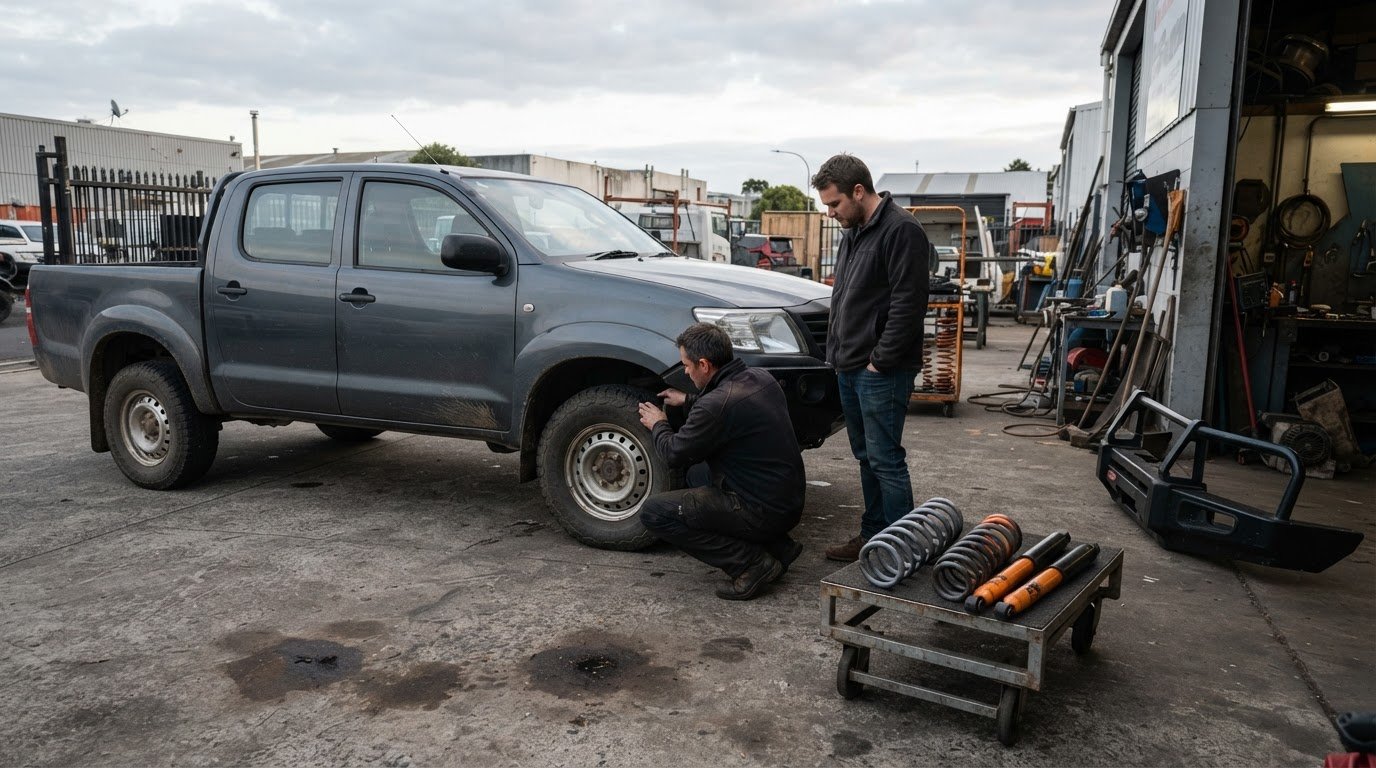
A lift kit changes suspension height and component position. The right setup depends on the vehicle, intended use and kit. A ute carrying touring gear has different demands from an unloaded vehicle used on local roads. The kit components, installation labour and supporting adjustments all affect the job.
Suspension kits can include springs and dampers designed to work together. Their specification affects ride quality, handling and how the vehicle responds over uneven ground. A kit chosen for extra load may behave differently from one intended for a lightly equipped 4×4. The vehicle’s existing suspension condition also matters. Worn components can change the installation scope.
Installation involves more than fitting parts. A technician checks compatibility, installs the suspension and assesses how the vehicle sits afterwards. A lift can change suspension geometry, which may affect steering and tyre wear. Wheel alignment is an important part of completing the work. Any additional adjustments add to the scope and labour.
Tyres are another consideration. A lift may be planned alongside a change in tyre size, but the two choices need to suit the vehicle together. For example, larger tyres can affect clearance around wheel arches during steering or suspension movement. Planning the kit and tyres as one package helps identify fitment requirements before work begins.
Use also influences the specification. A vehicle regularly travelling corrugated roads needs a suspension setup suited to that use. A vehicle carrying camping equipment may need its load considered during kit selection. Adding accessories later can change the vehicle’s weight and ride height, so future plans are useful when defining the job.
- Vehicle condition: Existing suspension wear and current setup.
- Kit specification: Spring and damper compatibility with intended use.
- Installation scope: Fitment, alignment and related adjustments.
- Tyre choice: Clearance and compatibility with the suspension setup.
The cost of a lift-kit installation depends on the vehicle, kit components and required labour; pricing is provided after a quote request. A clear scope accounts for alignment and related fitment needs, rather than considering the kit alone. This helps explain the difference between a straightforward suspension replacement and a broader setup involving tyres or additional adjustments.
For a lift planned around your vehicle and driving needs, discuss your lift-kit installation.
Motortech 4X4
Motortech 4X4 helps match 4×4 upgrades to your vehicle, intended use and project scope. Its Suspension Kits, Bullbars, Snorkels and GVM Upgrades cover different needs, from suspension changes to vehicle protection and load capacity. The right combination depends on how you use the vehicle and which modifications you’re considering.
For a clearer view of the cost of 4×4 modifications in NZ, the quote needs to reflect the selected components, vehicle fitment and installation work. Pricing is provided after a quote request. Share your vehicle details and the upgrades you’re planning to help define the work involved and the relevant options.
For advice on planning your 4×4 modifications, contact Motortech 4X4.
Plan your next upgrade with purpose
Set a clear priority before committing to a modification. A staged plan can help you focus first on the change that best supports how you use your vehicle, while keeping later upgrades compatible. Share your vehicle details, intended use and planned changes to help shape a practical project scope. This gives the cost of 4×4 modifications in NZ context: the right estimate depends on the vehicle and the work selected, not a generic package.
Motortech 4X4 offers Suspension Kits, Bullbars and Snorkels, giving you options for suspension, protection and vehicle preparation. A conversation can help connect your priorities with suitable modifications and the work involved.
Contact Motortech 4X4 to discuss your plans and take the next step towards a setup that suits your driving.
Frequently Asked Questions
How much do common 4×4 modifications cost in New Zealand?
The cost of 4×4 modifications in NZ depends on the vehicle, selected components and installation scope. A single accessory fitment differs from a project combining suspension, protection and storage equipment. The price depends on the case and is provided after a quote request. Vehicle details and a clear list of planned upgrades help define the work included in the estimate.
What is the cost of a 4×4 suspension lift kit and installation in NZ?
The total depends on the suspension kit selected, vehicle configuration and fitting work. For example, a vehicle already carrying heavy touring equipment may need a different suspension setup from a lightly loaded daily driver. An estimate should account for any related work required to complete the installation, rather than treating the kit as the entire job. Pricing is provided after a quote request.
What do bull bars, winches, snorkels, and roof racks cost in NZ?
Each accessory is priced according to its specification and fitment requirements. A bull bar and winch combination, for example, involves different components from a snorkel fitted on its own. Roof rack selection also depends on the vehicle and intended use. The price depends on the case and is provided after a quote request, with the chosen equipment and installation scope shaping the estimate.
How much does a 4×4 engine tune or exhaust upgrade cost in New Zealand?
An engine tune or exhaust upgrade is quoted according to the vehicle, requested work and existing setup. An ECU remap, for example, is a different job from replacing exhaust components or combining both changes. The price depends on the case and is provided after a quote request. Vehicle details and the intended outcome help clarify which work belongs in the estimate.