
A snorkel raises the engine’s air intake, where it may draw cleaner air and reduce the risk of dust or water entering the system. The benefits of a snorkel for engine health depend on correct installation and sealed connections, and a snorkel does not make a vehicle waterproof. Cooler intake air may support smoother engine operation, but a snorkel does not directly increase horsepower.
A raised intake can be useful on dusty tracks and during water crossings, when contaminants or water entering the engine can cause serious damage. It is a practical protective measure, not a substitute for knowing your vehicle’s limits or maintaining its air intake.
Here’s how a snorkel routes air to the engine, why a higher intake can reduce dust exposure, and what cooler air may mean for engine performance. You’ll also learn where that protection has limits and how to judge whether a snorkel suits the conditions you drive in around New Zealand.
Key Takeaways
- Water can still damage electrical components even if a snorkel keeps water out of the engine intake, so consider the vehicle’s overall wading limits.
- After dusty or wet driving, clearing dirt from the snorkel head can help prevent buildup from restricting airflow.
- Air passes through the snorkel into the vehicle’s air box; the snorkel’s design and installation affect how effectively it supplies air.
- Cooler, denser air may support combustion and fuel efficiency, but a snorkel is not a direct horsepower upgrade.
How does a vehicle snorkel work?
A snorkel relocates a 4WD’s engine air-intake point from inside the engine bay to a higher position, usually near roof level. During a water crossing, that raised intake reduces the likelihood of water entering the intake system. Water reaching the engine can cause hydro-lock and severe damage. A snorkel lowers that risk; it doesn’t make the vehicle waterproof. The intake system must be fully sealed, and the vehicle’s wading capacity still applies.
Before driving through water, consider the manufacturer-specified wading depth, usually between 500mm and 800mm. The safe depth depends on the vehicle, not the snorkel alone. Water above the vehicle’s interior electronics can damage electrical components or cause serious malfunctions, even if the engine keeps running. For example, a crossing that submerges electrical systems remains hazardous with a snorkel fitted. Keep water below those components and within the vehicle’s wading capacity.
In New Zealand, having a snorkel does not by itself establish WoF compliance, certification status or insurance cover. What matters is the modified vehicle’s compliance requirements and the terms of its insurance policy. Correct installation is essential for water protection: connect the snorkel securely to the airbox, seal the joints and body openings, then check the full intake path for leaks. A gap can let water bypass the raised intake and reach the engine.
Leaks are not the only risk. A damaged snorkel, failed seal or poorly routed intake can weaken protection, while an obstruction can restrict airflow. Check for cracks, dents and damaged seals, and replace compromised components before relying on the system during a crossing. Clean the snorkel head after dusty or wet driving, as accumulated dirt can reduce airflow. These checks help preserve the benefits of a snorkel for engine health, but a snorkel cannot protect electrical components or make deep water safe.
Dust and contaminant reduction
On dusty terrain, a snorkel raises the intake to a position where airborne dust may be less concentrated. This can reduce the contaminants reaching the airbox, especially when driving behind other vehicles on dry tracks. A snorkel does not remove dust from the environment or replace the engine’s air filter. It changes where the engine draws air; the filter still captures particles that enter the system. Cleaner air can help limit filter clogging and airflow restriction, which may otherwise reduce engine power.
Filter type also matters. A paper air filter can suppress particles down to 30 microns, while foam oil filters won’t filter particles below 40 to 50 microns. These figures describe filtration, not a promise that all dust is removed. Fine particles can still challenge the intake system, so dusty driving calls for attention to filter condition. A clogged filter restricts airflow, making the engine work with less air available for combustion and oxygen supply.
The air ram’s shape affects how air and heavier debris enter the snorkel. An open-face design without a screen avoids a screen that can deflect airflow. A design that turns incoming air back on itself at an angle greater than 100 degrees can also deflect airflow. Some air rams have four slots at the bottom to eject heavier particles. These features manage airflow and debris; they don’t make the intake dust-proof.
After dusty or wet driving, clean the snorkel head to prevent dirt buildup that may reduce airflow. Check the head and intake for damage or blockages, and keep the air filter maintained for the terrain you cover. A roof-height intake may draw cooler air as well as cleaner air, but its main dust-related advantage is drawing from a higher position. If you’re considering a setup for regular off-road use, explore snorkel options for your vehicle.
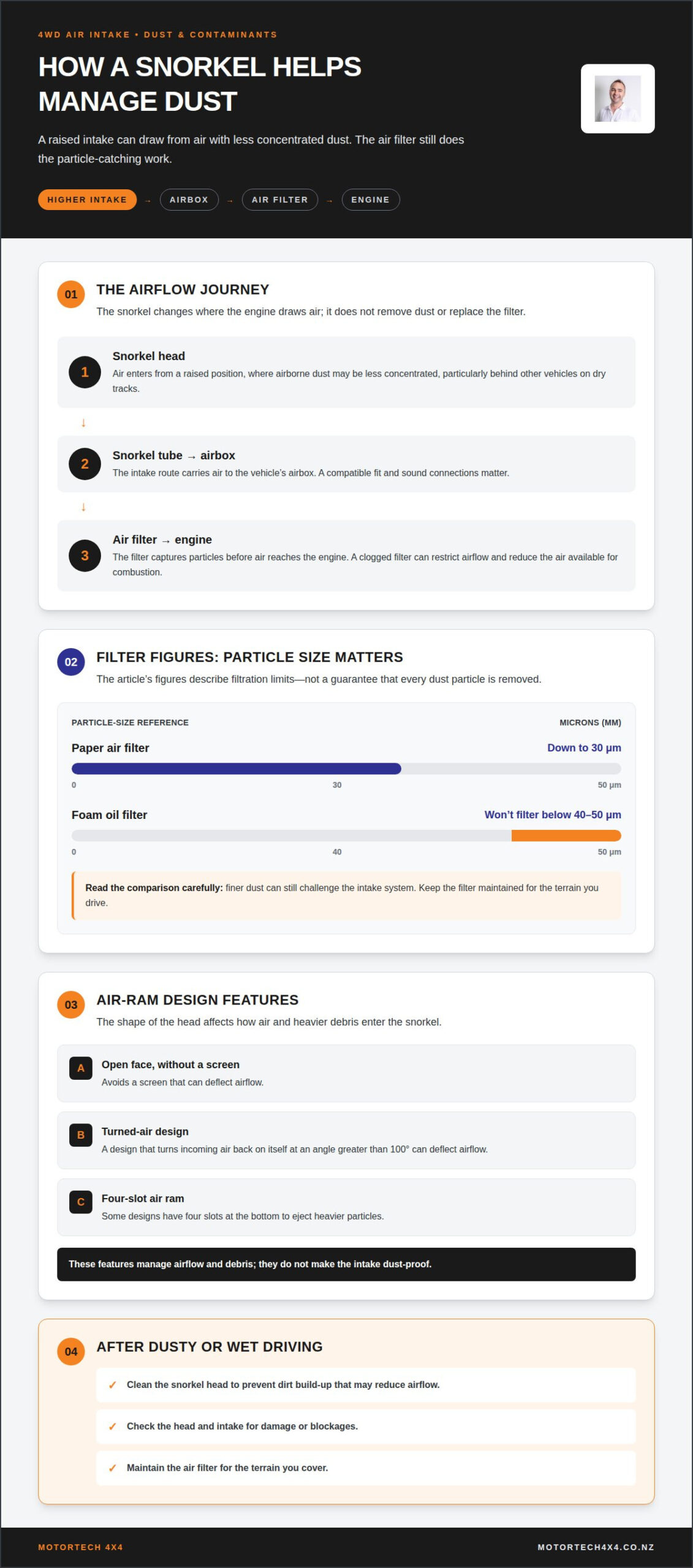
How a vehicle snorkel supplies air to the engine
Air enters the snorkel head, travels down the snorkel and reaches the engine’s airbox. In an induction snorkel, a larger-volume plenum chamber buffers incoming air and makes it available to the airbox at positive pressure. The air filter then captures particles before the air reaches the engine for combustion. The engine needs a steady supply of filtered air, which contains oxygen to support combustion. A snorkel changes the intake’s position and route; it does not replace the air filter or the engine’s need for clean airflow.
A vehicle-specific fit matters because snorkel design, materials and installation quality affect how the intake performs. The snorkel must connect correctly to the vehicle’s airbox and intake path. A mismatch or poor seal can let unfiltered air enter beyond the filter, while an obstruction can restrict airflow. Either issue can weaken dust protection and affect engine operation. If you regularly drive dusty tracks or near rivers, consider both the terrain and your vehicle’s airbox layout when choosing a compatible system.
A snorkel also changes the intake’s position for water crossings, but it doesn’t set a safe wading depth. A 4WD’s manufacturer-specified wading depth is usually between 500mm and 800mm. That range is not a universal limit: the vehicle’s own specification governs, and water can still reach electrical components or other vulnerable areas. Without a snorkel, avoid driving through water above the vehicle’s headlights. For a truck, water above waist height is probably too deep without one. Fuel efficiency is not the snorkel’s primary function; its role is to supply air to the engine. Filter condition, airflow restriction and the vehicle’s combustion system also influence how it runs.
Cold air induction and engine performance
Air temperature affects the oxygen available for combustion. Cooler air is denser than hot air, so the same volume contains more oxygen. Air drawn from a hot engine bay may be warmer than air entering through a raised intake. A snorkel near roof height may draw cooler air, particularly during hot, dusty driving. This can support combustion and smoother engine operation, although the effect depends on conditions and how the vehicle’s engine management responds to incoming air.
Engine management controls how the engine uses air and fuel. If the system can make use of cooler intake air, it may support power and torque. But a snorkel does not directly add horsepower or automatically recalibrate the engine. It changes the intake location and route, not the engine’s design. A restricted filter, blocked snorkel head or poorly matched intake can restrict airflow instead of supporting performance.
Throttle response also depends on the engine’s condition, calibration and load. Cooler air entering the intake does not guarantee a sharper response whenever you press the accelerator. For example, a vehicle working hard on a hot climb may benefit from cooler air, but a snorkel alone will not remove other performance limits. Keep the intake path clear and maintain the air filter to avoid preventable airflow restrictions.
Fuel efficiency can improve when cooler, denser air supports combustion, but any effect is usually marginal. Driving conditions, engine management and vehicle load also shape fuel use. Treat cold air induction as a potential supporting benefit, not a stand-alone performance upgrade. If you’re planning an intake setup for your vehicle, explore snorkel options suited to its use.
Motortech 4X4: Snorkels
Motortech 4X4 offers snorkels for drivers seeking a raised air intake for dusty routes or water-crossing conditions. A snorkel can support cleaner air intake and reduce the risk of water entering the engine, provided the system is correctly matched, installed and sealed. It doesn’t make a vehicle waterproof or remove its wading limits.
Consider a snorkel if your regular driving includes dusty terrain or crossings where a higher intake is useful. The right setup depends on your vehicle and its intake layout, so fitment matters as much as the snorkel itself. Motortech 4X4 also offers Suspension Kits, Bullbars and GVM Upgrades for 4WDs.
For a snorkel suited to your vehicle, contact Motortech 4X4.
Plan your next 4WD setup
Choose upgrades to suit your driving conditions and how you use your vehicle. A snorkel may help meet your intake needs, but the overall setup also depends on how your modifications work together. The benefits of a snorkel for engine health are most relevant when the fit and use match your driving conditions.
Motortech 4X4 offers snorkels, Suspension Kits and Bullbars, giving you options to consider as part of a broader 4WD setup. Discussing your vehicle and intended use can help clarify which upgrade best suits your plans, without treating a snorkel as a fix for every driving condition.
Ready to consider a snorkel for your vehicle? Contact Motortech 4X4 to discuss your setup and take the next step with confidence.
Frequently Asked Questions
Do snorkels improve engine performance?
A snorkel is not a direct horsepower upgrade, but cooler intake air may support combustion and engine operation. Any effect depends on the vehicle’s engine management and driving conditions. For example, an intake drawing air away from a hot engine bay may supply cooler air on a warm day. A snorkel will not fix a blocked filter or replace engine tuning.
Is a snorkel worth it?
A snorkel may suit a 4WD regularly used on dusty tracks or routes with water crossings. Its value comes from matching the intake setup to those conditions, rather than expecting a universal performance gain. If most driving is on sealed urban roads, the main reasons for fitting one may not apply as often. Consider your usual terrain, vehicle use and maintenance needs.
Why do 4x4s have snorkels?
Drivers fit snorkels to raise the engine’s air intake for use in dusty or wet environments. On a convoy across dry terrain, a raised intake may draw air away from dust stirred up near the ground. During water crossings, it can reduce the chance of water entering the engine intake. It does not protect every vehicle system from water or debris.
How does an engine snorkel protect an engine from water ingestion?
A snorkel places the intake opening above the standard engine-bay intake, reducing the likelihood of water being drawn in during a crossing. Water reaching the engine can cause hydro-lock and severe damage. Protection depends on an intact, sealed route from the snorkel head to the airbox. A loose connection or damaged seal can let water bypass the raised opening.
Does a snorkel improve engine air quality in dusty conditions?
A snorkel may draw air from higher up, where dust concentration can be lower than near the tyres. This can help when following other vehicles on dry gravel roads, where passing tyres stir up dust. The engine’s air filter still captures particles entering the intake, so a snorkel does not remove the need to maintain the filter.
Can an engine snorkel reduce engine wear or extend engine life?
A snorkel may reduce the dust and water entering the engine intake, helping protect the engine. It cannot guarantee a longer engine life: filter condition, servicing, driving conditions and installation quality also matter. For example, regular travel on dusty roads makes filter maintenance important even with a raised intake. Treat a snorkel as one part of a broader maintenance approach.