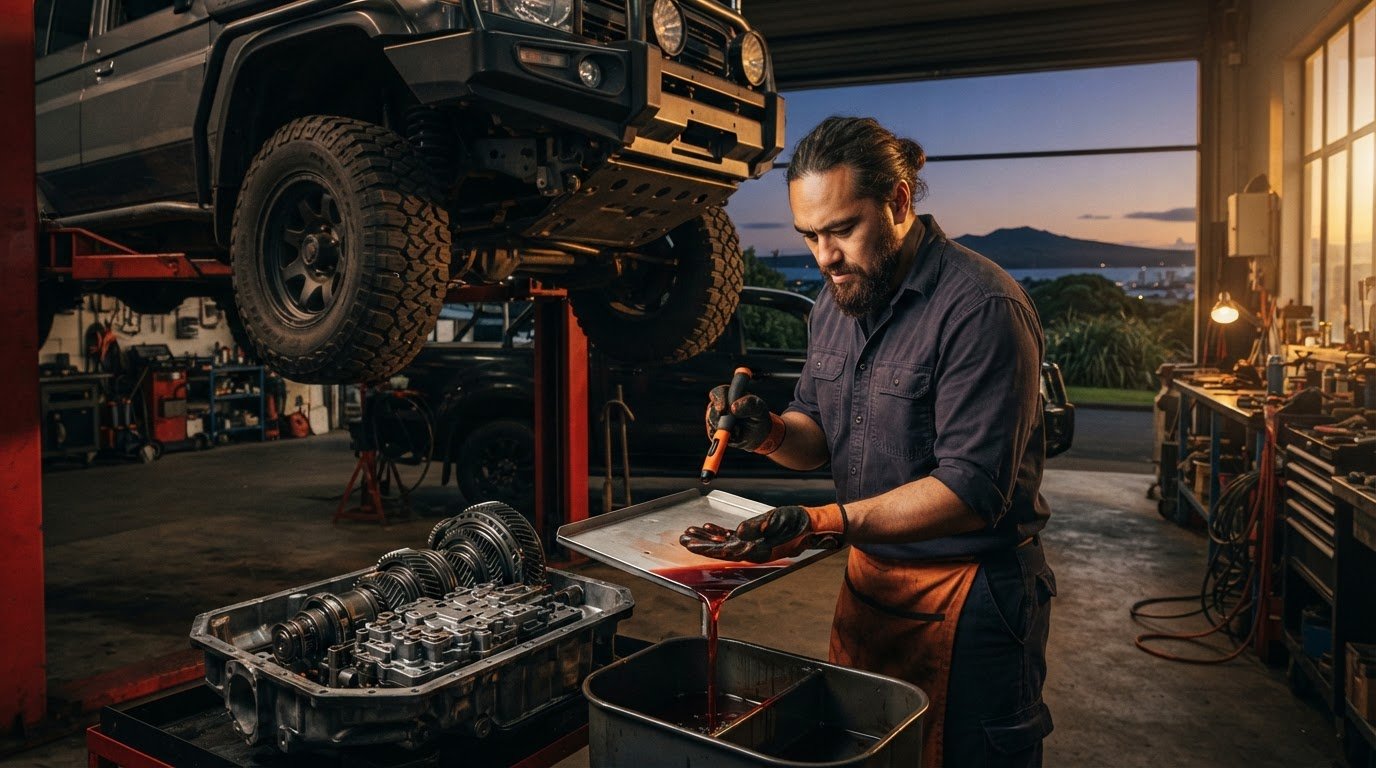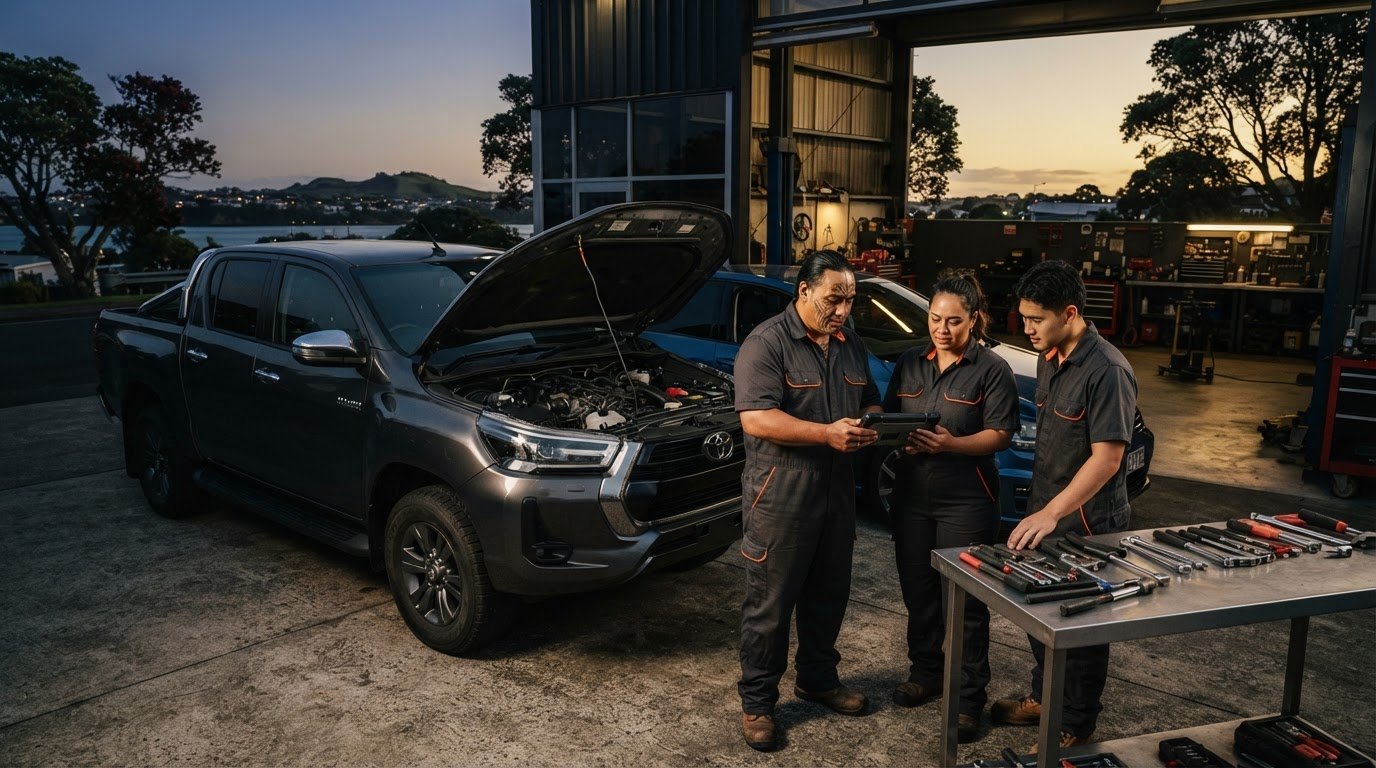
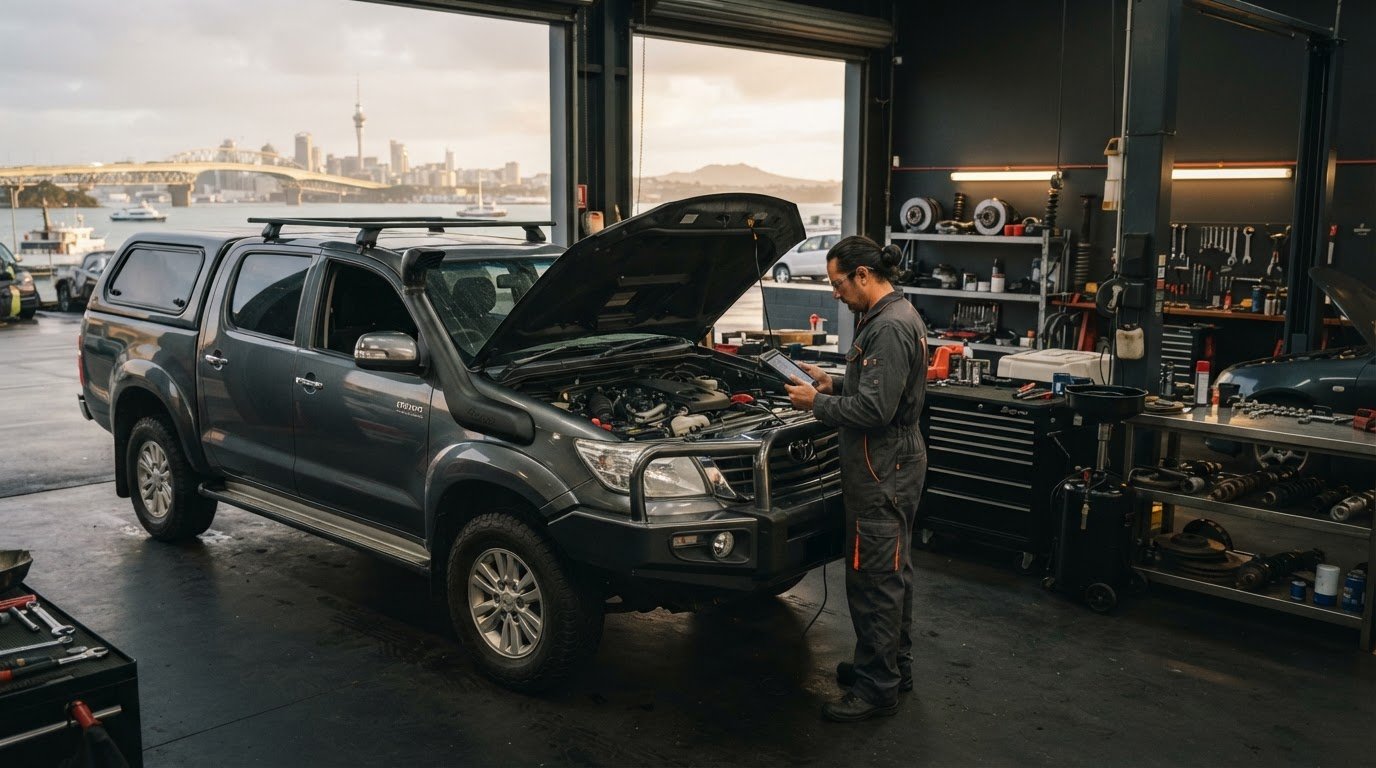
A ute’s workload can matter as much as the kilometres on its odometer. Towing, carrying heavy loads and frequent short trips all affect what maintenance deserves attention. Choosing ute servicing Auckland drivers can rely on starts with understanding how the vehicle is used and what its service history shows.
A routine service keeps scheduled maintenance on track, but it is different from diagnosing a fault. A warning light, unusual noise or change in performance may need specific investigation. Before booking, consider whether you need scheduled maintenance, a fault assessed or a known issue repaired. Motortech 4X4 provides car, 4×4 and fleet servicing in Auckland across vehicle brands, alongside specialised mechanical services for relevant needs.
This guide explains how to match servicing to your ute’s condition and workload, what to consider when comparing service options, and what information to have ready when booking. You’ll also learn how to describe symptoms clearly and separate routine maintenance from a request to investigate a problem.
Key Takeaways
- Match routine maintenance to your ute’s requirements and use, including towing, site work and frequent short trips.
- Choose ute servicing Auckland based on your vehicle, workload, service history and any concerns you need assessed.
- Describe changes in braking, vibration, leaks or dashboard warnings, but leave fault diagnosis to an assessment.
- Before booking, gather vehicle details and service records, note symptoms, and explain how you use the ute.
- Separate scheduled maintenance from a specific repair concern so the workshop understands the work you need.
Ute Servicing in Auckland: What Routine Maintenance Should Cover
A ute service is scheduled inspection and maintenance based on the vehicle’s requirements, service history and condition. The exact work varies by make, model, engine and use. Start with the vehicle handbook and previous service records rather than assuming every ute needs the same package or schedule.
A routine service may include engine oil and filter replacement, fluid checks, and inspection of components such as the brakes, tyres, steering and suspension. Which items are due depends on the manufacturer’s maintenance plan and the vehicle’s condition. If you’ve noticed a new warning light, unfamiliar noise or change in handling, mention it separately. These concerns may need diagnosis rather than scheduled servicing alone.
How work use changes a ute’s maintenance needs
A ute used mainly for light commuting has a different workload from one that regularly carries tools, works on rough sites or tows. Stop-start trips around Auckland also create different operating conditions from longer drives. These details help shape the service discussion, but they don’t establish a universal maintenance interval.
Keep a simple note of changes in use, such as starting regular towing, carrying heavier loads or making more frequent short trips. Record new noises, leaks or performance changes when they occur. Sharing that context helps Motortech 4X4 consider the ute’s operating conditions alongside its service history and manufacturer guidance.
Routine servicing versus repairs and inspections
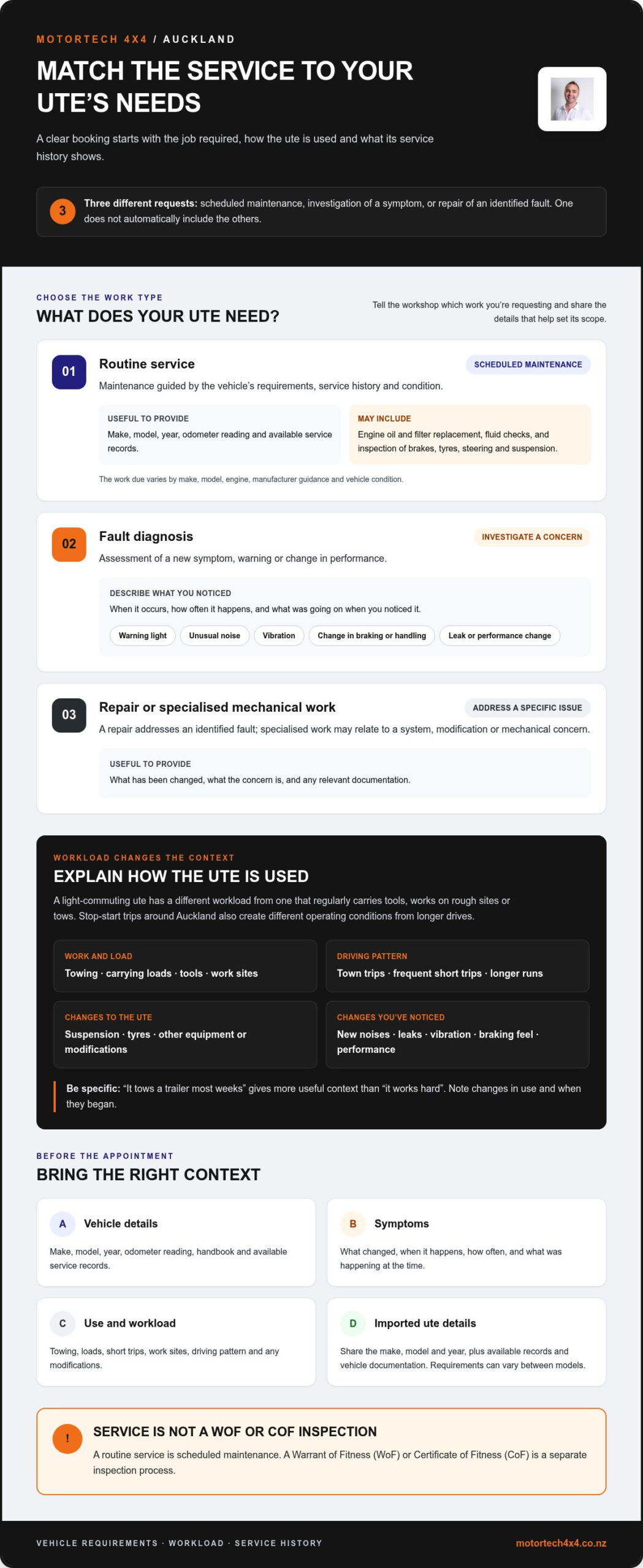
Servicing is planned maintenance; diagnosis investigates a problem; a repair addresses an identified fault. These jobs can overlap, but one doesn’t automatically include the others. If you’re booking routine maintenance and have also noticed a vibration or dashboard warning, describe both so the concern can be considered separately from the scheduled work.
A service appointment also isn’t automatically a Warrant of Fitness (WoF) or Certificate of Fitness (CoF) inspection. These are separate inspection processes. The NZ Transport Agency (NZTA) has a role in New Zealand’s transport system, including vehicle licensing and road safety. Check current official NZTA information for applicable inspection requirements rather than treating a routine service as a compliance inspection.
For ute servicing Auckland owners can plan with confidence, be clear about the job requested: scheduled maintenance, investigation of a symptom, or repair of a known fault. This distinction helps set the scope for the appointment and keeps the discussion focused on your ute’s requirements, use and condition.
Choosing Ute Servicing in Auckland for Your Vehicle and Workload
A useful servicing discussion starts with more than the ute’s make and model. Share its service history, the work it does and any symptoms you’ve noticed. This helps distinguish scheduled maintenance from a fault that needs investigation or specialised mechanical attention. Motortech 4X4 services cars, 4x4s and fleets in Auckland across vehicle brands.
Use this simple comparison to describe the work you need:
| Work type | Purpose | Useful information to provide |
|---|---|---|
| Routine service | Scheduled maintenance guided by the vehicle’s requirements and condition. | Make, model, year, odometer reading and available service records. |
| Fault diagnosis | Investigation of a new symptom, warning or change in performance. | When it occurs, how often, and what was happening when you noticed it. |
| Specialised mechanical work | Work relating to a specific system, modification or mechanical concern. | What has been changed, what the concern is, and any relevant documentation. |
What to consider for a Japanese-import ute
For an imported ute, provide the make, model, year and any available service records. Maintenance specifications and schedules can vary between models, so don’t assume a similar-looking vehicle has identical requirements. Check the handbook and vehicle documentation for relevant servicing guidance, and bring those details to the appointment. Motortech 4X4 services vehicles across brands and uses the vehicle information and history to inform the servicing discussion.
Matching the service approach to how you use your ute
A work ute needed for daily jobs has different booking priorities from one used occasionally. Explain how the vehicle fits into your workload and when you can leave it for servicing. If it tows or regularly carries loads, describe the typical use and report changes such as vibration, braking feel or unusual noises. Mention modifications too, including suspension, tyres or other equipment, so they can be considered in the vehicle’s context.
Be specific. “It tows a trailer most weeks” gives more useful context than “it works hard”. Note whether the ute mainly travels around town, makes longer runs or spends time on work sites. These details help focus maintenance discussions on the vehicle’s actual use rather than a generic description.
For 4×4 owners considering accessories or off-road use alongside servicing, the Auckland 4×4 servicing and modifications guide provides related context. For broader vehicle safety and transport information, consult the Waka Kotahi NZ Transport Agency.
Motortech 4X4 provides Auckland car, 4×4 and fleet servicing across vehicle brands. If your ute’s requirements or workload point to a servicing need, explore Motortech 4X4’s Auckland servicing as part of your ute servicing Auckland research.
Auckland Ute Servicing: Warning Signs, Records and Service History
A change in how your ute sounds, stops or handles is useful information to share when arranging servicing. Describe what you’ve noticed rather than trying to name the failed part. A symptom can help guide an assessment, but it doesn’t confirm a fault on its own. To prepare for ute servicing Auckland drivers can keep brief notes and bring relevant service documents.
Which ute symptoms should you mention when booking?
Record when the change began, whether it happens consistently and what the ute was doing at the time. A noise over bumps, for example, gives different context from one heard while braking. Mention whether the symptom occurs during towing, with a load onboard, on a particular type of journey or when the engine is first started.
- Braking: Note changes in pedal feel, pulling to one side, vibration or unusual sounds while slowing down.
- Steering and vibration: Describe when vibration occurs and whether steering feels different, including over bumps or at particular speeds.
- Leaks: Record where you notice a mark or fluid, when it appears and whether it returns after the ute has been parked.
- Dashboard warnings: Identify the warning light or message, and note when it appeared. A photo can help you describe it accurately.
- Starting or performance: Explain what has changed, such as slower starting or reduced response, and under what conditions you notice it.
Be factual and specific. If braking feels unsafe, avoid continuing to drive until the ute has been assessed.
How to use service records to plan maintenance
Gather service invoices, repair notes, the owner’s handbook and other vehicle documentation. These records can show what work has been completed, when it was done and which items may need attention under the vehicle’s maintenance requirements. If there’s a gap, label it as unknown rather than assuming a component is overdue or needs replacement.
A clear history also helps distinguish a recurring concern from a new one. For example, note whether a vibration was mentioned during an earlier visit and whether it has changed since then. Share details of repairs or component changes, including suspension work, so they can be considered alongside current symptoms. A guide to suspension systems can help explain why changes in ride or handling are worth describing precisely.
Service history and clear symptom details give diagnosis a stronger starting point, but assessment is still needed to identify the cause. For general automotive repair industry resources, the Automotive Service Association (ASA) outlines its focus on education and ethical standards for service professionals. Keep your notes practical: dates, conditions, warning messages and changes are more useful than a guessed diagnosis.
How to Prepare for a Ute Service Appointment in Auckland
A little preparation makes it easier to explain what your ute needs and plan around time off the road. Before arranging ute servicing Auckland drivers can make the booking discussion clearer by identifying the vehicle, gathering its records, noting symptoms and explaining how it’s used. Keep routine maintenance separate from a specific repair concern so both can be understood.
Four details to have ready before booking
Pull together the information you already have. You don’t need to diagnose a problem or fill gaps in an incomplete history. Clear facts establish a useful starting point for the service discussion and help explain the work you’re requesting.
- Vehicle details: Note the make, model, year and odometer reading. Include engine or variant details if you know them.
- Service history: Gather invoices, repair notes and the handbook. Mention maintenance already completed and anything with an unknown history.
- Symptoms: Write down what has changed, when it began and the conditions in which it occurs, such as on a cold start or while towing.
- Use and modifications: Explain typical journeys, loads, towing patterns and any modifications or recent changes to the vehicle.
What to expect from a clear service discussion
State the work you want in separate parts: scheduled maintenance, if due, and any concern that needs diagnosis. For example, request routine servicing and separately describe a vibration that appears under load. This avoids presenting a symptom as a confirmed fault and makes clear that assessment may be needed beyond planned maintenance.
Share what you’ve observed without guessing at the cause. If a warning appears intermittently, explain when it comes on and whether it clears. Mention any earlier work related to the concern. Motortech 4X4 can discuss findings and recommended next steps with you; the scope depends on the ute’s condition and what assessment shows.
Planning matters for Auckland work vehicles. When arranging a booking, explain any work commitments that affect when you can leave the ute, and describe your transport needs while it’s unavailable. If the vehicle carries tools or equipment, plan what needs to be removed or made accessible before drop-off. These details help set practical expectations without assuming a fixed appointment duration or outcome.
Motortech 4X4 provides car, 4×4 and fleet servicing in Auckland. Have your vehicle details, records and notes ready, then arrange ute servicing with Motortech 4X4 with a clear picture of the work requested.
Book Ute Servicing with Motortech 4X4 in Auckland
Choosing a workshop is easier when the servicing discussion starts with the ute’s requirements, not assumptions about a standard package. Motortech 4X4 is an Auckland-based service centre providing car, 4×4 and fleet servicing across vehicle brands. Share the vehicle’s details, maintenance records and any symptoms to help shape a discussion around its condition and use.
A clear plan separates scheduled servicing from concerns that need further investigation. It can also identify when a related mechanical service may be relevant. Discuss the scope with the actual vehicle and concern in mind, rather than treating every ute or issue the same.
Auckland servicing for utes, 4x4s and fleets
For an individual ute, explain its workload, service history and any change in performance or operation. Motortech 4X4 provides 4×4 servicing as well as general car servicing, with servicing available across vehicle brands. If the concern relates to a specific system, describe what you’ve noticed so the discussion can address the appropriate next step.
Some concerns may connect with wider mechanical capabilities. For example, a transmission concern may make a discussion about a transmission flush relevant, while an issue involving driver-assistance sensors may relate to ADAS calibration. These are distinct from routine maintenance, so explain the symptom or work requested clearly.
Fleet servicing has a different planning context from maintaining one privately or individually used vehicle. For a work fleet, explain how the vehicles are used and what maintenance information is available. This helps keep the discussion focused on fleet requirements, rather than assuming every vehicle has the same history or servicing needs.
Arrange your next ute service
Before arranging ute servicing Auckland owners can make the discussion more productive by having a few details ready:
- Make, model, year and current odometer reading.
- Service records, repair notes and any known maintenance gaps.
- A concise description of symptoms, including when they occur.
- Typical use, such as commuting, carrying loads, towing or site work, plus any modifications.
It’s fine if the records are incomplete or the cause of a symptom is unclear. State what you know and distinguish the maintenance you’re requesting from anything that needs diagnosis. Motortech 4X4 can discuss findings and recommended next steps in the context of the ute’s condition. Work scope and timing depend on the vehicle and the requirements identified, so a clear conversation is a useful first step, not a promise of a particular outcome.
Bring your vehicle details, records and symptom notes into the booking conversation. Book ute servicing with Motortech 4X4 and take the next step towards a service plan shaped around your ute.
Keep Your Ute Ready for the Work Ahead
A useful service decision doesn’t end when you collect the keys. Keep the invoice, note the odometer reading and record any change in workload before the next booking. This builds a practical maintenance record and gives future service discussions a clearer reference point than memory alone.
If a new symptom appears between scheduled services, note when and how it occurs. Describe changes in braking, steering or performance separately from routine maintenance, particularly if they affect how confidently you can use the ute. Clear observations help focus the next discussion on the vehicle’s condition and the work that may need assessment.
For ute servicing Auckland, Motortech 4X4 can help you move from vehicle details and concerns to a focused service discussion. Have your records and notes ready, then book ute servicing with Motortech 4X4. A considered plan helps keep maintenance aligned with the work your ute does.
Frequently Asked Questions
How often should a ute be serviced in New Zealand?
Follow the servicing schedule in the owner’s handbook or vehicle documentation, as the correct timing depends on the ute’s make, model and engine. As general workshop guidance, servicing is often recommended every 10,000-15,000 km or 6-12 months, but the manufacturer’s requirements take priority. Towing, heavy loads, dusty conditions or frequent short trips may call for closer attention to maintenance needs.
Can I take a Japanese-import ute to a general servicing workshop in Auckland?
Yes. A workshop that services vehicles across brands can service a Japanese-import ute. Bring its handbook, available service records and vehicle details, including make, model and year. Import variants can have different specifications from locally supplied versions, so the documentation helps identify the relevant maintenance requirements. Motortech 4X4 services vehicles across brands, including cars, 4x4s and fleets.
What should I tell the workshop when booking a ute service?
Give Motortech 4X4 the ute’s make, model, year and odometer reading, then explain the work you want: scheduled maintenance, investigation of a concern, or both. Mention its fuel type if known, recent repairs and any changes to how it’s used. If there’s a symptom, describe when it happens and what the vehicle is doing, rather than suggesting a particular failed component.
Is ute servicing different for a vehicle used for towing or work?
It can be, because the ute’s operating conditions affect what deserves attention during maintenance discussions. Tell Motortech 4X4 what it carries, how often it tows, and whether it works on rough sites or mostly travels on sealed roads. Include changes in load or towing patterns. The vehicle’s handbook remains the reference for its schedule; use details about its workload to discuss whether its condition warrants closer attention.
What happens if my ute has a warning light or unusual noise?
Tell Motortech 4X4 when the warning or noise began, whether it happens repeatedly and what conditions trigger it. A dashboard warning may require diagnostic assessment, while an unfamiliar noise could have more than one cause. The symptom alone doesn’t identify the fault. If braking or steering has changed significantly, or the ute feels unsafe to drive, stop using it and arrange appropriate assistance rather than driving it to a booking.
Does a ute service include a WOF inspection?
No, a routine service and a Warrant of Fitness inspection are separate. Servicing addresses maintenance based on the vehicle’s requirements and condition; it isn’t automatically a compliance inspection. Don’t assume a service appointment renews or replaces a WoF. Check current Waka Kotahi NZ Transport Agency information for inspection requirements that apply to your vehicle, and arrange any required inspection separately.
Can a workshop service a modified ute?
Yes. Tell Motortech 4X4 what has changed before work begins. For example, disclose suspension or wheel changes, engine tuning, or added equipment that affects how the ute is used. Share relevant paperwork and describe any new noises, handling changes or warning messages. Motortech 4X4 provides 4×4 servicing and mechanical services, with the vehicle’s specifications and condition guiding the discussion.