A vehicle modification isn’t the whole warranty story. For warranty-safe vehicle modifications NZ owners need to understand the key issue: how the change relates to the fault in a claim. An accessory and an unrelated mechanical problem aren’t automatically connected.
Think ahead: a modification can affect how a fault is assessed, and clear records help show what was installed and when. Focus on the failed component, the work carried out and any evidence linking the two.
This article explains how modifications may affect warranty claims, which installation and communication records to keep, how disputes between a vehicle manufacturer and an accessory installer can arise, and when a modification may need LVV certification. It also covers how professional installation and careful planning can help you make informed decisions before modifying your vehicle.
Key Takeaways
- Keep installation documents and written communications together so you can clearly track what was changed, when and by whom.
- When a fault appears, focus on the connection between the modification and the failed component rather than assuming every claim is affected.
- Understand how an installer and vehicle manufacturer may disagree about the cause of a fault, and why clear records matter in resolving the issue.
- Engine tuning and exhaust changes can complicate diagnosis of engine or DPF faults; learn which details may matter when a claim is assessed.
- Find out when a modification may require LVV certification and how certification fits into planning a compliant vehicle change.
Keeping records of communications about modifications
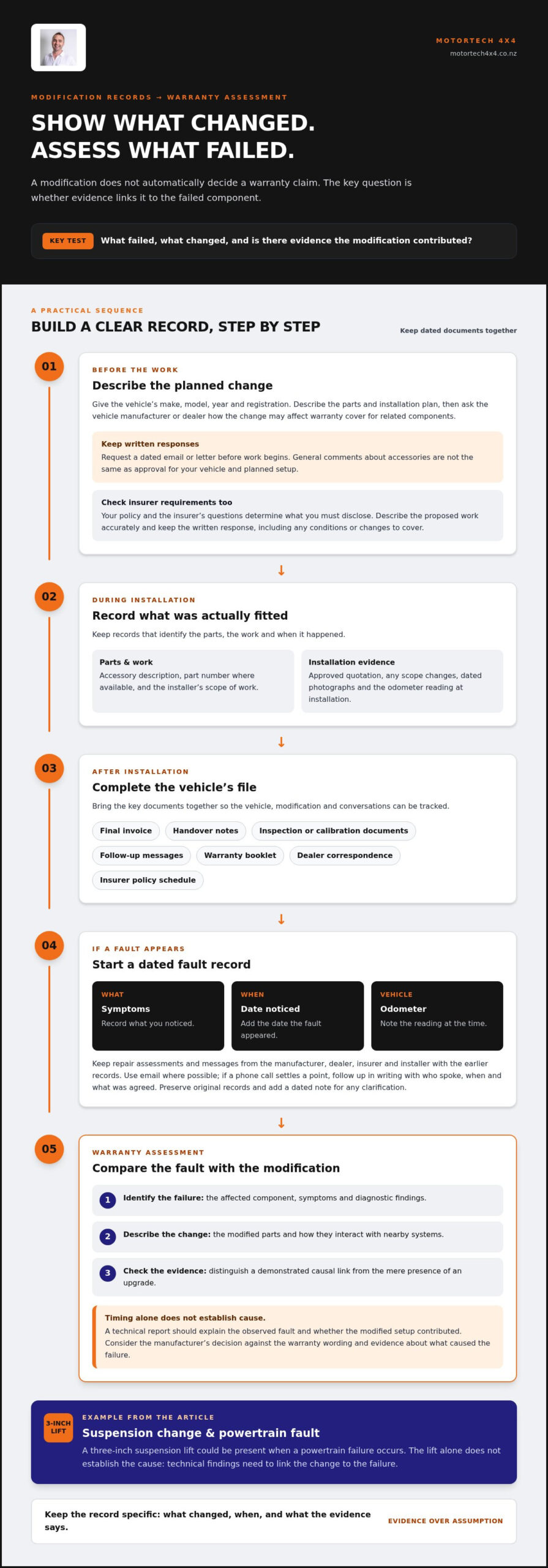
Keep dated records from your first modification enquiry through installation and any later warranty claim. A clear file links the vehicle, the work and each conversation.
Disclosing modifications to insurers
Your New Zealand motor policy and the insurer’s questions determine what you must disclose about modifications. Policy wording varies, so read the questions when applying, renewing or notifying the insurer of a change. Describe the proposed work accurately, such as a suspension change or added vehicle lighting. Keep the insurer’s written response with your policy documents, including any conditions or changes to cover.
Getting written approval
Written approval is a dated response from the vehicle manufacturer or dealer that addresses the specific modification. Provide the vehicle’s make, model, year and registration, then describe the parts and installation plan. Ask how the change may affect warranty coverage for related components. Request an email or letter before work begins, and save it with the quotation and installation record. General statements about accessories aren’t the same as approval for your vehicle and planned setup.
Build your file around identifiable records, not memory. Start with the manufacturer’s warranty booklet, dealer correspondence and insurer’s policy schedule. Add the accessory description, part number where available, installer’s scope of work and odometer reading at installation. For example, a lighting modification file should identify the lights, their position and the work completed. Keep invoices, photographs and any inspection or calibration documents with those details.
- Before installation: save the written request, the vehicle details supplied and the manufacturer, dealer or insurer response.
- During installation: retain the approved quotation, changes to the scope and dated photographs of the work.
- After installation: file the final invoice, handover notes and any follow-up messages about operation or faults.
Use email where possible to preserve dates and exact wording. If a phone call settles a point, follow up with a short email recording who spoke, when and what was agreed. Keep the response too. A note saying “dealer approved” doesn’t show whether approval covered a specific component or only a general discussion.
If a fault arises later, record its symptoms, the date you noticed them and the vehicle’s odometer reading. Keep repair assessments and messages from the manufacturer, dealer, insurer and installer together. This chronology helps distinguish what was authorised, what was installed and what each party said about the fault. Don’t alter original records; add a dated note if you need to clarify an entry.
Warranty claims when modifications cause or contribute to a fault
A modification matters to a warranty claim when evidence links it to the failed component. The fault, the changed parts and the vehicle’s warranty terms all shape the assessment.
An unrelated modification alone doesn’t explain a separate fault. Consider the manufacturer’s decision against the warranty wording and evidence about what caused the failure.
No single modification automatically determines whether a claim is covered in New Zealand. The relevant questions are what failed, what changed and whether the modification contributed to the fault.
Modifications that affect warranty cover
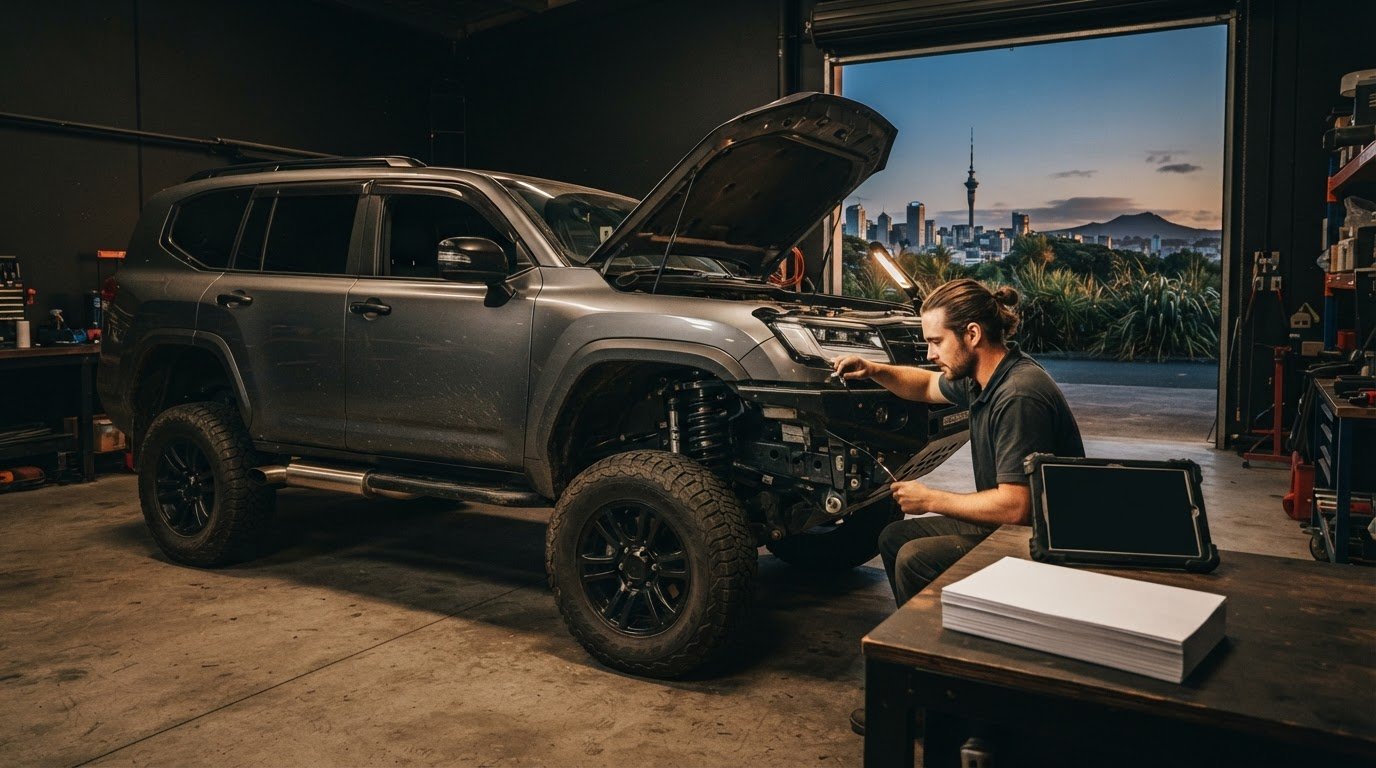
A modification may affect warranty cover when it changes a system connected to the part that later fails. That connection matters: a claim about altered suspension differs from one about an unrelated component. For example, a three-inch suspension lift could accompany a powertrain failure. Its presence alone doesn’t establish the cause; technical findings need to link the lift to the failure.
First consider the failed part and the modification separately. A fault in a modified system calls for close examination of the parts, installation and operating conditions. A fault elsewhere still needs diagnosis, not an assumption that every claim is excluded. The vehicle warranty sets out the manufacturer’s terms, while an assessment can identify how the failure occurred.
- Identify the failure: record the affected component, symptoms and diagnostic findings.
- Describe the modification: note the changed parts and how they interact with nearby systems.
- Compare the evidence: separate a demonstrated causal link from the mere presence of an upgrade.
If a powertrain fault follows a suspension change, for example, ask how the diagnosis links the two. Timing alone doesn’t establish causation. A technical report should explain the observed fault and whether the modified setup contributed. Keep that reasoning with the claim correspondence so the decision can be assessed against specific evidence, rather than broad statements about modifications.
Risks of DIY modifications
DIY modifications are changes fitted or altered by the vehicle owner rather than a professional installer. Incorrect wiring, fastening or calibration can create safety issues, complicate diagnosis and make the vehicle harder to assess at resale. Those risks matter because a later fault can be difficult to trace when the work has no clear scope or installation record.
A home-fitted lighting change, for example, can leave uncertainty about wiring and connections if a related electrical fault appears. Buyers can also ask for evidence of what was changed and how it was completed. For vehicle lighting changes, review the vehicle lighting options as part of planning the modification.
DIY work can also blur responsibility if the vehicle develops a fault. Keep dated records of the parts used, work performed and any later changes. If an assessment identifies a safety concern, don’t treat a passed road test as proof that every installation detail is correct. A documented professional assessment gives clearer information about the work and affected systems.
Disputes between vehicle manufacturers and accessory installers
A warranty dispute can arise when a manufacturer and an accessory installer disagree about what caused a vehicle fault. Each may focus on different evidence; the key issue is how the installed accessory relates to the failed component.
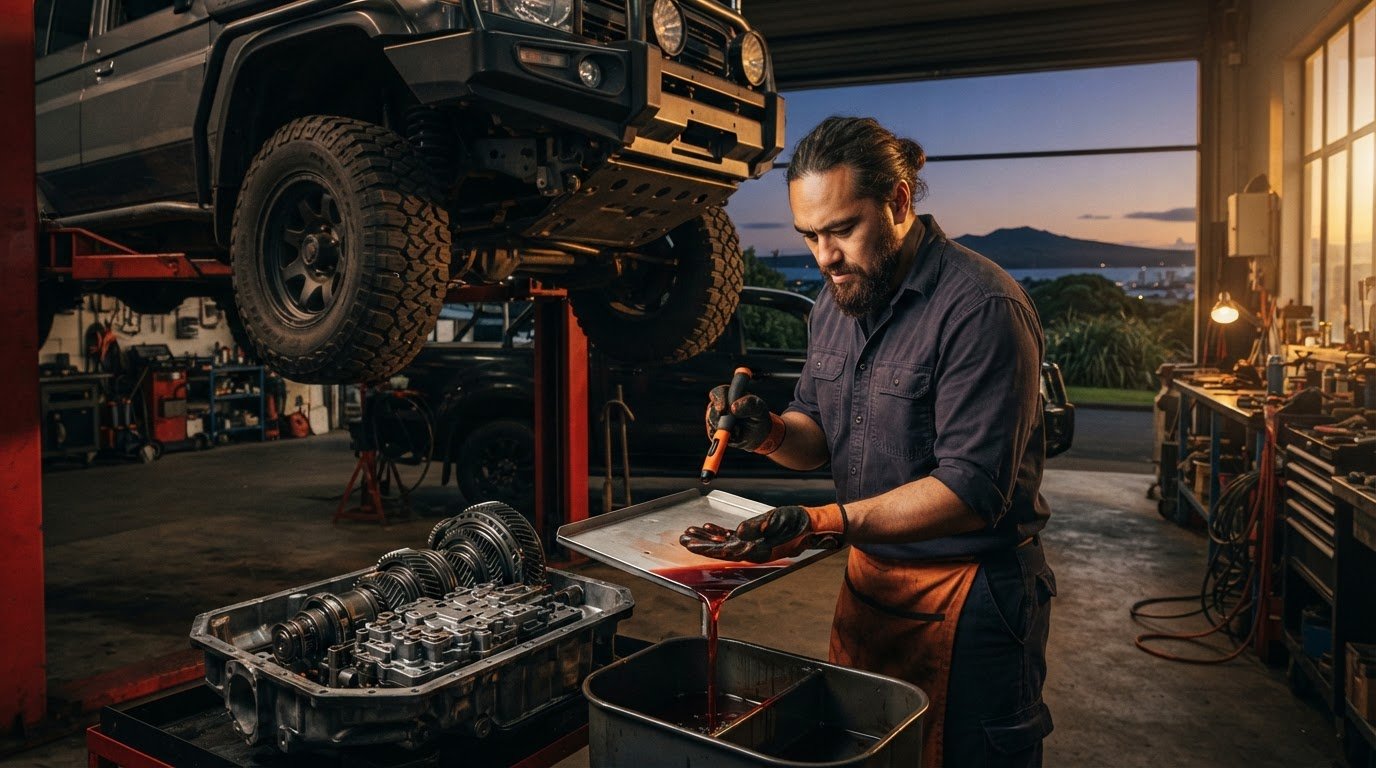
The manufacturer alleges that accessories restricted airflow to the transmission oil cooler, contributing to overheating and failure. The installer disputes this, saying the accessories were fitted as specified and didn’t obstruct the cooler. These opposing claims are starting positions, not a diagnosis. Technical evidence needs to establish whether airflow was restricted and how that affected the transmission.
Separate the questions before assessing responsibility. What failed? Which accessories were installed, and where? What evidence links their position or operation to the failure? A transmission fault alone doesn’t establish that an accessory caused it. Equally, an installation invoice alone doesn’t show that the setup couldn’t have contributed.
A focused assessment should describe how the failure occurred, rather than rely on broad statements such as “the accessories caused it” or “the installation was correct”. In the cooler example, useful findings would address the alleged airflow restriction and its connection to the transmission fault. The report should identify the parts examined, the observations and the reasoning behind its conclusion. This gives both parties something specific to respond to.
Organise the dispute file around the same vehicle and installation. Include the accessory specification, installation scope, relevant photographs, diagnostic findings and each party’s written explanation. Mark which statements are established facts and which are disputed opinions. For example, “the cooler opening was partly obscured” is an observation only if inspection evidence supports it. Whether that obstruction caused the failure requires a separate explanation.
- Ask for the basis: record the component said to have failed and the evidence supporting that conclusion.
- Compare accounts: set the manufacturer’s explanation beside the installer’s description of the fitted setup.
- Identify gaps: note unanswered questions about fitment, airflow or the failure mechanism.
- Keep responses together: retain technical reports and written replies in date order.
Clear, specific questions can move the discussion beyond blame. Ask each party to address the same failure mechanism and explain the evidence supporting its position. A reasoned assessment gives the warranty decision a firmer factual basis.
Engine tuning, exhaust changes and DPF failures
Engine tuning and exhaust changes alter how engine and emissions systems operate. If a fault follows an ECU remap, exhaust change or DPF alteration, diagnosis needs to identify the affected component and the modification’s role.
For owners researching “warranty-safe vehicle modifications NZ”, the practical test is how a tune or exhaust change interacts with the affected system. An ECU remap changes engine-control settings, which can affect fuelling, boost pressure and engine load. These settings interact with components such as the turbocharger, injectors and cooling system. If a turbocharger fault appears after tuning, the key issue is whether the changed calibration contributed. The remap alone doesn’t explain how the fault occurred.
Exhaust changes also need to be assessed in context. A different exhaust configuration can alter how gases move through the system, while related sensors provide information to the engine control unit. For example, a warning light after exhaust work calls for a scan of stored fault codes and an inspection of the affected sensors, wiring and exhaust components. A code identifies a system or condition to investigate; it doesn’t automatically prove which part caused the problem.
A diesel particulate filter, or DPF, traps soot from diesel exhaust and uses regeneration to burn accumulated soot. A blocked DPF, failed sensor or interrupted regeneration can cause similar symptoms, such as reduced engine performance. Distinguishing between these causes matters in a warranty assessment. Diagnostic findings should identify the DPF condition, relevant sensor readings and any changes to the exhaust or engine calibration.
DPF removal or alteration can make the cause of an exhaust-related fault harder to establish. A technician needs to determine what equipment remains, how the ECU has been configured and whether another fault contributed. Don’t treat a warning light or reduced power as proof of a single cause. Readings, inspection findings and the vehicle’s configuration help build a clear technical picture.
- Identify the system: record whether the concern involves engine calibration, exhaust flow, sensors or the DPF.
- Read the diagnostic evidence: note fault codes and measured values alongside the technician’s explanation.
- Connect modification and failure: establish how the changed setting or component relates to the failed part.
- Separate symptoms from causes: distinguish a warning message from the underlying mechanical fault.
For a claim involving a tuned diesel with a DPF fault, the assessment should address both the emissions system and engine calibration. A conclusion that simply blames “the tune” leaves unanswered which setting affected which component. Equally, a DPF warning doesn’t establish that an exhaust modification caused the problem. A fault-specific explanation gives the manufacturer and vehicle owner a clearer basis for considering the claim.
For warranty-safe vehicle modifications NZ owners should understand how a proposed setup interacts with sensors, regeneration and engine control. Keep the vehicle’s configuration and diagnostic findings clear, especially if a later fault involves the same systems. The relevant warranty question remains whether the modification is connected to the identified failure.
Getting LVV certification
LVV certification and a manufacturer’s warranty address different questions. Certification concerns the modified vehicle; a warranty claim concerns whether a fault is covered under the vehicle’s terms.
Whether a change needs LVV certification depends on the modification and its effect on the vehicle. A proposed change to suspension, steering, braking or vehicle structure warrants careful assessment before work begins. These examples aren’t a complete list of certification requirements. Assess the actual design and installation rather than assuming every accessory follows the same pathway.
Plan for certification as part of the modification, not as an afterthought. First, describe the intended work and identify the components it affects. Then establish whether certification applies before installation changes the vehicle. This allows the proposed setup to be assessed, rather than relying on incomplete information about work already finished.
- Describe the vehicle: record its make, model and current configuration.
- Define the change: identify the parts, their location and how they alter the vehicle.
- Keep technical details: retain specifications, installation documents and photographs.
- Record the outcome: file any certification documentation with the vehicle’s records.
For example, describe a suspension change by its components and how the resulting setup affects the vehicle. A parts invoice alone may not explain the installed configuration. Keep documents showing what was fitted and details of the completed vehicle. If the proposed design changes during installation, update the records to reflect the final arrangement.
Certification documents don’t decide a manufacturer warranty claim by themselves. If a later fault involves a modified component, the warranty assessment still concerns the fault and its connection to the modification. Keep certification records with warranty correspondence, diagnostic reports and installation documents. This allows the vehicle’s compliance history and the mechanical cause of a fault to be considered separately.
Certification planning shouldn’t be confused with written manufacturer approval. One concerns assessment of the modified vehicle; the other records the manufacturer’s position on warranty implications. Keep both records where relevant. For instance, a documented suspension assessment can describe the completed setup, while written warranty correspondence addresses how the manufacturer treats a related claim.
Before committing to suspension changes, organise the proposed components and vehicle details into a clear scope. This makes the modification easier to assess and document. Explore suspension modification options as part of planning your vehicle’s setup.
Motortech 4X4: Suspension Kits
Motortech 4X4 can help you consider Suspension Kits when planning a vehicle modification around your intended use. A clear plan for the vehicle and its setup gives you a practical basis for discussing components, installation and records.
For a broader fit-out, Motortech 4X4 also offers Bullbars, Snorkels and GVM Upgrades. Keep the selected components and work details with your vehicle documents, and consider how each change may affect other systems. This helps you keep modification records organised if a related fault needs assessment later.
Contact Motortech 4X4 to discuss your vehicle modification requirements.
Plan your next modification with confidence
For warranty-safe vehicle modifications in NZ, take a considered approach before proceeding. Match the proposed change to how you use your vehicle, and be clear about its purpose. This gives you a practical basis for planning the work and discussing how it may affect related systems.
If you’re considering Suspension Kits, Bullbars or Snorkels, Motortech 4X4 can help you explore options for your vehicle. A useful next step is to outline your intended setup and the work you’re considering, so the conversation can focus on the right components and installation requirements.
Careful planning won’t remove every warranty question, but it can help you approach modifications with clearer expectations and organised records. Contact Motortech 4X4 for advice about your vehicle modification plans, and take your next step with a clearer direction.
Frequently Asked Questions
Want more info on modifying your vehicle?
Start by defining what you want the vehicle to do, then identify the changes that support that use. A touring setup, for example, may involve different components from a work vehicle build. In Auckland, Motortech 4X4 offers modifications and accessories including Suspension Kits, Bullbars and Snorkels. Bring a clear outline of your intended use and vehicle configuration to make a discussion about suitable options more focused.
What does New Zealand consumer law say about modified vehicles and warranty claims?
A vehicle modification doesn’t automatically determine whether a warranty claim or consumer-law remedy applies. Relevant issues include the vehicle’s condition, the fault, the terms of any warranty and whether the modification contributed to the problem. A disagreement about warranty coverage isn’t, by itself, proof that an accessory caused a fault. Keep the diagnosis and written decision so you can assess the specific reasons.
Which vehicle modifications require LVV certification or a WOF inspection in New Zealand?
LVV certification and a WOF inspection are separate considerations, and the required pathway depends on the vehicle change. A modification affecting the vehicle’s structure or key systems may need closer compliance assessment than a simple accessory addition. Before work begins, describe the proposed change and its effect on the vehicle, then establish which assessment applies. Don’t treat a current WOF as confirmation that every later modification has been assessed.
Are aftermarket wheels, tyres, suspension, exhausts, or engine tunes warranty-safe in NZ?
None of these modifications is automatically warranty-safe in every situation. The key question is whether the specific change caused or contributed to the component failure in a claim. For example, a tyre change doesn’t explain an unrelated electrical fault without evidence linking them. With suspension, exhaust or engine tuning, the relationship between the altered system and failed part is central. Keep exact component details with any fault diagnosis.
What evidence should I keep when modifying a vehicle under warranty in NZ?
Keep evidence showing the vehicle’s condition before and after the work, including dated photographs of relevant areas. Save product specifications, the final installation scope and any changes made during fitting. If a warning light appears later, record when it started and the conditions in which it occurs, such as during acceleration or a cold start. These observations can help a technician reproduce the issue and distinguish symptoms from their cause.