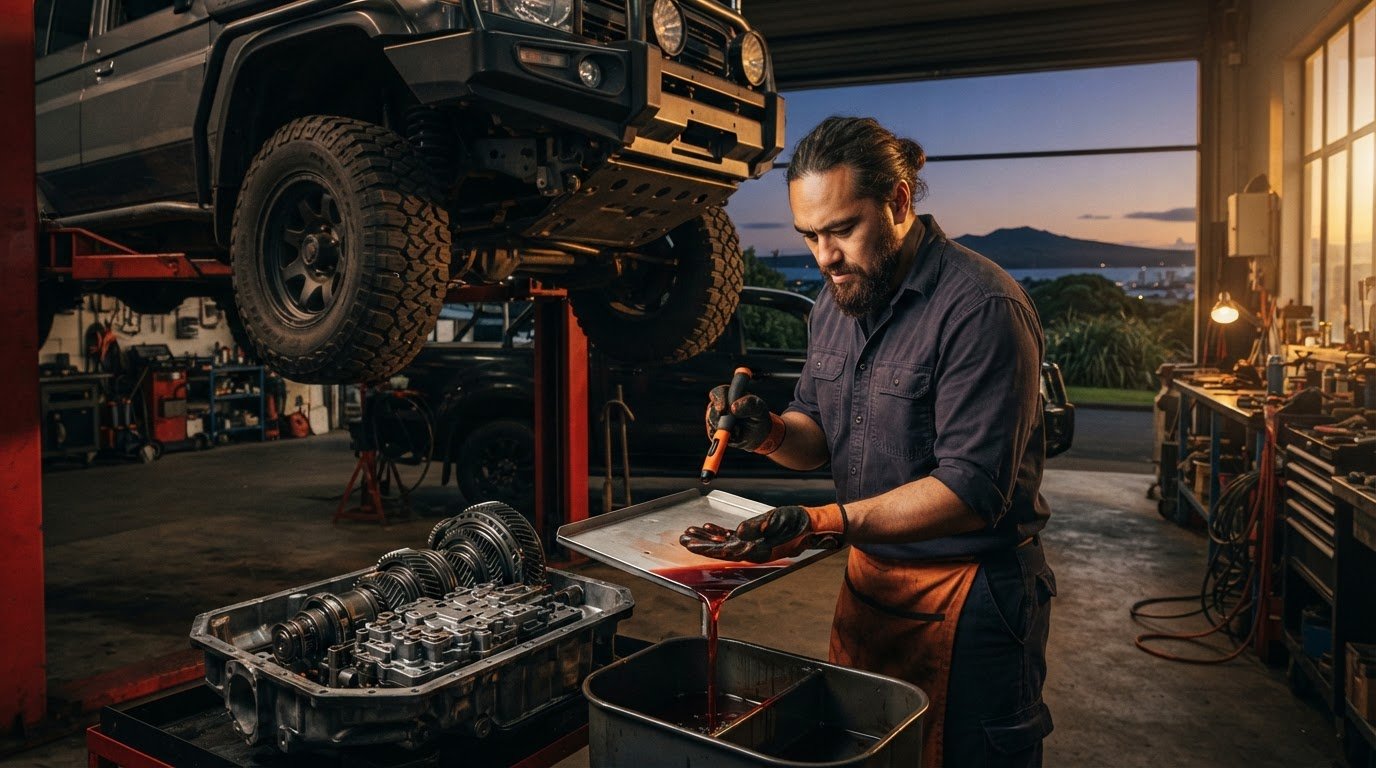
A transmission flush can be the wrong fix for a transmission that is already compromised. Changes in fluid condition or shifting behaviour can be reasons to have the transmission checked, but they do not by themselves show that a flush is needed. These symptoms can point to a fluid problem, but they do not automatically mean a flush is the safest solution.
Transmission fluid lubricates moving parts and helps carry heat away, so its condition affects how the transmission operates. A flush may seem like a straightforward way to clear out old fluid, but both the method and the transmission’s condition matter.
This guide explains what transmission fluid does, which symptoms to watch for and when a flush may help. It also explains why forcing fluid through a transmission with accumulated debris or existing damage can cause further problems, helping you make a more informed decision about the next step.
Key Takeaways
- Transmission fluid lubricates moving parts and helps cool the transmission, so its condition can affect how reliably it operates.
- Discoloured fluid or a burnt smell can signal that the fluid has deteriorated and needs attention.
- Delayed acceleration, slipping or difficulty shifting can point to transmission trouble, but symptoms alone don’t show whether a flush is the right fix.
- A flush replaces the transmission’s fluid, but it can’t repair worn or damaged components.
- Flushing a compromised transmission can disturb debris and make problems worse, so identify the cause of symptoms before choosing a service.
1. What Does Transmission Fluid Do?
Transmission fluid has two essential jobs: lubricating moving components and helping carry heat away. Gears, bearings and other internal parts rely on an adequate fluid supply while the transmission operates. Manual, automatic and continuously variable transmissions all need suitable fluid levels to work properly. Fluid types and checking procedures vary between vehicles, so follow the vehicle’s service information rather than assuming every transmission is checked the same way.
Fluid condition can offer useful clues. Fresh fluid is generally clear enough to inspect, while discolouration or a burnt smell can indicate deterioration or excessive heat. Fluid that is difficult to see through or smells burnt is a reason to consider an inspection and fluid service. These signs can guide an assessment, but they do not identify the cause of a transmission fault by themselves.
Start with the vehicle’s specified checking procedure. Some vehicles have a dipstick; others require a different method, so follow the service instructions for your model. Check the level and inspect the fluid’s appearance and smell if the procedure allows. A low level can affect operation, while old or contaminated fluid may no longer protect components as intended. Check transmission fluid monthly for clarity and smell.
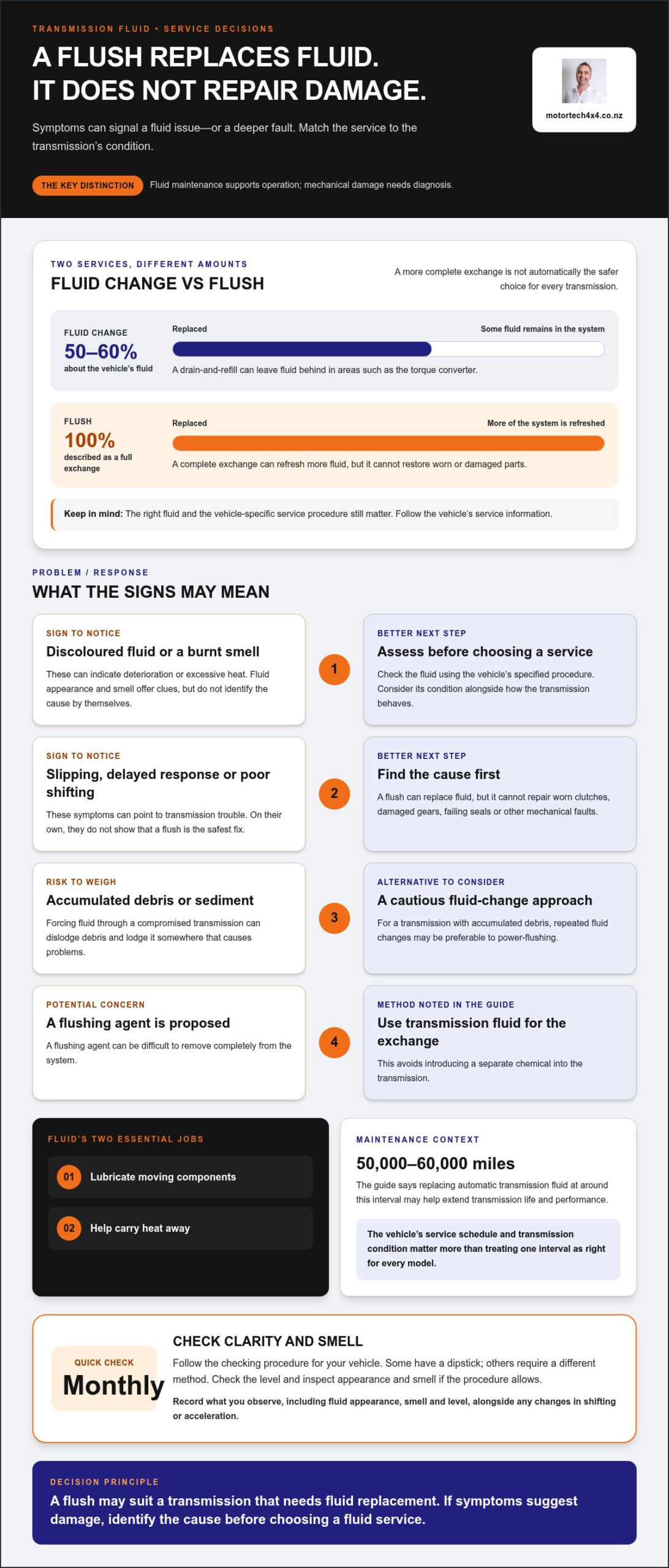
Replacing old fluid is maintenance, not a repair for damaged transmission parts. A transmission fluid change replaces about 50%-60% of the vehicle’s fluid. That can refresh a substantial portion of the fluid, while some remains inside the system. A flush is described as replacing 100% of the transmission fluid. The difference matters because a flush is a more complete exchange, not simply another name for a drain-and-refill.
Choose a service by considering fluid condition, symptoms and the vehicle’s service schedule. For example, burnt-smelling fluid alongside slipping gears calls for more than a visual check: the transmission’s overall condition needs assessment. A flush may suit a transmission that needs fluid replacement, but it should not be the automatic response to every symptom. A fluid change or flush can replace fluid, but neither restores worn components.
Signs you need a transmission flush can include discoloured or burnt-smelling fluid, but consider them alongside how the vehicle drives. Record what you observe, including the fluid’s appearance, smell and level, then note any changes in shifting or acceleration. This information helps distinguish a fluid-service need from a deeper transmission problem. Follow the model’s service schedule and specified fluid requirements when planning maintenance.
2. Benefits and limitations of a flush
A flush replaces old transmission fluid throughout the system, helping restore the fluid’s role in lubrication and cooling. That can be useful when fluid has deteriorated but the transmission itself remains serviceable. Replacing automatic transmission fluid at around 50,000 to 60,000 miles may help extend transmission life and performance. The vehicle’s service schedule and transmission condition matter more than treating one interval as suitable for every model.
Fluid-exchange equipment can regulate old fluid leaving the vehicle as new fluid enters. With the engine running, the transmission circulates fluid through its normal operating paths. This differs from draining and refilling, which can leave fluid behind in areas such as the torque converter. A complete exchange can refresh more of the system, but the correct fluid and vehicle-specific service procedure are still essential.
A flush has limits. It cannot repair worn clutches, damaged gears, failing seals or other mechanical faults. If symptoms stem from internal damage, replacing the fluid will not restore those components. The transmission may still slip or shift poorly after servicing because the underlying fault remains. Fluid maintenance supports operation; mechanical damage requires diagnosis beyond fluid replacement.
The method matters, too. Excessive force can dislodge debris and lodge it somewhere that causes problems. A transmission with accumulated sediment may be better suited to a cautious fluid-change approach than an aggressive power flush. A flushing agent creates another concern because it can be difficult to remove completely. Using transmission fluid for the exchange avoids introducing a separate chemical into the system.
Before authorising a flush, match the proposed work to the vehicle’s service schedule, fluid specification and symptoms. A vehicle with no shifting problems and scheduled fluid maintenance presents a different case from one with burnt-smelling fluid and slipping gears. In the second case, a flush alone may overlook damage that needs attention first. The benefit is refreshed fluid; the limitation is that fluid exchange cannot identify or repair every transmission fault.
A well-chosen fluid service can support transmission performance, but the process needs to suit the unit’s condition. If the vehicle has accumulated debris, repeated fluid changes may be considered instead of power-flushing. For a transmission with accumulated debris, repeated fluid changes may be preferable to power-flushing. That approach highlights why service decisions should consider contamination and transmission behaviour, not just the appeal of replacing all the fluid.
3. Delayed acceleration
Delayed acceleration means the vehicle responds slowly after you press the accelerator. For example, you pull away from a stop, but the vehicle moves only after a noticeable pause. Similar hesitation can occur when accelerating to merge or climb a hill. Transmission-fluid contamination can restrict flow and affect how the transmission operates. Record recurring hesitation, especially if it occurs during ordinary driving.
Pay attention to how the engine and vehicle behave together. If the engine revs but the vehicle gains speed slowly, note the circumstances and whether the transmission seems to engage late. If the engine also struggles to rev, the symptom may involve something other than transmission fluid. This comparison does not diagnose the fault, but it gives a mechanic a clearer description than simply reporting poor acceleration.
Record the conditions when the delay occurs. Note whether it happens from a standstill, after selecting drive, or while accelerating at road speed. Include whether the vehicle was cold or already warm, and whether the delay happened once or repeatedly. These details help distinguish an isolated moment from a consistent change in transmission behaviour. Also note any slipping, surging or unusual sounds at the same time.
Contaminants in transmission fluid can obstruct flow and may cause the vehicle to surge or lunge forward. Delayed acceleration alongside these abrupt movements deserves attention because fluid may not be flowing as intended. A flush replaces fluid, but it cannot correct damaged components or identify every cause of hesitation. The vehicle’s service history and symptom pattern matter when deciding what work is appropriate.
Start by keeping a record rather than booking a flush based on one slow response. Check the vehicle’s service information for the correct transmission-fluid inspection procedure, then note the level and visible condition if the procedure allows. Do not assume every model has a dipstick or uses the same checking method. Compare your observations with the service schedule and report the exact driving conditions that trigger the delay.
A delayed response can be one of the signs you need a transmission flush, particularly when it accompanies poor fluid condition. However, it is a symptom to investigate, not proof that flushing is the right remedy. If the vehicle also slips, surges or struggles to engage a gear, those combined clues help determine whether fluid service or further diagnosis should come first.
4. Difficulty shifting gears
A healthy transmission should shift gears quickly and smoothly. A pause, sudden jolt or change in engine speed can indicate a problem worth investigating. In an automatic, note hesitation when selecting drive from park, delayed gear changes while moving, or slipping when engine revs rise without matching acceleration. In a manual, record difficulty selecting a gear or grinding during a shift. These examples help describe what has changed.
Fluid condition can contribute to shifting problems. Old or ineffective fluid may no longer support normal transmission operation, while contaminants can interfere with its flow. Hard shifts, hesitation when moving from park to drive and slipping can be signs of neglected fluid maintenance. However, the same behaviour can also reflect a mechanical fault. A flush replaces fluid; it does not repair worn or damaged transmission components.
Track the symptom before deciding on a service. Note which gear is involved, whether the vehicle is stationary or moving, and whether the behaviour happens every time. For example, write down if selecting drive produces a pause each morning, or if the transmission slips during acceleration after a longer trip. Record any grinding noise, surging or delayed response at the same time. A clear pattern is more useful than a general report of rough shifting.
Check the vehicle’s service schedule and follow its specified fluid-checking procedure. Transmission designs differ, so do not assume every vehicle has a dipstick or uses the same method. If the procedure allows you to check the level and condition, note what you find, including discolouration or a burnt smell. Those observations, paired with the shifting pattern, help assess whether maintenance is overdue or the transmission needs further diagnosis.
Be cautious about treating a flush as the automatic answer to difficult shifts. If the transmission is already compromised, flushing it is not recommended. A flush cannot restore damaged parts, and forceful flushing can disturb debris. If the vehicle has severe slipping, repeated grinding or a persistent delay engaging drive, identify the fault before choosing a fluid service.
Use the signs you observe to make a practical record: the gear affected, the conditions, how often it occurs, and any fluid changes or previous transmission repairs. For instance, hard shifting combined with burnt-smelling fluid suggests a different concern from one isolated hesitation with no other symptoms. That distinction helps separate a possible fluid-maintenance issue from a transmission problem requiring broader assessment.
5. Risks of flushing a compromised transmission
A flush cannot repair internal transmission damage. If a vehicle already slips, struggles to engage drive, grinds or surges, flushing it can be the wrong next step. The key concern is accumulated debris: forceful fluid movement can dislodge sediment and lodge it elsewhere in the transmission. This may restrict flow or interfere with components that were still operating.
Symptoms need context. Burnt-smelling fluid alongside repeated slipping, for example, raises a different concern from old fluid without shifting problems. A flush can replace fluid, but it cannot restore worn clutches, repair damaged gears or correct a failing seal. If mechanical wear is affecting operation, changing the fluid does not remove the underlying fault.
See a mechanic before attempting a flush if the transmission slips, grinds, surges or repeatedly hesitates when engaging a gear. A mechanic can assess the symptoms and fluid condition before choosing between a flush, another service or further diagnosis.
DIY flushing also carries process risks. Transmission designs use different fluid specifications and service procedures, so the wrong fluid or method can cause problems. A power flush that applies excessive force can move debris through narrow passages. A separate flushing agent can leave residue if it is not fully removed. Use only the transmission fluid specified for the vehicle, and avoid introducing chemicals into the system.
Before any service, write down the symptoms and when they occur. Note whether slipping happens during acceleration, whether drive engages after a pause, and whether grinding occurs during a particular gear change. Include the fluid’s appearance and smell if you have checked them using the vehicle’s specified procedure. This record helps distinguish a maintenance need from a transmission that is already compromised.
The practical rule is straightforward: do not use a flush to test whether a failing transmission can be rescued. Persistent shifting faults, burnt fluid or debris call for an assessment before fluid exchange. A flush is appropriate only when it suits the vehicle’s condition and service requirements. Choosing the wrong procedure can disturb sediment without fixing the cause of the symptoms.
If inspection shows that fluid exchange is suitable, arrange a transmission flush service using the vehicle’s correct fluid and procedure. If the transmission is compromised, prioritise diagnosis rather than flushing; replacing fluid alone won’t repair internal damage.
Motortech 4X4: Suspension Kits
Motortech 4X4 offers Suspension Kits for drivers planning changes to their vehicle’s suspension setup. A suspension kit won’t address transmission fluid or shifting faults, so treat it as a separate consideration after resolving any transmission concerns.
For a broader 4×4 setup, Motortech 4X4 also offers Bullbars, Snorkels and GVM Upgrades. These options serve different vehicle requirements, such as planning a modification or preparing a vehicle for its intended use. Choose them based on your vehicle project, not as a substitute for transmission diagnosis or maintenance.
If you’re planning a 4×4 modification, contact Motortech 4X4 to discuss the relevant options.
Make the next step a considered one
Use the signs you have noticed to guide a practical decision, rather than assuming a flush will solve every transmission problem. Signs you need a transmission flush are useful clues, but persistent slipping, grinding or engagement problems call for investigating the cause before exchanging fluid. Whether a flush is suitable depends on the transmission’s condition and service requirements.
For transmission-flush advice, contact Motortech 4X4 and describe what the vehicle is doing, when it happens and any fluid changes you’ve observed. That gives the conversation a useful starting point. If you’re also planning a separate 4×4 build, Motortech 4X4 offers Suspension Kits, Bullbars and Snorkels. Keep those upgrades distinct from transmission diagnosis, and address the mechanical concern first.
A clear account of the symptoms helps you take the next step with purpose. Start with those details and make a considered plan for your vehicle.
Frequently Asked Questions
What Does Transmission Fluid Do?
Transmission fluid lubricates and cools internal parts. In automatic transmissions, it also helps transmit hydraulic pressure for gear changes, engaging the appropriate components as the vehicle moves between gears. A delay when selecting drive can make fluid condition relevant, but it does not prove fluid is the cause. Manual, automatic and continuously variable transmissions use different designs and fluid requirements.
What Is A Transmission Flush and Does My Car Need It?
A transmission flush is a fluid exchange intended to replace all the transmission fluid, rather than draining and refilling only part of it. Whether your car needs one depends on its manufacturer’s service schedule, fluid condition and transmission behaviour. A flush is maintenance, not a treatment for worn or damaged parts. If the car has persistent shifting problems, identify the cause before choosing a fluid service.
What are the common signs of low or dirty transmission fluid?
Low or dirty transmission fluid can be associated with slipping, delayed engagement, difficult shifts, surging or unusual transmission noise. Look for a pattern, such as hesitation that repeatedly occurs when selecting drive, rather than relying on one isolated moment. A leak may also explain a low level. Use the vehicle’s specified checking method, because the correct procedure and fluid level vary between models.
Can slipping gears, delayed shifting, or rough shifts indicate a transmission problem?
Yes. Slipping, delayed shifts and rough gear changes can indicate a transmission problem, including a fluid-related issue. Note whether engine revs rise without a matching increase in road speed, or whether a shift jolts the vehicle. Record when the symptom occurs and which gear is involved. These details help distinguish a recurring fault from a one-off change in driving conditions.
Can unusual transmission noises or a burning smell mean the fluid needs changing?
Yes. A burnt smell can indicate overheated or deteriorated fluid, while grinding or other unusual noises can signal a transmission fault. Neither clue identifies the problem on its own. Note whether the smell follows driving, whether the noise occurs during a particular gear change, and whether performance has changed. A noise paired with slipping or delayed engagement deserves more attention than a sound heard once.
Does dark or burnt-smelling transmission fluid mean a flush is needed?
Dark or burnt-smelling fluid warrants attention, but it does not automatically mean a flush is the right service. The transmission’s operating condition matters: a unit with slipping, grinding or engagement problems may be compromised, and flushing it can disturb debris. Check the service schedule and fluid condition using the vehicle’s specified procedure. The decision should distinguish routine fluid replacement from a fault that needs diagnosis.
How can I check transmission fluid safely, and do all cars have a dipstick?
No, not all cars have a transmission-fluid dipstick. Some models require a different inspection procedure, so consult the owner’s manual before checking. Follow its instructions for the vehicle’s position, engine state and fluid-temperature requirements; these details affect the reading. Do not reach near moving engine parts, and do not get beneath a vehicle supported only by a jack. If the procedure requires equipment, leave the check to a mechanic.
When should transmission fluid be changed according to the vehicle manufacturer?
Use the interval and procedure in your vehicle’s manufacturer service schedule, because requirements vary by transmission and model. Check the schedule for the specified fluid type and whether it calls for an inspection, fluid change or another service. Driving conditions and towing may also affect maintenance needs if the manufacturer’s guidance addresses them. Keep service records so the next fluid check can be planned against the vehicle’s history.