Could the best ute security setup for your work start with making tools less visible, rather than adding more equipment? Choosing ute security solutions Auckland drivers can use effectively means matching storage and access to the vehicle, the gear it carries and where it’s parked between jobs. A generic fit-out can make tools awkward to reach or leave valuable equipment exposed.
It’s understandable to want tools secure and organised without making every stop in the workday harder. Canopies and hardlids can form part of a considered setup, but the right choice depends on your ute, load and daily routine. No single storage option guarantees protection from theft.
This guide compares practical ways to protect and organise tools, explains what to weigh up when choosing covered storage, and shows how to plan around your vehicle and Auckland working conditions. You’ll also see how a vehicle-specific fit-out can balance security, access and everyday practicality. Motortech 4X4 is an Auckland 4×4 specialist offering canopies, hardlids and fleet fit-outs.
Key Takeaways
- Start with an inventory of the tools and equipment you carry, then prioritise what needs to be secured, organised or kept out of sight.
- Compare lockable and covered storage with broader electronic-security categories, considering how each may affect visibility and access.
- Choose ute security solutions Auckland workers can use day to day by weighing vehicle compatibility, work routines and parking conditions.
- Assess capacity, access and load handling before settling on a canopy or hardlid as part of your fit-out.
- Motortech 4X4’s Auckland expertise, canopies, hardlids and fleet fit-outs can help shape a considered setup around your vehicle’s intended work.
Ute security solutions in Auckland: start with what you need to protect
Protecting work gear matters, but a setup that slows every pickup or makes frequently used tools hard to reach can quickly become frustrating. The right ute security solutions Auckland operators choose depend on three practical factors: the vehicle, the equipment it carries and where it spends time parked. Start with your own workday, not a generic list of accessories.
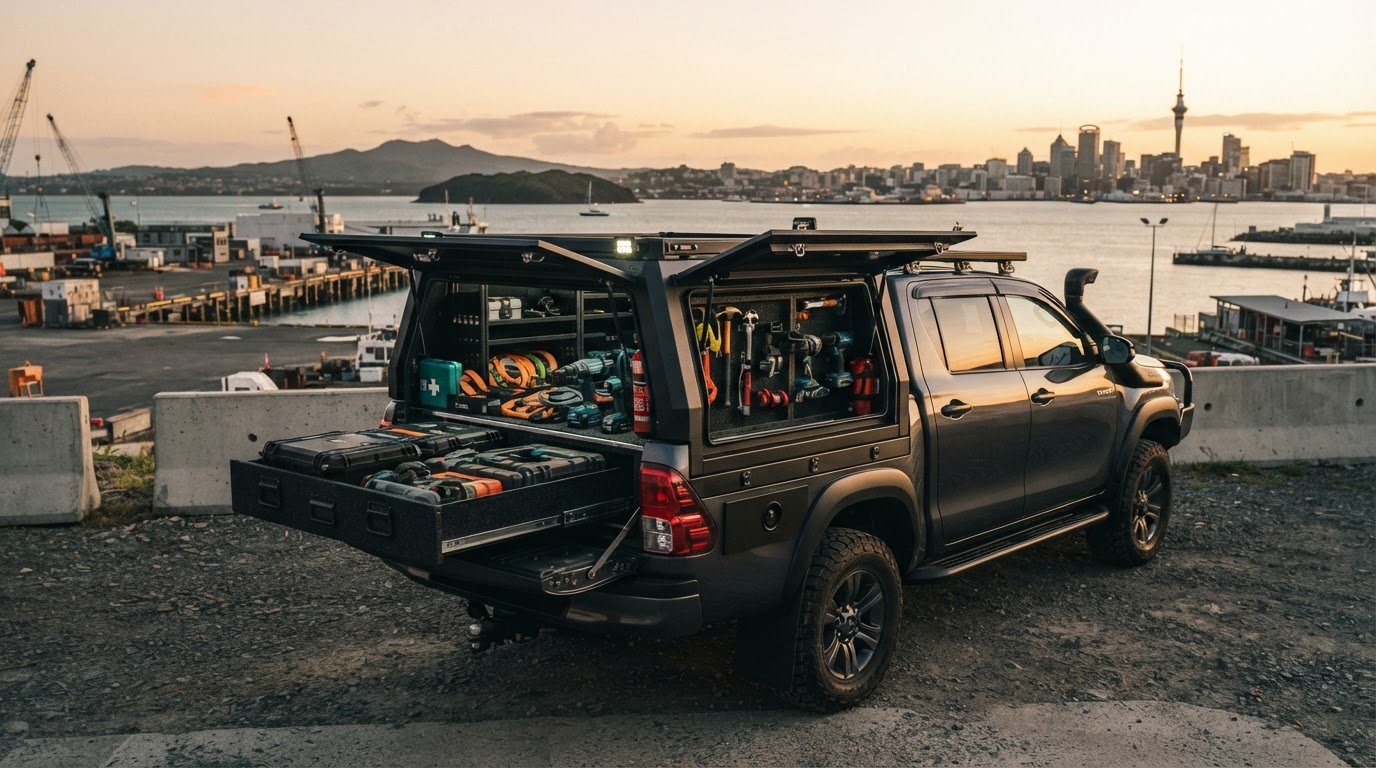
Separate two aims: reducing the visibility of valuable gear and controlling access to stored items. Covered storage, including a canopy or hardlid, can help keep equipment out of sight. An organised storage layout can also make it easier to manage what you carry and reach during the day. These measures can support a considered security plan, but no storage option guarantees theft prevention.
A vehicle-specific, layered security approach matches storage and access choices to the ute, its load and the way it’s used. Consider how different measures work together, rather than assuming one accessory will suit every risk. For a broad overview of approaches, Car security measures provides useful context. For a ute, the practical question is how those ideas relate to its load area and work routine.
Which gear and work situations need the most attention?
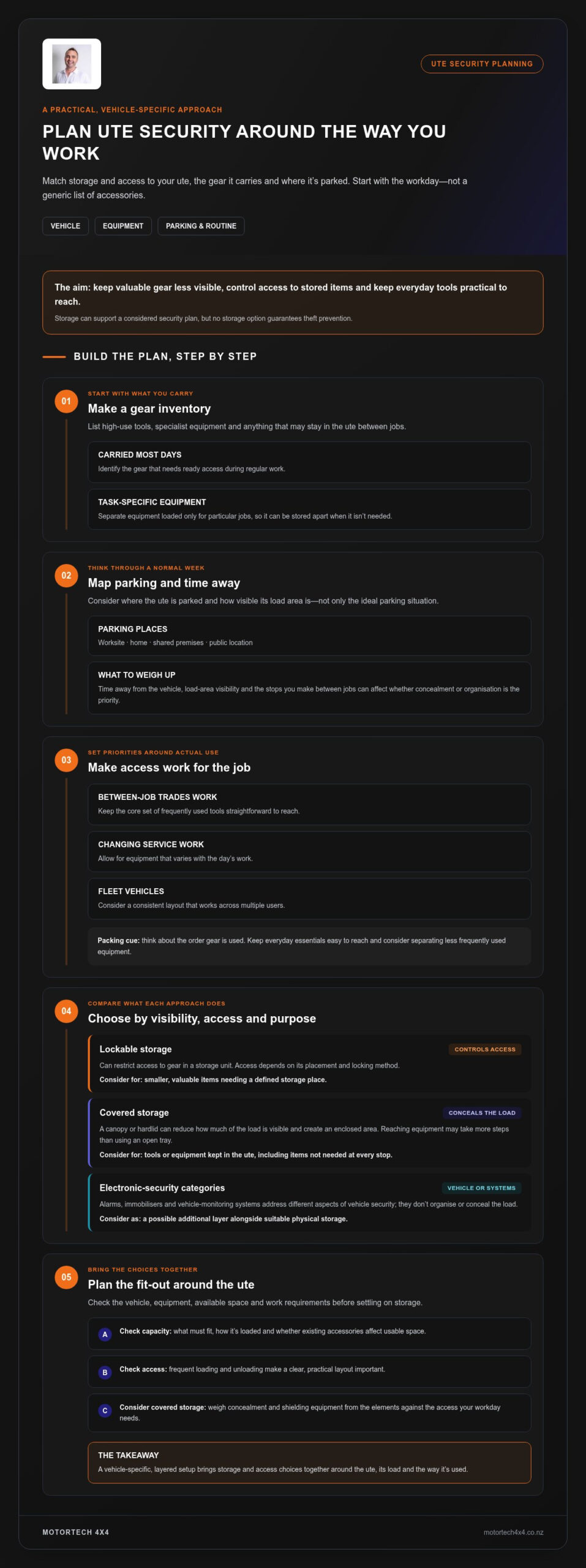
Make a simple inventory before comparing storage options. Note high-use tools, specialist equipment and anything that may be left in the vehicle between jobs. Then divide the list into two groups: gear carried most days and equipment loaded only for particular tasks. This clarifies what needs ready access and what could be stored separately when it isn’t required.
Next, consider where the ute is parked: at a worksite, at home, on shared premises or in a public location. Time away from the vehicle and visibility of the load area may affect whether keeping equipment covered or improving everyday organisation is the priority. Think through a normal week, including stops between jobs, rather than planning around one ideal parking situation.
How does ute use shape a practical security plan?
A tradesperson moving between jobs may need regular access to a core set of tools. A service operator could carry different equipment depending on the day’s work, while a fleet vehicle may need a consistent layout that works across multiple users. These uses call for different priorities: one storage arrangement won’t automatically suit every ute or operator.
Frequent loading and unloading make easy access and a clear layout particularly important. If gear is used in sequence, consider how it’s packed and whether less frequently used equipment can be kept separate from everyday essentials. Also account for the vehicle type, existing accessories and work requirements. These can affect available space and how a fit-out should be planned as a complete vehicle setup.
Taking these details into account gives you a useful starting point for comparing storage types and fit-out options. Motortech 4X4 can incorporate canopies and hardlids into a setup planned around the ute’s intended work.
Compare ute security solutions: storage, visibility and access
Different measures address different parts of the problem. Lockable storage controls access to selected gear, covered storage reduces how much of the load is visible, and electronic-security categories focus on the vehicle or its systems. These measures can be considered together, but none guarantees that a ute or its contents won’t be stolen. Compare each option against the equipment you carry, how quickly you need to reach it and the space available in your vehicle.
The table compares broad market categories to help identify trade-offs before planning a vehicle-specific setup.
| Approach | Visibility and access | Consider it for |
|---|---|---|
| Lockable storage | Can restrict access to gear in a storage unit, while access depends on its placement and locking method. | Smaller, valuable items that need a defined storage place. |
| Covered storage | Can conceal the load from view and create an enclosed area, though reaching equipment may take more steps than using an open tray. | Tools or equipment that need to remain in the ute, including items you don’t need at every stop. |
| Electronic-security categories | Alarms, immobilisers and vehicle-monitoring systems address different aspects of vehicle security; they don’t organise or conceal the load. | Operators considering an additional layer alongside suitable physical storage. |
For a general reference on layered theft-prevention approaches, see NICB vehicle theft prevention strategies. The advice is broad, so apply it to your ute, its storage and work routine rather than treating it as a specific product recommendation.
Canopies and hardlids: compare storage against everyday access
Covered storage can reduce the visibility of tools and help shield carried equipment from the elements. The best format depends on the load. Enclosed storage may suit gear that stays in the ute, while bulky equipment or tools used repeatedly through the day may need a layout that keeps access straightforward. Consider what must fit, how it’s loaded and whether other accessories affect usable space. Motortech 4X4 offers canopies and hardlids as part of a considered vehicle setup.
When should buyers consider electronic security categories?
Alarms, immobilisers and vehicle monitoring are broad categories to research if you’re considering protection beyond storage. Their purpose differs from a canopy or hardlid, so weigh them alongside physical measures rather than treating them as a substitute for managing what’s visible or accessible. Motortech 4X4 can incorporate storage choices into a wider fit-out discussion for ute security solutions Auckland operators can plan around daily use. Explore Auckland ute fit-out options as you consider how accessories should work with your vehicle and load.
How to assess ute security solutions before choosing a fit-out
A clear comparison starts with the work the ute actually does. Use this sequence to move from a list of tools to a practical fit-out plan. It keeps concealment, capacity and access in view while checking that storage suits the vehicle, rather than forcing a generic setup to fit.
- Inventory the gear. List tools and equipment carried every day, items used only for certain jobs, and anything left in the vehicle between shifts. Note the largest or awkwardly shaped items as well as the smaller gear you need to reach quickly.
- Map vehicle use. Think through regular routes, stops and parking: a worksite during the day, home overnight, shared premises or public locations. Record when the ute is unattended and how often you load or unload equipment.
- Compare storage options. Weigh how much each option conceals, the usable space it leaves and how easily you can reach frequently used tools. Consider whether bulky items need to be loaded from above or accessed repeatedly during a job.
- Check vehicle fit. Match the proposed storage to the ute’s model and load area, passenger needs, existing accessories and intended use. A solution that takes up useful space or conflicts with other equipment may not work well in practice.
- Plan the fit-out and installation. Consider the complete layout before committing: what goes where, how equipment is handled and whether the arrangement supports daily use. For fleet vehicles, account for the needs of the people who share them.
Compare concealment, capacity, access, load handling and vehicle compatibility against the way you use the ute before committing.
What should an Auckland ute owner include in the comparison?
Assess each parking situation separately. A ute left at a worksite may need a different access routine from one parked at home or on shared premises. Regular travel across Auckland can also mean frequent stops and changing loads. Base space requirements on the equipment you carry now, not an imagined future load. Include passenger needs, too, and note which tools must be within easy reach so they don’t end up buried beneath less-used gear.
How can buyers keep a fit-out practical?
Test the proposed layout against a typical loading and unloading routine. Consider what you reach first, what stays in the vehicle and how existing accessories affect available space. Vehicle compatibility and intended use should guide product selection, not appearance alone. Broader vehicle planning can also bring accessories into one coherent setup. Motortech 4X4’s Auckland 4×4 modifications and servicing guide provides context for that wider fit-out picture.
Plan ute security solutions around Auckland work and parking
A storage choice that works for an overnight park at home may not suit a ute moving between worksites, shared yards and public parking during the day. Plan around where the vehicle is left, how long it’s unattended and what’s inside at each point in the workday. For ute security solutions Auckland trades can use in practice, parking habits matter as much as the storage format.
Covered storage can make tools less visible, but it may add steps when you need to reach equipment regularly. Think about the gear you carry, not just the area it occupies. A canopy or hardlid could suit items that stay in the ute, while a busy loading routine may call for a layout that keeps frequently used tools accessible. No arrangement guarantees theft prevention, so consider several sensible measures together.
Match storage choices to parking and work routines
Compare your regular parking situations. At home, you may be able to remove tools at the end of the day; at shared premises, worksites or public locations, that routine may be less practical. Don’t leave unnecessary valuables in the vehicle. For equipment that must remain on board, consider whether it can be stored out of sight without obstructing access to what you need for the next job.
Map a typical day, including breaks and time away from the ute. If you stop often, a storage layout that makes unloading and reloading straightforward can help keep the routine manageable. If equipment is used only for a particular job, consider whether it needs to stay in the vehicle between tasks. A covered area can reduce visibility, but it isn’t a substitute for deciding what to carry and when.
Check compliance and insurance details carefully
Requirements can depend on the vehicle, the modification and the wording of your insurance policy. Before settling on a modified setup, use current New Zealand Transport Agency guidance for relevant vehicle-compliance information and review your policy wording for how it treats your circumstances. Don’t assume requirements are identical across vehicles or policies, and avoid relying on general advice where a specific detail matters.
For a practical selection check, ask whether the proposed storage suits the ute, the carried equipment and the places it’s parked; whether everyday tools remain accessible; and whether vehicle or policy details need closer review. This keeps the decision grounded in your work routine rather than a one-size-fits-all security claim.
Motortech 4X4 is an Auckland 4×4 specialist offering canopies, hardlids and fleet fit-outs as part of considered vehicle setups. If you’re weighing storage against access and vehicle use, explore Motortech 4X4’s vehicle fit-out solutions for options planned around the work your ute does.
Build an Auckland ute fit-out with Motortech 4X4
A practical fit-out starts with the work, then accounts for the vehicle. Identify the tools and equipment you carry, note how often you need access, compare storage options and plan around the ute’s configuration and existing accessories. That sequence turns a broad search for ute security solutions Auckland into a more useful decision about storage, visibility and everyday operation.
Motortech 4X4 is an Auckland 4×4 specialist and service centre offering canopies, hardlids and fleet fit-outs. These can be considered as part of a vehicle-specific setup, with storage choices guided by the load, access needs and intended work. The aim is a coherent fit-out, not a promise that any accessory will prevent theft.
What can a professionally planned ute fit-out bring together?
A canopy or hardlid can be assessed in relation to what the ute carries and how equipment needs to be reached during the day. The vehicle model, existing accessories and work requirements all matter when considering how storage fits into the wider setup. Other accessories may also need to be considered together. For example, Motortech 4X4’s Auckland bullbar selection and fitting guide offers relevant context when planning broader vehicle modifications.
For commercial operators, a fleet fit-out can take into account how vehicles are used across the business. Consistent equipment needs, loading routines and access priorities can help shape a practical plan for each vehicle, rather than treating every ute as interchangeable.
What information should readers have ready?
Before discussing a fit-out, gather a few practical details. Note the ute’s make, model and configuration, the work it regularly performs and the typical equipment load. Include parking routines, which tools need quick access, what can remain stored and any accessories already fitted. This gives the planning conversation a clear starting point and keeps recommendations tied to actual use.
- Vehicle: model, configuration and existing accessories.
- Work: regular tasks, loading patterns and whether the ute is used for trade, service or fleet operations.
- Equipment: everyday tools, occasional-use gear and items that need to be reached quickly.
- Routine: usual parking situations and how often equipment is loaded or removed.
With these details in hand, discuss a tailored vehicle fit-out with Motortech 4X4. List your regular load and vehicle details, then use them to plan storage around the work your ute needs to do.
Make your next fit-out decision work harder
Your ute’s setup should keep pace with the work it carries. As jobs, equipment and access needs change, revisit what stays on board and whether the layout still supports your routine. That check helps keep a fit-out purposeful, rather than adding storage that takes up space without solving a real need.
For ute security solutions Auckland workers can plan around their vehicle and day-to-day demands, start with a short list of the gear you carry, where you park and what you need to reach quickly. Motortech 4X4 can help you plan a vehicle fit-out around those requirements, including fleet fit-outs and accessory options such as canopies and hardlids.
Discuss your Auckland ute fit-out with Motortech 4X4 and take the next step towards a setup that makes sense for your work. A clear brief gives the planning conversation a strong starting point.
Frequently Asked Questions
Is a canopy enough to secure tools in a ute?
No. A canopy can help keep tools out of direct view, but covered storage alone can’t guarantee that equipment or the vehicle will be secure. Treat it as one part of a broader plan. For example, take specialist tools you won’t need home after a job, and keep the remaining load organised so you can see what’s still in the ute before leaving it unattended.
Can I keep tools in my ute overnight?
You can, but consider the value of the equipment, where the ute will be parked and whether you need every item on board overnight. Remove tools you won’t need the next day, particularly high-value or easily carried items, and avoid leaving equipment visible. A simple end-of-day routine, such as checking the load and securing the vehicle, can reduce unnecessary exposure without treating any measure as a guarantee.
What should I look for in a ute security fit-out?
Look for a fit-out that suits your vehicle and the way you work, rather than choosing accessories on appearance alone. Check that storage can accommodate the actual dimensions of your equipment, that commonly used tools remain practical to reach, and that the setup leaves room for passengers and other work requirements. Also consider how the vehicle will be used after the fit-out, including loading, unloading and any planned accessories.
Are canopies or hardlids better for ute security?
Neither is automatically better; the right choice depends on the load and how you need to access it. A canopy may suit equipment that needs an enclosed storage area, while a hardlid covers the tray without creating the same type of enclosed space. Consider whether you carry taller items, how often you need to reach tools and how the storage option works with your usual loading routine.
Do Auckland businesses need a different ute security setup?
Not necessarily. Ute security solutions Auckland businesses choose should reflect their own routes, parking and work patterns, not a blanket assumption about the whole region. A vehicle left at different worksites each day may need a different routine from one kept at a secure workplace between shifts. Map where the ute is usually unattended and what equipment stays on board, then tailor storage and daily procedures accordingly.
Can a fleet fit-out be planned around different work vehicles?
Yes. A fleet fit-out can account for different vehicle configurations and the roles each vehicle performs. A service ute carrying diagnostic equipment may need a different storage arrangement from a vehicle transporting larger materials. Motortech 4X4 provides fleet fit-outs for commercial clients, with vehicle and work requirements informing the setup. Where practical, a consistent approach to everyday items can also help staff recognise where shared equipment belongs.
Do ute security modifications affect vehicle compliance or insurance?
They can, depending on the vehicle, the modification and the wording of your insurance policy, so don’t assume the answer is the same for every ute. Before making changes, consult current New Zealand Transport Agency guidance for relevant vehicle-compliance information and review your policy details with your insurer. Keep records of modifications and fitted accessories, including descriptions and receipts, so you have clear information about the vehicle’s setup.