
The thickest bash plate isn’t automatically the right one for your 4×4. Choosing heavy duty bash plates NZ drivers can rely on means matching coverage and construction to your vehicle, clearance requirements and the terrain you actually drive.
Underbody protection can help shield vulnerable components, but a plate that doesn’t fit correctly or adds weight without covering the areas you need may not suit your setup. Coverage differs between vehicles and plate systems, so thickness alone won’t show whether a plate is appropriate.
This guide explains which underbody areas to consider, how steel and aluminium plates compare, and which fitment details can affect clearance, maintenance and compliance. It also covers how to plan protection alongside other modifications, such as suspension or a bullbar. Motortech 4X4 is an Auckland-based 4×4 specialist, offering accessories, installation and mechanical services to help you plan your wider vehicle setup.
Key Takeaways
- Match plate coverage to the underbody components most exposed on your usual New Zealand routes.
- Compare steel and aluminium by verified specifications, mounting design and service access, not thickness alone.
- Use your exact make, model, year, variant and existing modifications to narrow down suitable heavy duty bash plates NZ options.
- Assess clearance and added vehicle mass as part of the complete modified setup, then inspect the fitment before driving.
- Prepare a fitment brief with your vehicle details, typical driving conditions and priority protection zones.
Why heavy duty bash plates matter for New Zealand 4×4 driving
A bash plate is a fitted barrier designed to shield selected components underneath a vehicle from contact with stones, ruts or other obstacles. The term is commonly used interchangeably with “skid plate”; the Skid plate overview explains the basic protective function. In practice, the plate’s shape, mounting and coverage determine which parts are shielded. The name alone doesn’t tell you what a particular plate protects.
Think of underbody protection as a way to reduce exposure, not a guarantee against damage. It doesn’t replace routine servicing or provide recovery capability like a winch or recovery points. After an impact, inspect the plate and the components behind it. The plate or its fixings may be damaged even if the protected part looks intact.
Which parts of a 4×4 can underbody protection cover?
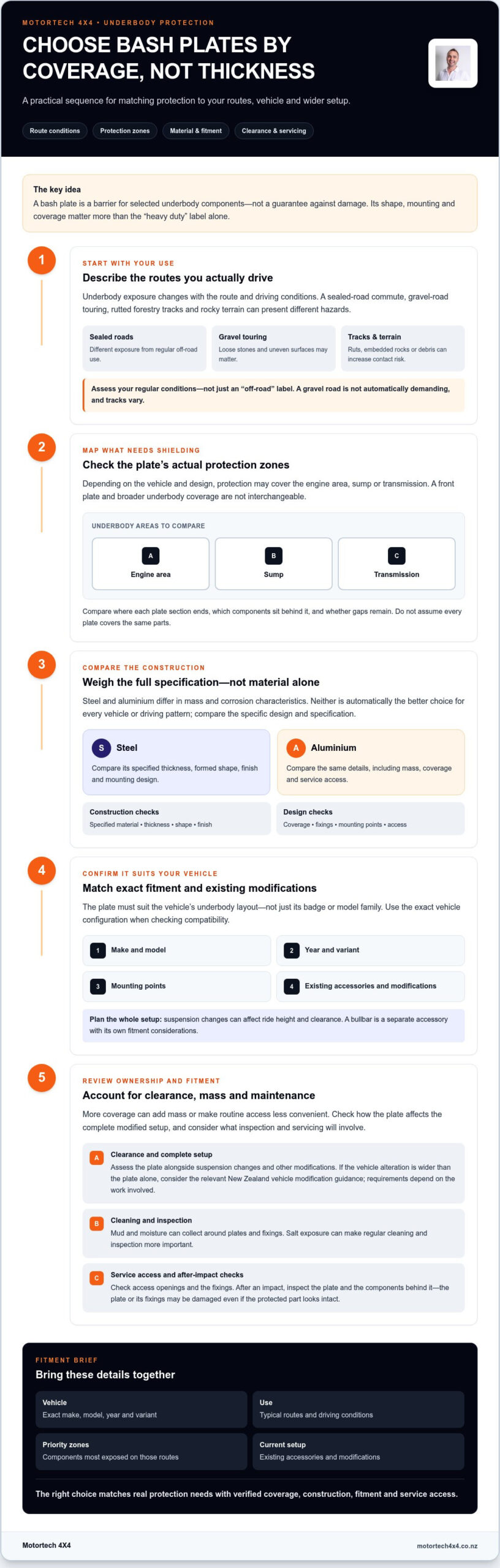
Depending on the vehicle and design, protection may cover the engine area, sump or transmission. Some configurations protect only the front section, while others extend further along the underbody. A front plate and broader underbody coverage aren’t interchangeable. Compare the protection zones and mounting points for your exact vehicle configuration rather than assuming every plate covers the same components.
When does New Zealand driving make bash plates worth considering?
Underbody exposure depends on both the route and how you drive it. A 4×4 used mainly for commuting on sealed Auckland roads encounters different hazards from one regularly driven across rocky terrain. Gravel-road touring can involve loose stones and uneven surfaces, while forestry tracks may have ruts, embedded rocks or debris. Conditions vary: a gravel road isn’t automatically demanding, and not every off-road track is equally rough.
Protection becomes more relevant when regular trips involve uneven ground, a greater chance of underbody contact or remote routes where a mechanical interruption would be difficult to manage. Consider your actual use. Occasional access along a well-maintained gravel road may call for different coverage priorities from repeated technical off-road driving. Assess heavy duty bash plates NZ options against your routes and vulnerable components, not just an “off-road” label.
Consider protection as part of the wider vehicle setup. Suspension changes can affect ride height and clearance, while a bullbar is a separate accessory with its own fitment considerations. For broader context on how accessories and servicing fit together, see the Auckland 4×4 modifications and servicing guide. Start by identifying where the vehicle travels, what sits beneath it and which areas need shielding.
Bash plate coverage and construction: what protection actually depends on
Protection depends on more than material or advertised thickness. Plate shape determines which components sit behind the barrier, while mounting points affect how the plate attaches and how forces may transfer if it contacts an obstacle. The design needs to suit the vehicle’s underbody layout, not just its badge or model family.
Material alone can’t determine a plate’s suitability. Thickness, steel or alloy specification, formed shape, mounting design, finish, coverage and service access all matter. Compare the specifications for the exact vehicle and configuration. A plate that protects one area thoroughly may leave another exposed. Adding coverage can also increase mass or make routine access less convenient.
How to assess the protection zones
Map the proposed plate against vulnerable components, such as the engine area, sump and transmission. A single front plate protects a different area from connected, multi-section coverage extending further beneath the vehicle. Check where each section ends and whether gaps remain. Don’t mistake partial coverage for complete underbody protection, and include vehicle-specific mounting points and existing accessories in your assessment.
Steel or aluminium: compare the actual specification
Compare material and thickness alongside formed shape, fixing locations and finish. Steel and aluminium differ in mass and corrosion characteristics, but neither is automatically the better choice for every vehicle or driving pattern. The relevant trade-offs depend on the specific design and specification. Check what the plate covers, how it mounts and which components remain accessible for servicing.
Consider the conditions the vehicle will encounter. Mud and moisture can collect around plates and fixings, while salt exposure can make regular cleaning and inspection more important. A protective finish may affect maintenance needs, but it doesn’t remove the need to check for trapped debris, damaged coating, loose hardware or impact deformation. Access openings can also make a difference to routine servicing.
- Coverage: identify the components shielded by each plate and any exposed gaps.
- Construction: compare specified material, thickness, shape and finish.
- Fitment: check mounting points and compatibility with existing vehicle modifications.
- Ownership: consider added mass, cleaning and access for inspection or servicing.
If a bash plate is part of a wider vehicle alteration, assess the complete setup rather than judging the plate in isolation. The New Zealand vehicle modification regulations provide official guidance to consider when planning modifications. Requirements depend on the work involved.
These checks help narrow down heavy duty bash plates NZ options by matching construction to real coverage needs, rather than choosing on thickness alone. For practical context on protection alongside other 4×4 accessories and fitment, see Auckland 4×4 accessory and installation planning.
How to compare heavy duty bash plates before buying
Start with the vehicle, not the advertised thickness or a broad claim such as “fits this model family”. Differences in year, variant, drivetrain and factory equipment can affect the underbody layout and mounting points. Existing suspension changes, bullbars or other underbody accessories may also affect fitment and clearance.
Compare options using the same criteria. Record the stated details and mark anything missing or not directly comparable as “not stated”. Don’t fill gaps with assumptions. This makes it easier to see whether a plate suits the vehicle and intended use, rather than simply looking more substantial on paper.
Vehicle fit: exact make, model, year, variant and drivetrain; note current modifications.
Protected zones: list the components covered and any areas left exposed.
Material and construction: record the specified material, thickness, shape and finish. Treat absent specifications as unknown.
Mounting: compare fixing locations and stated compatibility with the vehicle’s current configuration.
Service access: note access provisions for inspection and routine maintenance.
Intended use: assess whether coverage and design suit commuting, touring, work or regular off-road driving.
The heaviest or most extensive option isn’t automatically the best match. Additional coverage may suit a vehicle frequently exposed to rough terrain, but it can also add mass, affect clearance or complicate access. A lighter or more targeted configuration may better suit different priorities. Weigh these trade-offs using documented specifications and your actual use, not assumptions about material or size.
Which fitment details should buyers compare?
Record the vehicle’s year, model, variant and drivetrain, then list existing underbody equipment and suspension modifications. Compare those details with the plate’s stated application and mounting points. Fitment for a model family doesn’t establish compatibility with every year or variant. Check clearance against the vehicle as it sits now, including modifications that may alter ride height or the space beneath the chassis.
How should driving use shape the shortlist?
For occasional touring on established routes, prioritise protection for the areas most likely to be exposed while keeping inspection and servicing access practical. Regular work or off-road use may justify broader coverage if the route conditions warrant it. Neither use category guarantees a particular level of durability. Shortlist plates by documented coverage and fitment, then compare those details with how often the vehicle encounters rough or exposed terrain.
Use “heavy duty bash plates NZ” as a search starting point, not a specification. Before settling on an option, make sure your comparison describes the exact vehicle and configuration, identifies what’s protected and separates confirmed details from unknowns. This helps avoid choosing a plate based only on a generic fitment label or a headline measurement.
Bash plate fitment in NZ: clearance, weight and compliance checks
Assess fitment against the vehicle as it’s configured now, not just the model name on a product listing. Bash plates sit beneath the chassis, so they can affect available clearance and contribute to overall vehicle mass. Existing suspension changes, bullbars and other accessories also matter. Consider the complete modified vehicle before settling on a plate or installation plan.
Use this pre-fitment sequence to organise your checks:
- Identify the vehicle: record its make, model, year, variant and drivetrain, along with relevant factory equipment.
- Document modifications: note existing suspension, bullbars and underbody accessories that could affect space or mounting.
- Match the application: compare the plate’s stated fitment with the exact vehicle configuration and mounting locations.
- Assess clearance: consider ground clearance, approach angle and space around adjacent components.
- Check access: identify service points that need to remain accessible, and review the installation instructions and specified hardware.
- Review the finished fitment: inspect fixings, clearances and possible contact with other components according to the manufacturer’s guidance.
These checks are especially useful when planning accessories together. A bullbar and underbody protection sit in different areas, but their fitment can interact with other equipment and the overall setup. The 4×4 bullbar selection and fitting guide provides related context for coordinating accessory fitment.
What should be checked before fitting?
Start with the vehicle record and the plate’s verified fitment instructions. Confirm mounting locations, required vehicle-specific hardware and clearance for the current configuration. Consider whether the plate could affect the approach angle or access to routine service points. Include existing modifications in the assessment instead of relying on a generic fitment description.
What should the post-installation check cover?
After fitting, inspect fasteners, clearances and contact points in line with the manufacturer’s guidance. Check for interference with adjacent accessories and confirm that service access hasn’t been unnecessarily restricted. Reassess after later vehicle changes, since a suspension adjustment or additional accessory can alter the overall fitment.
Compliance needs a separate, current check. Don’t assume a bash plate automatically requires certification or is automatically exempt. Whether a modification or the complete vehicle setup has relevant New Zealand inspection or certification requirements depends on the details. Verify the situation against current NZTA and LVVTA guidance before making compliance decisions, particularly when the plate is part of a wider modification.
Motortech 4X4 in Auckland supplies and installs 4×4 accessories, including suspension kits and bullbars. Discuss your wider 4×4 setup with Motortech 4X4.
Plan your heavy duty bash plate setup with Motortech 4X4 in Auckland
A useful fitment discussion starts with the vehicle and how it’s used. Heavy duty bash plates NZ drivers consider should suit a specific configuration and its priority protection zones, not just a broad model category. Bring clear details about your 4×4, current accessories and the terrain it regularly encounters. That gives your setup planning a practical starting point.
What information helps plan a suitable setup?
Prepare the make, model, year, variant and drivetrain. Include existing modifications, such as suspension changes, bullbars and equipment fitted beneath or around the vehicle. These details help frame fitment and clearance considerations. Compatibility still depends on the specific vehicle and plate configuration.
Describe typical use clearly. A vehicle accessing a worksite over uneven ground may have different protection priorities from one used mainly for weekend touring or sealed-road travel. Identify the components you’re most concerned about protecting, such as the engine area or transmission, and note service points that need convenient access.
- Vehicle: make, model, year, variant and drivetrain.
- Current setup: suspension, bullbar and other fitted accessories.
- Driving use: regular routes, worksite access and off-road frequency.
- Priorities: protection zones, clearance concerns and service access.
How Motortech 4X4 can support the wider 4×4 setup
Motortech 4X4 is an Auckland specialist retailer and service centre for 4×4 accessories, professional installation and vehicle services. Planning underbody protection alongside the wider vehicle setup brings fitment considerations together, including clearance, mounting space and access for servicing. Motortech 4X4’s 4×4 modifications and mechanical services help you consider the vehicle’s current configuration and intended use when planning accessories.
Related modifications matter. Suspension changes can alter ride height and available clearance, while a bullbar is another component to account for in the overall vehicle plan. If suspension is part of your project, the suspension systems guide for NZ drivers offers useful context for a considered setup.
Bring your vehicle details, a short description of where you drive and the protection zones you want to prioritise. Motortech 4X4 can help put those requirements in context alongside other 4×4 accessories and modifications. A clear brief makes it easier to discuss the next steps without choosing protection by thickness or vehicle-family label alone.
Plan your 4×4 setup with Motortech 4X4.
Make your next 4×4 setup decision with confidence
Your protection needs can change as your vehicle, accessories and driving plans evolve. Treat underbody protection as part of an ongoing setup, and reassess it when you add equipment or take on different routes. Check the plate against the vehicle’s updated configuration after any changes.
For heavy duty bash plates NZ drivers can match to their vehicle and intended use, a considered fitment discussion is a practical next step. Motortech 4X4 brings accessory installation together with mechanical expertise, helping put underbody protection in the context of the wider vehicle rather than treating it as a standalone addition.
Bring your priorities and plans to Motortech 4X4 in Auckland, whether you’re preparing for regular off-road use or refining an existing build. Discuss your 4×4 setup with Motortech.
Frequently Asked Questions
Are heavy duty bash plates worth fitting to a 4×4 in New Zealand?
They can be worthwhile if regular driving exposes vulnerable underbody areas to rocks, ruts or debris. A vehicle used mainly on sealed roads around Auckland may have different priorities from one frequently driven on rough forestry tracks or remote routes. Consider how often underbody contact is plausible, what needs protection and whether the added equipment suits everyday use. The decision depends on your routes and vehicle setup.
Can bash plates affect ground clearance or vehicle weight?
Yes. A plate sits beneath the vehicle and adds mass, so it can affect clearance and the overall load carried. The change depends on the specific plate and fitment, so use verified specifications rather than estimating from appearance. Consider the fully equipped vehicle, including passengers, tools and other accessories, especially if it’s used for work or touring. When the setup changes, reassess clearance at the vehicle’s lowest points.
Do bash plates fit every 4×4 model?
No. Fitment can vary with make, model year, variant, drivetrain and factory configuration. Even vehicles sharing a model name may differ in ways that affect plate shape or mounting points. Match the plate’s documented application to the vehicle details and existing equipment. For an Auckland vehicle with aftermarket accessories, include those modifications in the fitment assessment rather than relying on a broad model-family or badge description.
Do bash plates need maintenance after off-road driving?
Inspection is sensible after a demanding trip, particularly if the vehicle has contacted rocks or driven through mud. Look for impact marks, deformation, loose or damaged fixings, and debris trapped between the plate and underbody. Clean away mud and residue so mounting areas and nearby components can be checked. Follow the plate manufacturer’s maintenance instructions, and have suspected damage assessed before continuing to use the vehicle off-road.
Can bash plates be fitted with a bullbar or suspension upgrades?
They may be part of the same vehicle build, but compatibility depends on the parts and vehicle configuration. Suspension changes can alter ride height and clearance, while a bullbar or other accessories may affect available space or the fitment sequence. Plan the components together instead of assuming separate catalogue fitments will work as a package. Motortech 4X4 can help plan accessories and mechanical requirements as part of a wider 4×4 setup in Auckland.
Are bash plates required to meet any New Zealand vehicle rules?
Don’t assume a bash plate is always required or automatically exempt from requirements. Relevant considerations can depend on how it’s installed and whether it forms part of other vehicle modifications. Before fitting, check current NZTA and LVVTA guidance for the specific work and vehicle configuration. If several modifications are being made together, consider the complete setup rather than treating each accessory as an isolated change.
How much protection do bash plates provide against underbody damage?
They provide a barrier over the areas they’re designed to cover, but can’t guarantee that damage won’t occur. Components outside the plate’s coverage remain exposed, and a severe impact may damage the plate or parts behind it. For example, a front plate won’t protect a transmission section it doesn’t extend to. Check the coverage and inspect the vehicle after a hard impact, even if the plate appears to have taken the contact.