A rock slider can look right yet provide the wrong protection if its mounting points don’t suit your vehicle or its position reduces useful ground clearance. That’s why rock slider fitting Auckland buyers consider should start with vehicle-specific fitment, not appearance alone.
It’s reasonable to want protection for the sills and underbody while avoiding unnecessary fitment or compliance concerns. This guide explains how rock sliders differ from side steps, what to consider when choosing a design, and which installation and New Zealand compliance questions to check before committing.
You’ll also find out what details to have ready for an Auckland assessment, including your vehicle’s make, model, year and intended use. Motortech 4X4 is an Auckland-based 4×4 specialist workshop. Contact the team to discuss suitability and confirm whether it currently supplies and fits an appropriate option for your vehicle.
Key Takeaways
- Rock sliders are intended to help protect vulnerable side sections on rough terrain, while side steps may prioritise easier cabin access.
- Check that the design and mounting method suit your vehicle’s exact make, model, year, body construction and existing accessories.
- For rock slider fitting Auckland, confirm product compatibility, installation scope and any required modifications before booking.
- Ask what post-installation checks are included, and seek current advice if you’re unsure whether the modification affects compliance.
- Have your vehicle details, modifications and typical driving conditions ready when arranging an assessment with a local workshop.
Rock slider fitting in Auckland: what protection is needed?
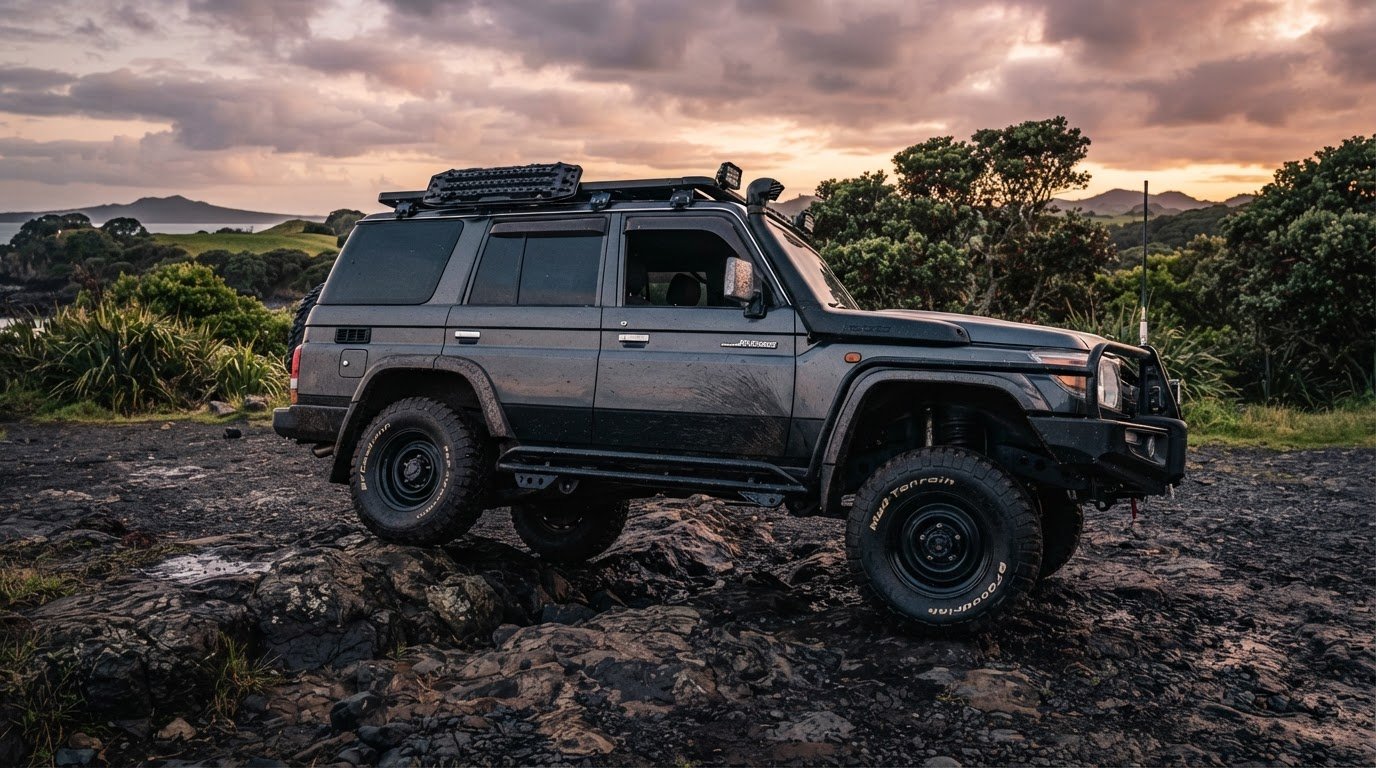
On a rocky track, a vehicle’s sills and lower side panels can be exposed to rocks, ruts and uneven ground. Rock sliders are vehicle-mounted protective structures designed to help shield these areas during off-road driving. As the What are rock sliders overview explains, designs vary. The protection a slider provides depends on its construction, mounting points, correct installation and how the vehicle is used. It can’t guarantee protection against damage in every situation.
Rock sliders versus side steps: what is the practical difference?
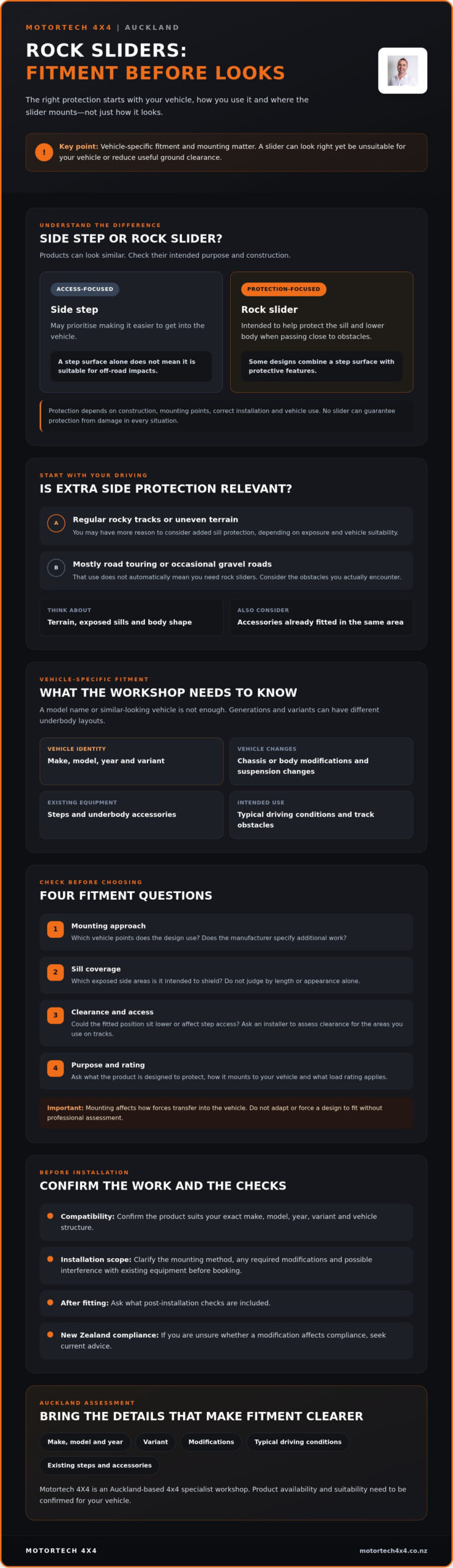
The names can be used loosely, so judge a product by its intended purpose and construction. A step-style accessory may be designed mainly to make getting into the vehicle easier. A rock slider is intended to protect the sill and lower body when the vehicle passes close to obstacles. Some designs combine a step surface with protective features, but that doesn’t make every side step suitable for off-road impacts.
Mounting also matters. Depending on the vehicle and product, a slider may attach to chassis points or other specified mounting locations. Don’t assume two products with a similar shape offer equivalent strength or fitment. Ask the supplier what the design is intended to protect, how it mounts to your exact vehicle and what load rating applies. If easier access is your priority, a step may be the better match. For regular track use, check whether a slider is designed for the protection you need.
Which Auckland drivers are most likely to benefit?
Suitability depends on where you drive and how exposed your vehicle’s sills are. Drivers who regularly leave sealed roads for rocky tracks or uneven terrain may have more reason to consider additional side protection than someone whose 4×4 is used mainly for road touring. Occasional gravel-road travel doesn’t automatically mean you need rock sliders, and demanding terrain doesn’t make every slider appropriate.
Think about the obstacles you encounter, your vehicle’s body shape and any existing accessories in the same area. A design that works for one model or generation may not suit another. For rock slider fitting Auckland owners should check compatibility and intended use before choosing a product or arranging installation. An Auckland assessment can help clarify those details, but location alone doesn’t confirm that a particular slider is available or suitable.
Start with the protection you need, then confirm the product’s purpose, vehicle fitment, mounting method and rating with its supplier. This helps distinguish access-focused steps from equipment intended for off-road sill protection, without assuming every product labelled a slider will perform the same way.
How vehicle-specific rock slider design affects fitment and protection
A slider’s shape is only part of the fitment decision. The vehicle’s mounting points, body construction and existing equipment determine whether a particular design can be installed as intended. Even within the same model name, a different generation or variant may have a different underbody layout. Don’t rely on appearance or a broad “fits this model” description alone.
Mounting approaches depend on the vehicle. Some designs attach to suitable chassis points; others may use different mounting locations specified for that vehicle. The installer needs to confirm that the method suits the vehicle structure and product instructions. Because mounting affects how forces are transferred into the vehicle, a design shouldn’t be adapted or forced to fit without professional assessment.
What vehicle details should you confirm before choosing sliders?
Give the supplier the exact make, model, year and variant, along with details of any chassis or body modifications. Mention suspension changes, existing steps and underbody accessories, as these may affect mounting access or cause interference. Ask the supplier to verify the mounting points and installation requirements for your specific vehicle instead of assuming a fit based on a similar model.
Clearance and coverage involve practical trade-offs. A slider that extends further to protect the sill may affect step access or sit lower than a more compact design. The result depends on the vehicle, product and installation. Ask a qualified installer to assess likely clearance around the areas you use on tracks.
Fitment factor
What to check
Mounting approach: Confirm which vehicle points the design uses and whether the manufacturer specifies additional work.
Sill coverage: Check which exposed side areas the slider is intended to shield, rather than judging by overall length or appearance.
Clearance and access: Discuss how the fitted position may affect obstacle clearance and getting in and out.
Compatibility: Verify fit with your vehicle generation, modifications and existing accessories. Specifications vary by vehicle and product.
How do mounting style and clearance affect real-world use?
For a vehicle used on uneven tracks, the slider’s position relative to the sill and other underbody components can matter. However, no design can promise a particular result across every obstacle or driving condition. Check the product instructions, structural suitability and any possible effect on other equipment before installation.
For rock slider fitting Auckland, a vehicle-specific assessment can help clarify these trade-offs before you select a design. Motortech 4X4 is an Auckland specialist workshop. You can contact the workshop about 4×4 accessories to ask whether it can confirm slider suitability and fitting for your vehicle.
Choosing rock slider fitting in Auckland: questions to ask before booking
Before approving an installation, get clear answers about fitment, the work involved and the checks that follow. A useful assessment should consider your exact vehicle and the slider’s specified purpose, not just a general claim that it suits a particular model range. For rock slider fitting Auckland owners should clarify the scope before work begins, especially if the vehicle has existing modifications.
What should a fitting assessment cover?
Ask the workshop to inspect the vehicle’s condition, mounting locations and existing accessories or modifications. Request confirmation that the proposed sliders suit its make, model, year and variant, and ask which installation method the product instructions specify. If anything needs to be altered, ask for the proposed work to be explained before authorising it.
Use this checklist when discussing the job:
- Fitment: Is compatibility confirmed for my exact vehicle and configuration?
- Purpose: What areas are the sliders designed to protect, and are they intended for my driving conditions?
- Installation: Does fitting involve drilling, trimming, welding or another change? Don’t assume it’s a straightforward bolt-on job.
- Scope: What is included, and are there any constraints or additional work to discuss first?
- After fitting: What checks will be completed, such as confirming secure mounting and checking for interference with nearby components?
How can you check New Zealand compliance considerations?
Compliance implications can depend on the vehicle, equipment and installation. Avoid relying on a general assurance that a slider is “legal” or WOF-compliant. Any such claim needs to relate to your specific fitment. Before work proceeds, ask what guidance applies and verify it against current NZTA, LVVTA and WOF information, or seek advice from an appropriate vehicle certification professional if the situation is unclear.
Keep a record of the product details, installation method and any changes made. This gives you useful information if you need to discuss the modification with an inspector or adviser later. The workshop should be able to explain what it has assessed, but don’t assume a compliance decision without relevant, current evidence.
For broader context on planning accessories and modifications, see this Auckland 4×4 modifications and servicing guide. Motortech 4X4 is an Auckland specialist workshop. Contact the team to ask whether it can assess slider suitability and fitting for your vehicle, and confirm availability and compatibility directly before making plans.
What to expect during professional rock slider installation
A professional installation should follow a clear sequence: check the vehicle, confirm the product and mounting method, fit the sliders, then inspect the result. The exact procedure depends on the vehicle, slider design and manufacturer’s instructions, so treat the stages below as a guide rather than a fixed workshop process.
From vehicle inspection to confirmed installation plan
Before booking rock slider fitting Auckland owners should prepare their vehicle details and explain how they use their 4×4. Tell the workshop about previous repairs or modifications, especially around the mounting areas. This information can help identify fitment constraints before work begins.
- Assess the vehicle. The installer records the vehicle’s make, model, year and variant, then checks its condition, mounting areas and relevant modifications.
- Confirm compatibility. The workshop checks that the proposed sliders suit the exact vehicle and reviews the product’s mounting requirements. Resolve any mismatch or unclear fitment detail before proceeding.
- Agree on the work. Confirm the installation method, what’s included and whether any vehicle changes are required. Don’t assume the job is bolt-on. Ask before authorising drilling, trimming or other work.
- Install to the specified procedure. The fitter follows the product instructions and uses the specified fasteners and mounting points. Secure mounting and careful alignment matter because poor fitment can affect stability, clearance or nearby components.
- Inspect and explain. After installation, the workshop checks the fit against the product instructions, including alignment, mounting security and clearance. Ask what was checked and whether anything needs follow-up.
Installation checks and ownership follow-up
Before collecting the vehicle, ask the installer to explain any care advice and whether the supplier recommends inspection intervals. Don’t assume every product has the same maintenance requirements. If you notice movement, unusual noise or contact with nearby components after fitting, stop and seek advice from the installer or supplier rather than trying to adjust the hardware yourself.
Some owners also plan side protection alongside front-end protection. If you’re considering a bullbar as part of a broader vehicle setup, this bullbar selection and fitting guide can help you consider that equipment separately.
Motortech 4X4 is an Auckland specialist retailer and service centre offering 4×4 accessories and professional installation. Contact Motortech 4X4 to ask about slider assessment and fitting, and confirm current availability and vehicle compatibility before arranging work.
Arrange rock slider fitting in Auckland with a vehicle-specific assessment
The right choice depends on three things: the protection you need, whether the design fits your exact vehicle, and whether its installation method suits that vehicle. A slider intended for regular off-road use may not be the best match for a 4×4 used mainly for touring or work. Confirm suitability before selecting a product or booking fitting.
What information to include in an Auckland fitting enquiry
Give the workshop enough detail to check fitment rather than relying on the vehicle’s model name alone. Include:
- Vehicle details: make, model, year and variant.
- Modifications: suspension changes, body or chassis work, existing side steps and other underbody accessories.
- Typical use: touring, work, occasional gravel roads or regular off-road driving, including the kind of terrain you encounter.
- Your request: ask whether suitable sliders can be supplied and fitted for that exact configuration, and what installation method is specified.
These details help the workshop identify compatibility questions and possible installation constraints early. If you’re unsure about a vehicle detail, provide what you know and ask what else is needed for an assessment.
When to consider sliders alongside other 4×4 modifications
Consider side protection as part of the vehicle’s broader setup, especially if you’re also planning suspension changes or adding accessories. The combination can affect fitment, access and clearance, so discuss the sequence and compatibility of proposed work rather than assuming each addition will suit the others. This suspension systems guide provides further context for planning broader vehicle changes.
Motortech 4X4 is an Auckland specialist retailer and service centre offering 4×4 accessories and professional installation. Its supplied information doesn’t confirm rock slider stock, supported vehicles or current fitting availability, so ask the workshop to verify those points for your vehicle before making plans.
For rock slider fitting Auckland enquiries, prepare your vehicle details and intended use, then ask about suitability, supply and fitting options directly. Contact Motortech 4X4 about your vehicle.
Make your next step a vehicle-specific assessment
Choosing rock sliders is about more than appearance. Match the protection to your driving conditions, confirm the design fits your vehicle’s exact make, model and configuration, and understand the specified installation method before approving the work. Ask about mounting, clearance, any vehicle changes and post-fitment checks. If compliance is uncertain, verify the current guidance for your vehicle and modification.
For rock slider fitting Auckland drivers should have their vehicle details, existing modifications and typical use ready when making an enquiry. This helps a workshop assess whether a suitable option may be available, rather than assuming a product will fit based on the model name alone.
Motortech 4X4 is an Auckland-based 4×4 specialist retailer and service centre that supplies and installs a range of 4×4 accessories. Rock slider availability and vehicle compatibility aren’t confirmed, so check these directly with the team. Contact Motortech 4X4 to discuss your vehicle and fitting requirements, and take the next step with a clearer plan for your 4×4.
Frequently Asked Questions
What do rock sliders do on a 4×4?
Rock sliders are vehicle-mounted protection intended to help shield vulnerable side sections, particularly the sills, during off-road driving. They may be useful on rocky tracks or uneven terrain where the vehicle could pass close to obstacles. The level of protection depends on the slider’s design, how it’s mounted and the conditions it encounters. They can’t prevent damage in every situation, so match the product to your vehicle and intended use.
Are rock sliders better than side steps?
Not necessarily, as they’re designed for different priorities. Side steps generally focus on helping occupants get into and out of a vehicle, while rock sliders are intended to help protect the sill area off-road. Some products combine step access with protective features, but designs aren’t interchangeable. Check the product’s purpose, construction and mounting method, and ask the supplier to confirm its intended use and load rating before choosing.
Can rock sliders be fitted to any 4×4?
No. Compatibility depends on the vehicle’s make, model, year, variant, body construction and mounting points, as well as the slider design. Existing steps, suspension changes or underbody accessories may also affect fitment. Don’t assume a product will suit your vehicle because it fits a similar model or generation. Ask the supplier or installer to confirm compatibility and installation requirements for your exact configuration before purchasing or booking.
How are rock sliders fitted to a 4×4?
Fitting usually involves checking the vehicle and mounting areas, confirming compatibility, then installing the sliders according to the product instructions and inspecting the result. The exact process varies by vehicle and design. Ask whether the installation requires drilling, trimming or other changes, and clarify this before work starts. A fitter should check alignment, secure mounting and clearance as relevant to the vehicle and product instructions.
Do rock sliders affect WOF or vehicle compliance in New Zealand?
They may raise compliance questions depending on the vehicle, equipment and installation, so don’t assume every slider automatically passes a WOF or needs certification. Before fitting, check current NZTA, LVVTA and WOF guidance for your specific modification, and seek appropriate professional advice if its status is unclear. Avoid relying on a general “compliant” claim unless it’s supported for the exact vehicle and installation.
Can rock sliders be fitted in Auckland?
Rock slider fitting Auckland-wide depends on whether a workshop can supply and fit a suitable option for your vehicle. Motortech 4X4 is an Auckland-based specialist retailer and service centre that supplies and installs a range of 4×4 accessories, but its rock slider availability and fitting capability aren’t confirmed. Contact the workshop to ask whether it can assess your vehicle and verify current product compatibility and installation options.
What information should I provide when enquiring about rock slider fitting?
Provide your vehicle’s make, model, year and variant, along with details of modifications such as suspension changes, existing steps or underbody accessories. Explain whether you mainly tour, use the vehicle for work or regularly drive off-road, and describe the terrain if relevant. Ask whether suitable sliders can be supplied and fitted for that exact configuration, what installation method is required and whether any vehicle changes are proposed.