
Could a snorkel make your 4WD safe to drive through deep water? No. It raises the engine’s air intake, but it doesn’t make the vehicle waterproof or increase its safe wading depth. That distinction matters when choosing a 4×4 snorkel NZ drivers can use for dusty tracks and changing conditions.
When choosing a setup, look beyond appearance and check that it suits your vehicle’s exact make, model and body configuration. A vehicle-matched snorkel with carefully sealed connections helps limit dust and water exposure at the intake. Poor selection or installation can undermine that purpose.
This guide explains what a snorkel does, what it can’t do, and what to consider before fitting one. You’ll learn how vehicle-specific design affects your choice, what professional installation in Auckland involves, and how to maintain the system. Motortech 4X4 supplies and installs snorkels, with fitment planned around your vehicle and the conditions you drive in.
Key Takeaways
- Match a 4×4 snorkel NZ setup to your vehicle’s exact make, model, year, engine and body configuration.
- Compare the snorkel’s intake route with the factory intake and airbox layout before choosing a setup.
- A raised intake may help on dusty gravel roads, but river crossings still require careful route assessment and conservative decisions.
- Professional fitting involves planning the intake route, aligning the ducting, preparing panels and checking the completed system.
- Inspect visible damage, fittings and intake connections, and check the air filter in line with vehicle guidance and driving conditions.
4X4 snorkel NZ: What it does, and what it does not do
A snorkel changes where your engine draws air from. It routes the intake to a higher position on the vehicle, which can reduce exposure to dust close to the road and help keep the intake opening above shallow surface water in some conditions. It is not a sealed vehicle system and can’t guarantee engine protection.
That distinction matters for New Zealand driving. Gravel roads, touring routes and farm access can expose a 4WD to dust, while changing weather can quickly alter track and river conditions. A snorkel is one part of the intake setup, not a substitute for vehicle preparation or careful decisions on the road.
How does a 4×4 snorkel work?
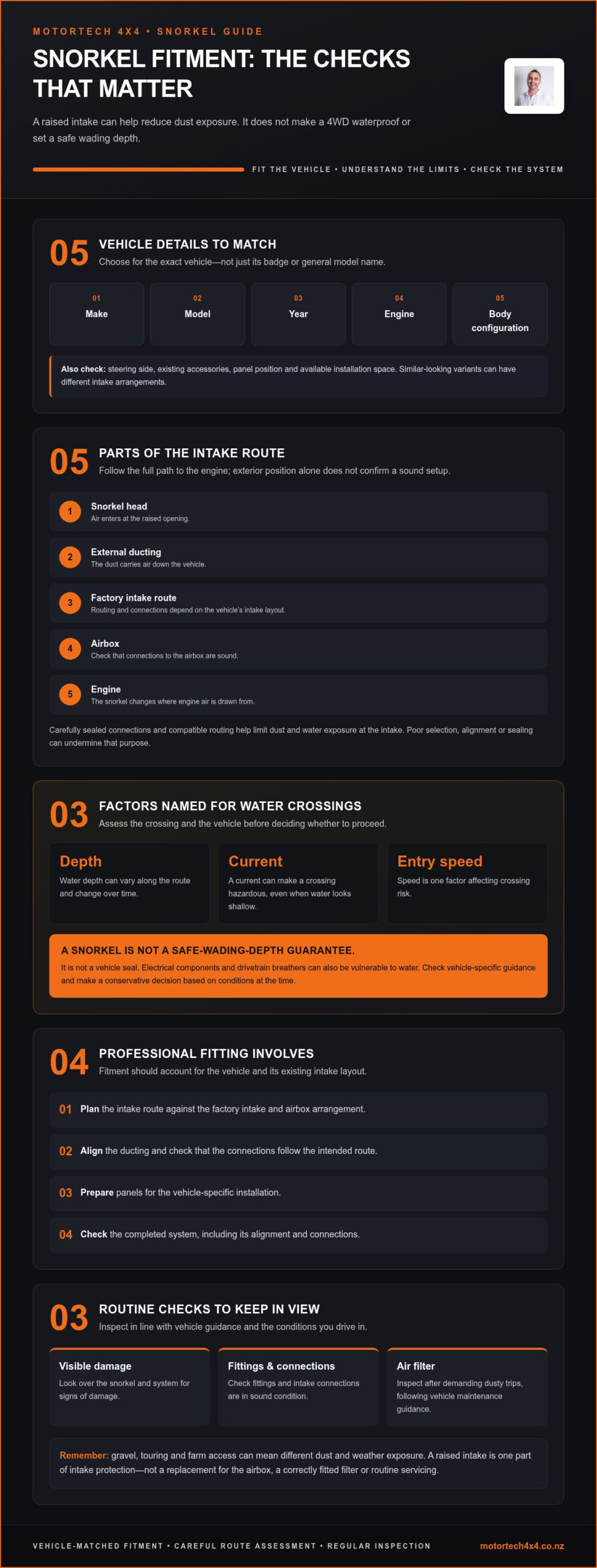
Air enters through the snorkel head, travels down the external ducting and connects to the factory intake route, leading to the airbox and engine. The raised opening changes where air is drawn in; the exact path and connections depend on the vehicle’s intake layout. For a general overview of the component and its use in civilian and military vehicles, see Vehicle snorkel.
A snorkel is a raised engine air-intake route, not a seal around the vehicle. Its performance depends on compatible routing and sound connections. A system that looks correctly positioned from outside may still be ineffective if the ducting is poorly aligned or the joints don’t seal properly. Check the complete path to the airbox, not just the exterior fit.
Does a snorkel make a 4×4 safe for water crossings?
No. A snorkel alone doesn’t make a 4WD waterproof or establish a safe wading depth. Water may affect other parts of the vehicle, and crossing risk depends on more than the height of the intake.
Assess the water and vehicle before deciding whether to proceed. Depth, current and entry speed all affect crossing risk, as does the vehicle’s condition. A current can make a crossing hazardous even when the water appears shallow, and conditions can change. Don’t treat a snorkel as permission to enter water. Check the vehicle’s guidance for its specific limits and make a conservative decision based on conditions at the time.
How a snorkel suits New Zealand 4×4 driving conditions
New Zealand driving can mean dusty gravel one day and wet access roads the next. A raised intake may help reduce the amount of dust drawn from close to the road, but the benefit depends on where and how you use the vehicle. Road surface, weather, vehicle spacing and speed all affect how much dust reaches the intake. A vehicle following closely behind traffic on a dry, loose road may face different conditions from one travelling alone on a damp, compacted surface.
Dust, gravel and touring use
A snorkel is one part of intake protection, not a replacement for the airbox, a correctly fitted filter or routine servicing. After a demanding trip on dusty roads, inspect the air filter and intake system in line with the vehicle’s maintenance guidance. A raised intake won’t keep every particle out, particularly if the filter needs attention or the intake connections need inspection.
When considering a 4×4 snorkel NZ setup, think about the trips your vehicle actually makes: regular gravel-road travel, touring or farm access. These uses can involve different dust and weather exposure, and not every track presents the same conditions. Choose and maintain the intake system to suit the vehicle’s use rather than making assumptions about all New Zealand roads.
Water crossings and realistic protection limits
Assess each crossing based on its conditions. Water depth and current can change along a route or after rain, so a familiar crossing may be different on a later trip. A raised intake does not establish a safe crossing depth. The snorkel addresses the engine’s intake route; electrical components and drivetrain breathers can also be vulnerable to water exposure.
Take a conservative approach and don’t proceed if you can’t assess the route and conditions with confidence. A snorkel isn’t a substitute for understanding the vehicle’s condition or the limits of its other systems. For Auckland 4×4 owners, local trips can still bring changing weather and track conditions, so assess the route on the day rather than relying on a previous visit.
Planning a setup for local conditions? Motortech 4X4 supplies and installs snorkels in Auckland, with fitment matched to the vehicle. Explore Auckland snorkel fitting as part of your vehicle preparation.
Choosing a 4×4 snorkel in NZ: Fitment checks before you buy
A snorkel needs to suit the vehicle’s actual intake layout, not just its badge or general model name. Before choosing a 4×4 snorkel NZ drivers should match the application to the exact make, model, year, engine and body configuration. Similar-looking vehicles can have different intake arrangements, so don’t assume a kit for one variant will fit another.
Which vehicle details affect snorkel fitment?
The year and engine variant can affect the airbox position and the route available for ducting. Body shape may change how the snorkel sits against the guard and A-pillar. Steering side and existing accessories can also affect the available space or installation path. Record the full vehicle details, then compare the proposed fitment with the factory intake and airbox arrangement before choosing a setup.
| Fitment check | What to compare |
|---|---|
| Vehicle details | Make, model, year, engine and body configuration |
| Intake compatibility | Snorkel route, factory intake connection and airbox layout |
| Installation needs | Panel position, duct alignment and access around existing accessories |
| Intended use | Commuting, touring, work-site travel or occasional off-road driving |
| Ongoing checks | Visible condition, intake connections and air-filter inspection needs |
How to compare snorkel setups for your use
Start with compatibility, then consider how you use the vehicle. A daily-driven ute with occasional gravel-road trips may have different priorities from a touring vehicle or one regularly accessing work sites. Compare the intake route and installation requirements, along with the inspection routine the setup will need. These practical factors help distinguish a suitable fit from one chosen mainly for appearance.
Colour and shape can influence the finished look, but visual preference doesn’t establish technical compatibility. Prioritise a vehicle-specific application and an intake route that connects correctly with the airbox. For broader context on planning vehicle upgrades, read this guide to Auckland 4×4 modifications and servicing guidance.
Motortech 4X4 supplies and installs snorkels in Auckland, with fitment considered against your vehicle’s configuration and intake setup. Bringing accurate vehicle details helps make the selection process more focused and clarifies the installation requirements.
4X4 snorkel installation in Auckland: What professional fitting involves
A dependable snorkel installation involves more than attaching an external intake to the guard. The application needs to match the vehicle, and the intake route must connect correctly to its airbox. In Auckland, Motortech 4X4 supplies and installs snorkels, tailoring the fitting approach to the vehicle rather than treating it as a one-size-fits-all job.
What happens during a snorkel fitting?
The process starts by checking the vehicle and snorkel application, including the intake layout and space available for the components. The installer then plans the route from the snorkel head to the factory intake and airbox. Fitment can involve work around body panels, so preparation and alignment matter. The mounting and connection method depends on the vehicle.
Once fitted, the system needs a functional inspection. This includes checking that components are secure, the ducting is aligned, and intake connections are correctly joined and sealed. A tidy exterior finish is useful, but it doesn’t replace checking the complete route through to the airbox.
Why installation quality and compliance checks matter
Secure mounting helps keep the snorkel stable, while correctly joined and sealed intake components help prevent unwanted air or water entry into the intake path. Poor alignment or rushed panel preparation can compromise the finished installation. Professional fitting accounts for the specific vehicle and the requirements of the selected setup.
Consider compliance against current New Zealand guidance and the details of the individual installation. A snorkel doesn’t automatically pass or fail a WOF simply because it’s fitted; avoid relying on blanket claims about compliance. Where other front-end accessories are part of the build, plan their position and fitment together. Motortech 4X4’s 4×4 bullbar selection and fitting guidance can help with that wider planning.
For a 4×4 snorkel NZ setup, professional fitting should finish with an inspection of the mounted components and intake connections, not just a visual check of the snorkel head. If you’re planning a snorkel installation in Auckland, book a snorkel fitting with Motortech 4X4.
Maintaining your 4×4 snorkel and getting Auckland workshop support
Regular checks help you spot damage or loose connections before they become bigger concerns. Add a quick snorkel inspection to your vehicle’s maintenance routine, especially after dusty travel or water exposure. A clean-looking exterior doesn’t confirm that every intake connection is secure, so check the visible parts and follow your vehicle manufacturer’s guidance for air-filter inspection and replacement.
A practical snorkel inspection routine
- Check the mounting points: Look for movement, loose fittings or visible damage around the external snorkel and its mounting points.
- Inspect the head and opening: Remove visible debris or obstructions, and check for signs of damage that could affect air entry.
- Look over visible ducting: Check accessible sections and intake connections for separation, damage or looseness. Don’t dismantle components unless you’re following the vehicle or snorkel manufacturer’s instructions.
- Check the air filter: Follow the vehicle’s maintenance guidance and account for driving conditions. Dusty trips may call for closer attention than normal road use.
After dusty driving, inspect the filter and intake system according to the manufacturer’s guidance. Following water exposure, check the visible snorkel and connections, but don’t treat that inspection as proof that the rest of the vehicle is unaffected. If you notice unusual engine behaviour, visible damage or a connection that doesn’t seem secure, arrange a professional assessment before relying on the system.
Plan a snorkel setup with Motortech 4X4 in Auckland
A suitable setup starts with accurate vehicle details, including the make, model, year, engine and body configuration. Intended use matters too: regular touring, work-site access and occasional off-road travel can shape fitment priorities. Motortech 4X4 supplies and installs snorkels in Auckland, matching the installation to the vehicle’s design and intake arrangement.
Good aftercare keeps the system on your maintenance radar without treating a snorkel as a substitute for routine vehicle servicing. Keep the manufacturer’s filter guidance handy, inspect visible components after demanding trips, and address signs of damage or looseness promptly.
Ready to plan a vehicle-matched setup? Talk to Motortech 4X4 about a snorkel setup.
Choose a snorkel setup built around your vehicle
A snorkel can raise the engine’s air intake, but it isn’t a waterproofing system or a guarantee of safe water crossings. The right setup starts with exact vehicle details and a compatible intake route, followed by careful fitting and routine checks of visible components and the air filter.
That’s the practical approach to choosing a 4×4 snorkel NZ drivers can use with confidence: match the fitment to the vehicle, consider the conditions it regularly faces, and include maintenance in the plan. A professionally fitted snorkel is part of a considered vehicle setup, not a substitute for assessing a track or crossing on the day.
Motortech 4X4 is an Auckland-based 4×4 specialist retailer and service centre that supplies and installs snorkels, with broader 4×4 servicing and vehicle modification expertise. Talk to Motortech 4X4 about a professionally fitted snorkel and take the next step towards a setup suited to your vehicle and how you use it.
Frequently Asked Questions
What does a 4×4 snorkel do?
A 4×4 snorkel routes engine intake air from a higher position than the vehicle’s standard intake. Air passes through the snorkel head and ducting to the airbox, which can reduce exposure to dust close to the road and some surface water. The full intake route needs compatible fitment and sound seals. A snorkel isn’t a sealed vehicle system and can’t guarantee engine protection.
Does a snorkel let you drive through deeper water?
No. A snorkel alone doesn’t increase your vehicle’s safe wading depth or make it waterproof. Water can affect electrical components and drivetrain breathers, while depth and current can change along a crossing or after rain. Assess the route, water movement and vehicle condition before deciding whether to proceed. If you can’t judge the conditions confidently, take a conservative approach and don’t treat the snorkel as permission to cross.
Will a 4×4 snorkel fit any vehicle?
No. Snorkels are designed for particular vehicle applications, and similar models may differ by year, engine, body configuration or factory intake layout. Before choosing a 4×4 snorkel NZ setup, match it to your vehicle’s exact make, model, year and engine, then compare the duct route with the airbox and intake. Motortech 4X4 supplies and installs snorkels in Auckland, with fitment considered against the vehicle configuration.
Can I install a 4×4 snorkel myself?
DIY fitting may be possible, but it requires accurate, vehicle-specific work. The process can involve preparing body panels, mounting the snorkel, aligning ducting and sealing intake connections. Errors in the route or seals can undermine the system’s purpose, while careless panel work may cause damage. If you’re not confident with those tasks, professional snorkel fitting in Auckland is a practical way to have the installation and connections checked.
Does a snorkel improve engine performance?
A snorkel’s primary purpose is to draw intake air from a higher position, not to provide a guaranteed power increase. Depending on the vehicle and conditions, it may help reduce exposure to dust close to the road and draw cooler air. Any performance change depends on the complete intake system and vehicle setup. Choose a snorkel for compatible fitment and intended use, rather than assuming it will increase engine power.
How do I maintain a 4×4 snorkel?
Inspect the snorkel head for debris, then check visible mounting points, ducting and intake connections for movement or damage. Pay particular attention after dusty trips or water exposure. Check the air filter according to the vehicle manufacturer’s maintenance guidance and the conditions you’ve driven in. A quick external look can’t confirm every connection is sound, so arrange an assessment if you notice damage, looseness or unusual engine behaviour.
Do I need a WOF inspection after fitting a snorkel in New Zealand?
A snorkel installation doesn’t automatically determine whether a separate inspection or certification is required. New Zealand guidance states that LVV certification isn’t required if the snorkel is fitted only to the outer skin of the A-pillar, with appropriately sized, sealed fixings and rust treatment applied. That condition isn’t a blanket WOF ruling. Don’t assume a snorkel automatically passes or fails a WOF; check current requirements for your vehicle and installation.