What if the best Triton upgrade is the one you don’t need? A bullbar, suspension kit or canopy can be useful for a particular job, but each addition should suit your exact model and how you drive. Planning Mitsubishi Triton upgrades Auckland owners can rely on starts with fitment, intended use and the load the vehicle will carry, not a generic accessories list.
It’s understandable to want more capability for work, towing, touring or off-road trips while being mindful of payload, handling and compliance. Triton generations, variants and existing modifications can affect compatibility, so check the details before choosing parts or booking installation. Review proposed changes against current New Zealand requirements, including relevant WOF and certification considerations.
This guide covers how to prioritise practical upgrades, what to check before installation and when to seek specialist advice. Motortech 4X4 is an Auckland-based 4×4 retailer and service centre where you can discuss your Triton model, intended use and proposed load, then plan suitable accessory and servicing work around those requirements.
Key Takeaways
- Start with your Triton’s year, generation, variant, drivetrain and existing modifications to narrow down suitable upgrades.
- Compare each upgrade by its purpose, model fitment and everyday trade-offs before adding it to your build.
- Understand how accessories and carried equipment relate to payload and GVM. Extra gear doesn’t automatically increase the vehicle’s load limits.
- Use a pre-installation checklist to define the job, confirm fitment and check current New Zealand compliance considerations.
- When considering Mitsubishi Triton upgrades Auckland, bring your vehicle details and intended load or use to a specialist discussion.
Mitsubishi Triton upgrades in Auckland: start with your model and intended use
Choose upgrades to suit the Triton’s actual job, rather than adding equipment without a clear purpose. A work ute carrying tools has different priorities from a vehicle set up for towing, touring or off-road driving. Start by identifying your Triton’s year, generation, variant and drivetrain. Then describe how you use it and what you expect it to carry.
Generations and variants can differ, so don’t assume an accessory fits just because it’s listed for a Triton. The Mitsubishi Triton models overview can help you understand the vehicle’s model history, but confirm each item’s compatibility against your exact vehicle, factory equipment and existing modifications with a workshop.
Which Triton details should you confirm before choosing upgrades?
Before seeking advice, record the model year, generation, variant, drivetrain and relevant factory equipment. List existing suspension changes, wheels and tyres, canopies, roof racks and other accessories, along with any previous modifications. These details give a specialist a more useful starting point than the generation name alone.
Ask for fitment to be checked for each item. A suspension kit, bullbar or snorkel may have different requirements, and previous modifications can affect what is suitable. For Mitsubishi Triton upgrades Auckland owners are considering, discuss the vehicle details and intended use before selecting or fitting equipment.
How does your driving determine the right Triton upgrade priorities?
Define the job first. For work use, explain what tools and regular loads you carry, how you access them and the conditions on your usual routes. For towing or touring, discuss how the vehicle will be loaded and which accessories the setup requires. A canopy or hardlid, roof racks, wheels and tyres, or suspension may be worth considering, but suitability depends on the vehicle and its intended configuration.
For off-road driving, describe the terrain and the protection or access needs you want to address. A bullbar, snorkel, winch or vehicle lighting can each serve a different purpose, but none is automatically necessary for every Triton. If you use the vehicle for a mix of work and everyday driving, consider whether added equipment will be useful on ordinary trips as well as occasional work or recreation drives.
Gather these details before requesting upgrade advice:
- Model year, generation, variant and drivetrain
- Factory equipment and existing modifications
- Typical passengers, tools, accessories and intended load
- Main use: work, towing, touring, off-road or mixed driving
- Specific requirements, such as storage, protection or access
Motortech 4X4 is an Auckland-based 4×4 retailer and service centre offering accessories, installations and mechanical servicing. Share your Triton details and intended use to help identify which options to investigate and what fitment or compliance checks may need confirmation.
Compare Mitsubishi Triton upgrades by function, fitment and everyday trade-offs
Compare each option with the job it needs to do, then check how it interacts with the rest of the vehicle. Added equipment can affect weight, clearance, carrying capacity and the overall configuration. Compatibility depends on the exact model and existing modifications, so treat advertised benefits as claims to verify, not guaranteed results for your ute.
| Upgrade | Intended function | Key fitment check | Everyday consideration |
|---|---|---|---|
| Suspension kit | Adapt the suspension setup to intended loads and driving conditions. | Confirm suitability for the Triton variant, current suspension and planned accessories. | Assess the complete loaded setup; changes can affect ride and handling. |
| Bullbar | Add a front-end protection option for the vehicle’s intended use. | Check vehicle fitment, mounting and any sensor or equipment implications. | Added mass and front-end changes should be considered as part of the whole build. |
| Snorkel | Relocate the engine air intake higher on the vehicle. | Confirm model-specific fitment and installation requirements. | A snorkel alone doesn’t make a vehicle suitable for every water crossing. |
| Canopy or hardlid | Provide a covered load area for work or touring equipment. | Check tray and vehicle compatibility, plus how the added equipment affects the intended load. | Choose between access and enclosure needs, not appearance alone. |
| Roof racks | Carry suitable equipment above the vehicle. | Verify mounting compatibility and the vehicle’s applicable load limits. | Roof loads can change how the vehicle feels; consider what you’ll carry and how often. |
| Wheels and tyres | Match the wheel and tyre setup to the vehicle and driving conditions. | Confirm clearance, specifications and compatibility with existing modifications. | Changes can affect the overall vehicle setup; seek advice before replacing standard sizes. |
| ECU remap | Adjust engine control settings through a specialist service. | Check suitability for the exact vehicle and its condition. | Discuss intended use and relevant vehicle implications; don’t assume advertised outcomes will apply. |
Which Triton accessories support protection, storage and touring?
A bullbar, snorkel, canopy, hardlid or roof rack should address a specific protection, intake or carrying need. Each adds equipment and may influence other fitment decisions, so check how it works with the complete setup before installation. For more detail on protection choices, see the Auckland bullbar selection and fitting guide.
When might suspension, tyres or an ECU remap be worth assessing?
Assess suspension against regular loads and handling priorities, rather than choosing by lift height alone. Wheels and tyres need vehicle-specific checks, particularly if you’re planning other changes. ECU remapping is a specialist service. Ask whether it suits your Triton and intended use, and distinguish provider claims from outcomes that depend on the vehicle’s condition and how it is driven.
For Mitsubishi Triton upgrades Auckland owners are comparing, a specialist can help review how choices work together. Discuss your vehicle, proposed accessories and intended use with Motortech 4X4’s Auckland team before settling on a configuration.
Triton payload, GVM and compliance: address the upgrade concern before fitting
Adding accessories doesn’t automatically make a Triton suitable for heavier loads. Bullbars, suspension components, canopies, roof racks and other equipment all contribute to the vehicle’s overall setup. Before planning a fit-out, consider the vehicle’s weight as equipped, who and what it carries, and how you intend to use it.
Payload is the load the vehicle can carry, including occupants, cargo and fitted equipment. Gross Vehicle Mass (GVM) is the maximum loaded vehicle mass specified for that Triton or established through an applicable approved process. An accessory description or a claim that a component is “heavy duty” doesn’t, by itself, change the vehicle’s limits or confirm that a build is compliant.
How should Triton owners think about payload after adding accessories?
Consider the complete setup, not just the new accessory. List the people usually on board, tools, cargo, fitted equipment and planned towing use. If you’re adding a canopy or other storage, include the items you expect to carry inside it. Don’t estimate remaining capacity from a parts description. Actual weights and the vehicle’s specifications matter.
Share that information with a suitably qualified specialist and ask them to assess the proposed configuration. This can help identify questions to resolve before selecting or installing parts, rather than discovering that the finished setup doesn’t suit your intended load.
When should you ask about a GVM upgrade or compliance assessment?
Ask for advice if planned loads or added equipment raise questions about the Triton’s limits, or if you’re considering a GVM upgrade. The suitable option and any applicable process depend on the vehicle and modification. Don’t assume that fitting a particular kit, changing suspension or describing a setup as an upgrade makes it automatically compliant.
Before committing, check current New Zealand guidance from NZTA and LVVTA, and confirm any relevant WOF implications for your specific modifications. Requirements can depend on the work carried out, so get the details confirmed for your vehicle rather than relying on a general accessory description. Motortech 4X4 offers GVM upgrades and can be a local starting point for discussing your Triton, proposed equipment and intended load. You can also review the NZ GVM upgrade and payload guide.
For Mitsubishi Triton upgrades Auckland owners are planning, take your vehicle details, existing modifications and a realistic load list to the first discussion. This gives the workshop a clearer basis for checking compatibility, weight considerations and compliance questions that need answers before fitting begins.
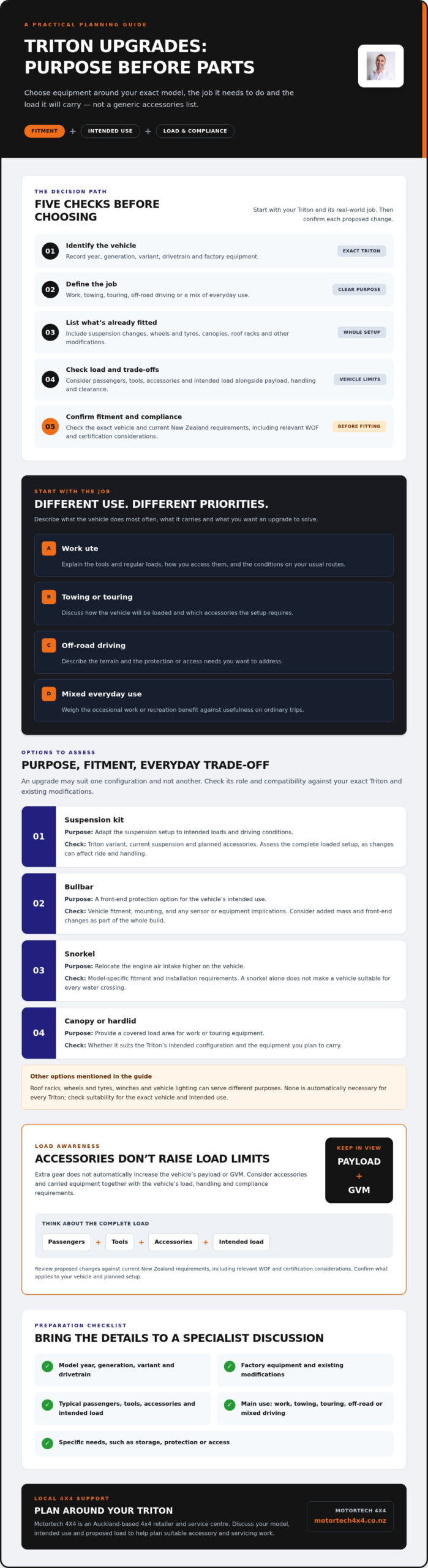
Plan a Mitsubishi Triton upgrade in Auckland with a pre-installation checklist
A clear plan helps prevent incompatible parts, duplicated work and overlooked checks. Before arranging Mitsubishi Triton upgrades Auckland-wide, work through the vehicle, its intended job and the complete proposed setup. Ask the workshop to confirm fitment, installation scope and any post-installation checks before you authorise work.
What information should you take to an Auckland upgrade consultation?
Bring the Triton’s model year, generation, variant and drivetrain, plus a list of accessories and modifications already fitted. Describe its regular work, planned towing or touring use, and the loads it may carry. Photos or notes about existing equipment can help explain the current setup. Prepare questions about compatibility, installation, compliance checks and any maintenance considerations after fitting.
A five-step pre-installation checklist
- Define the job. Be specific about what the vehicle needs to do, whether that’s carrying work equipment, touring or tackling off-road terrain.
- Confirm the vehicle. Record its model details, factory equipment and existing modifications. Don’t rely on the generation name alone to establish fitment.
- Shortlist upgrades. Prioritise accessories that address a real requirement, then discuss how each may interact with the rest of the build.
- Check requirements. Ask what current New Zealand compliance, WOF or certification considerations may apply to the proposed modifications, and who can verify them.
- Plan the fitting. Confirm what the installation includes, what needs to happen first and whether any post-installation inspections, adjustments or checks are recommended.
How can you coordinate several Triton modifications responsibly?
Ask the workshop to assess the whole proposed setup before confirming individual parts. Suspension, wheels and tyres, added accessories and electronic systems may have related fitment or assessment considerations. Discuss the order of work, too: modifications completed first can affect the selection or installation of later components. Agree on the scope of each job and clarify what checks need to follow installation.
For broader context on planning accessory and mechanical work, see the complete Auckland 4×4 modifications and servicing guide. Motortech 4X4 is an Auckland-based specialist retailer and service centre offering 4×4 accessories, installations and mechanical servicing. Discuss your Triton upgrade plan with Motortech 4X4, including the vehicle details, current modifications and intended load or use, and confirm which Triton-specific items can be supplied and fitted.
Choose an Auckland Triton upgrade workshop for fitting and ongoing support
The right workshop should help you assess the complete job, not just supply a part. For Mitsubishi Triton upgrades Auckland owners should look for clear answers about vehicle-specific fitment, installation scope and follow-up checks. The workshop should also explain how it will check compliance considerations for your proposed modifications, without treating a general answer as confirmation that every setup is suitable.
What should you ask an Auckland 4×4 workshop before booking?
Use the first discussion to understand how the workshop will approach your vehicle and the work involved. Ask:
- How will you confirm compatibility with my Triton’s exact year, variant, drivetrain and existing modifications?
- Which parts and installation tasks are included in the proposed scope, and what is excluded?
- Are there post-fit inspections, adjustments or other checks I should plan for?
- How will you check any relevant WOF, certification or other compliance questions against current New Zealand guidance?
- Who should I contact if I have questions about maintenance after fitting?
Clear communication matters. You should understand what the workshop has verified, what still needs checking and whether the proposed work depends on another modification being completed first. If an answer is unclear, ask for the scope and outstanding checks to be explained before booking.
How can Motortech 4X4 help plan your Triton upgrades?
Motortech 4X4 is an Auckland-based retailer and service centre for 4×4 accessories, installations and mechanical servicing. Its confirmed categories include suspension kits, bullbars, GVM upgrades and 4×4 servicing. These may suit different parts of a Triton build, from suspension planning to protection or mechanical support. Availability and fitment must be confirmed for your exact Triton; don’t assume every item or service suits every variant.
For a coordinated plan, share the vehicle’s details, current modifications and intended use, including any regular load or towing requirements. Ask which options can be supplied and fitted for your vehicle, what the work covers, and which compliance or post-fit checks need further confirmation. This gives you a practical basis for comparing recommendations before committing to parts or installation.
Ready to take the next step? Discuss a Mitsubishi Triton upgrade plan with Motortech 4X4 and provide your vehicle and use details so suitability and fitment can be considered.
Build a Triton that’s ready for the way you use it
A well-planned fit-out starts with your exact Triton model and the work it needs to do. Prioritise upgrades by function, check compatibility across the complete setup, and include accessories, occupants and cargo in payload discussions. Before fitting begins, confirm the installation scope and check any relevant New Zealand compliance or WOF considerations for your modifications.
For Mitsubishi Triton upgrades Auckland owners can plan with confidence, Motortech 4X4 offers an Auckland-based 4×4 retail and service centre, with accessory, modification and mechanical service categories including suspension kits, bullbars, GVM upgrades and 4×4 servicing. Triton-specific availability and suitability still need to be confirmed against your vehicle.
Have your Triton details, existing modifications and intended use ready. Talk to Motortech 4X4 about your Triton upgrade plan and take the next step towards a practical fit-out built around your needs.
Frequently Asked Questions
Which Mitsubishi Triton upgrades are best for towing?
The right towing upgrades depend on your Triton model, towing plans and the vehicle’s complete loaded setup. Start by checking the manufacturer’s vehicle specifications, then consider whether suspension, wheels and tyres or storage accessories suit the load and driving conditions. Include occupants, fitted equipment and cargo in the discussion, not just the trailer. Ask a specialist to assess the proposed setup, and don’t assume an upgrade changes the vehicle’s rated towing capacity.
Can I fit a bullbar and roof rack to any Mitsubishi Triton?
No, don’t assume a bullbar or roof rack will fit every Triton. Compatibility can depend on the exact year, generation, variant, factory equipment and existing modifications. Ask the workshop to verify each item against your vehicle, including mounting and any relevant equipment or load considerations. A bullbar and roof rack also add equipment, so consider their combined effect as part of the full vehicle setup before proceeding with installation.
Do Triton upgrades affect payload or GVM?
They can affect how much capacity remains for people and cargo. Payload is the load carried by the vehicle, including occupants, cargo and fitted accessories; GVM is the maximum loaded vehicle mass specified for that vehicle or established through an applicable approved process. Don’t estimate remaining capacity from accessory descriptions. Check vehicle specifications and actual weights, and discuss the complete setup with a suitably qualified specialist before adding equipment or changing how the Triton is loaded.
Will a suspension lift affect my Mitsubishi Triton WOF?
It may, depending on the modification and the vehicle, so don’t assume a lifted Triton will pass or fail a WOF based on lift height alone. Before fitting a suspension kit, ask which current New Zealand requirements and inspection considerations apply to your specific setup. Confirm the details with a relevant specialist and WOF provider, and check whether any certification assessment is needed. Get this advice before installation rather than relying on a general claim about a particular kit.
Can an ECU remap improve Mitsubishi Triton performance?
An ECU remap changes engine control settings, but the outcome depends on the exact Triton, its condition and the remap. Don’t treat advertised power, torque, response or efficiency claims as guaranteed results for your vehicle. Ask a specialist whether a remap is suitable for your model and intended use, and discuss any relevant mechanical, emissions or compliance implications before proceeding. Motortech 4X4 offers ECU remaps, but Triton-specific suitability should be confirmed first.
Where can I get Mitsubishi Triton upgrades fitted in Auckland?
Motortech 4X4 is an Auckland-based specialist retailer and service centre for 4×4 accessories, installations and mechanical servicing. Confirm that the workshop can supply and fit the specific item for your Triton year and variant, and ask what installation and post-fit checks are included. For Mitsubishi Triton upgrades Auckland owners are planning, take your vehicle details, existing modifications and intended use to the discussion so the proposed work can be assessed as a complete setup.
How do I check which accessories fit my Triton model?
Provide the model year, generation, variant and drivetrain, along with relevant factory equipment and a list of existing modifications. Then ask the supplier or workshop to confirm compatibility for each accessory against those details. A generation label alone may not be enough to establish fitment. Include your intended use and proposed load, especially if you’re considering several items, so the workshop can check how the accessories work together before you order or book installation.