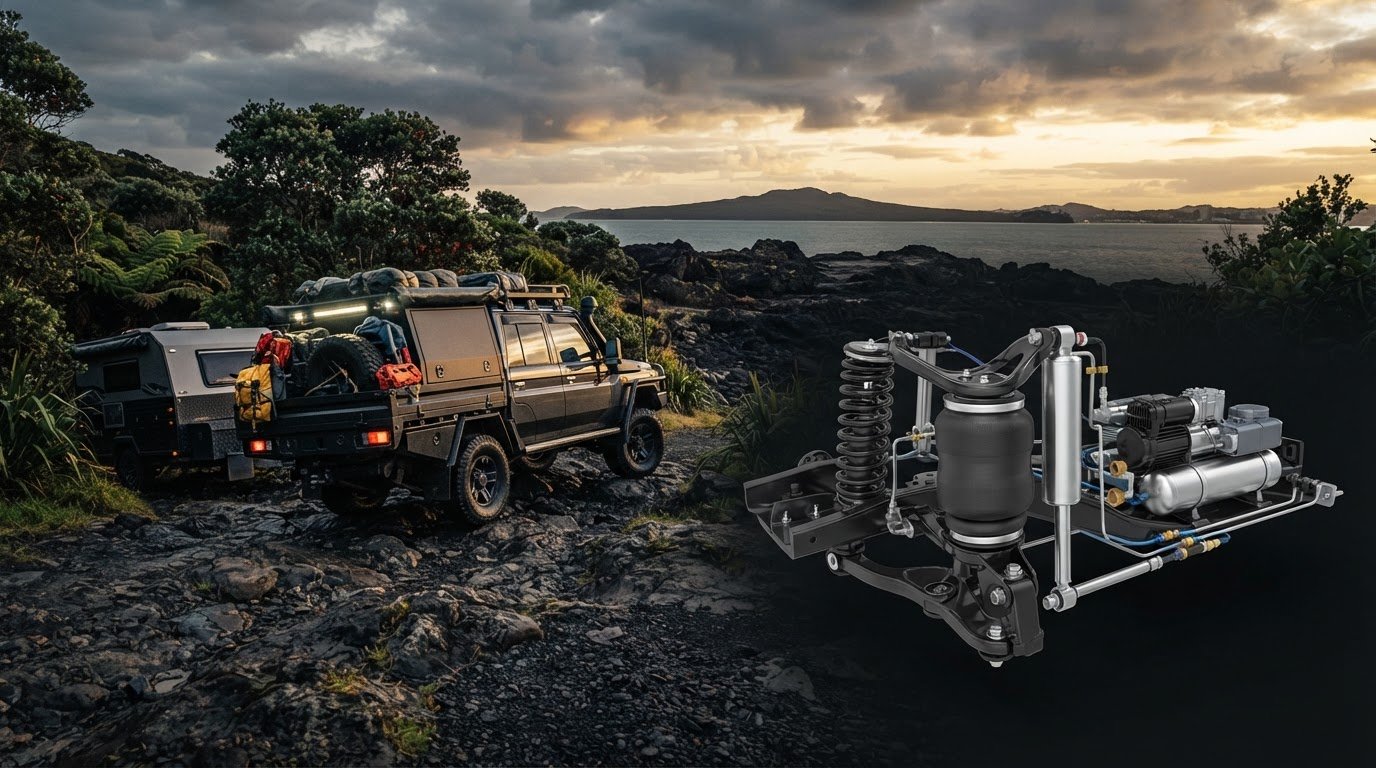
More adjustability doesn’t automatically mean a better 4×4 setup. The right 4×4 air suspension kits NZ owners consider should suit the vehicle’s changing load, towing needs and driving conditions, rather than act as a shortcut around proper suspension planning. A load-assist system works with the existing springs, while full air suspension replaces them. That distinction matters when you’re comparing systems and intended uses.
Extra support can be useful when carrying gear or towing, while maintaining ride and handling when the 4×4 is unloaded. This guide compares the main system types and explains what to check against your vehicle, payload and typical driving. It also covers New Zealand compliance: airbag-assisted and adjustable suspension installations require LVVTA certification, which is separate from a Warrant of Fitness inspection.
You’ll find practical questions to ask before committing, covering vehicle compatibility, installation and certification arrangements. If you’re in Auckland, Motortech 4X4’s team can discuss vehicle-specific suitability alongside its suspension and 4×4 modification expertise.
Key Takeaways
- Compare 4×4 air suspension kits NZ by system type and intended use, rather than assuming one setup suits every vehicle.
- Match kit selection to your 4×4’s usual payload, towing demands, existing suspension and driving conditions.
- Check how the system’s components will work with your vehicle’s springs, dampers, sensors and electronics.
- Before choosing a kit, record your vehicle details, current modifications and load information. Ask how handling, braking, alignment and clearance will be checked after fitting.
- When assessing an Auckland installer, ask for vehicle-specific fitment information and clarity on installation scope, post-fit checks and certification arrangements.
4X4 Air Suspension Kits NZ: How They Work and Why
Air suspension uses pressurised air springs, often called airbags, to support a vehicle and help manage its ride height. The air springs are only one part of the suspension system. A complete setup also includes components such as dampers, springs, linkages and mounts. As explained in How air suspension works, designs vary, so check how a proposed kit is intended to work with your 4×4.
In brief: An air suspension support kit adds adjustable air-spring support to a vehicle. It doesn’t necessarily replace the complete factory suspension.
Some kits work alongside existing coil or leaf springs, while a full air suspension system can replace factory springs. The terms aren’t interchangeable. Before comparing 4×4 air suspension kits NZ, confirm which type is being considered and which parts it changes.
How air suspension supports a 4×4 under changing loads
Adjusting air pressure changes the support provided by the air springs and can affect ride height within the kit manufacturer’s specified limits. For example, a touring 4×4 may be driven unladen during the week, then carry camping gear and towing equipment for a trip. A suitable system may let you adjust its air support for those different conditions.
That doesn’t guarantee a level ride or improved handling in every situation. The result depends on the vehicle, kit design, installation and operating instructions. Set air pressure as directed for the specific system, and don’t treat adjustment as a substitute for checking how the vehicle is loaded.
When an air suspension kit may not be the right fix
Persistent sag, an uneven ride or poor handling can point to worn suspension components, unsuitable spring rates or another issue that needs diagnosis. Adding air support without identifying the cause may mask a symptom rather than address the underlying fault. A qualified assessment can help determine whether a kit is appropriate or whether existing components need attention first.
Load levelling is not the same as increasing legal payload. Air suspension does not automatically raise a vehicle’s GVM, axle limits or permitted carrying capacity. If the 4×4 is overloaded, adjusting air pressure doesn’t make it compliant or safe to continue carrying that load. Check the vehicle’s applicable limits and the kit manufacturer’s instructions before use.
How 4×4 air suspension works with your vehicle’s existing setup
An air suspension kit is a group of components designed to work with a particular part of the vehicle’s suspension. Depending on its design, it may add air springs alongside the original springs or replace more of the factory arrangement. Other components can include mounting brackets, valves, air lines, a compressor and controls. Not every kit includes the same parts or uses the same layout.
The air springs provide support, while the vehicle’s mechanical springs and dampers continue to play their own roles in supporting and controlling movement. Adding air support doesn’t automatically change the dampers’ capacity or make the rest of the suspension suitable for a different load. Some vehicles also use ride-height sensors or electronic suspension controls. Whether an aftermarket system needs to work with these depends on the vehicle and kit design.
Air helper systems and full air suspension are not interchangeable
An air helper system generally supplements the existing suspension, while a full air suspension setup replaces more of its components. The right approach depends on the vehicle’s design, the manufacturer’s fitment information and how the 4×4 is used. A system intended to assist under changing loads isn’t automatically suitable as a full replacement, or vice versa.
Confirm kit compatibility for the specific vehicle. Model, year, axle configuration and existing modifications can affect what fits and how the system operates. Tell the installer about changes such as a suspension lift or other suspension components, and ask them to verify the proposed application against the manufacturer’s documentation. For New Zealand requirements that may apply to modified vehicles, consult New Zealand vehicle modification compliance and seek advice from an appropriately qualified professional where needed.
What the compressor, controls and air lines contribute
Where fitted, a compressor supplies air to the springs through air lines. Controls let the driver adjust pressure, while a gauge or electronic pressure monitoring may show system pressure. Some designs may use separate controls for each side; others use a different arrangement. Don’t assume the adjustment method, monitoring or included components are identical across 4×4 air suspension kits NZ.
Air lines need suitable routing and protection from heat, abrasion and moving components. Ask how the system is operated, which pressure limits apply and what checks are required. Read the manufacturer’s instructions for routine inspection and fault response, including what to do if pressure drops or a warning appears. If you’re considering a vehicle-specific setup, discuss suspension kit suitability with the Auckland-based Motortech 4X4 team.
Air suspension kit options compared for NZ touring, towing, and work use
Start with the load profile, not the look of the vehicle. A 4×4 set up for occasional towing has different needs from one carrying tools every working day. Use the comparison below to identify which system type is worth discussing, then confirm fitment and limits against your vehicle and the manufacturer’s documentation.
| System type | Potential use case | Vehicle checks | Question for the installer |
|---|---|---|---|
| Supplementary air springs | Variable touring or towing loads, where extra support may be useful at times. | Existing spring type, axle configuration, available mounting space and other suspension modifications. | Is this system designed to work with my current springs and dampers? |
| Full air suspension | A vehicle application where replacing more of the original suspension is appropriate. | Vehicle-specific design, sensors or electronic controls, installation scope and operating requirements. | Which factory components are replaced, and how will the system interact with the vehicle? |
| Conventional spring or suspension upgrade | A 4×4 that carries a relatively consistent load and may not need frequent adjustment. | Usual load, spring rates, dampers, axle loads and the vehicle’s existing setup. | Would a fixed-rate suspension change better suit my regular use? |
Choosing for touring, towing, or a changing work load
Before comparing 4×4 air suspension kits NZ, write down who and what the vehicle carries on a typical trip. Include regular passengers, bullbars or other accessories, cargo, trailer use and the kind of roads or distances you travel. A 4×4 that is lightly loaded most days but carries camping gear for long-distance touring has a different load pattern from a work vehicle carrying tools every day.
Ask the installer to consider axle loads and manufacturer guidance, not just whether the vehicle appears to sit level. A level stance alone doesn’t confirm that the load is within the vehicle’s limits. For decisions focused mainly on ride height, refer to the dedicated lift-kit guide. Lift height and load support are separate considerations.
Air suspension compared with conventional suspension upgrades
Air systems can offer adjustment, but may also add components, controls and inspection requirements. Conventional springs or a broader suspension change may be a better match for a consistent load, depending on the vehicle and intended use. Compare the adjustment you genuinely need with system complexity and ongoing care. The complete suspension systems guide can help with broader setup choices; confirm its link through the article navigation.
For an Auckland assessment, bring your load notes and details of existing modifications. Ask the installer to verify the application and explain the system’s intended use before you decide.
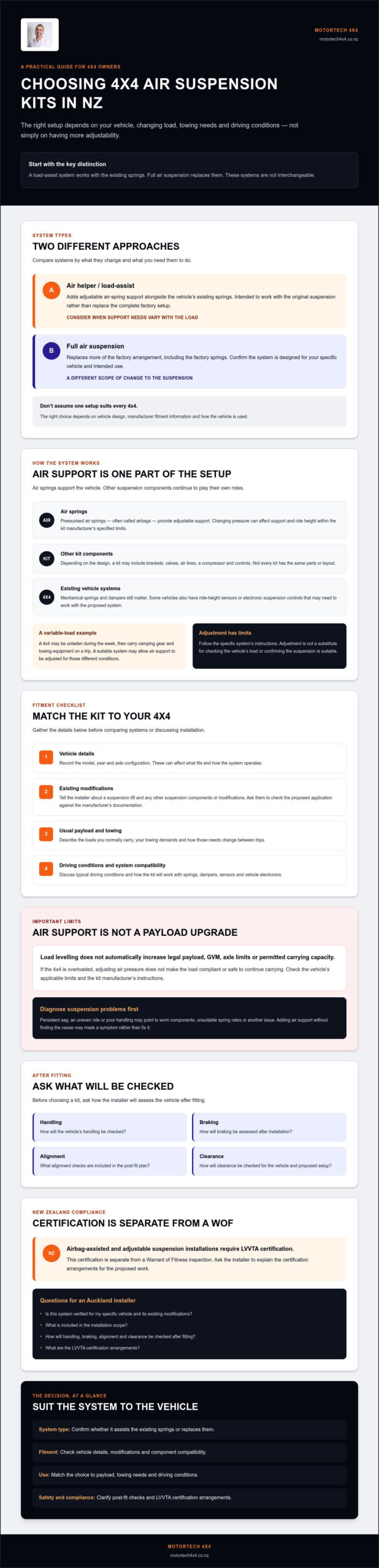
How to assess fitment, safety, and NZ compliance before buying
A sound fitment decision starts with accurate vehicle details and a clear picture of how the 4×4 is used. Before selecting from 4×4 air suspension kits NZ, gather the information below and ask the installer to verify the proposed application against manufacturer documentation.
Pre-purchase checklist
- 1. Identify the vehicle. Record its make, model, year, variant and axle configuration. Include any relevant suspension changes already fitted.
- 2. Describe its regular use. Note typical passengers, accessories, cargo, towing use and the roads or conditions you usually drive.
- 3. Gather load information. Share any known axle-load readings and explain whether heavy loads are occasional or part of daily work. Don’t rely on appearance alone to judge whether a vehicle is within its limits.
- 4. Confirm documented fitment. Ask whether the proposed kit is listed for your specific vehicle and axle configuration. Check its stated operating limits and instructions, including any conditions for use with existing modifications.
- 5. Clarify installation and compliance. Ask what the installation involves and whether the exact setup needs assessment or certification before work begins.
Installation and roadworthiness checks in New Zealand
Installation quality matters. Ask how air lines will be routed and protected, how components will be securely mounted, and which checks are included after fitting. Suspension changes should also prompt consideration of handling, braking, wheel alignment and clearance around tyres, hoses and moving components. These checks can help identify issues that may not be obvious when the vehicle is stationary.
New Zealand modification requirements depend on the vehicle and the specific change. Before installation, check the current guidance from NZTA and LVVTA, then confirm the requirements with a qualified certifier. Don’t assume a modification always requires certification, or that it avoids certification, based on a general description of the kit. Ask who will clarify the process and what documentation you’ll need.
A Warrant of Fitness inspection and modification certification are distinct checks. A WOF assesses roadworthiness against applicable inspection requirements; it doesn’t replace any certification that may apply to a modification. Confirm what applies to your vehicle and setup before booking work, then keep relevant documentation with the vehicle records.
For a vehicle-specific discussion of suspension kit suitability and installation, contact the Motortech 4X4 team with your vehicle details, modification history and typical load information.
Choosing an Auckland 4×4 air suspension installer and planning next steps
Before choosing among 4×4 air suspension kits NZ, ask for an assessment based on your vehicle and actual load profile. A useful discussion should establish whether a suitable system is available for your application, what installation involves and which checks or compliance steps need to be confirmed before work begins.
Questions to ask before confirming a kit and installation
Use these questions to compare recommendations and understand what’s proposed:
- Which system type suits my vehicle’s regular load, occasional heavy loads and intended use?
- Can you confirm documented compatibility with my vehicle’s make, model, year, axle configuration and existing modifications?
- Which components will be installed or changed, and what does the installation scope include?
- What operating instructions and routine inspection guidance will be provided for the system?
- What post-fit checks are recommended, and who should confirm any compliance requirements that apply to this exact setup?
For a vehicle-specific discussion, Discuss your 4×4 suspension requirements with the Motortech 4X4 team.
What to bring to a Motortech 4X4 assessment in Auckland
Motortech 4X4 is an Auckland-based 4×4 specialist retailer and service centre offering suspension kits and 4×4 modifications. To make an assessment more useful, prepare a concise record of your vehicle and how you use it. This gives the team practical details to discuss, without assuming every system fits every application.
- Vehicle details: Make, model, year, variant and axle configuration.
- Modification history: Existing suspension changes and other relevant vehicle modifications.
- Accessories and loads: Fitted accessories, usual passengers and cargo, plus typical towing or touring requirements.
- Symptoms or concerns: Changes in ride height, uneven stance, handling concerns or sag under load, including when they occur.
Ask which suspension options may suit your vehicle and whether the relevant kit type and application can be confirmed. Before committing, clarify the installation scope, expected post-fit checks and any further advice you’ll need on operation or compliance. This gives you a practical basis for comparing options and planning the next step.
Plan a suspension setup around your 4×4
The right suspension choice starts with how your vehicle is actually used. Compare air support with other suspension options, then match the system to your regular load, towing needs and driving conditions. Confirm vehicle-specific compatibility and installation requirements before committing.
Air suspension can provide adjustable support, but it doesn’t increase legal payload or replace sound suspension planning. Check the manufacturer’s fitment and operating guidance, and verify any compliance requirements for your exact vehicle and setup with the relevant experts.
For a vehicle-specific discussion, Motortech 4X4 is an Auckland-based specialist retailer and service centre offering suspension kits and 4×4 modifications. Share your vehicle details, existing modifications and typical loads to help guide a practical assessment of 4×4 air suspension kits NZ and other suitable options.
Discuss your 4×4 suspension requirements with the Motortech 4X4 team to plan a setup around your vehicle and the way you use it.
Frequently Asked Questions
Are air suspension kits legal in New Zealand?
Air suspension can be used in New Zealand, but airbag-assisted suspension installations require Low Volume Vehicle Technical Association (LVVTA) certification. Certification is separate from a Warrant of Fitness inspection. Before buying or fitting a system, confirm the requirements for your exact vehicle and setup with LVVTA or a qualified certifier. Don’t assume a kit is compliant simply because it’s available for sale or described as a bolt-on fit.
Can air suspension increase my 4×4’s payload or GVM?
No. An air suspension kit does not automatically increase your 4×4’s legal payload, Gross Vehicle Mass (GVM) or axle-load limits. It may provide adjustable support within the system’s specified operating limits, but that doesn’t authorise carrying more weight. Check the vehicle’s load ratings and account for passengers, accessories, cargo and tow-ball load. If you’re considering a GVM change, get advice on the applicable requirements before making modifications.
Are air suspension kits suitable for towing a caravan or trailer?
They may suit some towing setups, but suitability depends on the vehicle, kit design, load distribution and manufacturer’s instructions. An air system may help support a changing load, but it doesn’t increase the vehicle’s towing rating or correct an overloaded combination. Before choosing, provide the installer with your trailer details, tow-ball load, passengers and carried gear. Ask them to confirm documented fitment and the system’s operating limits for your use.
How do I choose the right air suspension kit for my 4×4?
Choose based on vehicle compatibility and your real load profile, not appearance alone. Record the make, model, year, variant, axle configuration, existing suspension modifications, accessories, passengers, cargo and towing use. Then compare supplementary air support with full air suspension and conventional suspension options. For 4×4 air suspension kits NZ, ask an installer to verify the application and operating limits against manufacturer documentation. Auckland owners can discuss their vehicle and requirements with a local 4×4 specialist.
Does an air suspension kit replace my 4×4’s existing suspension?
Not necessarily. Some air suspension kits add air springs to support the existing suspension, while full air suspension systems replace more of the factory arrangement. The exact components depend on the kit and vehicle. Springs, dampers and other suspension parts still have distinct roles, so an added air spring doesn’t automatically replace or upgrade them. Confirm which parts are retained, altered or replaced before approving a system for your 4×4.
Can I install a 4×4 air suspension kit myself?
Some kits may be marketed for self-installation, but fitting involves more than attaching air springs. Mounting, air-line routing, vehicle compatibility and correct operation all matter. In New Zealand, airbag-assisted suspension installations require LVVTA certification, so confirm the process with a qualified certifier before starting work. Professional installation can help address fitment and post-install checks. Motortech 4X4 is an Auckland-based specialist retailer and service centre offering suspension kits and 4×4 modifications.