
A capable 4×4 can still be the wrong setup for a particular trip. Preparing a 4×4 for a road trip starts with the route, not a shopping list: a long sealed-road drive, a remote back-country track and a winter trip to a ski field place different demands on your vehicle, load and equipment.
Check more than the basics before departure. Tyres, brakes, lights and fluid levels all matter, while passengers, a canopy, roof rack or packed recovery gear add weight and can affect handling. Equipment that suits one route may be unnecessary for another.
This checklist will help you identify potential vehicle issues, pack safely and choose touring and recovery equipment to suit your plans. It covers pre-trip checks, load distribution, route planning and when to book a 4×4 service. It also explains why fitted accessories should be considered as part of the vehicle’s overall setup, especially before a demanding New Zealand trip.
Key Takeaways
- Start preparing a 4×4 for a road trip by matching checks and equipment to your route, from sealed roads to remote tracks.
- Inspect tyres, the spare wheel, brakes, steering, suspension, lights, wipers and battery before departure.
- Account for passengers, luggage, accessories and towing when assessing your vehicle’s load and handling.
- Use a final travel-day checklist for route updates, weather, road conditions, rest stops and communication.
- Arrange a 4×4 service if you notice warning lights, unusual noises, changed handling or overdue maintenance.
Preparing a 4×4 for a road trip starts with your route
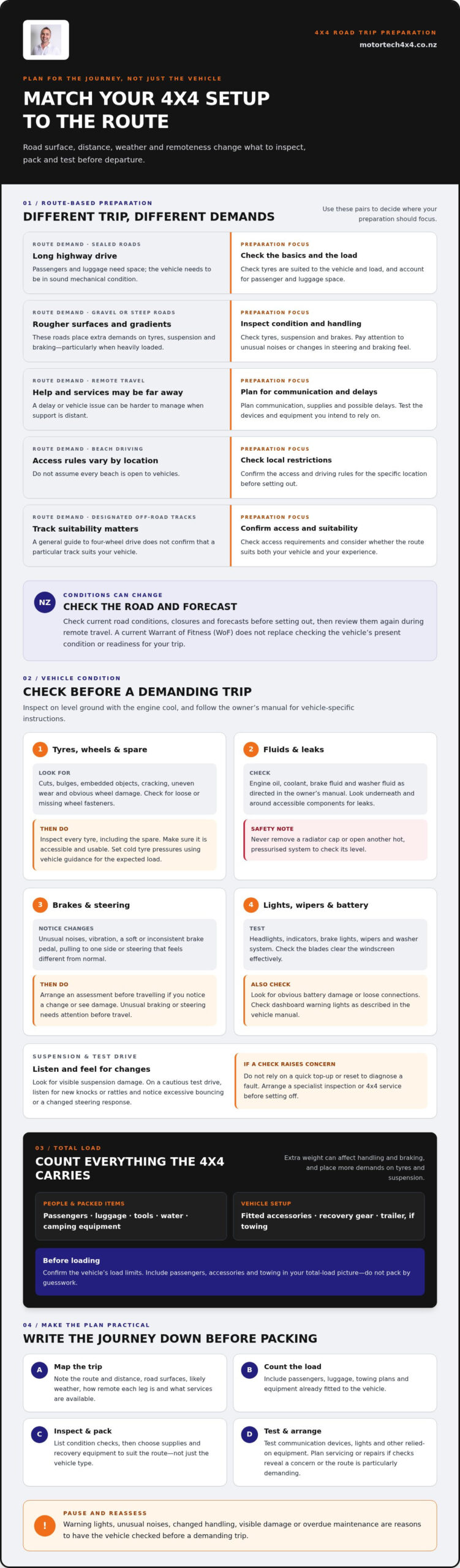
Use your route to decide what to inspect, pack, test or arrange before departure. A sealed-road touring holiday places different demands on a 4×4 than gravel roads, steep access roads or remote tracks. Preparing a 4×4 for a road trip is more effective when you plan for the surfaces, distances and conditions you’ll actually encounter, rather than adding equipment just in case.
How the route changes your 4×4 preparation
For highway travel, focus on sound mechanical condition, tyres suited to the vehicle and load, and enough space for passengers and luggage. Gravel and steep roads put extra demands on tyres, suspension and braking, particularly when the vehicle is heavily loaded. Remote travel adds another consideration: help and services may be far away, so plan for communication, supplies and possible delays.
Beach driving needs separate planning. Access and driving restrictions vary by location, so check local rules rather than assuming every beach is open to vehicles. For designated off-road tracks, confirm access requirements and consider whether the route suits your vehicle and experience. A general overview of Four-wheel drive systems can explain how 4WD works, but it won’t tell you whether a particular track suits your vehicle.
New Zealand road and weather conditions can change. Check current road conditions, closures and forecasts before setting out, then review them again during remote travel. A current Warrant of Fitness (WoF) is not a substitute for checking the vehicle’s present condition or readiness for your planned journey.
Build a simple pre-trip checklist
Write down the journey before deciding what to pack. Note the route and distance, expected road surfaces, likely weather, how remote each leg is and what services are available along the way. Include the number of passengers, luggage, towing plans and equipment already fitted to the vehicle. This gives you a clearer picture of the journey and the total load.
- Inspect: Note vehicle components and fitted accessories that need a condition check.
- Pack: List supplies and recovery equipment that match the route, not just the vehicle type.
- Test: Check that communication devices, lights and other equipment you’ll rely on work properly.
- Arrange: Plan servicing or repairs if checks reveal a concern or the route is particularly demanding.
Let the route determine which checks and equipment matter for your trip.
Pre-trip mechanical checks for tyres, brakes and fluids
A methodical inspection can reveal problems before they become a roadside issue. When preparing a 4×4 for a road trip, check the vehicle on level ground with the engine cool, and follow the owner’s manual for vehicle-specific instructions. It is also helpful to begin with a clean exterior and undercarriage so accumulated grime does not conceal fluid leaks or chassis damage, a principle evident in the thorough cleaning routines of providers like Nanak Car Wash. A current Warrant of Fitness (WoF) confirms the vehicle met inspection requirements at the time of inspection. It doesn’t replace checking the vehicle before a demanding trip.
Tyres, wheels and suspension before departure
Inspect every tyre, including the spare. Look for cuts, bulges, embedded objects, cracking and uneven wear. Make sure the spare is accessible and in usable condition. Set tyre pressures when the tyres are cold, following the vehicle guidance for the expected load. Don’t assume the usual pressure is right when the 4×4 is carrying passengers, luggage or touring equipment.
Look over the wheels for obvious damage and check for loose or missing wheel fasteners. Pay attention to how the vehicle feels, too. Pulling to one side, excessive bouncing, unusual suspension noise or a change in steering response can indicate a problem that a visual check won’t reveal. If you see damage or notice a change, arrange an assessment before travelling.
Fluids, brakes and warning lights
With the vehicle parked safely and the engine cool, check engine oil, coolant, brake fluid and washer fluid as directed in the owner’s manual. Look beneath the vehicle and around accessible components for signs of leaking fluid. Never remove a radiator cap or open another hot, pressurised system to check its level.
- Brakes and steering: Note unusual noises, vibration, a soft or inconsistent brake pedal, or steering that feels different from normal.
- Lights and wipers: Test headlights, indicators, brake lights and wipers. Check that the washer system works and the blades clear the windscreen effectively.
- Battery and dashboard: Look for obvious battery damage or loose connections, then check that warning lights behave as described in the vehicle manual.
- Suspension: Look for visible damage and listen for new knocks or rattles during a cautious test drive.
For general guidance on local road rules and driving conditions, read Driving regulations and tips for New Zealand roads. Unusual braking, steering or warning-light issues need attention before travel. Don’t rely on a quick top-up or reset to diagnose a fault. A specialist inspection can help identify the cause. If your checks raise concerns, 4×4 servicing is a sensible step before setting off.
Load, accessories and recovery gear: match the setup to the trip
Account for everything the vehicle carries, not just luggage. Passengers, tools, water, camping equipment, fitted accessories and any trailer all add to the load. Extra weight can affect handling and braking and place more demands on tyres and suspension, so avoid packing by guesswork.
Sort equipment by purpose. What’s essential for safe loading differs from what’s useful on a remote route or simply improves comfort.
| Category | What to consider |
|---|---|
| Essential checks | Confirm the vehicle’s load limits and check the condition and security of fitted accessories. Secure all luggage, tools and loose items. |
| Route-dependent gear | For remote or designated off-road travel, consider suitable recovery equipment, first aid supplies, communication options and basic roadside supplies. |
| Optional comfort equipment | Camping equipment, extra storage or other touring accessories may suit longer trips, but only if the vehicle can safely carry them and the route calls for them. |
Check the manufacturer’s vehicle and accessory limits, and review current New Zealand requirements for your vehicle and its modifications. Don’t assume a roof rack, canopy, bullbar or winch is automatically suitable. Its relevance depends on the vehicle, installation, load and route.
Pack a 4×4 safely for passengers and gear
Place heavier items low and secure them so they can’t shift under braking or cornering. Keep loose gear out of the passenger area where possible, and make sure the driver’s view and access to controls aren’t obstructed. Distribute cargo thoughtfully instead of stacking weight high or placing it all at one end.
Reassess the available payload whenever you add accessories or travel equipment. A roof rack and its cargo, for example, add weight above the vehicle and can change how it feels on the road. For guidance on planning roof storage, consult Motortech 4X4’s article about New Zealand roof racks.
Choose recovery and touring equipment by route
Equipment for a remote journey may include vehicle-appropriate recovery gear, a first aid kit, reliable communication equipment and basic supplies for an unexpected delay. A winch or other recovery gear isn’t a substitute for knowing how to use it safely. Recovery equipment must suit the vehicle and situation, and users should understand safe operating procedures before relying on it.
If camping is part of the plan, choose gear that fits the vehicle’s available load and storage space. A guide to essential vehicle-based camping gear can help you plan what to take without loading up on equipment you won’t use. The right setup is one your vehicle can carry safely and your route genuinely requires.
Final checks and travel planning for New Zealand roads
Before setting off, turn your route plan and vehicle checks into a departure routine. Preparing a 4×4 for a road trip means allowing for changing weather, road closures, rest breaks and the possibility that a remote leg takes longer than expected, as well as checking the vehicle.
The day-before departure routine
- Review the route. Check current road conditions, closures and weather forecasts for each part of the journey. Confirm fuel stops and accommodation or campsite arrangements, particularly if your plans depend on reaching a specific place.
- Share your itinerary. Give someone staying behind your planned route, expected arrival times and check-in arrangements. Agree what they should do if you miss a check-in, especially for remote travel where mobile coverage may be limited.
- Prepare the equipment. Make sure tools, recovery gear and communication devices are accessible and working. Confirm the spare wheel is ready to use, and secure loose cargo so it can’t move during braking or cornering.
- Plan rest breaks. Break long drives into manageable legs and allow extra time for slower roads, stops or changing conditions. Don’t build a schedule that depends on driving while tired to reach your destination.
- Complete a morning walk-around. Before leaving, check for anything that has changed overnight, confirm doors and loads are secure, and test essential equipment you’ll rely on during the trip.
New Zealand road conditions and Warrant of Fitness
A Warrant of Fitness (WoF) is not a substitute for checking your vehicle’s current condition or suitability for the planned journey. Use a trip-specific inspection alongside any checks you make before a WoF. For current information on road conditions, vehicle requirements and modifications, refer to guidance from Waka Kotahi NZ Transport Agency. Requirements can depend on the vehicle and the work carried out, so avoid assumptions about what applies to your setup.
Conditions can change after you leave. Recheck official road and weather updates during the journey, and adjust your route or timing if needed. If your final checks raise concerns, or the trip will put a heavily equipped 4×4 through demanding conditions, a specialist assessment can evaluate vehicle condition and touring equipment together. Book a pre-trip 4×4 service before departure.
When to book a 4×4 service before a road trip
A checklist helps you spot concerns, but it can’t diagnose every fault. Arrange a workshop assessment if servicing is overdue, you’ve noticed new noises or warning lights, or the vehicle’s braking, steering or handling has changed. It’s also a sensible step before a demanding route, particularly if the 4×4 will be carrying a full load or travelling on rougher roads.
Signs your 4×4 needs attention before the trip
Don’t dismiss a change as normal just because the vehicle still drives. Persistent fluid leaks, braking that feels different, steering that pulls or feels loose, and warning lights that remain on all warrant investigation. A new knock, vibration or unusual suspension noise can also indicate an issue that needs assessment.
- Maintenance is overdue: Check the service history and owner’s manual, especially if the trip will add substantial distance.
- Something has changed: Note when the noise, warning light or handling change occurs and whether it appears under braking, turning or load.
- Recent work or modifications need checking: Include newly fitted suspension or touring accessories in your pre-trip review.
Turn the checklist into a workshop plan
Before arranging an inspection, make a short list of what you’ve observed, when it occurs, the last service and any recent repairs or modifications. Include the route, expected load and fitted equipment, such as a canopy, roof rack, bullbar or winch. These details help focus the assessment on how the vehicle will actually be used, rather than treating each component in isolation.
Preparing a 4×4 for a road trip doesn’t automatically mean adding upgrades. The right setup depends on the vehicle, its condition, the load and the route. A specialist can assess the vehicle and installed touring equipment as a system, then identify where servicing or further attention is appropriate. Motortech 4X4 provides 4×4 servicing and mechanical work, along with suspension and accessory fitting.
Gather your checklist, service details and notes about any changes in vehicle behaviour before your appointment. Auckland drivers planning a trip can book a pre-trip 4×4 service with Motortech 4X4.
Get your 4×4 ready for the journey ahead
Preparing a 4×4 for a road trip starts with a clear plan: match checks and equipment to the route, assess the vehicle’s condition, and account for every passenger and item of gear. A current Warrant of Fitness is useful, but it doesn’t replace a trip-specific check or sensible planning for changing New Zealand road conditions.
Use your checklist to identify anything that needs attention before departure. If you’ve noticed a warning light, unusual noise or change in handling, or your 4×4 is due for servicing, arrange an assessment before the trip. Accessories and upgrades should suit the vehicle, load and journey, not be added by default.
Motortech 4X4 is an Auckland-based specialist 4×4 service centre offering vehicle servicing, accessory supply and professional installation. Book your pre-trip 4×4 service with Motortech 4X4 as part of your preparation. With a considered setup and a well-planned route, you can focus on the drive ahead.
Frequently Asked Questions
Can I take a 4×4 on a road trip with only a current Warrant of Fitness?
No. A current Warrant of Fitness (WoF) doesn’t guarantee that every system is ready for your particular journey. Before leaving, check tyres, brakes, fluids, lights, steering and the vehicle’s load. Consider how distance, road surfaces and remoteness affect your plans. A demanding route may warrant a more thorough inspection. Check current Waka Kotahi NZ Transport Agency guidance for applicable vehicle, road and modification requirements.
What should I check on my 4×4 before a long road trip?
Inspect tyre condition and pressure, including the spare, then check brakes, steering, suspension, lights and wipers. Check fluid levels according to the owner’s manual, look for visible leaks, and note dashboard warning lights or changes in handling. Confirm servicing is up to date and test equipment you’ll rely on during the trip. If you find a safety concern, arrange an assessment before departure rather than hoping it won’t worsen on the road.
How do I prepare a 4×4 for gravel roads in New Zealand?
Preparing a 4×4 for a road trip on gravel starts with checking current road conditions and the weather forecast. Inspect the tyres and spare, and make sure the brakes, suspension and lights are in sound condition. Secure cargo and take equipment suited to the route. Gravel surfaces vary, so don’t assume one tyre pressure or equipment setup suits every vehicle. Drive to the conditions and observe local access restrictions along the way.
Do I need recovery gear for a 4×4 road trip?
It depends on your route, conditions and how remote your travel will be. For remote journeys, consider vehicle-appropriate recovery equipment, communication options and basic emergency supplies. Learn safe recovery procedures before relying on the gear, and make sure it suits your vehicle and experience. Sealed-road touring may not call for an extensive off-road recovery setup. Choose equipment for the journey you’ve planned, not simply because you own a 4×4.
How should I load a 4×4 for a road trip?
Check the vehicle manufacturer’s load limits and account for passengers, luggage, accessories and any trailer. Secure cargo so it can’t shift, and place heavier items low where practical. Reassess the total load after fitting accessories or adding touring equipment, including anything carried on a roof rack. If modifications or a heavy load raise questions about compliance, refer to current official New Zealand guidance for information relevant to your vehicle.
When should I book a 4×4 service before a road trip?
Arrange an assessment if servicing is overdue, a warning light appears, you notice new noises or leaks, or the vehicle’s handling or braking has changed. A pre-trip service is also worth considering before a long or remote journey, particularly if the vehicle has recently been modified. Motortech 4X4 is an Auckland-based specialist workshop providing servicing and accessory fitting for 4x4s and other vehicle brands.
Are roof racks necessary when preparing a 4×4 for a road trip?
No. Roof racks can provide useful extra carrying capacity when the trip requires it, but they aren’t essential for every vehicle or journey. Consider the vehicle’s limits, how cargo will be secured and how roof-mounted weight affects the overall setup. Pack inside the vehicle where practical, and choose accessories to suit the route and load. Motortech 4X4 supplies and installs roof racks in Auckland as part of its 4×4 accessory offering.