
Why sacrifice your vehicle’s sleek factory aesthetics and sophisticated safety sensors just to gain off-road recovery insurance? Most modern 4×4 owners in New Zealand want the peace of mind that comes with a winch, but they’re rightfully hesitant to bolt a massive steel bullbar to the front of a brand-new rig. You’ve invested in a vehicle with advanced emergency braking and lane-keep assist, and the last thing you want is extra weight affecting your GVM or sensors failing to trigger when they’re needed most.
When planning a hidden winch mount installation Auckland owners often worry about compromising their vehicle’s warranty or safety ratings. This guide explores how concealed cradles preserve your vehicle’s structural integrity while providing heavy-duty recovery power and a clean, factory finish. We’ll cover everything from weight distribution and synthetic rope advantages to the essential recalibration steps required to ensure your vehicle remains fully compliant for its next Warrant of Fitness.
Key Takeaways
- Learn why a concealed steel cradle is the preferred choice for maintaining your vehicle’s factory aesthetics while adding heavy-duty recovery capability.
- Understand how a hidden setup can save significant weight compared to a traditional bullbar, protecting your front axle and preserving valuable GVM.
- Discover the critical steps for a hidden winch mount installation Auckland wide that ensures full ADAS safety compliance and a guaranteed WOF pass.
- Explore the technical integration of high-tensile cradles and fairleads that allow for seamless winch operation through your original bumper.
- Find out how professional fitting and on-site ADAS calibration provide a complete, road-legal solution for modern 4×4 builds.
What is a Hidden Winch Mount and Why Auckland Drivers Choose Them
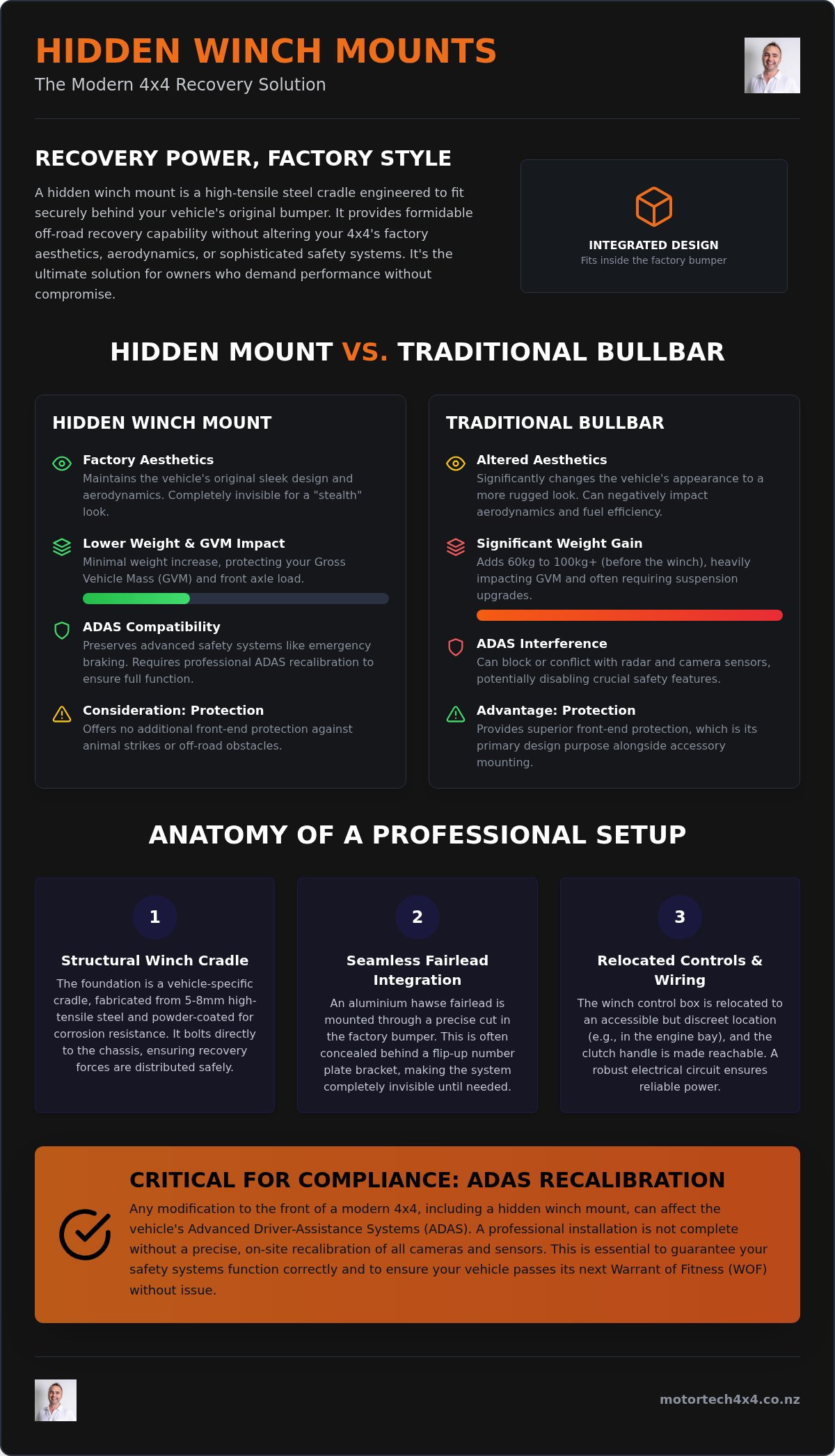
A hidden winch mount is a specialised high-tensile steel cradle engineered to sit entirely behind your vehicle’s factory bumper. Unlike traditional bullbars that replace the front end of your ute or SUV, these mounts are designed to integrate with the existing chassis rails while remaining invisible to the casual observer. For those seeking a foundational What is a Winch? primer, it’s essentially a mechanical device used to pull in or let out a heavy-duty rope, providing critical self-recovery capability in off-road environments.
In the local market, we’ve seen a significant shift toward these “stealth” setups. Many owners of late-model 4x4s use their vehicles as daily drivers or professional tools within the city. Bolting on a 60kg to 100kg steel bullbar isn’t always practical for navigating tight Auckland carparks or maintaining factory fuel efficiency. By choosing a hidden winch mount installation Auckland drivers can retain the original aerodynamics and safety features of their vehicle while still possessing the recovery power needed for weekend adventures.
The Aesthetic vs. Utility Balance
Modern vehicle design has reached a point where the sleek lines of a Next-Gen Ranger or a 300 Series LandCruiser are a major selling point. For many, a traditional bullbar ruins this aesthetic. A hidden mount offers a compromise that doesn’t feel like a sacrifice. It provides the utility of a winch without the “rugged” visual trade-off that comes with a full front-end replacement. This is particularly popular for vehicles like the Toyota Hilux, Ford Everest, and the Isuzu D-Max, where owners want to keep that clean, factory look while knowing they can get themselves out of a bog.
Recovery Capacity Without the Bulk
You don’t lose performance by going stealth. These cradles are built to handle standard recovery loads, supporting winches with capacities ranging from 9,500lb to 12,000lb. The mount isn’t just a bracket; it’s a structural component that ties directly into the vehicle’s chassis rails to ensure even load distribution during a pull. A hidden mount acts as a structural bridge between heavy-duty recovery power and factory aesthetics. Because the winch sits lower and closer to the front axle than it would in a bullbar, it also improves the vehicle’s centre of gravity. This positioning is critical because it maintains the vehicle’s approach angle while keeping the additional weight tucked within the front overhang. By avoiding the bulk of a bullbar, you also preserve the factory crumple zones and air intake paths, ensuring the engine remains cooled during high-load driving on New Zealand’s steeper tracks.
Technical Components of a Professional Hidden Winch Setup
A professional hidden winch mount installation Auckland wide requires more than just a bracket; it demands a precision-engineered structural system. Because the winch is concealed within the front-end assembly, every component must be chosen for its durability and accessibility. The system relies on four primary pillars: the structural cradle, the fairlead integration, the relocated control box, and a robust electrical circuit. Unlike bullbar-mounted winches that are exposed to airflow, hidden setups require meticulous planning to ensure heat dissipation and serviceability.
The Winch Cradle: The Foundation
The core of the system is the winch cradle. These are typically fabricated from 5mm to 8mm high-tensile steel, specifically folded and welded to match the chassis dimensions of a particular vehicle model. This vehicle-specific engineering is vital. It ensures that the recovery loads are transferred directly into the strongest points of the frame. Given Auckland’s coastal environment, corrosion protection is non-negotiable. Quality cradles feature a heavy-duty powder-coated finish or zinc plating to resist salt-laden air and road grime that can accumulate behind the bumper. A generic mount simply won’t suffice for the structural integrity required during a heavy recovery.
The fairlead integration is what defines the “stealth” look. The rope exits through a precisely cut aperture in the factory bumper, where an aluminium hawse fairlead is bolted to the cradle. In many builds, this exit point is cleverly disguised behind a flip-up number plate bracket, making the recovery point completely invisible when the vehicle is on the road. Our team can help you select the right winches and cradles to ensure this integration is seamless and professional.
Access and Ergonomics
Utility shouldn’t be sacrificed for aesthetics. Accessing the winch clutch handle is one of the biggest challenges in a hidden setup. This is solved by either creating a small, discreet access point through the grille or using a “clutch clocking” technique to rotate the winch housing for easier reach. For modern rigs, wireless remote controls are the gold standard. They eliminate the need to plug in a physical lead, which can be difficult when the control socket is tucked away. If a wired remote is preferred, we relocate the socket to a convenient point under the bonnet or inside the grille mesh.
The electrical system is the final critical link. Because the winch can draw over 400 amps during a pull, we use heavy-gauge copper cabling and high-quality isolation switches. Relocating the control box to a dry, elevated position under the bonnet protects the sensitive solenoids from water ingress and mud. This configuration ensures that your recovery gear is ready to perform in the harshest New Zealand conditions while remaining protected from the elements during your daily commute.
Hidden Mount vs. Traditional Bullbar: A Comparison for NZ 4x4s
Choosing between a full frontal protection system and a concealed cradle involves more than just aesthetics. For a professional hidden winch mount installation Auckland drivers must weigh up the physical impact on the vehicle’s dynamics. Traditional steel bullbars are excellent for animal strike protection, but they come with a significant weight penalty. A standard winch-rated bullbar can weigh between 60kg and 100kg before the winch is even added. In contrast, a hidden mount saves up to 50-80kg off the front axle by retaining the factory bumper and using a lighter, more targeted steel cradle.
This weight saving is critical for Auckland tradies and fleet operators. Every kilogram added to the front end is a kilogram removed from your legal payload. If your ute is already loaded with toolboxes, drawers, and materials, a heavy bullbar might push you over your Gross Vehicle Mass (GVM), leading to potential legal and insurance complications. Additionally, while bullbars often improve the approach angle by removing low-hanging plastic, they also increase the front overhang. A hidden mount maintains the factory overhang, preserving the vehicle’s original parking and manoeuvring characteristics in urban environments.
Safety Tech and ADAS Compatibility
Modern 4x4s are essentially computers on wheels, equipped with complex sensor arrays for Autonomous Emergency Braking (AEB) and Adaptive Cruise Control. Traditional bullbars often require these sensors to be relocated into the new bar, which can lead to sensor blindness or false positives if not perfectly aligned. By opting for a hidden winch mount installation Auckland enthusiasts can maintain factory sensor geometry because the sensors remain in their original positions within the factory bumper. At Motortech 4X4, we ensure that your safety tech remains unobstructed, providing a stealth recovery solution that doesn’t compromise your vehicle’s electronic safety net.
The Weight Factor and Suspension
Even with the weight savings of a hidden mount, adding 30kg to 60kg of recovery gear to the very front of the chassis will affect vehicle dynamics. This additional mass can cause front-end sag, which negatively impacts braking distances and steering response. While you might not need the heavy-duty springs required for a full bullbar, a targeted suspension upgrade is often recommended to restore factory ride height and handling. For more detailed analysis on balancing your load, refer to our Auckland 4×4 Guide for professional suspension and modification advice. This ensures your rig remains balanced and safe, whether you’re on the Southern Motorway or a weekend track.
The Installation Process and NZ Compliance Standards
A professional hidden winch mount installation Auckland relies on a methodical mechanical approach that prioritises structural integrity and electrical safety. The process begins with the careful removal of the factory bumper skin and the underlying impact absorbers. The vehicle-specific cradle is then bolted directly to the chassis rails using high-tensile fasteners, ensuring the recovery loads are transferred to the strongest part of the frame. Once the winch is secured within the cradle, we integrate the electrical system. This involves routing heavy-duty, heat-shielded cables to the battery and installing a master isolation switch. This switch is a critical safety feature, preventing the winch from being accidentally activated or tampered with while the vehicle is parked. Every connection is fused and protected to prevent electrical faults during high-load recovery operations.
Post-fitment testing is the final stage of the mechanical assembly. We perform a controlled spooling of the winch rope to ensure it seats correctly on the drum and check that the fairlead alignment allows for smooth exit angles. We also verify that the winch clutch handle is accessible and functioning without interference from the factory grille or bumper components. This rigorous testing ensures that the equipment performs reliably when you are stuck in a remote location and need it most.
Auckland WOF and LVVTA Compliance
Compliance with New Zealand safety standards is non-negotiable for road-legal vehicles. Under LVVTA technical standards, winch installations must not have sharp protrusions and require a minimum 3mm radius on all edges to ensure pedestrian safety. While a hidden mount typically does not require a full low volume certification if it does not involve cutting or modifying the main chassis structure, the fairlead placement must be precise to meet WOF requirements. Professional documentation of the fitment is vital for your insurance company. If an installation is deemed unsafe or poorly secured during a Warrant of Fitness inspection, it will result in an immediate fail, potentially grounding your vehicle until the issues are rectified.
ADAS Calibration: The Critical Final Step
For modern vehicles, the physical installation is only half the job. From 1 November 2026, any active Advanced Driver Assistance Systems (ADAS) warning light will cause an automatic WOF failure in New Zealand. Adding recovery gear to the front end changes the vehicle’s rake and pitch. This shift can throw off the alignment of radar sensors and cameras used for autonomous emergency braking and lane-keep assist. “Blind” DIY installations often overlook this, leading to safety systems that trigger incorrectly or fail to activate in an emergency. Motortech 4X4 utilises specialised on-site equipment to perform precise ADAS calibration, ensuring your safety systems are perfectly synchronised with the new hardware and fully compliant with the latest regulations.
Why Choose Motortech 4X4 for Your Auckland Winch Installation
Motortech 4X4 isn’t just a retail outlet; we are a specialised mechanical service centre with decades of experience in 4×4 fabrication and modifications. When you book a hidden winch mount installation Auckland with us, you aren’t just getting hardware bolted to your chassis. You’re getting a comprehensive engineering solution. Our “one-stop shop” approach means we handle the entire project lifecycle in-house. From the initial selection of high-performance winches to the precision fitting of the cradle and the final, mandatory ADAS calibration, every step is managed by qualified technicians at our Henger Street workshop. We prioritise high-quality workmanship and a commitment to NZ safety standards, ensuring your vehicle remains road-legal and reliable.
Expertise in Modern Vehicle Systems
Modern utes and SUVs require a high level of technical literacy to modify safely. We possess a deep understanding of late-model vehicle electronics, ensuring that your winch integration doesn’t interfere with complex CAN bus systems or battery management software. This technical diligence is why Auckland fleet managers trust us for their commercial fit-outs; they need vehicles that are both capable and fully compliant with health and safety standards. While a stealth build is ideal for many, some applications still demand the maximum protection of a full steel bar. If you decide a concealed setup isn’t right for your specific needs, you can explore our Premium 4×4 Bullbars Auckland guide for a detailed look at the 2026 selection and fitting options.
Secure Your Rig for the Toughest Tracks
Whether you’re planning a weekend run through the soft sands of Muriwai, navigating the clay tracks of Woodhill, or heading deep into the Coromandel, having reliable recovery gear is non-negotiable. A “stealth” build is the perfect solution for the modern adventurer who needs a daily driver that doesn’t look like an off-road monster but performs like one when the situation demands it. We ensure your rig is prepared for the harshest New Zealand conditions while maintaining the factory finish you value. Don’t leave your safety to chance with a DIY job or a generic fitment. Book your hidden winch mount consultation at Motortech 4X4 today and ensure your vehicle is equipped with professional-grade recovery power that meets every legal and safety standard.
Ready Your Rig for the Next Adventure
Equipping your vehicle with heavy-duty recovery power doesn’t have to mean sacrificing its clean, factory lines or sophisticated safety systems. A concealed cradle offers a professional balance between utility and aesthetics, providing the insurance you need for the tracks without the excessive weight of a traditional bullbar. This approach preserves your legal payload and ensures your modern ute or SUV remains fully compliant with the latest New Zealand safety regulations. For a precision hidden winch mount installation Auckland drivers can rely on our expert 4×4 service centre on Henger Street.
As Auckland’s leading ADAS calibration specialists, we ensure that every modification is technically sound and safety-compliant. Whether you’re managing a commercial fleet or building a private weekend warrior, our team provides the specialised expertise required for modern vehicle systems. Don’t leave your recovery capability to chance with an uncertified setup. Contact Motortech 4X4 for a Professional Winch Installation Quote and get your rig ready for whatever the New Zealand landscape throws your way. We look forward to helping you build a more capable, stealthy, and safe vehicle.
Frequently Asked Questions
Is a hidden winch mount as strong as a bullbar mount?
A professionally engineered hidden winch mount is just as strong as a winch-rated bullbar mount because both systems tie directly into the vehicle’s chassis rails. The cradle is typically fabricated from 5mm to 8mm high-tensile steel, designed to handle recovery loads of up to 12,000lb. While bullbars offer more physical protection against animal strikes, the structural integrity of a hidden cradle ensures that your recovery power is delivered safely without compromising the frame.
Will a hidden winch installation affect my vehicle warranty?
A professional hidden winch mount installation Auckland wide should not void your entire vehicle warranty, though it may affect specific components directly modified during the process. Under New Zealand consumer law, a manufacturer cannot deny a warranty claim unless the modification is proven to have caused the failure. We follow strict mechanical standards and use vehicle-specific hardware to ensure that the structural and electrical integrity of your rig remains within factory tolerances.
Do I need to upgrade my front suspension for a hidden winch?
We highly recommend a front suspension upgrade when fitting a winch. Even though a hidden mount is lighter than a bullbar, adding 30kg to 60kg to the very front of the chassis will cause the nose to sag. This change in rake affects braking distances, steering response, and headlight alignment. Restoring the factory ride height with upgraded springs ensures your vehicle handles correctly on both the motorway and technical off-road tracks.
Can I still use my parking sensors and adaptive cruise control?
You can absolutely retain full functionality of your parking sensors and adaptive cruise control with a hidden setup. Because the factory bumper skin remains in place, the sensors stay in their original geometry. However, the additional weight and slight change in vehicle pitch require professional ADAS calibration. We use specialised on-site equipment to ensure your autonomous emergency braking and lane-keep assist systems continue to function exactly as the manufacturer intended.
What maintenance does a hidden winch require?
Hidden winches require regular maintenance to ensure reliability, especially in Auckland’s coastal environment. We recommend an annual service that includes inspecting electrical connections for corrosion, cleaning the motor housing, and re-greasing the gearbox. It’s also vital to wash out any salt spray or mud that accumulates behind the bumper after a weekend trip. Periodically spooling the rope under light load helps prevent binding and allows you to inspect for fraying or damage.
Is a hidden winch mount legal for a WOF in NZ?
Yes, hidden winch mounts are fully legal for a Warrant of Fitness in New Zealand, provided they comply with LVVTA standards. The installation must not have sharp protrusions and requires a minimum 3mm radius on all external edges to protect pedestrians. Because the winch is concealed behind the factory bumper, it often finds compliance easier than some aftermarket bullbars. Professional documentation of the fitment is essential to ensure a smooth inspection process at any testing centre.
How long does a professional hidden winch installation take?
A professional installation typically requires a full working day at our workshop. The process involves carefully removing the factory bumper and impact assembly, fitting the high-tensile steel cradle, and integrating the electrical system with a safety isolation switch. We also allocate significant time for post-fitment testing and mandatory ADAS calibration. This methodical approach ensures that every component is perfectly aligned and your vehicle’s electronic safety net is fully operational before you head back onto the road.
Can I install a hidden winch mount myself?
While some enthusiasts attempt a DIY fitment, we advise against it for modern, safety-equipped vehicles. The process requires precise bumper trimming, high-load electrical integration, and structural knowledge of chassis mounting points. More importantly, a home installation lacks the specialised equipment needed for ADAS recalibration. A mistake in the wiring or sensor alignment can lead to electrical faults or safety system failures, potentially resulting in a WOF failure or compromised on-road safety during an emergency.