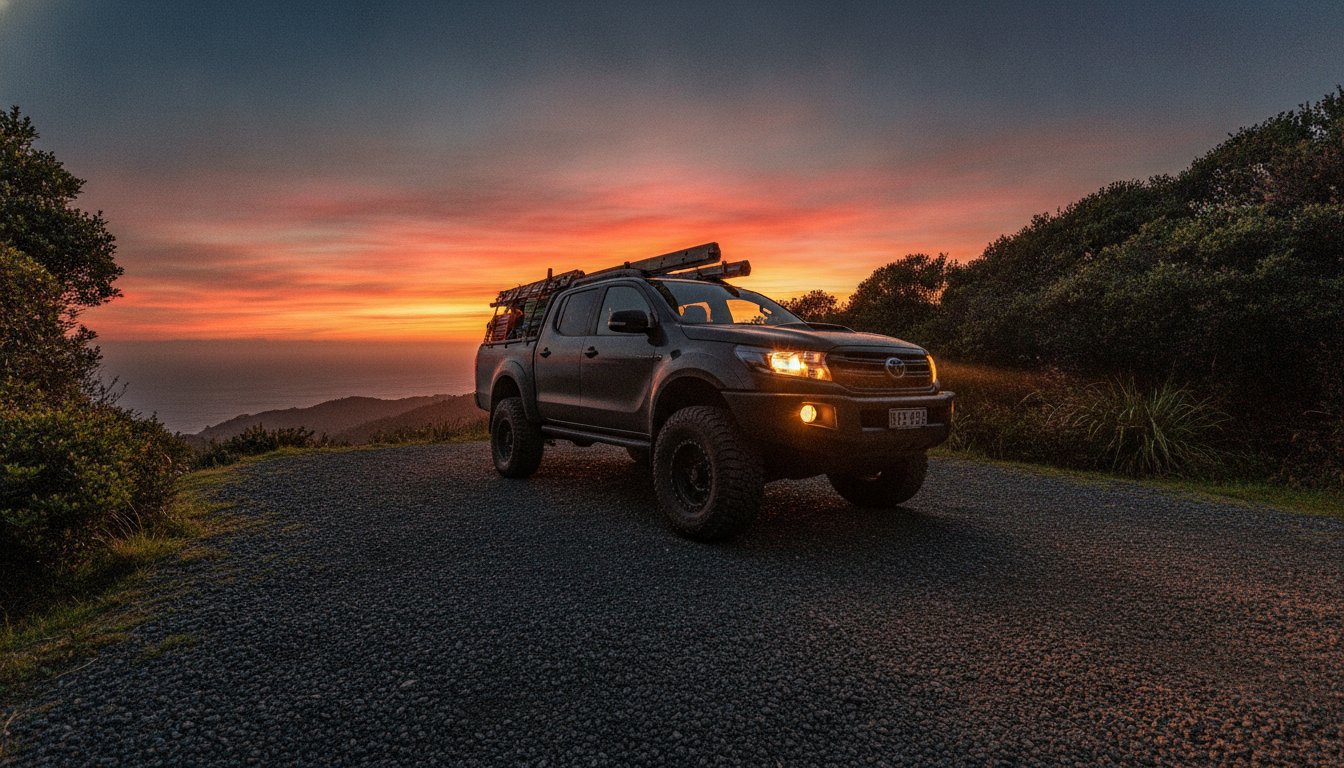
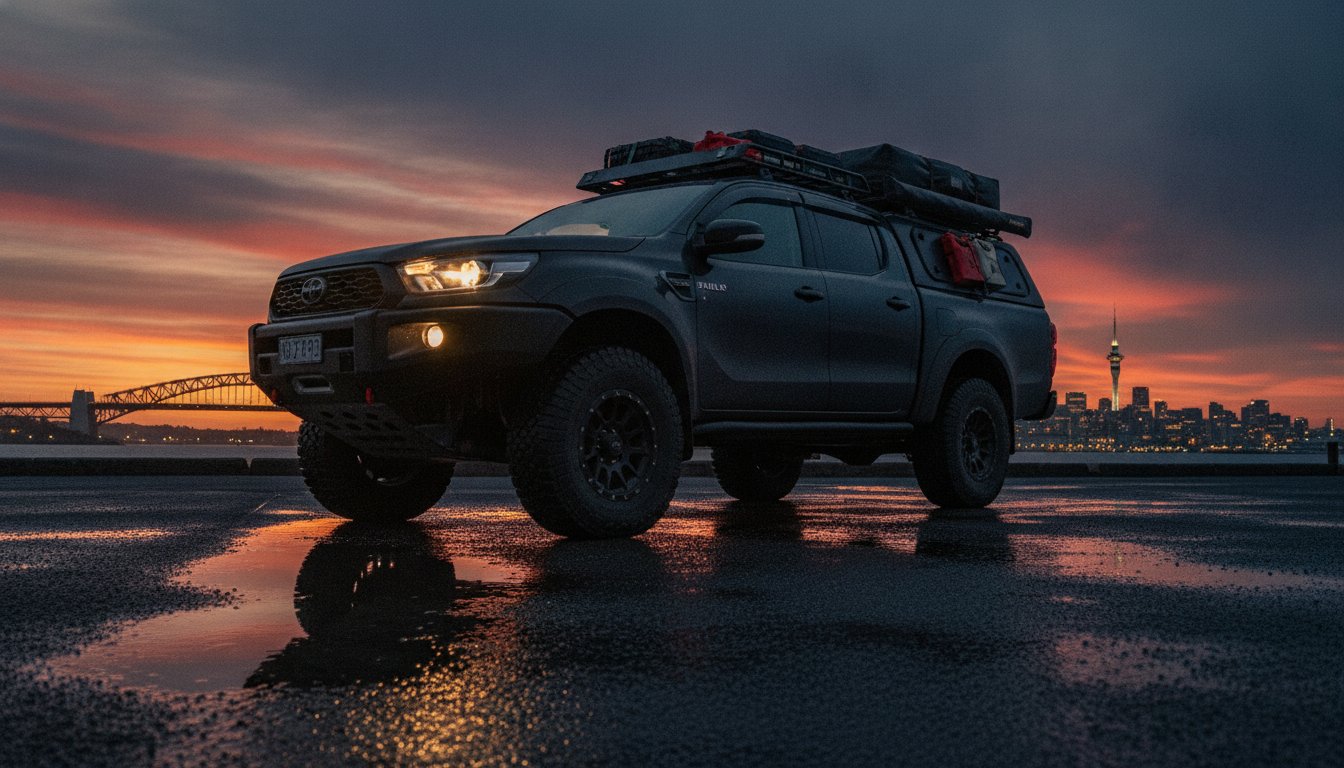
You’re heading over the Harbour Bridge with a tray full of gear, and every time you hit a slight dip, your headlights aim for the sky while the rear end threatens to bottom out. It is a frustrating reality for many Auckland tradies and weekend tourers who find their factory setups simply cannot cope with the demands of a heavy canopy or a loaded trailer. You shouldn’t have to choose between carrying your essential equipment and maintaining a safe, level ride height.
Securing a professional heavy duty suspension upgrade Auckland wide is the most effective way to restore your vehicle’s balance and handling. Beyond just aesthetics, a correctly engineered system transforms how your rig responds to the winding coastal roads around the Hauraki Gulf. You will discover how to increase your load-carrying capacity significantly without turning your daily commute into a bone-shaking experience.
This guide explores the technical requirements for GVM compliance, the necessity of ADAS calibration, and how to ensure your modifications meet all NZTA standards for your next WOF. From the North Shore to the off-road tracks of Muriwai, we cover everything you need to know about building a reliable, high-performance suspension system.
Key Takeaways
- Learn why standard factory suspension sags under heavy loads and how a specialised upgrade restores steering precision and braking safety.
- Discover the essential roles of heavy-duty springs and gas-charged shock absorbers in managing constant weight and New Zealand’s corrugated terrain.
- Understand the legal requirements of GVM upgrades and why a professional heavy duty suspension upgrade Auckland based is critical for insurance and WOF compliance.
- Find out how to tailor your rig for specific local environments, from the soft sands of Muriwai Beach to the gravel tracks of the Hunua Ranges.
- Identify why professional installation and ADAS calibration are mandatory to ensure your vehicle’s safety systems function correctly after a lift.
Why Standard Suspension Struggles with Auckland Loads
Standard factory-fitted vehicle suspension systems are designed with a primary focus on unladen ride comfort. While this works well for a showroom test drive, it rarely meets the requirements of a working ute or a dedicated touring rig. Most modern 4WDs leave the factory with “soft” spring rates intended to soak up minor road imperfections, but these components lack the structural integrity to support constant payloads. A professional heavy duty suspension upgrade Auckland owners can rely on is engineered specifically to handle the persistent weight of toolboxes, bullbars, and camping equipment without sacrificing control.
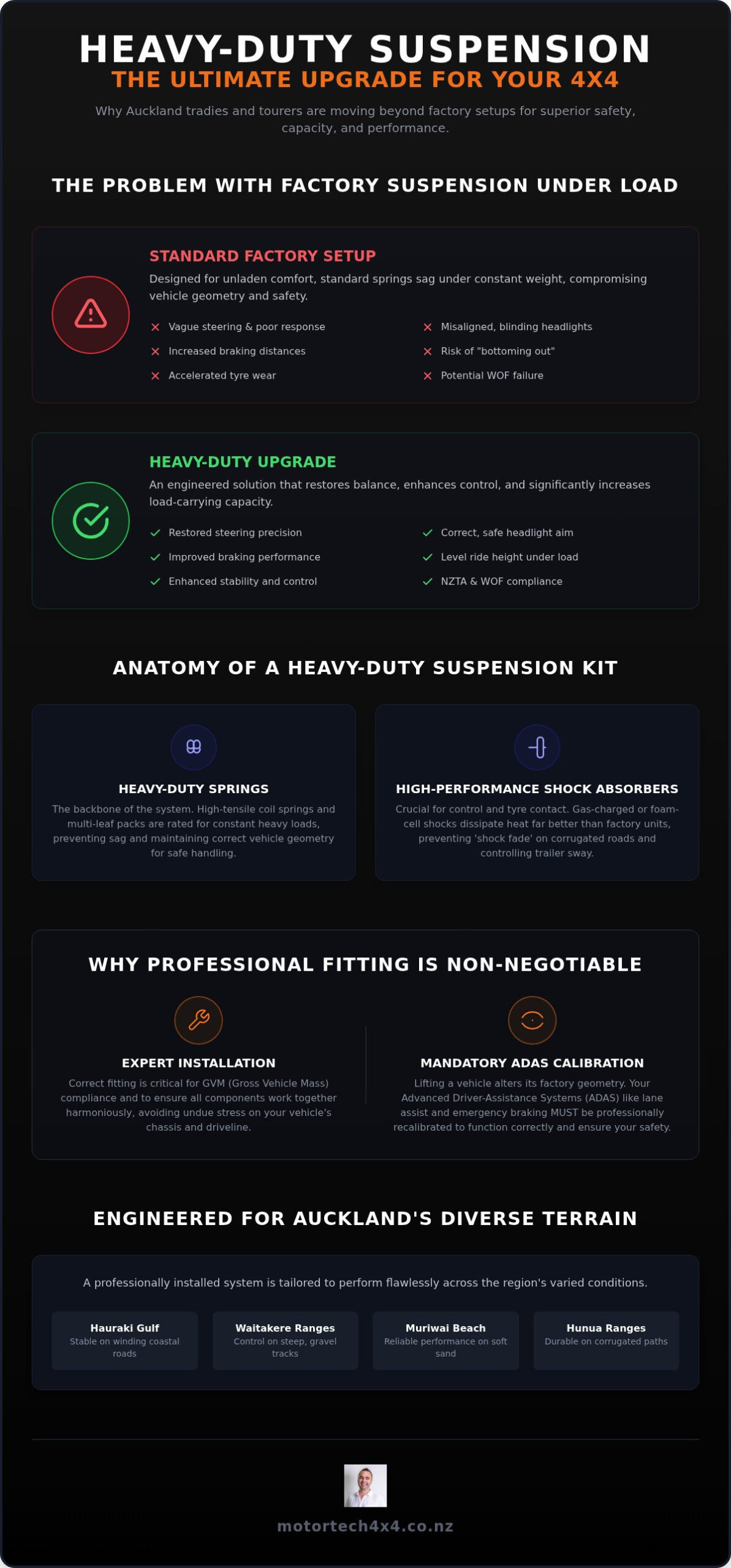
When a vehicle is loaded beyond the effective range of its factory springs, it suffers from “suspension sag.” This isn’t just a cosmetic issue where the rear end sits lower than the front; it fundamentally alters the vehicle’s geometry. As the rear squats, the front end lifts, which reduces the contact patch of the front tyres. This leads to vague steering response, increased braking distances, and accelerated tyre wear. In a city like Auckland, where you might transition from a smooth motorway to a steep, corrugated gravel track in the Waitakere Ranges within thirty minutes, these handling deficits become dangerous.
The Problem with Constant Payloads
Tradies often carry several hundred kilograms of tools and materials permanently. This constant pressure causes factory leaf springs to lose their arch over time, a process known as de-cambering. Once the springs are flattened, the vehicle is prone to “bottoming out” on common obstacles like speed bumps or off-road washouts. This creates a harsh metal-on-metal impact that can damage the chassis. Additionally, the resulting nose-up stance misaligns the headlight beams, often blinding oncoming drivers on Auckland’s narrow coastal roads and potentially leading to a WOF failure.
Towing Performance in the Auckland Region
Towing a heavy boat to the Hauraki Gulf or a caravan to the Coromandel places immense stress on the rear axle. Without a heavy duty suspension upgrade Auckland specialists recommend, the added tongue weight causes the vehicle to pitch and roll excessively. High-quality shock absorbers are essential here. They are designed with larger bores and better oil capacity to dissipate heat during long hauls. This superior dampening controls “trailer sway,” ensuring the vehicle and its load remain stable even when buffeted by crosswinds on the Harbour Bridge or navigating the winding turns of the Hunua Ranges.
Essential Components of a Heavy Duty Suspension Kit
Many drivers confuse a cosmetic lift with a functional heavy duty suspension upgrade Auckland specialists provide. While a simple lift kit increases ground clearance, a heavy-duty system is a comprehensive engineering solution designed for load management. High-tensile coil springs and multi-leaf packs serve as the backbone of this setup. These components are specifically rated to maintain a level ride height and stable centre of gravity while adhering to the Vehicle Dimensions and Mass Rule. Without these correctly rated parts, even a lifted vehicle will suffer from dangerous body roll when fully laden.
Choosing Between Leaf and Coil Upgrades
Most modern New Zealand utes utilise a hybrid configuration: independent front suspension with coils and a live rear axle with leaf springs. When we calculate front coil spring rates, we must account for the weight of permanent accessories like bullbars and winches to prevent nose-dive during braking. For the rear, tradies often choose between traditional leaf stacks for maximum payload or parabolic leaf springs. Parabolic designs use fewer, tapered leaves that don’t touch each other, which reduces internal friction. This results in a more supple ride when the tray is empty while still offering the support needed for heavy toolboxes.
The Role of High-Performance Shock Absorbers
Shock absorbers are the most critical component for maintaining tyre contact with the road. In the varied Auckland climate, gas-charged or foam-cell shocks are far superior to standard factory units. Foam-cell technology is particularly effective on corrugated gravel roads because it replaces the gas charge with a foam insert. This creates more space for oil, which significantly improves heat dissipation and prevents “shock fade” during long trips. Professional-grade shocks often feature larger piston diameters, typically 40mm or greater, providing the structural strength required to resist bending under high-stress off-road conditions.
Don’t overlook the smaller hardware that keeps the system together. Polyurethane bushings are essential for durability as they resist the abrasive effects of North Shore salt air and mud better than factory rubber. Greasable shackles allow for easy maintenance, ensuring the suspension moves freely and remains quiet over time. Finally, high-tensile U-bolts are non-negotiable to ensure the axle remains securely mated to the spring pack under the increased torque of a loaded rig. If you’re unsure which combination of components suits your specific payload, the team at Motortech 4X4 can help tailor a kit to your vehicle’s requirements.
When is a GVM Upgrade Necessary?
Modern dual-cab utes often advertise high towing capacities, but their actual payload capacity is surprisingly limited. Once you factor in a full tank of diesel, a steel bullbar, a winch, and a canopy, you might only have 300kg of legal payload remaining for passengers and gear. If you frequently carry heavy toolboxes or tow a large boat, you are likely operating near or over your legal limit. Under the NZ government vehicle modification rules, staying compliant is mandatory for passing a Warrant of Fitness (WOF) and maintaining road-legal status.
The Certification Process for Auckland Drivers
The path to a legal GVM upgrade involves more than just fitting parts. Once the specialised suspension kit is installed, the vehicle must be inspected by an authorised LVVTA certifier. This professional validates that the installation meets all safety criteria. Following a successful inspection, a permanent modification plate is fixed to the vehicle’s engine bay or door pillar, detailing the new legal GVM. At Motortech 4X4, we manage this entire technical process, from selecting the correct kit to facilitating the final certification. This “one-stop” approach ensures your rig is both high-performing and fully compliant with New Zealand law.
Tailoring Your Rig for Auckland’s Diverse Terrain
Auckland presents a unique engineering challenge for any vehicle suspension. You might spend your morning navigating the stop-start traffic of the Southern Motorway and your afternoon tackling the soft, shifting sands of Muriwai or the technical tracks of Woodhill Forest. A heavy duty suspension upgrade Auckland drivers choose must be versatile enough to handle both environments. Sand driving requires excellent articulation and ground clearance to avoid “bellying out” in deep ruts, while motorway speeds demand a firm, stable platform to minimise wind buffeting and body roll. Balancing these two extremes is the hallmark of a professionally tuned system.
Corrugated gravel roads, such as those found throughout the Hunua Ranges, are notorious for destroying budget suspension. The constant high-frequency vibrations generate extreme heat within shock absorbers. If your shocks aren’t up to the task, the oil will foam and lose its dampening properties, leading to a dangerous loss of control. Additionally, the Auckland region’s proximity to the coast means salt air is a constant threat. Combined with the abrasive mud of local tracks, this environment accelerates the wear of rubber components. Upgrading to high-durability polyurethane bushings and protected shock shafts is a practical necessity for long-term reliability.
The “Weekend Warrior” Setup
For vehicles that serve as both a daily commuter and a weekend explorer, a 50mm lift is the industry sweet spot. This height provides a significant increase in approach and departure angles for off-roading without requiring complex certification for the lift alone. Progressive rate springs are the ideal choice here. They feature a varying pitch in the coil, allowing the suspension to remain supple over small bumps while firming up significantly when the vehicle leans into a corner or carries a heavier load. This setup works in perfect harmony with modern all-terrain tyres, providing a quiet ride on bitumen and reliable traction in the dirt.
Commercial and Fleet Requirements
Managing a fleet of working utes requires a different approach focused on safety and uptime. Standardising a heavy duty suspension upgrade Auckland wide across all company vehicles ensures that every driver experiences predictable handling, regardless of the specific rig they are operating. Vehicles fitted with permanent service bodies or heavy hardlids require constant-load springs to prevent sagging and maintain legal headlight aim. By investing in high-durability, low-maintenance components, fleet managers can significantly reduce vehicle downtime caused by premature bushing failure or snapped leaf springs.
If you need a tailored solution for your specific driving conditions, contact the experts at Motortech 4X4 to discuss a professional fit-out.
Professional Fitting and ADAS Calibration at Motortech 4X4
The technical success of a heavy duty suspension upgrade Auckland owners invest in depends entirely on the precision of the installation. While the hardware provides the capacity, the fitting process determines the vehicle’s ultimate safety and driveability. Professional installation ensures that suspension geometry, including caster, camber, and toe, is correctly aligned to account for the new ride height. Incorrectly fitted components can lead to premature bush failure, driveline vibrations, and erratic handling that compromises the structural integrity of your rig.
At Motortech 4X4, our specialised workshop is equipped to handle the complexities of modern vehicle architecture. We don’t just swap springs; we perform a comprehensive engineering review of the entire system. This includes a meticulous post-installation check and a precision wheel alignment to ensure your vehicle tracks straight and true, whether you’re navigating North Shore suburban streets or rugged back-country trails. Our “one-stop” approach means we manage the technical fitment, the legal certification requirements, and the essential electronic recalibrations in a single location.
Recalibrating Your Safety Systems
Modern 4WDs are equipped with Advanced Driver Assistance Systems (ADAS) that rely on cameras and radar sensors to function. When you perform a heavy duty suspension upgrade Auckland specialists know that even a minor change in vehicle height or rake alters the sensor’s field of view. This can cause lane-keep assist, adaptive cruise control, and autonomous emergency braking systems to misinterpret road data, potentially leading to ghost braking or a failure to intervene in an emergency.
Skipping ADAS calibration after a suspension lift is a significant safety risk and may render your vehicle non-compliant with current NZTA standards. Our technicians use specialised diagnostic equipment to perform static and dynamic calibrations, resetting the vehicle’s “electronic eyes” to their new baseline. This ensures that your safety tech remains a reliable asset rather than a liability on the road.
The Motortech 4X4 Advantage
Choosing Motortech 4X4 means gaining access to industry-leading suspension brands backed by expert technical advice. We understand the specific nuances of New Zealand’s regulatory environment and the unique demands of our local terrain. Our team provides a seamless transition from the initial supply and fitting to the final LVVTA certification and electronic calibration. This comprehensive service model guarantees that your vehicle is returned to you in peak condition, fully road-legal, and ready for any challenge.
Book your suspension consultation with the Auckland experts at Motortech 4X4 to ensure your rig is engineered for performance and safety.
Engineering Your Rig for the Road Ahead
Investing in a heavy duty suspension upgrade Auckland wide ensures your vehicle handles the dual demands of a working week and weekend exploration. We’ve explored how correctly rated springs and high-performance dampeners prevent dangerous sagging while maintaining precise steering on winding coastal roads. Safety remains paramount; therefore, achieving GVM compliance and performing mandatory ADAS calibration are non-negotiable steps for any modern 4×4.
As Auckland-based modification specialists, Motortech 4X4 provides the technical expertise and specialised on-site equipment needed to keep your rig road-legal and performing at its peak. Our team offers expert guidance on GVM and LVVTA compliance, ensuring your fit-out meets every regulatory standard. Don’t settle for a compromised ride when you can have a system engineered specifically for your unique payload and lifestyle.
Get a Professional Suspension Quote for Your Rig
Your next adventure starts with a stable, capable, and fully certified setup that’s ready for the toughest New Zealand tracks. For those planning a tropical getaway, you can experience the same level of off-road confidence by hiring a premium vehicle from Bext Oahu for your island travels.
Frequently Asked Questions
Will a heavy-duty suspension upgrade make my ute ride roughly when empty?
A correctly specified heavy duty suspension upgrade Auckland wide won’t necessarily result in a harsh ride when unladen. By utilising progressive rate springs or parabolic leaf packs, the system remains supple over small bumps while providing the necessary stiffness once a load is added. This ensures the vehicle remains comfortable for daily commuting while retaining its heavy-duty work or towing capabilities for the weekend.
How much height will a heavy-duty suspension kit add to my vehicle?
Most heavy-duty kits add approximately 50mm of height to your vehicle. This 2-inch lift is the industry standard because it provides a significant increase in ground clearance and approach angles without automatically requiring Low Volume Vehicle (LVV) certification. However, the final height depends on the specific spring rates chosen and the permanent weight of accessories like bullbars or rear canopies already fitted to the chassis.
Do I need a GVM upgrade if I only tow occasionally?
You need a GVM upgrade if your total vehicle weight, including the tow ball download, exceeds the factory legal limit. Even if you only tow a boat or caravan occasionally, being overweight during that trip creates significant insurance and safety risks. If your “real world” loaded weight is consistently near the limit, a certified upgrade provides the legal headroom and structural support required for safe operation.
Is a suspension lift legal for a Warrant of Fitness (WOF) in Auckland?
Suspension lifts are legal for a WOF in Auckland as long as they comply with NZTA guidelines. Generally, a lift of up to 50mm using a recognised kit is acceptable without an LVVTA certification. If the lift exceeds this height, or if you’ve performed a GVM upgrade, you must have an LVV certification plate fixed to the vehicle to pass your inspection and remain road-legal.
How long does it take to install a full heavy-duty suspension kit?
A professional installation typically takes one full working day to complete. This timeframe allows our technicians to fit the hardware, perform a precision wheel alignment, and conduct a thorough safety check. If your vehicle requires ADAS calibration or GVM certification, additional time may be needed to ensure all electronic systems and legal documents are finalised before the vehicle is returned to you.
Why is ADAS calibration required after a suspension upgrade?
ADAS calibration is mandatory because lifting a vehicle changes the “eye level” of cameras and radar sensors. These systems are programmed to work at a specific factory height; once that height is altered, the sensors may miscalculate distances. This can lead to the failure of lane-keep assist or autonomous emergency braking, making the vehicle unsafe and potentially non-compliant with New Zealand safety regulations.
Can I install a heavy-duty kit myself to save on costs?
While DIY kits are available, professional installation is strongly recommended to ensure safety and legal compliance. Incorrectly fitted components can lead to catastrophic failure or WOF rejection. Furthermore, modern 4WDs require specialised tools for ADAS calibration and precision wheel alignments that aren’t available to the average home mechanic. Professional fitment also protects your product warranty and ensures the system is correctly engineered.
What maintenance does upgraded suspension require after off-roading?
Post-off-road maintenance involves a thorough cleaning and a visual inspection of all components. You should wash away abrasive mud and salt spray immediately to prevent corrosion and premature bushing wear. If your heavy duty suspension upgrade Auckland kit includes greasable shackles, these should be lubricated regularly. It’s also wise to check for any loose U-bolts or signs of shock absorber leaks after tackling particularly rugged tracks.