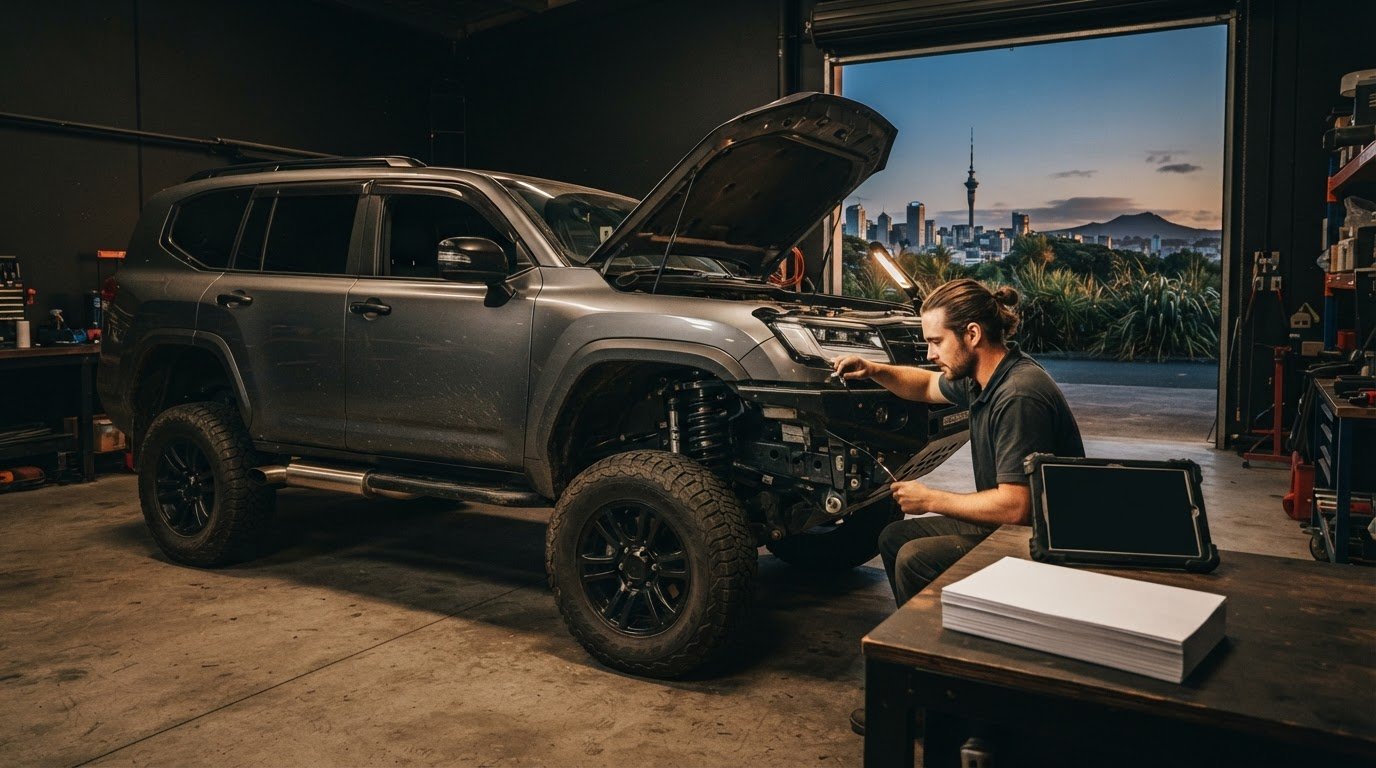
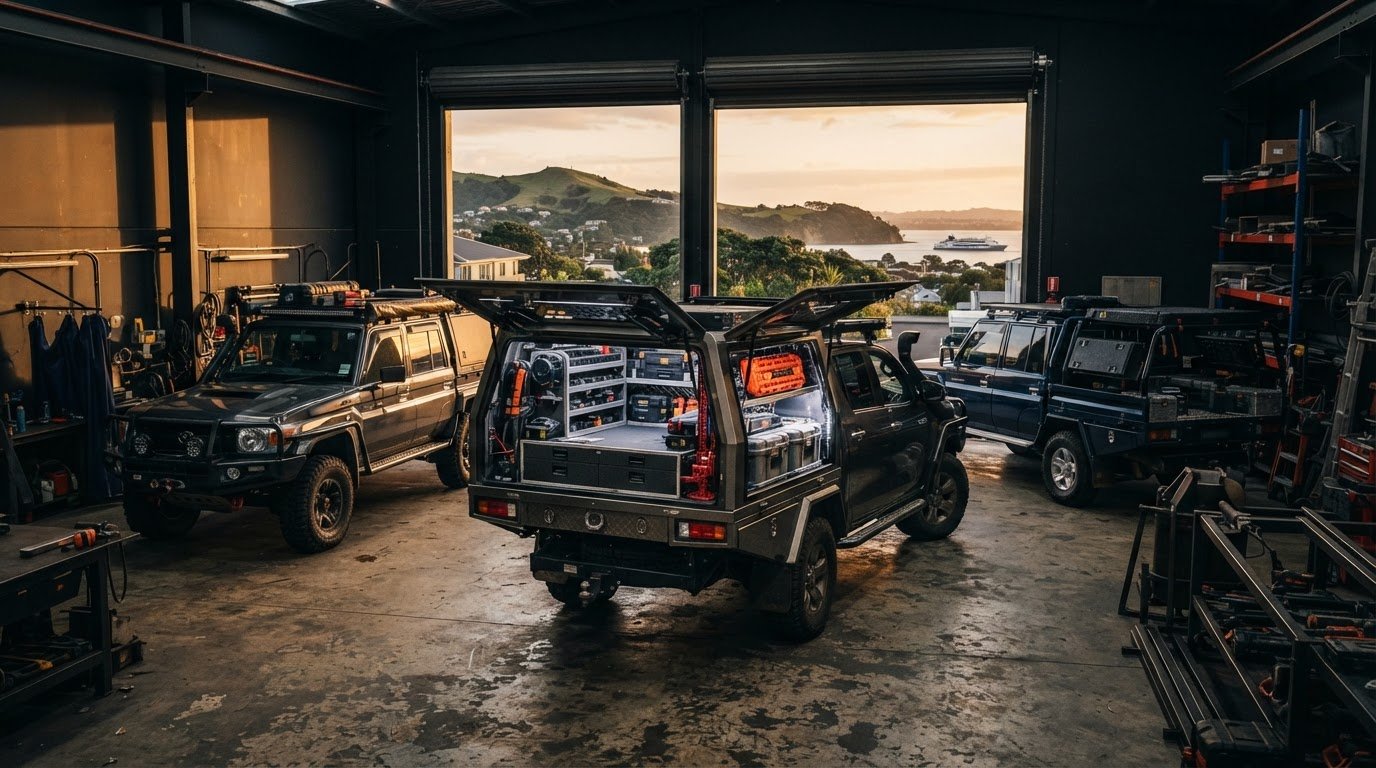
A useful fleet fit-out starts with the job each vehicle needs to do. For commercial vehicle fitouts Auckland businesses should consider work tasks, vehicle type and fleet requirements together, before deciding what equipment or modifications to include.
A consistent fleet can make planning simpler, but identical fit-outs won’t always suit vehicles with different roles. Start by recording what each vehicle carries and where it operates, then consider its existing setup, modifications and ongoing servicing needs. This helps keep the fit-out practical without treating every vehicle as interchangeable.
This guide explains how to scope a fit-out around real vehicle tasks, account for modifications and servicing, and balance fleet-wide consistency with role-specific requirements. Motortech 4X4 provides Fleet Servicing and Custom Fit-Outs from its fully equipped workshop in Glenfield, North Shore. Its custom fabrication and mechanical services can support a considered fit-out plan for your Auckland fleet.
Key Takeaways
- Start with each vehicle’s regular tasks and the equipment those jobs require.
- Plan commercial vehicle fitouts Auckland fleets can use by balancing vehicle-specific needs with useful fleet-wide consistency.
- Prioritise requirements that support the vehicle’s work before considering optional additions.
- Prepare a brief covering vehicle details, work tasks, equipment, shared requirements and servicing needs.
- Motortech 4X4 provides Fleet Servicing and Custom Fit-Outs from its workshop in Glenfield, North Shore.
What commercial vehicle fit-outs in Auckland should achieve
A fleet fit-out is not simply a matter of adding equipment. It should configure each vehicle to support its assigned work, with modifications and accessories that have a clear purpose. The right scope depends on the vehicle and the tasks it needs to perform.
This differs from adding general accessories for appearance or convenience. It is also distinct from routine mechanical servicing, which maintains a vehicle rather than configuring it for a particular role. A fit-out may involve custom fabrication or selected accessories. For example, a vehicle that regularly carries work equipment may have different priorities from one used to travel between sites with a different load or operating pattern.
Start with three factors: the vehicle’s role, its existing setup and the fleet’s operating needs. Make and model, current equipment and planned use all affect what is practical. Fleet-wide requirements matter too, including whether vehicles need a consistent layout, how they are serviced and whether different teams use them. Applying fleet management principles means treating the fit-out as part of planning and maintaining the fleet, not as an isolated accessory decision.
Start with the vehicle’s job, not a catalogue
List the vehicle’s regular tasks, then identify what it must carry, access or support to do that work. Separate essential requirements from optional enhancements in the initial brief. Equipment needed for every shift is a stronger priority than an addition used only occasionally. This makes decisions easier to explain and avoids assuming that every vehicle needs the same configuration.
Auckland location and local workshop support
Motortech 4X4 is based in Glenfield, North Shore, Auckland, and provides Fleet Servicing and Custom Fit-Outs. Planning fit-out work alongside servicing helps fleet operators consider vehicle modifications and ongoing mechanical needs together. For broader context on vehicle upgrades, servicing and off-road equipment, explore this Auckland 4×4 guide.
Good planning means establishing what each vehicle must do, what it already has and where the fleet needs consistency. This gives you a sound basis for deciding which requirements belong in the fit-out and which can remain optional. For commercial vehicle fitouts Auckland operators can plan around real work, start with the vehicle’s role before choosing equipment.
How to scope a commercial vehicle fit-out around real work
A clear brief turns a broad request for a work-ready vehicle into decisions that can be assessed and prioritised. Use this sequence to organise the information. The details will depend on each vehicle’s type, existing setup, work pattern and equipment needs.
- Define the tasks. Describe the vehicle’s regular role, where it operates and what work it supports. Include occasional tasks if they affect what the vehicle needs to carry.
- List the equipment. Record the items required for those tasks, separating everyday essentials from equipment used less often. Note any handling or access needs that affect how the vehicle is used.
- Assess the vehicle. Document its make, model, existing modifications and current condition. Consider whether the proposed setup suits that vehicle instead of assuming the same changes will work across different fleet vehicles.
- Prioritise requirements. Identify what is essential for the job, what would improve operation and what can remain optional. This keeps the brief focused and clarifies where vehicle-specific needs differ.
- Plan follow-up. Include servicing and maintenance considerations alongside the fit-out. Record relevant work for future fleet planning so vehicle support is considered as part of the overall plan.
Build a useful vehicle and fleet brief
Keep the brief practical. For each vehicle, record its role, regular tasks and equipment to be carried. Then mark which requirements apply across the fleet and which are specific to that vehicle or team. For example, distinguish shared operational essentials from equipment needed only for a particular type of work. Set priorities before considering optional enhancements, so decisions stay connected to each vehicle’s duties.
Vehicle type matters because the existing setup and suitability for proposed changes can differ. Work patterns matter too. A vehicle regularly assigned one set of tasks may need a different configuration from one used for varied duties. Listing these distinctions helps make fleet planning consistent without forcing every vehicle into the same specification.
Consider modifications, fabrication and vehicle support
Some requirements may call for custom fabrication rather than a standard accessory. Motortech 4X4’s fabrication capabilities include custom front and rear protection bars, bumpers, side steps, roll bars, spare-wheel carriers and side-protection bars. These examples can help frame a discussion about the work a vehicle needs to support, but they are not a universal fit-out list. Scope each modification against the vehicle’s role and existing setup.
Map the fit-out against ongoing fleet maintenance too. Servicing, mechanical work and tyre fitting are relevant parts of vehicle support. Considering them alongside modifications keeps the brief grounded in the fleet’s operational needs. For commercial vehicle fitouts Auckland operators can plan more clearly, bring the vehicle and fleet requirements together with Motortech 4X4’s fleet fit-out team.
Compare fit-out priorities without overbuilding the fleet
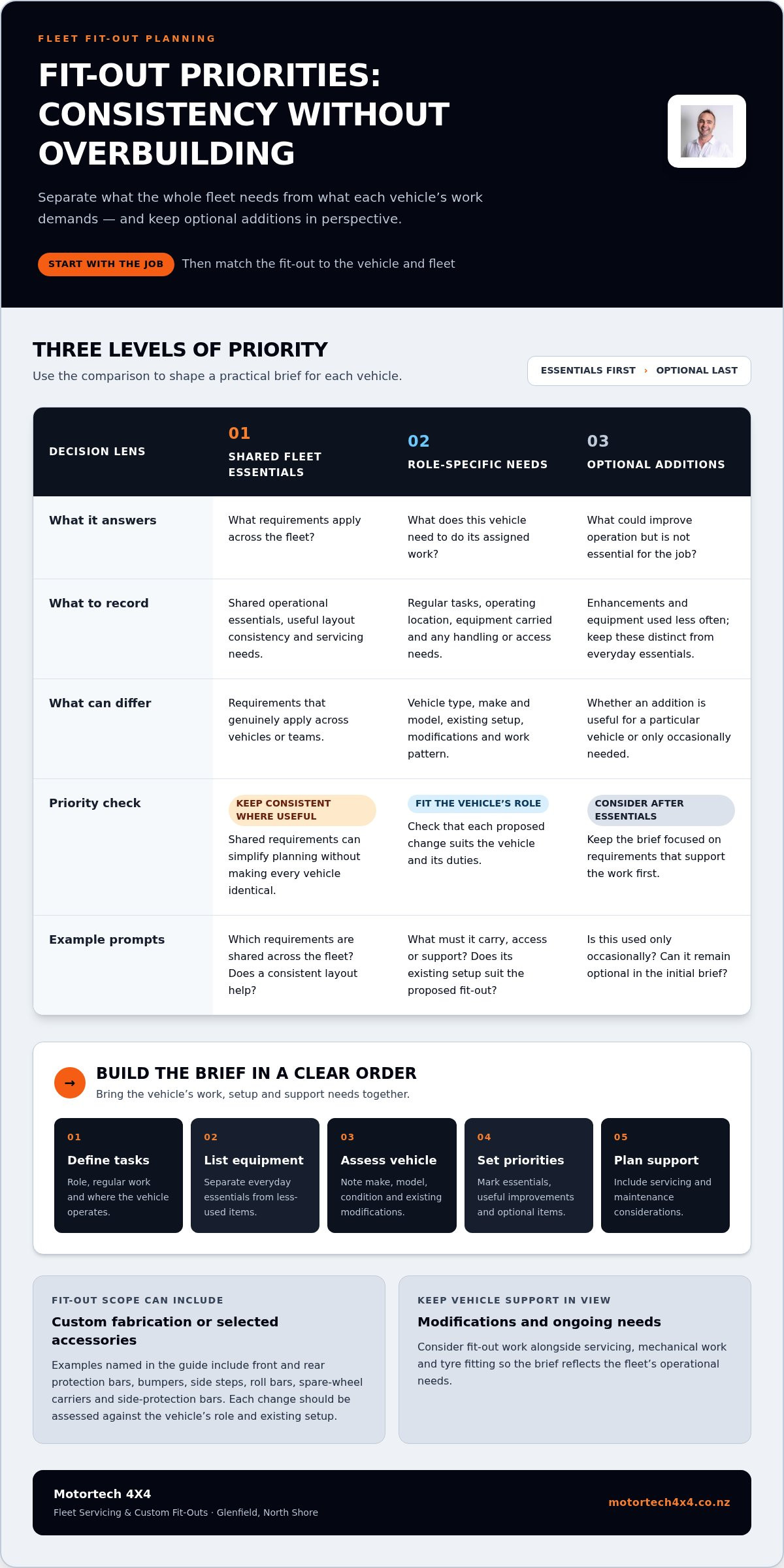
Custom fit-outs don’t have to mean a different plan for every vehicle. Separate decisions into shared fleet essentials, role-specific requirements and optional enhancements. This makes it easier to see where consistency is useful and where different duties call for different choices. The comparison below is a planning aid, not a universal specification.
| Decision area | Vehicle-specific approach | Fleet-wide approach |
|---|---|---|
| Work role | Tailor the brief where a vehicle has distinct tasks or equipment needs. | Set common requirements where vehicles perform similar work. |
| Equipment | Allow for items needed only by a particular role or team. | Use shared essentials as a consistent baseline where they suit the vehicles. |
| Future flexibility | Consider whether the vehicle’s duties may change and which choices would still make sense. | Consider whether common requirements would remain practical across the fleet. |
Vehicle-specific fit-out or a consistent fleet approach?
Different duties may justify different fit-out briefs, particularly when vehicles carry different equipment or support distinct work. Identify shared essentials first, then document role-specific requirements separately. Consistency can simplify fleet planning, but only when the same requirement genuinely applies. For each proposed common feature, ask whether the vehicles perform similar tasks and whether the same setup suits their existing configurations.
Customisation can seem to complicate fleet planning. Breaking choices into shared and vehicle-specific priorities makes the comparison more manageable. It also gives fleet managers a reason for each variation, rather than treating every difference as an exception without context.
Essential work needs or additional enhancements?
Separate equipment needed to complete the work from modifications that may offer protection or other benefits for a particular role. Motortech 4X4’s custom fabrication capabilities include protection bars, bumpers, side steps, roll bars and spare-wheel carriers. These are examples to consider against a vehicle’s actual use, not standard items for every fit-out. If protection bars are relevant, the 4×4 bullbar selection guide offers more context.
For each optional enhancement, ask what work requirement it addresses, which vehicles need it and whether it could limit flexibility later. Is the vehicle’s role likely to change? Would the proposed modification remain useful if its duties shifted? These questions help distinguish a justified requirement from an addition that has not earned priority in the brief.
There is no single package that suits every fleet. The right balance for commercial vehicle fitouts Auckland depends on actual tasks, vehicle roles and which requirements are shared. Document essentials first, then record justified variations and optional choices separately. This gives decision-makers a clearer basis for planning without overbuilding vehicles or forcing uniformity where it does not fit.
Prepare a fit-out brief that is practical to deliver and maintain
A concise brief turns operational needs into a clear discussion about vehicle modifications, servicing and fleet consistency. Gather the information below for each vehicle, noting where details differ across the fleet. You don’t need to prescribe a technical solution. Accurate vehicle and work information gives the fit-out discussion a useful starting point.
Checklist: information to gather before planning
Build a simple record for each vehicle, then compare it with the rest of the fleet. Include the details that affect its work and ongoing support.
- Vehicle details: Record the make, model and known differences between vehicles, such as variations in configuration or current setup.
- Work role: Describe the vehicle’s main duties and the tasks performed during a typical workday. Note less frequent jobs if they affect what it needs to carry.
- Equipment: List the equipment and materials carried, distinguishing regular essentials from occasional items. Include how staff use or access them as part of the work.
- Existing modifications: Document known modifications and relevant electronic systems. Record what has already been changed rather than assuming how a proposed fit-out will interact with the vehicle.
- Fleet consistency: Mark which requirements are shared and which apply only to a particular vehicle or role.
- Servicing needs: Note known maintenance requirements and relevant servicing history so the wider vehicle support plan can account for the fit-out.
This record helps expose gaps before decisions are made. If two vehicles appear to do similar work but have different existing modifications, note that distinction rather than treating them as identical. Keep the brief factual: describe the work, equipment and known vehicle details, then separate confirmed requirements from questions needing technical consideration.
Plan for servicing and vehicle systems
Fit-out planning should sit alongside ongoing fleet servicing. A joined-up brief considers vehicle modifications and maintenance needs together, rather than treating installed equipment as separate from the vehicle. Motortech 4X4 provides Fleet Servicing and Custom Fit-Outs, bringing these areas of vehicle support together.
Include electronic systems in the vehicle record, particularly if the proposed work could relate to them. Motortech 4X4 provides ADAS calibration, but not every fit-out requires calibration. Treat it as a relevant consideration where the vehicle and proposed work make it applicable. If suspension modifications are part of the brief, use the suspension systems guide for further context on suspension systems.
With these details organised, fleet operators can take a more complete brief into a fit-out discussion. For commercial vehicle fitouts Auckland businesses can plan around real vehicle and maintenance needs, discuss your fleet fit-out requirements with Motortech 4X4.
Commercial vehicle fit-outs in Auckland with Motortech 4X4
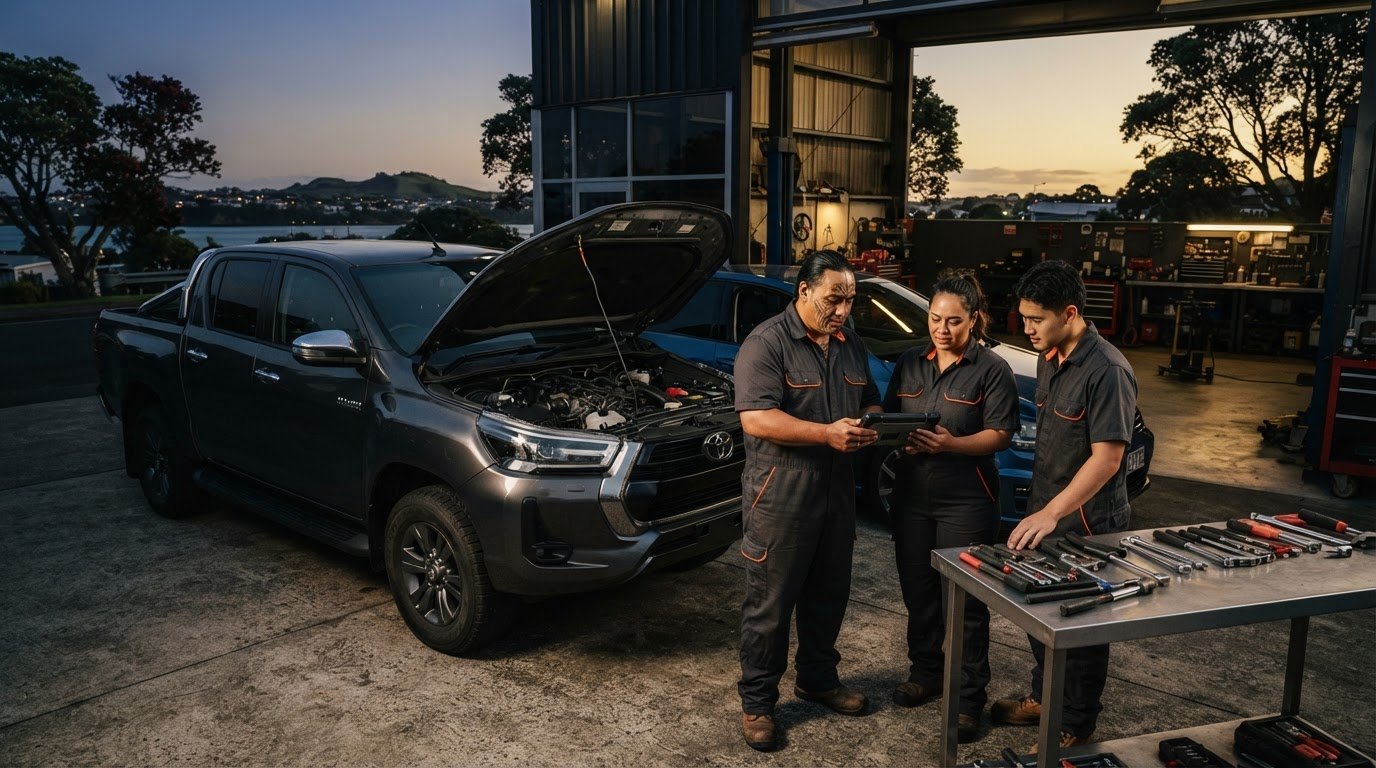
For fleet operators, a fit-out is part of a wider vehicle plan. Motortech 4X4 provides Fleet Servicing and Custom Fit-Outs from its fully equipped workshop in Glenfield, North Shore, Auckland. The workshop supports fleet operators as well as individual vehicle owners, bringing fit-out and mechanical capabilities together in one local setting.
A local workshop combining fit-outs and fleet servicing
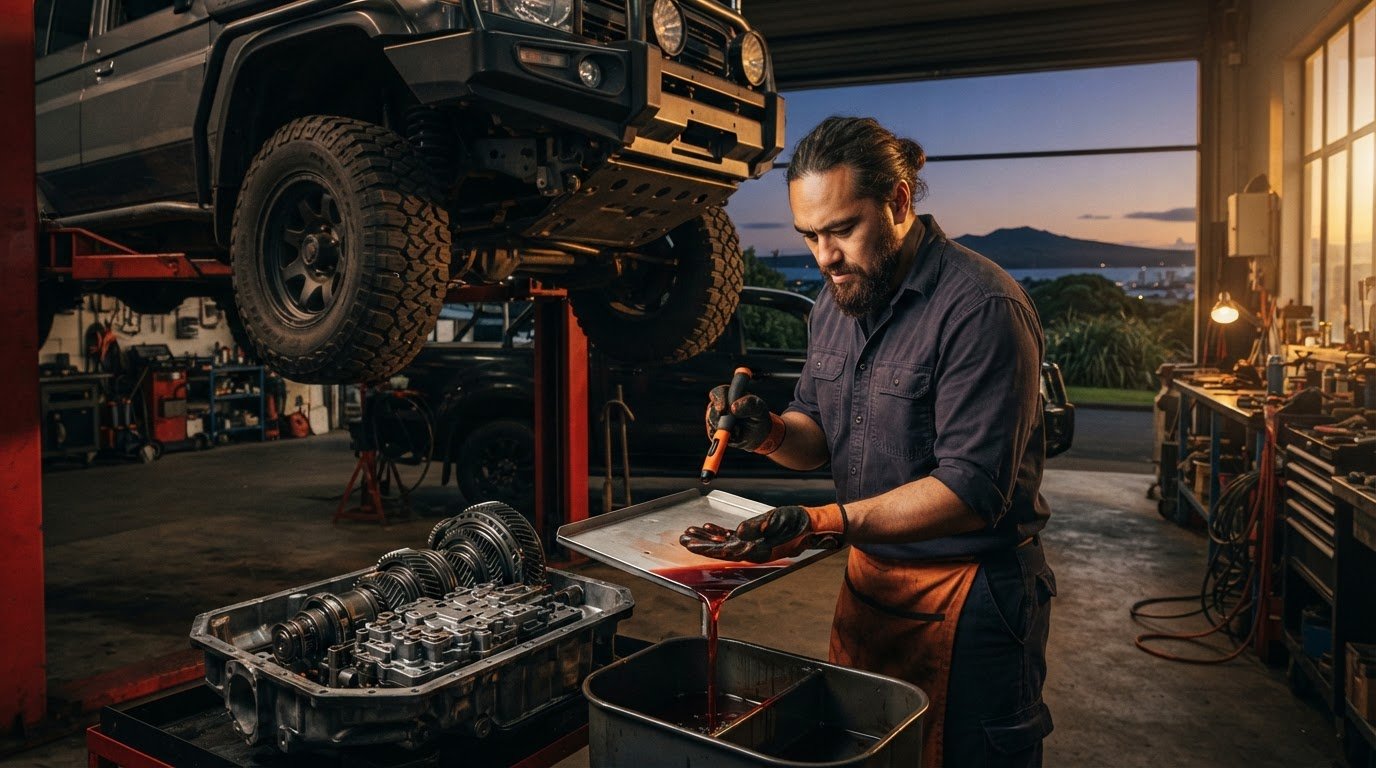
Motortech 4X4’s workshop combines fleet servicing with custom fabrication and mechanical work. Its fabrication capabilities include custom front and rear protection bars, bumpers, side steps, roll bars, spare-wheel carriers and side-protection bars. Workshop equipment includes a JD Squared model 32 hydraulic tube bender, a lathe and welders. These are workshop resources, not a standard fit-out package. The vehicle’s role and brief determine what work is appropriate.
Related vehicle support includes tyre fitting and ADAS calibration, alongside servicing and mechanical work. ADAS calibration is a listed service, but it is not automatically required for every fit-out. Motortech 4X4 also uses genuine and high-quality OEM parts and consumables. Considering these services alongside fit-out requirements helps fleet operators form a joined-up view of vehicle modifications and ongoing maintenance, without assuming every vehicle needs the same work.
This combination is relevant when a fleet plan involves more than choosing accessories. Custom fabrication can support vehicle-specific work, while servicing and tyre fitting are part of maintaining vehicles in operation. The right scope comes from the tasks, vehicle details and fleet requirements set out in the brief.
Discuss your commercial vehicle fit-out requirements
To make an initial discussion useful, bring a concise outline of the fleet and the work each vehicle needs to perform. Include vehicle makes and models, existing modifications, regular tasks, equipment carried and differences between vehicle roles. Note servicing needs too, so fit-out requirements can be considered alongside ongoing fleet support.
For commercial vehicle fitouts Auckland operators can plan around real work and vehicle requirements, Motortech 4X4 offers a local workshop with Fleet Servicing and Custom Fit-Outs, fabrication, mechanical work and other listed vehicle services. Start a conversation about your requirements through Talk to Motortech 4X4 about your fleet fit-out.
Turn your fleet brief into a practical next step
A fit-out plan is useful when it supports clear decisions for each vehicle without adding unnecessary complexity to fleet operations. Use your brief to identify what needs attention first, what can be staged for later and which requirements should stay consistent across vehicles. This gives your team a clear basis for planning commercial vehicle fitouts Auckland businesses can align with real work.
Before taking the next step, bring together the vehicle details, work roles, equipment needs and servicing considerations you’ve recorded. You don’t need every technical decision settled. A clear outline of how the fleet operates is a strong starting point for a focused discussion about fit-out requirements.
Motortech 4X4 helps Auckland fleet operators plan custom fit-outs alongside fleet servicing. Talk to Motortech 4X4 about your Auckland fleet fit-out and take the next step towards a plan built around your vehicles and their work.
Frequently Asked Questions
What is included in a commercial vehicle fit-out?
A commercial vehicle fit-out adapts a vehicle to its work, so there is no single package for every job. The scope may involve selected accessories or custom modifications, depending on the vehicle and its intended use. Motortech 4X4 offers items such as canopies and hardlids, roof racks and LED lighting, as well as custom fabrication. A clear brief helps distinguish what the work requires from optional additions.
Can commercial vehicle fit-outs be tailored to different fleet roles?
Yes. Different fleet roles can call for different fit-out requirements, even when the vehicles belong to the same business. A vehicle assigned to one type of field work may have different priorities from one used for another role. For commercial vehicle fitouts Auckland fleet operators can plan, group vehicles by duties first, then identify which requirements they share. This creates a practical basis for consistent specifications without assuming every vehicle should be identical.
Can Motortech 4X4 handle fleet servicing as well as custom fit-outs?
Yes. Motortech 4X4 provides Fleet Servicing and Custom Fit-Outs, alongside mechanical work. This gives fleet operators a local point of support for fit-out requirements and vehicle servicing. If a vehicle is being considered for modifications, include its servicing requirements in the same fleet brief. That keeps planning grounded in both the vehicle’s intended work and its ongoing maintenance needs.
Where in Auckland is Motortech 4X4 located?
Motortech 4X4 is based in Glenfield on Auckland’s North Shore. Its fully equipped workshop provides fleet servicing and custom fit-outs, along with mechanical work, fabrication and tyre fitting. Fleet operators can include the workshop’s Auckland location in their plans for vehicle requirements and ongoing support. When outlining the work, include your fleet’s operating needs and vehicle details.
Does every commercial vehicle fit-out require ADAS calibration?
No, ADAS calibration is not automatically required for every fit-out. It is a Motortech 4X4 service, but its relevance depends on the vehicle and the work being considered. Include details about the vehicle’s electronic systems and proposed modifications in the brief rather than assuming calibration is always needed or never relevant. That gives the discussion a useful, vehicle-specific starting point.
Can custom fabrication be part of a commercial vehicle fit-out?
Yes. Custom fabrication can form part of a fit-out when it suits the vehicle’s work requirements. Motortech 4X4’s fabrication capabilities include protection bars, bumpers, side steps, roll bars, spare-wheel carriers and side-protection bars. These are examples of fabrication work, not a standard set of inclusions for every vehicle. Define the practical requirement first, then consider what fabricated component could support that role.
What information should I prepare before planning a fleet fit-out?
Prepare a concise record of each vehicle’s make and model, work role, existing modifications and the equipment it needs to carry. Note which vehicles perform similar duties and where their requirements differ. It is also useful to record relevant servicing needs and known electronic systems. A fleet overview can show shared priorities, while individual vehicle notes capture details that should not be lost in a general specification.