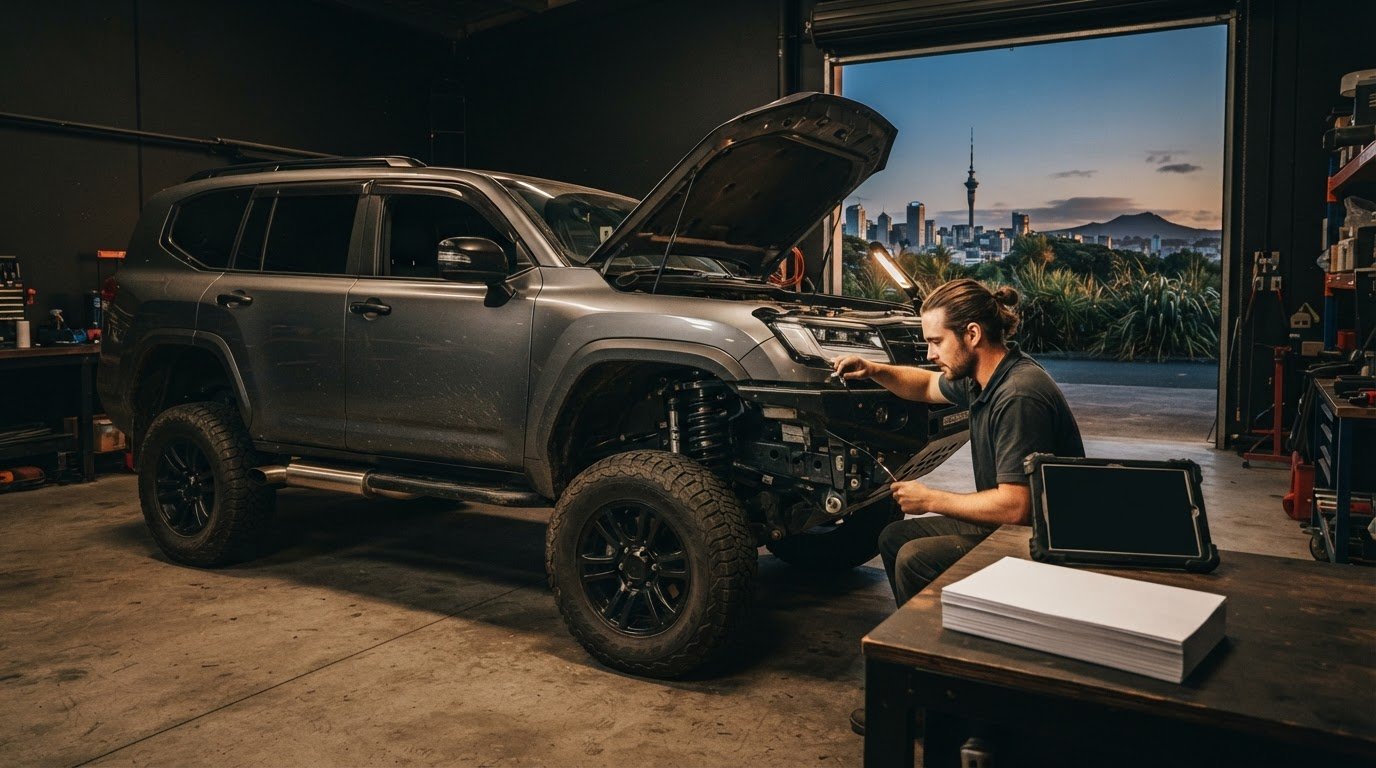

Could that new clunk, dashboard warning or change in handling be more than a minor annoyance? If you’re searching for a 4WD repair shop Auckland drivers can turn to, uncertainty about the fault, the workshop’s 4WD experience and the recommended work can make the next step difficult.
It’s reasonable to want a clear explanation before repairs begin, particularly if your vehicle has modifications or sees regular off-road use. Reliable repairs start with diagnosis, then a solution matched to the vehicle and how you use it.
This guide explains what details to share when booking, what a structured assessment should cover and how to prepare for a useful conversation about repair recommendations and timing. You’ll also learn which signs need prompt attention and why 4WD knowledge matters alongside mechanical capability. Motortech 4X4 is an Auckland-based specialist service centre for 4WDs and other vehicle brands, with mechanical services and technical support including transmission flushes and ADAS calibration. Knowing what to expect can help you arrange workshop support with greater confidence.
Key Takeaways
- New noises, warning lights, leaks, vibration or handling changes are reasons to arrange an assessment, not proof of a specific fault.
- A structured diagnosis moves from discussing symptoms to inspecting and testing relevant systems, with the approach shaped by the vehicle and its modifications.
- Choose the right visit by distinguishing a repair for a fault, servicing for maintenance and an upgrade to change capability.
- Prepare vehicle details, symptom notes and service history, and disclose aftermarket equipment or recent changes when booking a 4WD repair shop Auckland drivers can reach.
- Motortech 4X4 works on 4WDs and other vehicle brands, combining mechanical workshop capability with relevant technical services.
When should you take a 4WD to an Auckland repair shop?
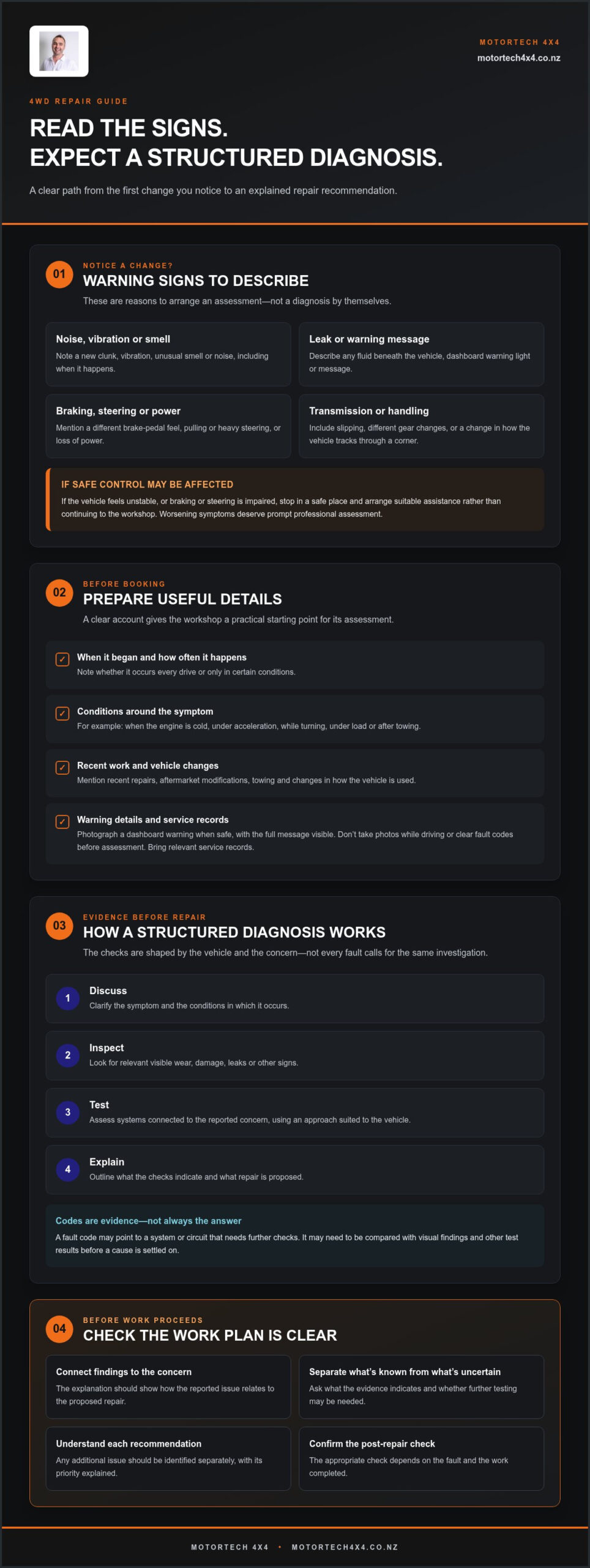
A 4WD can give you clues that something needs attention: a new clunk over bumps, a warning light, fluid beneath the vehicle, vibration through the steering wheel or a change in how it tracks through a corner. These symptoms are reasons to arrange an assessment, not a diagnosis on their own. A noise that seems minor may have several possible causes, so avoid assuming which component has failed.
Separate a possible safety fault from scheduled maintenance. A change in braking, steering or engine response deserves prompt attention, especially if it is getting worse. A service due by distance or time is planned maintenance, not proof that a repair is needed. Four-wheel drive systems vary, so an inspection should consider the particular vehicle rather than rely on a symptom alone.
If the vehicle feels unstable, braking or steering is impaired, or you believe it may be unsafe to drive, stop in a safe place and arrange suitable assistance rather than continuing to the workshop. For less urgent concerns, note the symptoms and book an assessment with an Auckland 4WD repair shop for mechanical support.
Which 4WD warning signs should not be ignored?
Pay attention to changes in braking, steering, engine performance and transmission behaviour. Examples include a brake pedal that feels different, steering that suddenly pulls or feels unusually heavy, loss of power, or a transmission that slips or shifts differently. Dashboard warnings also matter, particularly if they remain on or appear alongside a change in how the vehicle drives. If a symptom is worsening, arrange a prompt professional assessment.
Use this quick checklist to describe what you’ve noticed:
- New noise, vibration, leak or unusual smell
- Warning light or message, including when it appears
- Change in braking, steering, power or gear changes
- Whether the symptom is worsening or affecting safe control
What details help a mechanic understand the fault?
Before booking, record when the issue began and whether it happens every drive or only under certain conditions, such as when the engine is cold, under acceleration or while turning. Note recent repairs, aftermarket modifications, towing and changes in how the vehicle is used. These details help the mechanic decide what to inspect and test without treating your observations as a confirmed fault.
If a dashboard warning appears, photograph it when safe, ideally with the full message visible. Don’t take photos while driving, and avoid clearing fault codes before the assessment, as that information may help with diagnosis. Bring relevant service records and be specific about when the symptom occurs. A clear account gives the workshop a practical starting point for a focused repair assessment.
How an Auckland 4WD repair shop diagnoses mechanical faults
A useful diagnosis follows a sequence: discuss what you’ve noticed, inspect the vehicle, test the systems relevant to the symptoms, then explain the findings before recommending repair work. The checks aren’t identical for every vehicle. A noise under acceleration, for example, points the investigation in a different direction from a warning light or a vibration that changes with road speed.
Diagnosis is evidence-led testing before repair work is recommended. The aim is to identify a likely cause, not simply replace a part because it could be responsible. Symptoms can overlap: a vibration might have more than one possible source, while one underlying fault may produce several noticeable changes.
- Discuss: clarify the symptom and the conditions in which it occurs.
- Inspect: look for visible wear, damage, leaks or other relevant signs.
- Test: assess the systems connected to the reported concern.
- Explain: outline what the checks indicate and what repair is proposed.
From the driver’s description to targeted testing
Your account helps narrow the investigation. A symptom that appears only when the vehicle is cold, under load or after towing gives useful context. Service history and recent work can add further clues. The mechanic can then choose an inspection and suitable diagnostic equipment based on the vehicle and concern, rather than assume one test will reveal every fault.
Electronic fault codes are useful evidence, but they don’t always identify the failed component. A code may point to a system or circuit that needs further checks. The mechanic may need to compare the code with visual findings and other test results before settling on a cause. Fitted modifications can also affect what needs inspection, so relevant details help shape the diagnostic approach.
How repair findings become a clear work plan
Once the checks are complete, the findings should connect the reported concern to the proposed work. A clear explanation distinguishes what the evidence indicates from what remains uncertain, and sets out which repair is recommended and why. If an inspection reveals another issue, it should be identified separately from the original fault so you can understand what each recommendation addresses.
Before work proceeds, make sure the proposed repair relates to the reported symptom or a clearly explained additional finding. Clarify the priority of each item and what further testing may be needed if the cause isn’t yet conclusive. After a repair, the appropriate check depends on the fault and the work completed. The Auckland 4×4 guide gives broader context on specialist vehicle capabilities alongside mechanical support.
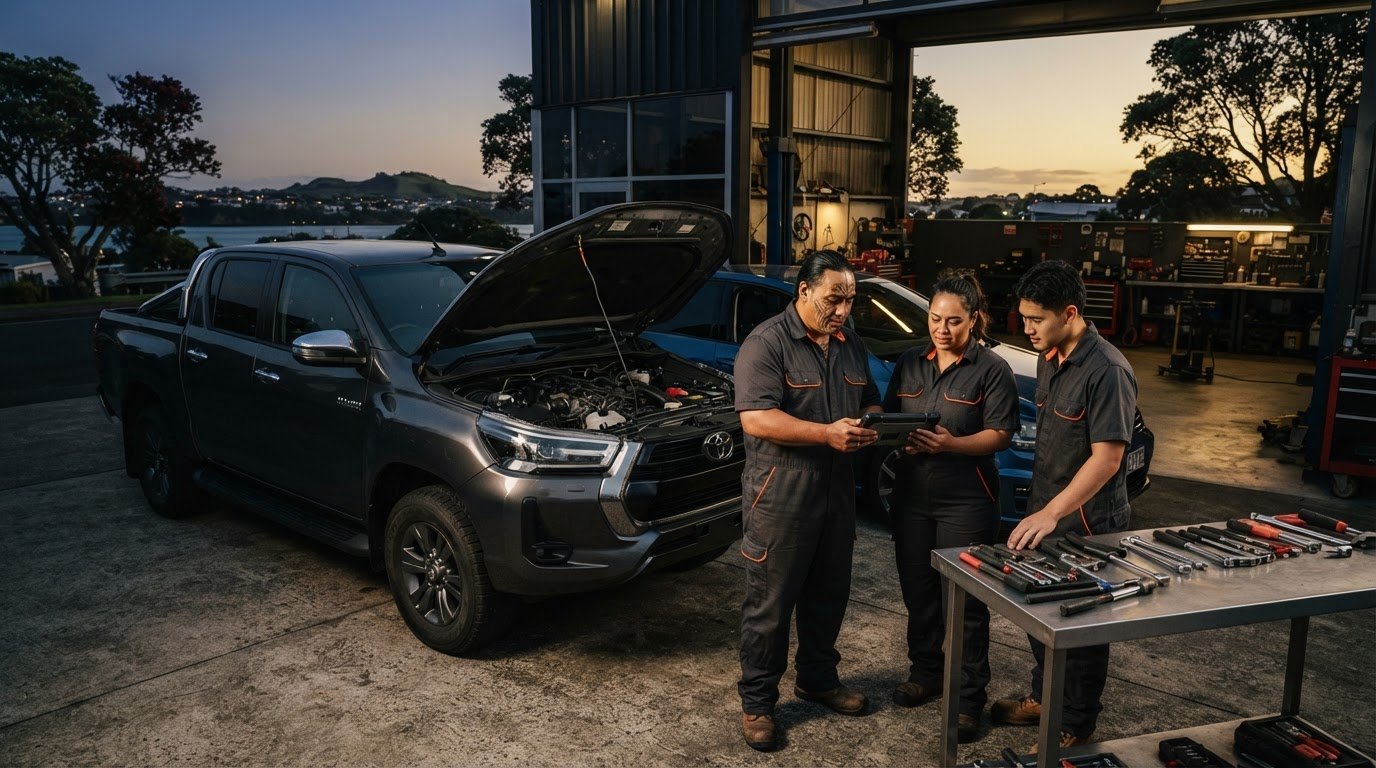
For a fault that needs assessment, Motortech 4X4 combines mechanical workshop capability with 4WD knowledge and works on 4WDs and other vehicle brands. If you’re considering a 4WD repair shop Auckland drivers can book for mechanical support, bring symptom notes and relevant service history to help start a focused discussion.
4WD repair, routine servicing or upgrade: which Auckland workshop visit fits?
A new fault, an upcoming service and a planned upgrade call for different workshop visits. Identifying the main need helps set the right starting point, though one vehicle may need more than one type of work. For instance, a new steering issue should be assessed before you proceed with a suspension change that could affect the same area.
Diagnosis-led repairs investigate a current fault; scheduled servicing maintains the vehicle according to its maintenance needs. An upgrade has a different purpose: it changes the vehicle’s capability or configuration. Use this distinction to explain what you’re seeking when you book, and mention any symptoms even if your main goal is an upgrade.
| Workshop visit | Main purpose | Example |
|---|---|---|
| Repair | Investigate and address a fault | Assessing a new vibration or warning light |
| Servicing | Planned maintenance | Booking scheduled 4×4 servicing |
| Upgrade | Change vehicle capability or setup | Planning a suspension kit for intended use |
When a repair assessment is the right starting point
Start with a repair assessment if a warning light remains on, the vehicle behaves differently, or a fault is affecting reliability. The aim is to investigate the existing concern, not to add equipment or assume a particular component needs replacement. Tell the workshop what has changed and when it happens. On a modified 4WD, the existing setup may also be relevant to fault-finding, so include details of fitted equipment or recent changes.
When servicing or a modification is the main need
Scheduled servicing is planned maintenance based on the vehicle’s maintenance needs, rather than a response to a new symptom. An upgrade is a separate planning decision: consider how you use the 4WD, whether components suit the vehicle and whether compliance considerations apply. If you’ve noticed a fault as well, raise it before the planned work so it isn’t mistaken for routine maintenance or overlooked during upgrade planning.
Suspension condition or proposed changes make the distinction especially important. A worn or altered setup may be relevant to both a current handling concern and a future upgrade, but those are separate questions: first establish the condition, then plan the change. The suspension systems guide provides related information when suspension is part of the decision.
For example, if you’re planning a suspension upgrade but have also noticed unusual movement or handling, report both when arranging your visit. The workshop can distinguish assessment of the current concern from planning a modification. Motortech 4X4 provides Auckland mechanical support for 4WDs and other vehicle brands, with servicing and technical work alongside repairs. When you contact a 4WD repair shop in Auckland, describe what needs attention now and what you’re considering for later.
Preparing for a 4WD repair booking in Auckland
A focused booking starts with a clear picture of the vehicle and the concern. You don’t need to identify the failed part yourself. Give the workshop accurate details, explain what has changed and bring relevant records. The assessment will determine which checks are appropriate and what the next steps should be.
Before booking, jot down the key information:
- Vehicle: make, model, year and, if available, registration or odometer reading.
- Symptom: what you’ve noticed, when it began and whether it’s constant or intermittent.
- Conditions: when it occurs, such as during starting, turning, braking, towing or acceleration.
- Warnings: any dashboard light or message, and when it appeared.
- History: recent repairs, maintenance, modifications or changes in vehicle use.
Notes on the conditions can be more useful than a guess about the cause. For example, describe whether a vibration changes with road speed or only appears under load. If a warning is visible, take a photo when safely parked and leave fault codes uncleared if possible. This gives the mechanic useful context while leaving diagnosis to inspection and testing.
What to bring and explain at the appointment
Bring relevant service records and describe any recent work, even if it seems unrelated to the current issue. Disclose aftermarket equipment, suspension changes, accessories and other modifications that may affect the vehicle or the area being assessed. Be specific about when the fault occurs and how it feels or sounds. Accurate detail helps the mechanic decide what to inspect without treating your description as a confirmed diagnosis.
What to clarify before repair work begins
Ask for the reported fault and recommended work to be explained in plain terms. You should understand what the assessment found, how the proposed repair relates to your original concern and which items are separate findings. Before work begins, clarify how you’ll be kept informed if further testing identifies additional work, so you can understand the scope before decisions are made.
An assessment may involve different checks depending on the symptom, vehicle and fitted equipment, so don’t assume every fault follows the same process or has a fixed diagnosis time. If you’re planning work around other commitments, discuss how the assessment and any further recommendations will be communicated. Clear expectations help you make informed decisions without presuming the diagnosis or repair scope in advance.
If “4WD repair shop Auckland” is what you’re searching for, arrive with your notes and vehicle history ready. Book a repair assessment with Motortech 4X4 to start with a clear account of the issue and let the workshop determine the appropriate checks and next steps.
Choosing Motortech 4X4 for mechanical repairs in Auckland
A useful repair visit should connect the driver’s concern to an evidence-based assessment and a clear explanation of the next steps. Motortech 4X4 is an Auckland-based workshop supporting 4WDs and other vehicle brands, combining mechanical capability with knowledge of four-wheel-drive vehicles. The discussion can take account of how the vehicle is used as well as what you’ve noticed.
For a 4WD that tows, travels off-road or carries added equipment, its use and setup provide important context. A symptom shouldn’t be treated in isolation: the vehicle, its history and any fitted equipment may all be relevant to the fault investigation. For owners who use their 4WD to tow boats or personal watercraft, the same diagnostic mindset applies to marine engine diagnostics, where systematic testing helps identify issues before heading out on the water. Share these details when arranging a visit to give the workshop a useful starting point.
Mechanical support for 4WDs and other vehicle brands
Motortech 4X4 provides 4×4 and car servicing alongside mechanical repair support. The appropriate investigation depends on the reported fault, the vehicle and how it’s used. For example, details about towing or recent equipment changes may help the workshop understand the conditions surrounding a concern. The focus is on identifying what needs attention, rather than assuming the same checks suit every vehicle.
Servicing information can also help place a current issue in context, while a repair assessment remains centred on the reported fault. For broader context on specialist 4WD use, modifications and servicing, see the specialised 4×4 servicing overview. It complements this repair guidance without replacing an assessment of a specific mechanical concern.
Technical services that can support the repair plan
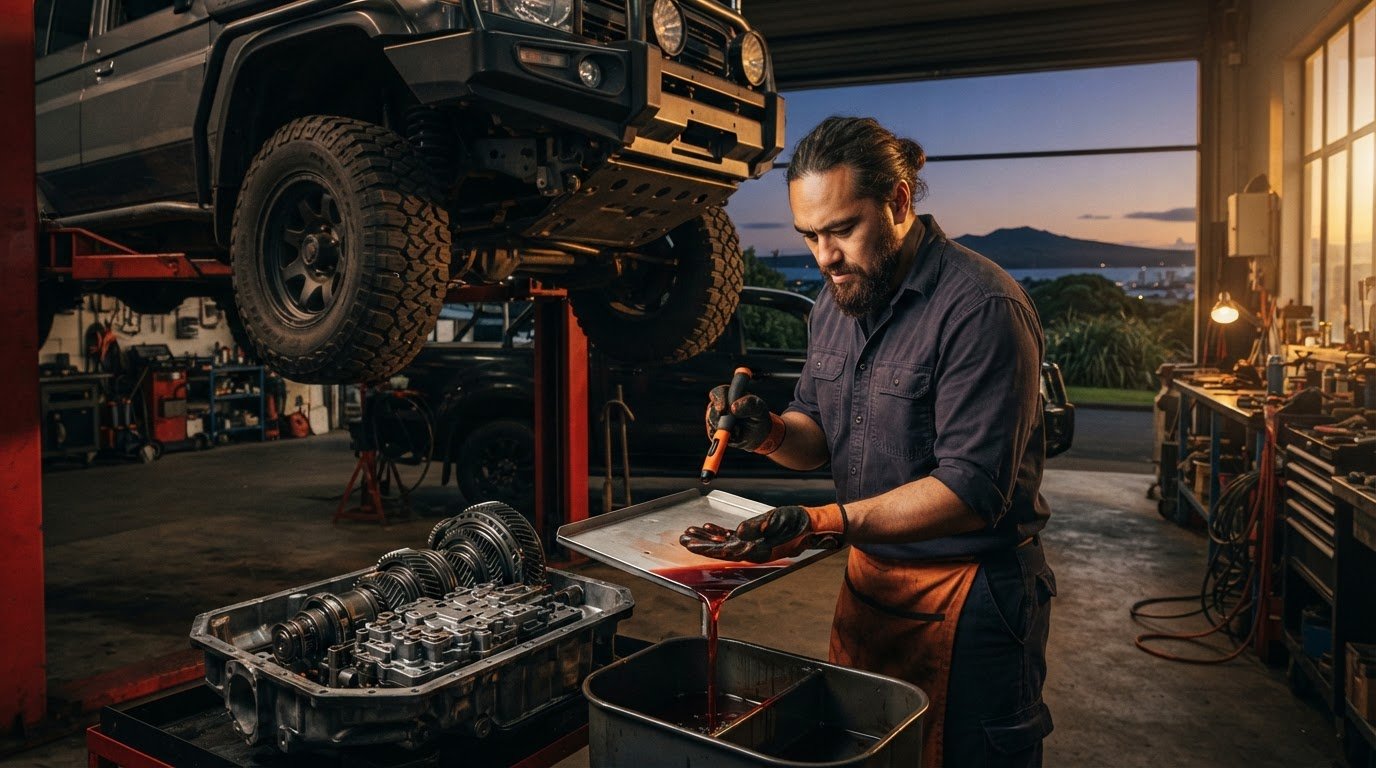
Some repairs involve vehicle systems beyond mechanical components. Where relevant to the vehicle and work required, ADAS calibration or a transmission flush can form part of the technical support. These services aren’t a substitute for investigating the reported fault; the workshop’s assessment determines which checks and work are appropriate. Any compliance-sensitive work should be considered against current New Zealand requirements for the vehicle and proposed work.
A clear repair plan should distinguish the original concern from any additional findings, explain the recommended work and identify relevant technical steps. Motortech 4X4’s Auckland workshop works across 4WDs and other vehicle brands, so the discussion can be grounded in the vehicle’s needs rather than assumptions based on its badge or modifications.
If you’re looking for a 4WD repair shop Auckland drivers can approach for mechanical support, provide the vehicle details and describe the symptoms you’ve observed. Book with Motortech 4X4 and include the concern when arranging your workshop visit.
Take the next step with a clear repair plan
A repair booking is a chance to turn uncertainty into a practical plan. You don’t need to arrive with a diagnosis; a straightforward account of what the vehicle is doing gives the workshop a useful place to start. The right repair should follow the evidence and suit the vehicle’s actual needs.
Motortech 4X4’s Auckland mechanical workshop works with 4WDs and other vehicle brands, with technical capabilities such as ADAS calibration available where relevant to the vehicle’s requirements. This helps keep mechanical concerns and related systems in view as the repair plan takes shape.
If you’re looking for a 4WD repair shop Auckland drivers can approach with a fault to investigate, share the symptoms you’ve noticed and let the workshop assess the next steps. Book a mechanical repair assessment with Motortech 4X4 and start with a clear description of your vehicle’s concern.
A considered assessment is a confident first move towards getting your 4WD back to dependable use.
Frequently Asked Questions
Can a 4WD repair shop in Auckland work on a vehicle from another make?
Yes. Motortech 4X4 works on 4WDs and other vehicle brands, so a vehicle doesn’t need to be a particular make for mechanical support. When arranging a booking, provide the make, model and year, along with any details about the engine or drivetrain if you know them. This helps the workshop understand which vehicle it’s assessing and plan relevant checks.
Should I keep driving my 4WD if a warning light comes on?
It depends on the warning and how the vehicle behaves, so don’t assume it’s safe to continue. If braking, steering or vehicle control seems affected, stop somewhere safe and arrange suitable assistance. If the vehicle still feels normal, note the warning and any related changes, then seek professional advice promptly. A warning that disappears can still be useful information, so record when it appeared rather than dismissing it.
Can a WOF inspection diagnose every mechanical fault?
No. A Warrant of Fitness checks whether specified safety requirements are met at the time of inspection; it isn’t a full mechanical diagnosis or a guarantee of the vehicle’s overall condition. A fault may not show up during the inspection, particularly if it occurs intermittently or under conditions not present at the time. If you have a separate concern, arrange a repair assessment even if the vehicle has a current WoF.
How much does a 4WD repair cost in Auckland?
There isn’t one price for every repair. The cost depends on what the assessment finds, which components or systems are involved and the work required to address the fault. A warning or symptom alone isn’t enough to establish a repair scope. Ask for the findings and proposed work to be explained, including any additional items, before approving repairs. That gives you a clearer basis for deciding how to proceed.
How long does a 4WD repair usually take?
Repair time depends on the fault, the diagnostic steps needed and the work identified, so a reliable timeframe can’t be set from a symptom description alone. An intermittent fault, for example, may need different checks from a clearly visible issue. Share any deadlines or planned vehicle use when booking, and clarify how the workshop will update you if assessment changes the expected scope. Avoid relying on a fixed timeframe before the vehicle has been assessed.
What should I do if my 4WD fails its WOF because of a mechanical issue?
Use the inspection result to identify the item that needs attention, then arrange the required repair and a re-inspection. A failed WoF is not a diagnosis of every concern the vehicle may have, so describe any additional symptoms separately when booking mechanical work. A re-check is typically available at the same inspection station within 28 days, but confirm the applicable arrangements with that station.
Do modifications affect how a workshop diagnoses a 4WD fault?
They can. Added equipment or changes to suspension, wheels, tyres or engine management may affect which components and systems are relevant to the investigation. Tell the workshop what has been changed, when it was fitted and whether the symptom began afterwards. For example, a handling concern on a modified vehicle needs to be considered in the context of its current setup, not only its original specification.