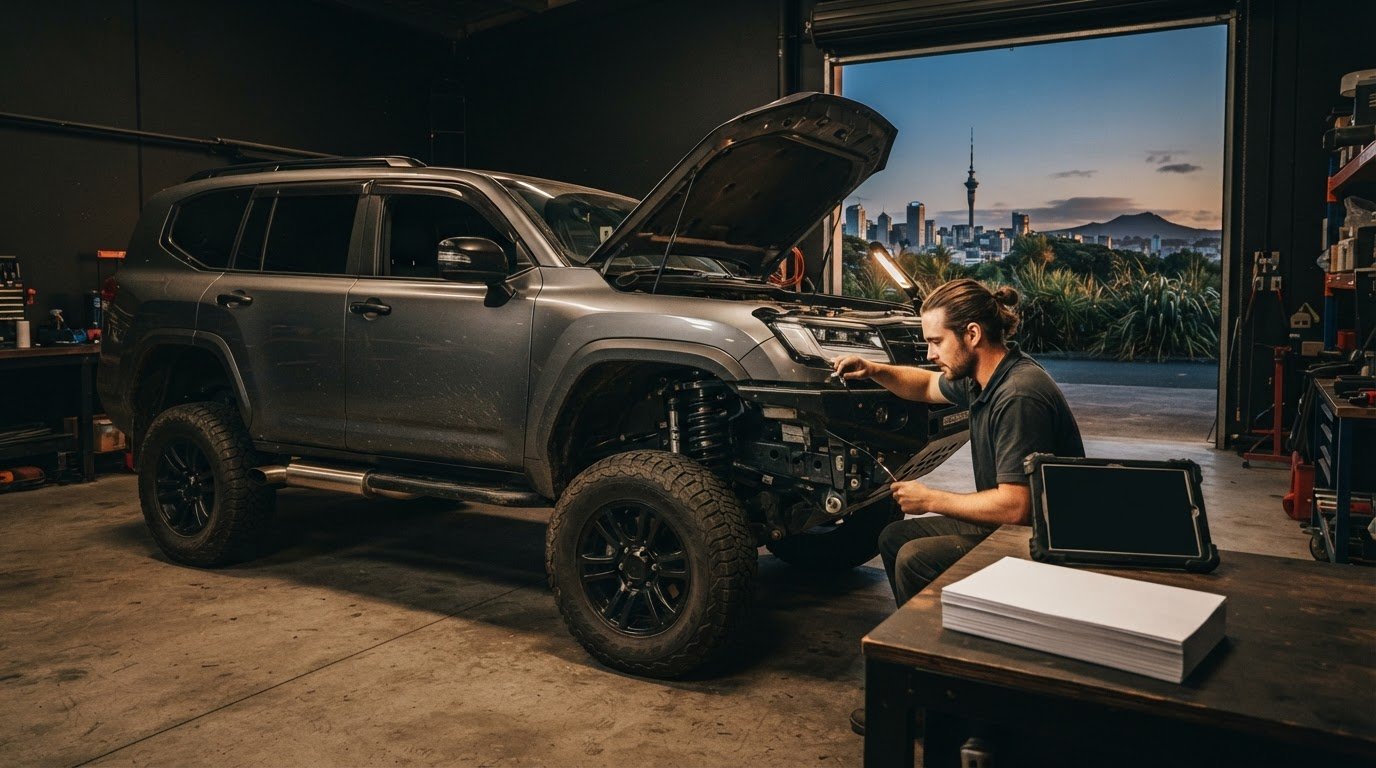
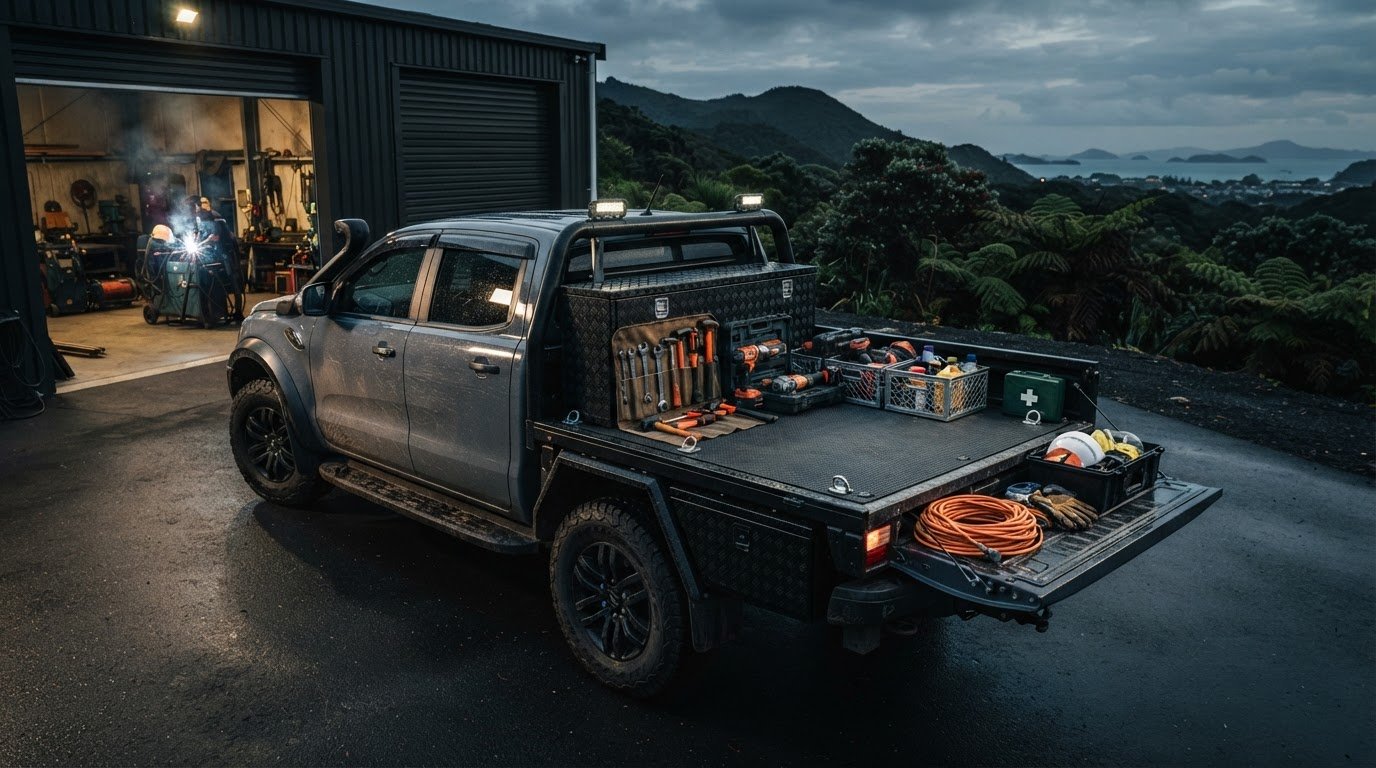
The biggest toolbox isn’t always the most practical choice. A well-planned ute tool box installation Auckland starts with your vehicle and workload, not the box. Your tools, tray layout and daily access all affect what will work.
You want secure storage without losing useful tray space or making essential gear awkward to reach. The fit-out also needs to work alongside other vehicle accessories, with tools properly restrained so they can’t shift while you’re driving.
This guide covers what to consider before fitting a toolbox, including vehicle compatibility, storage layout, access, mounting and load security. It also explains how vehicle dimensions, loaded mass and the wider setup affect planning. Motortech 4X4 is based in Glenfield on Auckland’s North Shore, with fabrication and custom fit-out services. That broader workshop capability helps put toolbox planning in context, whether you use your ute for trade work, fleet operations or everyday driving. Use the steps below to plan a tidy, practical setup around the way you work.
Key Takeaways
- Start with your ute’s layout and the tools you carry, then plan storage around your actual workload.
- Measure usable tray space and account for wheel arches, existing accessories and opening clearance before choosing a toolbox position.
- Compare tray-mounted, side-access and under-tray layouts by how they affect access, loading and available space.
- Prepare for ute tool box installation Auckland by noting your vehicle details, intended use, equipment and access needs.
- Motortech 4X4’s Glenfield workshop brings fabrication and custom fit-out experience to planning a toolbox within your wider ute setup.
Ute tool box installation in Auckland: what a work-ready setup needs
For Auckland ute owners, practical storage keeps everyday tools organised and within reach without making the tray difficult to use. Good ute tool box installation Auckland planning means matching the box to the vehicle layout and equipment you carry, then deciding where it belongs and how you’ll access it during the workday.
Choosing a toolbox is only part of the decision. Its position can affect how much tray space remains for larger items, whether frequently used gear is easy to reach and how it works alongside existing accessories. A setup that suits one ute may not suit another, even if both carry similar tools.
Good fitment starts with the vehicle, your work routine and the storage you need. That applies whether you’re equipping one ute or planning a consistent fit-out across a fleet.
What should a ute tool box installation solve?
Start with your working day, not the box dimensions. Identify the tools you reach for repeatedly, equipment that is bulky or heavy, and anything that tends to be left loose on the tray. A planned arrangement makes commonly used items easier to access and helps keep loose gear organised separately from materials and other equipment.
Consider how often you need each item and where you’re likely to use it. If you stop at several jobs around Auckland, quick access to frequently used hand tools may matter more than keeping everything in one compartment. Less-used equipment can go elsewhere, provided it remains practical to load and retrieve. These details clarify what your storage needs to do before you choose a layout.
Which Auckland ute owners benefit from a planned fit-out?
Tradies carrying tools between jobs, individual owners transporting work or recreational equipment, and fleet operators can all benefit from planning storage before fitting a box. Utes are commonly used to carry tools and equipment, as reflected in the general role of a pickup truck. The right arrangement depends on what your own vehicle needs to carry.
For a tradesperson travelling between suppliers, job sites and the workshop, access and tray flexibility may be priorities. An owner carrying equipment alongside other loads may need to preserve usable space and avoid a layout that complicates loading. Fleet operators also need to consider how storage will work across vehicles with similar duties. Plan for consistent routines, but don’t assume every ute has identical dimensions or accessories.
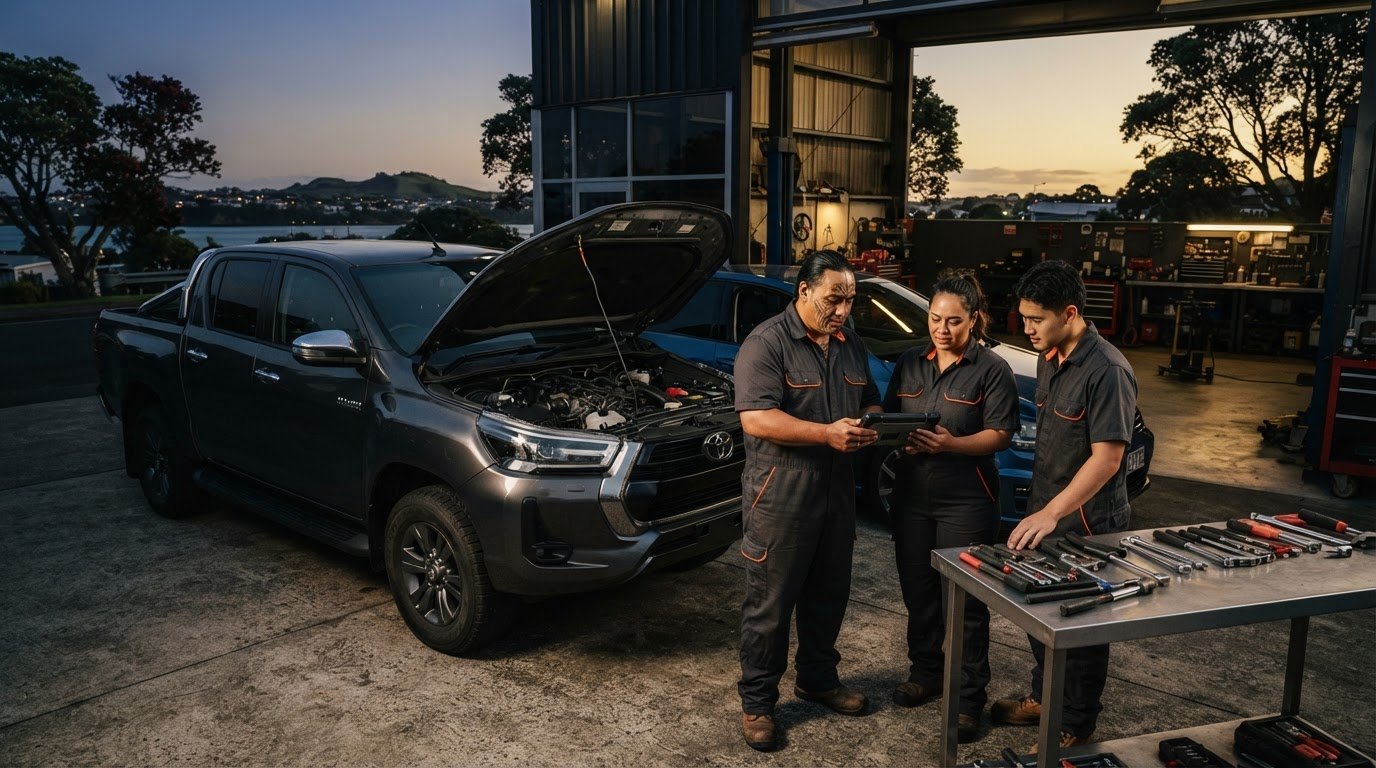
Motortech 4X4 is based in Glenfield on Auckland’s North Shore and provides Fabrication & Custom Work and Fleet Servicing and Custom Fit-Outs. These services are relevant when considering a toolbox as part of the wider vehicle setup. Start by defining your workload and storage priorities, then assess how your ute’s layout affects fitment and access.
Ute tool box fitment: check vehicle layout, mounting and access
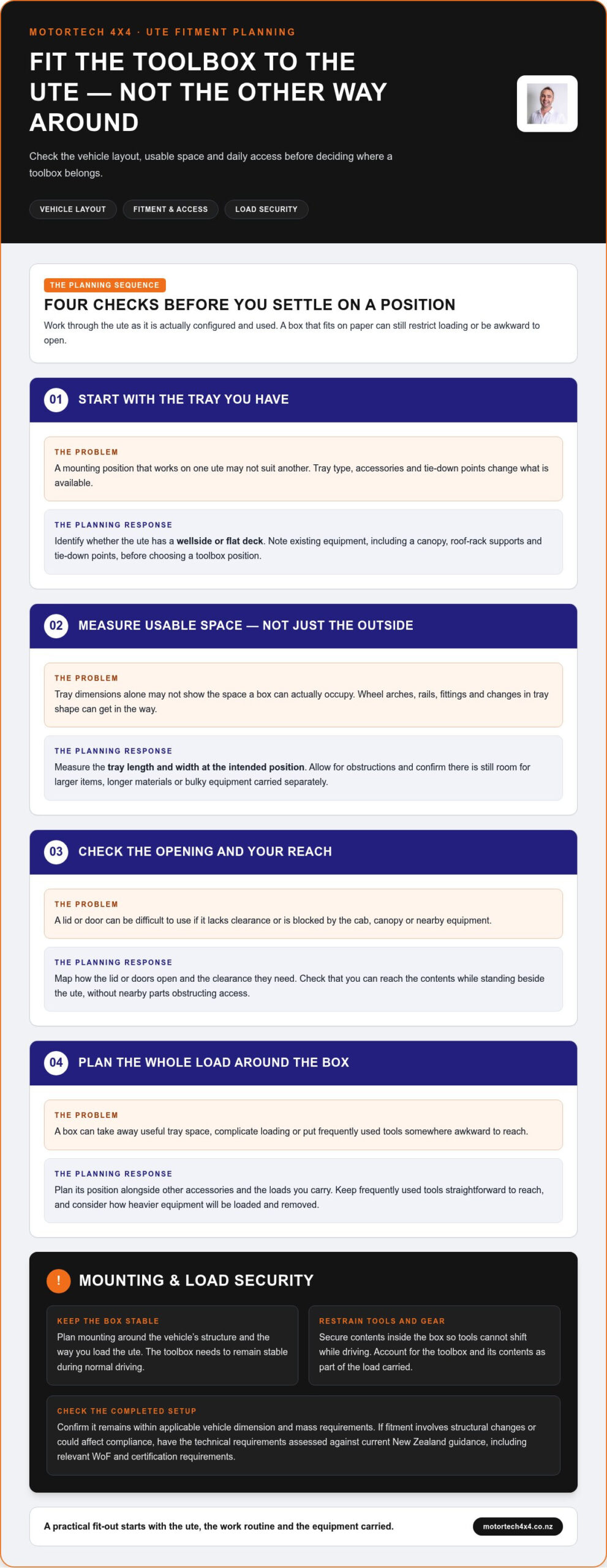
Before choosing a mounting position, assess the ute as you use it now. A box that fits the tray on paper may obstruct other equipment, restrict loading or be awkward to open once in place. For practical ute tool box installation Auckland, work through the vehicle layout, usable dimensions, access and fitment in order.
How do you check whether a toolbox will fit your ute?
Use this assessment before settling on a position:
- Identify the layout. Note whether your ute has a wellside or flat deck, and record existing accessories such as a canopy, roof-rack supports or tie-down points.
- Measure usable space. Check the tray length and width where you intend to position the box. Allow for wheel arches, rails, fittings and changes in tray shape instead of relying on outside dimensions alone.
- Map access. Consider how the lid or doors open, the clearance they need and whether you can reach the contents while standing beside the ute. Check that the cab, canopy or nearby equipment won’t obstruct them.
- Plan the fitment. Decide how the box will sit in relation to the tray and other accessories, and whether there will still be room for the loads you carry separately.
These checks matter because utes differ in tray dimensions, obstructions and accessory layouts. A position that suits one vehicle may reduce useful space or block access on another. Allow for real loading tasks, too. The box shouldn’t make it difficult to place longer materials or bulky equipment on the tray.
How should mounting and tool access be planned?
Plan the mounting around the vehicle’s structure and how you load the ute. The toolbox needs to remain stable during normal driving, and its contents need to stay secured inside. Put frequently used tools where they’re straightforward to reach. Consider how heavier equipment will be loaded and removed without requiring an awkward lift over other gear.
Consider the whole vehicle setup as well. Mounting choices can affect tray usability and interact with other accessories, while the toolbox and its contents contribute to the load carried. Before installation, check that the completed setup remains within applicable vehicle dimension and mass requirements. If a proposed fitment involves structural changes or could affect vehicle compliance, have the technical requirements assessed against current New Zealand guidance, including relevant WoF and certification requirements.
Motortech 4X4’s Glenfield workshop provides vehicle fit-out and fabrication services, which are relevant when planning accessories as part of a wider ute setup. Explore Motortech 4X4’s custom work and fit-out expertise when considering how a toolbox could work alongside the rest of your vehicle.
Choose a ute toolbox layout for your tools, tray and daily workload
Once you understand the ute’s available space, compare layouts by how they affect access and loading. The right option depends on what you carry, how often you need it and what else your vehicle must do. For ute tool box installation Auckland, treat the layout as part of the whole fit-out, not an isolated storage choice.
| Layout | Access | Tray space and loading | Fit-out considerations |
|---|---|---|---|
| Tray-mounted | Contents are generally accessed from above, so consider the height and reach needed to lift tools in and out. | The box occupies part of the tray, which can affect how larger or longer items are loaded. | Check its position against the cab, tray edges, tie-down points and other equipment. |
| Side-access | Side-opening doors can make frequently used tools easier to reach from beside the ute. | Access may be convenient, but the box still occupies space that could be used for other loads. | Allow for door-opening clearance and nearby accessories, including a canopy or hardlid. |
| Under-tray | Access is from below the tray, so consider how easily you can reach contents while parked. | Storage sits outside the main tray area, but its placement can affect access beneath the vehicle and loading routines. | Assess available space and how the box relates to the vehicle’s existing structure and equipment. |
When does a side-access or gullwing layout make sense?
Side access may suit a workday where you regularly reach for the same tools without unloading items from above. A gullwing-style opening makes access from the side part of the layout, but the door needs room to open. Consider where the ute is usually parked, what sits beside the box and whether nearby gear could obstruct access.
When should tray or under-tray storage be considered?
A tray-mounted box can suit equipment you want to reach from above, but account for its footprint and the space needed for other loads. Under-tray storage keeps the main tray area more available, though access is lower down and needs to suit the equipment you store. Neither layout is automatically better. Weigh access, loading and available fitment space against your daily routine.
Canopies and hardlids are related fit-out choices because they can affect where a toolbox sits and how it opens. Consider the accessories together instead of planning each in isolation. Motortech 4X4’s broader Auckland 4×4 modifications and servicing context is relevant when assessing how storage fits into the wider vehicle setup.
Prepare your ute for toolbox installation in Auckland
A little preparation makes it easier to plan a fit-out around your real workday. Before arranging ute tool box installation Auckland, clear the tray, record your vehicle details and make a short inventory of what you carry. This turns a general storage idea into a practical plan for access, placement and loading.
What information helps plan a toolbox fit-out?
Note the ute’s make and model, tray configuration and current accessories, such as a canopy, hardlid, roof racks or other equipment. List the tools and gear you carry regularly, separating frequently used items from bulky or occasional equipment. Record where you prefer to access the storage and any workflow constraints, such as needing the tray clear for materials or loading from a particular side.
- Clear the tray so its usable space, fittings and obstructions are visible.
- Inventory your gear and note which items need quick access or separate organisation.
- Identify existing accessories that could affect the toolbox position or opening clearance.
- Describe your routine, including typical loading and unloading tasks.
- Record vehicle details and any planned changes to the wider fit-out.
Bring these notes into the planning process. Fleet operators can also record the intended role of each vehicle and any need for consistent storage across the fleet. That context helps align the toolbox position with each vehicle’s duties instead of treating every ute as the same configuration.
What should owners consider after installation?
Once fitted, review the setup during normal use. Check that doors or lids open as intended, frequently used equipment is reachable and storage stays organised as tools are returned to the box. Notice whether loading other items onto the tray still works for your routine. If the vehicle’s use or accessories change, reassess how the storage arrangement fits.
Keep tools secured inside the box and follow current New Zealand load-restraint guidance for anything carried elsewhere on the vehicle. Fitment and loading should also account for applicable vehicle dimension and mass requirements. Requirements depend on the vehicle and modification details, so check current guidance from Waka Kotahi and have relevant technical considerations assessed as part of the fit-out plan. Don’t assume that a toolbox alone establishes compliance.
Motortech 4X4’s Glenfield workshop provides Fabrication & Custom Work and Fleet Servicing and Custom Fit-Outs, bringing the wider vehicle setup into the planning process. For a toolbox fit-out shaped around your ute and how you use it, see Motortech 4X4’s Auckland workshop capabilities.
Plan ute tool box installation with Motortech 4X4 in Glenfield
A well-considered ute fit-out takes the whole vehicle into account. Storage needs to work with your tray, existing accessories and daily tasks, rather than being treated as a separate add-on. Motortech 4X4, Auckland’s 4X4 Specialists, is based in Glenfield on the North Shore and provides Fabrication & Custom Work and Fleet Servicing and Custom Fit-Outs.
That workshop experience is relevant when planning how storage could sit alongside other vehicle equipment. Bring details of your ute, its current setup and what you carry, so the discussion can focus on practical priorities such as access, loading and how the vehicle is used.
How custom work can support a considered vehicle fit-out
Motortech 4X4’s fabrication work includes custom front and rear protection bars, bumpers, side steps, roll bars, spare-wheel carriers and side-protection bars. Considering these elements alongside storage keeps the wider fit-out in view. Existing accessories can affect available space and access, while future changes may influence how you want the vehicle configured.
The workshop’s fabrication equipment includes a JD Squared model 32 hydraulic tube bender, a lathe and welders. This equipment supports its custom fabrication work. When planning a fit-out, consider the vehicle and its intended use alongside any existing or planned accessories.
Why choose a local Glenfield 4×4 specialist?
A Glenfield workshop gives Auckland vehicle owners a local point of contact for fit-out planning. Motortech 4X4’s work spans custom fabrication, fleet fit-outs and servicing, alongside 4×4 parts and accessories such as suspension kits, bullbars, snorkels, roof racks, wheels and tyres, vehicle lighting, canopies and hardlids. This broader capability helps place storage decisions in the context of the ute’s complete setup.
For trade and fleet vehicles, describing the intended duties helps clarify which fit-out priorities matter, from tool access to carrying other equipment. Individual owners can take the same practical approach by explaining their regular loads and how they use the ute. Each setup should be planned around its own requirements.
To discuss ute tool box installation Auckland as part of your vehicle fit-out, bring your ute details, current accessories and a list of the equipment you carry. Talk to Motortech 4X4 about your ute fit-out and outline what you need the vehicle to do.
Set up your ute for the work ahead
A toolbox fit-out can shape how you use your ute well beyond the first week. Think about whether your workload, equipment or vehicle accessories may change, and avoid a layout that makes future adjustments unnecessarily difficult. A considered ute tool box installation Auckland should support the way you work now while leaving room to adapt.
Before deciding on the next step, narrow your priorities to what matters most: convenient access, a flexible tray or organised equipment for repeatable daily tasks. This gives the fit-out discussion a clear starting point and connects storage decisions with the vehicle’s broader purpose.
Motortech 4X4’s local workshop brings fabrication capability and vehicle fit-out experience to the planning process. Share how you use your ute and what you need it to carry, then discuss an approach that suits your priorities. Talk to Motortech 4X4 about your ute fit-out and take the next step towards a setup that works for you.
Frequently Asked Questions
Can a toolbox be installed on any ute?
No, a toolbox won’t suit every ute in the same way. Fit depends on the tray or tub, available mounting area, access and the vehicle’s overall load. For ute tool box installation Auckland, assess the specific vehicle rather than relying on a general fit description. A wellside tub, flat deck and canopy-equipped ute can each present different constraints. The setup also needs to preserve safe loading and normal vehicle use.
How do I choose the right size ute tool box?
Start with the largest tools or equipment you need to store, then compare their dimensions with the box’s usable internal space. Allow room to place items in and take them out without awkward angles, and consider whether tool handles or cases need extra clearance. A box that fills the available area may leave little room for other loads, so balance storage against the tasks the tray still needs to handle.
Do ute tool boxes need to be secured during travel?
Yes. The toolbox needs to be securely fitted, and tools inside must be restrained so they don’t move around during travel. Loose contents can shift under braking or when cornering, even if the box itself appears stable. Arrange tools so heavier items don’t slide into lighter gear, and use suitable internal organisation or restraint. Follow current New Zealand load-restraint guidance for both the box contents and anything carried elsewhere on the ute.
Can a ute toolbox be fitted without drilling the tray?
Possibly, but it depends on the ute, tray construction, toolbox design and available mounting points. Some fitment approaches may use existing points or other hardware, while another setup may need a different method. Don’t assume a no-drill option is suitable just because it appears convenient. The mounting still needs to be stable and appropriate for the vehicle. Consider the tray’s underside and structure before deciding how it should be secured.
How can I prevent water getting into a ute toolbox?
No toolbox should be assumed completely watertight without clear product information. Choose an enclosure suited to the conditions you expect, follow its care instructions and inspect the lid closure and seals regularly for wear or damage. After heavy rain or vehicle washing, check inside for moisture and dry the box if needed. For tools vulnerable to damp, consider additional protective storage inside the toolbox rather than relying on the outer enclosure alone.
Can a toolbox be fitted alongside other ute accessories?
Often, but accessories need to be considered together. A canopy or hardlid can affect toolbox position and lid clearance, while roof racks, tie-down equipment or other tray fittings may influence available space and loading. Sketch the intended arrangement and consider how each item will be opened, accessed or used. A combined fit-out plan helps avoid choosing a storage position that conflicts with another accessory’s function.