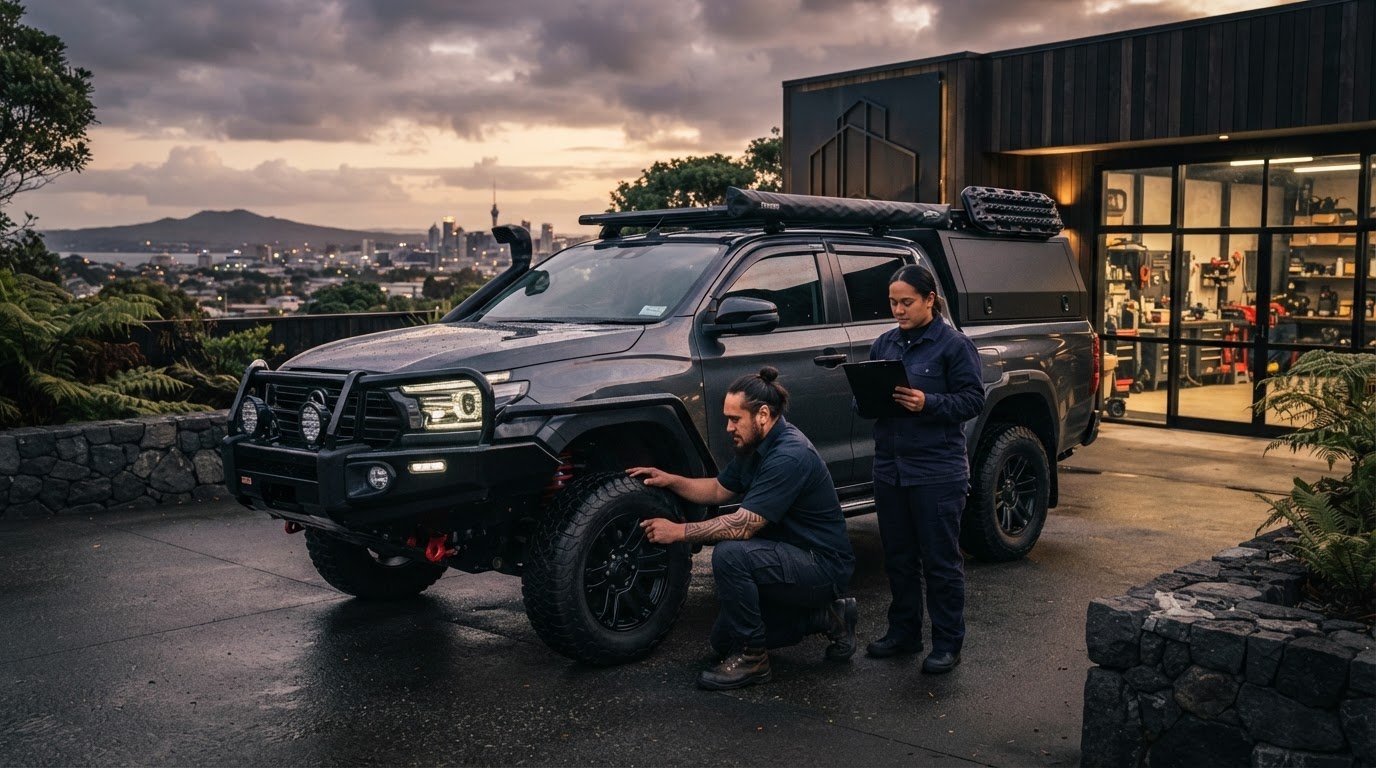
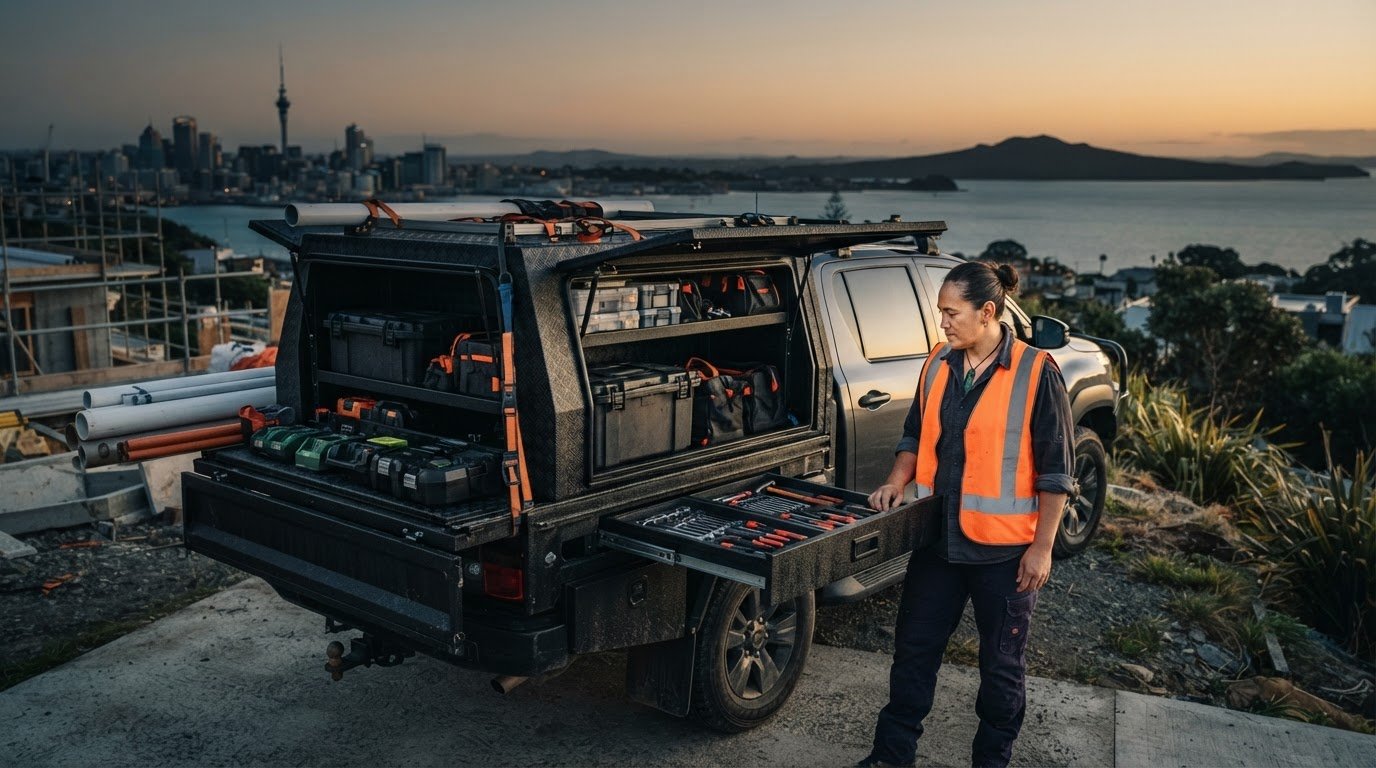
A bigger canopy or another toolbox won’t automatically make your ute work better. The right tradie ute setup ideas start with the jobs you do, the gear you carry and how quickly you need to reach it. A plumber moving between call-outs has different storage priorities from a builder carrying long materials or a sparkie protecting smaller tools.
It’s frustrating when equipment is buried under other gear, exposed to the weather or difficult to secure. Every addition also needs to be considered alongside payload, GVM and the vehicle’s other limits. A setup that looks practical on paper may not suit your workday or your ute.
This guide compares canopy, hardlid, toolbox and open-tray options for different trades and storage needs. You’ll find ways to match accessories to everyday access and protection problems, plus checks to make when planning a practical build for New Zealand conditions. We’ll also cover why professional advice on fitment and vehicle requirements matters. For Auckland tradies, Motortech 4X4 provides work-focused fit-out planning, accessories and fleet fit-outs.
Key Takeaways
- Start your tradie ute setup ideas with a clear list of daily tools, materials and equipment, then choose storage around how you work.
- Compare open trays, canopies, hardlids and mixed-storage layouts for access, weather protection, security and bulky-load flexibility.
- Prioritise the accessories that solve real workday problems. More equipment doesn’t automatically mean a more effective setup.
- Before ordering, confirm your ute’s details, intended cargo, accessory compatibility and relevant vehicle requirements with a professional.
- Learn how Auckland fit-out support can help coordinate suitable accessories and installation for a practical work-focused build.
Tradie ute setup: start with the work your vehicle does
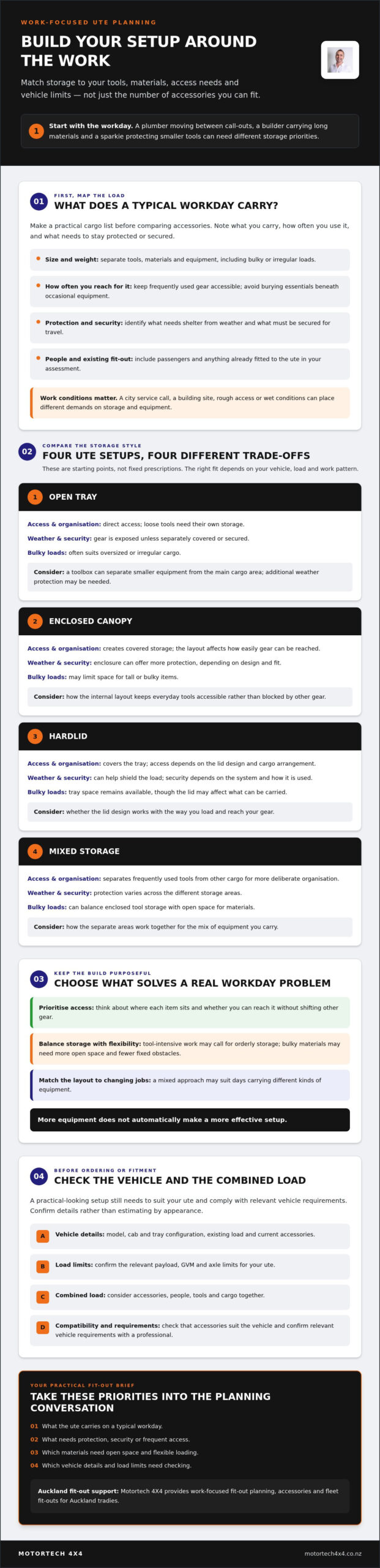
Choose a ute setup for the jobs you do, not for how it looks or how many accessories it can carry. Before comparing tradie ute setup ideas, map a typical workday: the tools, materials, people and equipment you take from the first stop to the last. A practical layout keeps essential gear accessible without getting in the way of the next task.
A ute is a familiar work vehicle in New Zealand and Australia; the Ute entry gives a useful overview of the term and its history. For your own vehicle, start with the details that affect fit and use: model, cab and tray configuration, existing load and the conditions at the worksites you visit. A city service call, a building site and a job involving rough access can place different demands on storage and equipment.
What does your ute carry on a typical workday?
Group your cargo by size, weight, frequency of use and need for weather protection. Note which items must be secured and which you reach repeatedly, such as tools used at each call-out. Separate everyday gear from occasional equipment so rarely used items don’t block access to essentials. Include passengers and anything already fitted to the vehicle in your assessment.
Check the vehicle details and the load you actually carry before choosing accessories. Payload, GVM and axle limits matter when you add storage or carry materials, so don’t estimate by appearance alone. Confirm the relevant figures for your ute and consider the combined load, including accessories, people, tools and cargo.
Which work pattern best describes your setup?
Tool-intensive work often calls for orderly storage, with frequently used tools easy to reach and protected when not in use. Jobs involving bulky materials may need more open space and fewer fixed obstacles. If your day combines different kinds of equipment, a mixed approach may make sense. The right balance depends on your cargo and how often you load or unload it.
For mobile service work, organised access can matter more than simply adding maximum storage. Think about where each item sits, whether you can reach it without shifting other gear, and how the layout works at a tight Auckland site or in wet conditions. No single tray, canopy or accessory combination suits every trade.
Use your cargo list to set priorities before comparing products. It gives you a practical brief to discuss with a fit-out professional: what the ute carries, what needs protection, what must stay accessible and which vehicle details need checking. This helps keep the eventual setup grounded in your work pattern rather than a catalogue image.
Four tradie ute setup ideas compared by storage and access
These four tradie ute setup ideas are starting points, not fixed prescriptions. An open tray can keep awkward loads accessible; enclosed storage can help protect equipment; a hardlid covers the tray while offering a different kind of access; and a mixed layout can separate tools from larger cargo. The best fit depends on your vehicle, load and work pattern.
| Setup | Access and organisation | Weather protection and security | Bulky-load flexibility |
|---|---|---|---|
| Open tray | Direct access; loose tools need their own storage. | Gear is exposed unless separately covered or secured. | Often suits oversized or irregular cargo. |
| Enclosed canopy | Creates covered storage; layout affects how easily gear can be reached. | Enclosure can offer more protection, but performance depends on its design and fit. | May limit space for tall or bulky items. |
| Hardlid | Covers the tray; access depends on the lid design and how cargo is arranged. | Can help shield the load; security depends on the system and how it’s used. | Tray space remains available, though the lid may affect what can be carried. |
| Mixed storage | Separates frequently used tools from other cargo for more deliberate organisation. | Protection varies across the different storage areas. | Can balance enclosed tool storage with open space for materials. |
Open tray and toolbox setup for adaptable loads
An open tray can suit work that regularly involves long, bulky or irregular materials, especially when loading access matters. A toolbox can keep smaller equipment separate from the main cargo area, making it less likely tools will be buried under materials. The trade-off is exposure: gear may need additional weather protection, and every item must be secured appropriately for travel. Base your choice on the cargo you actually carry, not just the tray’s available space.
Canopy, hardlid and mixed-storage setups
A canopy provides enclosed storage for equipment that benefits from being covered. A hardlid covers the tray without creating the same enclosed storage arrangement. A mixed setup might keep regularly used tools in a lockable area while leaving room for larger items. Compare the formats in this canopy versus hardlid comparison. For wider accessory context, see this Auckland 4×4 modifications and gear guide.
Whichever layout you choose, plan for secure loads and check compatibility with your vehicle. The US Occupational Safety and Health Administration’s work vehicle safety requirements offer an overseas reference, not New Zealand compliance guidance. For an Auckland discussion about relevant accessories and fitment, visit Motortech 4X4.
Need every tradie ute accessory? Match upgrades to the job
No. A ute doesn’t become more useful simply because it has more accessories. Each addition can take up space, add weight or change how you load and access the vehicle. Strong tradie ute setup ideas start with the problem you need to solve: tools that are hard to reach, gear exposed to the weather, poor visibility at a worksite or a genuine need to carry equipment outside the tray.
Prioritise storage and access first. Then consider protection, lighting or carrying capacity if your work calls for them. A light may help with work in dim conditions; a roof rack may suit long items that won’t fit in the tray. If additional carrying space is relevant, read this roof rack selection and installation guide. Don’t add equipment just because it appears in another ute’s build.
Storage, access and weather protection
Match storage to the way you use your tools. A canopy may suit gear that needs enclosed storage, while a hardlid covers the tray and toolboxes can separate smaller items from materials. Consider what you reach repeatedly during the day and what can stay secured until needed. The aim is a layout that supports your workflow, not one that looks complete in a catalogue.
Payload, suspension and vehicle-specific checks
Assess the whole working load: occupants, accessories, tools and materials. Added equipment uses carrying capacity too, so check the vehicle’s specifications and combined load before making changes. Don’t assume a suspension kit or GVM upgrade is suitable without assessing the specific ute and intended use. Confirm compatibility and any implications for vehicle requirements before ordering or installation.
For fleet operators, a documented vehicle safety process can help keep equipment choices connected to safe work practices. The US Occupational Safety and Health Administration outlines employer considerations in its work vehicle safety program. It’s an overseas reference, not a guide to New Zealand requirements. Check current New Zealand rules with an appropriate specialist before relying on any compliance conclusion about a modification.
Motortech 4X4 supplies and installs work-relevant accessories, including canopies and hardlids, roof racks, vehicle lighting, suspension kits and GVM upgrades. Auckland tradies planning a coordinated setup can explore the range at Motortech 4X4 and discuss their vehicle and intended use before settling on a fit-out.
Plan a safe, practical tradie ute fit-out before booking installation
Planning before ordering can help avoid a setup that doesn’t fit the vehicle or the way you work. Treat tradie ute setup ideas as a starting brief, then check the details against your actual ute, regular cargo and intended use. Allow for likely changes in your work, but avoid adding equipment for jobs you may never take on.
A practical sequence for planning the fit-out
Start with the ute’s make, model, year, cab and tray configuration, plus any existing modifications. Record regular cargo, access needs and who travels in the vehicle. Then prioritise essential storage and carrying needs, compare suitable accessories, and discuss the proposed combination and installation scope with a specialist workshop before confirming an order. Alongside storage hardware, many trades businesses also organise their branding during a fit-out; partnering with Motivation Design & Print for vehicle graphics and custom signage ensures the ute is fully work-ready and professional on the road.
Checks to make before and after installation
Before booking, confirm that each accessory is intended to fit your specific vehicle and suits the work it will do. Ask what documentation or certification may apply to the modification, and verify current requirements with Waka Kotahi NZ Transport Agency or an appropriate specialist. After installation, check that equipment is secure and doesn’t obstruct visibility, vehicle controls, lights or routine access.
For a useful workshop discussion, bring the vehicle details and a clear description of the load you expect to carry. Include existing accessories and modifications, as well as the people and equipment usually on board. Ask how the proposed additions affect the complete setup instead of assessing each accessory in isolation. If the vehicle’s use changes later, review the fit-out before adding further equipment.
Before accepting the finished vehicle, walk through your normal workday. Check that frequently used gear is reachable, storage opens as intended, and cargo can be loaded and secured without interfering with safe vehicle operation. If anything differs from the agreed plan, raise it with the installer before putting the setup to work.
For Auckland-based advice on coordinating accessories, fitment and vehicle requirements, discuss your work ute fit-out with Motortech 4X4.
Build a tradie ute setup with Auckland fit-out support
A work-ready ute comes from matching the setup to the job, cargo, vehicle and access you need throughout the day. Rather than selecting accessories one by one, consider how the full arrangement will work together: where tools sit, how materials are carried and whether the vehicle remains suitable for its intended use.
Motortech 4X4 is an Auckland-based specialist retailer and service centre supplying and installing accessories relevant to work ute fit-outs. Options include canopies and hardlids for enclosed storage, roof racks where additional carrying space is useful, and vehicle lighting for work-related visibility needs. The right combination depends on your ute and how you use it, so not every vehicle needs every accessory.
When a specialist fit-out assessment can help
Reviewing vehicle details and intended use before choosing components helps turn the fit-out into a coordinated plan rather than a collection of separate purchases. Share the ute’s make, model and configuration, existing accessories, regular cargo and the main access or storage problem you want to address. Confirm accessory compatibility and installation scope before settling on a setup.
For businesses managing several commercial vehicles, Motortech 4X4 also provides fleet fit-outs and fleet servicing. Planning around the vehicles’ work requirements can help businesses consider their fit-outs as a fleet, while allowing for differences in vehicle configuration or use. Vehicle servicing can also form part of the wider maintenance picture. Similarly, for trades and property businesses managing broader site safety or pre-renovation checks, you can discover Methamphetamine Testing Services NZ Limited for professional contamination testing across residential and commercial properties.
Next steps for a work-ready ute
Before starting a discussion, list the cargo you carry regularly and the most frustrating part of your current setup. Note whether your priority is easier tool access, covered storage, extra space for longer items or improved lighting for your work routine. Bring the vehicle details and any existing modifications, then ask about component fit, installation scope and checks that may be relevant to your vehicle.
A clear brief helps keep the conversation focused on practical needs rather than accessories that may not add value. If you’re comparing tradie ute setup ideas for an Auckland work vehicle or fleet, discuss the vehicle-specific requirements with the team before committing to components.
Talk to Motortech 4X4 about your ute setup.
Build a ute setup that works every day
The most useful tradie ute setup ideas begin with your actual workday. Match storage and access to the tools and materials you carry, then compare open-tray, canopy, hardlid or mixed layouts. Add accessories only when they solve a practical need, and check how the complete load and vehicle configuration affect your plans.
Before ordering, confirm accessory fitment and installation requirements for your ute. A vehicle-specific discussion can help you consider the setup as a whole, including existing equipment and intended cargo. This matters whether you’re fitting out one work vehicle or coordinating several for a commercial fleet.
Motortech 4X4 is an Auckland-based specialist retailer and service centre that supplies and installs accessories including canopies, hardlids and roof racks. It also provides commercial fleet fit-outs and servicing. Discuss a practical ute setup with Motortech 4X4 and outline the work your vehicle needs to support. With a clear plan and professional advice, you can build a setup that’s practical for the jobs ahead.
Frequently Asked Questions
What should a tradie include in a ute setup?
Include only the storage and equipment that support your regular work. Start with a list of tools, materials, passengers and existing accessories, then identify what needs secure storage, weather protection or quick access. Canopies, hardlids, toolboxes, roof racks and vehicle lighting can each address different needs. The most practical tradie ute setup ideas are based on your vehicle and daily tasks, not a standard accessory checklist.
Is a canopy or an open tray better for a tradie ute?
Choose a canopy if enclosed storage for tools or equipment is a priority; an open tray may suit bulky or irregular loads that need easy loading access. Each option has trade-offs in protection, security and available space. Your work pattern matters: mobile service work may benefit from organised, covered storage, while jobs carrying large materials may need more open space. Check vehicle fit and intended cargo before deciding.
Can I carry tools on a roof rack?
Yes, a roof rack can carry tools or other suitable equipment if the rack and vehicle are compatible and the load is secured correctly. Check the vehicle’s roof load limits and the rack manufacturer’s instructions before loading. Include the rack and its cargo when considering the ute’s total load, and make sure the equipment doesn’t obstruct safe vehicle operation. Motortech 4X4 supplies and installs roof racks in Auckland.
How do I organise tools in a work ute?
Group tools by size, weight and how often you use them. Keep regularly needed items easy to reach, and separate them from occasional gear or materials that could block access. Use suitable enclosed storage, such as a canopy, hardlid or toolbox, for equipment that needs protection or security. Before changing the layout, consider your actual cargo and check that all items can be secured for travel.
Do ute accessories affect payload?
Yes, accessories contribute to the vehicle’s load, leaving less capacity for occupants, tools and materials. Consider the complete working load rather than looking at each addition separately. Check your ute’s vehicle information and seek advice if you’re unsure how the proposed setup affects its limits. Suspension kits or a GVM upgrade may be relevant for some vehicles, but suitability depends on the specific ute and intended use.
Do I need certification for a tradie ute modification in New Zealand?
Some modifications may require certification, but the requirement depends on the specific change and vehicle. Don’t assume that every accessory needs certification, or that none do. Before ordering or fitting equipment, ask what documentation or certification may apply to your proposed modification. Check current guidance with Waka Kotahi NZ Transport Agency or an appropriate vehicle specialist, and confirm the requirements for your exact setup before relying on it.
Where can I get a tradie ute fit-out in Auckland?
Motortech 4X4 is an Auckland-based specialist retailer and service centre that supplies and installs work-relevant accessories, including canopies, hardlids and roof racks. It also provides commercial fleet fit-outs and servicing. Before discussing a setup, note your vehicle details, regular cargo and the main problem you want to solve. Ask about accessory compatibility, installation scope and any vehicle checks that may be relevant to your planned fit-out.