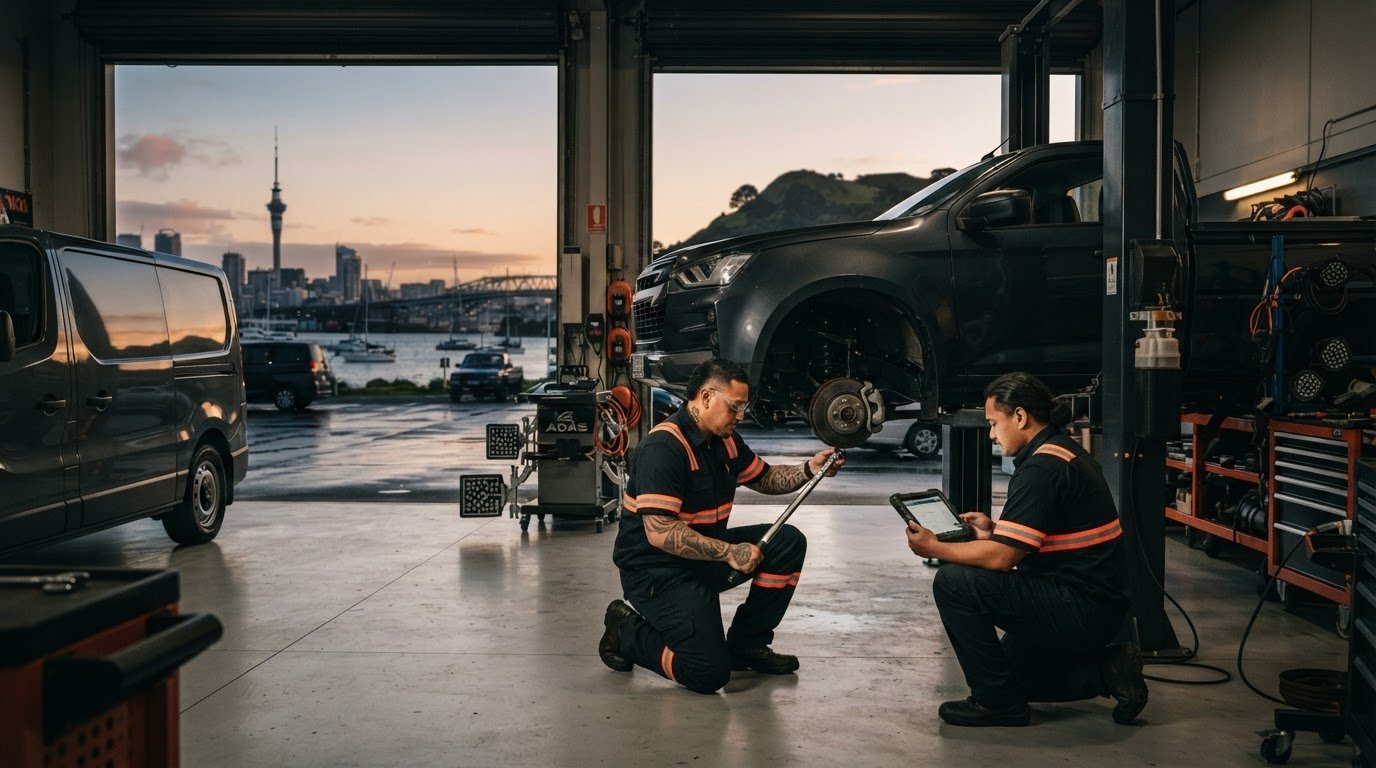
Did you know that at least 73% of acute workplace fatalities in New Zealand involve a vehicle? For an Auckland business owner, a ute or van isn’t just a transport solution; it’s a mobile office that carries your team through the city’s punishing stop-start traffic. When you rely on specialised fleet servicing Auckland to keep your wheels turning, you aren’t just paying for an oil change. You’re investing in revenue protection. It’s a reality that every hour a vehicle spends sidelined in a workshop is an hour of lost billable trade time that your bottom line simply cannot afford.
We understand the frustration of generic mechanics who lack the capacity for heavily loaded commercial rigs, often leaving you to manage complex logbook schedules and warranty compliance by yourself. This 2026 maintenance guide reveals how strategic servicing keeps your trade and corporate vehicles compliant, operational, and cost-efficient. We will break down the November 2026 WoF regulation updates, the critical role of ADAS calibration, and how tailored maintenance schedules can eliminate the surprise repair bills that typically plague high-mileage fleets.
Key Takeaways
- Understand why commercial vehicles require specialised maintenance schedules to handle severe duty cycles and heavy payloads that standard passenger car servicing overlooks.
- Discover how proactive fleet servicing Auckland protects your bottom line by prioritising asset availability and reducing costly, unscheduled downtime for your trade rigs.
- Identify the high-stress components, including automatic transmissions and braking systems, that require rigorous inspection when operating at full gross vehicle mass.
- Learn about your statutory health and safety obligations and the critical requirement for precise ADAS calibration following any steering or suspension modifications.
- See how partnering with a one-stop mechanical specialist simplifies fleet management by integrating routine maintenance with technical fit-outs and advanced diagnostics.
What Distinguishes Commercial Fleet Servicing from Standard Mechanical Maintenance?
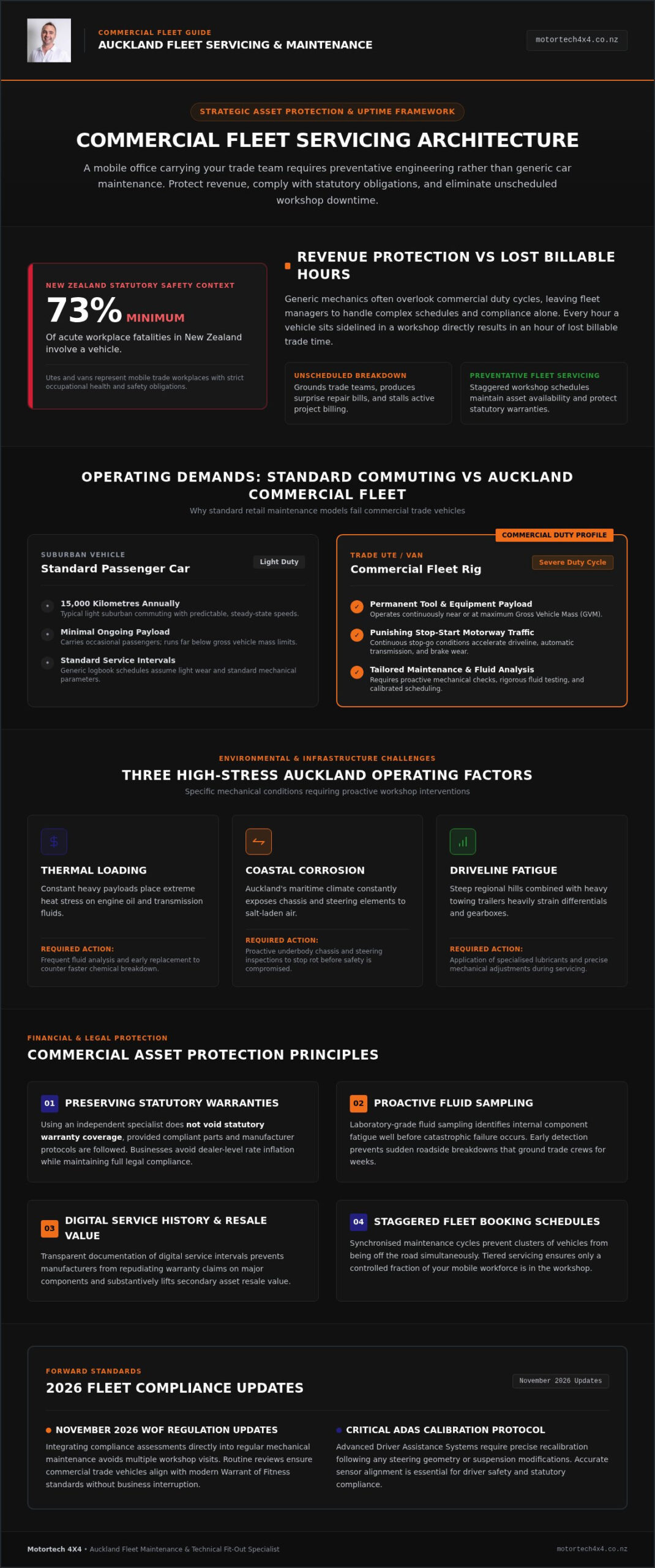
Commercial vehicles aren’t just larger versions of the family sedan. They operate under a completely different set of mechanical parameters. While a suburban car might see 15,000 kilometres of light commuting annually, a trade ute often carries a permanent payload of tools and equipment while navigating heavy traffic. This constant strain requires a shift in perspective. Professional fleet servicing Auckland focuses on maintaining asset availability through preventative engineering, rather than just fixing things once they’ve already failed on the side of the Southern Motorway.
Effective comprehensive fleet management requires a proactive approach to maintenance that considers the specific duty cycle of every vehicle in the group. By treating maintenance as a predictable operational cost, businesses can avoid the chaos of unscheduled downtime. A structured workshop booking schedule allows for staggered maintenance, ensuring that only a small portion of your mobile trade team is off the road at any given time. This level of coordination keeps your billable hours high and your team productive.
Duty Cycles and Operating Stresses on Auckland Fleets
Auckland’s unique geography and infrastructure create specific mechanical challenges that standard retail servicing often overlooks. The stop-start nature of the city’s motorway network accelerates wear on driveline components and braking systems, especially for vehicles operating at their maximum gross vehicle mass.
- Thermal Loading: Constant heavy payloads place extreme heat stress on engine oil and transmission fluids. This leads to faster chemical breakdown and requires more frequent fluid analysis.
- Coastal Corrosion: Auckland’s maritime environment means vehicles are frequently exposed to salt-laden air. This demands proactive underbody chassis and steering inspections to prevent structural rot before it compromises safety.
- Driveline Fatigue: The combination of steep hills and heavy trailers increases the load on differentials and gearboxes, requiring specialised lubricants and precise adjustment.
Preserving Manufacturer Warranties Through Certified Logbook Servicing
Maintaining a rigorous service history is a vital financial safeguard. Using an independent specialist for your fleet servicing Auckland doesn’t void your statutory warranty, provided the workshop uses compliant parts and follows manufacturer protocols. It’s a common misconception that you’re locked into dealership pricing to keep your coverage intact.
Clear documentation of digital service intervals prevents manufacturers from repudiating warranty claims if a major component fails. We use proactive fluid sampling to identify internal fatigue early. This allows our technicians to catch issues before they turn into catastrophic failures that could ground your team for weeks. Beyond the warranty period, a complete, professional service record significantly enhances the resale value of the asset. It proves to future buyers that the vehicle was maintained to a rigorous commercial standard rather than a generic retail one.
How to Build an Auckland Fleet Servicing Schedule: A Practical Framework
A reliable maintenance framework requires more than following the manufacturer’s logbook. Relying on rigid, generic intervals often leads to premature component failure, especially when vehicles carry constant payloads. A practical approach to fleet servicing Auckland involves assessing individual vehicle utilisation, gross operating weight, and specific operating environments. This allows you to build a tiered schedule that separates minor lubrication tasks from major driveline overhauls.
Synchronising these workshop visits is vital to keep your mobile trade teams deployed efficiently. By integrating compliance checks directly into your regular mechanical maintenance, you can eliminate multiple disruptive workshop visits. This approach ensures your business remains productive throughout the trading week.
Step 1: Segmenting Fleet Vehicles by Operating Demands
Every commercial fleet has different vehicle types that face distinct operating conditions. Grouping your assets helps you apply the correct maintenance intervals where they are needed most.
- Light Urban Runabouts: These vehicles experience high stop-start wear but lower structural stress. They require regular oil safety inspections and brake checks.
- Mobile Trade Utes: Operating under heavy, sustained payloads, these diesel vehicles need shortened service intervals to protect engine longevity and transmission health.
- Heavy Towing Rigs: These assets face extreme mechanical strain, requiring frequent driveline inspections and fluid analysis. For an example of specialised heavy vehicle care and preventative fleet solutions, visit Complete Truck Services LLC.
Reviewing historical maintenance logs helps pinpoint recurring wear patterns across specific vehicle makes, allowing you to adjust your schedule before major faults occur.
Step 2: Implementing Preventative Inspection Checkpoints
Every workshop visit must include a rigorous safety assessment. Technicians should conduct routine hydraulic brake testing and measure pad thickness on every occasion. It is also vital to inspect cooling systems, auxiliary belts, and turbocharger induction pipes for heat fatigue, as these components fail regularly under heavy commercial loads.
Integrating scheduled WOF Auckland inspections directly into your routine mechanical services saves significant time. This process is particularly critical for vehicles equipped with driver assistance technology, as official ADAS calibration research shows that even minor steering or suspension alterations can disrupt safety systems.
Step 3: Managing Turnaround Times and Operational Uptime
Staggering vehicle service bookings across the trading week protects your core business operations. Coordinating fast-turnaround consumable replacement using pre-allocated workshop repair bays ensures your trade rigs spend less time on the hoist. Establishing transparent communication protocols between fleet controllers and lead workshop technicians keeps everyone informed about vehicle status. If you want to streamline your maintenance schedule, consider speaking with our team about professional fleet servicing options that match your business requirements.
Critical Mechanical Components Demanding Regular Fleet Inspections
Operating a trade vehicle at its maximum gross vehicle mass (GVM) places immense pressure on every mechanical interface. Standard fleet servicing Auckland often misses the subtle signs of component fatigue that occur when a ute is permanently loaded with 800 kilograms of tools and equipment. These heavy payloads don’t just increase fuel consumption; they place severe rotational stress on automatic transmissions and differentials, especially when navigating Auckland’s steep volcanic terrain or towing heavy trailers between job sites.
Braking systems also experience rapid friction material degradation under these conditions. When a vehicle is consistently near its legal weight limit, the kinetic energy required to stop in Auckland’s motorway traffic generates extreme heat, leading to glazed pads and warped rotors. Regular inspections must go beyond simple visual checks, requiring precise measurement of steering linkages and commercial suspension assemblies to prevent uneven tyre scrub and maintain predictable handling.
Automatic Transmission and Driveline Fluid Longevity
Towing heavy trailers or carrying constant loads accelerates automatic transmission fluid oxidation and internal clutch pack wear. Heat is the primary enemy of any gearbox; once the fluid breaks down, internal friction increases and leads to expensive failure. A standard pan-drop drain only replaces about a third of the total fluid volume. We recommend professional transmission flushes to remove metallic contaminants that standard drains leave behind, ensuring the entire hydraulic circuit is clean. It’s equally vital to inspect differential oils and transfer case fluids regularly on commercial 4×4 trade vehicles to identify water ingress or metal filing accumulation before gear sets are damaged.
Suspension Integrity, Tyre Life, and GVM Management
Sustained tool loads degrade standard factory leaf springs, shock absorbers, and suspension bushes much faster than anticipated. When a vehicle sags under weight, the suspension geometry changes, which leads to poor steering response and accelerated tyre wear. You should evaluate vehicle load distribution and consider professional suspension systems upgrades for heavy-use trade utes to restore ride height and safety. Performing regular computerised wheel alignments is a non-negotiable part of effective fleet servicing Auckland, as it eliminates premature tyre wear and ensures your fleet remains stable under full load.
Diesel Powertrain Management and Diagnostic Health
Modern common-rail diesel injectors require regular diagnostic testing to maintain optimum combustion efficiency. In Auckland’s stop-start traffic, exhaust aftertreatment systems like DPF units are prone to soot accumulation because the engine rarely reaches the sustained temperatures needed for passive regeneration. We monitor Diesel Particulate Filter differential pressures during every service to prevent costly exhaust blockages. Technicians also check intercooler hoses and intake manifolds for oil mist accumulation and pressure leaks, ensuring the turbocharger system maintains peak boost pressure and fuel economy. For trade businesses aiming to keep operating expenditure under control alongside mechanical tuning, click here to explore commercial fuel card and fleet expense solutions from Fleetmaxx Solutions.
Safety, ADAS Calibration, and Compliance in Modern Commercial Fleets
Corporate safety responsibilities have evolved beyond simple mechanical reliability. Today, a vehicle is a mobile workplace, and employers hold statutory health and safety obligations to ensure their mobile teams operate roadworthy assets. While many providers focus on traditional oil changes, professional fleet servicing Auckland must now encompass the complex electronic architecture that governs modern vehicle safety. Failure to maintain these systems doesn’t just risk mechanical breakdown; it creates significant legal and operational liability for the business.
Ensuring that commercial accessories and frontal equipment integrate seamlessly with factory safety architecture is a technical requirement, not an optional upgrade. Thorough pre-purchase and ongoing safety inspections prevent non-compliant commercial vehicles from operating on public roads, protecting both the driver and the company’s reputation.
The Role of ADAS Calibration in Commercial Fleet Safety
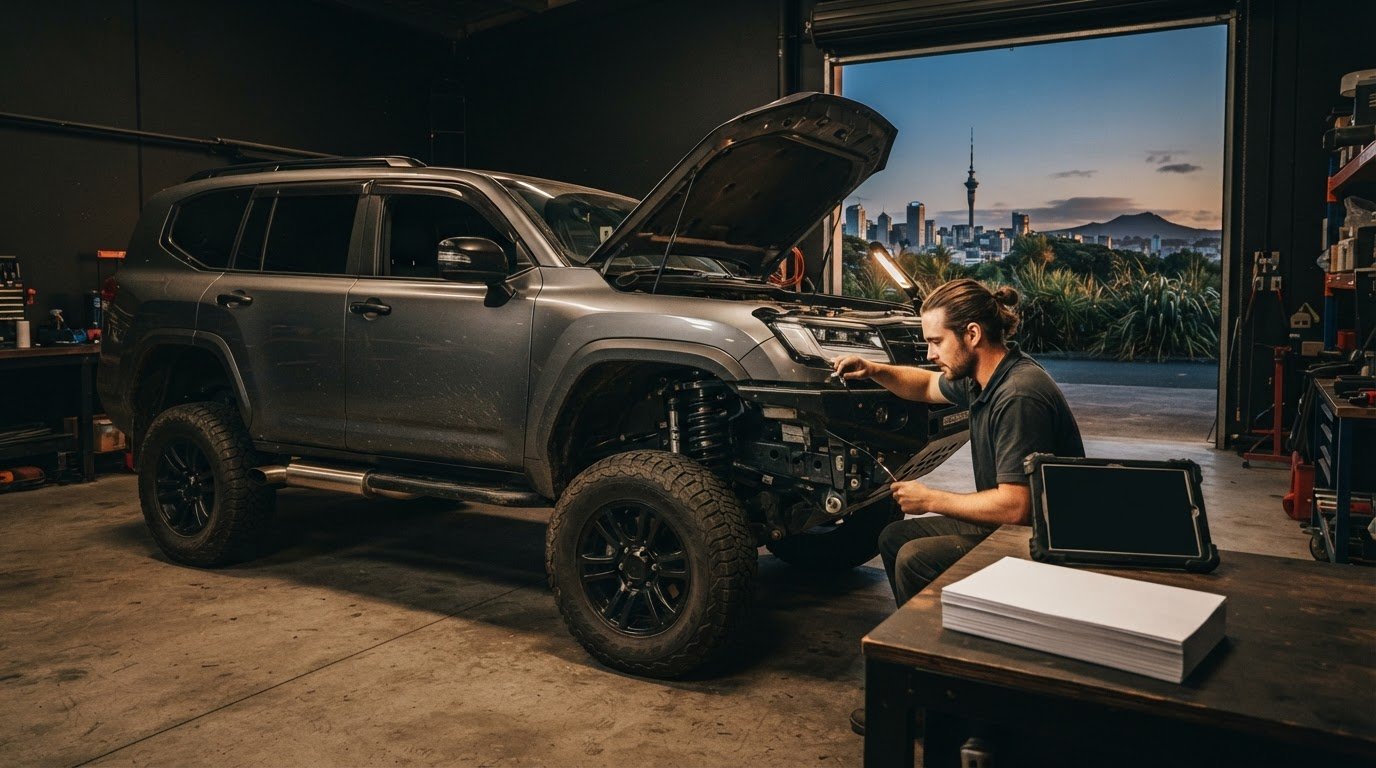
Advanced Driver Assistance Systems (ADAS) rely on forward radar sensors and windscreen-mounted cameras to govern critical safety features. These sensors are calibrated to millimetre precision based on the vehicle’s factory ride height and orientation. Any modification to the steering, suspension, or even a simple windscreen replacement can shift the sensor targeting geometry significantly.
- System Governance: Forward sensors control Autonomous Emergency Braking (AEB) and Lane Keep Assist, which are vital for preventing collisions in heavy traffic.
- Geometric Shifts: Lifting a trade ute or fitting heavy frontal accessories changes the “field of vision” for these sensors, potentially causing delayed intervention.
- Precision Recalibration: Specialised workshop calibration targets are required to restore factory electronic safety thresholds according to manufacturer specifications.
When managing fleet servicing Auckland, ignoring these digital calibrations is a risk no modern business should take. This ensures that the vehicle’s computer correctly interprets the road environment, providing a vital safety net for your drivers during their daily operations.
Meeting New Zealand WorkSafe and Road Transport Compliance
Under the Health and Safety at Work Act 2015, vehicle maintenance logs serve as crucial evidence of corporate compliance with transport safety standards. If an incident occurs, these records demonstrate that the business has taken all practicable steps to manage transport risks. It’s a level of diligence that protects the organisation from the severe penalties associated with safety failures in the workplace.
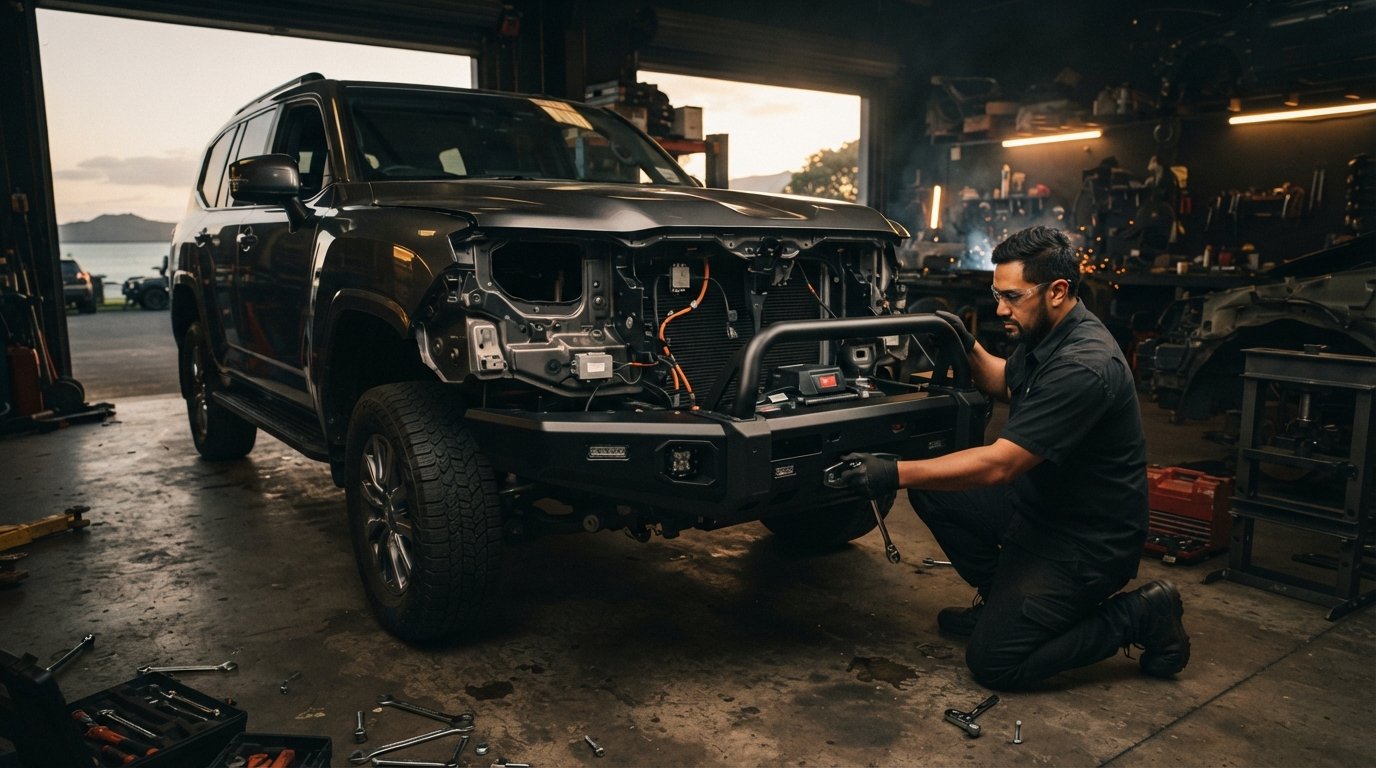
Compliance also extends to physical modifications and weight management. Commercial vehicles carrying trade accessories must remain strictly within certified legal axle load limits. It is essential to ensure structural accessories, such as commercial 4×4 bullbars, comply with frontal impact safety standards and don’t interfere with airbag deployment sensors. If you’re concerned about your vehicle’s current safety status, you can book a compliance inspection with our technical team to ensure your fleet meets all modern standards.
Why Auckland Fleets Partner with Motortech 4X4 for Complete Fleet Care
Selecting a partner for fleet servicing Auckland requires finding a workshop that understands the specific demands of trade rigs and corporate assets alike. Motortech 4X4 provides a specialised mechanical capability that covers everything from standard passenger cars to heavily modified 4×4 trade utes. We aren’t a generic suburban shop; we operate a high-performance facility designed to handle the precision requirements and heavy-duty cycles of modern commercial fleets. By centralising your maintenance, fit-outs, and diagnostics, you eliminate the logistical headache of managing multiple providers.
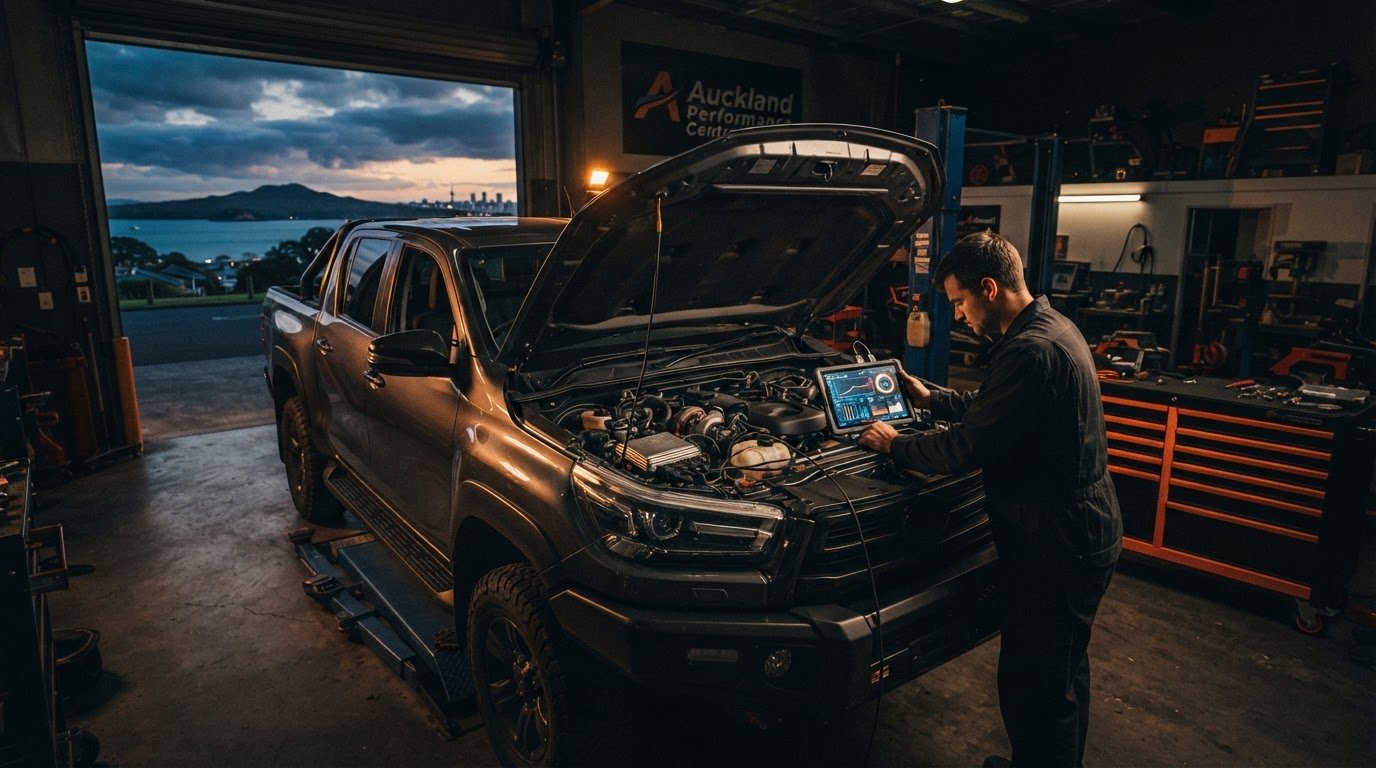
Our workshop is equipped with state-of-the-art diagnostic tooling that goes far beyond basic oil changes. We perform in-house transmission flushes, ADAS calibration, and performance optimisation, ensuring every vehicle in your fleet operates at peak efficiency. This technical depth allows us to identify and rectify complex electronic or mechanical issues before they lead to costly roadside failures, protecting your bottom line and your team’s safety.
End-to-End Capability from Routine Servicing to Commercial Fit-Outs
We offer a unique end-to-end capability that simplifies fleet management. You don’t need to visit one shop for a WOF and another for equipment upgrades. You can service standard company runabouts alongside heavily modified trade vehicles under one roof. This integration allows you to streamline fleet expansion by pairing routine mechanical servicing with the installation of commercial roof racks, storage systems, and safety lighting. We build tailored maintenance programmes calibrated around your specific trade operations and annual mileage, ensuring every asset is maintained to its actual duty cycle rather than an arbitrary calendar date.
Direct Communication and Rapid Workshop Turnaround
We know that every day a vehicle is off the road, your business loses revenue. Our central Auckland workshop capability is focused on delivering fast vehicle turnaround and maximum fleet availability. Dedicated commercial account coordination gives you direct access to the senior technicians managing your vehicles, ensuring clear communication throughout the repair process. We use prioritised scheduling to reduce operational downtime, meaning your staff spend more time on billable job sites and less time waiting for repairs. Book an initial fleet inspection at the Motortech 4X4 service centre today to see how we can optimise your operational uptime and reduce long-term maintenance costs.
Protect Your Uptime and Mechanical Compliance
Effective fleet servicing Auckland is no longer just a maintenance task; it’s a strategic investment in your company’s daily revenue. The transition from reactive repairs to duty-cycle engineering ensures your assets remain operational under the city’s unique stresses. From precise ADAS calibration to specialised transmission flushing, maintaining modern commercial rigs requires technical depth that generic workshops simply can’t provide.
Motortech 4X4 operates a comprehensive Auckland facility dedicated to minimising downtime for every vehicle in your fleet. Whether you manage standard passenger cars or heavily modified 4×4 trade utes, our team provides the technical expertise and fit-out support required to keep your mobile workforce safe and legal. Don’t let unscheduled breakdowns erode your billable hours or compromise your health and safety obligations.
Partner with Motortech 4X4 for comprehensive Auckland fleet servicing and secure the long-term reliability of your commercial assets. We look forward to keeping your business moving.
Frequently Asked Questions
How often should commercial fleet vehicles be serviced in Auckland?
Commercial fleet vehicles should be serviced based on their specific operating demands and payload levels rather than generic time intervals. Heavily laden trade utes and diesel vehicles operating in stop-start Auckland traffic generally require maintenance every 10,000 kilometres or six months. Light urban runabouts with minimal loads can often follow standard 15,000-kilometre intervals. Regular utilisation reviews help determine the optimum schedule for each asset type.
Will using an independent Auckland workshop void my commercial vehicle warranty?
No, using an independent specialist workshop will not void your manufacturer’s commercial vehicle warranty, provided the facility uses compliant parts and follows official service protocols. New Zealand consumer law protects your right to choose your service provider. Choosing a qualified specialist for your fleet servicing Auckland ensures your digital logbook records remain completely accurate, which prevents vehicle manufacturers from repudiating future warranty claims.
What is the difference between standard car servicing and commercial fleet servicing?
Commercial fleet servicing prioritises asset availability, preventative engineering, and strict regulatory compliance, whereas standard car maintenance is typically reactive. Fleet maintenance focuses on identifying component fatigue before a breakdown occurs, protecting your billable trade hours. It also accounts for severe duty cycles, heavy tool loads, and corporate health and safety obligations that standard passenger car servicing schedules completely ignore.
Why do commercial utes need specialised transmission flushes and suspension checks?
Commercial utes require specialised driveline flushes and suspension checks because they constantly operate near their maximum gross vehicle mass. Permanent tool loads degrade factory leaf springs and shock absorbers, altering steering geometry and accelerating tyre wear. Heavy payloads and towing also generate extreme heat within automatic gearboxes. A professional transmission flush removes metallic contaminants that standard drains leave behind, protecting the internal clutch packs.
What is ADAS calibration and why does my fleet vehicle need it after maintenance?
Advanced Driver Assistance Systems (ADAS) calibration is the precise electronic alignment of windscreen cameras and radar sensors that govern safety features like Autonomous Emergency Braking. Your fleet vehicle requires this recalibration because altering vehicle ride height, replacing suspension components, or changing a windscreen shifts the sensor targeting geometry. Precise workshop calibration targets restore these electronic safety thresholds according to exact manufacturer specifications.
How does regular fleet servicing reduce overall operating expenses for Auckland businesses?
Regular fleet servicing reduces overall operating expenses by preventing catastrophic mechanical failures and eliminating premature tyre and component wear. Investing in structured fleet servicing Auckland helps businesses transform unpredictable emergency repair bills into stable, scheduled operational costs. Catching issues early prevents expensive vehicle downtime, ensuring your mobile trade teams remain on the road and deployed at billable job sites throughout the week.
Can Motortech 4X4 handle both commercial fleet fit-outs and ongoing mechanical maintenance?
Yes, Motortech 4X4 provides a complete one-stop solution that integrates commercial fleet fit-outs with ongoing mechanical maintenance. Our central Auckland facility handles routine servicing, advanced diagnostics, and structural accessory installations under one roof. This end-to-end capability allows businesses to streamline fleet expansion by pairing routine mechanical inspections with the installation of suspension kits, bullbars, roof racks, and specialised trade storage systems.