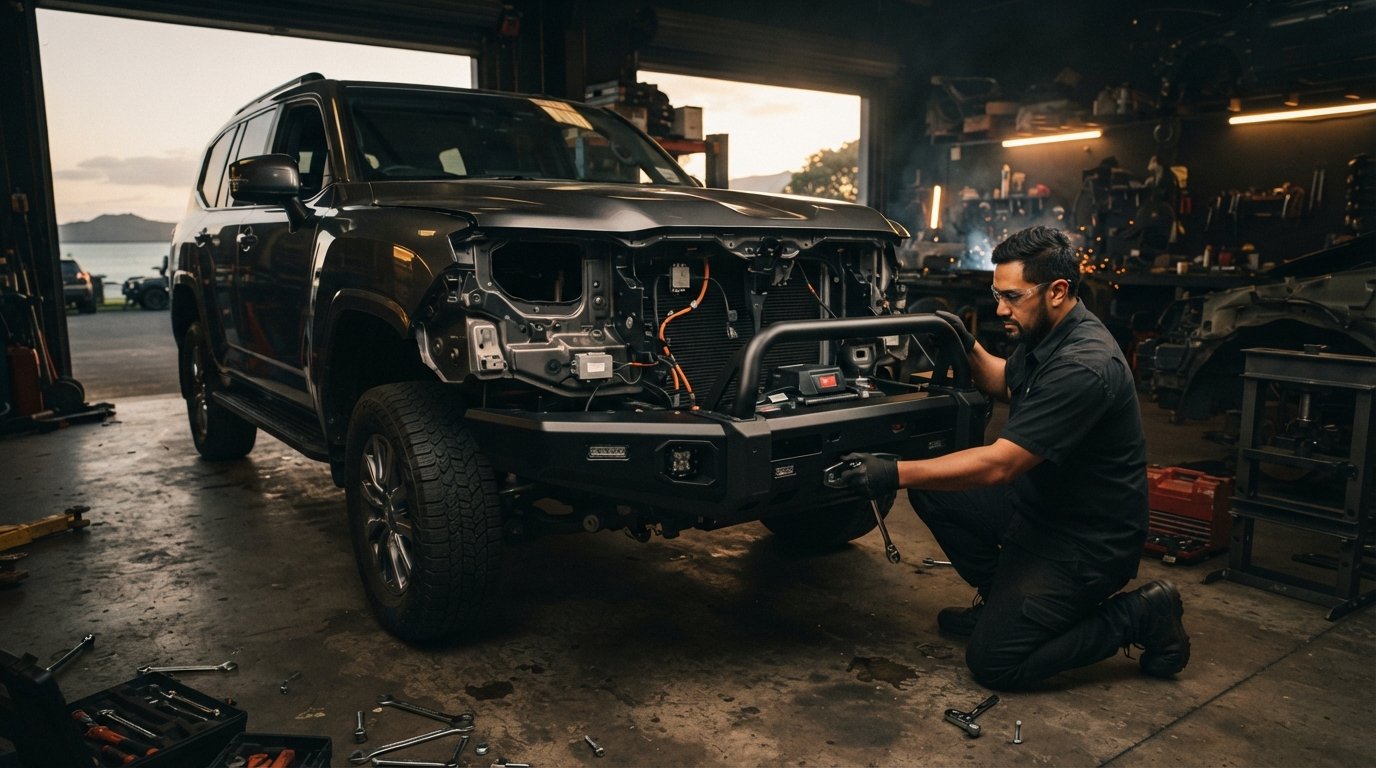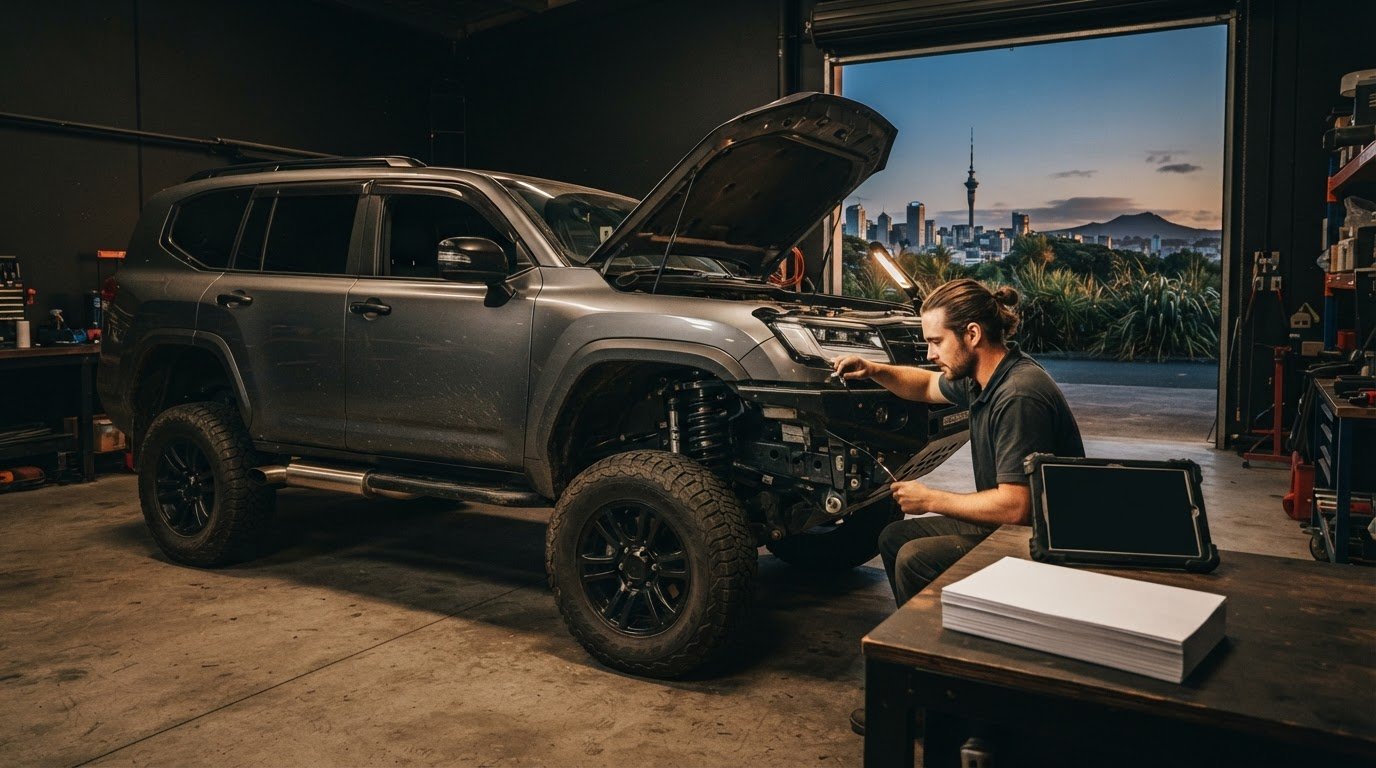
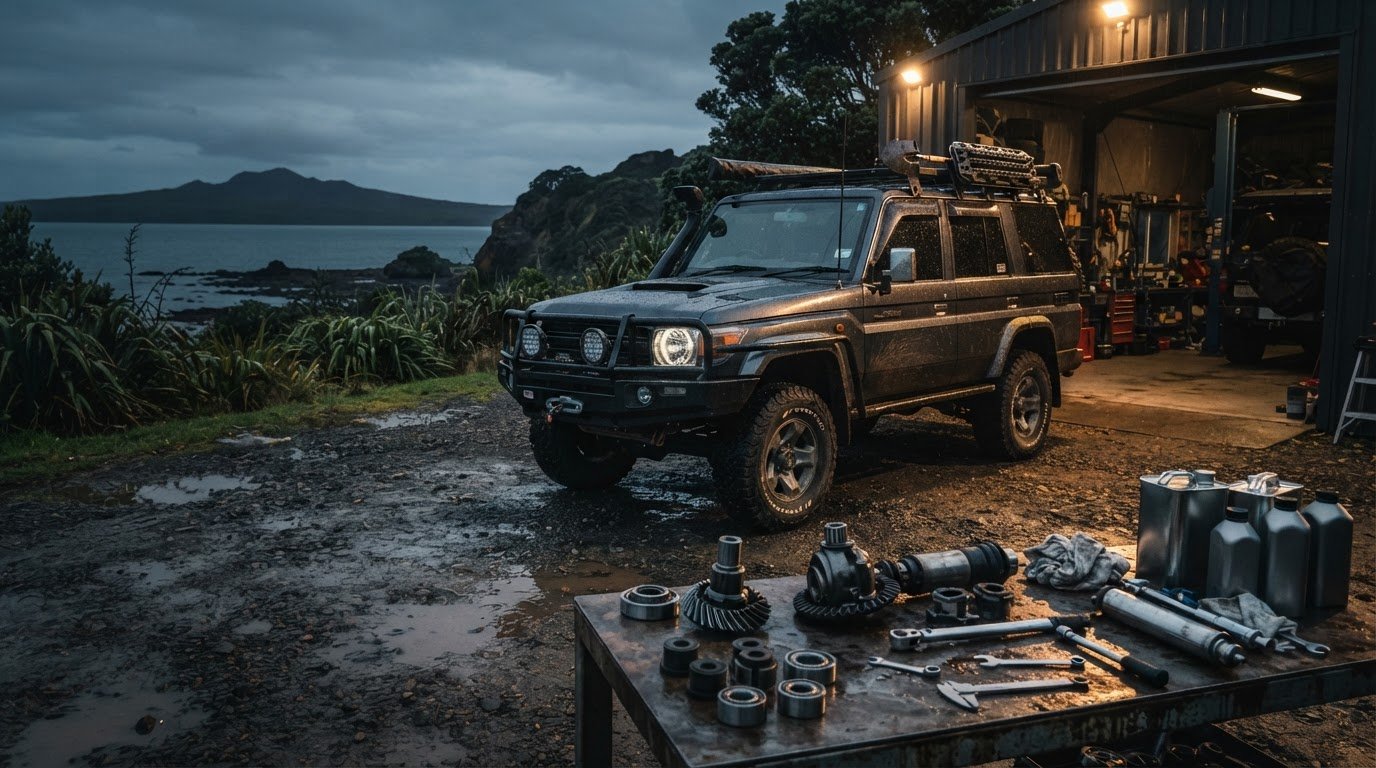
Relying on a standard passenger car logbook schedule is the fastest way to break a four-wheel drive. Harsh corrugated tracks, heavy towing, and deep water crossings place your vehicle under severe-duty strain that standard dealership intervals simply don’t address. Executing comprehensive preventative maintenance for 4WD vehicles means looking far beyond a basic oil change to actively protect your transfer case, diffs, and chassis before an avoidable driveline failure strands you hundreds of kilometres from help.
You already understand that mud ingress, grit, and continuous off-road loads accelerate component wear, yet pinpointing realistic service timelines often feels like guesswork. This 2026 checklist delivers the definitive maintenance blueprint to shield your suspension bushes, wheel bearings, and transmission from premature fatigue while locking in maximum mechanical reliability and resale value. Read on to master the essential pre-trip inspections, severe-service fluid schedules, and post-track care routines that keep your rig performing at its peak.
Key Takeaways
- Master the core principles of preventative maintenance for 4WD vehicles to protect heavy-duty transfer cases and locking differentials against thermal breakdown and water contamination.
- Identify early warning signs of chassis fatigue, bushing play, and ball joint wear caused by extreme off-road suspension articulation.
- Learn why operating in deep sand, corrugations, or under heavy towing loads qualifies as severe duty, requiring altered fluid replacement schedules.
- Distinguish between essential daily trailside inspections and advanced workshop diagnostics to ensure uncompromised remote track reliability.
- Understand the mechanical value of specialist services, including transmission flushes and driveline assessments, in maintaining long-term vehicle resale value.
The Essential 4WD Driveline Maintenance Checklist
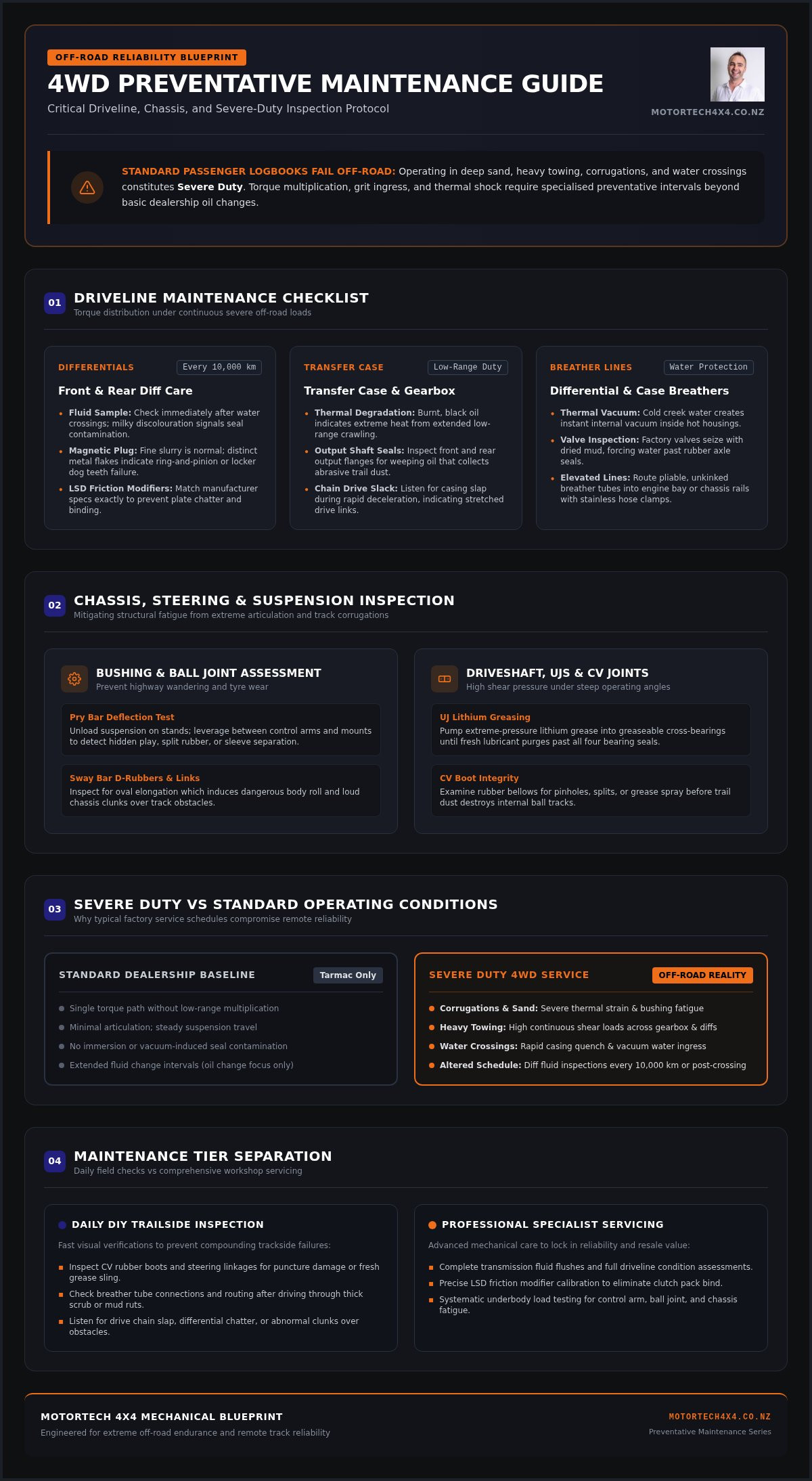
Conventional two-wheel-drive cars send power along a single path. In contrast, an off-road mechanical platform splits torque through complex gear sets, shafts, and planetary assemblies under extreme load. A fully engaged four-wheel drive system multiplies torque to overcome loose gravel, mud ruts, and steep inclines. This mechanical advantage generates massive thermal energy and rotational stress. Standard passenger car checks miss these stress points entirely. Executing disciplined preventative maintenance for 4WD vehicles demands a systematic teardown of your driveline condition before and after hitting remote tracks.
Front and Rear Differential Care
Transfer Case and Gearbox Lubrication
Low-range crawling subjects transfer case chains and planetary gears to prolonged torque multiplication. Over time, extreme heat thins the fluid, accelerating internal wear. Regular preventative maintenance for 4WD vehicles requires reviewing these specific transfer case points:
- Fluid viscosity and colour: Burnt, black oil indicates thermal degradation from long periods in low range, requiring immediate fluid renewal.
- Output shaft seals: Check the front and rear output flanges for weeping oil films that collect trail dust, which quickly shreds rubber lip seals.
- Chain drive integrity: Listen for slap inside the casing during sudden deceleration, a symptom of oil starvation or stretched drive links.
Differential and Gearbox Breather Systems
When hot differentials, gearboxes, and transfer cases hit cold river water, the rapid temperature drop creates an internal vacuum. Factory spring-loaded breather valves often seize shut with dried mud or grit, pulling creek water straight past axle seals. Trace your breather lines from the diff housings up into the engine bay or chassis rails. Check that tubing remains pliable, unkinked, and tightly secured with stainless hose clamps. Clear, unobstructed breathers equalise casing pressure instantly, ensuring your driveline stays sealed and dry in extreme conditions.
Chassis, Steering, and Suspension Inspection Protocol
Extreme wheel articulation tests the structural limits of underbody steel and flexible rubber joints. When negotiating severe ruts and corrugations, control arms, steering linkages, and shock absorbers endure torsional stresses that passenger vehicles never encounter. Without rigorous underbody checks, worn joints compromise steering response, induce dangerous wandering at highway speeds, and accelerate uneven tyre wear. Incorporating structural inspections into your regular preventative maintenance for 4WD vehicles protects both mechanical integrity and occupant safety.
Bushing and Ball Joint Assessment
Position the vehicle safely on stands to unload the suspension. Insert a pry bar between control arms and chassis mounts, applying firm leverage to expose hidden play. Look for split rubber, separation from metal sleeves, or excessive deflection. Inspect sway bar links and D-rubbers for oval elongation, which causes pronounced body roll and chassis clunks over track obstacles. For vehicles carrying heavy touring loads or commercial kit, review this suspension guide for heavy-duty replacement criteria and high-articulation bushing upgrades.
Driveshaft, Universal Joint, and CV Maintenance
Driveline angles steepen significantly under dynamic suspension cycles, placing immense shear pressure on flexible joints. A comprehensive pre-trip maintenance checklist should always include these mechanical driveline checkpoints:
- Universal joint greasing: Attach a grease gun to greaseable cross-bearings, pumping fresh extreme-pressure lithium grease until clean lubricant purges past all four bearing seals.
- CV boot integrity: Inspect constant velocity rubber boots for punctures, deep cracks, and radial grease spray that reveals torn clamping bands.
- Slip yoke backlash: Grasp driveshaft tubes firmly, twisting by hand to check for rotational play while ensuring splined sections retain adequate grease.
Chassis Washdown and Corrosion Mitigation
Packed mud acts like a sponge, holding moisture against bare steel and promoting structural rot inside boxed frame sections. Direct a high-pressure hose into factory chassis drain holes, flushing trapped silt and coastal salt deposits until the drainage runs crystal clear. Once dry, examine crossmembers, shock towers, and recovery points for hairline fractures caused by repeated chassis flex. Treating raw surfaces with specialized underbody coatings forms an essential shield against salt spray and gravel blasting. If you detect uncharacteristic chassis groans or abnormal tyre scrubbing after a rugged trip, book a comprehensive inspection with Motortech 4X4 to verify chassis alignment and suspension bush tolerances.
Severe Duty vs Standard 4WD Service Schedules
Automakers design standard service intervals for commuter vehicles running light loads over smooth tarmac. That baseline disappears the moment you point a loaded rig down a corrugated track or hook up a heavy off-road camper. Harsh off-road operating environments degrade lubricants, scorch transmission bands, and contaminate filtration systems at more than twice the highway rate. Comprehensive preventative maintenance for 4WD vehicles demands transitioning your service intervals from standard factory intervals to a dedicated severe-duty maintenance matrix.
| Mechanical Component | Standard Highway Schedule | Severe Off-Road / Towing Schedule |
|---|---|---|
| Engine Oil & Filter | 10,000 – 15,000 km | 5,000 – 7,500 km |
| Automatic Transmission Fluid | 80,000 – 100,000 km | 30,000 – 40,000 km (or after heavy towing) |
| Differential & Transfer Case Oils | 40,000 – 50,000 km | 20,000 km (or post-water crossing) |
| Engine Air & Cabin Filters | 20,000 – 30,000 km | 5,000 – 10,000 km (inspect every off-road trip) |
Environmental Factors That Halve Service Intervals
Fine bulldust and volcanic silt easily bypass tired airbox seals, turning engine oil into abrasive grinding paste. Relentless track corrugations generate high-frequency vibrations that shake loose electrical sensor plugs and chassis fasteners. Salt spray and wet beach sand accelerate bearing corrosion while fusing brake caliper slide pins. Operating in these terrains cuts usable component life in half, making timely fluid renewals and filter inspections crucial. For additional internal component shielding, motorists can explore Venda de Protetores de Metais e Motores through Motorbull to discover how advanced metal conditioners safeguard engines under severe operational friction.
Automatic Transmission Fluid Longevity Under Load
Heavy gross vehicle mass (GVM) payloads, steel bar work, and loaded dual-axle trailers generate immense torque converter slip. This extreme operating friction drives automatic transmission fluid (ATF) temperatures beyond safe thermal thresholds. Cooked ATF shears, oxidises, and loses hydraulic pressure, leading directly to slipping clutch plates and harsh shift flares. Routine drain-and-fill services change only a fraction of the burnt oil trapped in the torque converter; a full professional transmission flush completely evacuates oxidised fluid, clearing the cooling lines and restoring factory hydraulic response.
Diesel Particulate Filters and Air Intake Systems
Low-range crawling creates mechanical headaches for modern common-rail diesels. Slow track speeds and sustained low engine revolutions prevent exhaust gas temperatures from reaching the levels required for passive diesel particulate filter (DPF) regeneration, causing rapid soot buildup. Air intake plumbing requires equal scrutiny. High manifold vacuum pulls fine grit through loose snorkel clamps or split silicone joiners, dusting turbocharger compressor wheels. Clean the mass airflow (MAF) sensor regularly to keep fuel injection delivery precise and prevent unburnt fuel from loading your DPF. Regular emissions checks and quality servicing—such as the standard maintenance and diagnostics carried out by San Juan Auto Smog—demonstrate how vital clean combustion and fresh synthetic oil are for preventing exhaust soot contamination.
DIY Trailside Checks vs Professional Workshop Servicing
Every remote journey relies on a disciplined split between operator field checks and professional workshop diagnostics. While basic visual checks fit into a camp morning routine, modern four-wheel drives integrate over 150 computer modules controlling complex electronic traction systems and hydraulic circuits. Attempting to service electronic transfer cases, transmission valve bodies, or advanced driver aids with driveway hand tools creates substantial mechanical risk. Effective preventative maintenance for 4WD vehicles combines routine owner surveillance with dedicated specialist workshop interventions.
The 10-Minute Driveway Walkaround
Perform these non-negotiable checks on level ground before departure:
- Fluid levels on a cold engine: Verify engine oil, coolant, brake fluid, and power steering reserves sit precisely between the min and max indicators.
- Tyre carcass condition: Inspect tread grooves for embedded rocks, scrutinise sidewalls for trail bruising or stake cuts, and confirm valve stems have sealed dust caps.
- Lighting circuits: Cycle through low beams, high beams, indicators, brake lights, and high-output auxiliary driving lamps to verify earth connections haven’t rattled loose.
Post-Trail Contamination Inspection Protocol
Deep water crossings and thick clay demand an immediate post-adventure inspection before you return to daily highway commuting. Jack up each corner to spin the wheels by hand. Listen closely for coarse rumbling or crunching sounds that indicate water and abrasive grit have bypassed hub seals into the wheel bearings. Clear packed grass, spinifex, and dried clay away from hot exhaust pipes, DPF housings, and catalytic converters to prevent underbody fire hazards. Finally, inspect your cooling stack. Caked mud baked into radiator and intercooler fins severely chokes airflow, causing sudden engine overheating the moment you resume highway speeds.
When to Call a Professional 4×4 Specialist
Certain technical tasks require dedicated workshop equipment and advanced diagnostic scan tools. Driveline vibrations appearing at specific road speeds point to altered prop-shaft working angles, unbalanced shafts, or dynamic transfer case bearing wear that cannot be sorted on the trail. Furthermore, installing suspension lifts or altering vehicle ride height directly misaligns the forward-facing radar and windscreen cameras responsible for autonomous emergency braking and lane-keep assist. These systems require precise targets and digital realignment. Explore dedicated maintenance and modification options in the comprehensive Auckland 4×4 guide to keep your tourer compliant, safe, and mechanically sound.
If you encounter persistent driveline shudder, complex fault codes, or require dynamic safety sensor recalibration, book a specialist mechanical service with Motortech 4X4 to protect your build with purpose-built workshop tooling.
Partnering with Motortech 4X4 for Specialist Servicing
General automotive workshops excel at routine hatchback servicing, but off-road machinery requires specialized mechanical diagnostic procedures. Generalist technicians often overlook subtle indications of driveline fatigue, such as minor pinion seal seepage, micro-cracking in high-articulation suspension bushes, or thermal breakdown inside secondary transfer cases. Choosing an experienced four-wheel-drive specialist ensures that every underbody component receives the scrutiny needed to handle extreme terrain. Comprehensive preventative maintenance for 4WD vehicles demands workshop capability tailored to heavy chassis loads, extreme articulation, and technical off-road accessories.
Dedicated 4WD Workshop Tooling and Expertise
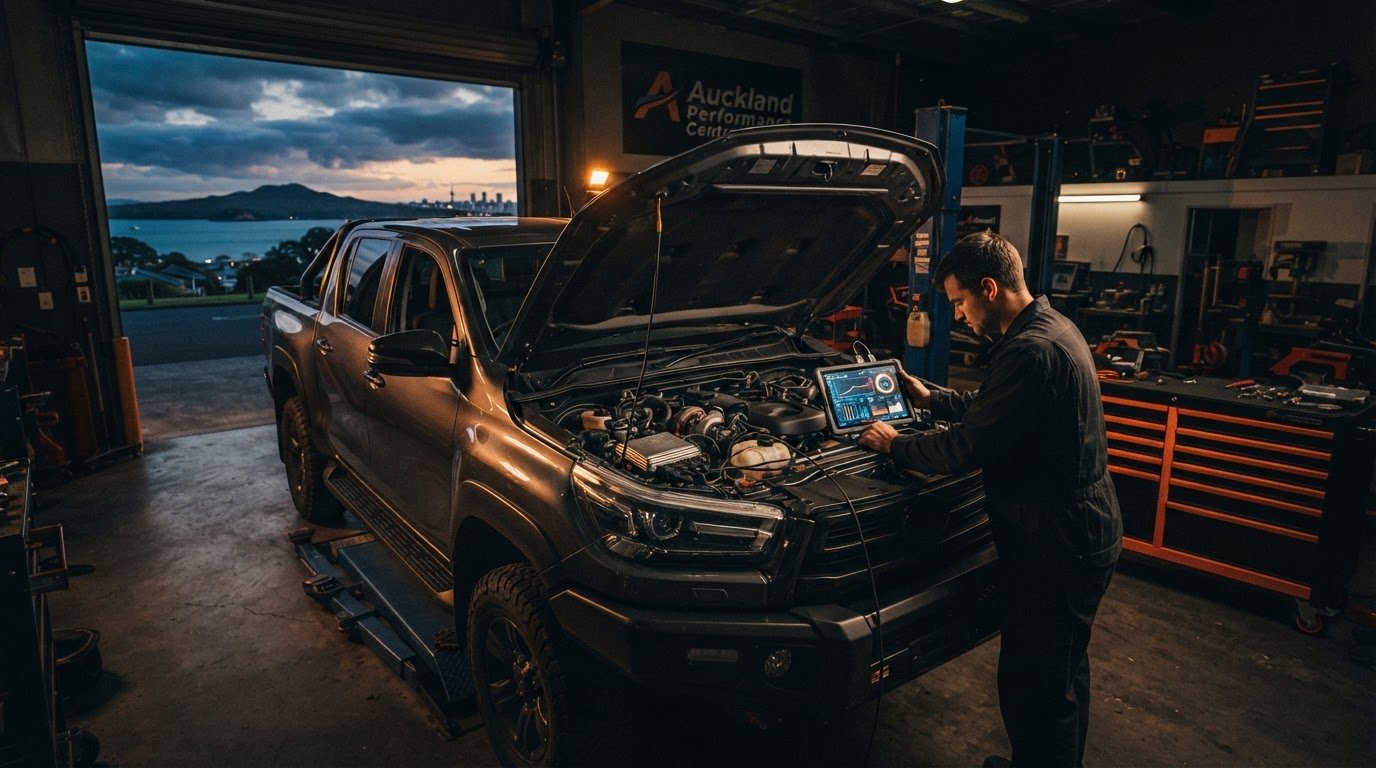
Modern four-wheel drives rely on sophisticated electronic management, requiring purpose-built scan tools to interrogate transmission control units, diff locks, and terrain-response computers. Motortech 4X4 operates advanced diagnostic systems alongside specialized hydraulic transmission flush equipment. Rather than settling for a partial fluid drop, our technicians execute full fluid exchanges to remove contaminated automatic transmission fluid (ATF) from torque converters and external cooling lines. Our team understands how heavy suspension kits, altered caster angles, and oversized tyres affect driveline geometry, allowing us to spot premature wear before it causes trail failure.
Fleet Servicing and Tailored Maintenance Programmes
Commercial operations depend on total vehicle reliability. We engineer structured fleet servicing programmes for commercial trade utes, forestry trucks, and heavy-duty utility vehicles subjected to constant severe duty. Preventative servicing routines include:
- Proactive component replacement: Swapping fatigued bushes, tie-rod ends, and universal joints during scheduled service windows to eliminate costly unscheduled downtime.
- Pre-WOF compliance inspections: Verifying that heavy-duty accessories, GVM upgrades, and chassis structures strictly meet New Zealand transport safety requirements.
- Severe-duty fluid analysis: Scheduling driveline and engine oil renewals based on operational hours and payload mass rather than standard highway mileage.
Book Your 4WD Preventative Service in Auckland
Heading into rugged backcountry tracks requires absolute confidence in your machine. A dedicated pre-trip inspection pinpoints failing wheel bearings, breached axle seals, and fluid contamination while your rig is still on the hoist. You gain direct access to technicians who live and breathe off-road performance, providing straightforward advice backed by engineering excellence. When you’re ready to secure maximum reliability, protect your driveline, and safeguard your vehicle’s resale value, book your next service with Motortech 4X4 at our Auckland centre.
Lock In Mechanical Reliability for Your Next Off-Road Adventure
Surviving the harshest off-road tracks requires deliberate mechanical preparation rather than wishful thinking. Every kilometre on corrugated gravel tests your vehicle’s mechanical limits. Adopting disciplined preventative maintenance for 4WD vehicles shields high-torque differentials, protects planetary transfer cases, and preserves heavy-duty suspension joints against punishing terrain. Following a severe-duty fluid matrix and backing up basic trailside walkarounds with professional workshop diagnostics ensures your rig handles remote environments without unexpected failure.
Motortech 4X4 is your specialist Auckland centre for both recreational tourers and commercial fleets. Equipped with 4WD-specific diagnostic tooling, specialised hydraulic transmission flush systems, and technicians experienced in extreme suspension geometry, we eliminate subtle driveline fatigue before it strands you in the bush. Take control of your machine’s longevity. Book your 4WD preventative service with Motortech 4X4 today, and set off on your next backcountry adventure with complete confidence.
Frequently Asked Questions
How often should differential and transfer case oil be changed in a 4WD?
Differential and transfer case fluids should be replaced every 20,000 kilometres under severe off-road conditions, or every 40,000 kilometres for standard highway driving. If you tow heavy loads, tackle deep mud, or complete water crossings, inspect fluid condition earlier. Any cloudy or discoloured oil indicates contamination, demanding an immediate flush to protect expensive gears and bearings from internal friction damage.
What preventative maintenance should be done immediately after water crossings?
Check differential, transmission, and gearbox breathers immediately after deep water crossings to ensure moisture hasn’t entered. Pull fluid filler plugs to verify oil hasn’t turned milky. Jack up each axle to spin the wheels, listening for abrasive grinding from compromised hub seals. Finally, inspect your chassis and radiator fins, hosing away packed river silt before it bakes hard against engine cooling surfaces.
Does severe off-road driving void my factory vehicle warranty?
Off-road driving alone doesn’t automatically void factory warranties, provided your vehicle is engineered for all-terrain use. However, failures caused by water ingestion, mechanical abuse, or exceeding rated gross vehicle mass limits will void warranty claims. Adhering to strict preventative maintenance for 4WD vehicles and documenting severe-service fluid schedules protects your consumer rights and provides verifiable service history if warranty disputes arise.
Why is a transmission flush recommended over a simple drain-and-fill?
A gravity drain-and-fill replaces only about a third of your transmission oil, leaving degraded fluid trapped inside the torque converter and cooler lines. A specialised mechanical transmission flush uses dedicated hydraulic gear to pump out 100% of the oxidised oil and suspended contaminants. This process restores factory hydraulic pressures, preserves friction linings, and prevents gear slippage when hauling heavy touring setups.
What are the early warning signs of 4WD suspension bush failure?
Early indicators include audible clunking or knocking noises over corrugated tracks, uneven tyre shoulder wear, and loose steering response on tarmac. You might also notice wandering at highway speeds or excessive body sway when cornering. Visually inspecting your control arms and sway bar links will reveal cracked, split, or deformed rubber sleeves that need replacing before they damage surrounding mounting brackets.
Can regular passenger car workshops perform proper 4WD preventative maintenance?
Standard passenger car garages generally lack the specialised tooling, heavy-duty diagnostic gear, and practical field experience required for modified four-wheel drives. General mechanics routinely miss subtle issues like altered driveline pinion angles or thermal fluid shearing inside high-torque transfer cases. Partnering with a dedicated Auckland specialist ensures accurate preventative maintenance for 4WD vehicles, covering high-articulation suspension, ADAS recalibrations, and severe-duty driveline care.
What critical spare parts and fluids should I carry on remote trails?
Pack dedicated bottles of engine oil, coolant, brake fluid, and differential gear oil matching manufacturer viscosity ratings. Essential mechanical spares include a spare drive belt, replacement fuel filters, tyre valve cores, and a high-grade puncture repair kit. Carrying heavy-duty zip ties, self-amalgamating silicone rescue tape, and an assortment of spare fuses will also help you manage trailside emergencies until reaching workshop support.