Your roof rack isn’t just a bolt-on accessory; it’s a structural modification that directly impacts your vehicle’s centre of gravity and electronic safety systems. When booking a Ford Ranger roof rack installation Auckland, you need to be certain the fitment accounts for the specific roof architecture of the Next-Gen models. You’ve likely seen conflicting load ratings online or worried about how a heavy setup might affect your fuel economy and wind noise levels. It’s a valid concern for any owner who values performance as much as utility.
This guide simplifies the selection process, ensuring you get a system that’s both functional and compliant. You’ll discover the best roof rack systems for your specific needs and learn why professional installation is essential for maintaining safety and protecting your factory warranty. We’ll preview the leading brands built for rugged NZ conditions and explain how to integrate heavy-duty gear without interfering with sensitive ADAS sensors. By the end, you’ll have the expert knowledge required to secure a rattle-free rack that protects your vehicle’s integrity and your peace of mind.
Key Takeaways
- Identify why specific mounting solutions are essential for both PX and Next-Gen models to maintain structural integrity and vehicle safety.
- Master the technical distinction between dynamic and static weight limits during your Ford Ranger roof rack installation Auckland to prevent dangerous overloading on local roads.
- Evaluate the performance differences between lightweight aluminium platform systems and traditional crossbars to optimise your ute’s carrying capacity and fuel efficiency.
- Learn how precision fitting prevents common issues like excessive wind noise, sunroof interference, and potential damage to sensitive ADAS sensors.
- Understand the value of a professional one-stop-shop approach that aligns your roof rack setup with GVM upgrades and other essential 4×4 modifications.
Maximising Your Ranger’s Utility with Professional Roof Rack Installation
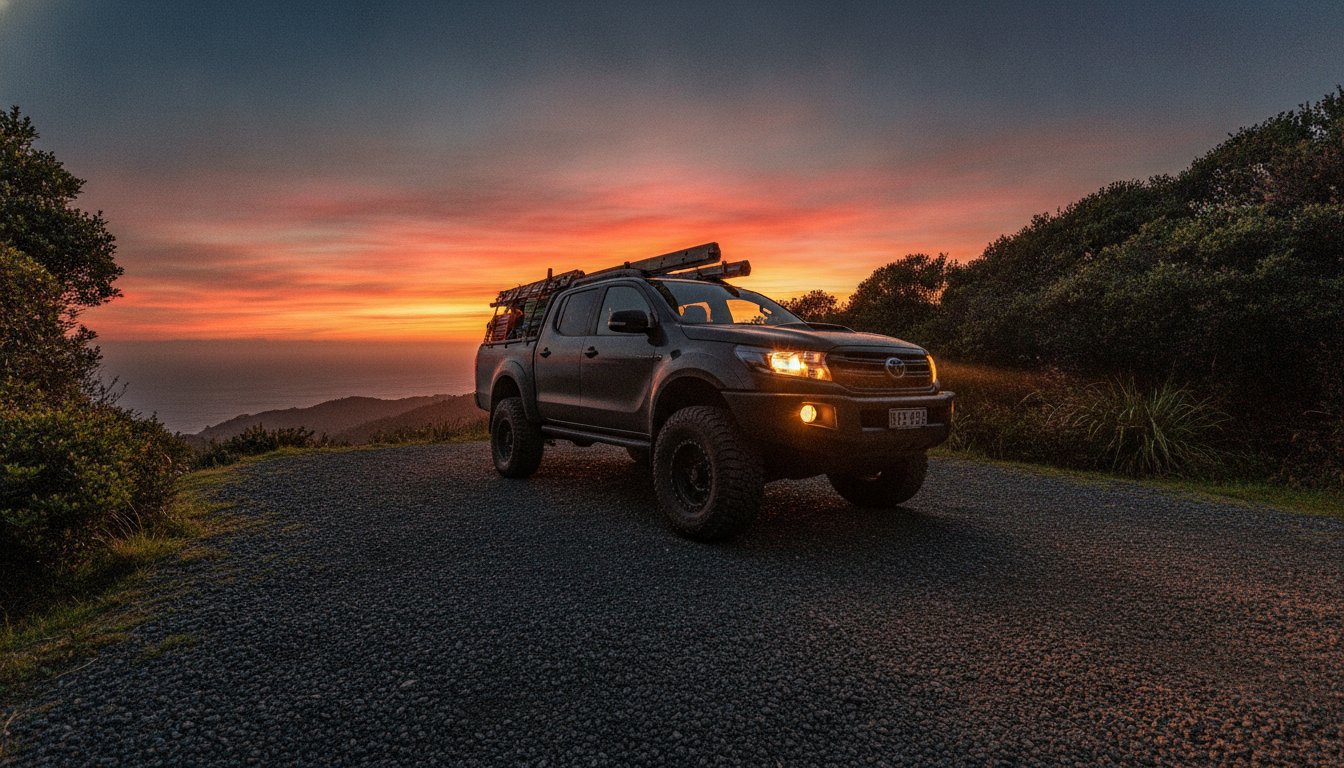
For Auckland tradies and weekend warriors, the Ford Ranger is more than a vehicle; it’s a mobile workstation and a gateway to the Coromandel or Northland. A heavy-duty roof rack system transforms the utility of the ute, allowing for the secure transport of ladders, timber, or rooftop tents. Choosing a professional Ford Ranger roof rack installation Auckland ensures that these loads are distributed correctly across the vehicle’s structural pillars. Unlike generic accessories, a vehicle-specific fit-out maintains the Ranger’s aerodynamic profile while providing a stable foundation for heavy equipment.
Universal racks often rely on generic clamping mechanisms that can deform door seals or scratch paintwork. In contrast, vehicle-specific engineered systems are designed to interface precisely with the Ranger’s factory mounting points. Before selecting a system, Understanding Roof Rack Systems and how they integrate with your specific model is crucial for long-term vehicle health. A professional installation doesn’t just add utility; it enhances resale value by ensuring no permanent damage is done to the roof skin or internal structure during the fitting process.
The Evolution of Ranger Roof Storage
Storage solutions have moved far beyond basic crossbars. Modern owners now favour integrated backbone systems and low-profile platforms that offer superior weight distribution. The Next-Gen Ranger requires a more sophisticated mounting approach compared to the older PX series, as its roof architecture is designed to work in tandem with advanced safety sensors. High-quality systems now integrate seamlessly with factory rails or utilise specialised track installations, providing a sleek, factory-finished look that handles the rigours of off-road tracks and highway speeds with equal ease.
Benefits of Professional Auckland Fitting
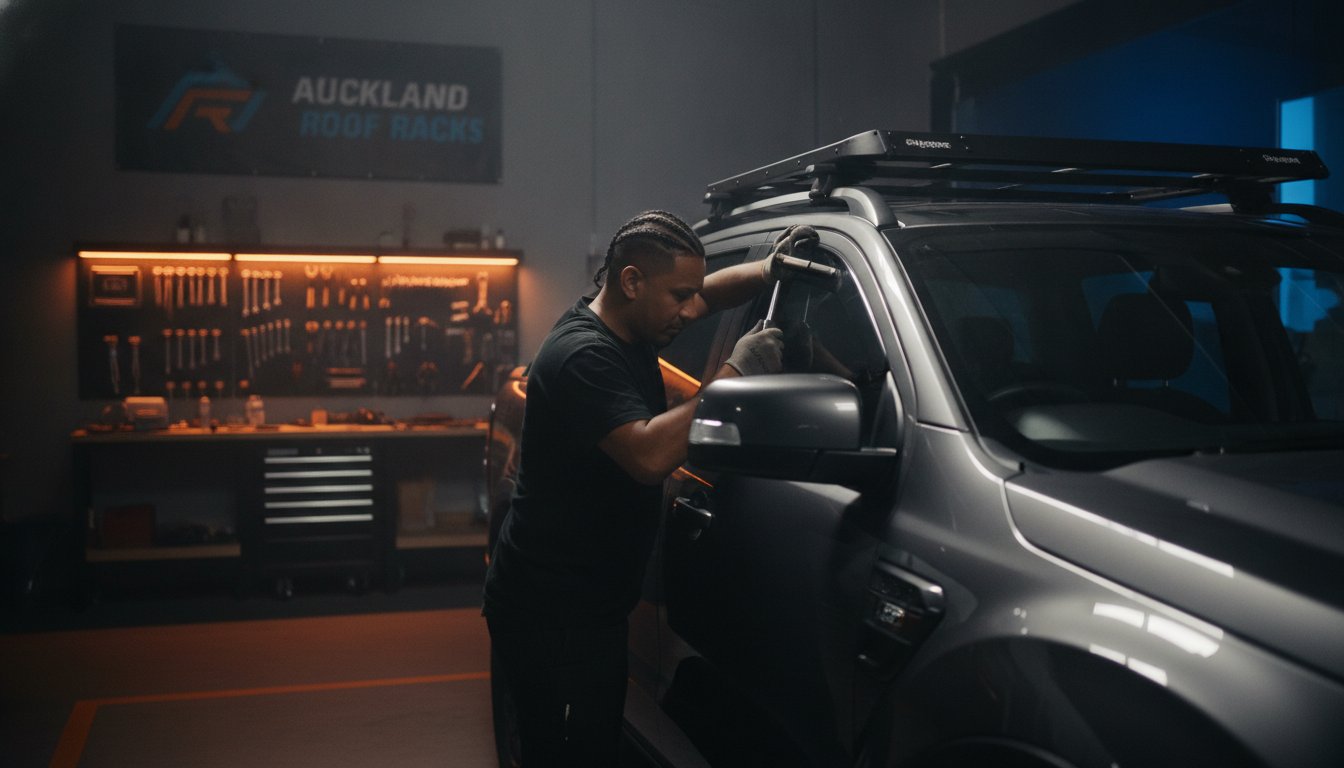
Professional fitting is essential for dealing with the unique challenges of the New Zealand environment. A primary concern is ensuring a water-tight seal. Auckland’s sudden winter downpours can quickly expose poor DIY seals, leading to cabin leaks and electrical issues. Our technicians use industrial-grade sealants and follow strict torque settings for every mounting bolt. This precision prevents structural fatigue and eliminates the common “whistle” or wind vibration caused by improper positioning. By fine-tuning the rack’s placement, we minimise wind noise and protect your fuel economy, ensuring your Ford Ranger roof rack installation Auckland performs perfectly at motorway speeds.
Understanding Weight Ratings and Load Limits for NZ Utes
Safety and structural integrity are the primary drivers behind every Ford Ranger roof rack installation Auckland. Every vehicle has a specific roof load limit set by the manufacturer, and exceeding this figure compromises vehicle handling and safety. Adding weight to the roof raises the centre of gravity, which increases body roll during cornering and extends braking distances. To remain compliant with New Zealand road safety standards, owners must understand the technical distinction between different load categories and how they apply to local driving conditions.
Adhering to international safety standards for roof racks ensures your mounting system can withstand the forces generated during emergency manoeuvres. While commercial vehicles in New Zealand often have dynamic roof load ratings between 100kg and 200kg, these figures represent the maximum permissible weight under ideal conditions. You must always follow the lowest rated component in your setup, whether that is the vehicle roof itself or the rack system.
Dynamic vs Static Loads Explained
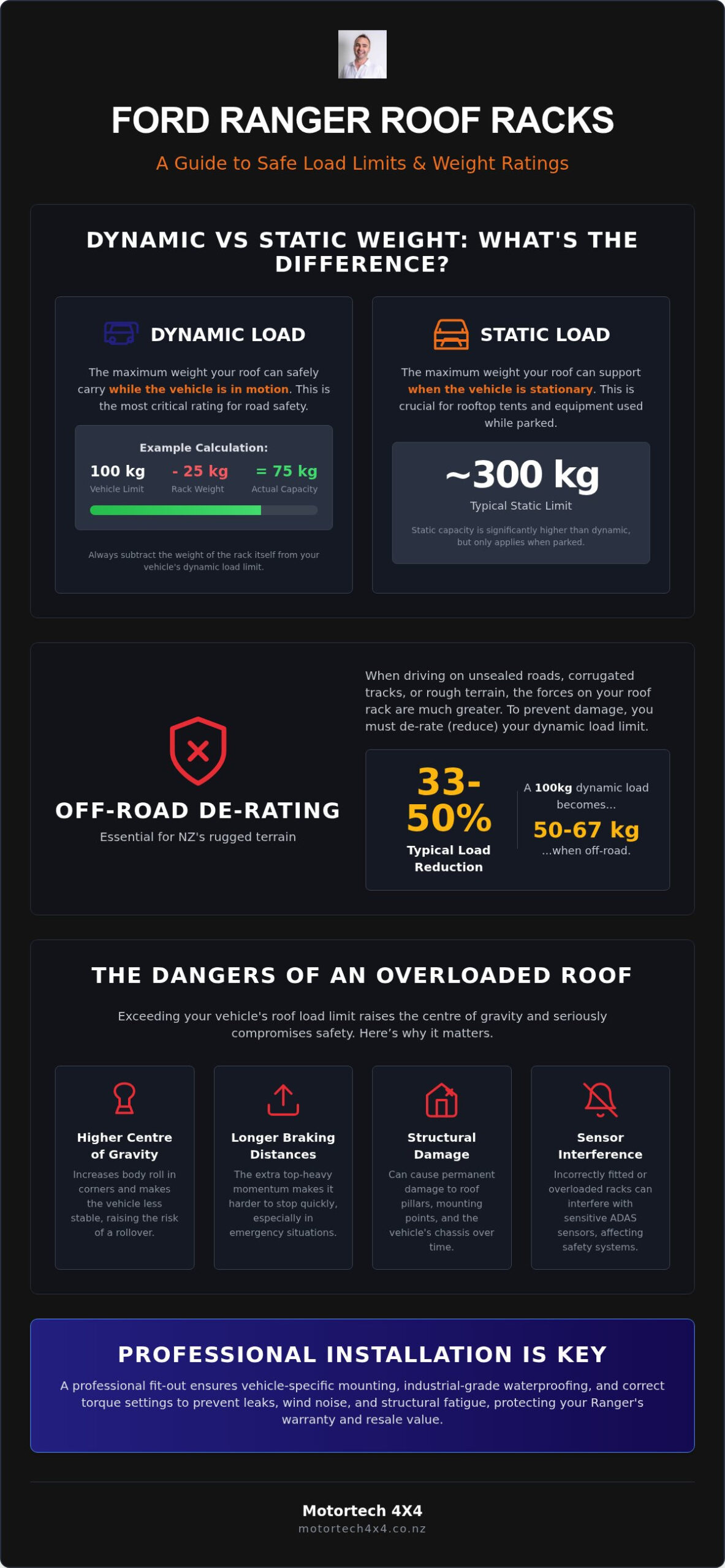
Dynamic ratings refer to the weight your rack can safely handle while the vehicle is in motion. This is the most critical figure for road safety. Conversely, static ratings apply only when the ute is stationary, which is essential for supporting rooftop tents and occupants. A vital step in your calculation is subtracting the weight of the rack itself from the total allowance. If your Ranger has a 100kg dynamic limit and your platform weighs 25kg, your actual gear capacity is 75kg. Overestimating this figure can lead to roof pillar deformation or mounting failure.
Off-Road De-Rating Factors
Auckland drivers heading to Muriwai or the Coromandel must account for off-road de-rating. Most premium rack manufacturers reduce their load ratings by 33% or 50% when travelling on corrugated tracks or unsealed roads. The increased vibration and vertical “G-forces” experienced off-road place significantly higher stress on mounting points. If you are planning a heavy build for remote touring, it is worth considering how these limits interact with your overall GVM upgrades to ensure your Ranger remains legal and safe.
New Zealand transport regulations also mandate strict load overhang limits. Any load extending more than 200mm beyond the sides or more than one metre beyond the rear requires a warning flag. These flags must be at least 400mm long by 300mm wide and in high-visibility fluorescent colours. Failing to meet these requirements during your Ford Ranger roof rack installation Auckland could result in fines or voided insurance in the event of an accident.
Selecting the Best Rack System for Your Ford Ranger
Choosing the right hardware is a balance of weight, aerodynamics, and intended utility. Lightweight aluminium has become the industry standard for modern 4x4s due to its high strength-to-weight ratio and natural resistance to corrosion, which is vital in Auckland’s salt-heavy coastal environment. A low-profile design is essential for maintaining fuel efficiency and reducing wind drag at motorway speeds. When planning your Ford Ranger roof rack installation Auckland, consider how the system integrates with your daily requirements, whether that involves height-restricted city car parks or heavy-duty site work.
Modern rack systems are designed to be modular, allowing for the seamless integration of various 4×4 accessories. Compatibility is a major factor in the selection process. You should ensure your chosen system supports the direct mounting of essential gear without the need for cumbersome adapters. A well-chosen rack serves as a foundation for your entire vehicle build, supporting everything from lighting and recovery gear to trade-specific tool mounts.
Platform Systems: The Ultimate Versatility
Flat platform systems, such as the Pioneer or LockNLoad styles, offer the highest level of versatility for touring and professional trade applications. These systems often utilise a “Backbone” mounting structure that runs along the vehicle’s roof ditch, providing superior load distribution by spreading weight across the strongest parts of the roof. The primary advantage of a platform is the integrated T-slot channels. These channels allow for the precise organisation of accessories, including:
- Side-mounted awnings for site shade or weekend camping.
- Secure brackets for shovels, high-lift jacks, and recovery boards.
- Eye bolts and tie-down points for custom cargo configurations.
Crossbars: Simple and Effective
While platforms offer maximum surface area, traditional crossbars remain a highly effective solution for specific cargo. They are the ideal choice for transporting long, narrow items like kayaks, ladders, or surfboards. For city-dwellers who only require extra storage occasionally, removable mounting options allow the bars to be detached when not in use, further improving fuel economy. Matching the bar strength to your intended gear weight is critical. Heavy-duty commercial bars are recommended for trade use, while aerodynamic “wing” profiles are better suited for recreational gear. Ensuring the correct bar width and profile during your Ford Ranger roof rack installation Auckland will prevent legal overhang issues and minimise cabin noise.
The Installation Process: Why Precision Fitting Matters
Modern vehicle architecture demands a methodical approach to accessory integration. A professional Ford Ranger roof rack installation Auckland begins with a comprehensive assessment of the roof’s structural points and any factory-fitted glass. For owners of high-spec models like the Wildtrak or Platinum, the sunroof factor is a primary concern. Technicians must ensure specific clearances are maintained so the glass can tilt and slide without impacting the rack or its fasteners. This precision prevents mechanical strain on the sunroof motor and avoids costly damage to the glass panel.
ADAS Calibration and Roof Racks
Advanced Driver Assistance Systems (ADAS) rely on cameras and sensors mounted near the top of the windscreen to manage lane-keep assist and autonomous emergency braking. Bulky roof-mounted gear or poorly positioned light bars can inadvertently obstruct these sensors’ field of vision. Professional installers verify that your equipment doesn’t trigger system errors or compromise safety. If you’ve made significant modifications to your vehicle’s height or load profile, you should book an ADAS calibration to ensure all safety electronics are functioning within factory specifications.
Weatherproofing and Structural Integrity
Auckland’s climate requires meticulous attention to weatherproofing during the fitting process. Any breach of the roof’s exterior skin must be treated with industrial-grade, non-setting sealants to prevent moisture ingress into the cabin. This process often involves the delicate removal and refitting of internal roof linings. Our technicians are trained to handle these components without damaging the sensitive clips or interfering with the curtain airbags housed within the pillars. Cold-galvanising involves applying a zinc-rich coating to exposed metal surfaces of drilled holes to create a sacrificial barrier that prevents oxidation and structural rust.
The final stage of a Ford Ranger roof rack installation Auckland involves a multi-point safety check. We use calibrated torque wrenches to ensure every mounting bolt meets the manufacturer’s exact tension requirements. This prevents the hardware from loosening under the constant vibration of Auckland’s motorways or unsealed rural tracks. We also verify the load is balanced and that all accessory mounts are rattle-free before the vehicle leaves the workshop. This methodical approach ensures your Ranger remains quiet, safe, and fully compliant with all vehicle standards.
Expert Ford Ranger Fit-Outs at Motortech 4X4 Auckland
Motortech 4X4 serves as the definitive specialist centre for comprehensive Ford Ranger builds in the Auckland region. We understand that a roof rack is rarely a standalone upgrade; it’s usually the first step in a broader vehicle enhancement project. Our workshop provides a streamlined “one-stop” experience, ensuring that your Ford Ranger roof rack installation Auckland is perfectly synchronised with other critical modifications like suspension kits or GVM upgrades. This holistic approach prevents compatibility issues and ensures your vehicle remains balanced and safe under load.
The Motortech 4X4 Difference
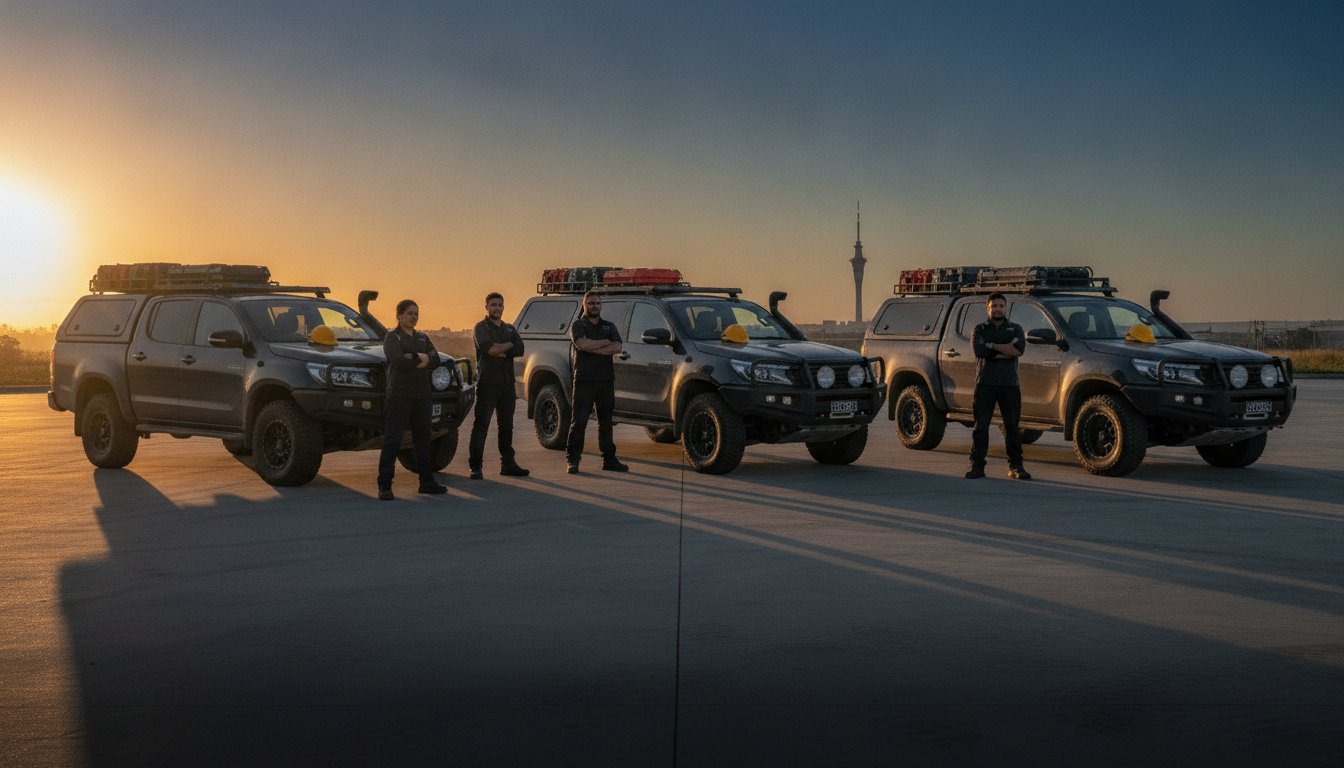
Our team combines high-end mechanical trade expertise with a genuine passion for 4×4 adventure. This dual perspective allows us to offer more than just a retail service. We provide engineered storage solutions tailored to your specific load requirements. As authorised installers for industry-leading brands such as Rhino-Rack and Yakima, we guarantee that every component is fitted to the highest technical standards. Our Auckland workshop is fully equipped to handle everything from intricate private builds to large-scale fleet fit-outs, ensuring that every vehicle leaves our facility ready for the harshest New Zealand conditions.
Complete Your Build
A professional rack installation provides the foundation for integrating additional hardware like bullbars, snorkels, and high-performance vehicle lighting. We specialise in creating cohesive vehicle packages where every component works in harmony. For Auckland business owners and trade contractors, our fleet fit-out services ensure that your commercial vehicles are both functional and compliant with safety regulations. We handle the technical complexities of mounting heavy gear while maintaining the integrity of your Ranger’s electronic systems and structural warranty.
Booking your vehicle in for a professional consultation is the first step toward a superior build. Our technicians will assess your specific needs and recommend a configuration that balances weight, accessibility, and durability. Contact Motortech 4X4 for your Ford Ranger roof rack installation today to ensure your ute is equipped for performance, safety, and long-term reliability on and off the road.
Secure Your Build for the Road Ahead
A high-performance roof rack system is the backbone of any serious Ford Ranger build. By understanding the critical technical differences between dynamic and static load ratings, you ensure your vehicle remains safe and legal on Auckland’s motorways and remote tracks. Professional fitment protects your structural warranty and ensures that complex ADAS sensors remain perfectly calibrated for your safety. It’s about more than just extra storage; it’s about maintaining the engineering integrity of your ute while expanding its capability.
Motortech 4X4 is Auckland’s leading 4×4 specialist, providing the mechanical precision required for modern vehicle modifications. As authorised dealers for premium rack brands, we offer on-site expert ADAS calibration and a comprehensive approach to vehicle fit-outs. Whether you’re preparing a private adventure rig or a professional trade fleet, our team delivers results-oriented solutions that stand up to New Zealand’s harshest environments. Don’t settle for generic accessories when you can have a precision-engineered system.
Get a Professional Roof Rack Quote for Your Ranger and book your Ford Ranger roof rack installation Auckland with the experts today. We’re ready to help you gear up for your next journey.
Frequently Asked Questions
How much weight can a Ford Ranger roof hold for off-roading?
Off-road load limits are significantly lower than highway ratings because of the increased vertical forces generated by corrugations and uneven terrain. While a Ranger might have a 100kg dynamic limit on sealed roads, most manufacturers require a 50% de-rating for off-road use, effectively limiting your gear to 50kg. This total must include the weight of the rack itself. Exceeding these limits on unsealed tracks can cause roof pillar fatigue or mounting failure.
Do I need to drill into my roof to install a rack on a Next-Gen Ranger?
Most Next-Gen Ranger configurations utilise factory mounting points or gutters that don’t require intrusive drilling into the roof skin. However, some heavy-duty backbone systems require mounting into the roof ditch to provide maximum structural support for trade or touring use. Professional Ford Ranger roof rack installation Auckland ensures these points are correctly sealed with industrial-grade compounds. This prevents water ingress and rust, maintaining the vehicle’s integrity while providing a secure foundation.
Will a roof rack affect my Ford Ranger’s warranty?
A professionally fitted roof rack won’t void your vehicle’s factory warranty. Ford’s warranty remains intact as long as the installation follows approved mounting procedures and doesn’t cause secondary damage. Problems typically arise from DIY installs that lead to cabin leaks, scratched paintwork, or structural stress from over-tightened bolts. Using an authorised installer ensures the work meets manufacturer standards, protecting both your vehicle and your long-term warranty coverage for peace of mind.
Can I still use my Ranger’s sunroof with a platform rack installed?
You can continue to use your sunroof as long as the rack system is positioned with the correct clearance heights. High-quality platform systems are designed with specific leg heights that allow the glass to tilt and slide without interference. During the fitting process, our technicians verify the operational range of the sunroof to ensure no contact is made with the rack or fasteners. This precision avoids motor strain and prevents expensive glass damage during operation.
How long does a professional roof rack installation take at your Auckland centre?
A standard Ford Ranger roof rack installation Auckland typically takes between two and four hours at our specialised centre. Basic crossbar setups are faster, while integrated backbone systems and platforms require more time for precise alignment and weatherproofing. We also factor in time for final torque verification and safety checks. For vehicles with complex accessory configurations or those requiring ADAS calibration, we recommend allowing a half-day to ensure every technical detail is perfect before handover.
Does a roof rack interfere with my Ranger’s safety sensors or ADAS?
Roof racks can interfere with ADAS sensors if gear or light bars are positioned too far forward. The forward-facing cameras near the rear-vision mirror require a clear field of view to manage lane-keep assist and emergency braking. If your rack setup is bulky or high-profile, it may trigger system errors. We provide on-site ADAS calibration to ensure your safety electronics remain fully functional and accurate after your vehicle modifications are complete, keeping your safety systems reliable.
What is the best roof rack for carrying a roof-top tent on a Ranger?
Aluminium platform systems are the superior choice for supporting roof-top tents due to their high static load ratings. While dynamic limits apply when driving, static limits determine how much weight the roof can support when parked. Platforms distribute the weight of the tent and occupants across the strongest structural points of the Ranger’s roof. This setup provides a stable, rattle-free base that handles the weight of a tent much better than traditional narrow crossbars or universal systems.
How do I reduce wind noise from my new roof rack?
Reducing wind noise requires a combination of aerodynamic hardware and precise positioning. Choosing a low-profile rack with a wind deflector or fairing significantly cuts down on cabin whistle. Ensuring the rack isn’t placed too far forward over the windscreen also helps manage airflow. If you experience excessive noise, we can adjust the mounting position or install rubber infill strips in the T-slots to eliminate the vibrations caused by high-speed air movement during highway driving.