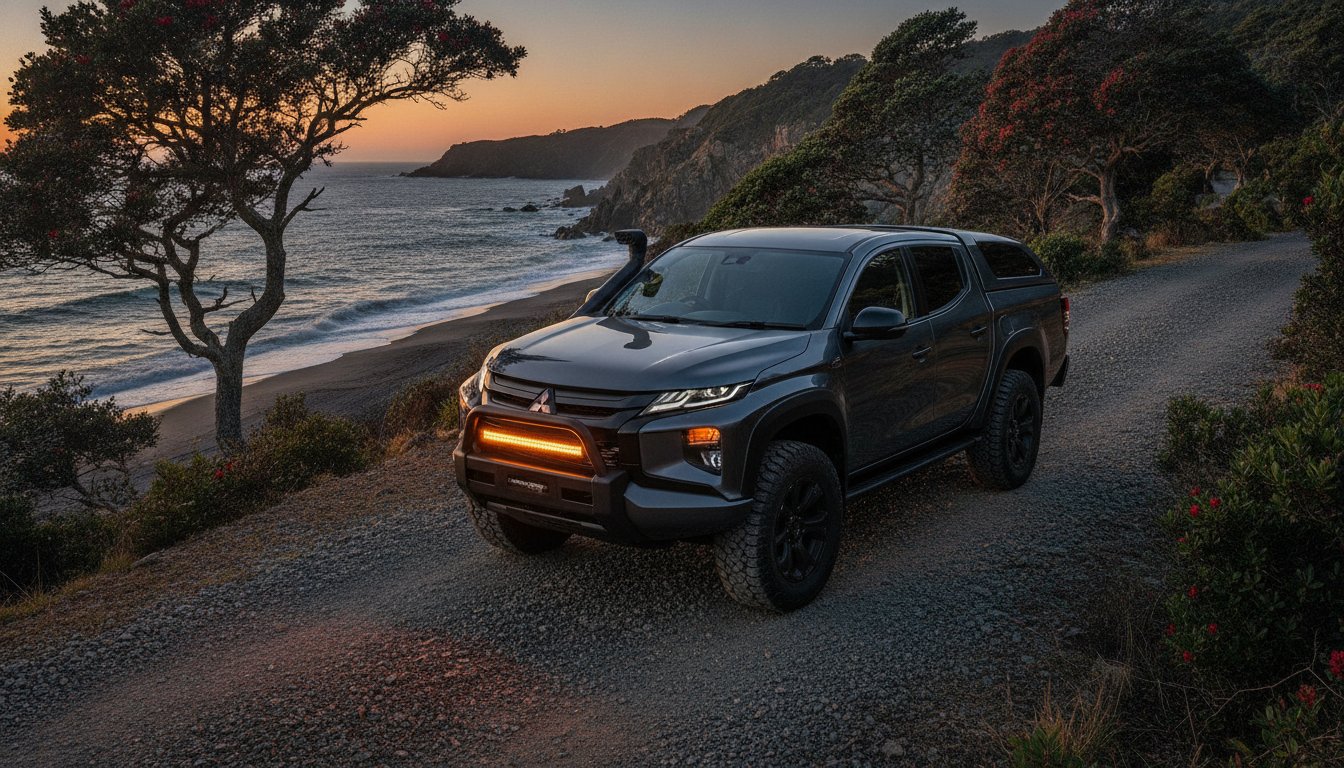
Did you know that over 90% of new vehicles in New Zealand now feature advanced safety technology that could be compromised by a simple suspension lift? While the Triton is the third most popular ute in the country, many owners don’t realise that bolting on the wrong gear can interfere with critical sensors or even void their warranty. Selecting the right mitsubishi triton accessories nz wide requires more than just picking the toughest-looking bullbar. It demands a technical approach that balances rugged performance with modern electronic compliance.
You likely bought your Triton to tackle demanding Kiwi tracks or to serve as a reliable workhorse, and you want it to perform without compromise. We understand the frustration of trying to increase your payload or off-road capability while worrying about ADAS sensor errors or accidentally overloading your vehicle. This guide provides the definitive roadmap for outfitting your 2026 Triton. We’ll explore essential hardware like snorkels and canopies, alongside critical performance modifications such as GVM upgrades and professional ADAS calibration. By the end, you’ll know exactly how to build a vehicle that’s both legally compliant and ready for any adventure.
Key Takeaways
- Identify the most effective mitsubishi triton accessories nz has to offer for tray security, focusing on canopies and hardlids that integrate with your factory central locking system.
- Understand the legal requirements for GVM upgrades to ensure your Triton remains road-legal and safe when carrying heavy trade tools or towing a caravan.
- Learn why choosing the correct bullbar and snorkel is essential for protecting your engine and bodywork against animal strikes and deep water crossings on remote Kiwi tracks.
- Recognise the critical importance of professional ADAS calibration to maintain the integrity of your ute’s safety sensors after fitting suspension kits or bullbars.
- Optimise your off-road recovery and visibility by matching winch capacity and LED lighting solutions to your specific vehicle weight and driving requirements.
Essential Protection and Airflow: Bullbars and Snorkels for the Triton
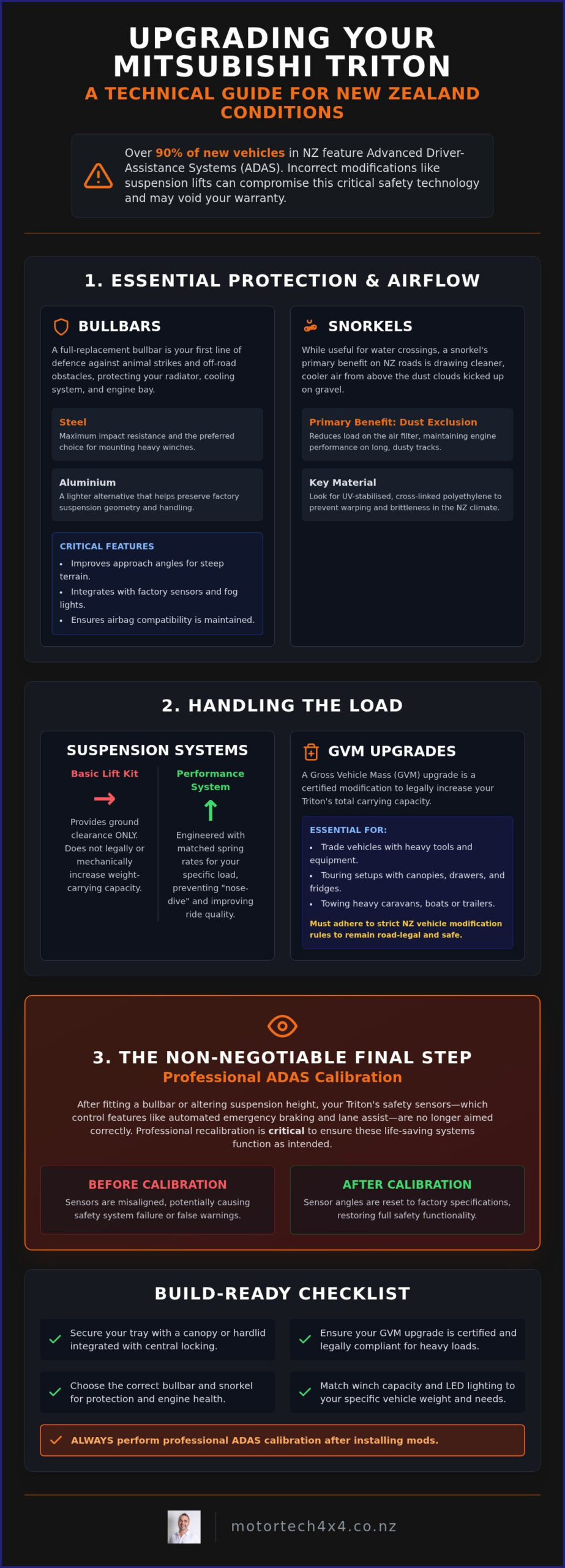
NZ rural roads present unique challenges, from wandering livestock to loose metal tracks. A factory bumper offers minimal structural defence. A full-replacement bullbar is a cornerstone of any build involving mitsubishi triton accessories nz. These units replace the plastic front fascia with a structural frame designed to absorb impacts and protect the radiator, cooling system, and engine bay. The Mitsubishi Triton is a capable platform, but its factory front end isn’t built to withstand a high-speed animal strike on a remote backroad.
Choosing between steel and aluminium depends on your vehicle’s weight budget and intended use. Steel bars provide the highest level of protection and are the preferred choice for mounting heavy winches. Aluminium bars offer a weight-saving alternative, which helps maintain front-end suspension geometry, though they generally lack the sheer impact resistance of high-tensile steel during a major collision. Both options provide much better protection than a standard nudge bar.
Heavy-Duty Bullbar Selection
Modern Triton models feature complex crumple zones and safety systems. A high-quality bullbar must maintain these factory standards. We prioritise designs that improve approach angles, allowing you to climb steeper terrain without scraping the front end. Integration is key. Ensure your chosen bar has dedicated mounting points for factory fog lights and parking sensors. Professional fitting is non-negotiable here. Incorrect installation can interfere with airbag deployment sensors, creating a significant safety risk. Most premium bars are also winch-compatible, providing a secure platform for recovery when you’re exploring remote blocks.
Snorkels and Engine Breathability
While many associate snorkels with deep river crossings, their primary benefit on Kiwi roads is often dust exclusion. On long gravel stretches, your front tyres kick up a massive amount of fine silt. A snorkel draws air from the roofline where it’s cooler and cleaner. This reduces the load on your air filter and helps maintain engine performance over long distances. It’s a simple addition that provides peace of mind when the weather turns and the fords start to rise.
Look for snorkels manufactured from UV-stabilised, cross-linked polyethylene. This material handles the high thermal fluctuations of the NZ climate without warping or becoming brittle. You can choose between a standard ram-head, which forces air in while driving, or a cyclone pre-cleaner. The cyclone option uses centrifugal force to eject heavy dust particles before they reach the filter, making it ideal for those spending significant time on dry, dusty farm tracks.
Handling the Load: Suspension Kits and GVM Upgrades
The Mitsubishi Triton is a versatile platform, but its factory payload capacity is quickly consumed once you add steel bullbars, winches, and canopies. Many owners mistakenly believe a standard suspension lift is sufficient to handle these heavy loads. In reality, a basic lift only provides ground clearance; it does not legally or mechanically increase the vehicle’s weight-carrying capacity. Managing these loads correctly is a vital part of selecting mitsubishi triton accessories nz to ensure your ute remains safe and compliant on the road.
Performance suspension systems do more than just raise the vehicle. They are engineered to provide consistent damping on corrugated NZ tracks where factory shocks often overheat and fade. When selecting a kit, we match spring rates to your specific build. If you have a heavy front bullbar and a rear canopy full of tools, you require a different spring rate than a weekend tourer. This precision prevents the “nose-dive” during braking and ensures the vehicle remains level under load. High-quality shock absorbers also improve ride quality when unladen, preventing the harsh, bouncy feel common in empty utes.
Triton GVM Upgrades Explained
A Gross Vehicle Mass (GVM) upgrade is an essential modification for trade vehicles and heavy towers. This process involves upgrading the suspension components and certifying the vehicle to carry a higher total weight than the factory specification. In New Zealand, these modifications must adhere to strict vehicle modification rules. If your modified Triton exceeds its original GVM, it is legally overloaded. This can void your insurance and lead to mechanical failures in the chassis or braking system.
The certification process requires a professional inspection to ensure the braking and steering systems can handle the additional mass. This is particularly important for modern Tritons equipped with safety sensors, as the change in ride height and weight distribution affects how the vehicle reacts in an emergency. If you are unsure if your current setup is legal, our team can provide a professional suspension and GVM assessment to keep your vehicle within NZTA requirements. Correct GVM management ensures your ute handles predictably, even when the tray is at maximum capacity.
Maximising Utility: Canopies, Hardlids, and Storage Solutions
Optimising tray space is a critical step when selecting mitsubishi triton accessories nz. The decision between a canopy and a hardlid rests on your specific operational requirements. Tradies typically favour hardlids for their low profile and secure, lockable storage that doesn’t compromise the vehicle’s aerodynamics. Conversely, weekend adventurers and long-distance tourers benefit from the increased volume of a full canopy, which provides the vertical room needed for fridges and camping kits. Both options provide a significant upgrade over an open tray, protecting your gear from the elements and opportunistic theft.
Heavy-Duty Canopies and Hardlids
Material choice significantly impacts both performance and payload. Fibreglass canopies are popular for their aesthetic integration and light weight, but they often require internal bracing to support roof loads. Aluminium canopies offer a higher degree of structural integrity and are ideal for those mounting heavy roof top tents or professional ladder racks. Effective dust sealing is a priority for NZ conditions. Fine silt on rural tracks can easily bypass poor gaskets. We recommend units that feature high-quality bulb seals and positive pressure vents to keep the interior clean. Integration with the vehicle’s factory central locking system is a standard requirement for modern builds, ensuring your gear is secured the moment you walk away from the ute.
Roof Rack Systems for the Triton
Roof rack selection should be based on the type of gear you carry. Platform systems provide a flat, modular surface with T-slots for attaching various mounts, from shovel holders to recovery board brackets. Traditional crossbars are a functional, cost-effective choice for carrying kayaks or timber. Understanding load ratings is vital for safety. A dynamic load rating refers to the weight the roof can safely carry while the vehicle is in motion, while the static rating applies when the vehicle is parked. This distinction is crucial if you plan on using a roof top tent. Modern aerodynamic designs incorporate wind deflectors and textured surfaces to minimise the whistling noise often associated with roof-mounted gear at highway speeds.
Internal tray organisation completes the utility setup. Heavy-duty drawer systems allow for the systematic storage of tools and recovery gear, keeping the centre of gravity low and stable. Adding a fridge slide or a modular slide-out tray improves ergonomics, allowing you to reach equipment without climbing into the back of the vehicle. These components work together to transform a standard tray into a highly efficient mobile workshop or basecamp.
Off-Road Capability: Winches, Lighting, and Performance
A vehicle’s active off-road capability is defined by its ability to navigate technical terrain and recover itself when conditions exceed traction limits. When outfitting your vehicle with mitsubishi triton accessories nz, the focus shifts from passive protection to active recovery and performance enhancement. A Triton equipped with a GVM upgrade and a full canopy is significantly heavier than a stock unit. This increased mass dictates the specifications for your recovery gear and the torque required to maintain momentum on steep, technical climbs.
Recovery Gear and Winches
Selecting a winch capacity requires calculating the gross weight of your fully laden vehicle. For a Triton pushing a 3,500kg GVM, a 12,000lb winch is the professional recommendation. This provides the necessary mechanical advantage to pull a bogged vehicle from deep mud or sand without straining the motor. Synthetic rope is the preferred choice for modern builds; it’s lighter than steel cable and doesn’t store dangerous levels of kinetic energy if a break occurs. While hidden winch mounts offer a clean aesthetic, bullbar-integrated systems provide better airflow to the winch motor and easier access to the clutch lever. You must also install rated recovery points. Factory tie-down points are designed for shipping and aren’t built to withstand the high-velocity forces of a snatch recovery.
Advanced Vehicle Lighting
NZ forest tracks and rural highways demand superior illumination to identify hazards like washouts or wandering livestock. Driving lights provide a focused, long-distance beam for high-speed road travel, while LED light bars offer a broad flood pattern that illuminates the periphery on tight, winding tracks. Durability is a technical priority. Look for lights with an IP68 or IP69K rating to ensure they remain functional after repeated river crossings and exposure to coastal salt spray. For a professional finish, we utilise vehicle-specific wiring looms and dash-mounted switches that match the factory interior lighting, avoiding the cluttered look of generic aftermarket kits.
Performance isn’t just about speed; it’s about usable torque. An ECU remap can significantly optimise the Triton’s power delivery, particularly the torque curve required for towing heavy trailers or caravans through the Southern Alps. This electronic tuning, combined with a set of high-traction all-terrain tyres, ensures your ute has the grip and grunt to handle any Kiwi adventure. If you’re ready to enhance your vehicle’s capability, you can book a professional off-road fit-out at our Auckland workshop. Upgrading your wheels and tyres to a higher load rating further complements a GVM upgrade, providing a more stable footprint and increased puncture resistance on sharp shale tracks.
The Motortech Advantage: Professional Fitting and ADAS Calibration
Modern vehicle engineering has moved beyond simple mechanical assemblies. Today’s Mitsubishi Triton is an integrated network of electronic control units and safety sensors. When you install mitsubishi triton accessories nz wide, you’re modifying a complex ecosystem. Professional installation is no longer just a recommendation; it’s a safety requirement. DIY attempts or cut-price retail fitting often overlook the delicate balance of factory safety systems. We ensure every modification aligns with structural standards and electronic requirements. This diligence is what maintains your manufacturer warranty and keeps your vehicle road-legal.
A professional workshop provides more than just labour. It offers the precision needed to ensure that heavy-duty components don’t compromise the vehicle’s integrity. For example, fitting a bullbar requires exact placement to ensure airbag sensors remain active and effective. Similarly, suspension upgrades must be balanced to avoid putting undue stress on the drivetrain. By choosing a specialised installer, you ensure that your upgrades enhance the vehicle’s capability without introducing new mechanical risks.
ADAS Calibration in Auckland
Modifying your Triton’s ride height through a suspension lift or adding a heavy bullbar changes the vehicle’s pitch and focal point. This directly impacts the Advanced Driver Assistance Systems (ADAS). Even a minor 50mm lift alters the trajectory of the forward-facing camera and radar sensors. If these aren’t recalibrated, your autonomous emergency braking and lane-keep assist may fail or trigger incorrectly. We utilise specialised on-site equipment at our Auckland workshop to perform precision resets. This ensures your safety tech “sees” the road accurately from its new height. It’s the only way to guarantee your safety systems remain functional after a build.
Fleet Fit-Outs and Custom Builds
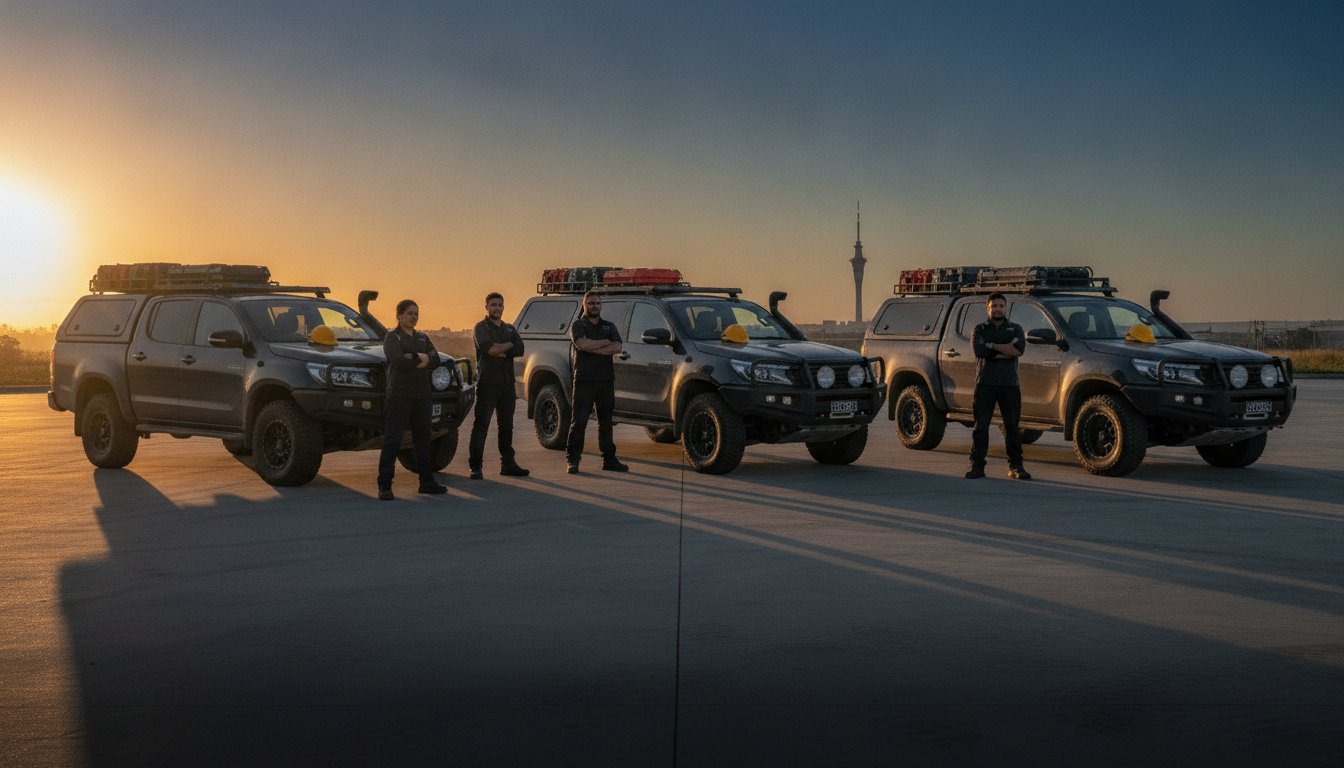
Commercial operators and fleet managers require a high level of reliability and minimal downtime. We provide tailored solutions for Triton fleets in Auckland, managing everything from initial fit-outs to ongoing mechanical servicing. Our “one-stop shop” approach means you don’t have to ferry vehicles between different specialists. We integrate accessory upgrades with scheduled maintenance, ensuring your workhorses stay on the road and perform at peak efficiency. Whether you’re building a single off-road tourer or a fleet of site-ready utes, our technical expertise ensures the job is done right the first time.
If you’re ready to start your project, you can enquire about your Triton build at Motortech 4X4 today. Our team combines mechanical mastery with the latest diagnostic technology to deliver a result that’s both rugged and safe.
Ready Your Triton for the Kiwi Backcountry
Outfitting a modern ute requires a technical balance between structural protection and electronic precision. We’ve explored how the right bullbar and canopy setup transforms utility, but these modifications must be supported by certified GVM upgrades and professional ADAS calibration to remain safe and legal. Selecting the best mitsubishi triton accessories nz wide is only the first step; ensuring they’re installed by experts who understand the intersection of performance and compliance is what guarantees long-term reliability.
As Auckland’s leading ADAS calibration specialists and authorised installers of premium 4×4 brands, Motortech 4X4 provides the comprehensive mechanical and modification expertise your build deserves. We handle everything from complex fleet fit-outs to bespoke off-road tourers, ensuring every component works in harmony with your vehicle’s factory safety systems. Get a Professional Triton Accessory Quote from Motortech 4X4 today and turn your vehicle into a precision-engineered workhorse. Your next adventure is waiting, and your ute will be ready to meet it head-on.
Frequently Asked Questions
Will fitting aftermarket accessories void my Mitsubishi Triton warranty?
Fitting aftermarket gear doesn’t automatically void your entire new vehicle warranty. However, Mitsubishi may decline a specific claim if a failure is directly caused by an unapproved modification. For example, an engine issue caused by poor snorkel fitment wouldn’t be covered. Using professional installers ensures your modifications meet the required technical standards to minimise this risk and protect your investment.
Do I need to recalibrate my sensors after a lift kit installation?
Recalibration is essential for vehicles equipped with Advanced Driver Assistance Systems (ADAS). A suspension lift changes the camera’s height and angle of view, which can cause lane-keep assist or autonomous braking to malfunction. We use specialised on-site equipment to reset these sensors to their new baseline, ensuring your safety tech remains functional and accurate after any height modification.
What is the best bullbar for a Mitsubishi Triton in NZ?
The best bullbar depends on your primary environment, but a full-replacement steel bar offers the highest level of protection against animal strikes. Steel is the preferred choice for winch mounting and structural durability on rural NZ roads. If weight is a major concern for your payload, a high-quality aluminium bar provides a lighter alternative while still offering superior protection over a standard nudge bar.
How much weight can a Triton canopy roof rack actually hold?
Load capacities vary significantly between static and dynamic ratings. Most internal-frame reinforced canopies can support a dynamic load of around 100kg, which is sufficient for most mitsubishi triton accessories nz like recovery boards or kayaks. Static ratings, which apply when the vehicle is parked, are much higher and can typically support the weight of a roof top tent and two occupants safely.
Can I install a GVM upgrade myself or do I need a specialist?
You must use an authorised specialist to install a GVM upgrade. In New Zealand, these upgrades require formal certification to be road-legal. A specialist ensures the suspension components are correctly matched to your vehicle’s requirements and handles the necessary engineering sign-off. This process ensures your ute remains compliant with NZTA regulations and is fully covered by your insurance provider in the event of a claim.
Is an ECU remap safe for my Triton’s engine longevity?
A professional ECU remap is safe and effective when performed within the engine’s mechanical tolerances. Rather than just increasing peak power, a quality remap optimises the torque curve for better towing and driveability. This reduces the strain on the engine during heavy hauling by providing power more efficiently, a principle followed by experts like nakedfrogvehicletuning.co.uk. We focus on reliable performance gains that maintain factory safety margins and long-term engine health.
What are the most essential Triton accessories for a new owner?
A high-quality bullbar and a snorkel are the most critical starting points for protection and engine safety. For utility, a secure canopy or hardlid is essential to protect your tools or gear from the elements. If you plan on exploring remote tracks, adding rated recovery points and a reliable winch ensures you can navigate challenging terrain with confidence and return home safely.
How do I choose between a 2-inch and a 3-inch lift kit for my ute?
A 2-inch lift is the most common choice as it provides significant ground clearance without requiring complex LVVTA certification in most cases. It maintains better drivetrain geometry and is easier to calibrate with ADAS sensors. A 3-inch lift offers more clearance but involves higher costs, additional structural modifications, and mandatory certification to remain road-legal in New Zealand, making it a more intensive project.