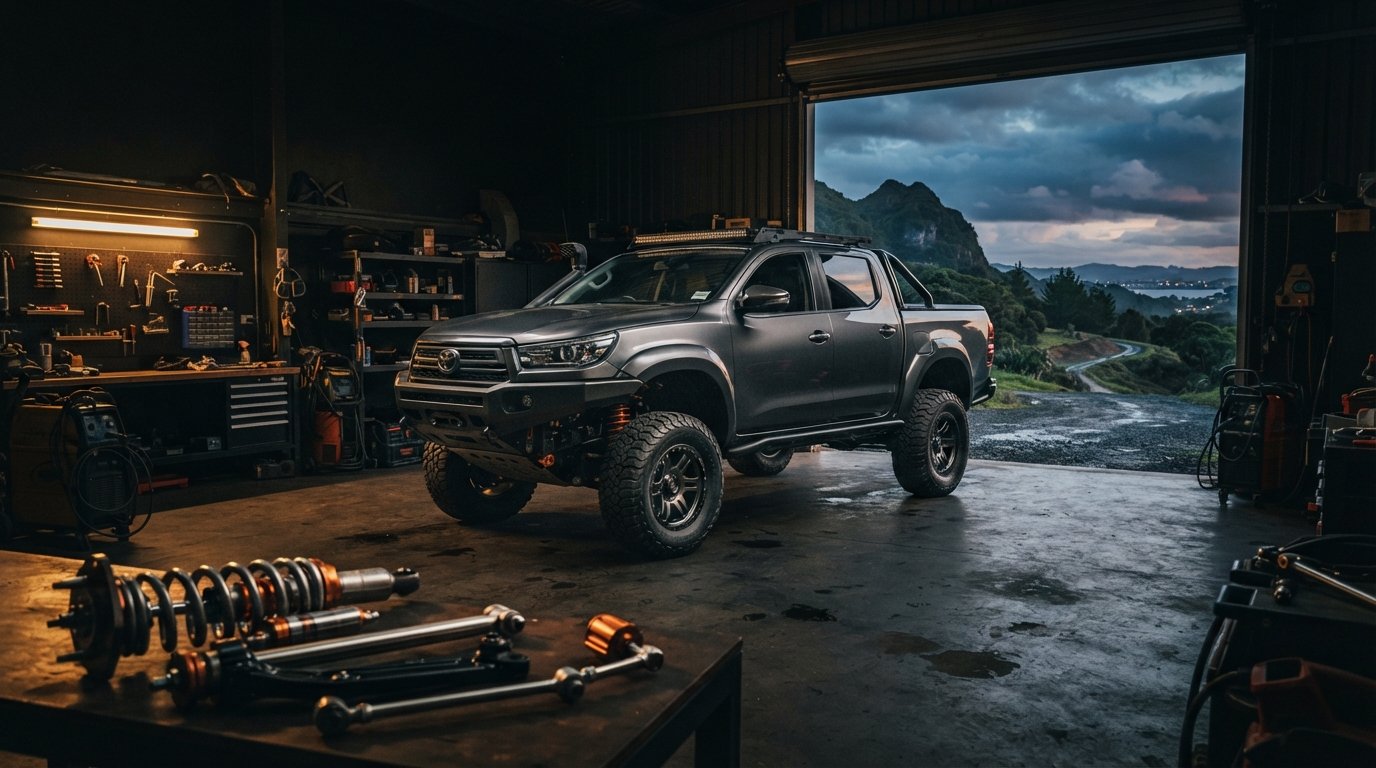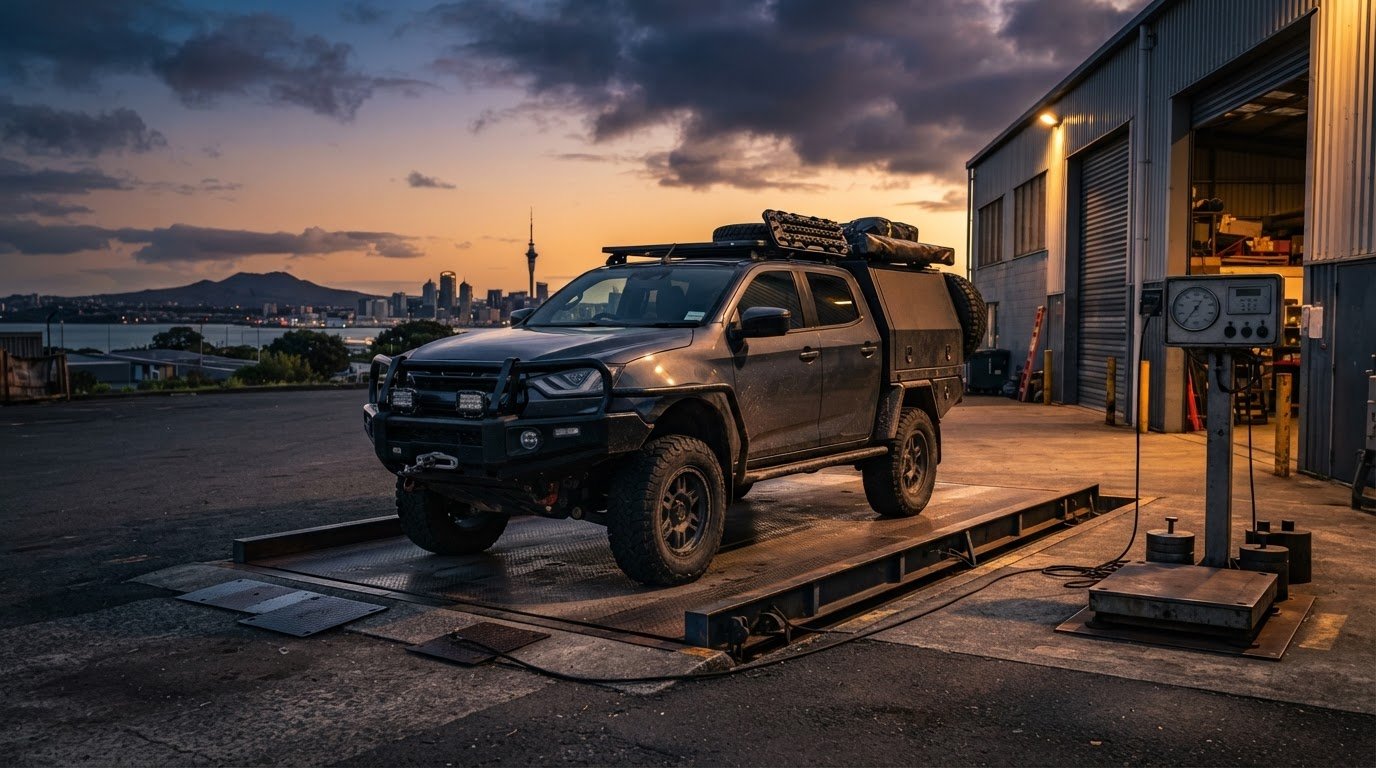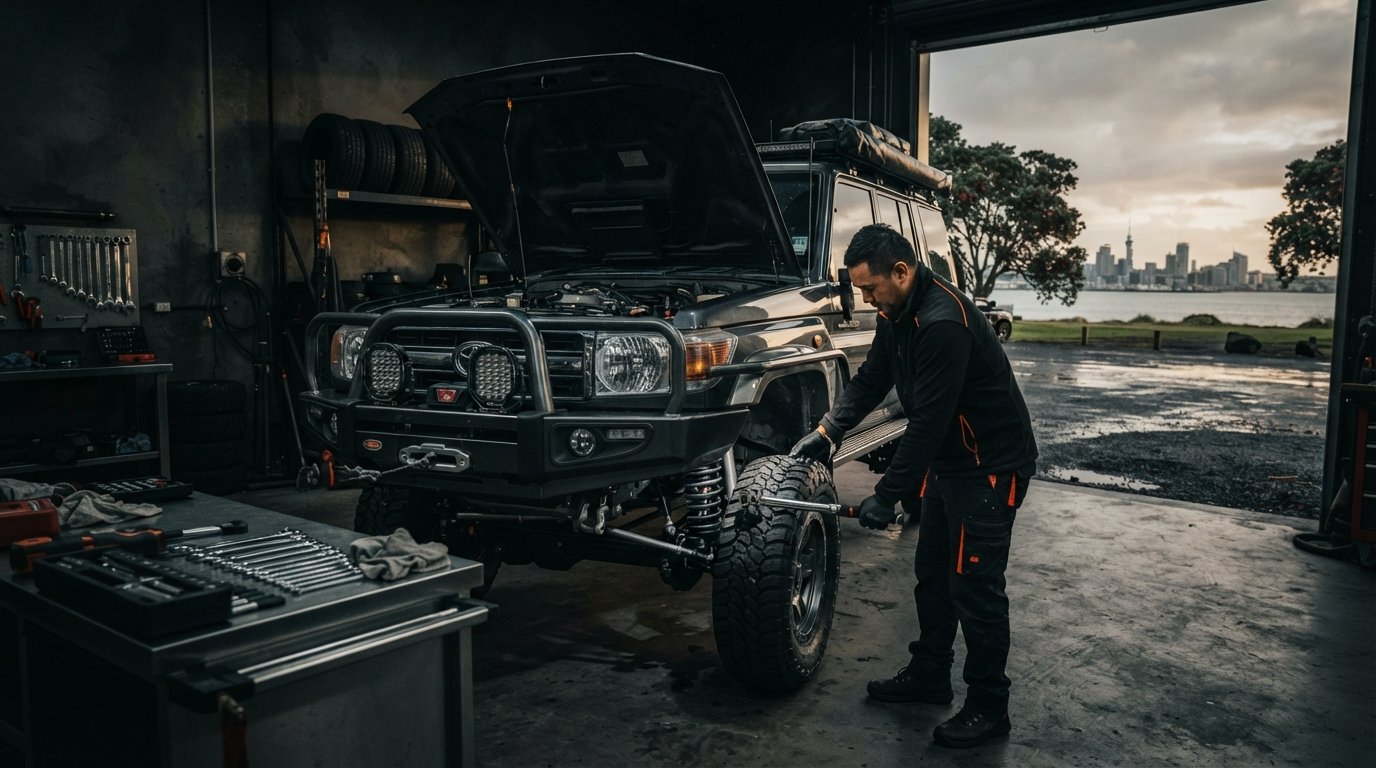

Did you know that over 540,000 vehicles fail their initial Warrant of Fitness inspection every year due to tyre and wheel deficiencies alone? When you are searching for 4×4 wheel and tyre packages Auckland, it’s easy to focus on a rugged aesthetic and overlook the fact that a single centimetre of tyre poke can result in a $350 infringement fee. You likely want an aggressive stance that can handle Muriwai sand or Hunua mud, yet you’re probably concerned about rubbing issues, failing your WoF, or how heavier rubber might impact your fuel economy and braking distances.
We understand that precision is just as important as performance. This 2026 guide promises to help you master the technical details of selecting the perfect wheel and tyre combo to enhance your rig’s capability while staying strictly compliant with New Zealand regulations. We will preview the latest LVVTA requirements, explain why ADAS calibration is now a mandatory step for modern utes, and show you how professional fitting ensures your investment doesn’t compromise your safety or insurance. From understanding offsets to choosing the right load ratings for a GVM upgrade, you’re about to gain the expertise needed to build a dependable, high-performance machine.
Key Takeaways
- Learn why integrated 4×4 wheel and tyre packages Auckland prevent common fitment headaches while balancing your daily motorway commute with rugged weekend tracks.
- Understand the performance trade-offs between All-Terrain, Mud-Terrain, and the increasingly popular Rugged-Terrain hybrid options for New Zealand’s unique clay and sand.
- Master technical specifications like wheel offset and load ratings to ensure your vehicle remains within LVVTA thresholds and meets GVM compliance standards.
- Discover why ADAS calibration and professional wheel alignments are critical for maintaining safety system accuracy and securing a successful WoF inspection.
The Case for Integrated 4×4 Wheel and Tyre Packages in Auckland
Investing in 4×4 wheel and tyre packages Auckland is a technical upgrade that requires more than just picking a rim that looks the part. A true integrated package is a precision-engineered combination where the wheel offset, rim width, and tyre carcass construction work in unison. When these components are matched correctly, you eliminate the common fitment headaches that plague DIY setups, such as steering rack strain or high-speed vibration. At Motortech 4X4, we treat every installation as a mechanical project, ensuring that the physical dimensions of the rubber complement the structural limits of the vehicle.
Auckland drivers face a unique set of geographic challenges. Your rig needs to be civilised enough for a daily commute on the Southern Motorway while remaining aggressive enough to tackle the greasy clay of the Hunuas or the soft sand at Muriwai. A professional package balances these demands by pairing the right tread compound with a wheel that can handle the lateral loads of bitumen cornering. Choosing a pre-engineered package is more cost-efficient over the long term because it reduces uneven tread wear and prevents the premature failure of suspension bushings caused by incorrect wheel geometry.
Why Compatibility Matters for NZ Utes
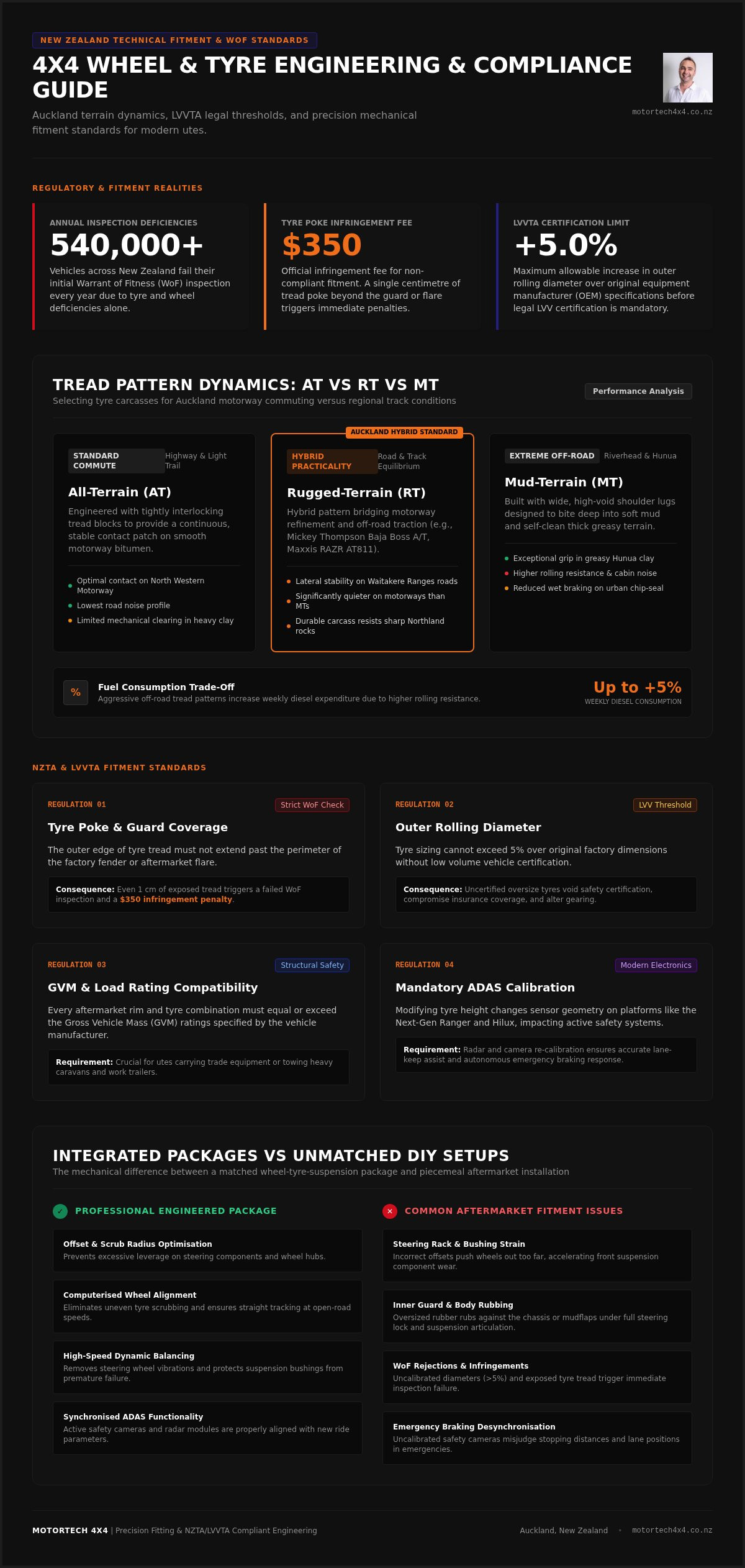
New Zealand’s regulatory environment is strict regarding vehicle modifications. Under current NZTA and LVVTA guidelines, your aftermarket tyres must have an outer rolling diameter no more than 5% greater than the original equipment specification. Exceeding this threshold without LVV certification is a common mistake that leads to failed Warrant of Fitness (WoF) inspections. Furthermore, ensuring your “tyre poke” is managed is critical; the tread must not protrude beyond the wheel arches or flares. With the infringement fee for non-compliant tyres set at $350 as of November 2026, staying within legal limits is a financial necessity as much as a safety one. We also ensure that every wheel in our packages meets or exceeds your vehicle’s Gross Vehicle Mass (GVM) load ratings, which is vital for anyone towing or carrying heavy payloads.
The One-Stop Shop Advantage
The primary benefit of a professional fitment is the integration of technical services. A comprehensive package at Motortech 4X4 includes professional mounting, high-speed balancing, and a computerised wheel alignment. This holistic approach is essential for your Auckland 4×4 experience, as it ensures the vehicle tracks straight and responds predictably in emergency braking scenarios. Because modern utes like the Next-Gen Ranger or Hilux utilise Advanced Driver Assistance Systems (ADAS), any change in tyre diameter requires specialised ADAS calibration to keep your lane-keep assist and emergency braking functional. Sourcing your 4×4 wheel and tyre packages Auckland from a specialised workshop provides a single point of warranty and the peace of mind that every sensor and mechanical component is synchronised for the road ahead.
Selecting the Right Tread: All-Terrain vs Mud-Terrain for NZ Tracks
Selecting a tread pattern is the most critical decision when configuring 4×4 wheel and tyre packages Auckland. The choice dictates how your vehicle handles the transition from the smooth bitumen of the North Western Motorway to the technical clay tracks of Riverhead Forest. All-Terrain (AT) tyres are engineered with interlocking tread blocks that provide a stable contact patch for high-speed road use, whereas Mud-Terrain (MT) tyres utilise large, open shoulder lugs and high-void ratios to mechanically “bite” into soft surfaces.
The “Auckland Hybrid” reality has led many local enthusiasts toward Rugged-Terrain (RT) options when browsing 4×4 wheel and tyre packages Auckland. These hybrid patterns, such as the Mickey Thompson Baja Boss A/T or the Maxxis RAZR AT811, bridge the gap between motorway quietness and off-road bite. Local drivers prefer RT tyres for several reasons:
- Lateral Stability: Better handling on winding roads like the Waitakere Ranges.
- Noise Reduction: Significantly quieter than traditional MTs on the motorway.
- Durability: Stronger carcasses than standard ATs for sharp Northland rocks.
Vehicle dynamics are significantly altered by your tread choice. Aggressive patterns can increase your weekly diesel bill by up to 5% due to higher rolling resistance. Additionally, braking performance on wet Auckland chip-seal is a major safety factor. At 80 km/h, tyres with low tread or high-void patterns can take significantly longer to stop on wet tarmac compared to a specialised AT tyre. This makes tread selection a balance between weekend traction and daily safety.
All-Terrain: The Versatile Kiwi Choice
For the majority of Auckland drivers, the AT tyre is the most pragmatic solution. These are ideal for Muriwai beach runs where sand flotation is key, or the hard-packed gravel roads through the Hunuas. Modern ATs, like the BFGoodrich KO3, have been refined to eliminate the “tyre hum” that once made long commutes tedious. Because they utilise harder rubber compounds, they typically provide a superior “cents per kilometre” return, often outlasting MT alternatives by 20,000 kilometres or more.
Mud-Terrain: When Traction is Non-Negotiable
When your weekend involves the deep, greasy clay of the Coromandel or Northland, traction becomes non-negotiable. MT tyres are designed with self-cleaning properties; the centrifugal force generated during wheel spin ejects Auckland mud from the grooves, preventing the tyre from becoming a smooth, grip-less slick. These tyres also feature reinforced sidewalls to resist punctures from sharp rocks and hidden debris in the bush. If you frequently push your rig into technical terrain, selecting a durable mud-terrain tyre ensures you aren’t left stranded with a sliced carcass.
The Technical Side: Offset, Load Ratings, and GVM Compatibility
Engineering the perfect fitment for 4×4 wheel and tyre packages Auckland requires a deep understanding of wheel geometry and vehicle physics. While many enthusiasts focus on the visual impact of a wider stance, the mechanical reality involves managing the relationship between the wheel centreline and the hub mounting surface. This measurement, known as offset, determines where the tyre sits within the wheel arch and how it interacts with your vehicle’s steering and braking components.
New Zealand’s Land Transport Rule for Tyres and Wheels 2001 dictates strict compliance standards that every Auckland driver must follow. Specifically, aftermarket tyres must maintain an outer rolling diameter within 5% of the original equipment (OE) specification. Exceeding this threshold without a Low Volume Vehicle (LVV) certification risks immediate Warrant of Fitness rejection and, as of November 2026, a $350 roadside infringement fee. Our technical approach ensures your package remains within these legal bounds while optimising off-road clearance.
Offset and Scrub Radius
Wheel offset is categorised into three types: positive, zero, and negative. A positive offset moves the wheel further into the guard, while a negative offset pushes it outward for a wider track. Changing this measurement alters the “scrub radius,” which is the distance between the steering axis and the centre of the tyre’s contact patch. If the offset is too aggressive, it can increase steering kickback, enlarge your turning circle, and cause the tyre to rub against the chassis or the upper control arms (UCA) during full articulation. We calculate the ideal offset to achieve a rugged stance without compromising the longevity of your suspension components or steering rack.
Payload and Safety Engineering
Load ratings are the most overlooked aspect of 4×4 wheel and tyre packages Auckland, yet they are the most critical for safety. Every wheel and tyre must have a load index that equals or exceeds the manufacturer’s maximum axle rating. This is particularly vital for modern dual-cab utes that have undergone a Gross Vehicle Mass (GVM) upgrade to 3,500 kg or more. In these scenarios, standard alloy rims may lack the structural integrity required to handle the increased weight.
Using under-rated wheels for commercial work or heavy towing can lead to catastrophic wheel failure under stress. We verify that your chosen rims provide the necessary capacity, often requiring ratings between 1,150 kg and 1,250 kg per wheel for certified GVM setups. Motortech 4X4 ensures that your package isn’t just aesthetically pleasing, but is engineered to support your specific payload and towing requirements with a significant safety margin.
Alloy vs Steel: Choosing the Right Rim for the Rugged Kiwi Lifestyle
Selecting the foundation for your 4×4 wheel and tyre packages Auckland involves a trade-off between raw durability and mechanical refinement. The choice between alloy and steel rims impacts your vehicle’s unsprung mass; this is the weight not supported by the suspension. A lighter alloy wheel allows the shock absorbers and springs to react more rapidly to terrain changes. This improves tyre contact and ride quality. Conversely, the additional weight of steel wheels can dampen suspension response, though they remain the preferred choice for severe off-road applications where impact resistance is the priority.
Auckland’s coastal environment adds another layer of complexity. The salt-laden air along the Waitemata and Manukau harbours accelerates oxidation. While modern powder-coated steel wheels offer significant protection, any deep scratch or rock chip can quickly lead to surface rust in our damp climate. High-quality alloys generally resist the elements better, provided the clear coat remains intact. Steel is the heavy-duty standard. Alloy offers precision.
Steel Wheels: The Tradie’s Workhorse
Steel wheels are the definitive choice for fleet vehicles and dedicated mud-pluggers. Their primary advantage is malleability. If you clip a submerged rock on a tight Coromandel track, a steel rim is likely to bend rather than shatter. In many cases, you can hammer the bead back into shape to maintain a seal and get home. They are a cost-effective solution for those who prioritise utility over aesthetics. Managing corrosion is a constant task in New Zealand. We recommend regular inspections to prevent rust from compromising the rim’s structural integrity.
Alloy Wheels: Performance and Precision
Modern alloy wheels are engineered for precision and performance. Because they are cast or flow-formed, they are inherently more balanced than a stamped steel wheel. This translates to a smoother ride at 100 km/h on the motorway. Alloys also offer superior heat dissipation. This is a critical factor when descending steep ranges under load, as it helps keep the braking system cooler and more effective.
Beyond performance, alloys allow for a wider range of styles and finishes to complement your ute’s trim. Whether you prefer a matte black rugged look or a machined face, these wheels provide a level of customisation steel cannot match. If you are ready to upgrade your vehicle’s capability, you can browse our range of high-performance wheels and tyres to find the perfect fit for your rig.
Precision Fitting and WoF Compliance: The Motortech 4X4 Difference
Professional fitting is the bridge between purchasing hardware and achieving road-legal performance. When you select 4×4 wheel and tyre packages Auckland, the installation process must account for more than just physical clearance. As of 1 November 2026, NZTA regulations require that no warning lights for Advanced Driver Assistance Systems (ADAS) are displayed during a WoF inspection. Because changing your tyre’s rolling circumference alters the data sent to your vehicle’s computer, specialised ADAS calibration is no longer optional; it is a legal necessity for modern utes equipped with autonomous emergency braking or lane-keep assist.
Motortech 4X4 provides an in-house solution where mechanical fitting and electronic calibration happen under one roof. This prevents the common issue of safety systems “fighting” the new wheel geometry. Our final inspection verifies that every modification remains within the LVVTA thresholds, protecting you from the $350 infringement fee for non-compliant wheels and tyres. We ensure that your rig doesn’t just look aggressive; it remains a precision-engineered tool that meets every safety standard.
The Alignment and Balancing Process
Standard tyre shops often lack the specialised equipment required to accurately balance oversized off-road rubber. We utilise high-performance balancing machinery to eliminate steering wheel wobble, which is essential for a comfortable Auckland commute. If you have fitted a suspension lift alongside your 4×4 wheel and tyre packages Auckland, we perform a comprehensive 4×4 wheel alignment to correct caster and camber. This prevents “feathering” on the tread blocks and ensures your vehicle tracks straight on the motorway, even with a significantly wider track width.
Future-Proofing Your Rig
Maintaining the performance of your investment requires a disciplined maintenance schedule. Aggressive tread patterns are prone to uneven wear if they aren’t rotated every 5,000 to 7,500 kilometres. We recommend a “five-tyre” rotation if you have a matching spare, ensuring all carcasses wear at the same rate. Additionally, monitoring pressures is vital for Auckland’s varied terrain. Dropping to 18-20 PSI is necessary for Muriwai sand to increase your footprint, but you must reinflate to factory road pressures before hitting the tarmac to avoid sidewall damage and excessive heat build-up. Book your professional wheel and tyre consultation at Motortech 4X4 today to ensure your rig is fully compliant and ready for the bush.
Equip Your Rig for Auckland’s Toughest Terrain
Selecting the right 4×4 wheel and tyre packages Auckland is a technical investment that defines your vehicle’s capability and legal standing. You now understand that a successful upgrade requires more than just an aggressive tread; it demands precise offset calculations, matched load ratings for GVM compliance, and mandatory ADAS calibration to meet 2026 WoF standards. Whether you are navigating the soft sands of Muriwai or the greasy clay tracks of the Hunuas, your setup must balance rugged performance with motorway refinement.
Motortech 4X4 has provided authoritative technical advice since our inception, positioning us as Auckland’s leading specialists for complex modifications. As certified experts in GVM upgrades and safety sensor calibration, we ensure every component of your build is synchronised for maximum reliability. Don’t leave your safety or insurance to chance with a “mix-and-match” approach. Explore 4×4 Wheel and Tyre Packages at Motortech 4X4 and let our team engineer a solution that outlasts the competition. We look forward to seeing your rig out on the tracks.
Frequently Asked Questions
Will fitting a wheel and tyre package void my vehicle warranty?
Modifying your vehicle with aftermarket wheels and tyres does not automatically void your entire factory warranty. Under New Zealand law, a manufacturer can only decline a warranty claim if the modification is the direct cause of the failure. For example, fitting an extreme negative offset might affect a claim on premature wheel bearing wear. Sourcing 4×4 wheel and tyre packages Auckland from a specialist workshop ensures components are matched to your vehicle’s mechanical limits.
What is the largest tyre size I can fit without a suspension lift?
The maximum size varies by vehicle model, but most modern utes can accommodate a tyre roughly 20mm to 30mm larger in diameter than factory equipment. For instance, a common upgrade is moving from a 265/60R18 to a 265/65R18. However, you must account for the wheel offset to prevent the rubber from rubbing against the upper control arms or the inner guard liners during a full steering lock.
How much does changing tyre size affect my speedometer accuracy?
Speedometer accuracy is directly linked to the rolling circumference of your tyres. If you increase the tyre diameter by 5%, your speedometer will read approximately 5% slower than your actual road speed. This discrepancy can lead to accidental speeding fines on the Auckland motorway network. We recommend verifying your speed against a GPS device or performing an electronic calibration to ensure your vehicle remains safe and legally compliant.
Do I need to recalibrate my safety sensors (ADAS) after fitting larger tyres?
Yes, recalibration is essential for any vehicle equipped with Advanced Driver Assistance Systems. Changing the tyre size alters the vehicle’s ride height and pitch, which misaligns the cameras and radar sensors used for autonomous emergency braking and lane-keeping assist. Motortech 4X4 provides specialised in-house ADAS calibration. This ensures your safety electronics accurately interpret the road environment despite the physical changes to your vehicle’s stance and rolling diameter.
What is the difference between P-metric and LT-rated tyres for 4x4s?
P-metric tyres are designed for passenger cars and light SUVs, prioritising a quiet ride and fuel efficiency. LT (Light Truck) tyres are engineered for heavy-duty use with reinforced sidewalls and additional plies. While LT tyres are slightly heavier, they offer the puncture resistance required for Auckland’s technical clay tracks and sharp gravel. Choosing LT-rated rubber within your 4×4 wheel and tyre packages Auckland provides a significant safety margin for towing or carrying heavy payloads.
How do I know if my new wheels need an LVVTA certification in NZ?
Certification is mandatory if your modifications exceed the thresholds set by NZTA and the LVVTA. You will generally require an LVVTA plate if your tyre diameter increases by more than 5% over factory specifications or if your wheel track width increases by more than 50mm total across an axle. Additionally, any modification that requires cutting the vehicle’s structure or fitting wheels that protrude past the guards will trigger a certification requirement.
Are beadlock wheels legal for road use in Auckland?
Most true beadlock wheels are not legal for highway use in New Zealand because they do not meet the required safety standards for public roads. These wheels use external bolts to clamp the tyre bead, which requires frequent maintenance and can fail under high-speed road conditions. If you want the rugged look for your daily driver, we recommend “beadlock-style” wheels. These provide the aggressive aesthetic without the legal and maintenance complications of a functional beadlock.
How often should I rotate my mud-terrain tyres to prevent uneven wear?
You should rotate your mud-terrain tyres every 5,000 to 7,500 kilometres to maximise their lifespan. The large, open tread blocks on aggressive tyres are susceptible to uneven wear patterns if they remain in the same position for too long. A regular rotation schedule, including a cross-pattern swap, helps maintain a flat contact patch. This reduces road noise and ensures you get the best possible return on your investment in high-quality off-road rubber.