Lowering fleet costs starts with measuring the right things, not simply spending less on fuel. To calculate cost per kilometre, divide total operating costs by the distance travelled, then track fuel, maintenance, repairs and downtime separately. In New Zealand, use the same distance unit throughout your records. Reducing fleet running costs means identifying avoidable fuel use, preventing costly faults and making better use of each vehicle.
Fuel prices are only part of the picture. Driving habits, route efficiency, vehicle condition and time off the road all affect what a fleet costs to operate. It’s understandable to focus on the most visible expense, but a low fuel bill won’t tell the whole story if vehicles are frequently idle or repairs are disrupting work.
This guide explains how to assess fleet cost per mile and outlines four practical ways to bring running costs under control. You’ll see how consistent driving, efficient routes, preventive maintenance and regular cost tracking can help identify where changes are most useful.
Key Takeaways
- Calculate cost per mile using consistent distance and operating-cost records, then separate expenses to see what is driving the total.
- Use smoother driving, efficient routing and less unnecessary idling to identify practical ways to reduce fuel waste.
- Include vehicle downtime in your cost assessment, as time off the road can affect productivity as well as repair spending.
- Track preventive maintenance and repeat repairs to spot patterns early and make better decisions about each vehicle’s total cost of ownership.
1. Fuel-efficient driving habits and driver training
New Zealand businesses can reduce fleet fuel costs through driver coaching, efficient routes and fuel tracking. Reducing fleet running costs starts with recording fuel use, distance, vehicle and driver for each trip. These records reveal patterns that a single fuel receipt won’t show.
Driver behaviour affects fuel efficiency. Aggressive driving at highway speeds reduces fuel economy by 15-30%. Train drivers to accelerate smoothly, anticipate traffic, avoid hard braking and switch off engines during stops. Telematics can highlight speeding, harsh acceleration and idling, helping managers provide targeted coaching. Review data regularly, and use alerts to flag repeated idling or unusual fuel use. This makes reducing fleet running costs a practical part of driver management, rather than a one-off instruction.
Route optimisation can reduce fleet fuel expenses by 10-15% in New Zealand. Plan trips to avoid unnecessary kilometres, congestion and detours. Compare planned routes with actual tracking data, then adjust schedules where recurring delays or extra distance appear. Fewer wasted kilometres can also reduce vehicle wear.
For company-car fuel taxation and cash allowances, record whether the business pays for fuel directly or provides an allowance. Keep business and private use distinct in expense records, then apply the relevant New Zealand tax treatment. Comparing total fuel spend with distance travelled gives a clearer picture than assessing the allowance or fuel card alone.
Fuel cards can help control spending and provide access to discounts at participating stations. Set card controls to suit each vehicle’s use, then review transactions against recorded kilometres. Compare refuelling locations and consumption across similar vehicles. If one vehicle’s fuel use rises without a clear change in route or workload, investigate driving patterns, idling and maintenance before changing the refuelling policy.
2. What is a realistic cost per mile for a light-duty fleet?
There’s no useful fleet cost per mile without consistent records. Divide total operating costs by distance travelled, then compare vehicles within the same class. Use twelve months of data to capture fuel costs, repairs, insurance, depreciation and downtime across different operating periods. Keep the distance unit consistent; New Zealand fleets may also track costs per kilometre.
Include the cost of vehicles being unavailable. A repair bill alone won’t show the full impact: account for disrupted routes, delayed work and replacement capacity too. Cutting maintenance or keeping vehicles in service longer may reduce immediate spending, but can increase repair and downtime risks.
Include depreciation because vehicles lose value as they age and accumulate use. Assess purchase and resale value alongside fuel economy, emissions, maintenance and suitability for the work. A more fuel-efficient vehicle may use less fuel, but its whole-life cost also depends on acquisition, repairs and eventual resale. In New Zealand, include Road User Charges where relevant, as they apply to diesel and heavy vehicles on a distance basis.
Telematics can connect distance, fuel use, driver behaviour and vehicle performance. Use the records to identify persistent idling, high fuel consumption or underused vehicles. Reallocating vehicles between drivers can balance mileage and make better use of existing capacity. Before changing assignments, consider whether the change shifts costs elsewhere, for example by adding travel time or making a vehicle less suitable for its workload.
For a clearer comparison, calculate each vehicle’s total operating cost divided by its distance, then group results by vehicle class. Review the highest-cost vehicles in each class and investigate whether downtime, fuel use, depreciation or workload explains the difference. A fleet requirements assessment can help frame decisions about vehicle suitability and fit-out needs.
3. Preventive maintenance compliance and comeback rates
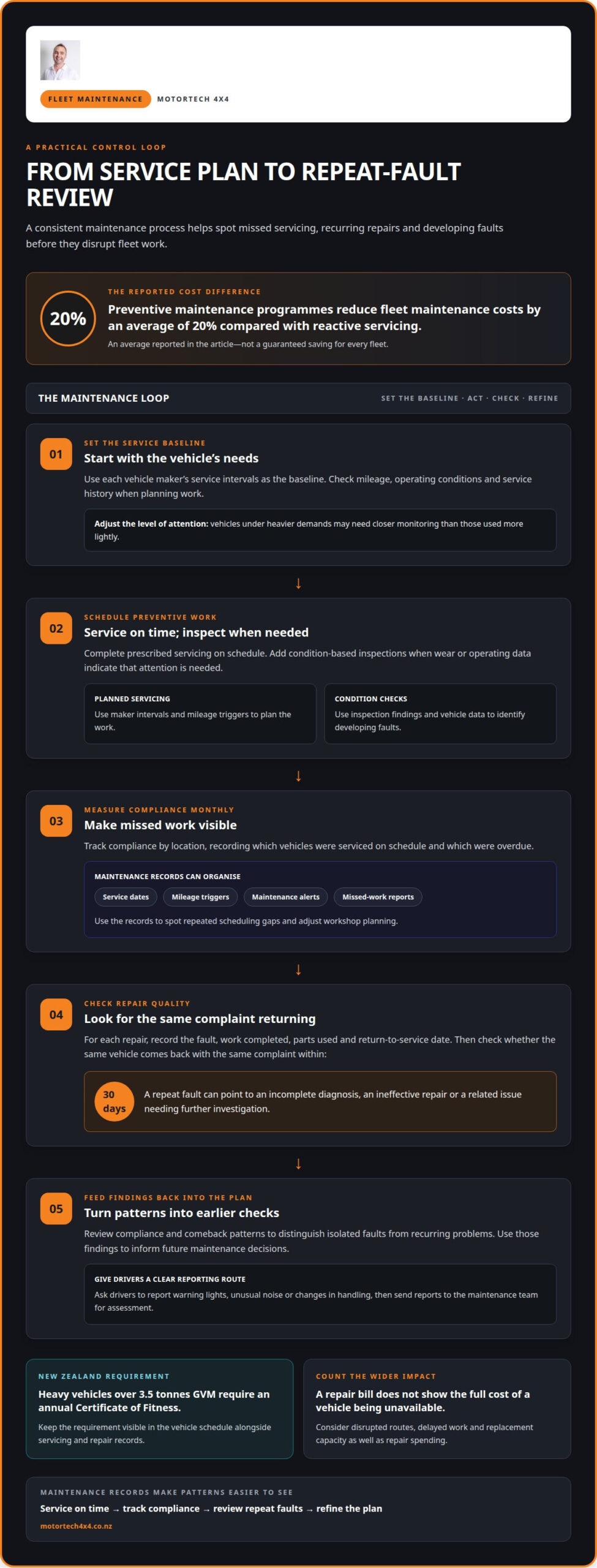
Use each vehicle maker’s service intervals as the baseline, then schedule work around mileage, operating conditions and service history. To manage costs without increasing breakdowns, complete prescribed servicing on time and add condition-based inspections when wear or operating data indicate attention is needed. Vehicles under heavier demands may need closer monitoring than those used more lightly.
Preventive maintenance programmes reduce fleet maintenance costs by an average of 20% compared with reactive servicing. Track compliance monthly by location, recording which vehicles were serviced on schedule and which were overdue. Fleet management software can organise service dates, mileage triggers and maintenance alerts, then produce reports showing missed work. These records help managers spot repeated scheduling gaps across operations and adjust workshop planning.
Maintenance also needs a repair-quality check. Record the fault, work completed, parts used and return-to-service date for each repair. Then review whether the same vehicle returns with the same complaint within 30 days. A repeat fault can point to an incomplete diagnosis, an ineffective repair or a related issue that needs further investigation. Reviewing comeback patterns helps separate isolated faults from recurring problems and informs future maintenance decisions.
Condition-based checks can use inspection findings and vehicle data to identify developing faults before they cause a breakdown. Build a process for drivers to report warning lights, unusual noise or changes in handling, then send those reports to the maintenance team for assessment. For heavy vehicles over 3.5 tonnes GVM, an annual Certificate of Fitness is required in New Zealand. Keep that requirement visible in the vehicle schedule, alongside servicing and repair records, so operational maintenance and compliance tasks are managed together.
4. Fleet cost per mile and total cost of ownership
Calculate fleet cost per kilometre by dividing operating expenses by distance travelled, using the same unit throughout your records. For a whole-life view, include vehicle acquisition, depreciation, fuel, repairs, maintenance, insurance and downtime. A vehicle that uses less fuel may still cost more overall if its purchase and repair expenses are higher. Compare vehicles doing similar work before choosing a cost-saving approach.
Leasing, financing and buying affect cash flow and ownership differently. Leasing tends to suit fleets replacing vehicles at four years or less, while ownership may suit vehicles run to 250,000 miles. Financing spreads acquisition payments over time; buying requires upfront capital. Compare the full cost over each vehicle’s intended service life, including fuel economy, depreciation, repairs and resale value.
Reduce avoidable distance where operations allow. A 6% reduction in fleet miles reduces almost every variable fleet cost by 6%, including fuel and wear-related expenses. Use a platform to compare planned routes with actual driving, identify traffic delays and remove unnecessary trips. Check that route changes still meet delivery times and operational requirements.
Detention charges can add up when empty containers aren’t returned on time and customers charge for each day of delay. Track container returns alongside vehicle locations and route progress. Set alerts for overdue returns, then investigate causes such as congestion, scheduling or loading delays. This helps managers address recurring problems instead of treating each charge as an isolated expense.
Use one reporting period and consistent categories to compare total cost of ownership across vehicles. Separate fixed expenses from distance-related costs, then examine how utilisation, route choice and vehicle age affect each class. For a practical next step, review fleet operating requirements before implementing vehicle or route changes.
Motortech 4X4
Motortech 4X4 can help Auckland businesses match vehicle equipment to the work each fleet vehicle performs. Reviewing operating requirements before choosing modifications helps keep decisions connected to vehicle use, payload needs and fleet plans. Suspension Kits, Bullbars, Snorkels and GVM Upgrades are among the available options.
For fleet managers assessing total ownership costs, the key is selecting equipment that suits the vehicle’s role rather than adding specifications without a clear operational need. Motortech 4X4 can help identify relevant options for your fleet requirements.
Contact Motortech 4X4 to discuss your fleet’s vehicle requirements.
Make your next fleet decision count
Use your cost assessment to guide future fleet decisions. Consider whether each vehicle’s configuration still suits its assigned work, and whether changes to routes, loads or duties call for a different setup. Reducing fleet running costs means matching equipment to operational needs, rather than adding modifications without a clear purpose.
Motortech 4X4 offers Suspension Kits, Bullbars and Snorkels for vehicles with specific fleet requirements. The right choice depends on the vehicle’s role and how it is used, so consider fitment as part of your broader fleet planning.
Contact Motortech 4X4 about your fleet to discuss your vehicle requirements and decide on a suitable next step. A considered plan can help keep fleet decisions connected to the work your vehicles need to do.
Frequently Asked Questions
What are fleet costs?
Fleet costs cover the expenses of acquiring, operating and eventually replacing business vehicles. They include fixed costs, such as finance or licensing, and variable costs, such as fuel, repairs and distance-based charges. A delivery van can also create indirect costs when it’s unavailable, including disrupted work or substitute transport. Grouping costs this way helps managers see how daily operations affect the overall fleet budget.
Does outsourcing repair management actually save money?
Outsourcing repair management can save money when the time and disruption it removes outweigh the management fee. A provider can coordinate bookings, maintenance records and repair approvals, freeing internal staff to focus on operations. For a business with vehicles across Auckland, a single process for tracking work orders can help reveal repeat faults. Compare administration and downtime costs as well as repair invoices.
Minimise the running costs: what can employees do?
Employees can protect fleet budgets by using vehicles only for authorised work, reporting defects promptly and following load procedures. Drivers should report a new warning light or fluid leak before the next job, rather than waiting for scheduled servicing. Dispatch staff can group nearby jobs where practical. Clear responsibilities help prevent avoidable damage, unnecessary trips and delays caused by unreported faults.
What about the differences in servicing costs?
Servicing costs vary because vehicles have different designs, service requirements and operating demands. A vehicle used for frequent short trips may need different attention from one travelling longer distances or carrying equipment. Costs also depend on the work required: routine servicing is different from diagnosing a fault or replacing worn components. Compare similar vehicles and record completed work so unusual changes are easier to spot.
What are the 4 pillars of fleet success?
A useful fleet framework has four pillars: vehicle suitability, cost visibility, responsible use and planned maintenance. Suitability means matching each vehicle to its workload. Cost visibility makes spending easier to manage. Responsible use covers how vehicles are driven, loaded and assigned. Planned maintenance keeps servicing and repairs organised. Assess all four together when setting fleet priorities, since a weakness in one area can undermine the others.
What is a realistic cost per mile for a light-duty fleet?
There isn’t one realistic cost per kilometre for every New Zealand light-duty fleet. The result depends on vehicle type, annual distance, fuel use, depreciation, maintenance, insurance and time off the road. Calculate it from your own records by dividing total operating expenses by distance travelled. Use the same distance unit throughout, then compare vehicles doing similar work rather than treating a fleet-wide average as a target.