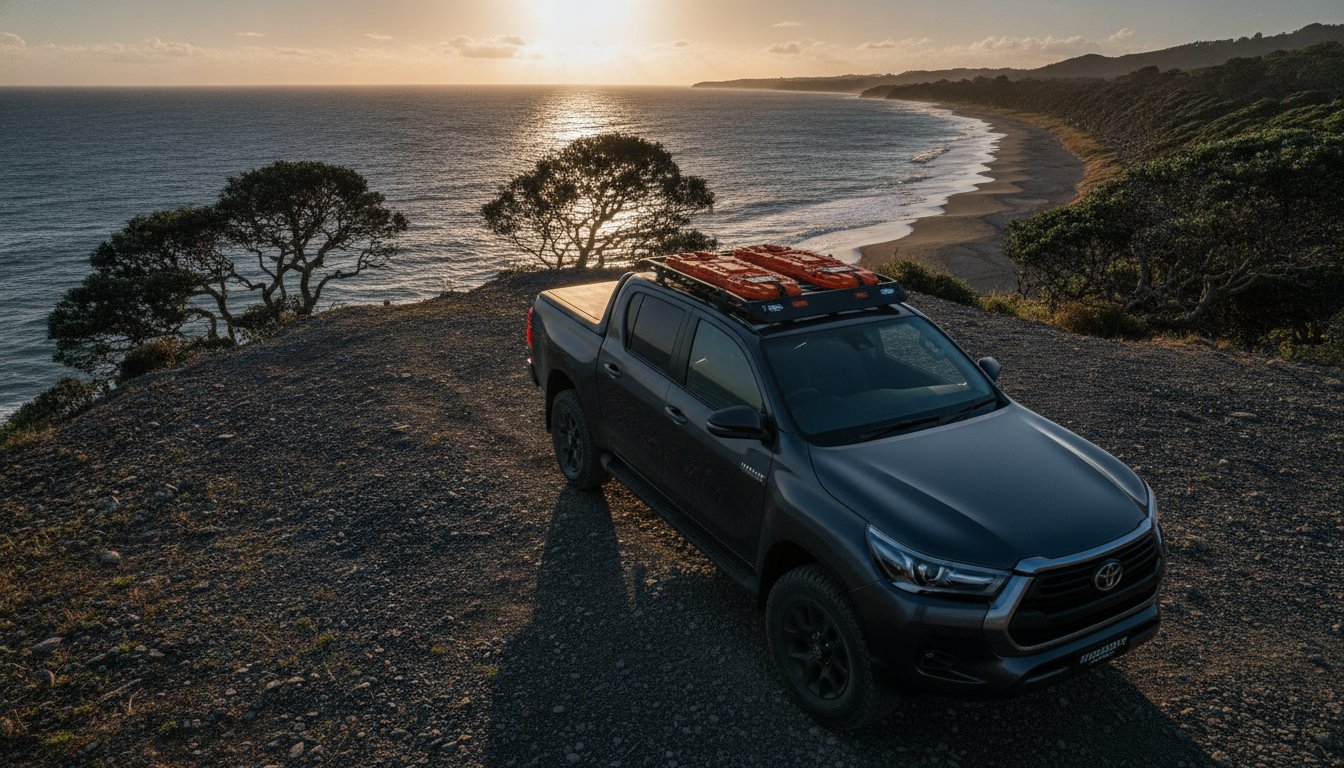
Most 4WD owners in New Zealand are unknowingly risking a failed Warrant of Fitness or a voided insurance claim by misunderstanding how a rhino rack or similar system interacts with their vehicle’s legal load limits. It’s a common frustration to feel overwhelmed by technical jargon like dynamic versus static ratings, especially when you’re anxious about drilling into a brand-new roof or enduring relentless wind noise on a long haul down the Desert Road. You want a storage solution that looks professional and maintains fuel efficiency without failing when the track gets rough.
This guide provides the definitive expert verdict on which specific storage configuration suits your rig and why it consistently outclasses the competition in our unique Kiwi environment. We’ll cut through the confusion to ensure your setup remains legally compliant with NZTA requirements while securing your gear for the long term. You’ll get a detailed technical breakdown of the 2026 range, including the latest Pioneer 6 Platform which offers a 60% reduction in drag, helping you build a rock-solid system that won’t let you down on the Coromandel tracks.
Key Takeaways
- Understand the material science behind extruded aluminium and glass-reinforced nylon that allows these systems to withstand the rigours of New Zealand’s back country.
- Compare the heavy-duty Pioneer Platform against aerodynamic Vortex Bars to determine which configuration best supports your touring requirements or daily commute.
- See how a rhino rack setup offers more secure mounting options for the Hilux, Ranger, and Triton compared to lifestyle-focused European competitors.
- Master the technical difference between static and dynamic load ratings and learn why you must reduce your weight capacity when heading off-road.
- Recognise the importance of professional fitting to protect your vehicle’s ADAS calibration and ensure full compliance with NZTA standards.
Why Rhino-Rack Dominates the NZ 4WD Market in 2026
Rhino-Rack didn’t just appear on the market; it was forged in the extreme heat and relentless dust of the Australian outback. While many brands design for smooth European motorways, this gear is built for the corrugated tracks and unpredictable terrain found throughout New Zealand. By 2026, the brand has solidified its position as the definitive choice for Kiwi 4WD enthusiasts because it addresses the specific mechanical stresses of our landscape. It’s a system designed by people who understand that a failure in the middle of a remote track isn’t just an inconvenience, it’s a safety risk.
The core of their dominance lies in advanced material science. A modern roof rack system from Rhino-Rack utilises high-grade extruded aluminium combined with glass-reinforced nylon. This isn’t just marketing speak. Extruded aluminium provides a high strength-to-weight ratio, ensuring your rig isn’t top-heavy while maintaining the structural integrity needed to carry heavy recovery gear. Glass-reinforced nylon offers incredible impact resistance, preventing the brittle snapping often seen in cheaper, plastic-heavy alternatives when temperatures drop in the Southern Alps.
Every component undergoes rigorous testing, including the infamous ‘corrugation test’. This process simulates thousands of kilometres of high-frequency vibration, the exact type of stress that causes bolts to loosen and welds to crack on inferior products. For a rhino rack, these tests ensure that the modular ecosystem remains silent and secure, whether you’re hauling timber to a job site or a heavy rooftop tent to a remote campsite.
Engineered for the Rugged Kiwi Landscape
New Zealand presents unique environmental challenges that quickly degrade standard hardware. Coastal regions like Auckland and the Bay of Plenty have high salt content in the air, making corrosion resistance a non-negotiable requirement. Rhino-Rack uses powder-coated finishes that act as a barrier against salt spray and the intense UV levels characteristic of the NZ summer. This UV stabilisation prevents the components from becoming chalky or weak over time. When you hit the tracks, the impact-tested mounting points ensure the rack stays anchored even during heavy vehicle articulation on technical sections.
The Versatility Factor for Tradies and Tourers
One of the biggest advantages is the ability to transition your vehicle from a weekday workhorse to a weekend explorer. The modular design allows tradies to carry ladders and conduit during the week, then swap to bike carriers or kayak mounts on Saturday morning. This one-stop-shop approach means you aren’t buying a new system every time your hobbies change. Professional fitment is the final piece of the puzzle. Having your rhino rack installed by specialists ensures the mounting feet are correctly tensioned and aligned, allowing the system to grow with your needs without compromising your vehicle warranty.
Pioneer Platform vs Vortex Bars: Which System Suits Your Rig?
Selecting the correct rhino rack configuration requires a calculated balance between your storage requirements and your vehicle’s structural limitations. The two primary options, the Pioneer Platform and Vortex Bars, serve distinct operational roles. While the platform offers an expansive, flat loading area for heavy touring, the bars provide a lightweight, aerodynamic alternative for those who don’t need a full-scale expedition setup. Understanding the mechanical differences between these systems is essential for maintaining vehicle safety and efficiency.
For serious off-roaders, the ‘Backbone’ mounting system represents a significant engineering upgrade over traditional leg kits. Unlike individual feet that concentrate weight on four specific points, the Backbone replaces these with a continuous rail that runs along the roof ditch. This distributes the load more evenly across the vehicle’s strongest structural points. This level of technical precision is consistent with the rigorous Australian vehicle standards for roof racks, ensuring your setup remains stable during high-speed travel or technical off-road manoeuvres.
You must also account for the weight penalty of the hardware itself. A Pioneer Platform is a robust piece of equipment, and its mass must be subtracted from your vehicle’s total roof capacity. If your vehicle has a dynamic roof rating of 75kg and the platform weighs 25kg, your actual cargo capacity is reduced to 50kg. Vortex bars, being significantly lighter, preserve more of that capacity for your gear. If you’re unsure which system fits your specific GVM requirements, consult with our technical team for a precise fitment plan.
The Pioneer Platform: Maximum Utility
The Pioneer Platform is the definitive choice for those mounting rooftop tents, recovery boards, or spare tyres. Its flat surface allows for versatile gear placement without the height restrictions of traditional bars. Integrated T-slots across the planks provide a secure mounting point for hundreds of accessories, keeping your roof organised and the centre of gravity as low as possible. Recent design iterations have focused heavily on wind noise mitigation, using refined leading edges to keep the cabin quiet at 100km/h on the highway.
Vortex Bars: Sleek and Functional
Vortex Bars are the preferred choice for Auckland’s urban 4WDs and daily drivers. They utilise VGS (Vortex Generating Strip) technology to disturb airflow and eliminate the annoying whistle common in older bar designs. These bars are fully compatible with standard bike, kayak, and ski carriers, making them highly versatile for weekend warriors. Their lower profile also makes it easier to navigate height-restricted parking buildings while maintaining better fuel efficiency during the Monday to Friday commute.
Rhino-Rack vs Thule and Yakima: The 2026 Comparison
Choosing between a rhino rack and its global competitors often comes down to the intended environment of the vehicle. While the market features several high-quality options, the engineering philosophy behind each brand differs significantly. Thule represents European lifestyle design, prioritising aesthetics and aerodynamics for weekend adventurers. Yakima brings American utility with innovative, tool-free mounting mechanisms. However, the grit inherent in Rhino-Rack engineering prioritises structural integrity under the high-stress conditions common on New Zealand’s back country tracks. For owners of the Toyota Hilux, Ford Ranger, or Mitsubishi Triton, the deciding factor is frequently the security of the vehicle-specific mounting hardware.
Accessory availability is another critical consideration for Kiwi drivers. Because Rhino-Rack is the established market leader in NZ, finding spare parts or specialised brackets in Auckland is significantly easier than sourcing niche components for international brands. This local dominance ensures that if you lose a specific bolt or decide to add a new awning while on a trip, you aren’t waiting weeks for shipping from overseas. When assessing price versus value, the long-term ROI of a premium system is found in its longevity; you aren’t just buying a rack, you’re investing in a modular system that won’t need replacing after three seasons of heavy use.
Rhino-Rack vs Thule: Workhorse vs Weekender
Thule produces exceptionally sleek products that look at home on a modern SUV. They win on aesthetics and are perfect for carrying bikes or skis to the mountain. However, when the tarmac ends, the structural differences become apparent. A rhino rack is designed to handle the constant vibration of unsealed roads without the mounting feet shifting or loosening. For canopy installations, Rhino-Rack’s track-mount systems offer a more robust interface than many lifestyle-focused alternatives. When it comes to weight ratings, the Aussie-built gear consistently carries more when you’re navigating technical off-road sections where vehicle articulation is at its peak.
Rhino-Rack vs Yakima: The Battle of the Platforms
The technical head-to-head between the Rhino-Rack Pioneer and the Yakima LockNLoad is a common debate in 2026. Yakima offers a highly versatile platform with clever integrated features, but Rhino-Rack’s T-slot standardisation remains the industry benchmark. This standardisation means a wider variety of third-party recovery gear and camping accessories will bolt directly onto your platform without the need for custom adapters. While Yakima is a strong contender, Rhino-Rack’s superior local support network and the sheer depth of their vehicle-specific Backbone range provide a more secure fitment for the current generation of NZ utes. It’s a more complete package for those who view their rig as a serious tool rather than just a hobby.
Understanding Load Ratings: Static, Dynamic, and Off-Road Realities
Calculating the load capacity of your vehicle involves more than just reading the sticker on a rhino rack box. You must distinguish between static and dynamic load ratings to maintain structural safety. A static rating refers to the weight the system can support when the vehicle is stationary, which is the figure relevant for rooftop tents and occupants. The dynamic rating is the maximum weight permitted while the vehicle is in motion. In New Zealand, standard passenger vehicles typically have a dynamic roof load rating between 50kg and 75kg, while commercial utes and vans often range from 100kg to 200kg. You must always adhere to the lower limit between the vehicle manufacturer’s specification and the rack’s rating.
The most overlooked factor for Kiwi off-roaders is the off-road load rating reduction. When you leave the sealed tarmac for corrugated tracks or technical terrain, the forces exerted on your roof mounting points increase exponentially. It’s a standard industry recommendation to reduce your on-road dynamic load rating by 50% for off-road use. If your vehicle has a 75kg on-road rating, your actual capacity on the track is only 37.5kg. Failing to account for this reduction can lead to pillar deformation or mounting failure during high-vibration travel. Managing your payload effectively is essential for maintaining your Gross Vehicle Mass (GVM) and ensuring the centre of gravity remains manageable.
The Danger of Overloading Your Roof
Excessive weight on the roof significantly alters vehicle handling and increases the risk of a rollover during sudden manoeuvres. Adding heavy gear high up raises the centre of gravity, making the suspension work harder and potentially exceeding the vehicle’s stability limits. From a legal perspective, staying within these limits is non-negotiable. If you’re involved in an accident and your roof is found to be overloaded, your insurance provider may decline the claim based on a breach of vehicle safety standards. Always calculate your total load by adding the weight of the rack and all accessories to the weight of your gear.
Optimising Weight Distribution for the Track
Strategic packing is the key to a stable rig. Heavy items like fuel and water should be stored low in the vehicle or tray, leaving the roof for light, bulky items such as bedding or clothing. A rooftop tent presents a specific challenge, as it often consumes a large portion of your dynamic load limit before you’ve even packed a sleeping bag. For those operating a heavy touring rig or a vehicle with a canopy, book a professional load assessment to ensure your setup remains within legal and safe parameters. This is especially vital for GVM-upgraded vehicles in Auckland, where technical compliance is strictly monitored during inspections.
Expert Installation in Auckland: Why Professional Fitting Matters
A professional installation is the final step in ensuring your rhino rack performs as engineered. While a DIY approach might seem straightforward, it often leads to critical errors in structural integrity and waterproofing. The Motortech 4X4 difference lies in our technical precision; we don’t just bolt components together. We understand the specific mechanical requirements of the Backbone mounting system versus traditional gutter mounts. For instance, the Backbone requires exact torque settings and industrial-grade sealants at every mounting point to prevent the “leaky roof” syndrome that plagues many home installations. If these seals fail, the resulting corrosion within the vehicle’s pillars can be catastrophic and expensive to rectify.
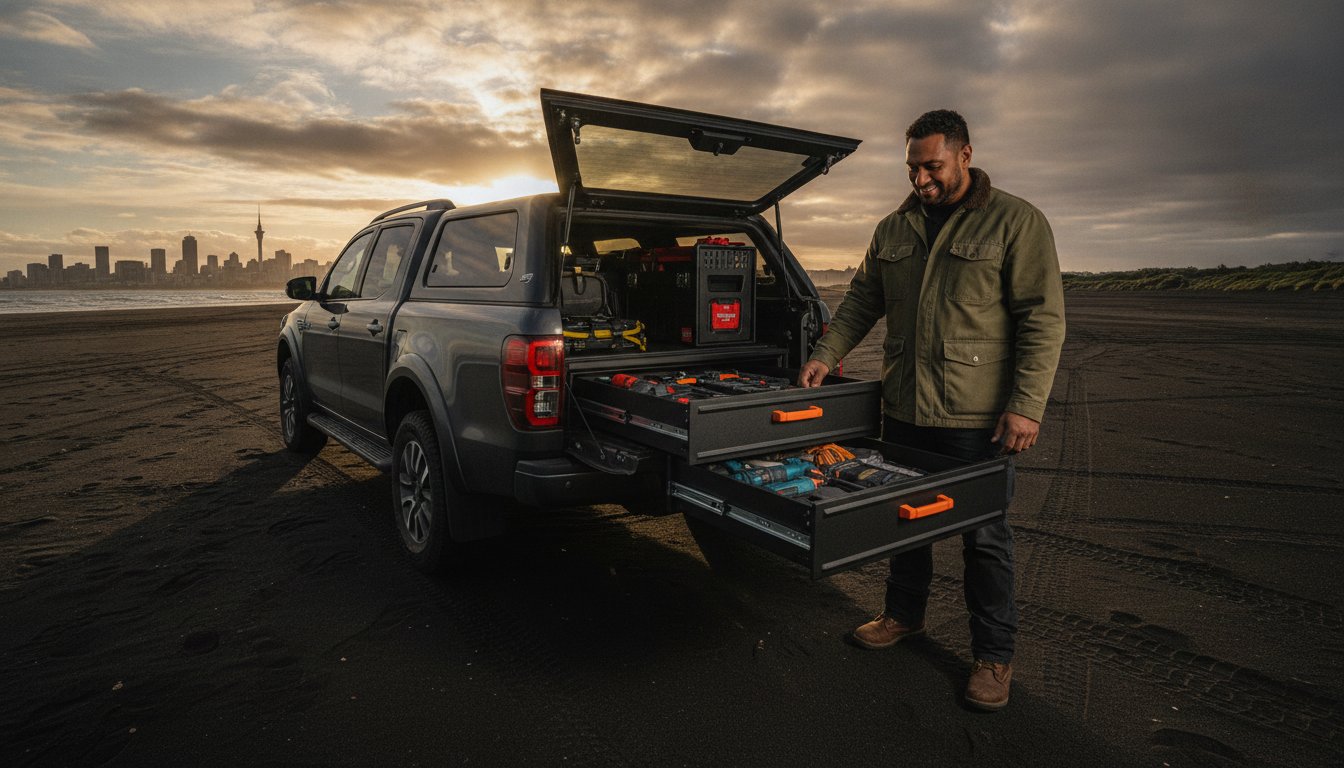
Beyond the physical mounting, custom fit-outs allow for a level of integration that isn’t possible with a basic assembly. Our technicians can seamlessly integrate vehicle lighting, auxiliary power, and awnings into your system. This involves complex cable routing that avoids interference with side-curtain airbags and ensures all electrical connections are weather-sealed for the Auckland environment. By choosing professional fitting, you ensure the system is correctly aligned and tensioned, which reduces wind noise and prevents the hardware from loosening under the high-vibration conditions of our coastal tracks.
ADAS Calibration and Modern Vehicle Safety
Modern 4WDs are equipped with Advanced Driver Assistance Systems (ADAS) that rely on cameras and radar sensors to manage lane-keep assist and emergency braking. Adding a significant load to your roof changes the vehicle’s static height and its pitch under braking. These alterations can throw the sensors out of alignment, potentially causing the safety systems to malfunction or fail entirely. Our Auckland-based ADAS calibration service ensures that your vehicle’s technology is recalibrated to account for the new height and weight distribution of your modified rig. This technical step is essential for maintaining the safety standards of your vehicle after the install.
The One-Stop Shop for Auckland 4WD Enthusiasts
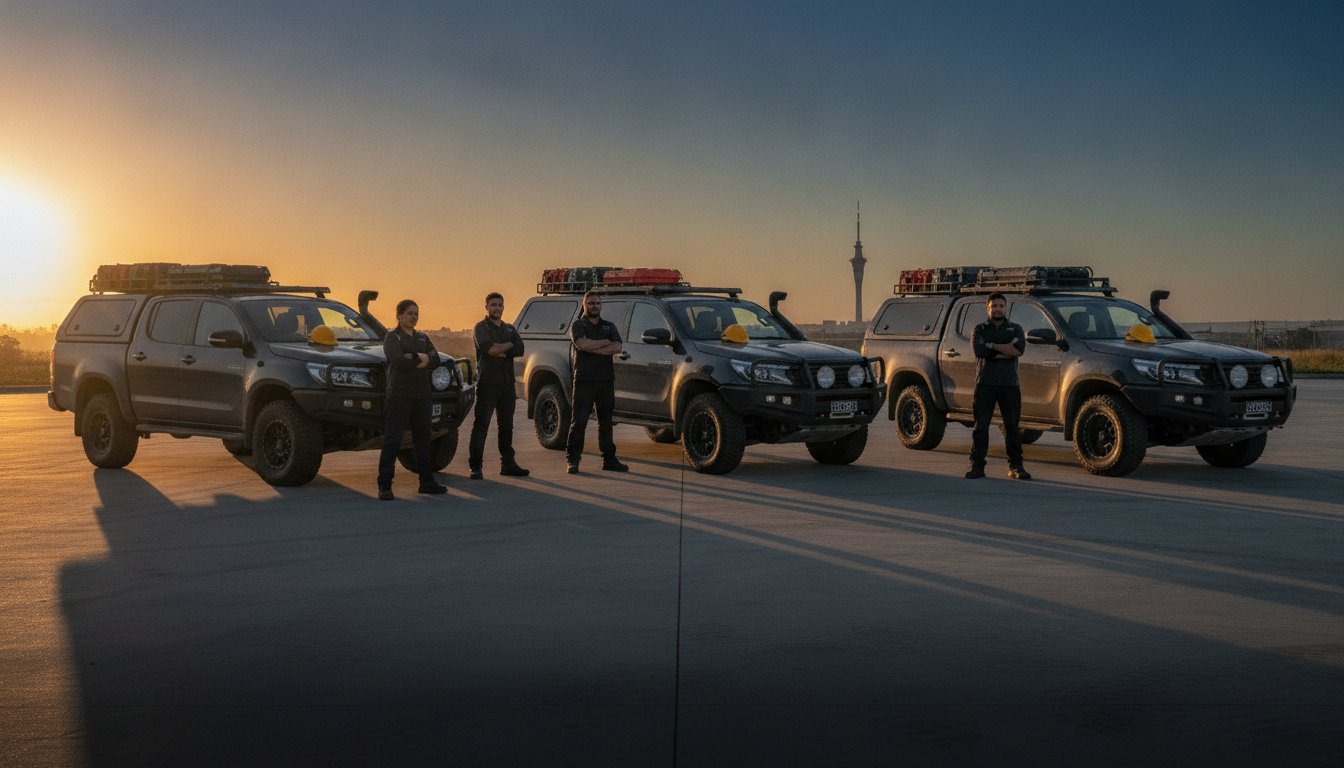
Operating as a comprehensive service provider allows us to manage your entire vehicle build in one location. You can combine your rack installation with other performance upgrades like suspension kits, bullbars, or snorkels. This holistic approach ensures that every modification works in harmony; for example, ensuring your new suspension can handle the increased weight of a fully loaded storage system. We also provide specialized fleet fit-out expertise for Auckland tradies and commercial operators who require a reliable, standardized setup across multiple vehicles. Organise your professional Rhino-Rack installation at Motortech 4X4 today to ensure your rig is legally compliant and technically sound for your next adventure.
Secure Your Rig for the Next Adventure
Selecting a storage solution requires more than just picking a brand; it’s about technical precision and operational safety on the track. You now understand the critical differences between the heavy-duty Pioneer Platform and aerodynamic Vortex Bars, alongside the non-negotiable reality of off-road load reductions. Ensuring your vehicle remains within legal limits while protecting its structural integrity is the benchmark of a professional build. A well-planned setup doesn’t just increase your capacity; it preserves your vehicle’s handling and safety performance under pressure.
As an authorised rhino rack supplier and installer, Motortech 4X4 provides the expertise needed to integrate these systems correctly. We are Auckland’s leading 4×4 modification specialists, offering certified ADAS calibration on-site to ensure your modern safety sensors function perfectly after your vehicle is modified. Our team is ready to help you plan a storage setup that is both high-performing and fully compliant with New Zealand standards. Book Your Rhino-Rack Consultation at Motortech 4X4 Auckland today to secure your gear for the rugged Kiwi landscape. We look forward to seeing your rig in the workshop and getting you ready for the tracks ahead.
Frequently Asked Questions
Will a Rhino-Rack Pioneer Platform fit my specific vehicle model?
Fitment depends on the availability of a vehicle-specific mounting kit designed for your rig’s roof architecture. Rhino-Rack produces specialized kits for most modern utes and SUVs common in New Zealand, including the Hilux, Ranger, and Triton. You must verify your vehicle’s roof type, such as fixed points, tracks, or gutters, to select the correct mounting hardware. Consult a technical fitment guide or speak with an installer to ensure the platform dimensions are compatible with your vehicle’s roof length and width.
How much wind noise should I expect from a Rhino-Rack Vortex system?
You can expect minimal wind noise due to the integrated Vortex Generating Strip (VGS) technology. This rubber strip is designed to disturb airflow and eliminate the high-pitched whistling common in traditional bar designs. While any roof-mounted accessory increases drag, the aerodynamic profile of the Vortex bars makes them one of the quietest options on the market for daily driving. Correct installation of the under-bar strips is essential to maintaining this low-noise performance at highway speeds.
Can I install a Rhino-Rack myself or do I need a professional?
While basic bar systems can be a DIY project, professional installation is strongly recommended for complex systems like the Backbone or Pioneer Platform. Professional fitting ensures that mounting points are correctly torqued and industrial-grade sealants are applied to prevent water ingress. Specialists also address technical requirements like ADAS calibration, which is often necessary when modifications alter a vehicle’s height or pitch. Expert installation protects your vehicle’s structural integrity and ensures the rhino rack remains secure under heavy vibration.
Does a roof rack affect my vehicle’s warranty or insurance in NZ?
A correctly installed roof rack does not void your vehicle warranty, but overloading the system can lead to declined insurance claims. Insurance providers in New Zealand require vehicles to operate within the manufacturer’s specified legal load limits. If an accident occurs and your roof is found to be over its dynamic or static capacity, you may face liability issues. It’s vital to keep records of professional installation to demonstrate that the system was fitted according to industry safety standards.
How do I calculate the off-road load limit for my Rhino-Rack?
Calculate your off-road capacity by applying a 50% reduction to your vehicle’s on-road dynamic load rating. For example, a vehicle with a 75kg highway rating is limited to 37.5kg when navigating unsealed tracks or corrugated surfaces. This reduction is necessary because off-road travel subjects the mounting points to significantly higher structural stress and vertical G-forces. Always subtract the weight of the rhino rack hardware itself from this final figure to determine your actual gear capacity.
What is the difference between the Backbone system and standard legs?
The Backbone system is a continuous reinforced rail that runs along the roof ditch, whereas standard legs are individual mounting feet. This rail design distributes weight more evenly across the vehicle’s strongest structural pillars rather than concentrating the load on four specific points. This engineering approach provides superior stability for heavy touring setups and reduces the risk of roof skin deformation. It’s the preferred mounting method for those carrying high-mass items like rooftop tents or multiple fuel jerry cans.
Can I mount a rooftop tent to Rhino-Rack Vortex bars?
Yes, you can mount a tent to Vortex bars, provided you don’t exceed the bars’ static load rating or the vehicle’s roof limit. You must ensure the tent’s mounting hardware is compatible with the bar’s profile and that the weight of the tent plus occupants remains within safe parameters when stationary. While bars are capable, many tourers prefer the Pioneer Platform for tent mounting because its flat surface provides a more stable base and easier access to mounting tracks.
How do I maintain my Rhino-Rack to prevent corrosion from Auckland’s salt air?
Regular maintenance involves washing the system with fresh water and a mild detergent to remove salt deposits and road grime. Auckland’s coastal environment accelerates corrosion, so frequent cleaning is essential, especially after trips to the beach or through the Firth of Thames. Periodically check all mounting bolts with a torque wrench to ensure they haven’t loosened due to vibration. Inspect the powder-coated surfaces for any chips or abrasions and touch them up immediately to prevent the underlying aluminium from oxidizing.