A fluid top-up isn’t the same as a proper power steering fluid change. A professional drains the old fluid, refills the system with fluid suited to the vehicle, then checks steering operation and inspects for leaks. The method depends on the vehicle’s system and condition, so the service involves more than replacing the fluid in the reservoir.
If you want the old fluid replaced without overlooking signs of a problem, the details matter. This guide explains how a professional handles the drain and refill, what can affect the work, and how the system is checked afterwards. You’ll also learn why using the correct fluid specification and inspecting for leaks are important parts of the service.
Key Takeaways
- The replacement fluid must match the vehicle’s specified requirements; the wrong type can make the service unsuitable.
- A professional can drain and refill the system without a dedicated pump, using a method suited to the vehicle.
- A post-service leak inspection helps identify fluid escaping from hoses, connections or other steering components.
- The condition of the old fluid and access to the system can affect how the drain and refill is carried out.
How Is a Power Steering Fluid Change Carried Out Professionally?
A professional starts by checking the vehicle’s service information and the fluid’s condition. The process then covers fluid selection, replacement and a final level check.
-
Check whether the fluid needs changing
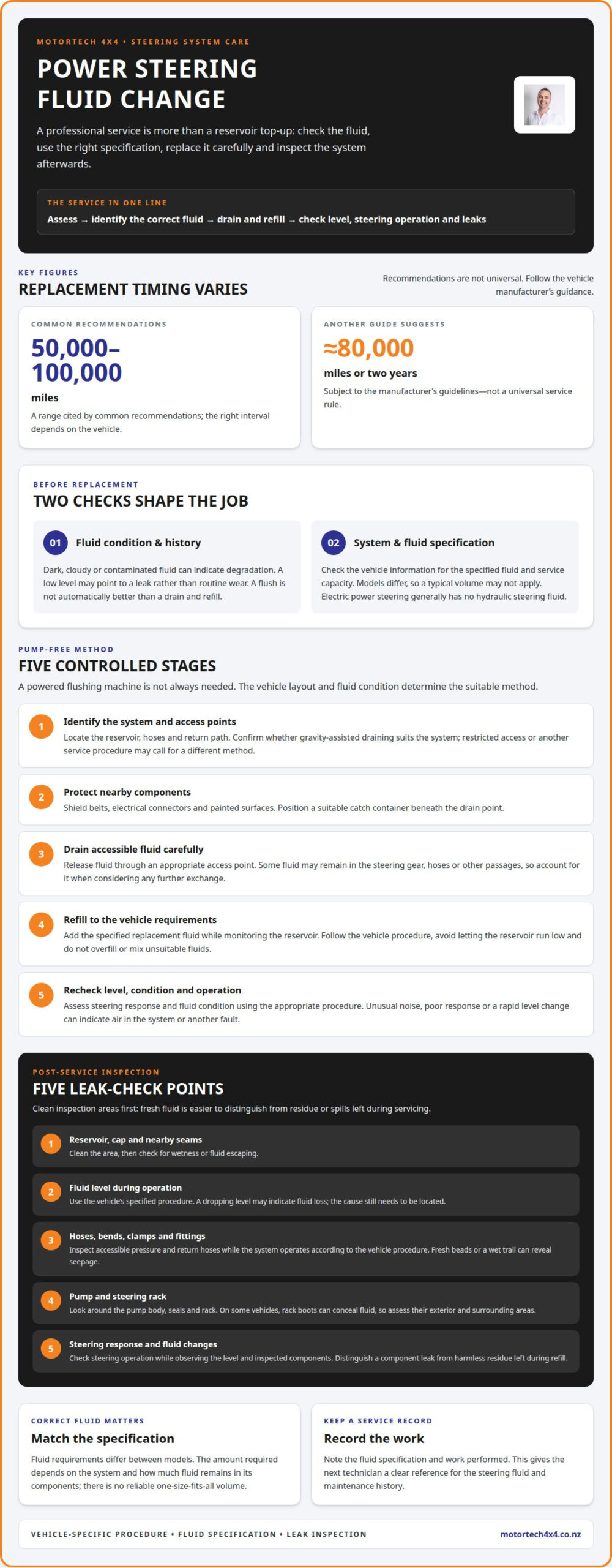
Assess the fluid condition and service history before draining it. Dark, cloudy or contaminated fluid can indicate degradation, while a low level may point to a leak rather than routine wear. Replacement intervals vary: common recommendations range from 50,000 to 100,000 miles, while another guide suggests approximately 80,000 miles or two years, subject to the manufacturer’s guidelines. A flush isn’t automatically better than a drain and refill; the method depends on the system and fluid condition.
-
Confirm the vehicle’s fluid requirements
Use the vehicle manufacturer’s information to identify the required fluid specification and service capacity. Requirements differ between models, so a typical volume won’t reliably apply to every car. The amount needed depends on the system and how much fluid remains in its components. Electric power steering generally uses an electric motor instead of a hydraulic circuit, so it doesn’t need hydraulic steering fluid. The professional confirms the system type before selecting replacement fluid.
-
How professionals add the correct replacement fluid
Match the replacement fluid to the specified type before adding it. A professional fills the reservoir in stages, then checks the level using the vehicle’s prescribed procedure; overfilling or mixing unsuitable fluids can cause problems. In New Zealand, the service price depends on the vehicle, fluid specification, access and labour, and is provided after a quote request. The final amount reflects the work required, not a universal rate.
- Record the fluid specification and work performed in the service history. This gives the next technician a clear reference when assessing the steering fluid and the vehicle’s maintenance history.
How professionals change power steering fluid without a pump
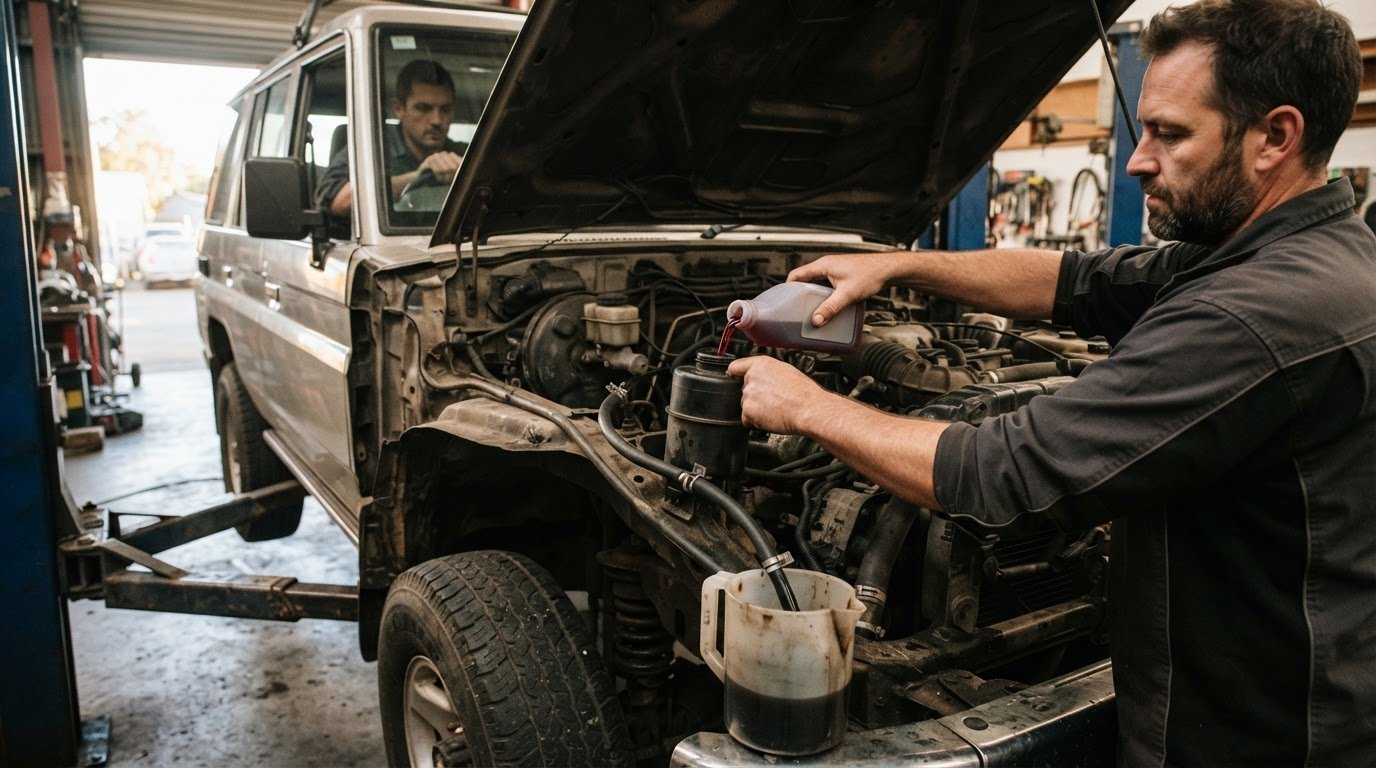
A technician can replace the fluid without a powered flushing machine by using a controlled drain-and-refill method. The vehicle’s steering layout determines the access points and precautions needed.
- Identify the system and access points. The technician checks the vehicle’s service information and locates the reservoir, hoses and return path. This confirms whether gravity-assisted draining is suitable. A layout with restricted access or a different service procedure may need another method, rather than forcing a basic drain onto the system.
- Protect surrounding components. Before opening the system, the technician protects nearby belts, electrical connectors and painted surfaces from fluid. A suitable catch container is positioned beneath the drain point. This keeps the work area controlled and helps prevent old fluid from spreading across the engine bay or workshop floor.
- Drain the accessible fluid carefully. The technician releases fluid through an appropriate access point, allowing it to drain into the container. Without powered flushing equipment, this approach may leave fluid inside the steering gear, hoses or other passages. The technician accounts for that retained fluid when deciding whether a further exchange is appropriate.
- Refill while monitoring the system. The technician adds replacement fluid that matches the vehicle’s requirements and watches the reservoir level during the process. If the system’s design allows, controlled movement of its components helps circulate fluid through the circuit. The technician follows the vehicle procedure and avoids running the reservoir low.
- Recheck operation and fluid condition. After refilling, the technician checks the level, observes fluid condition and assesses steering response using the appropriate vehicle procedure. Any unusual noise, poor response or rapid level change can indicate air in the system or another fault. The technician addresses those findings before considering the service complete.
Because the drain method depends on system layout and fluid condition, a workshop assessment can establish the suitable approach. Arrange a professional vehicle assessment before fluid replacement.
How professionals check for leaks after a power steering fluid change
After refilling, the technician checks the reservoir, pump, hoses, connections and steering rack. Cleaning the inspection area helps distinguish a fresh leak from fluid spilled during servicing.
- Clean the areas around fluid connections. The technician wipes the reservoir, hose joints and pump exterior before running the system. Removing old residue makes new fluid easier to identify. A damp patch already present before cleaning can be recorded, then compared with the area after circulation.
- Check the fluid level and reservoir. The technician confirms the level using the vehicle’s specified procedure. A level that drops during operation may indicate fluid loss, but the cause needs locating. The reservoir cap and nearby seams are also inspected for wetness or signs of fluid escaping.
- Inspect hoses and fittings under operation. With the system operating according to the vehicle procedure, the technician checks accessible pressure and return hoses. Particular attention goes to bends, clamps and connection points, where seepage may appear. Fresh fluid beads or a wet trail can identify a leak more clearly than old staining.
- Examine the pump and steering rack. The technician looks around the pump body, seals and steering rack for fresh fluid. On some vehicles, the rack’s boots can conceal fluid, so their exterior condition and surrounding areas are assessed. A leak at a component differs from harmless residue left during a refill.
- Assess steering response and listen for changes. The technician checks steering operation while watching the fluid level and inspected components. Whining or uneven assistance can point to air in the hydraulic system or a fault requiring further diagnosis. The sound alone doesn’t prove a leak, so findings are considered together.
- Reinspect after the initial check. The technician examines cleaned connections again after the system has circulated fluid. Any fresh wetness is traced to its source, rather than simply topping up the reservoir. If no fluid reappears and the level remains stable, the inspection supports completing the service record.
How professionals drain and remove old power steering fluid
A technician selects the draining method to suit the vehicle’s hydraulic layout. The aim is to remove accessible old fluid without stressing hoses, seals or steering components.
- Confirm the drain procedure. The technician identifies the reservoir, supply hose and return path, then consults the vehicle’s service information. This establishes which components can be opened safely and where fluid can be collected. A system with limited access may need a different procedure from one with a clear return-line connection.
- Prepare the work area. The technician positions a suitable catch container and protects nearby parts from spills. Old fluid is kept away from belts, wiring and painted surfaces. Before opening a connection, the technician checks its condition, since a brittle or damaged hose can require attention rather than being disturbed unnecessarily.
- Remove fluid from the reservoir. Accessible fluid is extracted or drained through an appropriate service point. This removes the fluid held in the reservoir, but fluid can remain inside hoses, the pump and steering gear. The technician considers those retained pockets when assessing how much old fluid remains in circulation.
- Drain the circuit using the vehicle’s procedure. Where the system allows, the technician opens the relevant return path and directs discharged fluid into the container. The method is controlled to avoid running the pump without adequate fluid or allowing air to enter unnecessarily. The vehicle’s layout determines how much of the circuit can be drained this way.
- Assess the collected fluid and close the system. The technician examines the drained fluid for visible contamination and checks the opened hose ends and fittings. Connections are secured before replacement fluid is introduced. The condition of the old fluid helps guide the next service checks, while any damaged connection needs separate attention.
For a professional assessment of the draining method and steering system, book a vehicle service with Motortech 4X4.
Motortech 4X4
Motortech 4X4 is a practical next step if you want a professional to assess your vehicle’s steering system. A technician can consider the fluid condition, service history, system layout and any signs of leakage before recommending the appropriate maintenance. This matters because a low reservoir can point to a leak, while discoloured fluid can indicate deterioration. The right response depends on the vehicle and the condition found during inspection.
If your vehicle also needs broader 4×4 work, Motortech 4X4 can help with related upgrades such as Suspension Kits, Bullbars, Snorkels and GVM Upgrades. These are separate from steering-fluid maintenance, but can be considered as part of your vehicle’s wider needs.
Contact Motortech 4X4 to discuss your vehicle’s steering-fluid concerns.
Plan the right next step for your vehicle
Steering maintenance is a useful prompt to consider how your vehicle is performing overall. If steering feels different after servicing, fluid levels change, or a fresh leak appears, arrange a professional assessment instead of treating repeated top-ups as a fix. A technician can assess the system and determine whether further diagnosis or maintenance is needed.
A power steering fluid change should suit the vehicle’s requirements and the condition of its steering system. For Auckland drivers maintaining a 4×4, Motortech 4X4 also offers Suspension Kits, Bullbars and Snorkels as part of its broader vehicle solutions. Keeping maintenance decisions connected to how you use your vehicle helps you plan practical work without assuming every symptom has the same cause.
Discuss your vehicle’s needs and contact Motortech 4X4 today. A clear next step can help you move forward with confidence.
Frequently Asked Questions
How does a technician identify which power steering fluid a car needs and check its specification?
A technician identifies the required fluid from vehicle-specific service information, rather than relying on colour or a generic product label. The registration details, make, model, year and steering-system design help identify the correct specification. If the vehicle has had previous steering repairs or fluid changes, sharing those details can help clarify what is already in the system and avoid unsuitable mixing.
What does a professional power steering fluid change involve, step by step?
A professional service starts by identifying the vehicle’s hydraulic steering system and reviewing its service procedure. The technician assesses the existing fluid, drains accessible fluid using a method suited to the layout, then refills and checks the system. For example, a vehicle with restricted access may need a different drain method from one with a convenient return-line connection. Final checks include fluid level and steering operation.
What should I expect from a professional power steering fluid change, and what information should I provide?
Expect the technician to confirm the correct fluid specification, assess the system and explain any issues found during servicing. Provide the vehicle’s make, model and year, along with relevant service records. Mention symptoms such as a whining sound, heavy steering, a visible fluid patch or recent steering repairs. These details help distinguish routine fluid maintenance from a fault that needs diagnosis.
What are the risks of using the wrong power steering fluid or overfilling it?
Unsuitable fluid may not meet the steering system’s operating requirements and can affect its components or performance. Overfilling can leave too little space in the reservoir for fluid movement and expansion. For example, if the level rises above the marked range after servicing, the technician should correct it using the vehicle’s specified procedure. Don’t assume fluids are interchangeable just because their colour looks similar.
What should I do if power steering fluid is leaking, dark, or foaming?
Arrange an inspection rather than treating repeated top-ups as a repair. A fresh wet patch under the vehicle can help locate a leak, while dark fluid may indicate contamination or deterioration. Foaming can point to air entering or circulating in the hydraulic system. Describe when you noticed the change and any steering symptoms. That context helps the technician trace the cause and decide what needs attention.
How much does a power steering fluid change cost in New Zealand?
In New Zealand, the final price depends on the vehicle, fluid specification, access and labour.