Is your commercial fleet actually a legal liability waiting to happen on Auckland’s roads? Many fleet managers realise too late that adding heavy toolboxes, bullbars, and essential trade gear has pushed their vehicles well beyond legal GVM limits, risking safety and insurance voiding. We understand the frustration of managing multiple vendors just to get a single ute ready for the worksite, only to have poor quality accessories start rattling or breaking within months. It’s a logistical headache that costs your business time and money.
You deserve a more professional, integrated approach to fleet vehicle fit-outs Auckland. This expert guide shows you how to customise your commercial fleet for the region’s toughest conditions while maintaining strict compliance with New Zealand engineering standards. We’ll walk you through the technical requirements for GVM upgrades, the necessity of ADAS calibration after modifications, and how a turn-key solution for both fit-outs and ongoing mechanical servicing protects your investment. By the end, you’ll know exactly how to build a high-performance fleet that holds its resale value and stays on the road longer.
Key Takeaways
- Understand why Auckland’s diverse geography demands specialised vehicle engineering rather than generic storage solutions.
- Learn how professional fleet vehicle fit-outs Auckland integrate GVM upgrades to ensure your vehicles remain legal and safe under heavy payloads.
- Discover the critical role of ADAS calibration in maintaining modern safety standards after installing suspension kits or bullbars.
- Identify the essential 4×4 accessories needed to protect your fleet from the rigours of construction sites and rural road conditions.
- Maximise vehicle uptime by consolidating fit-outs and specialised mechanical servicing with a single expert provider.
The Fundamentals of Fleet Vehicle Fit-outs in Auckland
Professional fleet vehicle fit-outs Auckland involve much more than just bolting in a few shelves or a ladder rack. It is a comprehensive engineering process that transforms a standard production vehicle into a specialised tool of trade. This process sits at the heart of the wider automotive aftermarket industry, where precision mechanical work meets commercial utility. For businesses operating in the Super City, a fit-out must account for Auckland’s unique geography. Your vehicles often transition from the steep, congested hills of the CBD to the soft, unsealed fringes of the Rodney or Franklin districts in a single day. This demands a setup that balances urban agility with rugged off-road capability.
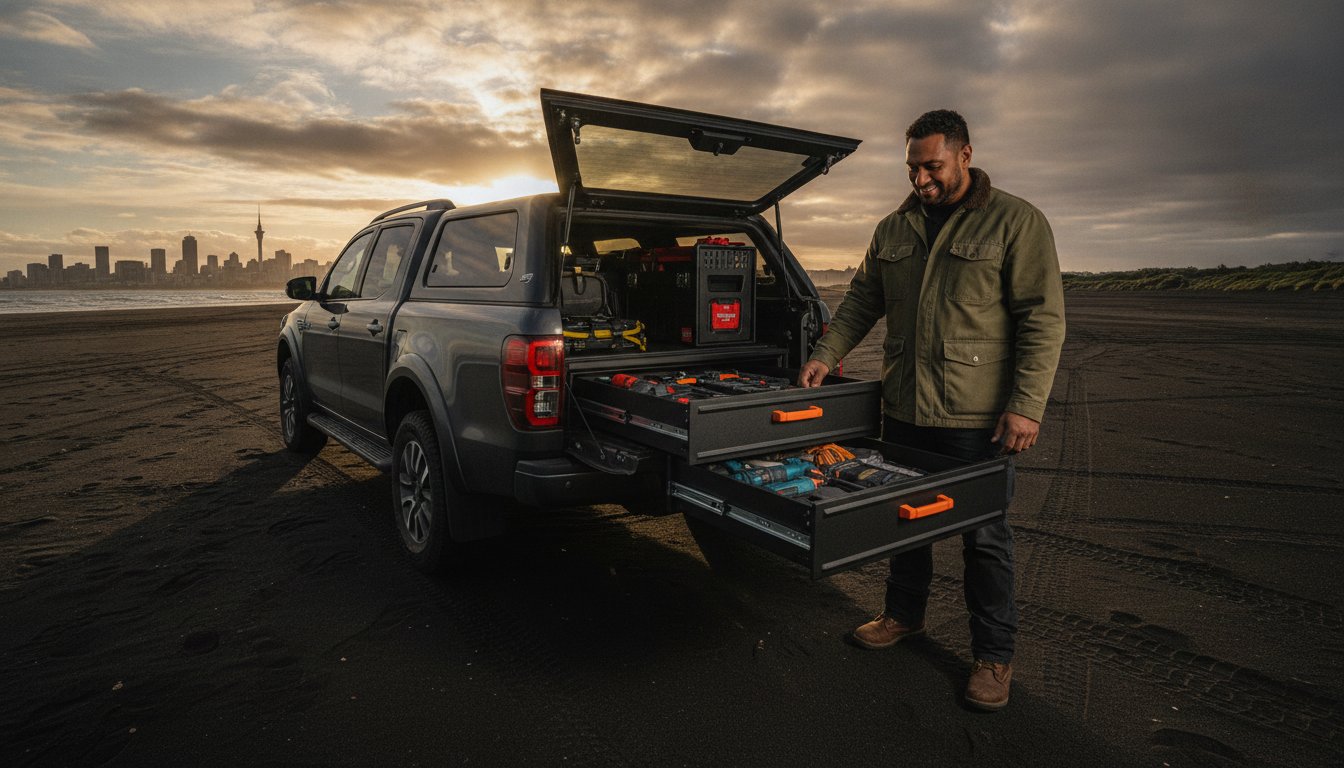
A truly effective fit-out integrates four essential pillars: protection, storage, power, and performance. Protection includes bullbars and internal liners to shield the vehicle from site damage. Storage involves intelligent racking systems that keep gear secure and accessible. Power solutions, such as dual battery systems, ensure that tools and electronics stay charged during long shifts. Finally, performance enhancements like suspension kits and GVM upgrades ensure the vehicle can actually carry the weight of all that gear safely. Integrating your fleet vehicle fit-outs Auckland with ongoing mechanical servicing provides a distinct advantage. When the same team handles your accessories and your logbook servicing, they develop a complete understanding of your vehicle’s history and stress points. This reduces downtime and ensures every modification is compatible with the vehicle’s long-term performance.
Ute vs. Van: Selecting the Right Platform for Your Auckland Fleet
Choosing between a tray-back ute and a secure van depends on your specific operational requirements. A 4×4 ute is essential for civil engineering or rural trade work where site access is challenging and the terrain is unpredictable. Conversely, vans offer superior security and weather protection for urban deliveries and service work. One critical Auckland-specific factor is height. If your fleet frequently enters CBD car parks, you must carefully calculate the height of roof racks and beacons. Ignoring these height restrictions can lead to expensive structural damage and vehicle downtime.
The ROI of Professional Fit-outs: Productivity and Resale
A well-organised vehicle is a productive one. When tradies can find their tools instantly, you eliminate the “tool-hunting” time that drains billable hours across your team. High-quality fit-outs also protect your capital investment. By installing heavy-duty liners and bullbars, you shield the base vehicle from the inevitable dings and scratches of a busy worksite. This attention to detail preserves the vehicle’s condition, leading to significantly higher resale values when it’s time to cycle the fleet. Professional external accessories also project an image of reliability and technical excellence to your clients, strengthening your business reputation.
Engineering for Payload: GVM Upgrades and Suspension
Most fleet vehicle fit-outs Auckland providers focus heavily on what goes inside the tray, but they often overlook the mechanical stress placed on the chassis. Standard factory suspension is engineered for a balance of passenger comfort and occasional load carrying. When you add a permanent commercial payload consisting of heavy steel toolboxes, canopies, and bullbars, that original equipment manufacturer (OEM) suspension is pushed to its absolute limit. This leads to a vehicle that sits low in the rear, handles poorly through Auckland’s sweeping arterial corners, and suffers from increased braking distances.
Engineering for payload is a core pillar of effective fleet management and maintenance. A Gross Vehicle Mass (GVM) upgrade is the professional solution to this problem. In New Zealand, GVM refers to the maximum legal weight a vehicle can carry, including the chassis, body, fuel, occupants, and cargo. For most light goods vehicles (NA-class), a professional upgrade typically increases the GVM by approximately 10 per cent, often bringing the new rating up to 3500 kgs. This process involves replacing factory components with heavy-duty springs, shocks, and bushes designed to maintain vehicle stability and safety under constant load.
Signs Your Fleet Vehicles Need a Suspension Upgrade
Ignoring suspension fatigue doesn’t just affect comfort; it compromises safety. Look for these critical indicators in your fleet:
- Visible Sagging: The rear end sits noticeably lower than the front, even when the vehicle is partially loaded.
- Excessive Body Roll: The vehicle leans heavily during cornering or feels “boaty” when changing lanes on the motorway.
- Nose-Diving: The front end dips sharply under braking, which reduces steering control and increases stopping distances.
- Bottoming Out: The suspension hits its travel stops when driving over speed bumps or uneven worksite terrain.
A standard WOF inspection may not always identify these performance-based failures, especially if the components aren’t leaking or broken. However, a specialised review of your GVM and suspension requirements can prevent long-term mechanical damage.
Professional GVM Upgrades: Staying Legal on Auckland Roads
Legal compliance is non-negotiable for Auckland business owners. Operating a vehicle over its original GVM rating can void your insurance and lead to significant fines. As of February 2026, WOF inspectors are actively verifying Low Volume Vehicle Technical Association (LVVTA) plates against an official database to detect counterfeit or uncertified modifications. A fake or missing plate will result in an immediate WOF failure. A legitimate GVM upgrade must be installed by authorised professionals and requires formal LVV certification and approval from Waka Kotahi (NZ Transport Agency). This ensures your fleet remains compliant with the latest New Zealand safety standards while providing the load-bearing capacity your trade demands.
Performance and Protection: Essential 4×4 Accessories
Engineering a fleet for Auckland requires more than just internal shelving. While the suspension handles the weight, external accessories provide the necessary protection and functional capacity to keep your team operational. High-quality fleet vehicle fit-outs Auckland prioritise components that withstand the daily grind of civil sites and rural roading projects. This phase of the build shifts focus from the chassis to the external utility of the vehicle, ensuring it can perform in environments where standard production models would fail.
Bullbars and nudge bars are the first line of defence. On construction sites or rural fringes, they protect the vehicle’s cooling system and structural integrity from minor impacts and debris. It is essential to ensure these modifications adhere to NZTA vehicle standards to maintain safety compliance and avoid legal complications. For vehicles operating in dusty environments or areas prone to flash flooding, snorkels provide critical engine protection by raising the air intake point. This addition significantly extends engine longevity by preventing dust ingestion and water ingress during deep crossings or heavy rain events. Storage utility is further enhanced by heavy-duty roof racks. These systems allow for the safe transport of ladders, timber, and long conduits that cannot be accommodated in the tray or canopy.
Ute Canopies vs. Hardlids: Which Suits Your Trade?
Selecting between a canopy and a hardlid is a choice between volume and profile. High-volume canopies transform a ute into a mobile workshop, offering massive storage space and easy access through side-opening windows. They are ideal for trades requiring a vast array of tools and specialised parts. Alternatively, hardlids provide a lower profile, which is perfect for navigating Auckland’s CBD car parks. They offer high-level security for expensive equipment and maintain the vehicle’s aerodynamic efficiency, making them a preferred choice for urban-based technicians and project managers.
Lighting and Electrical Upgrades for Commercial Operations
Modern commercial operations often extend beyond daylight hours. High-output LED lighting is essential for night-time emergency repairs or early morning starts on unlit sites. To power these lights and other job-site electronics without risking a flat starter battery, we install dual battery systems. These isolated setups ensure you can run fridges or charge power tools while the engine is off. Professional wiring standards are paramount here; we use heavy-duty conduits and appropriate fusing to prevent electrical failures and ensure your fleet remains reliable under constant, high-demand use.
Compliance and Safety: ADAS and ECU Considerations
Modern commercial vehicles are sophisticated mobile computers equipped with safety technology that relies on precise sensor alignment. When performing fleet vehicle fit-outs Auckland, any change to the vehicle’s ride height or the addition of front-end protection can disrupt these delicate systems. Advanced Driver Assistance Systems (ADAS) use cameras and radar to monitor lane position and proximity to other road users. A suspension lift or the installation of a bullbar changes the sensor’s field of vision, which can render safety features like emergency braking or adaptive cruise control inaccurate or completely non-functional.
Maintaining your Warrant of Fitness (WOF) requires all modifications to meet strict New Zealand Transport Agency (NZTA) requirements. It is a common misconception that fit-outs only involve physical hardware. In reality, the electronic integration of these components is what ensures the vehicle remains safe for your drivers and the public. Failing to address these electronic considerations doesn’t just compromise safety; it creates a significant compliance risk for your business.
ADAS Calibration: The Post-Modification Essential
If your vehicle’s sensors are out of alignment by even a few millimetres, the safety systems cannot react correctly in a split-second scenario. This creates a significant legal liability for fleet managers. From November 1, 2026, a new Land Transport Rule comes into force in New Zealand, introducing a technology-neutral ADAS warning indicator check for WOF and Certificate of Fitness (COF) inspections. This means a vehicle with uncalibrated or malfunctioning safety systems will fail its inspection. Professional ADAS calibration in a specialised workshop is no longer an optional extra; it is a critical safety and compliance step for every modified commercial vehicle in your fleet.
ECU Re-mapping for Fleet Efficiency
Beyond safety sensors, the vehicle’s Engine Control Unit (ECU) can be optimised to handle the increased weight of a commercial fit-out. A professional ECU remap for a fleet is not about achieving high speeds. It is a tool for efficiency. By shifting the torque curve, we help the engine pull heavy payloads and tow trailers with less strain, which often leads to better fuel economy under load. This also helps maintain the health of the Diesel Particulate Filter (DPF) by ensuring the engine runs at peak efficiency.
You must stay within the legal framework for these modifications. In New Zealand, any ECU tune on a forced induction engine requires Low Volume Vehicle (LVV) certification. For naturally aspirated engines, certification is required if the power increases by more than 20 per cent over stock. Ensuring your vehicle remains compliant with these technical standards preserves its reliability and protects your business from insurance complications. To ensure your modifications are fully compliant, you can book your ADAS calibration and ECU remap here with our specialist engineering team.
Integrated Fleet Maintenance Services in Auckland
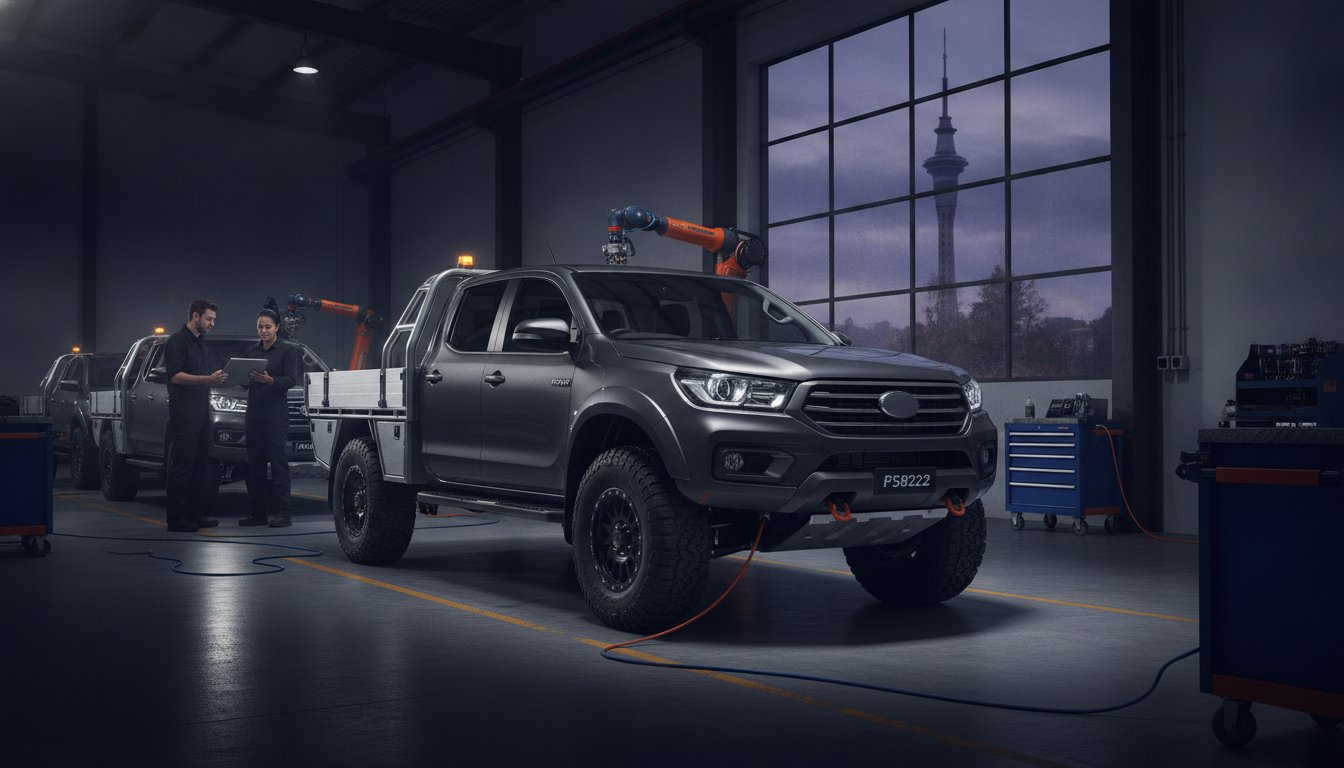
A generalist mechanic might understand the basic requirements of a passenger car, but they often lack the specialised technical knowledge required for modified 4×4 commercial vehicles. Effective fleet vehicle fit-outs Auckland require a maintenance partner who understands how GVM upgrades, heavy-duty suspension, and constant payloads change a vehicle’s service profile. When the same engineering team that performed your fit-out also handles your logbook servicing, they bring a level of familiarity that a third-party workshop cannot match. They know exactly which components have been modified and can monitor the integrity of those specific parts during every inspection.
Consolidating your fit-outs and maintenance with a single provider eliminates the complexity of managing multiple vendors. This “one-stop” approach ensures that your vehicle’s electronic calibrations, mechanical upgrades, and standard service requirements are all managed under one roof. It creates a seamless history for each vehicle, which is invaluable for both safety compliance and preserving resale value. Instead of just changing the oil, a specialist centre conducts a thorough review of the entire system, ensuring that the performance enhancements and protection gear are functioning as intended.
Preventative Maintenance for Heavy-Duty Fleets
Standard manufacturer service intervals are often designed for vehicles driven under light, domestic conditions. For a commercial fleet carrying maximum payloads through Auckland’s stop-start traffic and steep terrain, these intervals are often too long. Heavy-duty use places extreme thermal stress on the drivetrain and braking systems. We prioritise preventative measures like a professional transmission flush to remove contaminants and maintain cooling efficiency in the gearbox. During every service, our technicians also perform a fit-out integrity check. This involves inspecting and tightening bolts on roof racks, bullbars, and canopies to ensure that the constant vibrations of the road haven’t compromised the security of your expensive equipment.
Minimising Downtime: The Motortech 4X4 Approach
Vehicle downtime is one of the most significant hidden costs in fleet management. We understand that every hour a vehicle spends in the workshop is an hour it isn’t generating revenue. Our Auckland-based support means your vehicles stay in the region for both specialist modifications and routine servicing, avoiding the logistical delays of sending them elsewhere. We use strategic scheduling to align WOF inspections with scheduled servicing, ensuring your fleet remains compliant with the least amount of disruption possible. By catching mechanical wear early through specialised 4×4 servicing, we prevent the catastrophic failures that lead to unscheduled repairs and long-term vehicle absence. You can organise your fleet fit-out or service at Motortech 4X4 today to keep your business moving with confidence.
Drive Your Business Forward with Engineered Fleet Solutions
Customising your commercial vehicles is a significant investment in your company’s productivity and safety. Successful fleet vehicle fit-outs Auckland rely on a precise balance of mechanical engineering and technical compliance. From ensuring your Gross Vehicle Mass remains within legal limits to performing critical ADAS calibrations after every modification, every technical detail matters. By choosing a partner that integrates professional accessory installation with high-end mechanical servicing, you protect your capital assets and minimise costly downtime.
Motortech 4X4 stands as Auckland’s leading 4×4 and fleet specialist, providing a full mechanical workshop and on-site ADAS calibration to handle every stage of your build. Our team are expert installers for industry-leading accessory brands, ensuring your vehicles are equipped for the most demanding conditions. Get a Professional Fleet Fit-out Quote for Your Auckland Business. We look forward to helping you build a more efficient, capable, and reliable commercial fleet that supports your business growth for years to come.
Frequently Asked Questions
Do fleet fit-outs in Auckland affect my new vehicle warranty?
Professional fleet vehicle fit-outs Auckland generally don’t void your entire new vehicle warranty. However, the vehicle manufacturer isn’t responsible for failures caused by aftermarket components or their installation. We recommend using authorised installers for industry-leading brands to ensure the highest standards of workmanship. This approach protects your capital investment while providing the specialised utility your business requires for daily operations.
What is the average turnaround time for a commercial ute fit-out?
Turnaround times depend heavily on the complexity of the engineering required for your specific build. A basic accessory installation might be completed in two to three business days; however, a full commercial fit-out involving GVM upgrades, custom canopies, and ADAS calibration typically takes one to two weeks. We focus on strategic scheduling to ensure your vehicles spend the minimum amount of time off the road.
How much does a GVM upgrade cost for a fleet vehicle in NZ?
The cost of a GVM upgrade is highly dependent on the vehicle model and the specific suspension components required to meet your payload needs. Because these are specialised engineering projects that require LVV certification and Waka Kotahi approval, prices are provided on a quote-by-quote basis. It is best to contact a specialist fit-out company directly to discuss your specific vehicle class and weight demands.
Is ADAS calibration required after installing a bullbar or lift kit?
Yes, ADAS calibration is essential whenever a vehicle’s ride height or front-end geometry is altered. Modifications like suspension lifts or bullbars change the sensor’s alignment, which can cause safety systems like emergency braking to malfunction. With new New Zealand transport rules coming into effect in November 2026, uncalibrated systems will also result in a WOF failure. We perform this calibration on-site to ensure your fleet remains compliant.
Can I customise a fit-out for specific trades like plumbing or electrical?
Customisation is a core part of professional fleet vehicle fit-outs Auckland. We design setups tailored to specific trade requirements, including specialised racking for conduits, secure storage for high-value electrical tools, and heavy-duty power solutions for mobile workshops. By understanding your daily workflow, we can engineer a vehicle that maximises productivity and ensures all gear is organised and protected during transit.
Does Motortech 4X4 provide ongoing fleet maintenance after the initial fit-out?
Motortech 4X4 provides a comprehensive “one-stop” solution that includes both the initial fit-out and ongoing mechanical servicing. Our technicians understand the specific stress points of modified commercial vehicles, allowing us to provide superior preventative maintenance. By consolidating your servicing and fit-out requirements, you simplify your fleet management and ensure that the team who built the vehicle is the one keeping it on the road.
What are the legal payload limits for a standard 4×4 ute in New Zealand?
Most standard 4×4 utes in New Zealand have a payload capacity of approximately 1,000 kilograms, but this includes the weight of all accessories, fuel, and passengers. Once you add a heavy canopy, bullbar, and tools, it is very easy to exceed the factory Gross Vehicle Mass (GVM). If your trade demands a higher capacity, a certified GVM upgrade can typically increase your legal carrying limit up to 3,500 kilograms.
How do ECU remaps improve fleet fuel efficiency for Auckland drivers?
ECU remaps improve efficiency by optimising the engine’s torque curve to better handle the permanent weight of a commercial fit-out. For Auckland drivers frequently navigating stop-start traffic and steep hills, this means the engine doesn’t have to work as hard to move the payload. By reducing engine strain and ensuring the drivetrain operates at peak efficiency, businesses often see a measurable improvement in fuel economy across their entire fleet.