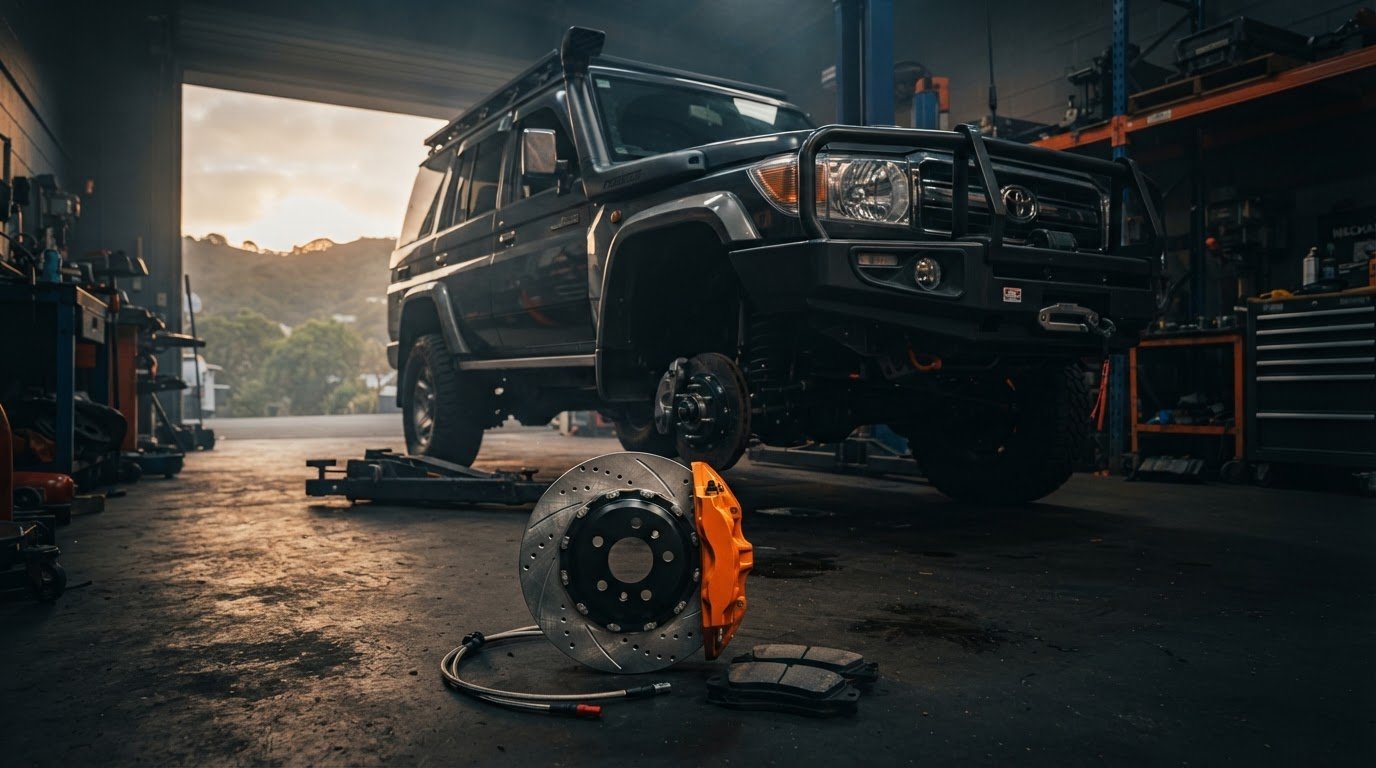
The biggest brake upgrade isn’t always the best fit. A brake upgrade kit for 4×4 needs to suit the vehicle’s exact configuration, the weight it carries and how it’s driven, whether that means towing, touring or regular off-road use.
If your brakes feel less effective, upgraded parts might not be the answer. Worn pads, old fluid or another maintenance issue could be the cause. Extra load, larger tyres and other modifications can also change the demands on the braking system. Choosing parts before understanding these factors can leave you with a setup that doesn’t match your 4WD.
This guide explains what common components such as pads, rotors, calipers and brake hoses can change, and how to compare kit fitment with your vehicle and driving needs. It also covers practical compliance considerations in New Zealand. For Auckland owners, Motortech 4X4’s mechanical servicing is a local starting point for discussing your vehicle’s needs. The workshop is in Glenfield, North Shore.
Key Takeaways
- Use your 4WD’s exact make, model, year, variant and existing brake configuration to narrow down a suitable brake upgrade kit for 4×4.
- Compare each kit’s contents and intended vehicle application, rather than relying on a general “4×4” fitment label.
- Factor in towing, payload and modifications when deciding whether to investigate an upgrade or address maintenance first.
- Review fitment information and relevant modification requirements before settling on a brake setup.
- Motortech 4X4 provides mechanical servicing in Auckland from its Glenfield, North Shore workshop, a local place to discuss your vehicle’s needs.
Why consider a brake upgrade kit for a 4×4?
A brake upgrade kit groups braking components selected for a particular vehicle application. Components and specifications vary, so the aim isn’t simply to fit the largest parts available. First establish whether the standard system suits the vehicle’s condition, configuration and demands. Consider a brake upgrade kit for 4×4 as part of that assessment, not as a substitute for maintenance.
Brakes convert a vehicle’s movement into heat through friction. Understanding how brakes work helps explain why weight and operating conditions matter: carrying more mass or braking repeatedly on demanding terrain can place different demands on the system. That doesn’t automatically mean an upgrade is required. It does make the vehicle’s use important information when deciding what to inspect and whether a change is appropriate.
When does a 4×4 owner start looking at upgraded brakes?
Towing a trailer, travelling with touring gear, driving steep or rough tracks and adding accessories are all reasons to review braking performance. Bullbars, canopies, larger tyres and other modifications may also change the vehicle’s overall setup. Consider how you use the 4WD, including the loads it carries and the terrain it regularly encounters.
How you use the vehicle doesn’t prove that upgraded parts are needed. A change in pedal feel can have several explanations, and braking may feel different with a heavier load, on a loose surface or in changing conditions. Pay attention to a noticeable loss of braking performance, such as taking longer to slow under comparable conditions. Don’t assume every change in feel calls for a kit, or dismiss a persistent change as normal.
Upgrade planning versus brake fault diagnosis
Planning an upgrade is different from investigating a possible fault. Pulling to one side, vibration during braking or unusual noise are reasons to have the existing system professionally inspected. These symptoms can have different causes, so they don’t identify a specific faulty part or prove that an upgrade will solve the problem.
Before selecting components, assess the existing brakes and the vehicle they’re fitted to. An inspection can help establish whether the priority is routine maintenance, fault diagnosis or considering a different setup. It also provides context for comparing parts with the current configuration and intended use. A kit that isn’t correctly matched may not address the issue and could raise fitment or performance concerns.
Keep the decision practical: establish that the brakes are in sound condition, then weigh the vehicle’s load, towing demands, terrain and modifications. An upgrade cannot compensate for neglected maintenance, and correct fitment matters as much as component choice. A vehicle-specific assessment gives you a sounder basis for deciding what to investigate next than the assumption that a modified or heavily used 4WD automatically needs upgraded brakes.
What does a 4×4 brake upgrade kit change?
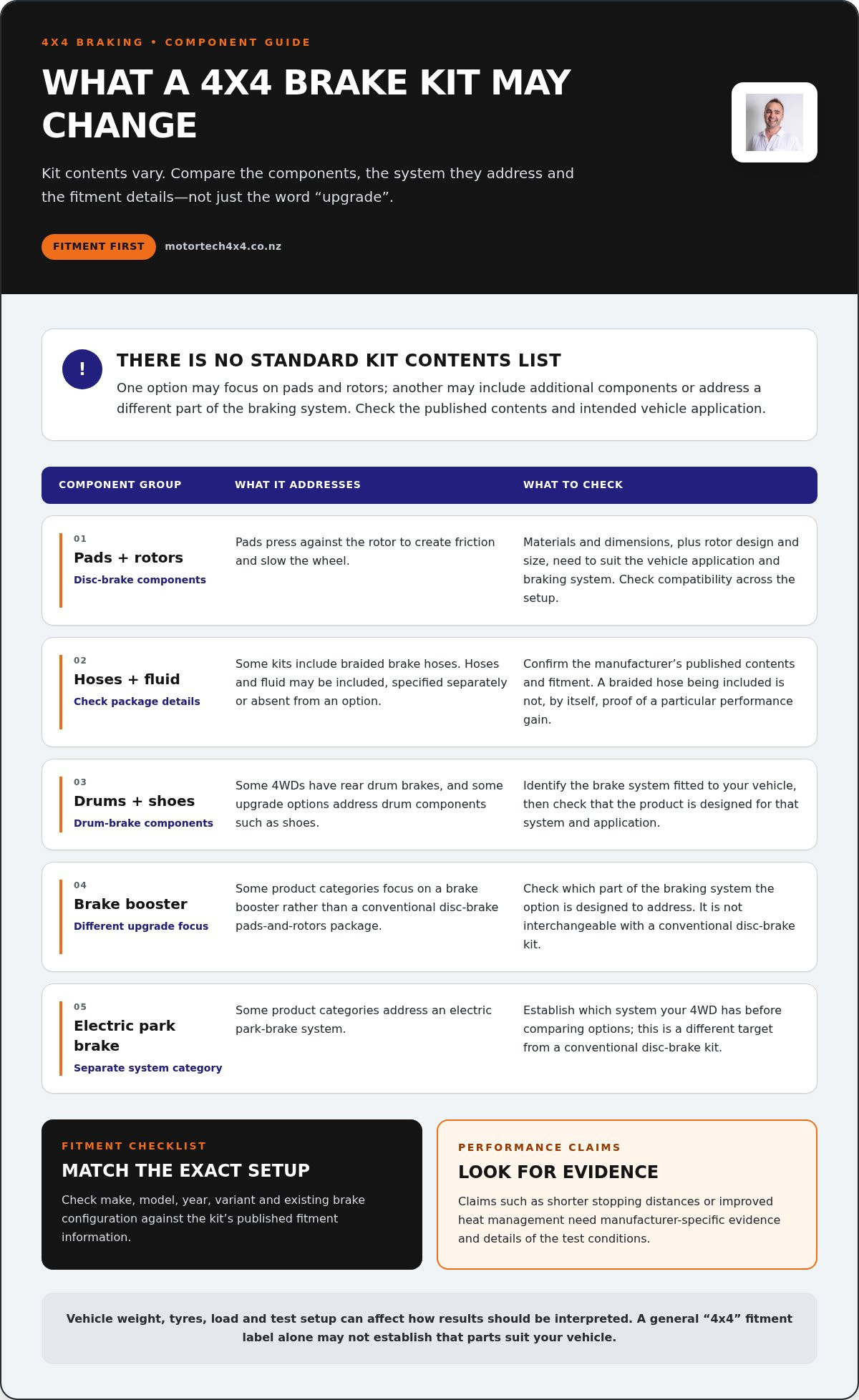
A brake upgrade kit for 4×4 doesn’t have a standardised contents list. One option may focus on pads and rotors, while another may include additional components or address a different part of the braking system. Start by checking what the kit is designed to fit and what its published contents actually include, rather than relying on the word “upgrade” on the packaging.
Brake pads, rotors and hoses: the common components
In a disc-brake system, pads press against the rotor to create friction and slow the wheel. Their material and dimensions, along with the rotor’s design and size, need to suit the vehicle application and braking system. Don’t consider a change to one component in isolation: compatibility with the rest of the setup matters.
Some kits also include braided brake hoses. Treat these as a specific component in the package, not as proof of a particular performance gain. Check the manufacturer’s published contents and fitment details against the exact make, model, year, variant and brake configuration. A broad fitment label alone may not establish that the parts suit your 4WD.
Claims about shorter stopping distances, improved heat management or other performance benefits need manufacturer-specific evidence and details of the conditions behind those claims. Vehicle weight, tyres, load and test setup can affect how results should be interpreted. SAE International’s technical paper on heavy vehicle brake performance concerns heavy-duty trucks. It offers a technical perspective, not direct fitment advice or proof of results for a particular 4×4.
Drums, boosters and other upgrade approaches
Not every upgrade is a disc-brake pads-and-rotors package. Some 4WDs have rear drum brakes, and some upgrade options address drum components such as shoes. Other product categories may focus on a brake booster or an electric park-brake system. These target different parts of the vehicle and aren’t interchangeable with a conventional disc-brake kit.
For example, Bendix’s product categories include offerings for pads, rotors, hoses, drums, shoes, boosters and electric park brakes. These illustrate the range of components available, not a single universal kit or products offered by Motortech 4X4. Identify which system your vehicle has before comparing options.
- Pads and rotors: confirm the parts are specified for the vehicle and its brake configuration.
- Hoses or fluid: check whether they’re included, specified separately or not part of the option.
- Drum, booster or park-brake components: establish which system the product is designed to address.
For a clearer picture of the existing setup, Motortech 4X4’s 4×4 servicing and mechanical work provides a local starting point for discussing what to investigate before selecting parts.
How to compare brake upgrade kit options for your 4×4
Compare vehicle application first, then the components and evidence behind each option. A product described broadly as suitable for “4x4s” may not match your vehicle’s brake configuration. Before shortlisting a brake upgrade kit for 4×4, collect the manufacturer’s fitment details and published contents, then compare them with your vehicle and how you use it.
Check exact vehicle fitment before comparing specifications
Match the make, model, year and variant, then identify the existing brake configuration. Modifications such as a suspension lift, wheel changes or other alterations may affect which parts are appropriate. Use the manufacturer’s application data for the vehicle as it is configured. An Altitude Offroad listing, for example, presents fitment choices by model, year and lift configuration. That shows why fitment can be specific, not that its options suit every 4WD.
Use a simple comparison framework to keep the details clear:
| What to compare | What to establish |
|---|---|
| Vehicle application | Exact make, model, year, variant and brake configuration stated by the manufacturer. |
| Component contents | Which parts are included, and which are optional, ancillary or supplied separately. |
| Intended use | Whether the stated application aligns with towing, loaded touring, work or off-road driving. |
| Supporting documentation | Fitment data, installation information and evidence for any claimed performance benefit. |
Compare kit contents with the job the vehicle does
Start with how you actually use the vehicle, then check whether the manufacturer specifies that application. A 4WD regularly towing, carrying touring gear or doing work may face different demands from one used mainly for everyday driving. Off-road use can also involve changing surfaces and repeated braking. These factors help frame the comparison, but don’t prove that a particular kit will deliver a specific result.
Read the parts list carefully. A package might include pads and rotors, while hoses, fluid or other items may be optional or listed as ancillary. Use the published documentation to establish what’s included and what the parts are designed to fit. Don’t assume a photograph, broad product title or list of possible components describes every variant.
Be cautious about claims such as shorter stopping distances or superior performance unless the manufacturer provides evidence relevant to the vehicle application and test conditions. A headline claim without that context isn’t a reliable basis for ranking options. Compare like with like: exact fitment, stated use and documented contents when choosing a brake upgrade kit for 4×4.
Include replacement and maintenance in your comparison. If an inspection finds that the existing system needs routine servicing or repair, a different setup may not be the appropriate next step. A vehicle-specific mechanical assessment can help clarify the distinction before you decide.
What Auckland 4×4 owners should check before upgrading
A sound brake-upgrade decision starts with the vehicle, not a kit description. Before choosing parts, work through the concern, the condition of the existing system, exact fitment and New Zealand requirements. This sequence helps distinguish a need for a different setup from a maintenance issue, while keeping towing, payload and modifications in view.
A practical pre-upgrade checklist
Follow these steps in order. Record the details rather than relying on a general vehicle description, and keep the manufacturer’s documentation with your notes so the parts and intended application can be compared accurately.
- Identify the concern. Note what has changed, when it occurs and under what conditions. Include whether the 4WD is towing, carrying regular loads or being used on steep, rough or off-road routes.
- Inspect the existing system. Have the brakes assessed before selecting parts. An inspection can establish whether the next step is maintenance, fault diagnosis or considering a different configuration.
- Confirm vehicle fitment. Record the exact make, model, year and variant, plus the current brake configuration. Include relevant modifications, such as changes to wheels, tyres, suspension or vehicle weight, and compare these details with the manufacturer’s application information.
- Check the documentation and requirements. Review the kit’s contents, stated application and installation information. Then verify current road-use or modification requirements with the relevant New Zealand authorities before proceeding.
Describe your normal use, not just an occasional trip. Regular towing, a loaded touring setup and added accessories provide useful context for an assessment, but don’t assume they create a specific upgrade requirement. Check the vehicle’s condition and match any proposed parts to its actual configuration.
New Zealand road-use and modification considerations
Brake changes can intersect with vehicle modification and roadworthiness requirements. The rules that apply may depend on the vehicle and the nature of the change, so general advice shouldn’t be treated as a compliance decision for every 4WD. Before acting on certification, inspection or road-use obligations, check current guidance from Waka Kotahi NZ Transport Agency and the Low Volume Vehicle Technical Association (LVVTA).
Consider the broader build as well. Suspension changes, larger tyres or added equipment can affect the vehicle setup alongside its brakes. If the suspension has been altered, review the existing Suspension Systems guide as part of assessing how the modifications fit together. Keep records of vehicle details, parts information and any advice relevant to the proposed change.
For mechanical servicing for your 4WD in Auckland, visit Motortech 4X4 in Glenfield, North Shore. Explore its 4×4 servicing and mechanical work.
Plan your 4×4 brake assessment with Motortech 4X4 in Auckland
It’s easier to choose a brake setup when you understand the vehicle’s current condition and configuration. Motortech 4X4, Auckland’s 4X4 Specialists, is based in Glenfield on the North Shore. Its 4×4 Servicing & Mechanical service covers all makes and models, making it a local place to discuss your vehicle before deciding whether maintenance, further diagnosis or upgrade planning is appropriate.
The fully equipped Glenfield workshop uses genuine and high-quality OEM car parts and consumables. Mechanical servicing can help put your concerns in context, but it doesn’t mean a particular brake upgrade kit or outcome is automatically recommended. The right next step depends on the vehicle and what an assessment finds.
What to bring to a mechanical assessment
A few details help make the discussion specific and useful. Bring or note the following information:
- Vehicle details: make, model, year and variant, along with any information you have about the existing brake configuration.
- Modifications: changes such as suspension, wheels or tyres, and accessories or equipment that add to the vehicle’s load.
- How you use it: regular towing, touring loads, work use, off-road driving and the kinds of roads or terrain you commonly encounter.
- What you’ve noticed: describe any change in braking, including when it happens and whether it is consistent. Mention symptoms such as pulling, vibration or unusual noise without assuming what’s causing them.
These details help frame the discussion but don’t replace an inspection. The aim is to establish whether the priority is routine maintenance, diagnosing an existing concern or planning a different braking setup. If upgrade planning is appropriate, accurate vehicle information also gives you a clearer basis for comparing manufacturer fitment data and kit contents.
A local next step for 4×4 owners
For Auckland owners, Motortech 4X4’s 4×4 Servicing & Mechanical service is a practical local place to discuss your vehicle. Its experienced mechanics, with 4WD expertise, service all makes and models from the Glenfield workshop. Bring details of your 4WD and how you use it, so the conversation can focus on its condition and requirements rather than a generic kit description.
Explore Motortech 4X4’s services in the Auckland 4×4 guide and take the next step towards understanding your vehicle’s mechanical needs. Knowing its condition and configuration can help you make a more informed decision, whether that means maintenance, diagnosis or further upgrade planning.
Make your next brake decision with confidence
A vehicle’s braking needs can change as its setup and use evolve. Keep a record of modifications, regular loads and any changes in braking behaviour. That information gives future assessments a useful starting point and helps you avoid choosing parts based on an old configuration or a general 4WD label.
Before selecting a brake upgrade kit for 4×4, focus on the vehicle’s condition and verified fitment, not the assumption that more extensive parts are automatically better. Motortech 4X4’s Glenfield workshop supports Auckland drivers with 4×4 servicing and mechanical work for all makes and models. Its mechanics use genuine and high-quality OEM car parts and consumables.
Take the practical next step: explore Motortech 4X4’s mechanical services and discuss your vehicle’s servicing needs. Understanding its condition and setup first can help you plan what to do next.
Frequently Asked Questions
Do I need a brake upgrade kit for my 4×4?
Not automatically. An upgrade is worth considering when an assessment indicates the current setup isn’t suited to the vehicle’s demands, but heavier use alone doesn’t settle the question. If braking concerns appear mainly with a loaded trailer, note that condition and have the vehicle assessed. If the system is in sound condition and performs as expected for your use, maintenance rather than an upgrade may be the appropriate next step.
What is included in a 4×4 brake upgrade kit?
There’s no standard contents list. A kit might include disc-brake pads and rotors, while another option may also include hoses or other parts. Some products focus on drum brakes, brake boosters or park brakes instead. Before comparing options, read the manufacturer’s parts list and distinguish included components from optional or separately supplied items. Don’t assume a product photo or broad description represents every kit variant.
Will a brake upgrade kit fit my 4×4?
It depends on the exact vehicle and its current brake setup. Check the manufacturer’s application information against the make, model, year and variant, and note any changes to wheels, tyres or suspension. Two 4WDs with the same model name can have different configurations, so a general “fits 4×4” label isn’t enough. If your vehicle has been modified, use the fitment information that matches its actual configuration.
Can bigger tyres or a lift affect 4×4 braking?
They can affect the overall vehicle setup and are relevant details for a braking assessment. Larger tyres may change rotating mass and wheel fitment, while a suspension lift can alter component clearances or hose routing, depending on the vehicle. The effect varies by vehicle and modification. Record the tyre and suspension changes, then have the setup considered as a whole rather than assuming either change automatically requires an upgrade.
Are brake upgrade kits legal in New Zealand?
Some brake modifications may require certification, particularly if they affect vehicle safety standards. Whether certification applies depends on the specific modification and vehicle, so a general answer can’t determine compliance for every 4WD. Check current guidance from Waka Kotahi NZ Transport Agency and LVVTA before proceeding. For modifications requiring approval, use the relevant certification process and don’t treat a WoF inspection as a substitute for modification certification.
Should I upgrade brakes or replace worn brake parts?
Replace or service worn parts when an inspection shows the existing system needs maintenance; don’t assume an upgrade is the fix. For example, worn pads need attention as part of maintaining the braking system, while persistent vibration or pulling needs diagnosis before parts are selected. An upgrade is a separate decision, made when the vehicle’s needs and verified fitment support a different setup. Address safety concerns before returning the vehicle to normal use.
Where can I get a 4×4 brake assessment in Auckland?
Motortech 4X4 in Glenfield, North Shore, provides 4×4 Servicing & Mechanical for all makes and models. Share your vehicle details, modifications, regular loads and the braking concern you’ve noticed to help frame a vehicle-specific mechanical assessment. The fully equipped workshop uses genuine and high-quality OEM car parts and consumables. Explore Motortech 4X4’s mechanical services as a practical local starting point.