A modern bullbar is no longer just a heavy piece of steel bolted to your chassis; it is a sophisticated extension of your vehicle’s safety network. If you are preparing your ute for the rugged tracks of the Waitakere or Hunua ranges, you already know that front-end protection is non-negotiable. However, with 2026 NZTA standards becoming increasingly stringent, a simple accessory fitment can quickly turn into a legal and technical liability. You want a rig that looks the part without compromising the sensitive electronic sensors that keep your family safe on the road.
We recognise the confusion surrounding current compliance rules and the genuine concern that an aftermarket bar might interfere with airbag deployment or adaptive cruise control. This guide provides the definitive roadmap for professional bullbar installation Auckland, ensuring your vehicle remains WOF-compliant and mechanically sound. You will learn about the critical necessity of ADAS calibration, the specific requirements for different vehicle classes, and why a specialised mechanical approach is the only way to safeguard your insurance. We are moving beyond basic aesthetics to focus on precision engineering and total vehicle integration.
Key Takeaways
- Understand the latest 2026 NZTA regulations to ensure your rig remains WOF-compliant and legal on New Zealand roads.
- Discover why professional bullbar installation Auckland must include onsite ADAS calibration to keep your vehicle’s safety sensors functioning correctly.
- Learn how to choose the right bar for your specific needs, balancing heavy-duty protection with your vehicle’s GVM and suspension requirements.
- Identify the critical steps in a precision fitting process, from initial sensor diagnostics to secure chassis mounting.
- See how a mechanical-first approach to accessory fitting protects your warranty and ensures long-term reliability in harsh coastal conditions.
Why Professional Bullbar Installation in Auckland is Non-Negotiable
A professional bullbar installation Auckland is much more than a mechanical bolt-on; it’s a total system integration for your vehicle. Modern 4x4s and utes are designed as a single safety unit, where the front bumper, chassis, and electronic sensors work in unison. Auckland drivers frequently transition from the high-speed demands of the Southern Motorway to the rugged, animal-prone backroads of the Hunua Ranges. This requires a protection system that doesn’t just look tough but functions with the precision of a high-end mechanical workshop. For a comprehensive overview of bullbars and their engineering evolution, it’s evident that modern bars must be precision-matched to the vehicle’s specific safety architecture.
NZTA Compliance and WOF Standards
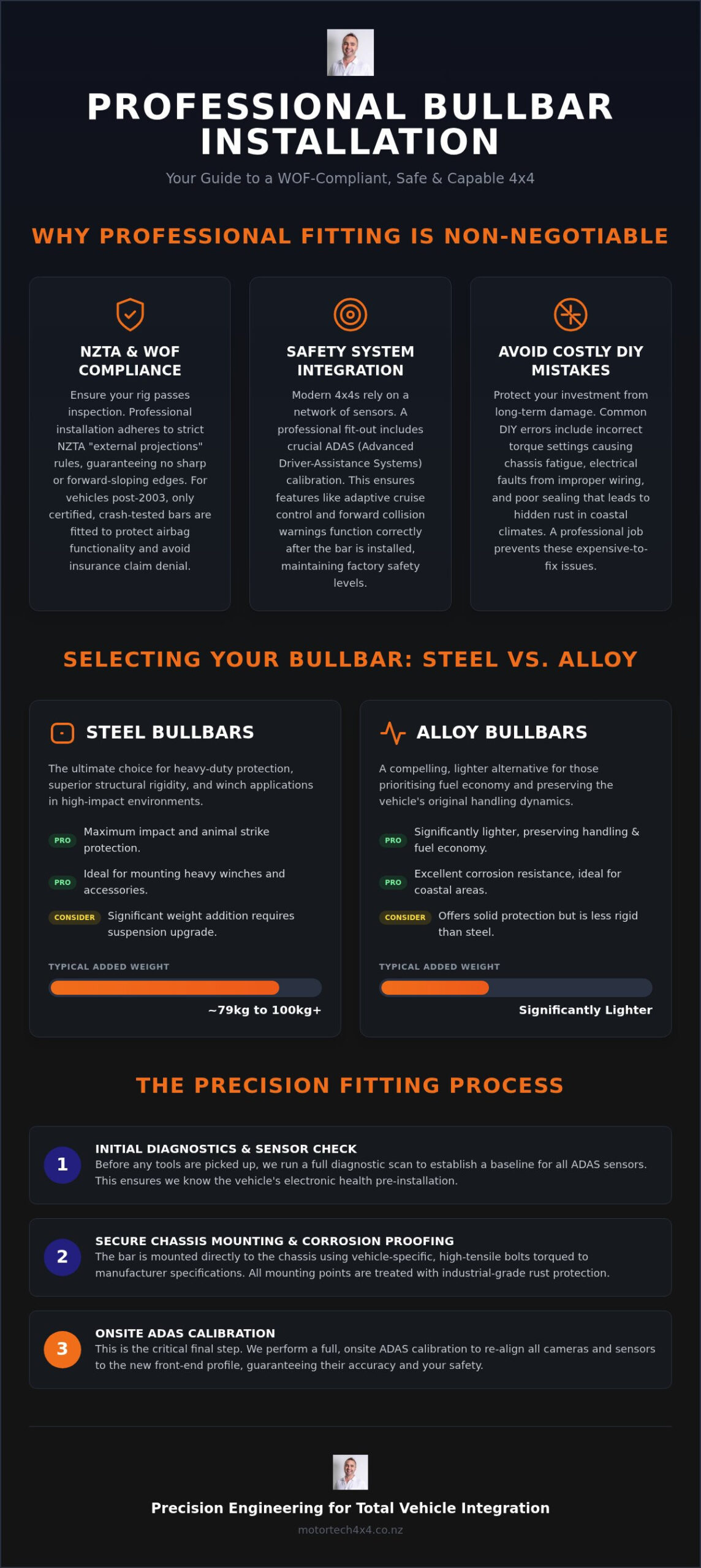
Adhering to NZTA standards is critical for passing your Auckland WOF inspections. The “external projections” rule is particularly strict, stating that no part of the bullbar can have sharp edges or components that slope forward, as these pose a risk to pedestrians. For vehicles manufactured after October 2003, the bar must be crash-tested and certified for that specific model to ensure it doesn’t interfere with airbag deployment. Fitting a non-compliant bar doesn’t just invite a WOF failure; it can lead to insurance companies declining claims after an accident. Certified fitting is the professional process of securing a bullbar so that it meets all NZTA safety mandates without compromising the vehicle’s factory safety ratings.
The High Cost of DIY Mistakes
Modern vehicles require more than just a basic spanner set for a safe fit-out. DIY attempts often lead to common errors like incorrect torque settings, which can cause significant chassis fatigue over time due to Auckland’s varied road surfaces. Electrical mishaps are also frequent, particularly when wiring up integrated indicators or fog lights. In Auckland’s coastal areas, poor sealing during the installation process can lead to hidden rust in the chassis rails, a problem that is often only discovered when it’s too late. Professional bullbar installation Auckland mitigates these risks by using industrial-grade rust protection and vehicle-specific wiring looms that protect your vehicle’s long-term health.
Selecting the Best Bullbar for Your Rig: Protection vs. Performance
Choosing the right protection system requires a clear understanding of your vehicle’s primary duties. Whether you are outfitting a trade ute for Auckland’s busy motorways or preparing a dedicated touring rig for remote tracks, the hardware must match the mission. Choosing a quality bullbar from a trusted manufacturer ensures that the engineering is already verified for your specific vehicle model. This compatibility is vital for a successful bullbar installation Auckland, as it guarantees that the mount points are designed to handle the stresses of winching and animal strikes without compromising the chassis.
Weight is a critical factor that many owners overlook. A standard steel bullbar, including the chassis mounts and fitting kit, adds approximately 79kg to the front of your vehicle. This additional mass directly impacts your front-end suspension, steering response, and tyre wear. If you plan on adding a winch and driving lights, you are likely looking at over 100kg of extra weight. This often necessitates a front suspension upgrade to maintain correct handling and prevent front-end sag.
Steel vs. Alloy: Which Wins for Auckland Drivers?
Steel bars remain the industry standard for maximum protection. They are the preferred choice for heavy-duty touring and winch applications due to their superior structural rigidity. If you are frequently heading into high-impact environments, steel offers the best defence. However, alloy bars provide a compelling alternative for those prioritising fuel economy and performance. They are significantly lighter, which helps preserve the original handling characteristics of your ute.
Visual durability is also a concern in our local climate. Auckland’s coastal salt spray is notoriously harsh on metal finishes. While polished alloy offers a classic look, high-quality powder-coated steel provides a robust barrier against corrosion. Choosing a finish that can withstand the humidity and salt is essential for long-term vehicle value. If you’re unsure which material suits your lifestyle, you can consult our specialists for a tailored recommendation based on your typical driving routes.
Full Bar vs. Sahara Style
The choice between a full hoop bar and a Sahara style bar often comes down to the level of protection required for the vehicle’s vital organs. Full hoop bars provide maximum coverage for headlights and the radiator, which is essential if you are driving in areas with a high risk of animal strikes. Sahara bars offer a sleeker, more modern aesthetic. They provide robust protection for the lower half of the vehicle while offering a cleaner profile that many owners prefer for urban driving. Both styles allow for easy accessory mounting, such as aerials and light bars. For more information on how these choices fit into a broader build, check out our Auckland 4×4 Guide for expert advice on modifications and gear.
The Technical Edge: ADAS Calibration and Accessory Integration
Modern vehicle engineering has evolved to the point where a bullbar installation Auckland is as much an electronic project as a mechanical one. For 2026-standard 4x4s, the front bumper is no longer just a plastic shell; it’s a housing for Advanced Driver-Assistance Systems (ADAS). These systems rely on millimetre-perfect alignment of radar sensors and cameras to manage Autonomous Emergency Braking (AEB), Adaptive Cruise Control (ACC), and Lane Keep Assist. Simply bolting a bar to the chassis without addressing these components can render your vehicle’s most critical safety features useless or, worse, dangerously unpredictable.
Professional sensor relocation is mandatory for modern rigs. Parking sensors and front-facing cameras must be moved from the factory bumper to precision-drilled ports in the new bullbar. If these sensors are off by even a fraction of a degree, the vehicle’s computer may trigger false collision warnings or fail to detect obstacles entirely. Motortech 4X4 utilises specialised diagnostic equipment to ensure every electronic component is perfectly aligned with the new hardware, maintaining the factory safety suite’s integrity.
ADAS Recalibration: The Missing Step in Most Fit-Outs
Many retail fitters overlook the fact that adding a bullbar alters the vehicle’s static pitch. As established earlier, adding nearly 80kg to the front end changes the angle at which your cameras and radar “see” the road. This shift requires a comprehensive sensor reset to ensure the computer understands the vehicle’s new physical orientation. Failing to perform this calibration can lead to erratic braking behaviour or “blind” spots in your cruise control’s field of vision. Because this process is so sensitive to vehicle height, it’s often best addressed alongside a suspension systems guide to ensure the rig sits level before the final electronic alignment.
Integrating Winches and Lighting
A high-performance bullbar serves as the foundation for your recovery and lighting gear. When mounting a winch, it’s vital to ensure the installation doesn’t block critical airflow to the radiator, which can lead to overheating during heavy beach driving or steep climbs. We use high-tensile hardware to secure winches and recovery points, ensuring they can handle the immense loads required for a safe extraction. Additionally, wiring high-intensity LED driving lights for Auckland’s dark rural roads requires a clean, fused connection to the vehicle’s electrical system. This prevents interference with the sensitive CAN bus wiring found in modern utes, ensuring your bullbar installation Auckland is both rugged and electronically sound.
Inside the Workshop: Our Precision Fitting Process Explained
A high-quality bullbar installation Auckland follows a methodical, multi-stage workflow that ensures your vehicle’s structural and electronic integrity remains intact. We treat every fit-out as a precision engineering task. Our process begins with a comprehensive pre-installation vehicle health check. This includes a full sensor diagnostic to identify any existing fault codes in the ADAS or airbag systems. Documenting the vehicle’s baseline status ensures that the final calibration is accurate and that no pre-existing issues are overlooked.
Once the vehicle is cleared, we move to the precision chassis mounting stage. We use only vehicle-specific mounting kits that are designed to work with your ute’s factory crumple zones. This isn’t a “one size fits all” approach; the brackets must align perfectly with the chassis rails to ensure even load distribution during a recovery or impact. Following the mechanical fitment, our technicians handle the electrical integration. This involves wiring the new indicators, fog lights, and winches into the factory loom using high-quality connectors to prevent future electrical gremlins.
The final stage involves the ADAS recalibration mentioned previously, followed by a rigorous WOF-compliance verification. We ensure that every projection and edge meets the 2026 NZTA safety standards. To begin your build with a team that values technical excellence, book your professional bullbar fitting today.
Quality Control and Safety Checks
Our commitment to reliability means we never skip the final “nut and bolt” check. Every fastener is torque-tested to the manufacturer’s exact specifications to prevent loosening under corrugated road conditions. Because Auckland’s humidity and salt air can be brutal, we apply industrial-grade anti-corrosion treatments to any points on the chassis that were drilled or modified during the fitment. Finally, every vehicle undergoes a road test. We check for zero vibration and ensure there is no intrusive wind noise at motorway speeds, confirming the bar is perfectly aerodynamic and secure.
Custom Solutions for Auckland Fleets
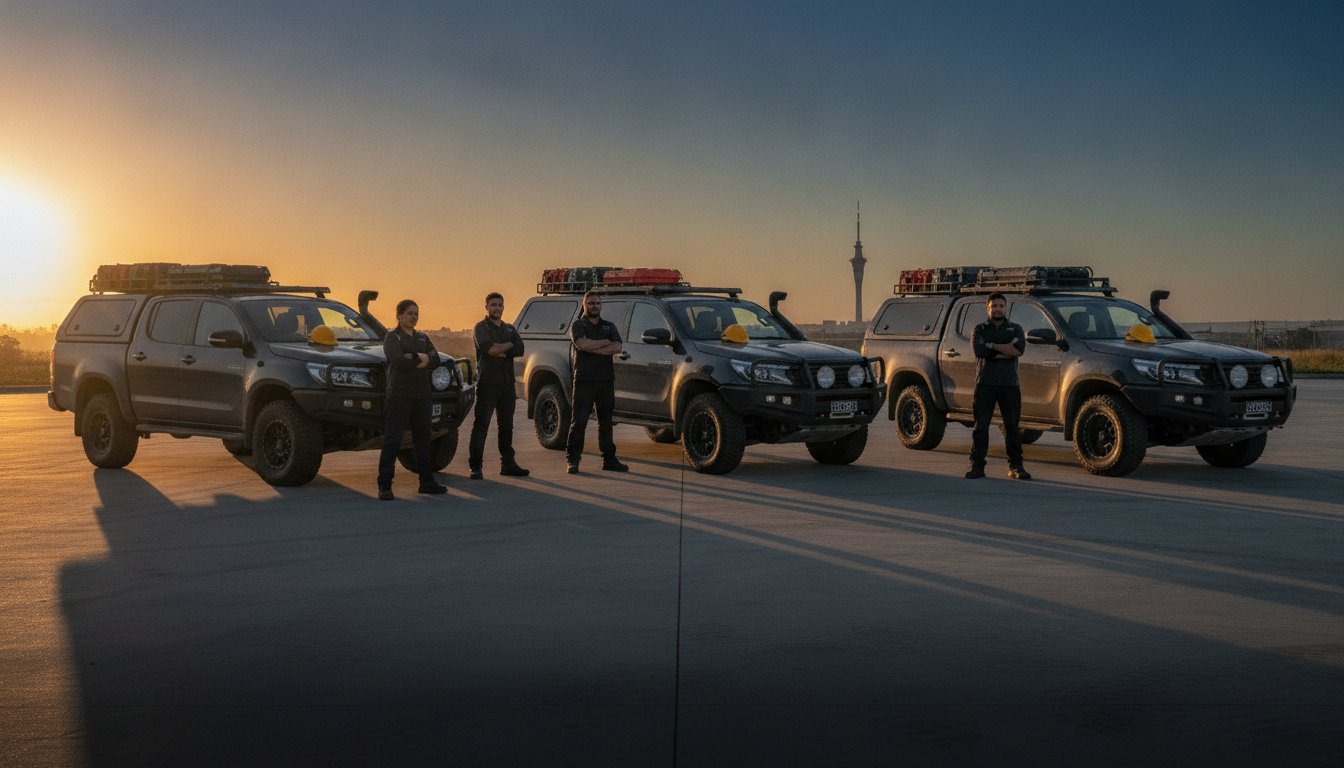
For commercial operators, consistency and durability are the primary goals. We specialise in standardising bullbar fit-outs across entire Auckland fleets, providing a uniform level of protection and accessory mounting for every vehicle. This includes the seamless integration of fleet-specific hardware like high-gain radio antennas and amber beacons. We understand that for Auckland tradies, time off the road is lost revenue. Our workshop scheduling is designed for maximum efficiency, ensuring your bullbar installation Auckland is completed on time without compromising our high mechanical standards.
Motortech 4X4: Auckland’s Premier Hub for Specialist 4×4 Bullbar Fitting
Motortech 4X4 operates as a high-end mechanical workshop rather than a basic retail accessory store. This distinction is critical for a high-quality bullbar installation Auckland. Our technicians possess a deep understanding of vehicle performance, structural modifications, and complex electronic systems. While a standard retail outlet might focus solely on the physical bolt-on process, we view the installation through a mechanical lens. This ensures that every modification respects your vehicle’s engineering limits and factory warranties. We don’t just fit parts; we integrate systems.
We select only the highest quality components proven to withstand New Zealand’s unique environmental challenges. From the high humidity of an Auckland summer to the corrosive salt air of our coastal tracks, your gear needs to be resilient. Our Auckland service centre serves as a one-stop-shop for both weekend enthusiasts and large-scale commercial fleets. We take pride in being a dependable guide for those who require a rig that is as safe on the school run as it is in the Waitakere bush. Our reputation is built on technical excellence and a commitment to customer safety above all else.
A Complete Approach to Vehicle Modification
A professional fit-out rarely stops at the front bumper. We specialise in balancing a bullbar installation Auckland with essential suspension upgrades and GVM increases. Adding significant weight to the front end changes the vehicle’s dynamics. Our team ensures your suspension is tuned to handle the new load while maintaining ride quality and steering precision. For a deeper dive into our curated range, explore our Premium Bullbars Auckland guide. Beyond the initial fitment, we provide ongoing maintenance and mechanical servicing to ensure your accessories remain secure and your vehicle stays in peak condition.
Book Your Auckland Bullbar Installation Today
Securing a professional fit-out starts with a tailored quote that reflects your specific vehicle model and intended usage. When you come in for a consultation, please bring your vehicle specifications and a clear idea of your off-roading or trade requirements. This allows our specialists to recommend the most effective combination of protection and performance gear. Whether you are managing a fleet of commercial utes or outfitting your personal 4×4 for the holidays, we are ready to assist. Enquire with Motortech 4X4 for professional fitting and ensure your vehicle is 2026-compliant and ready for any challenge the New Zealand landscape presents.
Secure Your Vehicle’s Future with Professional Fitting
A successful bullbar installation Auckland requires a methodical balance of structural strength and electronic precision. By prioritising NZTA compliance and ensuring your ADAS sensors are correctly recalibrated, you protect both your vehicle’s occupants and its long-term resale value. We have detailed why a mechanical-first approach is essential for modern 2026-standard utes, particularly when navigating Auckland’s unique driving conditions from urban motorways to coastal tracks.
Motortech 4X4 operates as a specialist 4×4 mechanical workshop and onsite ADAS calibration expert. Whether you are an enthusiast preparing for a remote expedition or require Auckland fleet fit-out specialists for your commercial vehicles, we provide the technical diligence your rig deserves. Our commitment to precision ensures that your safety systems remain fully functional and your insurance remains valid under current New Zealand regulations.
Take the next step in outfitting your vehicle for performance and protection. Get a Professional Bullbar Installation Quote from Motortech 4X4. We look forward to helping you build a rig that is rugged, legal, and ready for any New Zealand adventure.
Frequently Asked Questions
How much does bullbar installation cost in Auckland?
The cost of bullbar installation Auckland depends on the complexity of your vehicle’s safety systems and the specific bar being fitted. Modern 4x4s often require additional labour for sensor relocation and ADAS recalibration, which are essential for a safe and legal fit-out. Accessory additions like winches or driving lights will also influence the total time required. We provide tailored quotes based on your vehicle model to ensure all technical requirements are met.
Will a bullbar affect my car’s airbag sensors?
A correctly installed, airbag-compatible bullbar is designed to work in harmony with your vehicle’s safety systems. Reputable manufacturers perform extensive crash testing to ensure the bar does not interfere with the factory crush rate or airbag triggering mechanisms. It is vital to use a specialist workshop that understands these engineering requirements. An incorrect installation can compromise your safety and potentially void your insurance coverage in the event of an accident.
Do I need to recalibrate my ADAS sensors after fitting a bullbar?
Yes, recalibrating your Advanced Driver-Assistance Systems (ADAS) is a mandatory requirement for vehicles equipped with radar and camera technology. Adding the weight of a bullbar alters the vehicle’s static pitch and height, which can misalign the sensors responsible for emergency braking and adaptive cruise control. Motortech 4X4 performs onsite ADAS calibration to ensure these critical safety features function exactly as intended by the manufacturer after your new bar is fitted.
Are bullbars legal for a WOF in New Zealand?
Bullbars are entirely legal for a Warrant of Fitness provided they comply with NZTA external projection standards. The bar must not have sharp edges or forward-sloping components that could increase the risk of injury to pedestrians. For vehicles manufactured after October 2003, the bar must also be certified as airbag compatible. Choosing a professional bullbar installation Auckland ensures your rig meets all 2026 compliance rules and passes every inspection without difficulty.
What is the difference between a steel and an alloy bullbar?
Steel bullbars provide the ultimate level of structural protection and are the preferred choice for heavy-duty touring and winch applications. They are highly robust but add approximately 79kg to the front of your vehicle. Alloy bars are a lightweight alternative that helps preserve fuel economy and original handling characteristics. While alloy offers good protection against debris and minor impacts, it lacks the extreme structural rigidity found in high-quality steel protection systems.
Can I install a winch on any bullbar?
No, a winch must only be mounted to a bullbar specifically designed and rated for winch fitment. Winch-ready bars feature reinforced internal mounting plates and high-tensile hardware to manage the immense loads generated during a recovery operation. Attempting to fit a winch to a standard bar can lead to structural failure or chassis damage. Always verify the winch compatibility of your chosen bar and ensure the electrical installation is handled by a professional technician.
How long does a professional bullbar installation take?
A professional installation typically takes between four and eight hours depending on the vehicle’s technical complexity. This timeframe allows for the mechanical mounting of the bar, electrical integration of indicators or fog lights, and the essential ADAS sensor recalibration. If you are adding a winch or complex lighting kits, the process may take longer. We prioritise precision over speed to ensure every fastener is torqued correctly and all safety systems are fully verified.
Does a bullbar affect my vehicle’s fuel consumption?
Installing a bullbar can result in a slight increase in fuel consumption due to the additional weight and changes to the vehicle’s aerodynamics. Steel bars have a more noticeable impact than lightweight alloy versions. To manage this, many owners choose to combine their installation with an ECU remap to optimise engine performance for the new load. Maintaining correct tyre pressure and ensuring your suspension is tuned for the extra weight also helps maintain efficiency.