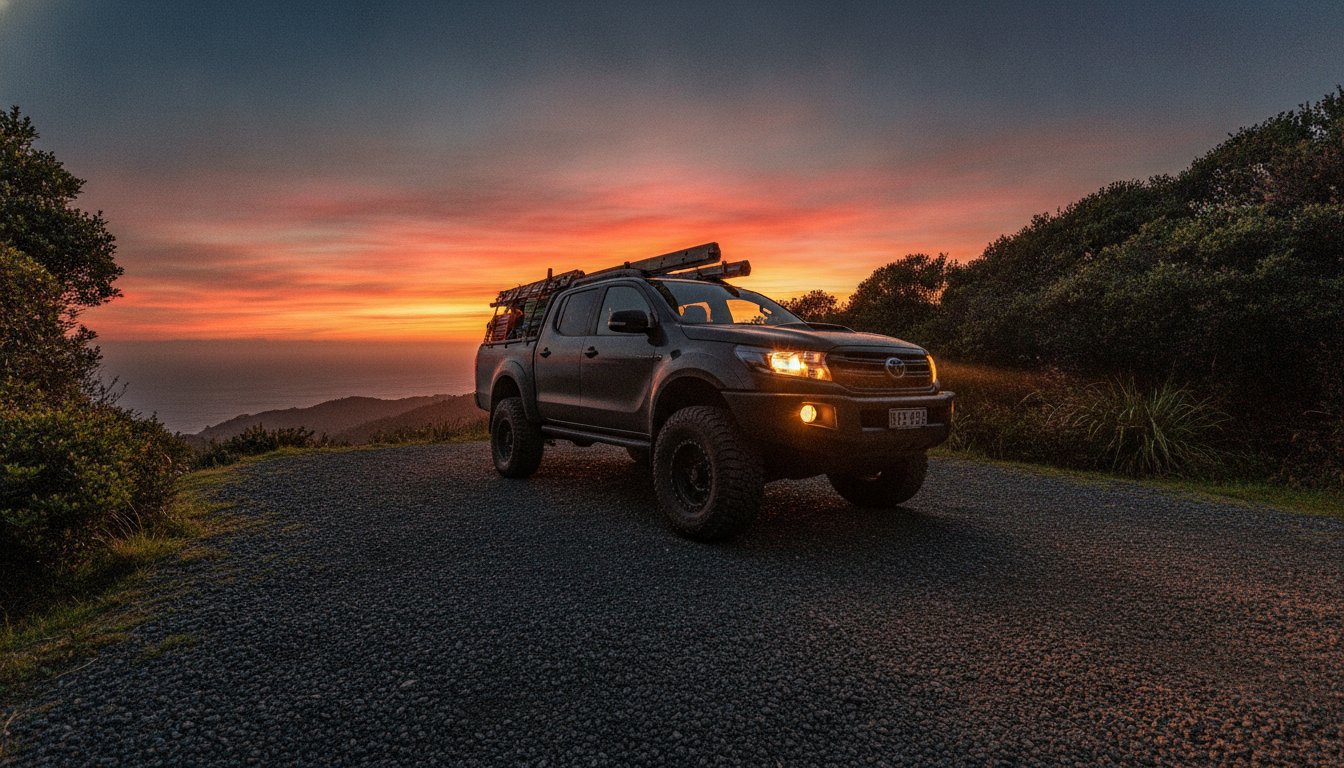
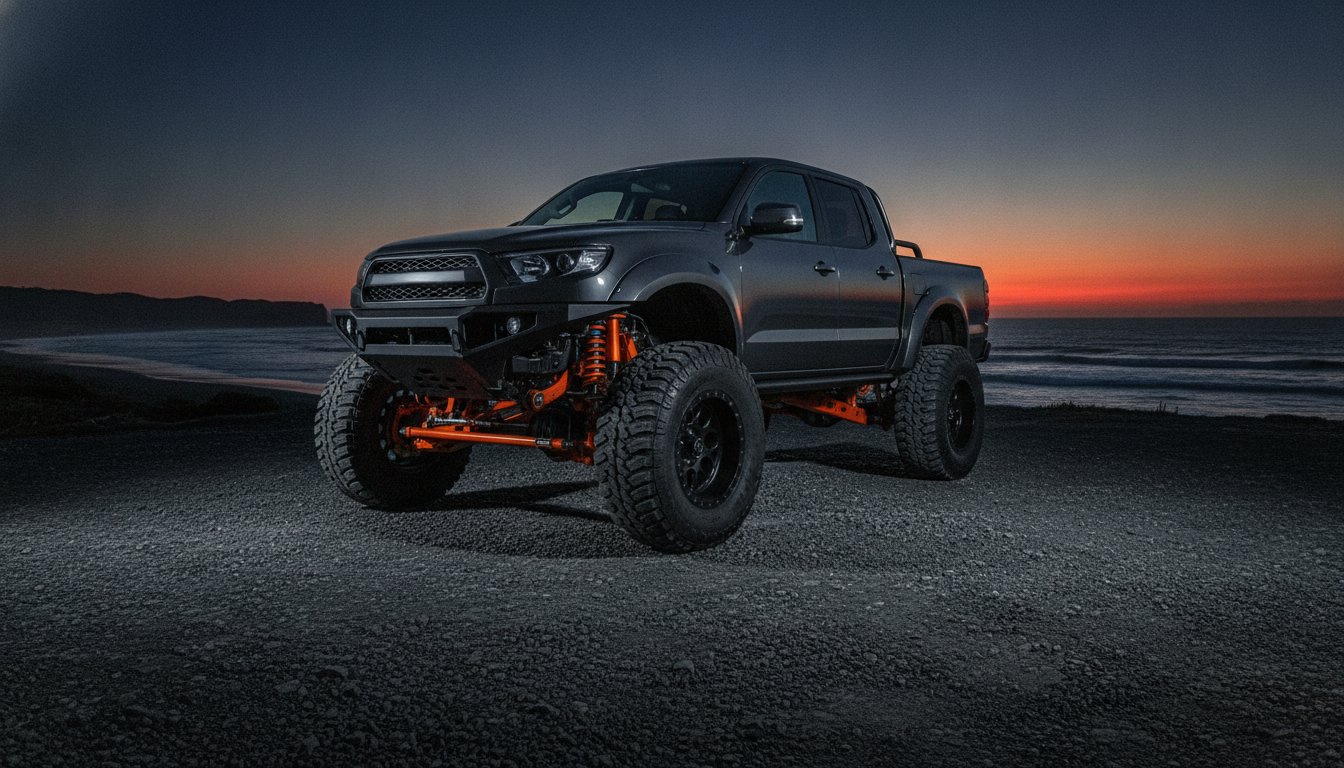
Choosing the wrong height for your ute could be the most expensive mistake you make this year. While many Auckland drivers assume a taller stance automatically means better performance, the reality is that the best setup often involves a precise integration of components that respects New Zealand’s strict legal limits. Whether you are looking to clear 33 or 35-inch tyres for the weekend or simply want a more aggressive look on the road, understanding the trade-offs in the body lift vs suspension lift nz debate is essential for any serious owner.
We know the frustration of wanting a capable rig but fearing the complexity of LVVTA certification or the risk of making your vehicle feel twitchy at 100km/h. You want clearance for bigger rubber without the scrubbing, and you certainly don’t want to fail your next WOF because of a technicality. This guide provides the professional clarity you need to make an informed decision. We will compare the mechanical impacts on your centre of gravity, explain why every body lift requires certification regardless of height, and show you how to achieve a compliant build that drives as well as it looks.
Key Takeaways
- Understand the mechanical distinction between modifying springs and shocks for performance versus using chassis spacers to increase cabin height.
- Learn how suspension upgrades improve off-road clearance and GVM capacity, while body lifts allow for 33 or 35-inch tyres without altering factory ride quality.
- Navigate the legal requirements of a body lift vs suspension lift nz, including the 50mm certification threshold and mandatory LVVTA inspections for all body modifications.
- Discover why professional ADAS calibration is essential after any height increase to ensure your vehicle’s safety sensors and electronic systems function correctly.
- Identify the optimal configuration for your specific driving needs, balancing aggressive aesthetics with motorway stability and long-term WOF compliance.
The Fundamental Difference: Body Lift vs Suspension Lift Explained
Understanding the core mechanics of a lift kit is the first step toward building a capable vehicle. While both methods increase the distance between the roof and the road, they do so through entirely different engineering paths. A suspension lift modifies the actual running gear of your ute, while a body lift simply raises the shell. Deciding between a body lift vs suspension lift nz requires a clear understanding of your end goal. Do you need better articulation for the North Island’s muddy tracks, or are you just trying to fit a set of 35-inch tyres for a more aggressive stance?
What is a Suspension Lift?
A suspension lift is a comprehensive modification of the vehicle’s sprung components. This typically involves replacing factory coil or leaf springs with heavy-duty alternatives, installing long-travel shock absorbers, and often upgrading upper control arms to maintain correct wheel alignment. By extending the suspension system, you raise the chassis, engine, and drivetrain higher above the ground. This is the preferred method for performance-oriented off-roading in the NZ bush. It increases approach and departure angles while allowing for better axle articulation over uneven terrain. It fundamentally changes how the vehicle handles both on and off the tarmac, often improving load-carrying capacity for those who use their rigs for work.
What is a Body Lift?
A body lift uses high-density spacers or blocks to create a gap between the vehicle’s frame and the body, which includes the cabin and tray. Unlike a suspension lift, this modification does not touch the springs or shocks. The suspension geometry remains exactly as it was from the factory. The primary objective here is to raise the wheel arches. This creates the necessary room to fit larger diameter tyres without them rubbing on the bodywork during turns or under compression. Many owners in Auckland use body lifts as a cost-effective secondary method to gain that extra inch of clearance required for 33 or 35-inch rubber. It offers no improvement to actual ground clearance under the diffs or chassis, but it provides the aggressive “stance” many enthusiasts crave.
Both paths aim for increased clearance, but they solve different problems. One focuses on mechanical capability and off-road performance, while the other focuses on spatial clearance within the guards. In the context of New Zealand regulations, these choices have significant implications for your vehicle’s legality and safety on the motorway. Choosing the right path depends on whether you value technical trail performance or the ability to run oversized wheels and tyres without compromising factory ride comfort.
Suspension Lift Kits: Boosting Off-Road Performance and Load Capacity
Suspension lifts are the primary choice for drivers who prioritise functional capability over pure aesthetics. By replacing the factory springs and dampers, you physically raise the chassis and drivetrain. This modification provides immediate improvements to approach, departure, and break-over angles. In the context of body lift vs suspension lift nz, the suspension route is what prevents your front bumper from digging into a bank or your belly from high-centring on a ridge. Raising these fixed points allows the vehicle to traverse obstacles that would otherwise cause significant underbody damage.
Articulation is another critical factor for performance. High-quality suspension kits provide greater travel, allowing the wheels to drop further into ruts while keeping the tyres in contact with the ground. This constant traction is vital on technical New Zealand tracks where clay and loose rock are common. However, raising the vehicle also raises its centre of gravity. This requires a balanced approach to spring rates and damping to ensure the ute remains stable during motorway cornering and sudden manoeuvres. A well-engineered kit maintains this balance, whereas a poorly matched setup can make the vehicle feel unpredictable at speed.
The Link Between Lifts and GVM Upgrades
For Auckland tradies, a suspension lift is often a technical necessity. Adding a steel bullbar, winch, and a fully loaded canopy quickly exceeds the factory payload limits. A specialised suspension kit allows for a GVM upgrade, utilising heavy-duty springs designed to manage this constant weight without sagging. Choosing the correct spring rate is critical; a setup designed for a heavy fleet build will feel uncomfortably stiff on an empty commuter. If you are planning a comprehensive build, it is worth discussing your specific weight requirements with a professional team during a 4×4 servicing consultation to ensure your springs are fit for purpose.
Driveline Geometry and Component Wear
Pushing a suspension lift beyond the standard 50mm mark introduces significant mechanical stress. As the ride height increases, the angle of the CV (constant velocity) joints becomes more acute. This increased operating angle can lead to torn boots and premature axle failure if not addressed. To maintain reliability, builds exceeding 50mm often require diff drop kits to realign the front axles and adjustable upper control arms to correct the caster and camber. Professional installation at a specialised workshop ensures these components are synchronised, preventing the driveline vibrations and steering issues that plague budget installations. High-performance builds must prioritise these geometric corrections to ensure the rig remains reliable on long-distance tours.
Body Lifts: Achieving Tyre Clearance While Maintaining Factory Ride
A body lift is often the most strategic way to increase a vehicle’s height without compromising the factory-engineered ride quality. Unlike a suspension modification, this process involves installing high-density spacers between the chassis and the body mounts. Because the original springs and shock absorbers remain untouched, the ute retains its factory damping characteristics and steering geometry. When evaluating a body lift vs suspension lift nz, the body lift stands out as a solution for owners who want a taller stance and more room for rubber without the stiffness often associated with heavy-duty off-road springs.
Raising the body provides significant aesthetic benefits, but it does not increase the clearance for the chassis or the differentials. The lowest points of your vehicle remain exactly where they were. To ensure the modification is safe and functional, several technical adjustments are mandatory. These typically include:
- Steering Shaft Extensions: Raising the body increases the distance between the steering wheel and the rack, requiring a legal extension or spacer.
- Radiator Shroud Modifications: Since the radiator is usually attached to the body and the engine is fixed to the chassis, the fan shroud must be adjusted to prevent interference.
- Brake and Fuel Lines: These components must be inspected and often lengthened or relocated to accommodate the new height.
- Gear Shifter Alignment: Manual or automatic linkages may require lengthening to ensure they don’t pop out of gear during chassis flex.
Fitting Larger Tyres in NZ
In the New Zealand 4×4 scene, the primary driver for a body lift is tyre clearance. Installing a 1-inch or 2-inch body lift provides the necessary room in the wheel arches to fit 33-inch or even 35-inch mud tyres without the rubber scrubbing against the guards during full lock. Larger tyres are the only way to actually increase ‘pumpkin’ (differential) clearance, which is vital for traversing deep ruts. However, larger tyres often require specific wheel offsets to clear internal components. To remain legal on Auckland roads, any tyre that pokes past the bodywork must be covered by flare extensions to meet WOF and LVVTA standards.
Potential Drawbacks of Body Lifts
The most obvious downside is the visible gap created between the chassis and the body. This is particularly noticeable in the rear wheel arches and can be addressed by installing ‘gap guards’ or rubber liners to hide the frame. More importantly, raising the body alters the alignment of body-mounted accessories. Bullbars and towbars, which are usually bolted to the chassis, will appear to sit lower relative to the body. This often necessitates custom fabrication work to raise the bar work so it aligns correctly with the new body height. Additionally, the spacers increase the leverage applied to the body mounts during high-speed cornering or heavy off-roading, making professional installation and high-grade hardware essential for long-term structural integrity.
Navigating NZ Law: LVVTA Certification and WOF Requirements for Lifts
Legal compliance in New Zealand is a non-negotiable requirement for any modified 4×4 build. While a standard 50mm suspension lift is typically acceptable for a standard Warrant of Fitness (WOF), the regulations shift significantly when you modify the connection between the chassis and the body. In the body lift vs suspension lift nz comparison, the regulatory path for a body lift is always more stringent. Any body lift, regardless of height, requires a Low Volume Vehicle Technical Association (LVVTA) certification to remain road legal.
The LVVTA certification process involves a rigorous inspection by a certified professional to ensure all modifications meet specific engineering standards. In Auckland, this usually begins with a comprehensive pre-inspection at a specialised workshop. Once approved, a permanent metal “Cert plate” is attached to the vehicle. This plate is your primary legal protection. It ensures your insurance remains valid and provides the necessary proof of compliance during roadside police checks or WOF inspections. Driving a modified rig without a valid Cert plate risks immediate fines or the vehicle being deemed unroadworthy.
The Thresholds for Certification
Understanding the specific triggers for certification prevents unexpected costs during your build. For suspension-only modifications, anything over 50mm requires an inspector’s sign-off. However, if you choose to combine a 2-inch suspension lift with a 2-inch body lift, you are guaranteed to need a Cert. The law also looks closely at your rolling circumference. If your new tyres are more than 5% larger than the factory equipment, you must seek certification. Additionally, installing aftermarket upper control arms is an automatic trigger for the LVVTA process, regardless of the lift height.
Ensuring Your Rig is WOF-Ready
Passing a WOF in Auckland requires more than just a Cert plate. Inspectors look for specific safety clearances that are often overlooked during DIY installations. Your vehicle must maintain at least 100mm of ground clearance and have a minimum of 40mm of rebound travel in the suspension. Tyre poke is another common failure point. New Zealand law requires mudguards or flares to cover the full width of the tyre tread. Brake lines must also be inspected to ensure they aren’t under tension when the wheels are at full lock or the suspension is fully extended. With WOF frequency changes coming into effect in late 2026, maintaining these standards is even more critical for long-term roadworthiness. To avoid these common pitfalls, it is essential to work with a professional mechanical workshop that understands the intersection of performance and NZ transport law.
The Professional Verdict: Tailoring Your Lift for Auckland Conditions
The decision between a body lift vs suspension lift nz ultimately depends on how you intend to use your rig. For those building a dedicated touring ute, a high-quality 50mm suspension lift is usually the superior choice. It provides the necessary load-carrying capacity for canopies and camping gear while improving off-road clearance without the legal complexity of a body modification. However, if your goal is a hardcore play-truck capable of running 35-inch mud tyres through deep ruts, a combined approach is often the only way to achieve the required arch clearance while maintaining a safe centre of gravity. Balancing these mechanical needs with New Zealand’s strict transport laws requires a methodical approach to vehicle engineering.
ADAS and Safety Tech: The Modern Lift Challenge
Modern 4x4s like the latest Ranger and Hilux models are equipped with sophisticated Advanced Driver Assistance Systems (ADAS). These systems rely on cameras and radar sensors mounted at specific heights and angles to function correctly. When you install a lift kit, you are physically altering the “view” these sensors have of the road. An uncalibrated system can lead to dangerous malfunctions in Autonomous Emergency Braking (AEB), Adaptive Cruise Control, and Lane-Keep Assist. Because the sensors are now looking further down the road than intended, they may fail to detect obstacles or trigger phantom braking events. Motortech 4X4’s specialised ADAS calibration centre in Auckland is equipped to reset these systems to factory-spec alignment, ensuring your safety tech works perfectly with your new ride height.
Building Your Dream Rig at Motortech 4X4
Achieving a compliant and capable build requires more than just bolting on parts. Motortech 4X4 provides a comprehensive “one-stop” service that manages every stage of the modification process. From selecting the right spring rates for your GVM requirements to fitting snorkels, bullbars, and winches, our team ensures every component works in harmony. We handle the technical installation, the precision ADAS calibration, and coordinate the LVVTA certification process, so you drive away with a fully legal and insured vehicle. Whether you need a fleet fit-out for the job site or a bespoke weekend explorer, we provide tailored solutions based on your specific usage and weight requirements.
Before booking your vehicle into our Auckland workshop, use this final checklist to prepare for your build:
- Define your primary usage: Is this a daily commuter, a heavy-duty work ute, or a weekend mud-plugger?
- Choose your tyre size: If you are moving to 33s or 35s, determine if arch clearance requires a body lift.
- Assess your payload: Calculate the weight of planned accessories to see if a GVM upgrade is necessary.
- Budget for compliance: Ensure your project includes the costs for LVVTA certification and ADAS calibration.
- Verify insurance: Confirm that your provider accepts certified modifications to maintain your cover.
Book your 4×4 in for a professional lift consultation at Motortech 4X4 to discuss your requirements with our expert mechanical team.
Ready to Elevate Your Rig?
Navigating the technicalities of a body lift vs suspension lift nz doesn’t have to be a solo mission. By now, you understand that while suspension upgrades provide the mechanical backbone for off-road performance and GVM capacity, body lifts offer the critical arch clearance needed for oversized rubber. The key to a successful build lies in the details: ensuring your LVVTA certification is correct and your ADAS safety systems are precisely calibrated for the modern road environment.
As authorised installers for industry-leading suspension brands, Motortech 4X4 provides the specialised expertise required for complex, compliant builds. Our Auckland workshop features a dedicated ADAS calibration centre, ensuring your Hilux or Ranger remains as safe on the motorway as it is capable in the bush. We manage the entire process from component selection to final certification, giving you peace of mind that your vehicle is legal and reliable.
Get a Professional Lift Kit Quote from the Motortech 4X4 Team to start your transformation today. We look forward to helping you build a vehicle that performs without compromise.
Frequently Asked Questions
Is a body lift or suspension lift better for my Hilux?
A suspension lift is generally superior for a Hilux used for off-roading, towing, or carrying heavy loads. It improves actual ground clearance and articulation, whereas a body lift is primarily a cosmetic modification to allow for larger tyres. Choosing between a body lift vs suspension lift nz for your Toyota often comes down to whether you prioritise mechanical performance or an aggressive stance.
How much can I lift my 4×4 in NZ without needing LVVTA certification?
You can install a suspension lift of up to 50mm without needing LVVTA certification, provided you don’t change structural components like upper control arms. However, any body lift, regardless of height, requires a full LVVTA inspection and a permanent certification plate. Combining any height of suspension and body lift together also triggers the mandatory certification process under New Zealand law.
Will a lift kit make my ute tip over more easily on the road?
Raising your vehicle’s height increases the centre of gravity, which can make it more prone to rolling during sudden manoeuvres. High-quality suspension kits use specific spring rates and valving to manage this increased height and maintain motorway stability. It’s vital to choose an engineered kit that balances off-road clearance with safe, predictable on-road handling characteristics to avoid making the vehicle unstable.
Do I need to recalibrate my car’s cameras and radar after a lift?
Yes, ADAS calibration is essential for any modern vehicle equipped with cameras or radar sensors after a lift is installed. These systems are calibrated to specific factory heights; changing that height can cause emergency braking or lane-keep assist to malfunction. Professional recalibration ensures these safety features continue to protect you correctly by accounting for the new angle of the sensors.
Can I install a lift kit myself and still pass a WOF in Auckland?
While you can perform the installation yourself, a WOF inspector in Auckland will scrutinise the work for safety and legal compliance. Incorrect installation can lead to brake line tension, steering interference, or insufficient suspension travel, causing an immediate failure. Professional workshops provide the documentation and precision required to ensure the vehicle meets all NZ transport regulations and remains safe for road use.
What is the average cost of LVVTA certification for a lifted vehicle in NZ?
Industry costs for an LVVTA certification typically range from approximately $650 to $1,190, depending on the complexity of the modifications. This fee covers the inspector’s time and the standard charge for the physical certification plate. Complex builds that involve both body lift vs suspension lift nz components may incur higher costs due to the additional inspection requirements for steering and body mounts.
Will fitting larger tyres with a body lift affect my fuel economy?
Fitting larger tyres will almost certainly increase your fuel consumption. The increased rolling resistance and the extra weight of mud-terrain rubber require more energy to move. Additionally, larger diameter tyres change your effective final drive ratio. This can make the engine work harder at motorway speeds and may require an ECU remap to restore performance and efficiency.
Does a suspension lift help with towing heavy trailers or caravans?
A heavy-duty suspension lift is highly beneficial for towing as it prevents the rear of the ute from sagging under heavy tongue weight. This maintains the vehicle’s level stance, which is critical for steering control and braking efficiency. For those regularly towing heavy caravans, a suspension upgrade is often paired with a GVM upgrade to ensure the vehicle stays within its legal weight limits.