Approximately 1 in 3 Warrant of Fitness (WoF) inspections in New Zealand fail on the first attempt, yet many buyers still rely on a basic safety check as a guarantee of mechanical health. When you’re investing in a rig, a standard warrant won’t tell you if the transmission is failing or if those aftermarket lift kits are actually road legal. Booking a specialized 4WD pre-purchase inspection Auckland is the only way to ensure you aren’t inheriting someone else’s expensive mistakes.
We understand the fear of unknowingly buying a lemon with hidden structural rust or a compromised driveline. This guide provides the definitive checklist to ensure your next 4×4 isn’t a hidden money pit. We will break down the critical technical details a generalist misses, covering everything from GVM compliance to drivetrain reliability. By the end, you’ll have the knowledge required to secure a comprehensive mechanical report and the leverage needed to negotiate the final price with confidence.
Key Takeaways
- Understand why a standard Warrant of Fitness is insufficient for identifying hidden off-road wear or complex drivetrain issues.
- Learn how to identify critical mechanical red flags, including diesel engine blow-by and turbocharger whistling, before committing to a purchase.
- Discover the essential components of a professional 4WD pre-purchase inspection Auckland to verify the legality and quality of aftermarket suspension kits.
- Identify signs of structural stress, such as chassis twist from overloaded roof racks, by scrutinising the vehicle’s underside and bash plates.
- Ensure your prospective rig meets GVM compliance standards to avoid legal issues and insurance complications when carrying heavy loads.
Why a Standard Car Inspection Misses the Mark for 4WDs
A standard vehicle check might suffice for a suburban hatchback, but a touring rig requires a more rigorous approach. A 4WD pre-purchase inspection Auckland isn’t just a tick-box exercise; it’s a specialised audit of the drivetrain, chassis, and aftermarket modifications. While a Warrant of Fitness (WoF) is a mandatory safety check, it only ensures the vehicle is roadworthy at that specific moment. It doesn’t account for the long-term health of the engine or the integrity of the suspension under load. Relying on a WoF to judge a used 4×4 is a gamble that often leads to thousands of dollars in unforeseen repairs.
Understanding what four-wheel drive means in a mechanical context is vital for any prospective buyer. These vehicles feature complex systems like dual-range transfer cases, locking differentials, and freewheeling hubs that are completely absent in standard passenger cars. A generalist mechanic might confirm the car drives, but they rarely have the expertise to test if the low-range gears engage smoothly or if the diff lockers are binding under pressure. In Auckland, the coastal environment adds another layer of risk. Salt air and frequent beach driving lead to accelerated chassis corrosion that often hides behind a fresh layer of underseal or plastic liners.
The “Never Been Off-Road” Myth
Sellers often claim a vehicle has never seen dirt, but the physical evidence usually tells a different story. We look for fine sand trapped deep within chassis rails or silt deposits inside chassis bungs, which are clear indicators of beach driving or heavy river crossings. Heavy towing also leaves distinct marks. A worn-out transmission or a scorched tow bar hitch suggests the vehicle has spent its life hauling heavy trailers, putting immense strain on the cooling system and gearbox. A “shiny on top” exterior is easy to achieve with a professional valet, but a healthy underside requires genuine, proactive maintenance.
Specialist Knowledge vs. Generalist Mechanics
Specialist technicians understand the intricacies of 4×4 suspension geometry and the specific stress points of aftermarket bullbar mounts. Generalist workshops often lack the diagnostic tools required to read specific fault codes for ECU remaps or recalibrate ADAS systems after a suspension lift has been installed. Missing a hairline crack in a mounting bracket or an incorrectly sealed snorkel can lead to catastrophic engine failure during your first deep water crossing. Using a specialist ensures that every modification is not only functional but also safe and compliant with local regulations.
The Essential 4WD Mechanical Checklist: Beyond the WOF
A standard road test often lasts five minutes. That isn’t enough time to get a gearbox up to operating temperature or identify a slow coolant leak. A professional 4WD pre-purchase inspection Auckland must be more forensic, focusing on high-stress components that a general safety check ignores. We start with the heart of the rig: the engine. For diesel variants, checking for “blow-by” is vital. By removing the oil filler cap while the engine is running, a technician can spot excessive crankcase pressure, which usually indicates worn piston rings or internal damage. Similarly, a high-pitched whistle from the turbocharger often signals an impending and expensive failure.
Drivetrain integrity is the next priority. We scrutinise CV boots for tears, universal joints for play, and differential seals for weeping oil. Following a comprehensive off-road inspection checklist ensures these parts are evaluated for wear caused by increased angles from suspension lifts. The cooling system also requires a close look. We search for “red dust” or white crusty deposits on the radiator, which are tell-tale signs of electrolysis or poor coolant maintenance. If the vehicle has an automatic gearbox, the transmission fluid must be red and clear. Dark, burnt-smelling fluid is a massive red flag, suggesting the clutch packs have been cooked during heavy towing or soft-sand driving.
Braking performance on a heavy 4×4 is often compromised by warped rotors. This occurs when hot brakes are suddenly cooled during river crossings or subjected to extreme heat during steep descents. If you notice a pulsation through the pedal, the rotors likely need replacement. For peace of mind, ensure your prospective vehicle has a documented service history, including a recent professional transmission flush to protect the drivetrain.
Driveline and Underbody Audit
Testing 4WD engagement is non-negotiable. We shift through high and low range on appropriate surfaces to ensure the transfer case operates without hesitation. Clunks during take-off or gear changes often signal worn splines or tired bush kits. Underneath, we look for “fish-plating” or fresh welds on the chassis. These are signs of structural repairs from previous accidents or stress fractures caused by overloading. A clean chassis is good, but a chassis that shows honest, well-maintained use is often a safer bet than one hidden under a thick layer of fresh black paint.
Electrical and ADAS Systems
Modern rigs are packed with technology that requires precise calibration. If a vehicle has a suspension lift, the Advanced Driver Assistance Systems (ADAS) must be recalibrated to account for the new ride height. We use specialised scanning tools to find “ghost” ECU codes that don’t trigger a dashboard light but could indicate underlying sensor issues. Finally, we inspect dual-battery setups and auxiliary wiring. Poorly fused “backyard” wiring jobs are a significant fire risk and a common find in used off-roaders.
Specialist Off-Road Scrutiny: Detecting Hidden Damage
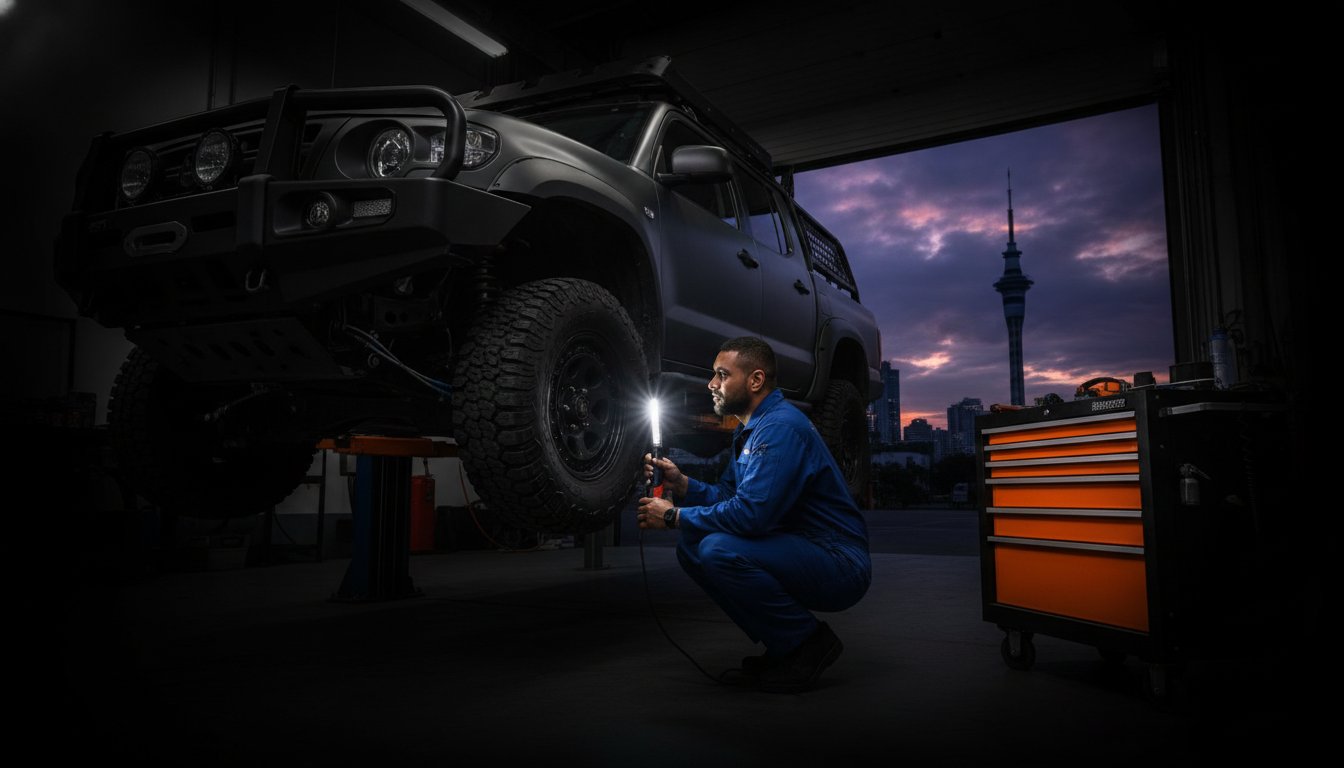
Detecting hidden damage requires more than a visual walkthrough. A dedicated 4WD pre-purchase inspection Auckland involves getting hands-on with the vehicle’s protective armour. We look specifically for “chassis twist.” This occurs when a rig has been subjected to excessive torque from heavy towing or overloaded roof racks. While a vehicle might look straight to the untrained eye, a twisted frame leads to permanent alignment issues and uneven tyre wear. These structural nuances are often overlooked by official Warrant of Fitness (WoF) standards, which prioritise immediate safety over long-term structural integrity.
The “bash plate” reveal is one of the most telling parts of our process. We remove these protective covers to see what the seller might be hiding. Bashed differential housings, crushed sumps, or significant gouges in the transmission pan tell a story of hard off-road use. We also examine suspension bushings. Polyurethane components are popular for their durability, but they can perish or “flog out” when exposed to harsh, corrugated tracks. If the bushings are squeaking or show visible cracking, it is a clear sign the vehicle has been pushed to its limits.
Snorkels and diff breathers are other critical areas. Many owners install these for aesthetics, but we verify their functionality. A snorkel that isn’t properly sealed to the airbox provides zero protection during a river crossing. Similarly, we check that diff breathers are routed high enough to prevent water ingress into the gear oil. If these systems are purely cosmetic, the engine and drivetrain remain vulnerable to catastrophic water damage.
Rust and Corrosion Hotspots
Auckland’s coastal air is a silent killer for 4×4 chassis. We pay close attention to the rear cross-members and spring hangers, where salt spray and mud tend to settle. Rust often hides behind plastic wheel arch liners or inside the chassis rails themselves. If mud is trapped inside the rails for months, it holds moisture against the metal, causing internal rot that isn’t visible from the outside. We use specialised tools to probe these cavities and ensure the metal hasn’t been compromised by “Auckland salt” or neglect.
Winch and Recovery Point Safety
If the rig comes with a winch, we test the motor operation and inspect the cable or synthetic rope for fraying. A seized winch is a costly repair and a safety hazard. We also verify that the recovery points are actually rated for snatch recoveries. Many buyers mistake factory tie-down loops for recovery points, which can be lethal if they fail under tension. Finally, we check the front of the chassis near the bullbar mounts for stress fractures. These are common on vehicles that have spent significant time on rough terrain with heavy front-end accessories.
Evaluating 4×4 Accessories and GVM Compliance
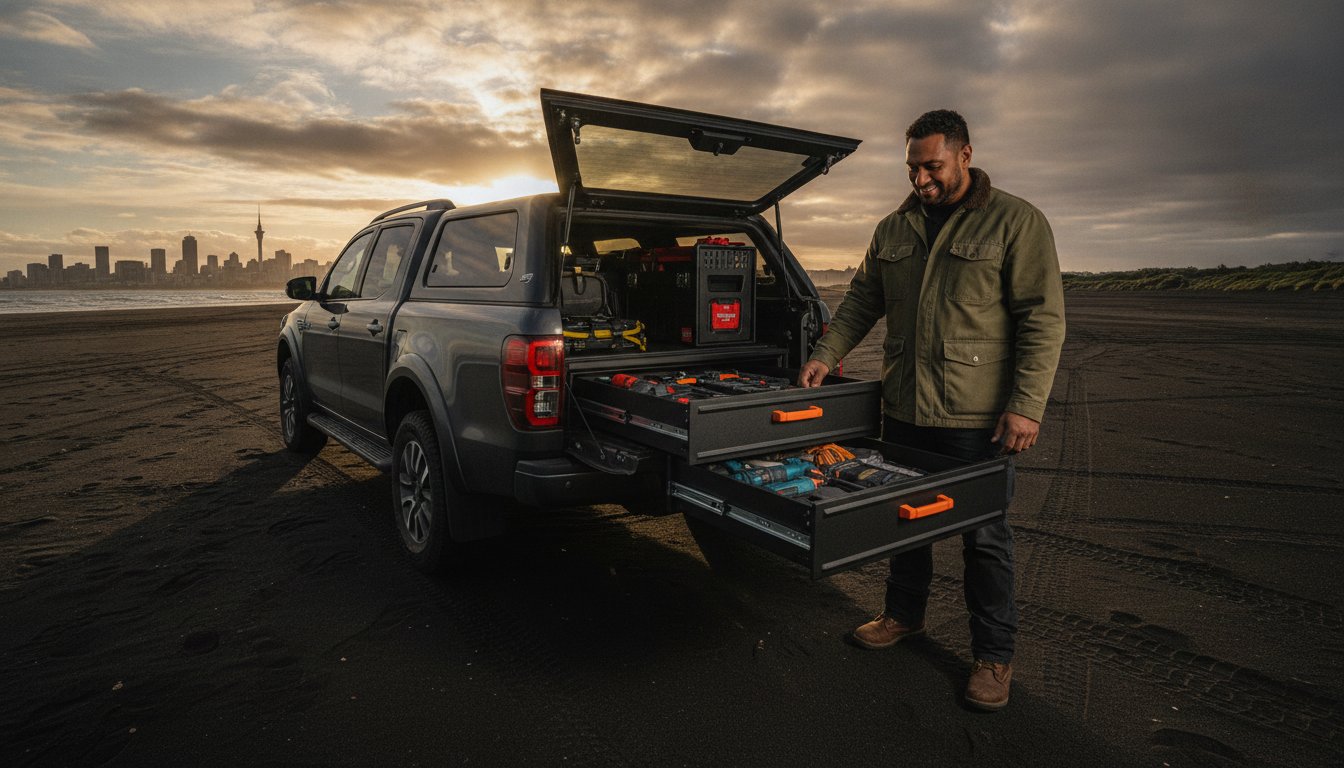
Buying a modified rig involves more than just tallying up the retail cost of the accessories. Every addition, from steel bullbars to heavy-duty canopies and drawer systems, impacts the Gross Vehicle Mass (GVM). If a vehicle is loaded with touring gear but hasn’t had a formal GVM upgrade, it may be operating outside its legal weight limit. This doesn’t just affect handling and braking distances; it can void your insurance policy entirely. A thorough 4WD pre-purchase inspection Auckland ensures that the vehicle is legally compliant and safe for its intended load before you commit to the purchase.
Suspension quality is another critical factor. We distinguish between high-end, engineered systems and budget kits that often lack proper damping or spring rate calibration. A poor-quality lift kit usually results in a harsh ride and puts unnecessary stress on CV joints and bushes. Similarly, we verify tyre sizes against New Zealand regulations. You can increase tyre diameter by up to 5% over factory specifications without needing special certification. Any larger, and the vehicle requires a Low Volume Vehicle (LVV) certificate to remain road legal. If those modifications aren’t documented, you’re buying a liability.
The Risk of Illegal Modifications
Budget shortcuts are common in the second-hand market. We frequently find “coil spacers” or “extended shackles” used to gain height without the expense of a proper suspension kit. These modifications are often dangerous and will result in an immediate WoF failure. Any suspension lift exceeding 50mm, or any body lift of any height, requires an LVV certification plate. If that plate is missing, you’re looking at a costly certification process or the expense of returning the vehicle to stock. Ensure your next purchase is fully compliant by booking a specialist GVM and modification audit to protect your investment.
Performance Upgrades: ECU Remaps and Exhausts
Performance modifications carry their own set of risks. An ECU remap can provide excellent power gains, but if executed poorly, it increases exhaust gas temperatures and shortens engine life. We also check for DPF deletes. Removing a Diesel Particulate Filter is illegal for road-going vehicles in New Zealand and will cause the vehicle to fail future inspections. Finally, we inspect aftermarket exhausts for secure mounting and structural integrity. A vibrating or poorly hung exhaust can crack manifolds or rub against fuel lines, creating a significant safety hazard that a generalist mechanic might overlook.
Booking Your Specialist 4WD Inspection at Motortech 4X4
Motortech 4X4 has established itself as the definitive authority for enthusiasts and fleet operators seeking a 4WD pre-purchase inspection Auckland. We aren’t just general mechanics. Our technicians are seasoned off-roaders who understand exactly how a rig should perform under pressure. This practical experience allows us to identify subtle drivetrain vibrations or suspension issues that a city-based workshop would simply miss. Our comprehensive report provides a transparent breakdown of the vehicle’s mechanical health, modification compliance, and structural integrity.
Choosing a specialist workshop means receiving a report that goes beyond a simple list of faults. We provide a total solution. Because we operate a high-performance workshop, we can provide immediate, accurate quotes for any necessary repairs or desired upgrades identified during the inspection. Whether it’s a leaking diff seal or a requirement for a legal GVM upgrade, you’ll have all the data needed to negotiate the final price or decide if the vehicle is the right fit for your requirements. This level of diligence protects you from inheriting someone else’s mechanical nightmares.
Our Auckland Workshop Location and Process
Our booking process is designed for efficiency, catering to buyers and sellers located across the Auckland region. Once the vehicle is on the hoist, we perform a methodical audit that covers every technical component discussed in this guide. After the inspection, we provide expert, direct advice on whether to proceed with the purchase or walk away. For those who do buy, our 4×4 Servicing department is available to organise a proactive maintenance schedule, ensuring your new investment remains reliable for years to come.
Next Steps for Your New Rig
Securing the vehicle is just the beginning of the journey. Our facility is equipped to handle complete fleet fit-outs and individual customisations. From installing snorkels and winches to complex ECU remaps and ADAS calibrations, we ensure every modification is technically sound and legally compliant. We value technical excellence and customer safety above all else, positioning ourselves as your long-term partner in vehicle performance and protection. Our “one-stop” mentality ensures that your vehicle is always prepared for the terrain ahead.
Take the guesswork out of your next 4×4 purchase. Book your 4WD pre-purchase inspection today and ensure your new rig is ready for the track, not the scrap heap.
Secure Your Next Adventure with Confidence
Investing in a used 4×4 is a significant commitment that requires more than a cursory glance and a standard safety check. By focusing on drivetrain integrity, GVM compliance, and identifying hidden off-road damage, you protect yourself from inheriting a costly mechanical liability. Understanding the difference between a city-driven vehicle and one that has been subjected to harsh coastal environments or heavy towing is essential for long-term reliability. Our guide has highlighted why verifying modification legality and structural health is the only way to avoid a hidden money pit.
As Auckland’s leading 4×4 modification specialists, Motortech 4X4 provides the technical expertise required to evaluate complex rigs. Our technicians are experts in GVM upgrades and ADAS calibration, ensuring that every aftermarket modification is both safe and road legal. Booking a comprehensive 4WD pre-purchase inspection Auckland ensures you receive a detailed report designed specifically for enthusiasts. Don’t leave your next purchase to chance; rely on a partner who understands the precision required for high-performance off-roading.
Book Your Specialist 4WD Pre-Purchase Inspection at Motortech 4X4 today. We look forward to helping you get behind the wheel of a rig that is truly fit for purpose.
Frequently Asked Questions
Is a 4WD pre-purchase inspection different from a standard car check?
Yes, a 4WD pre-purchase inspection Auckland is significantly more technical than a standard roadworthy check. While a general inspection focuses on basic safety, our audit scrutinises dual-range transfer cases, locking differentials, and the integrity of aftermarket modifications. We examine components like CV joints and universal joints that are subjected to extreme stress during off-road use, ensuring the vehicle is mechanically sound for more than just suburban driving.
Can you tell if a 4WD has been used for heavy off-roading?
We identify heavy off-road use by searching for physical indicators that a simple valet cannot hide. Our technicians look for fine silt trapped deep within chassis rails, evidence of “sand blasting” on the underbody, and gouges on the bash plates or diff housings. These “battle scars” provide a clear history of the vehicle’s past terrain and allow us to assess the likely wear on the drivetrain and suspension systems.
Do you check if the lift kit and bullbar are legal in NZ?
Verification of modification legality is a core part of our service. We check that suspension lifts and tyre sizes comply with current New Zealand regulations, identifying where Low Volume Vehicle (LVV) certification is mandatory. If a bullbar or snorkel is incorrectly mounted or lacks the necessary compliance, we flag these as critical issues that could lead to insurance complications or Warrant of Fitness failures.
How long does a specialist 4WD inspection take at your Auckland workshop?
A specialist 4WD inspection at our workshop is a methodical process that generally takes several hours to complete. This timeframe allows our technicians to perform a comprehensive diagnostic scan, remove bash plates for a thorough underbody audit, and conduct a rigorous road test. We prioritise precision over speed to ensure that every technical detail, from GVM compliance to cooling system health, is accurately documented.
What happens if the inspection finds a major fault?
If a major fault is identified, we provide a clear technical explanation along with an immediate quote for the necessary repairs. This information serves as vital negotiation leverage for the final purchase price. Because we are a full-service workshop, we can also advise whether the fault is a simple fix or a systemic issue that suggests you should walk away from the deal entirely.
Can you inspect a vehicle at the seller’s house in Auckland?
Inspections must be conducted at our specialised Auckland facility to ensure the highest standard of accuracy. A mobile service cannot provide the necessary access to heavy-duty hoists, ADAS calibration tools, or advanced diagnostic equipment required for a forensic 4WD audit. Bringing the vehicle to our workshop ensures we can inspect the chassis and drivetrain under optimal conditions with all specialist tools at hand.
Do you provide a written report after the inspection?
Every inspection concludes with a comprehensive written report detailing the vehicle’s mechanical and structural condition. This document covers everything from engine health and transmission fluid quality to the safety of auxiliary wiring and dual-battery setups. It provides a permanent record of the vehicle’s state at the time of purchase, which is invaluable for both insurance purposes and future maintenance planning.
Is it worth getting an inspection on a relatively new 4WD?
Obtaining a professional 4WD pre-purchase inspection Auckland is essential even for near-new vehicles. Late-model rigs are often fitted with complex electronic systems and ADAS technology that can be easily compromised by poor-quality modifications or a single hard weekend off-road. We ensure that even a relatively new vehicle meets factory standards and that any fitted accessories, such as canopies or winches, have been installed correctly and safely.