
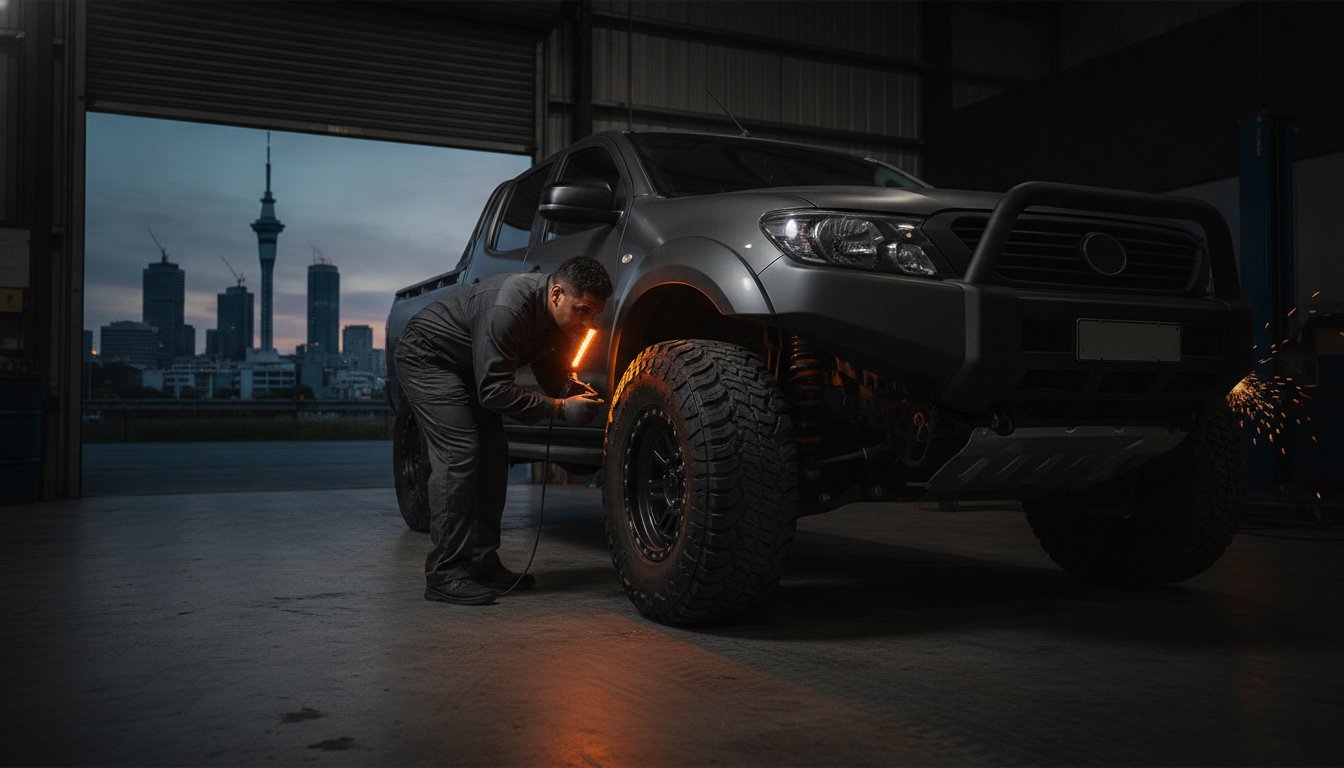
Did you know that nearly 40% of vehicles in New Zealand fail their first Warrant of Fitness inspection? For Aucklanders, a ‘fail’ sticker isn’t just a technical setback; it’s a logistical nightmare involving hours of crawling through motorway traffic for a re-test. If you’ve invested in performance upgrades or fleet modifications, the stakes are even higher. Between the latest 2026 regulations and strict LVVTA requirements, securing WOF repairs Auckland drivers can rely on is the only way to avoid being sidelined by a minor technicality.
We understand the frustration of uncertainty regarding lift kit compliance or bullbar safety standards. You deserve to know that your rig is both capable and road-legal. This guide promises to demystify the 2026 WOF process, including the new biennial inspection cycles for newer vehicles and the increased NZ$350 fines for expired certificates. We’ll provide a professional pre-inspection checklist and a clear breakdown of modern ADAS requirements, ensuring you pass your inspection the first time with total confidence in your vehicle’s compliance.
Key Takeaways
- Understand the 2026 Waka Kotahi inspection frequency changes and why structural integrity remains the most critical factor for Auckland utes and fleet vehicles.
- Navigate the legalities of 4×4 modifications by learning how LVVTA certification affects your suspension, bullbars, and wheel upgrades.
- Utilise our professional pre-inspection checklist to spot common failures like lighting faults and insufficient tyre tread before your appointment.
- Learn why choosing a specialist for WOF repairs Auckland avoids the frustration of traffic-heavy re-tests by resolving technical issues on-site.
- Identify how modern safety features, including ADAS calibration, are now integrated into the standard inspection process for 2026.
What is a WOF and Why is it Critical for Auckland Drivers?
A Warrant of Fitness (WoF) is a mandatory safety audit regulated by Waka Kotahi (NZTA) to ensure every light vehicle on New Zealand roads meets basic safety requirements. It’s a snapshot of roadworthiness at a specific moment in time. While many drivers view it as a bureaucratic hurdle, its core purpose is preventing mechanical failure on public roads. If your vehicle fails, securing professional WOF repairs Auckland wide is essential to return your rig to a compliant state.
It’s vital to distinguish a WOF from a comprehensive mechanical service or a pre-purchase inspection. A WOF check is strictly limited to safety items like tyre tread, brake performance, and structural integrity. It doesn’t assess the health of your engine or the longevity of your transmission. For those driving modified utes or fleet vehicles, a WOF is the bare minimum legal standard, whereas a service focuses on performance and reliability. Relying solely on a WOF to monitor your vehicle’s health is a risk that can lead to expensive mechanical breakdowns later on.
WOF Frequency and 2026 Regulation Updates
Major changes to inspection frequencies take effect on 1 November 2026. For new light vehicles, the second inspection is now required after four years rather than three. Vehicles aged between 4 and 14 years are moving toward a two-yearly cycle, provided they were first registered on or after 1 November 2019. However, vehicles over 14 years old must still undergo an annual inspection. This is a shift from the previous six-monthly requirement for older cars, placing more responsibility on owners to maintain their vehicles between checks. Driving with a warrant that has been expired for more than two months now carries an increased infringement fee of NZ$350.
The Auckland Factor: Why Local Conditions Matter
Auckland presents unique challenges for vehicle maintenance. The relentless stop-start nature of motorway traffic accelerates wear on brake pads and clutch systems, often leading to unexpected failures during an inspection. Additionally, Auckland’s coastal geography means vehicles are constantly exposed to salt-laden air. This significantly increases the risk of chassis corrosion and structural rust, particularly for 4x4s used near the coast. Maintaining a valid warrant is also a prerequisite for most insurance policies in New Zealand. If you’re involved in an accident with an expired WOF, your insurer may decline your claim, leaving you personally liable for damages. Professional WOF repairs Auckland specialists provide the technical expertise needed to address these local environmental impacts before they become costly safety hazards.
The Comprehensive Auckland WOF Checklist: What is Inspected?
The inspection process is a rigorous physical and electronic audit designed to identify safety-critical defects. Inspectors begin with the vehicle’s structural integrity. This involves a meticulous check for rust or corrosion, particularly within 150mm of structural mounting points or suspension anchors. For Auckland 4×4 owners, secure towing mounts and chassis condition are high-priority areas. Any sign of structural fatigue or uncertified welding on the frame will result in an immediate failure, requiring specialised WOF repairs Auckland workshops must execute to exact NZTA standards.
Tyre condition and braking systems represent the most common fail points in New Zealand. Your tyres must maintain a minimum tread depth of 1.5mm across the entire circumference. However, inspectors also look for sidewall integrity, ensuring there are no bulges, deep cuts, or exposed cords. Braking systems are subjected to a decelerometer test to measure efficiency. Technicians also perform a visual inspection of hoses, cylinders, and drums to check for hydraulic leaks. If you are unsure about your vehicle’s current status, you can Renew your WoF through an authorised agent after ensuring these core components are sound.
Safety Systems and Interior Standards
The interior inspection focuses heavily on occupant protection. Seatbelts are checked for fraying, secure buckling, and correct retractor tension. Any illuminated SRS or airbag warning lights on the dashboard are considered safety defects. Visibility is equally critical. Windscreen chips or cracks in the critical vision area, along with inefficient wiper blades or faulty washers, will prevent a successful pass. Ensuring your lighting and signalling systems display the correct colour and orientation is a simple but vital step in the process.
Modern Tech: ADAS and Sensor Compliance
As of late 2026, WOF inspections have expanded to include checks for warning lights on Advanced Driver Assistance Systems (ADAS). This includes Automatic Emergency Braking (AEB) and Lane Keep Assist (LKA) where fitted. These systems rely on precise sensor and camera alignment. If you have recently installed a suspension lift or replaced a windscreen, your ADAS requires professional calibration to remain compliant. Sensors must be unobstructed by bullbars or accumulated grime to function correctly. For those managing a trade fleet or a modified rig, our team at Motortech 4X4 provides the technical ADAS calibration and prep work needed to navigate these modern requirements without the hassle of a re-test.
Addressing these technical requirements before your appointment reduces the risk of being sidelined by WOF repairs Auckland inspectors often mandate. A proactive approach ensures your vehicle remains a reliable asset on the road.
Modified Vehicles and the WOF: Staying Legal in Auckland
Auckland’s passion for modified utes and 4x4s is unmatched, but the transition from a showroom floor to a custom-built rig introduces complex compliance hurdles. The intersection of performance accessories and official WoF safety standards is where many owners get caught out. In 2026, the ‘she’ll be right’ approach to structural changes is a guaranteed way to fail your inspection. Testing stations are increasingly vigilant regarding non-certified modifications, particularly those affecting a vehicle’s centre of gravity or steering geometry. If your customisations lead to a failure, you’ll need specialised WOF repairs Auckland experts can provide to rectify the issues or facilitate the necessary certification.
Significant modifications often require a Low Volume Vehicle Technical Association (LVVTA) certification. This process ensures that any changes to the chassis, suspension, or braking systems meet stringent engineering benchmarks. Common pitfalls include fitting oversized tyres that rub on the bodywork or installing uncertified seat mounts. These aren’t just minor technicalities; they’re safety-critical failures that prevent a warrant from being issued. Securing a ‘fail’ for these reasons often means a long wait for a certifier, making it vital to get the build right before heading to the testing station.
Suspension Lifts and GVM Upgrades
Suspension kits are the most popular modification for Auckland rigs, but they come with strict legal limits. Generally, a lift of up to 50mm is permissible without an LVV certificate, provided the components are direct replacements and don’t compromise safety. However, once you combine a lift with a Gross Vehicle Mass (GVM) upgrade, additional certification is mandatory. This is especially relevant for trade fleets carrying heavy loads. Professional installation is non-negotiable here. If your suspension geometry is out of alignment or uses substandard fasteners, you won’t just fail your WOF; you’ll risk the structural integrity of your vehicle under load.
Bullbars, Snorkels, and External Accessories
External accessories must meet specific pedestrian protection and visibility rules. Bullbars must be airbag-compatible to ensure the vehicle’s SRS system functions as intended during a collision. If a bar isn’t correctly rated, it’s an instant fail. Similarly, snorkels must be fitted so they don’t obstruct the driver’s forward or side vision, particularly the view of the A-pillar. Roof racks and lighting bars also face scrutiny. They must be securely mounted and kept within height restrictions. If your lighting bar is wired incorrectly or positioned too high, it creates a compliance issue that requires WOF repairs Auckland technicians to resolve before you can legally return to the road.
How to Pass Your WOF First Time: Pre-Inspection Tips
Securing a pass on your first attempt is the most efficient way to manage vehicle compliance. Before heading to your appointment, perform a systematic walk-around. Test every external light, including high beams, indicators, and the high-stop brake lamp. If a bulb is out, replace it immediately; it’s a simple fix that prevents a formal failure. Use the 20c coin trick to verify tyre tread depth. If the base of the ’20’ is visible when placed in the groove, you’re likely below the 1.5mm legal limit. Ensure tyre pressures are set to the manufacturer’s specification, as uneven pressure can affect the results of a brake decelerometer test.
A critical but often overlooked step is cleaning your vehicle. A muddy underbody is a common reason for a ‘Refusal to Inspect’. If an inspector can’t clearly see the chassis or suspension components due to caked-on dirt, they won’t proceed. This is particularly relevant for Auckland 4×4 owners who’ve recently been off-road. A thorough high-pressure wash of the undercarriage reveals leaks or structural issues that might otherwise require urgent WOF repairs Auckland technicians must address. Test the horn, wipers, and washers before you leave. Wipers should clear the screen without streaking, and the washer jets must hit the glass effectively.
The 5-Minute Interior Audit
Check all seatbelts for smooth operation. Pull each belt sharply to ensure the locking mechanism engages and verify that the buckles click securely. The dashboard must be free of warning lights. If the ABS, SRS, or Engine Check lights stay on, the vehicle will fail. Finally, remove any clutter from the parcel shelf or dashboard. Obstructions to rear visibility are a safety hazard and a frequent fail point during the inspection process. Ensuring a clear cabin demonstrates a well-maintained vehicle to the inspector.
Booking and Logistics in Auckland
Organise your inspection up to 28 days before the expiry date. This preserves the original anniversary, effectively providing a 13-month warrant. You have two main options: a dedicated pass-fail testing station or a mechanical workshop. Testing stations offer no repair services. If you fail, you’re forced to navigate Auckland traffic to find a repairer and then return for a re-test. A specialist workshop can identify and fix issues on-site, saving significant time. For those managing trade fleets or modified rigs, our fleet servicing and WOF prep provide a one-stop solution to maintain compliance and avoid the hassle of WOF repairs Auckland drivers often face after a failed test.
Why Choose Motortech 4X4 for Your Auckland WOF Prep
Choosing a specialist for your pre-inspection work eliminates the ‘fail-repair-retest’ cycle that often plagues Auckland drivers. Generic testing stations are built for high volume, not for the technical nuances of modified 4x4s or heavy-duty trade vehicles. At Motortech 4X4, we provide a definitive source of expertise. We don’t just identify faults; we resolve them on-site. This ‘one-stop’ approach ensures that any necessary WOF repairs Auckland inspectors might flag are handled by technicians who understand the intersection of performance and legal compliance.
Our workshop is equipped for the complexities of 2026 standards, including ADAS calibration and GVM upgrades. If your rig features a suspension lift or a custom bullbar, a standard garage might lack the specialised engineering knowledge required for LVVTA certification. We bridge that gap. Our team ensures your electronic safety systems are correctly calibrated and your structural modifications meet every NZTA benchmark. This meticulous attention to detail keeps your vehicle safe for both the rugged tracks of the North Island and the daily motorway commute.
Beyond the Sticker: Comprehensive Vehicle Care
A Warrant of Fitness is a legal minimum, but our services aim for total vehicle optimisation. Many clients choose to combine their WOF prep with a transmission flush or an ECU remap to enhance performance and efficiency. For Auckland businesses and tradies, we offer professional fleet servicing solutions that minimise downtime. Whether you need specialised advice on GVM upgrades or a complete suspension overhaul, our industry experts provide grounded, results-oriented solutions. We view vehicle maintenance as a complete package, ensuring every component from the snorkel to the tow bar is fit for purpose.
Book Your Auckland WOF Assessment Today
Getting your vehicle ready for its next inspection is straightforward. Contact our Auckland service centre to secure a booking that fits your schedule. For a seamless experience, ensure your vehicle is clean and bring any relevant certification documents for existing modifications. Our fast-paced, organised workflow ensures you aren’t left waiting, avoiding the need for secondary WOF repairs Auckland workshops often have to squeeze in at the last minute. Trust the authoritative experts to handle your compliance needs with precision and reliability. Ensure your rig is road-legal; book your WOF prep with Motortech 4X4 today!
Secure Your Road-Legal Status for 2026 and Beyond
Navigating the 2026 Waka Kotahi updates requires a proactive approach to vehicle maintenance. While inspection frequencies have shifted for many light vehicles, the technical standards for structural integrity and ADAS functionality are more precise than ever. Ensuring your modified ute or trade fleet meets these benchmarks is essential for both legal compliance and insurance validity. By performing basic pre-checks and understanding the specific requirements for your accessories, you eliminate the risk of unexpected failures and the frustration of Auckland traffic during re-tests.
If your vehicle requires WOF repairs Auckland wide, choosing a provider with full mechanical repair capabilities is the only way to avoid the logistical burden of multiple testing appointments. As Auckland 4×4 specialists and LVVTA compliance experts, we ensure every modification on your rig is safe, functional, and fully certified. Don’t leave your roadworthiness to chance at a generic testing station when you can rely on professional, specialised expertise.
Book your professional WOF inspection at Motortech 4X4 Auckland today. We’re here to help you stay compliant and ready for your next adventure.
Frequently Asked Questions
How much does a WOF cost in Auckland in 2026?
A standard car Warrant of Fitness (WOF) inspection in Auckland typically ranges from NZ$70 to NZ$95 as of July 2026. For example, VTNZ currently charges approximately NZ$89, while the AA offers rates between NZ$76 and NZ$85 depending on membership status. Independent workshops may offer competitive rates starting from NZ$70, though prices vary based on the vehicle type and the complexity of the inspection required.
What happens if my vehicle fails its WOF inspection?
If your vehicle fails, the inspector will issue a check sheet outlining the safety defects that must be resolved. You have 28 days to complete the necessary repairs and return for a re-inspection; if you return to the same site within this window, the re-test is often free or provided at a reduced cost. During this time, the vehicle should only be driven to a workshop for repairs or back to the testing station, as it is technically no longer roadworthy.
Can I drive my vehicle if the WOF has expired but I have a booking?
No, it is illegal to drive a vehicle on public roads with an expired WOF, regardless of whether you have an appointment booked. The only legal exception is if you are driving directly to a repairer or a testing station for the purpose of obtaining a new warrant. Be aware that as of late 2026, the infringement fee for driving with a warrant expired for more than two months has increased to NZ$350.
Do I need an LVV certificate for my 4×4 lift kit to pass a WOF?
You generally require a Low Volume Vehicle (LVV) certificate if your suspension lift exceeds 50mm or involves significant changes to the vehicle’s original geometry. Modifications like body lifts or uncertified structural changes are common fail points at testing stations. If your rig is flagged for these issues, securing WOF repairs Auckland specialists provide is the most efficient way to ensure your modifications meet LVVTA safety standards for a successful pass.
How long does a WOF inspection usually take?
A standard WOF inspection typically takes between 30 and 45 minutes to complete. This timeframe allows the technician to perform a full physical audit of the lights, tyres, brakes, and structural integrity. If your vehicle is a complex 4×4 or part of a commercial fleet, the process might take slightly longer to ensure all specialised accessories and ADAS sensors are functioning within the legal safety parameters.
Will a cracked windscreen result in an automatic WOF failure?
A cracked windscreen will result in a failure if the damage is located within the critical vision area or exceeds specific size limits. Generally, any crack longer than 25mm or a chip larger than 10mm in the driver’s direct line of sight is a safety violation. Inspectors also check for delamination and scratches that might impair visibility during night driving or in heavy rain.
Does a WOF cover the mechanical health of my engine?
No, a WOF is strictly a safety inspection and does not assess the internal mechanical health of your engine or transmission. It focuses on items like seatbelts, braking efficiency, and structural rust rather than oil quality or engine longevity. To ensure your vehicle remains reliable, you should book a comprehensive service alongside your WOF to address internal mechanical wear that a safety inspector won’t see.
Can I get a WOF for my trailer or caravan at Motortech 4X4?
We specialise in comprehensive WOF prep and WOF repairs Auckland for 4x4s, light vehicles, and commercial fleets. While we focus on the mechanical and structural compliance of motor vehicles, we can assess the towing mounts and lighting systems of your rig to ensure they are safe for hauling. For specific trailer or caravan warrant stickers, we recommend checking with an authorised testing station after we have verified your vehicle’s towing integrity.