Did you know that nearly 23% of modified vehicles fail weight inspections because of poorly planned upgrades? It is a common trap when researching ute fitouts Auckland; adding bullbars, winches, and canopies without considering the impact on your Gross Vehicle Mass (GVM). You likely recognise the frustration of a rig that feels sluggish under load or the anxiety of wondering if your latest modifications will pass a Warrant of Fitness under the strict 2026 LVVTA and ADAS regulations.
We believe your vehicle should be a precision tool, not a legal liability. This guide will teach you how to execute a fully engineered, compliant fitout that balances heavy-duty storage with mechanical performance. You will learn about the critical 40mm suspension rebound rules, the November 2026 ADAS calibration requirements, and how to build a setup that survives the Auckland bush while remaining completely road-legal. We are moving beyond simple accessory bolting to a total engineering solution that ensures your ute handles as well as it looks on the coast or the worksite.
Key Takeaways
- Learn why a successful build starts with a defined objective, treating your vehicle as an integrated ecosystem rather than a collection of bolted-on parts.
- Discover how GVM upgrades and professional suspension kits provide the foundation needed to handle heavy loads without compromising safety or handling.
- Evaluate the best storage solutions for your needs, comparing the security and accessibility of canopies, hardlids, and drawer systems for work or play.
- Understand the complex landscape of ute fitouts Auckland by mastering the latest LVVTA standards and mandatory ADAS calibration requirements.
- Find out how a professional one-stop-shop in Wairau Valley streamlines your project by combining mechanical expertise with high-end accessory fitting.
Planning Your Custom Ute Fitout in Auckland
Building a high-performance Ute (vehicle) is a technical engineering exercise, not a simple shopping trip. Many owners approach ute fitouts Auckland as a series of disconnected purchases, buying a bullbar one month and a canopy the next. This fragmented approach often leads to sagging suspension, compromised handling, and expensive rework. A professional fitout treats the vehicle as a holistic ecosystem where every modification influences the performance and safety of the next.
The “One-Stop-Shop” advantage is central to a successful build. By integrating mechanical expertise with accessory installation in a single Wairau Valley workshop, you ensure that structural upgrades like GVM increases are calibrated alongside your storage solutions. This prevents the common frustration of visiting multiple shops to fix issues that should have been addressed during the initial planning phase.
Setting Your Build Objectives
Your primary objective dictates every component choice. A ‘site-ready’ tradie ute requires rapid tool access, high-payload durability, and secure storage for expensive equipment. In contrast, a ‘track-ready’ touring rig prioritises remote self-sufficiency, weight distribution for off-road stability, and long-range comfort. If your vehicle serves as a mixed-use ‘daily driver’, the challenge is balancing heavy-duty capability with urban drivability. You must prioritise upgrades based on immediate safety needs, such as braking and suspension, before moving to lifestyle additions. Constant loads from heavy canopies or permanent tool setups will accelerate wear on factory parts, making early mechanical intervention essential for long-term reliability.
The Auckland Terrain Factor
Auckland’s diverse geography demands specific hardware choices that generic online guides often overlook. Local knowledge is vital when selecting gear for our unique conditions:
- West Coast Sand: Driving at Muriwai or Pollock requires tyres with excellent flotation and snorkels positioned to avoid salt spray and fine sand ingestion. Rust protection is non-negotiable for vehicles frequently exposed to the Tasman Sea’s salt air.
- Regional Forest Tracks: The slippery, tight clay tracks found in the Hunuas or Northland forests demand aggressive mud-terrain or high-quality all-terrain tread patterns. These environments also require robust underbody protection to shield the transmission and sump from hidden stumps and rocks.
- Urban Compliance: Auckland’s strict enforcement of WOF standards means your snorkel height, tyre poke, and lighting must remain within legal limits to avoid unwanted attention during your daily commute.
Choosing the right ute fitouts Auckland specialist means working with a team that understands these local environments. They can recommend the exact suspension valving and tyre compounds needed to transition seamlessly from the Southern Motorway to a remote North Island campsite.
The Foundation: Suspension, GVM Upgrades, and Protection
A professional build begins with the chassis. It’s a common mistake to prioritise internal shelving while ignoring the mechanical strain of that added weight. When planning ute fitouts Auckland, the suspension system is your most critical component. Factory springs are designed for a compromise between unladen comfort and occasional loads; they are rarely equipped to handle the constant, static weight of a fully kitted work or touring rig. Without upgrading the foundation, your vehicle’s handling, braking, and safety are compromised before you even hit the road.
Suspension Kits and GVM Upgrades
High-quality suspension kits do more than just provide a lift. They improve approach and departure angles, which is vital for navigating the steep, rutted tracks found across the North Island. However, a lift alone isn’t enough if your vehicle is exceeding its legal weight limit. This is where a GVM (Gross Vehicle Mass) upgrade becomes essential. If your ute is constantly laden with heavy canopies, steel trays, or towing equipment, you risk exceeding the manufacturer’s limit. This affects braking performance, structural integrity, and insurance validity.
Compliance is non-negotiable. Modifications must adhere to LVVTA Standards to ensure the vehicle remains safe and road-legal. We match specific spring rates to your vehicle’s unique load profile. For example, a ute with a steel bullbar and high-capacity winch requires a significantly different front-end spring rate than a stock vehicle. Getting this calibration right ensures the nose doesn’t dive under heavy braking or sag over time. If you’re unsure about your current weight, a professional assessment of your GVM requirements can prevent long-term mechanical failure.
Body Protection and Recovery Points
Protection gear forms the second layer of your foundation. The ‘Big Three’ include bullbars, side rails, and underbody armour. A well-engineered bullbar must balance front-end protection with airbag compatibility and essential airflow to the radiator. In the NZ bush, you also need rated recovery points. These aren’t just hooks; they are engineered points designed to withstand the immense forces of a winch recovery. Using non-rated points during a recovery is a significant safety risk that can lead to catastrophic hardware failure.
Side steps and rock sliders serve a dual purpose. They protect your sills from Auckland’s rock hops and construction site debris while providing a stable step for accessing roof racks. Finally, underbody armour shields vulnerable components like the transmission and sump from impact damage. When selecting these parts, we prioritise brands that offer NZ-wide warranty support. This ensures that if you’re touring the South Island and encounter an issue, you have the backing of a national network for peace of mind.
Functional Storage: Canopies, Drawers, and Racks
Storage is the most visible aspect of ute fitouts Auckland, but its success depends entirely on the mechanical foundation established in the previous sections. A trade fleet has vastly different requirements than a remote touring vehicle. While a tradie needs rapid access to power tools and heavy materials, a tourer requires a dust-proof, organised environment for camping gear and long-term food storage. The right storage solution doesn’t just hold your gear; it protects your investment from the elements and opportunistic theft.
Choosing between a canopy and a hardlid involves a technical trade-off between volume and aerodynamics. Canopies provide the maximum secure volume, which is essential for housing internal shelving or large drawer systems. Hardlids offer a sleeker profile and slightly better fuel economy, but they limit the height of the items you can carry. Both options must be professionally fitted to ensure complete weatherproofing against Auckland’s unpredictable coastal rain. Poorly installed seals will lead to moisture ingress, potentially damaging expensive electronics or rusting hand tools.
The Ultimate Touring and Lifestyle Setup
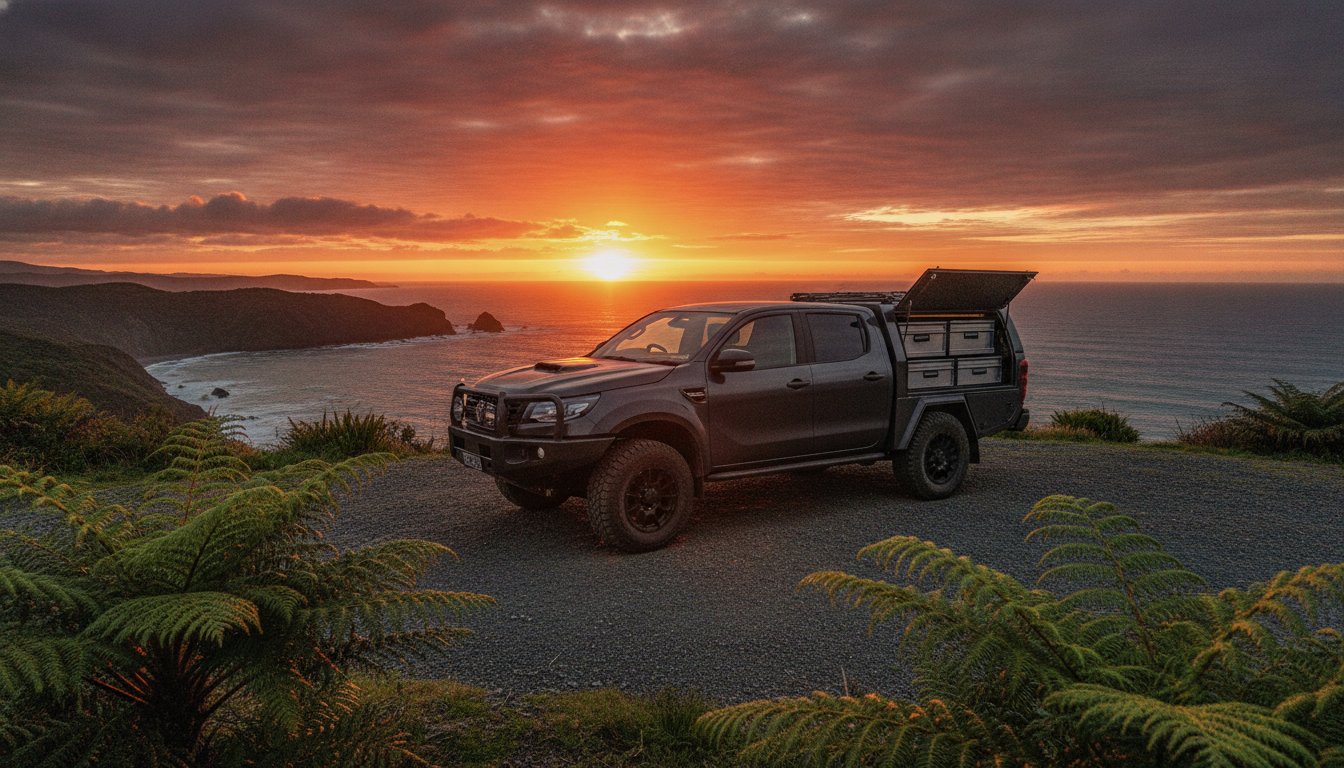
Organised travel relies on high-quality drawer systems that categorise recovery gear, tools, and kitchen supplies. This prevents heavy items from shifting on rough tracks, which can compromise vehicle balance. To support extended trips in the NZ outdoors, we integrate dual battery systems and solar setups. These are vital for powering 12V fridges and site lighting without draining your starting battery. Maximising roof space is also a priority for lifestyle builds. Specialised roof racks are engineered to carry heavy rooftop tents, recovery boards, and kayaks, keeping the main tray clear for heavier items like water tanks or fuel cans.
Modern builds with high-mounted roof racks or heavy canopies must account for safety technology. As detailed in this ADAS Calibration research, any modification that alters the vehicle’s pitch, height, or weight distribution can affect sensor accuracy. Ensuring these systems are recalibrated after your storage is installed is a critical safety step.
Commercial Trade and Fleet Fit-outs
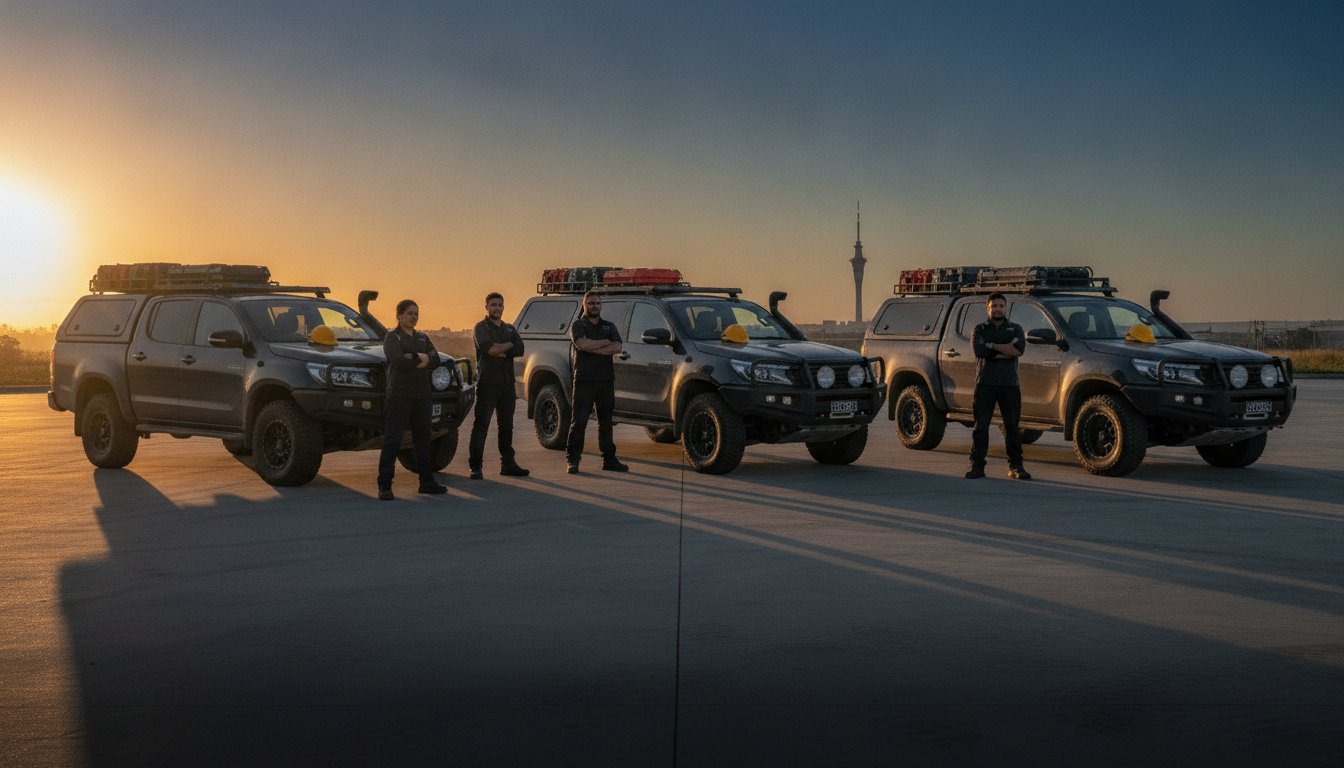
For businesses, consistency across a fleet is key to maintaining reliability and ease of maintenance. Standardising ute fitouts Auckland ensures every driver knows exactly where their equipment is located, which improves on-site efficiency. Essential trade accessories include heavy-duty internal shelving, secure toolboxes, and high-visibility work lighting for early starts. Because trade vehicles often operate at or near their maximum payload, we provide ECU remaps to optimise torque delivery. This adjustment makes the vehicle more responsive and efficient when carrying constant loads, reducing strain on the drivetrain and improving long-term reliability.
Navigating NZ Compliance: LVVTA Standards and ADAS Calibration
Engineering a high-performance vehicle in New Zealand requires more than just mechanical skill; it requires a deep understanding of the legal framework. While previous sections focused on the foundation and storage, those components must exist within the strict boundaries of Waka Kotahi NZTA regulations. When executing ute fitouts Auckland, failing to account for compliance doesn’t just result in a failed Warrant of Fitness (WoF). It can lead to voided insurance policies and significant safety risks on the road.
Understanding LVVTA Certification
Not every modification requires a Low Volume Vehicle (LVV) plate, but the thresholds are precise. To avoid mandatory certification, suspension modifications must ensure the vehicle maintains a minimum of 100mm ground clearance and at least 40mm of suspension rebound travel. If your lift exceeds these limits or involves adjustable height systems, an LVVTA inspector must certify the build. Similarly, tyre circumference must not exceed 5% of the original equipment (OE) size. If you push beyond these technical boundaries without the correct certification, your vehicle is effectively illegal for NZ road use. This is particularly relevant for heavy builds where a GVM of 4,500kg, like the Ford Ranger Super Duty, classifies the ute as a heavy vehicle, subjecting it to an entirely different set of stringent rules compared to a standard 3,350kg Wildtrak.
ADAS Calibration: The Modern Build Essential
Modern utes are packed with Advanced Driver Assistance Systems (ADAS), including lane-keep assist, adaptive cruise control, and autonomous emergency braking. These systems rely on cameras and radar sensors calibrated to the vehicle’s factory height and pitch. When you install a heavy bullbar, add a suspension lift, or fit larger tyres, you change the sensor’s field of vision. Even a slight deviation can cause the system to misinterpret the distance to obstacles, leading to ghost braking or failure to intervene during a collision.
The regulatory landscape is tightening. A new rule effective from 1 November 2026 mandates that a WoF inspection will include a check for ADAS warning lights or malfunctions. If your sensors are out of alignment after a ‘backyard’ install, your vehicle will fail its inspection. Professional ute fitouts Auckland must include on-site calibration using specialised equipment to reset these electronic systems to their new baseline. Ignoring this step compromises the very safety technology you paid for when buying a modern vehicle. To ensure your rig is both capable and completely legal, you should book a professional ADAS calibration and compliance check with a specialist workshop.
Motortech 4X4: Auckland’s One-Stop Shop for Ute Fitouts
Executing a high-performance build requires a unified technical vision. Many owners find themselves caught in a logistical loop, moving their vehicle between accessory fitters, mechanical workshops, and auto-electricians to get the job done. Motortech 4X4 eliminates this inefficiency. By integrating every aspect of ute fitouts Auckland into our Wairau Valley facility, we provide a streamlined path from initial concept to a road-legal, high-performance rig. Our approach treats your vehicle as a single engineered unit, ensuring that every bolt-on accessory is supported by the necessary mechanical calibrations.
Our expertise extends beyond simple installation. We provide total vehicle care that factory dealerships often overlook for modified 4x4s. This includes specialised transmission flushes to handle the increased heat generated by heavy towing and ECU remaps that refine power delivery for laden vehicles. Whether you’re managing a commercial fleet or preparing for a solo North Island expedition, our team ensures your modifications enhance rather than compromise your vehicle’s long-term health. We understand the strain that Auckland’s stop-start traffic and rugged coastal tracks place on a modified drivetrain.
Why Choose Our Wairau Valley Service Centre?
Choosing the right partner means gaining access to industry-leading brands and technical mastery under one roof. We are an authorised M2 Overland outfitter, providing some of the most robust tray and canopy systems available in New Zealand. Because we operate a full mechanical workshop alongside our accessory fitting bay, we understand the structural implications of every upgrade. We don’t just “make it fit”; we ensure it’s built for purpose. This commitment to technical excellence keeps your build legal, safe, and durable enough to withstand the harshest NZ environments.
Start Your Build Journey Today
The process begins with a detailed consultation where we analyse your specific load requirements and terrain goals. We guide you through every stage, from selecting the correct spring rates for your GVM upgrade to finalising LVVTA certification. Our support continues long after the initial build with specialised 4×4 servicing designed for the unique needs of modified vehicles. We monitor the wear on your upgraded components and provide the preventative maintenance required to keep your rig performing at its peak. This holistic care ensures your investment remains reliable whether you’re on the worksite or the West Coast.
Don’t leave your vehicle’s safety and performance to chance. Book your vehicle in with Auckland’s ute fitout specialists today and start engineering your ultimate work or play rig with the experts in Wairau Valley.
Build Your Rig with Technical Precision
A high-performance vehicle is the result of methodical engineering rather than a random collection of accessories. You now understand that successful ute fitouts Auckland depend on a technical foundation where suspension and GVM upgrades support your storage needs. Integrating these mechanical requirements with mandatory ADAS calibrations and LVVTA standards ensures your vehicle remains safe, legal, and capable of handling the diverse New Zealand landscape.
We provide a comprehensive solution as Auckland’s one-stop-shop for 4×4 performance. Our Wairau Valley team includes specialist ADAS calibration technicians and serves as an authorised M2 Overland outfitter. This combination of high-end hardware and mechanical expertise ensures your rig is built to professional standards from the chassis up. You don’t have to risk failed inspections or compromised handling when you partner with specialists who understand the demands of both the worksite and the wilderness.
Start your custom ute fitout with Motortech 4X4 Auckland. We look forward to helping you engineer a vehicle that truly delivers on its promise.
Frequently Asked Questions
Do I need an LVVTA certificate for a 2-inch lift kit in NZ?
You generally don’t need an LVVTA certificate for a standard 2-inch lift provided the vehicle maintains at least 100mm of ground clearance and 40mm of suspension rebound travel. If your modification exceeds these thresholds or involves height-adjustable systems, certification becomes mandatory. It’s vital to have your setup checked by a professional to ensure it remains compliant with the current 2026 safety standards.
What is ADAS calibration and why does my ute need it after a fitout?
ADAS calibration is the technical process of realigning your vehicle’s cameras and radar sensors after changes to its height or pitch. Modern utes rely on these systems for emergency braking and lane-keep assist. When you install a suspension lift or a heavy bullbar, the sensors’ field of vision shifts. Professional recalibration ensures these safety features continue to function accurately and prevent ghost braking.
Can Motortech 4X4 handle both mechanical servicing and accessory fitting?
Yes, our Wairau Valley facility operates as a full mechanical workshop alongside our specialised accessory fitting bay. This allows us to provide comprehensive ute fitouts Auckland that include 4×4 servicing, transmission flushes, and performance tuning. Managing both aspects under one roof ensures your modifications don’t compromise the mechanical integrity or long-term reliability of your vehicle’s drivetrain.
Will custom ute modifications void my new vehicle warranty?
Custom modifications typically only affect the warranty of the specific components you replace or the parts directly impacted by the change. New Zealand consumer laws protect you from having an entire vehicle warranty voided simply for adding accessories like snorkels or bullbars. We use high-quality, engineered components to ensure your vehicle remains reliable and that factory systems continue to operate as intended.
What is a GVM upgrade and do I really need one for my trade ute?
A GVM upgrade increases the legal Gross Vehicle Mass of your ute, allowing it to carry heavier loads without exceeding manufacturer limits. If your trade vehicle is constantly laden with heavy canopies, tools, and materials, you likely need this upgrade to remain road-legal. It ensures your vehicle handles safely under load and maintains your insurance coverage in the event of an accident.
How long does a typical custom ute fitout take to complete in Auckland?
Most professional installations take between one and five business days depending on the complexity of the project. A basic accessory fitment might be finished in a few hours, while a total build involving suspension, GVM upgrades, and custom storage requires more time for precision engineering. We provide a clear timeline during the planning stage so you can manage your vehicle’s downtime.
Do you offer fleet fit-outs for commercial trade vehicles?
We provide specialised fleet servicing and fit-out solutions for commercial businesses requiring consistent ute fitouts Auckland. Our team can standardise builds across your entire fleet to ensure every vehicle is equipped for the same operational demands. This includes installing heavy-duty racks, internal shelving, and work lighting that meets the specific health and safety requirements of your industry.
What are the best ute accessories for beach driving at Muriwai?
The most essential accessories for the West Coast include a high-quality snorkel and rated recovery points. A snorkel protects your engine from fine sand and salt spray, while engineered recovery points are necessary for safe winching in soft sand. We also highly recommend underbody rust protection to shield your chassis from the corrosive salt air frequently encountered on the Auckland coast.