
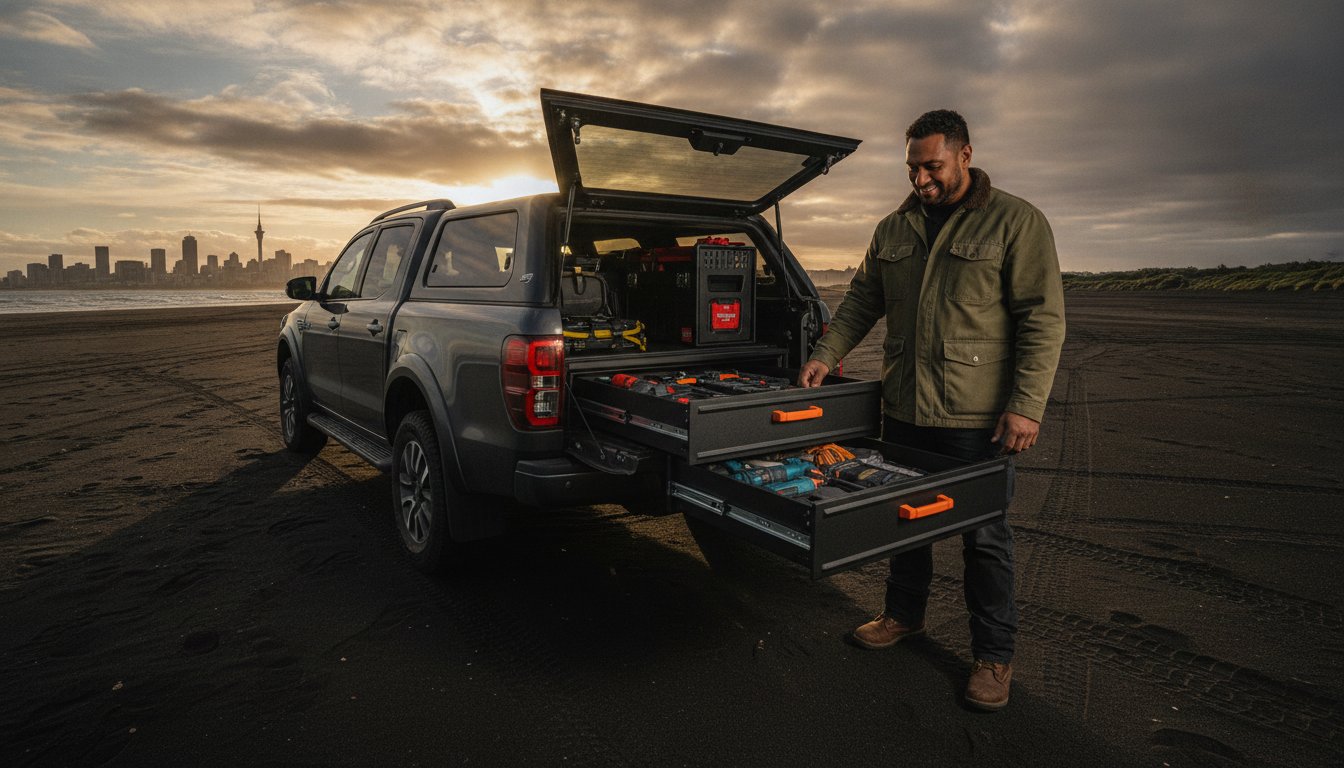
A ute drawer system installation is a high-stakes structural modification that requires the precision of a mechanical workshop rather than a simple DIY approach. While adding drawers is the most effective way to organise your gear, the risk of drilling into a fuel line or a hidden wiring loom is a legitimate concern for any vehicle owner. Whether you’re an Auckland tradie hauling heavy plant or a tourer prepping for the backblocks, your storage solution must be as rugged as the New Zealand landscape.
We know you’re looking for a secure, rattle-free setup that won’t fail on corrugated roads or cause issues with your Gross Vehicle Mass (GVM) limits. It’s vital that your rig remains compliant with NZ safety standards while providing maximum utility. This guide promises to help you master the technical requirements and safety protocols for a professional-grade installation. We’ll step through mounting hardware standards, weight distribution strategies, and the structural considerations needed to protect your vehicle’s integrity and your peace of mind.
Key Takeaways
- Analyse the weight-to-strength ratio of different materials to ensure your storage solution doesn’t compromise your vehicle’s GVM or legal payload capacity.
- Pinpoint critical “no-drill” zones in popular NZ models like the Hilux and Ranger to prevent catastrophic damage to fuel lines, brake lines, and electrical looms.
- Master a methodical ute drawer system installation process that guarantees a square, rattle-free finish capable of withstanding New Zealand’s harshest corrugated roads.
- Optimise your tray space by integrating fridge slides and dual battery systems with professional cable management to keep your 12V setup safe and functional.
- Determine when a professional fleet fit-out at an Auckland service centre is the best investment to secure your vehicle warranty and meet strict safety standards.
Selecting Your Ute Drawer System: Planning for Weight and Utility
Choosing the right setup for a ute drawer system installation isn’t just about drawer depth or handle style. It’s a structural decision that affects how your vehicle handles on and off the road. Cheap, unbranded systems often use inferior bearings and thin-gauge materials that fail under the constant vibration of corrugated NZ tracks. A professional-grade system must balance structural rigidity with weight management to ensure it doesn’t become a safety liability or a mechanical burden.
Material Choice: Steel vs Aluminium
Your choice of material dictates both the lifespan of the system and your vehicle’s performance. Galvanised steel is the industry standard for heavy tradie use. It offers superior impact resistance and can handle the daily abuse of heavy tools and plant. However, steel is heavy. For touring rigs where every kilo counts, aluminium systems provide significant weight savings without sacrificing too much strength. Given Auckland’s coastal environment, high-grade powder coating or naturally corrosion-resistant aluminium is essential to prevent salt air from degrading your investment. Modern vehicle storage systems often incorporate composite materials to further reduce tare weight while maintaining high load ratings.
GVM and Payload Considerations
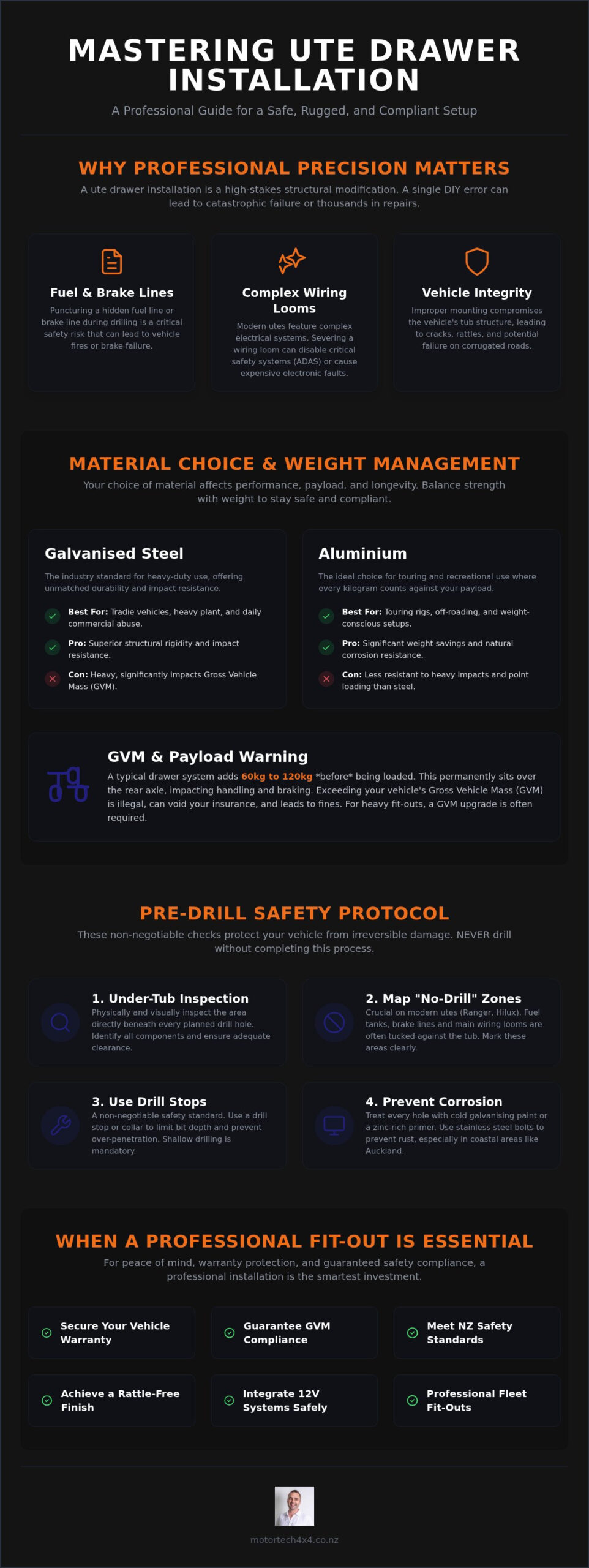
Every modification adds to your vehicle’s Gross Vehicle Mass (GVM). A dual drawer system typically weighs between 60kg and 120kg before you even put a single tool inside. This weight sits permanently over the rear axle, which can lead to sagging and poor braking performance if your factory suspension isn’t up to the task. In New Zealand, exceeding your GVM is a serious legal issue that can void your insurance and lead to fines during a roadside inspection. If your planned fit-out includes drawers, a canopy, and a full set of tools, you should investigate GVM Upgrades Auckland to ensure your rig remains compliant and safe under full load.
Proper weight distribution is critical. Installing the heaviest components as far forward in the tray as possible helps maintain a balanced centre of gravity. When planning your ute drawer system installation, consider how the weight of the drawers and their contents will affect your rear-axle loading. A poorly balanced rig won’t just handle poorly; it increases wear on tyres and suspension components, ultimately costing you more in maintenance over the life of the vehicle. Precision planning at this stage prevents expensive repairs and safety failures later on.
Essential Safety Checks Before You Drill into Your Tray
Drilling into a vehicle’s tub is the most critical phase of any ute drawer system installation. A single error can lead to punctured fuel tanks or severed wiring looms, resulting in thousands of dollars in repair costs. Professional installers always conduct a thorough “under-tub” inspection before the drill bit touches the metal. You must verify what lies directly beneath your chosen mounting points to ensure the structural integrity of the vehicle remains intact.
The “No-Drill” Zones
Modern utes like the Next-Gen Ranger and Raptor have complex electrical architectures. Wiring looms are often tucked tightly against the chassis rails or the underside of the tub. Fuel tanks in these models are frequently plastic and sit closer to the tray floor than in older vehicles. You must use drill stops to limit the bit’s depth. Shallow drilling is a non-negotiable safety standard. If you are unsure about the clearance on your specific model, consulting a specialist for a professional fit-out ensures these high-risk areas remain untouched.
Corrosion Prevention for NZ Utes
Auckland’s humid, salt-laden air is unforgiving to exposed metal. Every hole drilled is a potential site for rust to take hold. You must treat every penetration with a cold galvanising paint or a high-quality zinc-rich primer. For vehicles operating in coastal areas, applying lanolin-based protectors or specialised automotive sealants provides an extra layer of defence. Using stainless steel hardware is essential for long-term structural integrity. It prevents the “bleeding” of rust that often occurs with cheap, zinc-plated bolts found in budget kits.
Beyond physical damage, you must consider the vehicle’s electronic systems. Many utes now feature Advanced Driver Assistance Systems (ADAS) with sensors and cameras located near the rear of the vehicle. Ensure your ute drawer system installation does not pinch or interfere with the wiring for blind-spot monitors or reverse cameras. Adhering to WorkSafe guidelines and the Land Transport Act is mandatory for load security. This ensures the system is anchored sufficiently to withstand a collision or heavy braking, keeping both the occupants and other road users safe.
Step-by-Step Guide to a Professional-Grade Ute Drawer Installation
A professional ute drawer system installation requires more than just bolting a frame to a tray. It is a methodical process of alignment, shimming, and mechanical fastening designed to endure years of heavy-duty use. While some budget kits claim a two-hour setup, achieving a rattle-free, square finish that can withstand New Zealand’s uneven terrain takes precision and the right hardware.
Preparation and Dry-Fitting
Begin by stripping the tub of any factory tie-down points that might obstruct the frame. If your vehicle has a drop-in plastic tub liner, assess its compatibility; these liners often have high ridges that prevent the drawer frame from sitting flush. You may need to trim the liner or remove it entirely in favour of a spray-on coating. Once the tub is clear and clean, place the main frame inside for a dry-fit to check for potential obstructions.
- Centring: Measure from the wheel arches to ensure the unit is perfectly centred. Even a few millimetres of misalignment will cause issues when fitting side wings.
- Tailgate Clearance: Close the tailgate to verify that the drawers can open fully without hitting the handle, seal, or any aftermarket accessories like central locking actuators.
- Marking: Use a centre punch to mark your drill points accurately. This prevents the drill bit from “walking” across the metal and damaging the tub floor.
Securing the System
New Zealand roads are notorious for high-frequency vibrations that rattle standard hardware loose over time. You must use Nyloc nuts for every mounting point to ensure the system remains tight. Because most ute trays are corrugated, the frame will not naturally sit level. Use penny washers or specialised shims to bridge the gaps in the corrugations. This provides a flat, stable surface for the frame to rest on and prevents the frame from twisting, which is the primary cause of sticking drawers.
While some systems utilise factory tie-down holes, through-bolting to the chassis-mounted crossmembers is the superior method for heavy loads. This ensures the drawers remain anchored during emergency braking or off-road manoeuvres. Once the frame is secure, conduct a final torque check on all fasteners. Finish the ute drawer system installation by fitting the side wing kits. These wings provide a seamless look and prevent small items from falling into the gaps between the drawers and the tub sides, effectively maximising your usable storage space for smaller tools or camping gear.
Integrating Fridge Slides and Dual Battery Systems
A high-performance ute drawer system installation provides the necessary framework for integrating complex 12V systems and refrigeration. For most Auckland owners, the drawers are only the first stage of a comprehensive build. To truly maximise utility, you must account for the placement of dual batteries, DC-DC chargers, and fridge slides while maintaining safe cable routes around moving mechanical parts.
12V Electrical Integration
Precision cable management is the difference between a reliable setup and a fire hazard. You must route heavy-gauge cable from the engine bay to the rear, ensuring it is protected by corrugated conduit and secured away from heat sources. Using Anderson plugs at the rear allows for easy disconnection if you ever need to remove the drawer unit for maintenance. For detailed advice on wiring layouts and component selection, refer to our Auckland 4×4 Guide.
The “dead space” located behind the wheel arches and the side of the drawer frame is an ideal location for mounting slimline lithium batteries or control panels. This keeps the heavy electrical components low and central, aiding weight distribution. However, electronics and fridges generate heat. In an enclosed canopy environment, you must ensure adequate airflow to prevent thermal cut-outs. This often requires vented side wings or the installation of small 12V fans to circulate air around the fridge compressor.
Fridge Slide Installation
Mounting a fridge on top of a drawer system raises the height of the unit significantly. For utes with a suspension lift, a standard slide can make accessing the fridge difficult for shorter users. In these cases, a drop-slide is the superior choice. It lowers the fridge to a manageable height when extended. You must ensure the drawer frame is engineered to handle the cantilevered weight of a fully loaded 75-litre fridge. Without a rigid mounting point, the weight can twist the frame and cause the drawers below to bind.
Safety is paramount on rugged NZ tracks. Your fridge slide must feature heavy-duty locking mechanisms to prevent it from sliding out unexpectedly during steep descents or heavy braking. If you are planning a complex build involving power and refrigeration, our team can handle the entire process. Book your professional fit-out at Motortech 4X4 to ensure your electrical and storage systems are integrated to the highest technical standards.
Professional Fleet Fit-Outs and Custom 4×4 Storage in Auckland
For commercial operators, a ute drawer system installation is a strategic investment in operational efficiency rather than just a storage upgrade. When managing a fleet of vehicles, standardising the internal layout ensures that every tradie or technician knows exactly where their tools are located, regardless of which rig they’re driving. Professional installation at our Auckland service centre guarantees that these systems are fitted to a uniform standard, maintaining the vehicle’s structural integrity and long-term resale value.
The Motortech 4X4 Difference
We operate as a genuine one-stop shop for Auckland vehicle owners. Our expertise extends beyond simple bolt-on accessories; we handle the complex intersection of mechanical, electrical, and structural modifications. Because a full storage fit-out often coincides with other upgrades, we provide a comprehensive solution that includes everything from Roof Racks NZ to suspension tuning.
Safety remains our primary focus. Significant vehicle modifications can affect the sensors used by modern safety suites. As part of our professional service, we provide expert ADAS calibration to ensure your blind-spot monitoring and emergency braking systems function correctly after the drawers and external accessories are fitted. This level of technical diligence provides peace of mind that a DIY or entry-level installation simply cannot offer. All our labour is backed by professional warranties, ensuring your fleet stays on the road and remains compliant with NZ safety standards.
Custom Fleet Solutions
Different industries require different storage configurations. A technician in the telecommunications sector has vastly different needs than a contractor in the mining or agricultural sectors. We specialise in bespoke storage solutions that account for specific tool dimensions, heavy plant requirements, and the need for rapid access in the field. By combining heavy-duty drawer units with custom shelving and secure partitions, we transform a standard ute tub into a highly organised mobile workshop.
Standardising your fleet’s storage doesn’t just improve worker efficiency; it also simplifies vehicle maintenance. When every ute drawer system installation follows the same technical blueprint, troubleshooting electrical issues or performing routine inspections becomes significantly faster. We understand the unique demands placed on 4x4s in the Auckland region, from coastal salt exposure to the punishing tracks of the backblocks. If you’re ready to upgrade your commercial vehicles, book a consultation for your 4wd Auckland fleet today. Our team will work with you to design a storage solution that maximises payload utility while prioritising driver safety and vehicle longevity.
Secure Your Setup with Professional Engineering
A successful ute drawer system installation is more than just a convenience; it’s a structural upgrade that transforms your vehicle’s capability. By prioritising precise weight distribution and rigorous safety checks, you ensure your rig handles the weight of your gear without compromising its mechanical integrity. Whether you’re managing a commercial fleet or preparing for a solo tour of the North Island, the intersection of storage, electrical integration, and safety compliance is where professional expertise becomes invaluable.
Motortech 4X4 is your Auckland specialist for GVM upgrades and comprehensive fleet fit-outs. As an authorised installer of industry-leading 4×4 brands, we provide the technical precision required for complex modifications, including expert ADAS calibration. We ensure your storage solution is rattle-free, secure, and fully compliant with New Zealand standards. Don’t risk your vehicle’s warranty or safety on a DIY attempt. Get a Professional Ute Fit-Out Quote from Motortech 4X4 Auckland and build a rig that’s truly fit for purpose. Your next job site or off-road adventure deserves a setup that won’t let you down.
Frequently Asked Questions
Will installing ute drawers void my new vehicle warranty?
Installing drawers won’t void your entire vehicle warranty, but it can affect claims related to the specific areas modified. For example, if a DIY job damages the wiring loom or causes tub corrosion, the manufacturer won’t cover those repairs. Choosing a professional service centre for your ute drawer system installation ensures the work meets engineering standards, protecting your warranty for the vehicle’s structural and electronic components.
Do I need a GVM upgrade if I install a heavy drawer system?
You may require a GVM upgrade if the combined weight of the drawers, tools, and accessories exceeds your vehicle’s legal payload. A standard dual drawer system adds significant permanent weight over the rear axle. When you factor in a canopy, bullbar, and full tank of fuel, many utes approach their limit quickly. We specialise in GVM upgrades in Auckland to ensure your rig remains legal and safe under heavy loads.
Can I install ute drawers myself, or should I hire a professional in Auckland?
While many systems are marketed as DIY, professional installation is recommended for complex builds. Professionals in Auckland have the specialised tools to identify “no-drill” zones and handle 12V electrical integration safely. Expert fitting also includes ADAS calibration, which is critical for modern vehicles with blind-spot sensors. Hiring a specialist ensures your storage is rattle-free and securely anchored, saving you from potential structural damage or safety failures on the road.
How do I prevent my ute drawers from rattling on gravel roads?
Preventing rattles starts with a square installation and high-quality hardware. Use Nyloc nuts to ensure fasteners don’t vibrate loose on New Zealand’s corrugated tracks. You must also use penny washers or shims to level the frame on the uneven tub floor, preventing the chassis from twisting the drawer unit. High-quality heavy-duty runners and side wing kits further stabilise the system, creating a tight, silent fit even during off-road touring.
What is the best material for ute drawers in New Zealand conditions?
Galvanised steel is the best choice for heavy-duty tradie use due to its superior impact resistance. However, for tourers concerned about weight, high-grade aluminium offers significant payload savings. In Auckland’s humid, coastal environment, corrosion resistance is vital. Ensure your chosen system features a durable powder-coated finish or zinc-rich primers to prevent salt air from degrading the metal components over the life of the vehicle.
Are ute drawers waterproof if I don’t have a canopy or hardlid?
Most drawer systems are weather-resistant rather than fully waterproof. While the internal compartments are protected from light splashes, they aren’t designed to be submerged or exposed to heavy NZ rain without a canopy or hardlid. If you operate an open tray, water can pool in the corrugations and eventually ingress through the seals. For total protection of your tools and electronics, we recommend combining your drawers with a high-quality canopy fit-out.
How much weight can a standard ute drawer system actually hold?
A standard heavy-duty drawer system typically supports between 100kg and 150kg per drawer when using high-quality roller bearings. The top deck is often rated for even higher loads, frequently supporting up to 250kg of evenly distributed weight. You must ensure your vehicle’s suspension can handle this concentrated load. Overloading the drawers won’t just damage the runners; it can negatively impact your vehicle’s braking distance and overall handling characteristics.
Can I still access my spare tyre if I install a drawer system?
Yes, you can still access your spare tyre, but the installation must account for the factory winch point. Most professional drawer systems include a specific access port in the front panel or provide a tool extension to reach the lowering mechanism. It’s vital to test this access during the ute drawer system installation. You don’t want to discover your spare is unreachable while stuck on a remote beach or a busy Auckland motorway.