
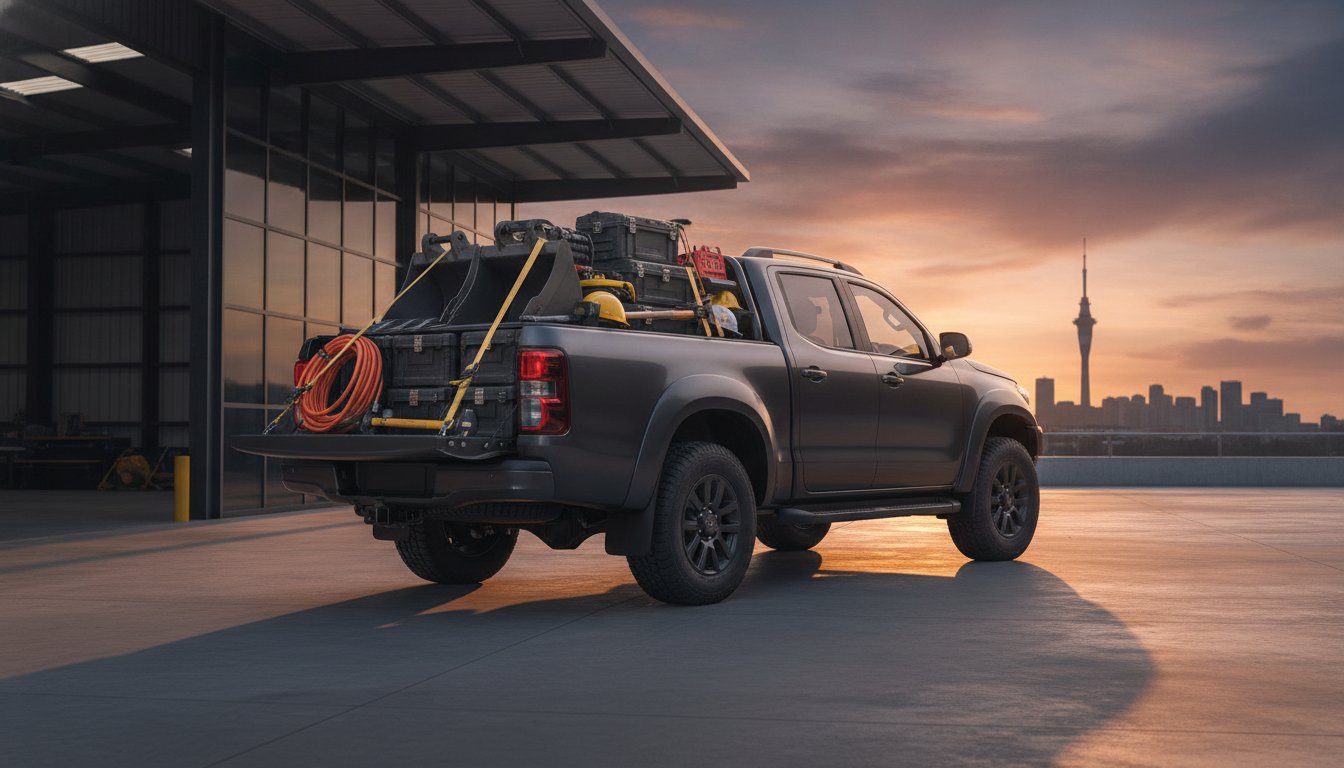
Did you know that bolting on a steel bullbar, a canopy, and a long-range tank can push your late-model Hilux or Ranger over its legal weight limit before you even load the tools? Many Auckland ute owners treat factory weight ratings as a loose suggestion, yet NZTA weighbridges and insurance assessors take them very seriously. It’s a genuine concern; driving a vehicle that sags under pressure or handles poorly isn’t just frustrating, it’s a liability that could see an insurance claim rejected when you need it most.
As GVM upgrade specialists NZ, we know you need your vehicle to perform without the constant fear of fines or mechanical failure. This article provides the definitive roadmap to mastering NZ GVM upgrades, ensuring your vehicle remains legal, safe, and insurance-compliant under heavy loads. We will break down the LVV certification process, the necessity of ADAS calibration after suspension changes, and how to maintain your vehicle warranty while significantly increasing your usable payload.
Key Takeaways
- Learn why common accessories like bullbars and canopies often push NZ utes over their legal weight limits before they even hit the road.
- Understand the critical role of LVVTA standards and why a certified upgrade is essential for maintaining your Warrant of Fitness and insurance validity.
- Discover the differences between pre-registration and post-registration upgrades to determine the most efficient path for your new or existing vehicle.
- Consulting GVM upgrade specialists NZ ensures your vehicle receives the necessary ADAS calibration and hardware modifications to handle increased loads safely.
- Explore how a professional one-stop workshop manages the entire engineering workflow, from suspension installation to final legal certification.
What is a GVM Upgrade and Why Does Your NZ Ute Need One?
Most dual-cab utes in New Zealand are marketed with a one-tonne payload capacity. This figure is technically accurate when the vehicle leaves the showroom, but it quickly evaporates once you start adding essential trade or touring accessories. Understanding What is a GVM Upgrade starts with recognising that your vehicle has a hard legal limit. Gross Vehicle Mass (GVM) is the maximum allowable total mass of a fully loaded vehicle as specified by the manufacturer or certifier.
The “hidden” overloading crisis occurs because every modification eats into that initial payload. A steel bullbar, winch, side steps, and a heavy-duty canopy can easily account for 250kg to 300kg. Add a full tank of fuel, two passengers, and a drawer system, and you might only have 200kg of capacity left for actual tools or gear. Driving a vehicle in this state is a gamble. Standard suspension lifts might provide extra ground clearance, but they do not provide the legal engineering re-certification required to carry more weight. This is why consulting GVM upgrade specialists NZ is vital for anyone using their ute for serious work or towing.
GVM vs. GCM: Understanding the Limits
It’s a common mistake to assume that a GVM increase gives you a higher towing capacity. Gross Combination Mass (GCM) is the total allowable weight of the vehicle and the trailer combined. While an upgrade helps your ute carry more internally, it doesn’t always change the manufacturer’s GCM rating. You must also consider the tow-ball download weight. When you hitch up a heavy trailer, roughly 10% of its weight is transferred directly onto your rear axle, which counts toward your GVM. Without professional recalibration, this weight can cause dangerous sagging and compromised steering.
The Auckland Factor: Stop-Start Traffic and Heavy Loads
Auckland’s unique driving conditions place immense stress on overloaded vehicles. Navigating the Southern Motorway during peak hour involves constant low-speed crawling and sudden braking. An overloaded ute takes significantly longer to stop, which is a recipe for disaster in heavy traffic. GVM upgrade specialists NZ focus on more than just springs; they ensure the entire vehicle system, including braking and ADAS electronics, is prepared for the load. Relying on a “she’ll be right” attitude is risky. If you’re involved in an accident while over your legal limit, NZ insurance providers have clear grounds to void your policy, leaving you personally liable for damages.
The Legal Framework: LVVTA Standards and NZTA Compliance
Legal compliance in New Zealand isn’t about ticking boxes. It’s about engineering safety. The Low Volume Vehicle Technical Association (LVVTA) manages the standards that ensure modified vehicles are safe for our roads. When you work with GVM upgrade specialists NZ, the goal is to obtain an LVV certification. This process culminates in the fitment of a modification plate. This silver plate, usually fixed to the engine bay or door pillar, is your legal passport. It proves to NZTA, WOF inspectors, and insurance companies that your vehicle’s increased weight rating is backed by professional engineering.
A standard Warrant of Fitness (WOF) inspection now includes a check for modification plates on any vehicle with obvious suspension work. If your ute is sitting high or carrying heavy gear without the correct plate, it won’t pass. More importantly, insurance providers treat uncertified modifications as a breach of contract. If you’re involved in an accident while driving an uncertified, overloaded vehicle, you face significant financial liability. Professional GVM upgrades ensure your policy remains valid by keeping everything above board and legally documented.
The LVV Certification Process
The certification process is rigorous. An LVV certifier examines the mechanical installation, component quality, and overall vehicle stability. Using “Type-Approved” kits is the most efficient path. These kits have already undergone extensive testing, meaning the certifier only needs to verify the specific installation rather than re-engineering the entire system from scratch. DIY suspension swaps almost always fail this level of scrutiny. Without the technical data and approved components provided by a specialist, a certifier cannot legally sign off on the increase, leaving your vehicle in a legal grey area.
Axle Load Limits and Engineering
Your GVM is only as strong as its weakest link. Upgrading springs alone doesn’t change the load rating of your tyres or the structural integrity of your axles. Engineers look at the Gross Axle Weight Ratings (GAWR) for both the front and rear. Proper weight distribution is essential. A ute might be under its total GVM but still over its rear axle limit due to a heavy canopy and a trailer. GVM upgrade specialists NZ use professional weighing services to calculate these shifts. In Auckland, where stop-start traffic is the norm, an unbalanced load shifts weight forward during braking, putting immense pressure on front-end components. We ensure your braking performance meets LVVTA standards even at maximum capacity.
Pre-Registration vs. Post-Registration GVM Upgrades
Timing plays a critical role in how your vehicle is certified for a higher payload. In New Zealand, the legal pathway differs depending on whether the vehicle has already been registered with the NZ Transport Agency. As GVM upgrade specialists NZ, we assist clients through both the pre-registration and post-registration processes, ensuring the engineering meets the required standards before the vehicle begins its service life or is retrofitted for new demands.
Pre-registration upgrades occur before the vehicle is first registered to an owner. This is often referred to under the umbrella of Second Stage Manufacture, where a brand-new vehicle is modified to a higher specification than the factory original. The primary advantage here is administrative. When the vehicle is first entered into the NZTA system, it is registered with the increased GVM already on its records. Post-registration upgrades are the more common route for private owners and involve modifying a vehicle that is already on the road. This path requires an individual LVV certification and the fitment of a physical modification plate to remain legal.
Timeline expectations vary based on the complexity of the build. While the physical installation of heavy-duty suspension and components typically takes one to two days, the certification process is more involved. For post-registration vehicles, the inspection by an LVV certifier and the subsequent processing of the modification plate can take anywhere from two to four weeks. Planning for this lead time is essential, especially for commercial operators who cannot afford extended vehicle downtime.
Upgrading a New Vehicle
Organising your upgrade through a dealership before delivery can simplify the paperwork, as the cost is often bundled into the initial vehicle purchase. This allows you to include all aftermarket accessories, such as bullbars and winches, in the initial engineering sign-off. However, you should ensure the dealership is using GVM upgrade specialists NZ who understand the specific requirements of the Auckland market. A pre-registration build ensures your ute is fit for purpose from day one, with all electronic systems calibrated to the new weight ratings before you even leave the showroom.
Upgrading Your Current 4×4
Retrofitting a GVM kit to a used vehicle requires a more detailed mechanical assessment. At Motortech 4X4, we conduct a thorough inspection to identify any existing wear and tear in the bushes, bearings, or chassis before installing high-performance components. An LVV certifier will be more rigorous with an older vehicle, checking for rust or previous structural repairs that might compromise the new weight rating. This ensures that the upgrade doesn’t just increase your payload, but also restores the handling and stability that often degrades as factory suspension tires over time.
The Motortech Difference: Hardware, ADAS, and Precision
Professional GVM upgrades involve more than simply swapping out factory coils for heavier alternatives. It requires a systematic approach to the entire vehicle platform to ensure structural integrity remains uncompromised. As GVM upgrade specialists NZ, we focus on the synergy between mechanical hardware and electronic safety systems. Selecting the right suspension kit is a balancing act. Auckland drivers often navigate a mix of corrugated gravel roads and smooth motorways, so we tailor the valving and spring rates to provide stability when the tray is full without creating a bone-jarring ride when the vehicle is unladen.
To support these increased loads, we often integrate complementary modifications like bullbars, winches, and snorkels. These additions provide protection and performance in rugged environments but add significant weight. An ECU remap is frequently recommended alongside these upgrades. This provides the necessary low-end torque to move a fully loaded vehicle efficiently through hilly terrain, reducing strain on the drivetrain. If you are ready to secure your vehicle’s performance, you can enquire about our technical fit-out services to see how we integrate these systems.
ADAS Calibration: The Safety Step Most Miss
Suspension lifts and GVM increases change the mounting height and pitch of your vehicle. This directly affects the “vision” of forward-facing cameras and radar sensors used for lane-keep assist and autonomous emergency braking. If these systems aren’t recalibrated, they can trigger incorrectly or fail to respond during a critical event. While many workshops ignore this electronic integration, we utilise specialised in-house ADAS calibration equipment. This ensures your safety tech remains as accurate as the day it left the showroom, providing peace of mind for you and your family.
Fleet Fit-Out Expertise
Commercial operators have strict Occupational Health and Safety (OH&S) obligations to provide safe equipment for their staff. Standardising GVM upgrades across a commercial fleet ensures every driver has predictable handling and a legal payload capacity. We customise builds for specific trades, from plumbers and builders to mobile workshops, ensuring the shelving and gear don’t exceed axle limits. Our team manages the entire process from hardware installation to final certification for Fleet Fit-Outs Auckland, allowing you to focus on running your business. GVM upgrade specialists NZ like Motortech 4X4 provide the technical precision required for high-use commercial environments.
Choosing an Auckland GVM Specialist: Why Motortech 4X4?
Selecting a partner for a major engineering modification is a decision that affects both your safety and your legal standing. Motortech 4X4 stands out as the premier GVM upgrade specialists NZ because we provide a seamless, end-to-end service. We don’t just bolt on parts and send you to a certifier. We manage the entire workflow, from the initial consultation and hardware installation to the electronic ADAS calibration and final LVV certification. This holistic approach ensures your vehicle is returned to you fully compliant and ready for work without the need for multiple workshop visits across Auckland.
We only use industry-leading suspension components and hardware that meet strict NZTA and LVVTA requirements. Our Auckland workshop is equipped with the precision tools required for high-end mechanical work, ensuring that every bolt is torqued to spec and every sensor is correctly aligned. Whether you’re a private tourer preparing for a Cape Reinga to Bluff expedition or a fleet manager overseeing twenty service utes, our standards remain uncompromising. We understand the specific challenges of NZ road conditions, from the coastal humidity of the North Shore to the rugged tracks of the Waitakere Ranges, and we build vehicles to survive them.
Technical Mastery and Reliable Results
Our deep roots in 4×4 servicing and performance tuning give us a unique advantage. We understand how a weight increase affects other vehicle systems, such as the transmission and cooling. We maintain transparent communication throughout the certification process, providing regular updates as your vehicle moves through the engineering stages. This eliminates the guesswork often associated with complex legal modifications. Our Auckland centre is the preferred choice for serious operators because we value technical excellence over quick, uncertified fixes that could compromise safety and void your insurance coverage.
Book Your GVM Assessment Today
The first step toward a legal payload is understanding your current weight distribution. We recommend a professional weight bridge session to identify exactly how much room you have left on your front and rear axles. This data allows our GVM upgrade specialists NZ to recommend a custom solution that fits your specific load requirements, whether you’re carrying tools, a camper, or towing a heavy boat. Don’t wait until a weighbridge fine or an insurance dispute forces your hand. Contact the GVM Upgrade Specialists at Motortech 4X4 today to discuss your vehicle’s requirements and secure your legal payload increase.
Secure Your Payload and Legal Compliance Today
Driving a modified ute without the correct engineering certification is a significant legal and financial liability. A certified GVM upgrade ensures your vehicle handles predictably under load while protecting your insurance validity. By integrating high-quality suspension hardware with precise electronic recalibration, you transform your vehicle into a reliable tool for work or adventure. This process is essential for anyone pushing their vehicle’s factory limits with heavy trade gear or touring accessories.
As GVM upgrade specialists NZ, Motortech 4X4 provides the technical expertise required to navigate these complex regulations. Our Auckland team manages the entire LVV certification workflow and provides in-house ADAS calibration to keep your safety systems accurate. We are the dependable choice for local tradies and fleet managers seeking professional fit-out expertise. Book your GVM upgrade assessment at Motortech 4X4 Auckland and ensure your vehicle is fit for purpose. Take the guesswork out of your build and drive with the confidence that your vehicle is engineered to perform on New Zealand roads.
Frequently Asked Questions
Is a GVM upgrade legal in New Zealand?
Yes, GVM upgrades are entirely legal in New Zealand as long as they comply with the Land Transport Rule: Vehicle Dimensions and Mass 2016. Any modification that increases the manufacturer’s original weight rating requires a Low Volume Vehicle (LVV) certification. This involves an inspection by an authorised engineer who verifies the installation and components before issuing a modification plate for the vehicle.
How much does an LVV certification cost for a GVM upgrade?
The cost for individual engineering certification generally varies depending on the complexity of the build and the specific certifier’s requirements. While these are external fees, they cover the rigorous inspection and the administrative processing of your modification plate. Using GVM upgrade specialists NZ who use type-approved kits can often streamline this process compared to custom one-off engineering solutions.
Do I need to recalibrate my ADAS after a GVM lift?
Yes, recalibrating your Advanced Driver Assistance Systems (ADAS) is a critical safety requirement after any suspension lift or GVM increase. Modern utes rely on precise camera and radar angles for autonomous braking and lane-keep assist. Even a slight change in the vehicle’s rake or height can cause these systems to malfunction, making professional calibration essential for road safety.
Will a GVM upgrade void my vehicle manufacturer warranty?
A GVM upgrade won’t void your entire vehicle warranty, but the manufacturer is no longer responsible for the suspension components or any failures directly caused by the modification. Most reputable aftermarket suspension brands provide their own comprehensive warranty that covers their hardware. It’s best to discuss this with your specialist to ensure you maintain full protection for your investment.
What is the difference between a suspension lift and a GVM upgrade?
A standard suspension lift only provides additional ground clearance, whereas a GVM upgrade is a legal engineering re-certification. While both involve changing springs and shocks, a GVM upgrade uses components tested to carry higher loads and includes the legal paperwork required to increase your ute’s registered payload. A lift kit alone does not change your legal weight limit.
Can I increase my towing capacity (GCM) with a GVM upgrade?
No, a GVM upgrade typically does not increase your Gross Combined Mass (GCM). While you can carry more weight inside the vehicle, the manufacturer’s limit for the total weight of the vehicle and trailer combined usually remains the same. It’s important to calculate your total weights carefully to ensure you don’t exceed the combination limit when fully loaded.
How long does the GVM upgrade process take at your Auckland workshop?
The physical installation of the suspension hardware usually takes one to two days at our Auckland facility. However, the total timeline depends on the availability of LVV certifiers and the time required to process the modification plate through the LVVTA. We generally advise clients to allow two to four weeks for the entire end-to-end process to be finalised.
Do I need a GVM upgrade if I only tow a small trailer?
You only need a GVM upgrade if the combined weight of your passengers, accessories, and the tow-ball download from the trailer exceeds your factory limit. Even a small trailer can add significant weight to the rear axle. We recommend a professional weighbridge session to determine if your current setup is pushing your vehicle into an illegal or unsafe weight range.