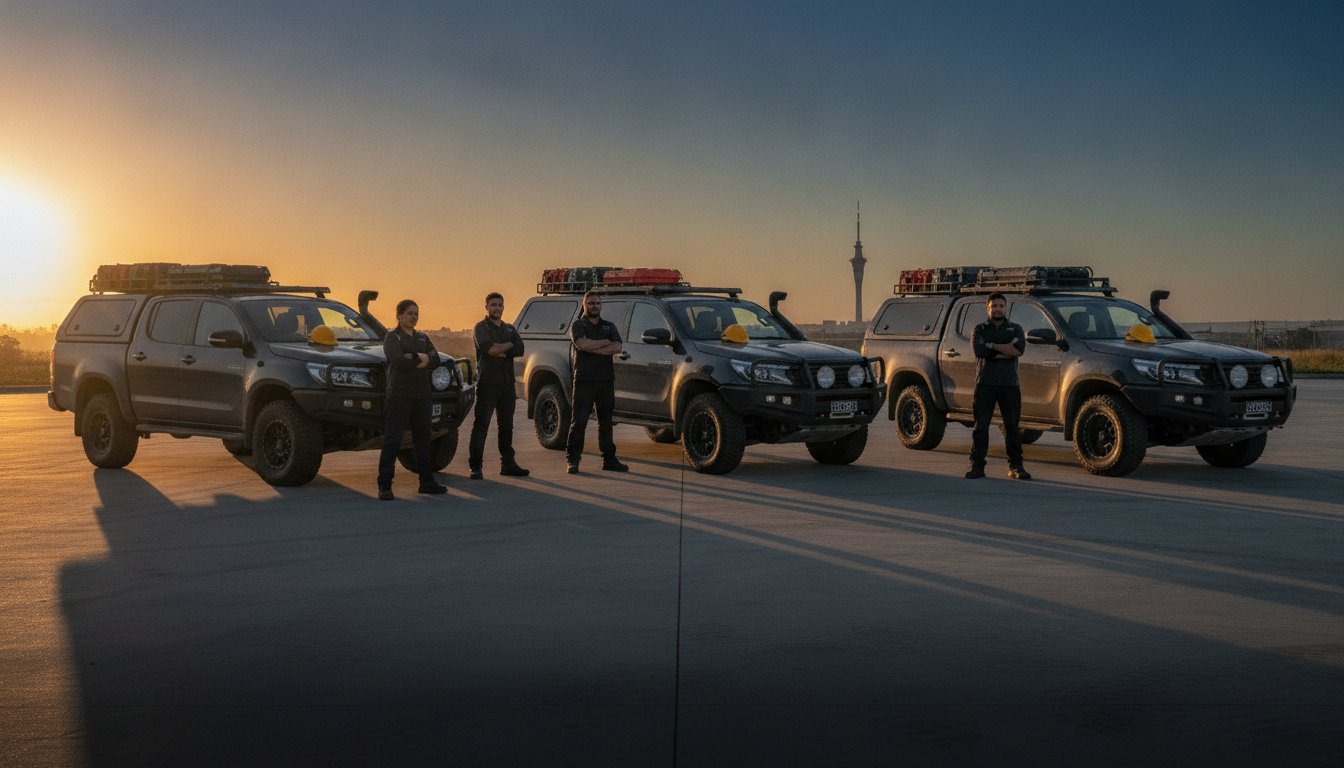
Did you know that from 1 November 2026, a single warning light on your dashboard for Lane Keep Assist or Automatic Emergency Braking will result in an immediate WoF or CoF failure? Under the new Land Transport Rule: Vehicle Standards Compliance Amendment 2026, the NZTA is tightening the screws on safety technology. For businesses operating modified 4x4s or heavy-duty trade utes, securing professional fleet ADAS calibration Auckland is no longer just a technical recommendation; it is a legal necessity.
We understand that managing a fleet is complex enough without worrying about whether a recent suspension lift or bullbar fit-out has thrown your sensors out of alignment. You likely feel the pressure of rising operational costs and the constant fear of an insurance claim being denied due to a misaligned camera or radar. This guide will clarify exactly when your vehicles require recalibration and provide a comprehensive compliance checklist to keep your team safe. We will look at the specific trigger events that demand action and how to maintain your fleet with minimal disruption to your daily workflow.
Key Takeaways
- Understand the 2026 NZTA regulatory updates that turn active dashboard warning lights into automatic WoF or CoF failures.
- Identify the specific mechanical triggers, including suspension lifts and wheel alignments, that necessitate an immediate safety system reset.
- Compare static and dynamic calibration methods to understand why modified trade vehicles often require a dual-stage approach for total accuracy.
- Ensure your business remains protected against liability and insurance denials with certified fleet ADAS calibration Auckland.
- Discover the benefits of a comprehensive fit-out and calibration partner to reduce vehicle downtime and maintain strict technical standards.
The Fleet Manager’s Guide to ADAS: Why Calibration is Non-Negotiable
Modern commercial fleets in New Zealand are no longer just mechanical assets; they are sophisticated mobile computers. Advanced driver-assistance systems (ADAS) represent the primary safety layer for your drivers, utilising a network of sensors to monitor surroundings in real time. These sensors, typically high-resolution cameras and millimetre-wave radar units, function as the vehicle’s eyes. They provide the critical data required for Lane Departure Warning, Autonomous Emergency Braking (AEB), and Adaptive Cruise Control to operate. When these systems are functional, they significantly reduce the frequency of rear-end collisions and lane-drift incidents.
Failing to prioritise fleet ADAS calibration Auckland carries heavy financial and operational risks. Beyond the obvious safety hazards, uncalibrated sensors lead to increased vehicle downtime and potentially higher insurance premiums. If a sensor is even slightly misaligned, the vehicle may react unpredictably, leading to expensive repairs and lost billable hours. Proper maintenance ensures your fleet remains a reliable tool rather than a liability on the road.
The Anatomy of Your Fleet’s Safety Systems
Most modern trade utes and 4x4s utilise two primary sensor types. Front-facing cameras are generally mounted behind the upper windscreen, while radar sensors are housed within the front grille or bumper assembly. These units feed constant streams of data to the Engine Control Unit (ECU), which makes split-second decisions regarding braking and steering. Precision is the non-negotiable standard here. A misalignment of just one degree at the sensor can result in the system “looking” several metres wide of the actual lane markings or obstacles when travelling at highway speeds.
The Cost of Misalignment: Beyond Just Safety
Misaligned sensors frequently cause “phantom braking,” where the vehicle detects a non-existent obstacle and applies the brakes abruptly. This frustrates drivers and creates a high risk of being rear-ended by following traffic. Additionally, when ADAS systems constantly fight against the driver’s input due to poor calibration, you will notice accelerated wear on tyres and brake components. ADAS recalibration is the process of resetting sensor aim to factory specifications. Maintaining this standard is essential for fleet managers who value both staff safety and the mechanical longevity of their vehicles. Regular fleet ADAS calibration Auckland ensures these systems support the driver rather than creating new hazards.
When Recalibration is Required: A Trigger Event Checklist for Auckland Fleets
Auckland fleet vehicles operate in a demanding environment. From the stop-start motorway traffic of the CBD to the rugged, unsealed tracks of rural construction sites, sensor accuracy is non-negotiable. Many managers assume that if the dashboard remains clear of warning lights, the system is functioning correctly. However, NZTA research on ADAS understanding suggests a significant gap in how these systems are managed, particularly regarding when a reset is mandatory. Professional fleet ADAS calibration Auckland is the only way to verify that your safety systems are actually “seeing” the road as intended.
Mechanical and Structural Triggers
For commercial vehicles, modifications are often essential for the job. However, any change to the vehicle’s physical geometry directly impacts sensor alignment. You must schedule a recalibration following these events:
- Suspension Modifications: Installing suspension kits or GVM upgrades changes the vehicle’s ride height and rake. This shifts the camera’s horizon line, meaning it may fail to detect obstacles or lane markings correctly.
- Bullbar and Winch Installations: These heavy additions alter the front-end weight distribution and often require the relocation of radar sensors. If the radar is not reset to its new position, adaptive cruise control and AEB will not function reliably.
- Wheel Alignments: Even a standard wheel alignment can change the thrust angle of the vehicle. If the ADAS is not updated to reflect this new steering geometry, the lane-keep assist may pull the vehicle in the wrong direction.
When planning heavy-duty fleet fit-outs, ensure calibration is treated as the final, critical step of the build process to maintain safety standards.
Maintenance and Repair Triggers
Routine maintenance and minor repairs are the most common reasons for sensor misalignment. High-use Auckland fleets should monitor these specific triggers:
- Windscreen Replacements: Most modern utes have a forward-facing camera mounted directly to the glass. Even a millimetre of variance in the new glass or mounting bracket requires a full recalibration.
- Front-End Smash Repairs: Sensitive radar units are housed behind bumpers and grilles. Even a minor “fender bender” that doesn’t cause visible structural damage can jar a sensor out of its precise alignment.
- Battery or Module Disconnection: In some vehicles, disconnecting the battery or ADAS-related control modules during heavy engine work can cause the system to lose its calibration data.
Integrating fleet ADAS calibration Auckland into your regular servicing schedule is the most effective way to manage liability. Don’t wait for a warning light to appear; if a trigger event has occurred, the system is technically compromised until a specialist verifies its accuracy.
The Technical Choice: Static vs. Dynamic Recalibration for Commercial 4x4s
Selecting the correct recalibration method is a technical requirement determined by the vehicle manufacturer and the specific modifications performed on the rig. While many passenger cars require only a single procedure, heavy-duty trade vehicles and modified 4x4s often demand a more rigorous approach. Professional fleet ADAS calibration Auckland involves navigating the distinct requirements of static and dynamic methods to ensure every sensor is pinpoint accurate. Adhering to NZTA standards for ADAS calibration ensures that these technical choices meet the rigorous safety expectations of New Zealand’s transport authorities.
Static Calibration: The Controlled Environment
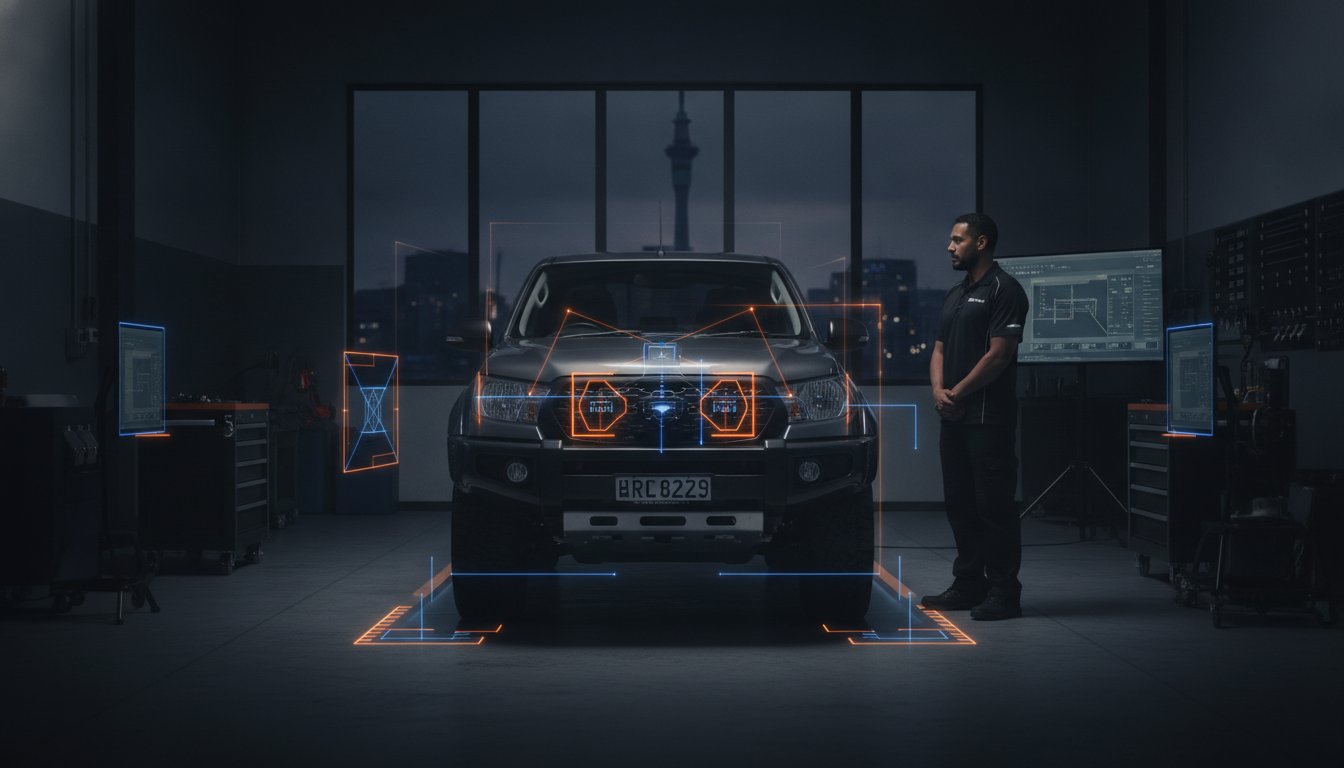
Static calibration takes place inside a specialised workshop using high-precision targets and laser-guided floor layouts. For 4x4s with upgraded suspension or GVM upgrades, a level workshop floor is non-negotiable. If the floor isn’t perfectly horizontal, the targets used to aim the sensors will provide a false baseline, effectively “teaching” the vehicle to look at the sky or the road surface rather than the traffic ahead. This method offers the highest level of precision because it eliminates external variables like Auckland’s unpredictable weather or poor road markings. It’s the essential first step for any vehicle that has undergone significant structural changes or bullbar fit-outs.
Dynamic Calibration: The Real-World Test
Dynamic calibration involves “teaching” the vehicle’s sensors while driving on actual roads. The technician connects a diagnostic tablet to the vehicle’s OBD-II port and drives at specific speeds on roads with clear lane markings. Certain manufacturers, such as Ford and Toyota, mandate this process for their late-model Rangers and Hiluxes to ensure the software correctly interprets real-world data. The primary challenge in Auckland is finding the right road conditions. Busy motorway traffic or roadworks can interfere with the sensor’s ability to lock onto targets, often requiring multiple passes to successfully complete the programme.
It’s vital to understand that a standard “road test” by a mechanic is not the same as a formal dynamic calibration. A road test simply checks if the vehicle drives straight; a dynamic calibration involves a complex software handshake between the sensors and the ECU. For many modified Auckland fleets, a hybrid approach is required. We often perform a static calibration to set the physical aim of the sensors, followed by a dynamic procedure to verify the system’s logic in a live environment. This dual-stage process is the only way to guarantee that your fleet ADAS calibration Auckland meets the precision standards required for commercial compliance.
Compliance and Liability: Meeting NZTA Standards and Insurance Requirements
Compliance is the bedrock of professional fleet management. When a vehicle is modified beyond its factory state, the responsibility for maintaining the integrity of its safety systems shifts from the manufacturer to the owner or fleet manager. NZTA (Waka Kotahi) maintains strict expectations for modified vehicle safety, particularly regarding Low Volume Vehicle (LVV) certification. If your trade utes have undergone GVM upgrades or significant suspension changes, an LVV certifier will require proof that the safety sensors are functioning within their intended parameters. Securing a professional fleet ADAS calibration Auckland provides the necessary evidence that your business is meeting its regulatory obligations.
Liability is a critical concern for Auckland business owners. If a fleet vehicle is involved in a collision and the Autonomous Emergency Braking (AEB) fails to engage because of an uncalibrated lift kit, the legal and financial fallout can be severe. In such cases, the liability often rests with the business for operating an unroadworthy vehicle. Maintaining a detailed “Calibration Log” for every asset in your fleet is the best defence. This log should record every trigger event, the date of recalibration, and the specific method used to reset the sensors.
Insurance and Workplace Health & Safety
Insurance companies are increasingly scrutinising ADAS data following major claims. If a post-accident investigation reveals that a sensor was misaligned due to a previous repair or modification, the insurer may have grounds to deny the claim. Beyond insurance, you have a “Duty of Care” under the New Zealand Health and Safety at Work Act 2015. This legislation requires you to provide tools and vehicles that are safe for your employees to use. A digital calibration certificate serves as a vital record, proving that you have taken all reasonable steps to ensure the vehicle’s electronic safety net is fully operational.
The Role of the ADAS Declaration
The ADAS Declaration is a specific document required by many vehicle certifiers and inspection centres. It confirms that the vehicle’s safety systems have been professionally tested and aligned following modifications. Without this paperwork, your fleet vehicles may face significant delays or outright failures during their next WOF or COF inspection. Motortech 4X4 assists fleet managers by providing the precise technical documentation needed to satisfy these compliance checks. To ensure your fleet remains fully compliant and road-legal, contact Motortech 4X4 for specialised ADAS calibration and documentation. We handle the technical heavy lifting so your vehicles stay on the road and out of the workshop.
Motortech 4X4: Your Partner for Precision Fleet ADAS Calibration in Auckland
Managing a commercial fleet in Auckland requires a partner who understands the mechanical realities of heavy-duty vehicles. While generalist workshops often struggle with the complexities of modified rigs, Motortech 4X4 specialises in the intersection of structural enhancement and electronic precision. We understand both “the lift and the light,” ensuring that your suspension modifications don’t compromise your safety systems. By choosing a specialist for your fleet ADAS calibration Auckland, you ensure that every camera and radar unit is aligned to handle the specific pitch and rake of a fully loaded trade vehicle. This level of precision is vital for maintaining the effectiveness of Autonomous Emergency Braking and Lane Keep Assist on the motorway.
Specialist 4×4 and Fleet Knowledge
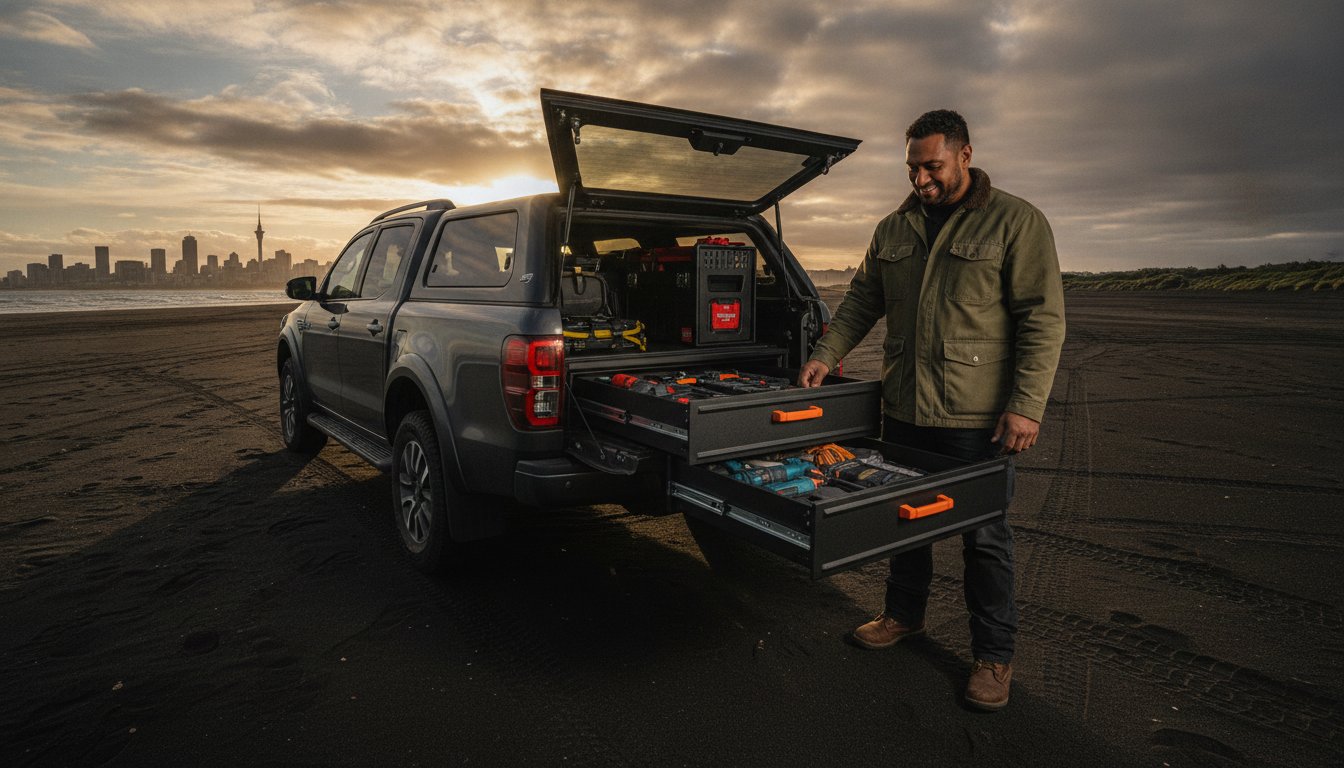
Generalist mechanical centres often lack the specific diagnostic targets and calibrated floor space required for large, modified 4x4s. Our Auckland workshop is purpose-built to handle heavy-duty commercial fit-outs, including GVM upgrades, bullbar installations, and winch mounting. We don’t just reset the warning light; we recalibrate the entire system to account for the physical changes in the vehicle’s geometry. This “one-stop-shop” approach eliminates the need to coordinate between multiple providers, which significantly reduces vehicle downtime. For comprehensive vehicle care, our team also provides expert fleet servicing designed to withstand the rigours of the New Zealand landscape. We work with common fleet models like the Ford Ranger and Toyota Hilux, ensuring every calibration meets OEM standards.
Book Your Fleet Audit Today
Compliance is a moving target, especially with the 2026 NZTA regulatory shifts looming. Our technicians utilise industry-leading diagnostic tools specifically tailored for New Zealand vehicle specifications. We can assess your current assets for compliance gaps, providing the clear technical documentation necessary for insurance providers and LVV certifiers. We prioritise a quick turnaround for our commercial clients because we know that every hour a vehicle spends in the workshop is an hour of lost productivity. We are committed to keeping Auckland businesses moving safely, legally, and efficiently. Don’t leave your fleet’s safety to chance; Contact Motortech 4X4 for a professional fleet ADAS assessment and ensure your vehicles remain fully compliant and road-ready.
Future-Proof Your Fleet Compliance Today
The 2026 regulatory shift marks a significant turning point for vehicle safety standards across New Zealand. Maintaining the integrity of your safety sensors is no longer just about driver assistance; it’s a fundamental requirement for road legal compliance and insurance protection. As we’ve explored, modifications like suspension lifts or bullbar fit-outs are primary triggers that demand a technical reset. Ensuring every camera and radar unit is precisely aligned is the only way to avoid the legal and financial risks of a system failure in the field.
Motortech 4X4 provides the technical expertise and specialist diagnostic equipment required to handle these complex recalibrations on modified trade vehicles. As Auckland experts in 4×4 fleet fit-outs, we provide the full documentation needed for NZTA and insurance compliance. This gives you total peace of mind that your assets are operating within factory specifications. Don’t let your business be caught out by the upcoming mandate or a denied insurance claim. Book your fleet ADAS calibration at Motortech 4X4 Auckland and keep your team moving with absolute confidence.
Frequently Asked Questions
How long does a standard fleet ADAS calibration take in Auckland?
A standard fleet ADAS calibration Auckland typically takes between one and three hours per vehicle. The exact duration depends on whether the manufacturer requires a static procedure in a controlled workshop environment, a dynamic on-road calibration, or a combination of both methods. High-use commercial vehicles with multiple sensors may require additional time to ensure every system is perfectly aligned.
Will a lift kit always interfere with my vehicle’s ADAS sensors?
Yes, installing a suspension lift kit changes the vehicle’s height and rake, which directly alters the sensor’s field of vision. Even a minor two-inch lift can cause a front-facing camera to miscalculate the distance to the vehicle ahead. This misalignment compromises the accuracy of safety features like Autonomous Emergency Braking, making a professional reset essential after any suspension modification.
Can I drive my fleet vehicle if the ADAS warning light is on?
Driving with an active ADAS warning light is a significant safety and liability risk. The light indicates that the safety system is either compromised or entirely disabled, which could lead to an accident if the driver relies on those features. Furthermore, from November 2026, any vehicle showing an ADAS malfunction indicator will fail its WoF or CoF inspection under new NZTA rules.
Is ADAS recalibration covered by insurance after an accident?
Recalibration is generally covered by insurance when it’s required as part of a collision repair process. However, if the calibration is needed because you’ve added aftermarket accessories like bullbars or lift kits, you should check your policy. It’s vital to ensure your insurer recognises these modifications and that the vehicle remains compliant with New Zealand road-legal standards.
Do I need to recalibrate ADAS after a simple wheel alignment?
Most modern vehicle manufacturers mandate a recalibration following a wheel alignment. Because an alignment adjusts the steering angle and the vehicle’s thrust line, the ADAS sensors must be updated to match the new mechanical geometry. If this isn’t done, the lane-keep assist system may pull the vehicle in the wrong direction while attempting to centre itself.
What happens if I install a bullbar without recalibrating the radar?
Installing a bullbar without recalibrating the radar often leads to “phantom braking” or the total failure of the Autonomous Emergency Braking system. The added weight of the bar and the new mounting position of the radar unit change how the vehicle perceives obstacles. Without a technical reset, the system cannot accurately detect hazards, which creates a dangerous driving environment for your staff.
Can any Auckland mechanic perform ADAS calibration for my fleet?
No, standard mechanical workshops usually don’t have the specialised laser targets, level calibration bays, and diagnostic software required for this work. Effective fleet ADAS calibration Auckland requires technicians who are specifically trained in electronic safety systems. Using a specialist ensures that the calibration meets strict OEM standards and provides the necessary documentation for your compliance records.
How much does ADAS calibration typically cost for a commercial ute?
The cost for recalibration varies based on the number of sensors fitted to the vehicle and the specific method required by the manufacturer. A single camera reset is generally less labour-intensive than a full system calibration involving both radar and camera units. Factors such as whether the vehicle requires a static, dynamic, or dual-stage calibration will influence the total time and equipment needed for the job.