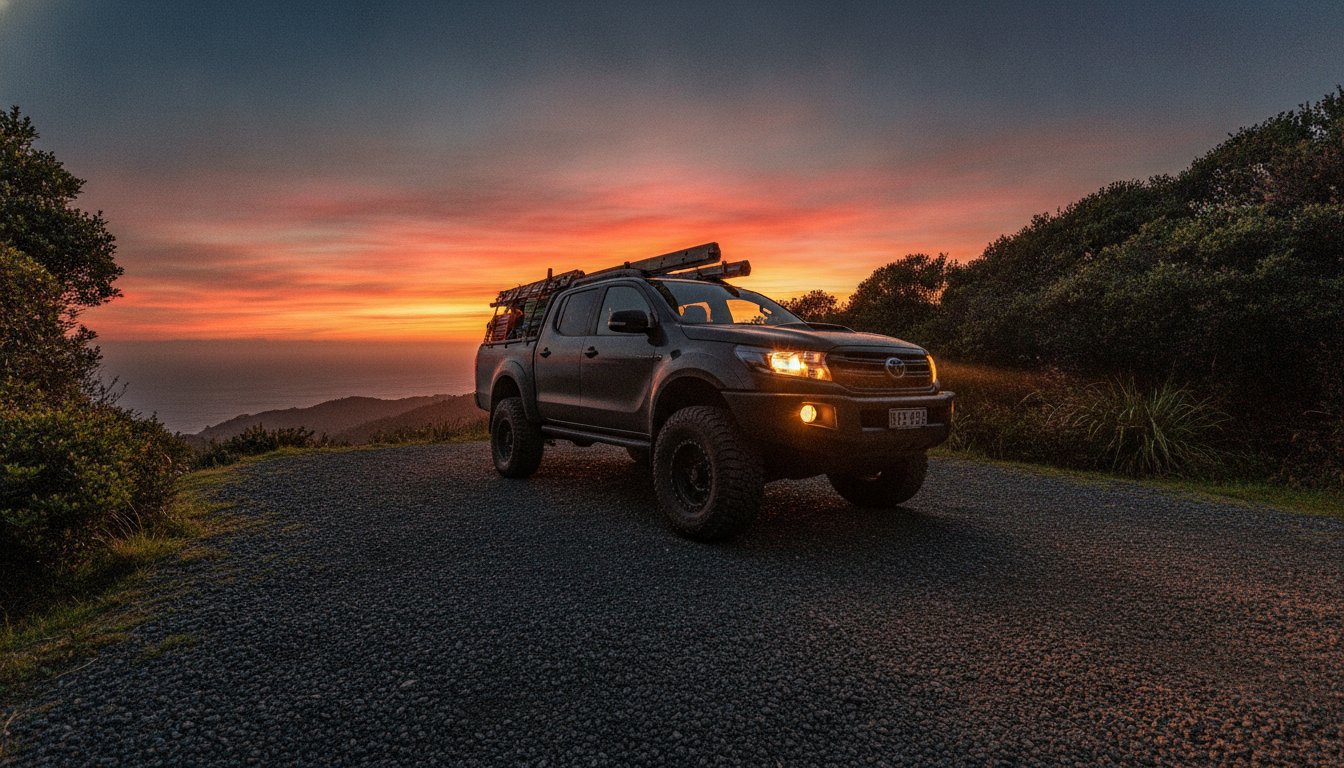
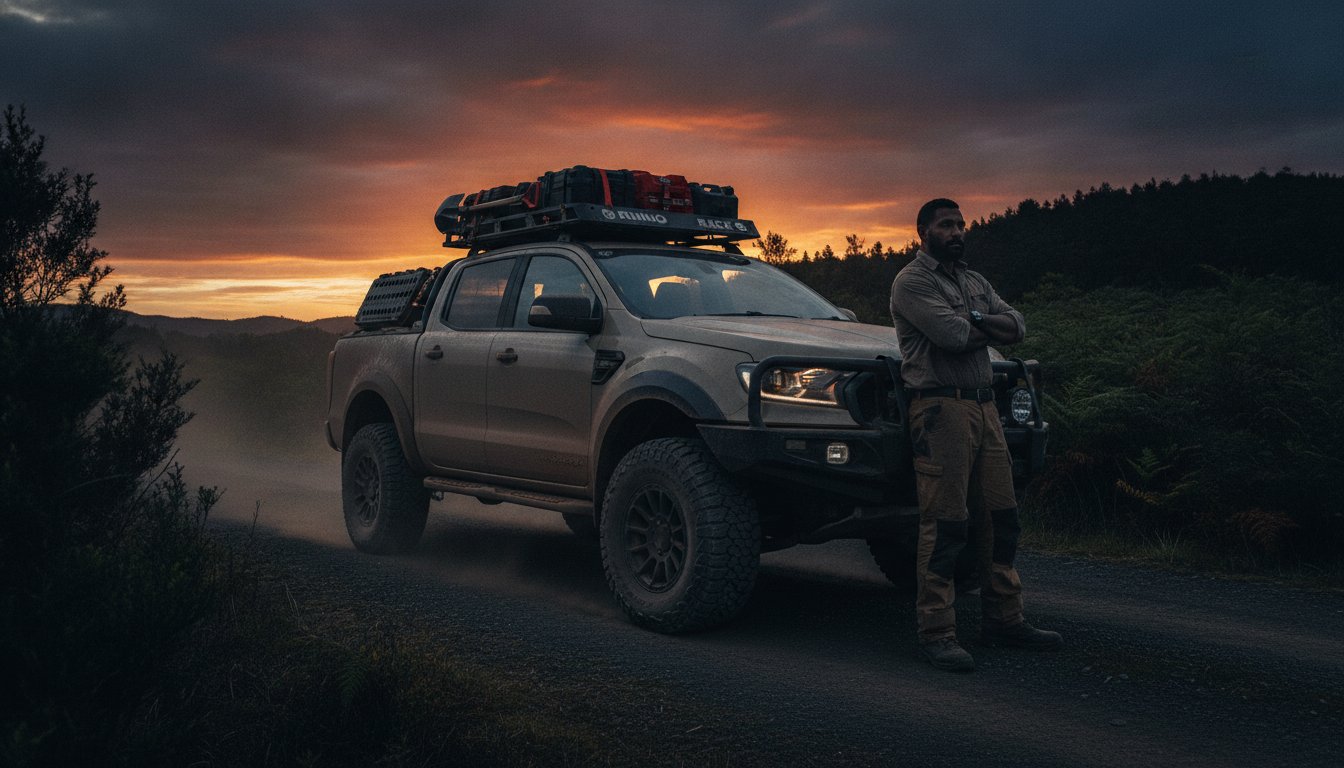
That rack bolted to your ute’s roof is doing a lot more than holding gear. It’s a structural modification that directly affects your load rating, your GVM compliance, and your vehicle’s long-term roof integrity. Choosing the best ute roof rack NZ has to offer isn’t a matter of picking the cheapest option online and hoping the fitment works out.
If you’ve spent time wading through conflicting static versus dynamic load ratings, wondering whether a DIY install will void your canopy warranty, or grinding your teeth at that persistent wind whistle on the motorway, you’re not alone. These are the exact frustrations that tradies and serious 4×4 owners across New Zealand deal with every time they spec up a rig.
This guide cuts through the noise. You’ll learn how to match a roof rack to your ute’s actual payload capacity, what to look for in a rack that handles both the Waikato worksite and a weekend run up a Northland forestry track, and why professional installation makes the difference between a rattle-free setup and an expensive mistake. By the end, you’ll have a clear, practical framework for choosing a rack that performs, complies, and holds its value.
Key Takeaways
- New Zealand’s UV intensity, salt spray, and corrugated back-country tracks place demands on roof racks that budget imports simply aren’t engineered to handle — understanding why matters before you spend a dollar.
- Selecting the best ute roof rack NZ conditions require means knowing the difference between static and dynamic load ratings, and matching your rack system to your ute’s actual remaining payload capacity.
- Platform systems and cross-bar systems serve fundamentally different purposes — choosing the wrong type for your worksite or off-road use case costs you both functionality and compliance.
- DIY installation carries real structural and warranty risks, and any modification that alters your ute’s roofline profile may require ADAS recalibration to keep your vehicle’s safety systems operating correctly.
- Integrating your roof rack with a GVM upgrade, bullbar, and lighting through a single specialist workshop ensures every modification works as a cohesive, legally compliant system rather than a collection of unrelated parts.
Beyond the Basic Bar: Why NZ Conditions Demand Heavy-Duty Ute Roof Racks
New Zealand is genuinely one of the harshest operating environments on the planet for vehicle accessories. The combination of high UV index, coastal salt spray, and the kind of corrugated back-country tracks that’ll shake loose a poorly mounted fitting within a single season creates a very specific set of demands. A ute (pickup truck) is fundamentally a working platform, and the rack bolted to its roof needs to be engineered to the same standard as the vehicle itself. Budget imports simply aren’t.
The failure point on cheap racks isn’t always dramatic. It’s gradual. Anodising peels. Mounting brackets develop micro-cracks from repeated flex. Fasteners corrode at the contact point between dissimilar metals. By the time you notice the problem, you’re looking at roof damage, not just a rack replacement. That’s the real cost of a low-grade system on a Coromandel forestry track or a Central Plateau run in winter.
The Auckland Tradie vs. The Weekend Warrior
For a tradie running ladders, conduit, and timber daily, the rack needs to handle consistent dynamic loading across Auckland’s stop-start traffic and motorway runs. But many of those same utes transition to the boat ramp or a Northland camping track on Friday afternoon. The best ute roof rack NZ tradies actually use isn’t a compromise between those two roles; it’s a system with a mounting platform versatile enough to carry trade gear Monday to Friday and swap to a rooftop tent or light bar configuration for the weekend. Accessory mount compatibility, specifically the T-slot or cross-bar channel system, is what makes that transition practical rather than theoretical.
Durability Standards for the NZ Backcountry
Material selection isn’t a marketing point. It’s structural. High-grade aluminium alloy resists the electrochemical corrosion that destroys mild steel in coastal environments, while maintaining the strength-to-weight ratio that keeps your payload capacity viable. Stainless steel hardware at mounting points prevents galvanic corrosion where the rack contacts the roof or canopy rail.
Wind noise is a separate engineering problem. A rack that whistles at 100 km/h on the Southern Motorway isn’t just annoying; it indicates aerodynamic inefficiency that increases fuel consumption and suggests the crossbar profile wasn’t tested at real-world speeds. Quality systems use aerofoil crossbar profiles specifically to address this.
Structural rigidity under off-road articulation is the specification that separates recreational-grade systems from true commercial-duty racks. When a ute’s chassis twists over uneven terrain, a rigid roof rack transfers that torsional load directly into the roof structure unless the mounting system incorporates controlled flex points. Understanding that distinction is central to identifying the best ute roof rack NZ conditions actually demand.
Understanding Load Ratings and Rack Types for NZ Utes
Two numbers define whether your roof rack setup is legal and safe: the rack’s rated capacity, and your ute’s remaining payload after you’ve accounted for fuel, passengers, tray gear, and canopy weight. Most buyers focus exclusively on the first number and ignore the second entirely. That’s where the compliance problem starts.
Static load rating refers to the maximum weight a rack can bear when the vehicle is stationary. Dynamic load rating is the figure that actually governs real-world use; it’s the maximum load permitted while the vehicle is in motion, and it’s always significantly lower. A rack marketed as carrying 200 kg static may have a dynamic rating of 75 kg or less. Load your rack to the static limit and drive it down a corrugated Northland track, and you’re not just stressing the rack; you’re potentially breaching the NZ vehicle modification regulations that govern load-carrying equipment on modified vehicles.
The ute’s own roof limit adds another constraint that’s frequently overlooked. Most dual-cab utes have a manufacturer-specified roof load limit between 100 kg and 150 kg dynamic, and that limit applies to the combined weight of the rack itself plus everything mounted to it. A quality aluminium platform rack can weigh 25 to 40 kg before you’ve placed a single item on it. Factor in a rooftop tent, recovery boards, and a spare tyre, and you’ll breach your ute’s roof limit well before you reach the rack’s rated capacity. This is precisely the intersection between roof rack selection and a GVM upgrade assessment that a specialist workshop needs to evaluate as part of any serious build.
Raising gear onto the roof also shifts your vehicle’s centre of gravity upward. The practical effect is reduced lateral stability in cornering and a higher rollover threshold during emergency manoeuvres. This isn’t a theoretical concern on back-country tracks with off-camber sections; it’s a handling characteristic that changes how your ute responds at speed.
Platform Racks: The Ultimate Off-Road Storage
A full platform rack provides maximum usable surface area for recovery gear, fuel cans, spare tyres, and expedition equipment. Low-profile platform designs address the garage clearance problem that’s genuinely relevant for Auckland CBD tradies working out of residential sites with limited height clearance. Critically, quality platform systems are engineered with canopy and hardlid compatibility in mind, mounting directly to the canopy’s side rails rather than the ute’s factory roof points, which preserves roof integrity and distributes load more effectively.
Cross-Bars: Lightweight and Efficient
Cross-bar systems are the practical choice for ute owners who need occasional carrying capacity without a permanent platform. They’re well-suited to kayaks, surfboards, ladders, and basic trade materials, and their removability is a genuine advantage; stripping the bars when not in use measurably reduces aerodynamic drag and fuel consumption. For new ute owners building out a rig progressively, cross-bars represent a cost-effective starting point that doesn’t foreclose future platform upgrades. The best ute roof rack NZ buyers choose at this tier is one with a quality T-slot channel system that accepts accessories and mounting hardware from a platform rack if the use case eventually demands it.
Top-Tier Ute Roof Rack Systems Compared: Rhino-Rack vs. The Market
Rhino-Rack’s Pioneer Platform has become the reference point against which most other systems in the NZ market are measured, and for good reason. It’s engineered specifically for the demanding conditions that Australian and New Zealand ute owners operate in, with a backbone mounting system that fundamentally changes how load stress is distributed across the rack structure. Understanding why that matters, and where other brands sit relative to it, is central to identifying the best ute roof rack NZ buyers should actually be speccing.
The core distinction between backbone-style mounting and traditional gutter or track mounts comes down to structural rigidity under dynamic load. Gutter mounts clamp to the vehicle’s outer lip and transfer load directly to that contact point. Under repeated off-road articulation, that’s a fatigue failure waiting to happen. Backbone systems run a central spine along the rack’s longitudinal axis, distributing load across multiple contact points and significantly reducing stress concentration at any single mount. For high-capacity dynamic loads, particularly recovery gear and rooftop tents on corrugated tracks, that engineering difference is not marginal. It’s the reason commercial and serious 4×4 builds default to backbone-style platforms rather than legacy gutter systems.
Accessory integration is where the market separates further. The Pioneer Platform’s T-slot channel system accepts a wide range of compatible accessories including awning mounts, shovel and hi-lift jack holders, and lighting brackets, without requiring secondary adaptor hardware. That matters for tradies and expedition-oriented owners who need a configurable system rather than a static platform. Brands at the budget end of the market often advertise accessory compatibility but use proprietary slot dimensions that limit you to that brand’s own accessory range. Before committing to any system, verify that the T-slot profile is industry-standard. It’s a detail that determines how useful your rack is five years from now, not just at purchase.
Compliance sits underneath all of this. Any load-carrying modification on a New Zealand ute must meet the requirements set out under the NZ Transport Agency load and towing regulations, and the rack system you choose directly affects your ability to meet those standards in practice.
The Backbone Revolution
Internal bracing isn’t just a structural upgrade; it’s what allows a platform rack to maintain its rated dynamic capacity without progressive mount fatigue. On modern ute cabins with flush rooflines, backbone systems also deliver a cleaner, more integrated visual profile than bolt-on gutter clamps. Long-term, the reduction in micro-movement at mounting points measurably extends the service life of both the rack and the roof surface beneath it.
NZ Compatibility: Ranger, Hilux, and Triton
The Ford Ranger Next-Gen presents a specific challenge: its flush door seals and revised roofline profile mean that legacy mounting kits from older Ranger generations don’t transfer across. Vehicle-specific mounting feet are non-negotiable here, and the Ranger’s ADAS sensor placement requires post-installation calibration if the rack alters the roofline geometry in the sensor’s field of view.
The Toyota Hilux remains the dominant platform for heavy trade use in New Zealand, and its roof rail configuration is well-supported across the major rack manufacturers. For high-load trade applications, prioritise systems that mount to the canopy rail rather than the factory roof points to preserve the Hilux’s roof integrity under sustained daily loading.
The Mitsubishi Triton’s narrower cab width and specific roof contour require model-specific mounting hardware. Generic cross-bar kits frequently don’t achieve adequate contact with the Triton’s roof profile, which introduces flex under load. Confirm vehicle-specific fitment data before purchasing any rack system for a Triton, and have a specialist workshop verify the mounting geometry prior to loading the rack.
Fitment Matters: Why Professional Installation Trumps DIY
A roof rack bolted on incorrectly isn’t just a nuisance. It’s a liability. Water ingress through improperly sealed mounting points causes corrosion that works inward from the roof skin, often invisible until it’s structural. On a ute that’s also your primary work vehicle, that’s a problem that compounds daily. The best ute roof rack NZ conditions demand is only as good as the installation behind it, and that’s where DIY fitment consistently falls short.
The failure modes are predictable. Swarf from drilling through roof skins contaminates the cavity beneath, accelerating rust from the inside out. Sealants applied without surface preparation fail within a single NZ winter. Mounting hardware torqued by feel rather than specification loosens under off-road vibration. None of these problems announce themselves immediately, which is precisely what makes them dangerous.
There’s also the warranty dimension. Many canopy manufacturers specify that modifications to the canopy structure, including rack mounting points, must be completed by a qualified installer to maintain warranty coverage. A DIY fitment that voids your canopy warranty is a costly shortcut.
The Professional Installation Process
A properly executed roof rack installation follows a defined sequence that eliminates the failure points DIY work introduces:
- Precision roof marking and preparation: Contact surfaces are cleaned, degreased, and marked to vehicle-specific templates before any drilling occurs. Swarf management during any penetration work is non-negotiable; contamination in the roof cavity is a corrosion initiation point that’s essentially impossible to remediate after the fact.
- Industrial-grade sealant application: Polyurethane or equivalent sealants rated for NZ’s UV and temperature cycling are applied to all penetration points and contact surfaces. Consumer-grade silicone isn’t an appropriate substitute.
- Torque-verified fastening: Every mounting point is torqued to manufacturer specification using calibrated tools. This isn’t optional for any rack that’ll see corrugated back-country tracks; it’s what separates a rack that stays put from one that develops progressive movement fatigue.
Safety Tech and Your Roof Rack
Modern utes, particularly the Ford Ranger Next-Gen and current Hilux variants, carry a suite of ADAS systems whose sensors are calibrated to the vehicle’s factory roofline geometry. Altering that profile, even by adding a low-profile rack, can shift the field of view for front-facing cameras and affect how Electronic Stability Control interprets lateral load during cornering. A raised centre of gravity from roof-mounted gear changes the vehicle’s dynamic behaviour in ways that ESC algorithms weren’t originally calibrated to manage.
Recalibrating these systems after a rack installation isn’t a recommendation. On vehicles where the rack alters sensor geometry, it’s a functional requirement. A specialist workshop with ADAS calibration capability handles this as part of the installation process, not as an afterthought. That’s a capability gap that separates a genuine 4×4 specialist from a basic fitting service.
WOF compliance and insurance validity both hinge on modifications being completed to a documented standard. An insurer investigating a claim has every incentive to scrutinise how accessories were fitted. Professional installation with a verifiable process provides the paper trail that protects you.
For Auckland ute owners building out a complete rig, combining roof rack fitment with suspension work, a GVM assessment, or lighting installation through a single specialist workshop eliminates the coordination risk of multiple trades working across the same vehicle. Talk to the Motortech 4X4 team about integrating your roof rack installation into a complete ute build.
Complete Your Auckland Ute Build with Motortech 4X4
A roof rack doesn’t exist in isolation. It’s one component in a system, and how it interacts with your ute’s GVM rating, suspension setup, bullbar weight, and payload capacity determines whether your build is genuinely capable or just visually impressive. This is the gap that most rack suppliers can’t bridge: they’ll sell you a platform, but they can’t tell you what it does to your compliance position. Motortech 4X4 can.
The GVM relationship is the most overlooked element in any serious ute build. Every kilogram of rack, canopy, bullbar, and snorkel counts against your vehicle’s gross vehicle mass limit before you’ve loaded a single item. A GVM upgrade, assessed and certified through Motortech 4X4’s Auckland workshop, expands that legal payload envelope so your rig can carry what the work actually demands. Pairing a roof rack installation with a GVM assessment isn’t belt-and-braces caution; it’s the only way to know your setup is legally compliant under load.
Beyond compliance, integration matters for performance. A high-performance lighting system mounted to your rack needs to work in concert with your vehicle’s electrical architecture. A snorkel paired with a suspension lift changes your approach geometry. A winch-equipped bullbar adds frontal mass that affects steering weight and braking distances. Motortech 4X4 builds these systems as cohesive units rather than a sequence of unrelated add-ons, which is precisely why their builds hold up where individually sourced modifications don’t. For the best ute roof rack NZ operators can run legally and confidently, the surrounding build matters as much as the rack itself.
Custom Fleet Solutions
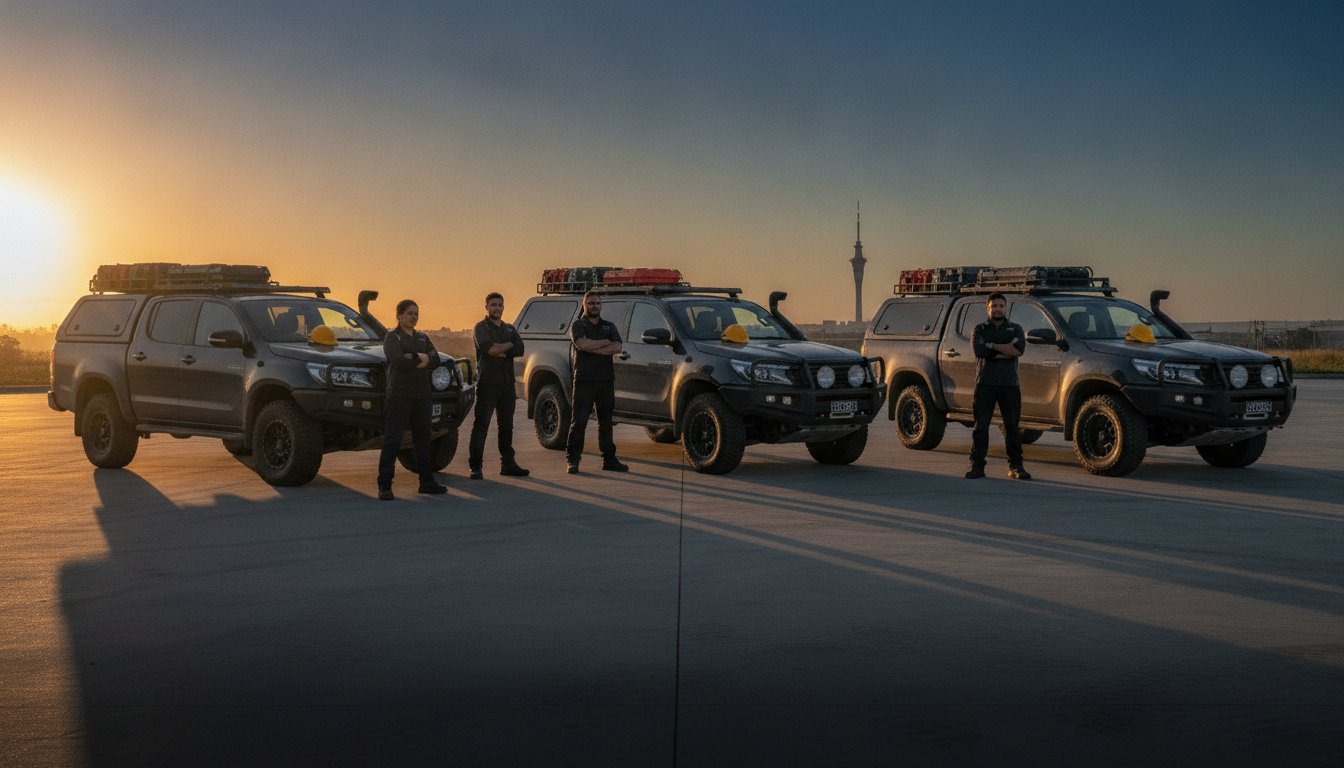
For Auckland businesses running multiple utes, consistency across a fleet isn’t just an aesthetic preference; it’s an operational and safety standard. Motortech 4X4 delivers uniform rack configurations across commercial fleets, ensuring every vehicle meets the same load rating, mounting specification, and compliance standard. Ongoing servicing for heavy-use rigs, where mounting hardware is inspected and re-torqued on a scheduled basis, keeps fleet vehicles performing to standard rather than degrading quietly between services.
Book Your Auckland Consultation
Speccing the best ute roof rack NZ conditions demand starts with a conversation about what your rig actually needs to do. Motortech 4X4’s Auckland service centre gives you the opportunity to assess rack systems directly, discuss your specific load requirements with a team that understands the compliance framework, and map out a build sequence that works within your timeline and payload constraints.
Build It Right the First Time
Choosing the best ute roof rack NZ conditions demand comes down to three things: matching your rack’s dynamic load rating to your ute’s actual remaining payload, selecting a system engineered for New Zealand’s UV intensity and corrugated back-country tracks, and having it installed to a documented professional standard that protects your warranty, your WOF compliance, and your roof integrity.
A rack that’s specced correctly and fitted properly doesn’t just carry gear. It becomes a permanent, reliable part of a rig that performs consistently whether you’re running a Northland forestry track on Saturday or loading trade materials in Auckland on Monday morning.
Motortech 4X4 are Auckland’s leading 4×4 modification specialists, with expert ADAS calibration capability, GVM upgrade services, and authorised installation of premium heavy-duty rack systems. They don’t just fit racks; they build complete, compliant rigs.
Get a professional roof rack fit-out at Motortech 4X4 Auckland and build a rig you can load with confidence.
Frequently Asked Questions About Ute Roof Racks in NZ
How much weight can I legally carry on my ute roof rack in NZ?
The legal weight limit is determined by two figures working together: your rack’s dynamic load rating and your ute’s manufacturer-specified roof load limit. Most dual-cab utes specify a dynamic roof limit between 100 kg and 150 kg, and that figure covers the rack’s own weight plus everything mounted to it. Exceeding either limit puts you in breach of NZ Transport Agency load regulations, regardless of what the rack itself is rated to carry statically.
The critical distinction is static versus dynamic rating. A rack rated at 200 kg static may carry a dynamic limit of 75 kg or less. Always confirm the dynamic figure with your rack supplier, then subtract the rack’s dead weight to calculate your actual usable payload. If those numbers don’t add up for your intended load, a GVM upgrade assessment is the correct next step.
Will installing a roof rack affect my ute’s fuel consumption?
Yes, and the impact is directly related to aerodynamic drag. Any structure added above the roofline disrupts airflow, and the effect compounds at motorway speeds. A bare platform rack with an open mesh surface creates measurably more drag than an aerofoil-profile cross-bar system. The difference in fuel consumption between a well-engineered low-profile rack and a budget flat-bar system can be noticeable on regular motorway runs.
Removing the rack entirely when it’s not in use is the most effective way to recover fuel efficiency. For owners who run cross-bars rather than a permanent platform, stripping the bars between jobs is a practical habit worth building. Aerofoil cross-bar profiles and wind deflectors fitted to the leading edge of platform racks reduce drag without requiring full removal.
Do I need a GVM upgrade if I install a heavy-duty platform rack?
Not automatically, but it depends on your total build weight. A GVM upgrade becomes necessary when the combined weight of your ute’s accessories, fuel, passengers, and cargo pushes the vehicle beyond its manufacturer-rated gross vehicle mass. A heavy-duty aluminium platform rack weighing 30 to 40 kg contributes to that total alongside your canopy, bullbar, snorkel, and any gear you’re carrying.
The only way to know your compliance position accurately is to have a specialist workshop assess your complete build weight against your ute’s GVM rating. Motortech 4X4 provides GVM upgrade assessments and certification as part of their Auckland modification services, which is the practical approach for any serious rig build that combines a roof rack with multiple other accessories.
What is the best roof rack for a Ford Ranger Wildtrak?
The best ute roof rack NZ Ranger Wildtrak owners should specify is one supplied with vehicle-specific mounting feet engineered for the Next-Gen Ranger’s revised roofline and flush door seal profile. Legacy mounting kits from earlier Ranger generations don’t transfer across. Backbone-style platform systems that distribute load across multiple contact points are the preferred configuration for the Wildtrak’s roof structure under dynamic off-road loading.
ADAS recalibration is a non-negotiable requirement on the Next-Gen Ranger following any rack installation that alters the roofline geometry. The vehicle’s front-facing camera and driver assistance systems are calibrated to factory roof geometry, and even a low-profile rack can shift the sensor field of view enough to affect system performance. Confirm that your installer has ADAS calibration capability before booking the fitment.
Can I install a rooftop tent on any ute roof rack?
No. Rooftop tents are among the heaviest accessories mounted to a roof rack, and many entry-level cross-bar systems don’t carry sufficient dynamic load rating to support them safely. A rooftop tent’s weight, typically between 40 kg and 80 kg depending on the model, must sit comfortably within both the rack’s dynamic rating and the ute’s manufacturer-specified roof load limit, with margin remaining for occupants and additional gear.
Platform racks with backbone-style mounting are the appropriate foundation for rooftop tent installations. Verify that the rack manufacturer explicitly supports rooftop tent use in their load rating documentation, and confirm that your ute’s remaining payload capacity after the tent’s weight is accounted for still supports your intended load. A specialist workshop can assess the combined weight impact before you commit to the configuration.
How do I reduce wind noise from my roof rack at motorway speeds?
Wind noise is primarily a function of crossbar profile geometry. Circular or square-section bars create turbulence at speed; aerofoil-profile bars are engineered to manage airflow and significantly reduce acoustic output at 100 km/h. If your existing rack produces noticeable whistle on the motorway, fitting a wind deflector to the leading crossbar is the most cost-effective retrofit solution.
Persistent noise after fitting a deflector usually indicates either a gap in the deflector’s seal against the bar or a secondary vibration source at a mounting point. Check that all mounting hardware is torqued to specification, as micro-movement at any contact point generates its own resonance frequency. If the noise originates from accessories rather than the bars themselves, repositioning or adding rubber isolation mounts to the affected item typically resolves it.
Does a roof rack installation affect my vehicle warranty or WOF?
It can affect both if the installation isn’t completed correctly. Many canopy manufacturers specify that modifications to the canopy structure, including rack mounting points, must be carried out by a qualified installer to maintain warranty coverage. A DIY fitment that’s later identified as the source of structural damage puts your canopy warranty at direct risk.
For WOF compliance, the vehicle must meet the standards set under the Land Transport Rule at the time of inspection. A rack that’s improperly secured, overloaded, or creates a hazard to other road users can result in a failed inspection. Professional installation with documented torque specifications and sealant application provides the verifiable process record that protects your compliance position and gives insurers a clear audit trail if a claim is ever investigated.
Is a backbone system better than a traditional foot pack?
For high-capacity dynamic loads and sustained off-road use, yes. Traditional foot packs clamp to gutter rails or roof tracks and concentrate load stress at discrete contact points. Under repeated off-road articulation, that stress concentration accelerates fatigue at the mounting interface. Backbone systems run a central structural spine along the rack’s longitudinal axis, distributing load across multiple points and reducing stress concentration at any single mount.
The practical advantage is measurable over a rack’s service life. Backbone-style platforms maintain their rated dynamic capacity without progressive mount fatigue, and they produce less micro-movement at roof contact points, which protects the roof surface beneath. For light occasional use on sealed roads, a quality foot pack system is adequate. For commercial daily use or serious back-country work, the backbone architecture is the more durable and structurally sound choice.