The extra range matters only if the fuel system works as intended. Long-range tank upgrades commonly add between 30 and 180 litres, depending on vehicle space, fuel type and travel needs. A long range fuel tank installation can mean fewer fuel stops, but it also needs to suit your vehicle and be followed by thorough system testing.
If you travel beyond town or plan remote trips, carrying extra fuel can make journey planning easier. The right setup depends on your vehicle’s make, model and year, and how the tank fits with your other equipment.
This guide explains what a long-range tank can offer, how to assess compatibility and what to consider after installation. It also covers how professional fitting fits into a carefully planned vehicle upgrade.
Key Takeaways
- Choose between a replacement tank and an auxiliary tank based on how the setup integrates with your vehicle’s existing fuel system and available space.
- Use your vehicle’s make, model and year to narrow down compatible tank options; some auxiliary setups can also affect spare-tyre placement.
- Understand what a long-range upgrade changes and how fuel type, vehicle layout and travel plans shape the suitable configuration.
- Post-installation testing checks the fuel system’s operation, making it an essential part of completing the fitment.
Why do I need a Long Range Fuel Tank?
Extra fuel capacity can mean fewer stops on long-distance trips. The distance between refills depends on the tank’s usable capacity and your vehicle’s fuel economy. Two common options are a replacement tank and an auxiliary tank. A replacement tank takes the place of the factory tank, while an auxiliary tank adds a separate supply. Each option stores and delivers fuel differently, so the right choice depends on your routes, fuel use and available vehicle space.
An auxiliary setup is vehicle-specific, not a universal fit. Its tank, mounting points and transfer system must suit the vehicle’s layout. Some systems transfer fuel into the factory tank, so the factory gauge may stay full longer while the auxiliary tank feeds it. For example, a Jeep Gladiator JT auxiliary tank is listed with a 17-gallon capacity for 2019-2025 models. That example illustrates why vehicle model and year matter before choosing a tank.
A long range fuel tank installation may suit remote touring, routes with long gaps between fuel stops or vehicles with high fuel consumption. Compare the usable extra capacity with your actual journey needs. For an auxiliary tank, also consider how it works with the factory gauge and fuel system. Replacement and auxiliary tanks address the same need through different layouts.
Whether LVV certification or another approval applies depends on the vehicle, tank design and installation changes. Include the relevant approval pathway in the installation plan rather than assuming every replacement or auxiliary tank follows the same process.
Tank options are vehicle-specific, and no single design suits every make and model. Listings include vehicle-specific designs, such as the Jeep Gladiator JT example above. Compare options by make, model, year, tank type and capacity. Ask how fuel transfers, how the gauge operates, and whether the tank clears the vehicle’s existing components and works with its fuel system.
When choosing an installer in New Zealand, look for a workshop experienced with vehicle-specific fitment and fuel-system modifications. Discuss your vehicle and intended touring use. Ask which tank design suits your setup, how fuel transfers, what testing is carried out after fitting and how any required approval is handled. These questions clarify the scope of the installation.
Tank compatibility by vehicle model and year
A tank must match the vehicle’s generation, body configuration and underbody layout. The model name alone is not enough: differences between model years can make a design unsuitable. The examples below show how fitment varies across Toyota and Land Rover vehicles:
- Toyota FJ Cruiser, 2007-2014: 30-gallon auxiliary tank.
- Toyota 4Runner 5th Gen and Lexus GX 460, 2010-2024: 24-gallon auxiliary tank.
- Toyota Land Cruiser 100 and Lexus LX 470, 1998-2004: 24-gallon auxiliary tank.
- Land Rover Discovery III/IV, 2008-2016: 29-gallon auxiliary tank.
These are examples, not interchangeable specifications. Confirm the exact model year and body style, then compare the tank’s mounting points, fuel connections and underbody clearance. An auxiliary tank may also affect spare-tyre placement on some LandCruiser wagons. Rear bars, water tanks and other touring equipment can reduce available space, so assess the complete setup before choosing a design.
The tank and its fuel add weight, along with passengers, luggage and accessories. Consider the vehicle’s GVM and remaining payload as part of the complete touring configuration, rather than assessing tank capacity on its own. A larger tank can leave less capacity for other gear. Include planned equipment in the fitment assessment, particularly if the vehicle is already modified.
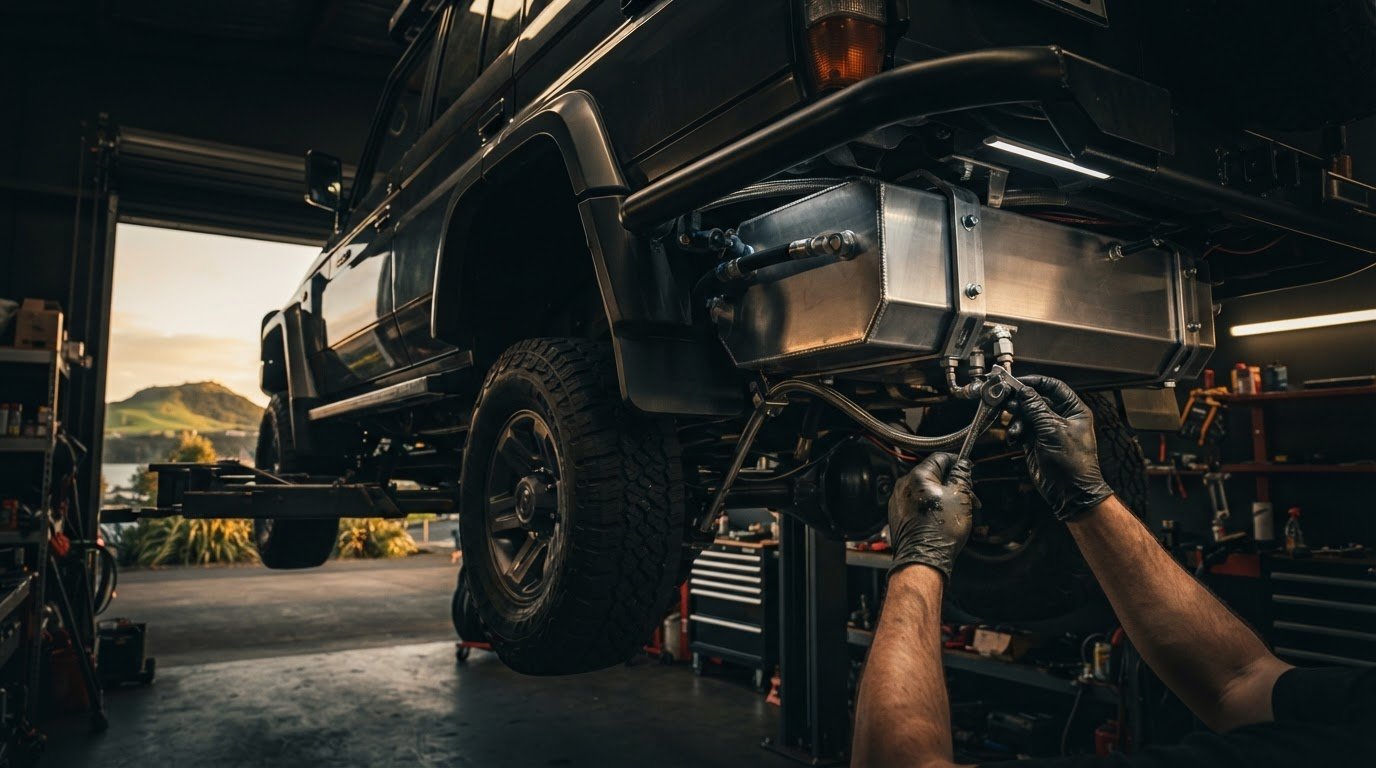
Installation generally involves selecting the correct tank, removing or preparing the existing fuel system, fitting and securing the tank, connecting fuel lines, and testing the system. The work depends on whether the design replaces the factory tank or adds auxiliary capacity.
Before choosing, gather the vehicle’s exact year, model, body configuration and existing accessories. A vehicle-specific fitment assessment helps relate those details to tank layout, payload considerations and touring equipment.
Post-installation fuel system testing
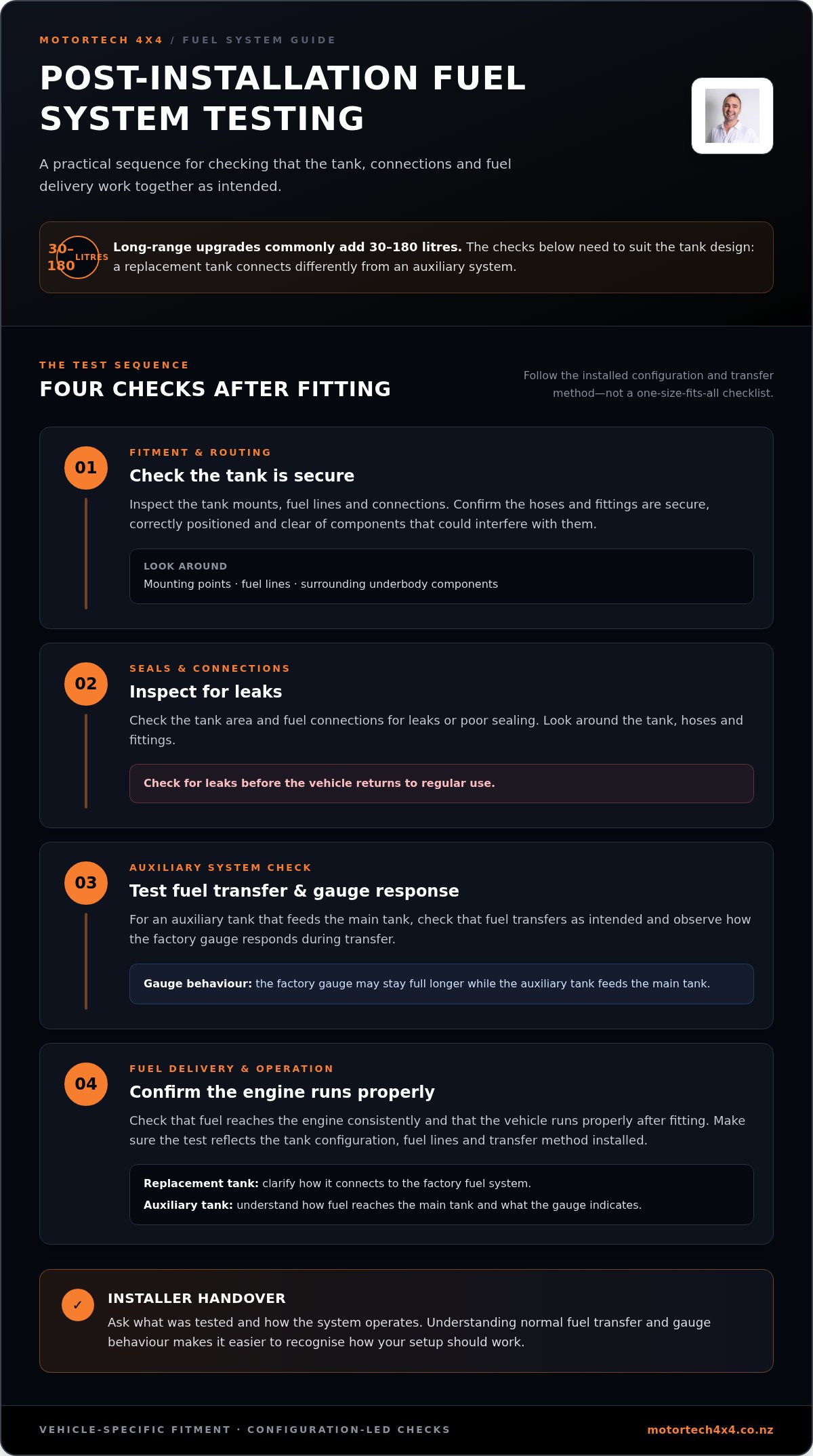
After fitting, the fuel system needs testing to confirm that the tank, lines and connections work together as intended. The checks should reflect the design: a replacement tank connects differently from an auxiliary system. With an auxiliary tank, pay particular attention to fuel transfer and the factory gauge. For example, if the auxiliary tank feeds the main tank, check that the gauge responds as expected as fuel transfers.
Inspect the tank area and fuel connections for leaks or poor sealing. Check that hoses and fittings are secure, correctly positioned and clear of components that could interfere with them. Review the mounting points and surrounding components after fitting, especially where underbody space is limited. These checks can help identify installation issues before the vehicle returns to regular use.
The system also needs to supply fuel consistently to the engine, with an auxiliary system transferring fuel into the main tank as intended. Testing should suit the tank configuration, fuel lines and transfer method fitted to the vehicle. For example, an auxiliary tank for a Jeep Gladiator JT has a vehicle-specific layout, so its functional checks must match that setup.
- Inspect tank mounts, fuel lines and connections for secure fitment.
- Check for leaks around the tank, hoses and fittings.
- Test auxiliary fuel transfer and observe the factory gauge response.
- Confirm the engine receives fuel and runs properly after fitting.
Ask the installer to explain what was tested and how the system operates. With an auxiliary tank, understand how fuel reaches the main tank and what the gauge indicates during transfer. With a replacement tank, clarify how it connects to the factory fuel system. Knowing how the setup should behave makes it easier to recognise normal operation and spot changes that need attention.
What is a long-range fuel tank and which vehicles can have one installed in New Zealand?
A long-range fuel tank increases the fuel a vehicle can carry, helping extend the distance between refuelling stops. Common upgrades add 30 to 180 litres, depending on vehicle space, fuel type and travel needs. The extra capacity does not translate into one fixed driving range. Fuel consumption, terrain, load and driving conditions all affect how far a vehicle travels.
In New Zealand, diesel and petrol tank options are available for popular 4WD makes and models. Fitment depends on the specific vehicle, not simply the badge on its bonnet. Before choosing a tank, identify the vehicle’s make, model, year and fuel type. Then compare the available fitment with the vehicle’s layout and planned use.
Choose a capacity that suits your actual journeys. A vehicle used for remote touring may need a different setup from one driven mainly around town. Consider how often your routes pass fuel stops, how much fuel the vehicle uses and whether extra capacity fits without compromising the rest of your touring setup. Tank size alone does not determine the distance you can travel between refills.
- Match the vehicle: Record its exact make, model, year and fuel type.
- Consider the route: Note where fuel stops fall along regular trips.
- Compare capacity: Relate the added litres to fuel consumption and travel plans.
- Review the setup: Account for other equipment and the tank’s position.
These considerations help narrow the options and give the installer practical details for assessing fitment, fuel-system connections and intended use. A long-range setup needs to work as part of the complete vehicle, not just provide extra capacity. Choose a design made for your vehicle and suited to your fuel and touring requirements.
Ready to plan a suitable setup? Discuss your vehicle’s fuel tank fitment and use details to identify the next step.
Motortech 4X4: Suspension Kits
Motortech 4X4 can help plan related 4WD upgrades alongside your touring setup. Suspension Kits may be relevant when you’re preparing a vehicle for regular travel with equipment, while GVM Upgrades are worth discussing if your build includes additional load. Bullbars and Snorkels can also form part of a broader vehicle modification plan.
Consider the vehicle as a complete package: its intended use, added accessories and carrying requirements all inform which upgrades are relevant. Motortech 4X4 offers these products for 4WD owners planning practical modifications, rather than treating each accessory as an isolated choice.
For guidance on related vehicle upgrades, contact Motortech 4X4.
Plan the next step for your touring setup
Before committing to a long range fuel tank installation, consider how you use the vehicle as a complete touring platform. The tank is one part of the build: carrying equipment, protecting the front of the vehicle and preparing for varied terrain can all affect the wider setup. Matching modifications to your vehicle and travel needs helps keep the plan practical.
Motortech 4X4 offers Suspension Kits, Bullbars and Snorkels for drivers planning complementary 4WD upgrades. These options can be considered alongside your vehicle’s intended use and existing equipment, rather than as unrelated additions. A clear outline of your vehicle and touring plans gives the conversation a useful starting point.
For a practical next step, contact Motortech 4X4 about installation. Take your vehicle details and intended use into the discussion, then work towards a setup that suits your plans. Your next touring upgrade can start with a well-considered fitment plan.
Frequently Asked Questions
What are the benefits and drawbacks of installing a long-range fuel tank?
Extra capacity can make routes with fewer convenient refuelling stops easier to plan and reduce how often you stop on longer trips. The trade-offs include added weight, reduced remaining payload and potential effects on available space. Consider your usual routes and how the vehicle is loaded, not just the extra capacity, before deciding whether the upgrade suits your driving.
How do long-range replacement tanks compare with auxiliary fuel tanks?
A replacement tank takes the place of the factory tank; an auxiliary tank adds a separate fuel supply. The practical difference is how each design integrates with the existing fuel system. An auxiliary setup may use a transfer system, while a replacement changes the tank itself. Compare how you’ll manage refuelling and gauge readings, as well as how the design fits with the equipment already on your vehicle.
How does a larger fuel tank affect vehicle payload, axle loads, range and fuel consumption?
A larger tank reduces remaining payload because the tank and its fuel add load. The load’s position also matters, as weight is distributed across the vehicle’s axles. Extra fuel can extend the distance between stops, but carrying more weight can affect fuel use. Assess the vehicle with passengers, luggage and accessories aboard rather than considering the tank in isolation.
What safety risks, warranty issues and maintenance requirements come with a long-range fuel tank?
Key concerns include fuel leaks, damaged connections and tanks or lines that become loose or worn. Follow the tank maker’s maintenance guidance and include the fuel system in routine vehicle inspections. Pay attention to fuel smells or visible damage, and have any concerns assessed promptly. Tank manufacturer warranties vary by brand, so keep the product and installation information with your vehicle records.
Which long-range fuel tank brands and models are available in New Zealand?
Diesel and petrol options are available for popular 4WDs, with models varying by vehicle fitment. Examples include Toyota FJ Cruiser, 4Runner and Land Cruiser models, Lexus GX 460 and LX models, Land Rover Discovery III/IV, and Jeep Gladiator JT.