Could a thick underbody coating leave your 4×4 just as exposed to a rock strike as before? It can. Coatings help create a barrier against moisture and corrosion, while physical guards are designed to shield vulnerable components from impacts. That distinction matters when considering underbody protection installation Auckland, where coastal salt, damp roads and off-road debris can all influence what your vehicle needs.
It’s understandable to want one durable solution, especially if you’re concerned about existing rust or hidden damage. Start with the vehicle’s condition and how you drive, rather than choosing a one-size-fits-all treatment. A coating won’t repair structural corrosion, and a guard doesn’t replace corrosion protection.
This guide explains the differences between coatings and physical guards, Auckland-specific conditions to consider, and why inspection and preparation matter before work begins. Motortech 4X4’s Glenfield workshop offers 4×4 servicing and mechanical work alongside fabrication and custom work, so local owners can plan vehicle care and modifications in context.
Key Takeaways
- Choose between corrosion protection and impact protection by identifying what your 4×4 is most exposed to. The two approaches serve different purposes.
- Consider existing rust or damage before choosing a treatment. Vehicle condition and preparation affect which approach is suitable.
- For underbody protection installation Auckland planning, factor in your usual driving, from sealed-road commuting and coastal exposure to gravel and off-road travel.
- Make a practical plan by noting your vehicle’s use, current condition, protection goal and planned modifications. Motortech 4X4’s Glenfield workshop offers 4×4 servicing and mechanical work, as well as fabrication and custom work.
Underbody Protection Installation in Auckland: Coating or Physical Guard?
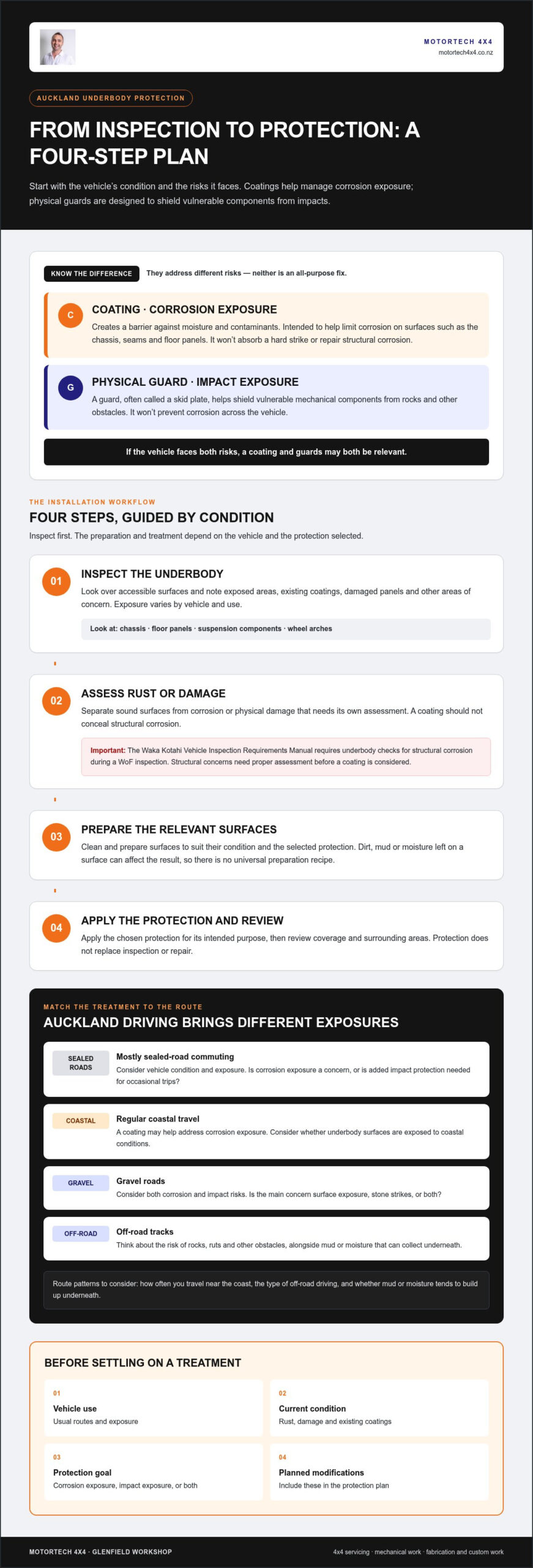
Underbody protection is an umbrella term, not one product or installation method. The right choice depends on what the vehicle is exposed to. Corrosion protection creates a barrier against moisture and contaminants; impact protection uses a physical guard to shield vulnerable components from knocks. These options address different risks, and neither prevents every type of underbody damage.
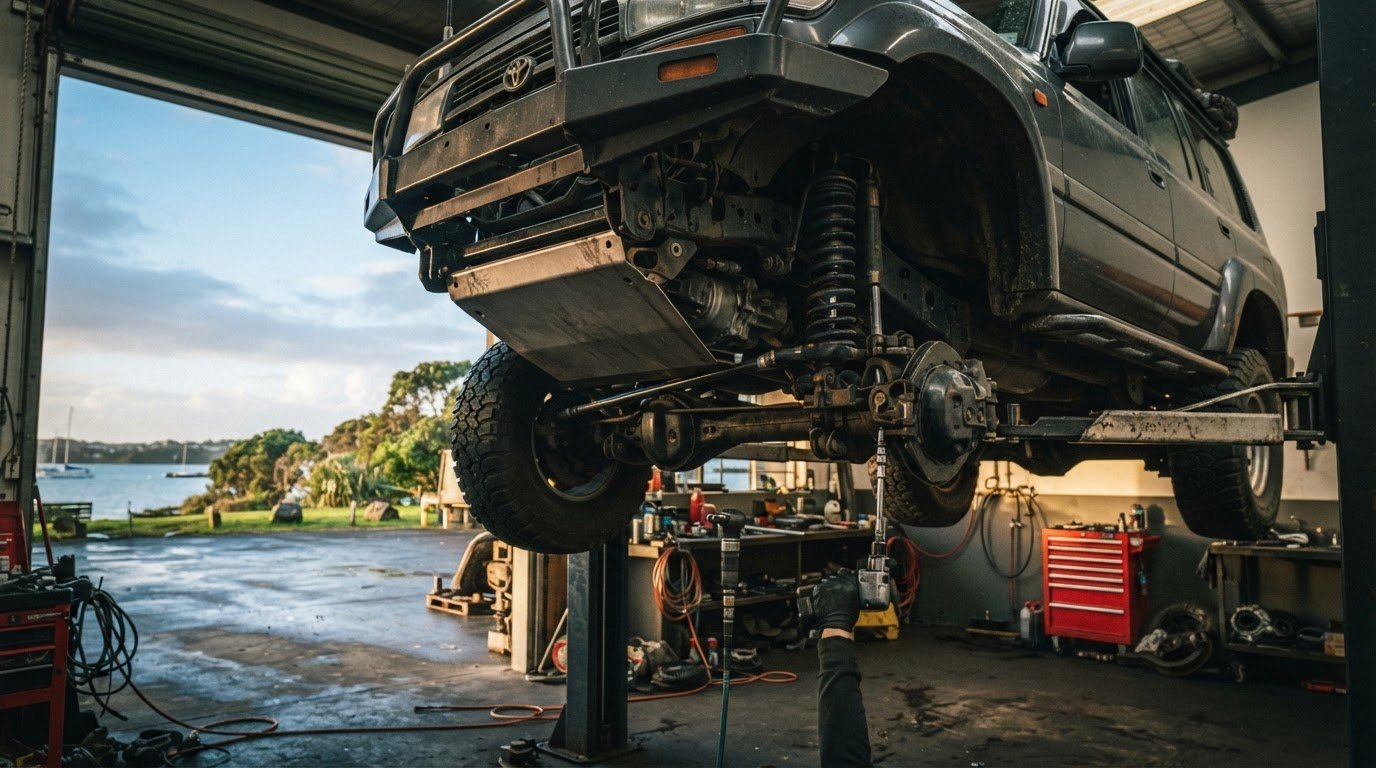
Protective coatings are intended to help limit corrosion on surfaces such as the chassis, seams and floor panels. Physical guards, often called skid plates, cover vulnerable mechanical components and help deflect direct impacts from rocks or other obstacles. This overview of physical skid plates explains their role in shielding areas such as the oil sump and drivetrain. A guard won’t prevent corrosion across the vehicle, while a coating won’t absorb a hard strike.
What does underbody protection protect against?
Moisture and mud can collect around exposed underbody areas, while coastal salt and road debris can contribute to surface wear and corrosion. Relevant areas include the chassis, floor panels, suspension components and wheel arches. What’s exposed varies by vehicle and use, so underbody protection installation Auckland owners consider should match the actual risk, rather than being treated as a single all-purpose fix.
Condition matters, too. A coating shouldn’t be used to conceal structural corrosion: New Zealand’s Waka Kotahi Vehicle Inspection Requirements Manual requires underbody checks for structural corrosion during a WoF inspection. If there’s rust or damage, it needs to be assessed before protection is applied. The practical distinction is straightforward: choose a coating to help manage corrosion exposure, a guard for impact exposure, or consider both if the vehicle faces both risks. Neither replaces inspection or repair.
What Happens During Underbody Protection Installation?
A sound plan starts with the vehicle, not the product. A typical workflow includes inspecting the underbody, identifying rust or damage, preparing the relevant surfaces, applying the selected protection and reviewing the result. The preparation and treatment depend on the vehicle’s condition and the type of protection being considered.
Inspect and prepare the surface before applying a coating, because its condition affects whether protection can be applied appropriately. The assessment should consider exposed underbody areas, existing coatings, damage and signs of corrosion. Dirt, mud or moisture left on a surface can affect the result, so preparation needs to suit the material and treatment rather than follow a universal recipe.
- Inspect: Look over accessible underbody surfaces and note areas of concern, including damaged panels or coating.
- Assess rust or damage: Distinguish sound surfaces from corrosion or physical damage that needs separate assessment.
- Prepare: Clean and prepare the relevant surfaces in a way that suits their condition and the selected protection.
- Apply and review: Apply the chosen protection for its intended purpose, then review coverage and surrounding areas.
Why does existing rust change the installation plan?
Applying a coating over visible rust without assessing it can conceal the condition rather than address it. Surface corrosion and suspected structural corrosion aren’t the same issue, so the next step depends on what an inspection reveals. Rust treatment is separate from protecting a sound surface; there isn’t one product or process that suits every vehicle. If corrosion affects structural areas, it needs proper assessment before any coating is considered.
When planning underbody protection installation Auckland owners should bring together the vehicle’s condition, past use and protection goal before settling on a treatment. Motortech 4X4’s Glenfield workshop provides 4×4 servicing and mechanical work as part of wider vehicle care.
Choosing Underbody Protection for Auckland Driving Conditions
Your usual routes are a better guide than a generic “4×4 use” label. Auckland owners may spend most of their time on sealed roads, travel regularly near the coast, tackle gravel roads or head off-road. Each pattern brings different exposure, so underbody protection installation Auckland planning should start with where and how the vehicle is driven.
How should 4×4 owners assess their vehicle’s exposure?
Think through your regular routes, how often the vehicle is near the coast, the type of off-road driving it does and whether mud or moisture tends to build up underneath. Then define the main concern: corrosion exposure, or the risk of striking rocks, ruts or other obstacles? The answer helps you decide whether a coating, physical guards or a combination is relevant, without assuming one option suits every vehicle.
| Exposure or risk | Relevant protection type | Question to resolve |
|---|---|---|
| Mostly sealed-road commuting | Depends on condition and exposure | Is corrosion exposure a concern, or is added impact protection needed for occasional trips? |
| Regular coastal travel | Coating may help address corrosion exposure | Does the vehicle’s use leave underbody surfaces exposed to coastal conditions? |
| Gravel roads | Consider the different corrosion and impact risks | Is the main concern surface exposure, stone strikes, or both? |
| Off-road tracks | Physical guards may suit impact exposure | Which components face a realistic risk of contact with obstacles? |
Auckland’s coastal setting makes salt and damp conditions relevant considerations, particularly for vehicles regularly used near the shore. Beach and off-road trips can also bring wet sand or mud into contact with underbody areas. That doesn’t make a coating or guard automatically necessary: the vehicle’s condition and actual use still matter.
For vehicle-care planning that takes your 4×4’s use into account, explore Motortech 4X4’s 4×4 servicing at its Glenfield workshop.
Planning Underbody Protection with an Auckland 4×4 Workshop
A useful workshop discussion starts with a clear picture of the vehicle and how it’s used. This puts the protection goal in context with the vehicle’s condition and any other planned 4×4 work. For underbody protection installation Auckland planning, bring the practical details rather than focusing on a product choice alone.
What vehicle details should owners have ready?
Note the make and model, typical driving, current underbody condition and any protection already fitted. Describe the main concern plainly: corrosion exposure, impact protection or both. If you’ve noticed rust, damage, trapped mud or chipped coating, note where it is and when you first saw it. Include planned modifications, such as suspension changes or added accessories, so the broader vehicle set-up is part of the conversation.
- Vehicle: Make, model and relevant existing modifications.
- Use: Regular routes, coastal exposure, gravel travel and off-road driving.
- Condition: Visible rust, damage, existing coatings or fitted guards.
- Goal: Corrosion protection, impact protection or a combination.
Motortech 4X4 is based in Glenfield on Auckland’s North Shore and provides servicing and mechanical work for 4WDs. Its fabrication and custom work includes custom front and rear protection bars, bumpers, side steps, roll bars, spare-wheel carriers and side-protection bars. These are distinct from underbody guards, but the workshop’s mechanical and fabrication services provide relevant context when planning a broader 4×4 project. The vehicle and intended outcome still determine what protection is appropriate.
Bring your vehicle details and modification priorities to Motortech 4X4 for 4×4 servicing and custom work. It’s a practical way to plan underbody concerns alongside wider mechanical and modification needs.
Plan Protection Around Your Next 4×4 Project
Underbody protection is one part of keeping a 4×4 suited to its intended use. As your plans develop, consider how ongoing servicing and future modifications fit together rather than making a decision in isolation. A clear protection goal is a practical starting point for discussing underbody protection installation Auckland owners are considering as part of a wider vehicle plan.
Motortech 4X4’s Auckland workshop in Glenfield provides 4×4 servicing and mechanical work alongside fabrication and custom work. Its fabrication includes protection bars, bumpers, side steps and side-protection bars. This broader workshop capability gives you a place to consider underbody concerns alongside other planned work, without assuming one solution suits every build.
Before your next project, consider what you want the vehicle to handle and which servicing or custom-work needs sit alongside that goal. Talk with Motortech 4X4 about your vehicle’s servicing and custom-work needs, and take a practical next step towards a plan that suits your 4×4.
Frequently Asked Questions
Is underbody protection worth considering for an Auckland 4×4?
It can be worth considering if your regular driving exposes the vehicle to damp conditions, coastal environments or debris. For underbody protection installation Auckland owners should weigh that exposure against the vehicle’s condition and intended use, rather than assume every 4×4 needs the same treatment. Note where and how the vehicle is used, then identify whether the main concern is surface corrosion, impact or both.
Can underbody protection be applied over existing rust?
Existing rust should be assessed before protection is applied. A new coating won’t treat corrosion simply by covering it, and the appropriate preparation depends on what’s present and where it has developed. Visible surface rust may need a different assessment from corrosion affecting a structural area. Don’t assume a rust-removal process or recoating sequence described for another vehicle will suit yours.
How long does underbody protection installation take?
There isn’t one reliable timeframe for every vehicle or protection method. The scope can vary with access to the underbody, its current condition, the preparation required and the selected treatment. Existing rust or damaged coating may add work. A useful estimate depends on the vehicle and proposed scope, rather than a general duration that may not reflect the work involved.
Does underbody coating protect a 4×4 from rock impacts?
No. A coating is intended for corrosion exposure, not to absorb a direct strike. A physical guard may help shield selected vulnerable components, but it doesn’t cover every part of the underbody or prevent every type of damage. If your trips include rocky tracks or uneven ground, consider where contact is most likely and which components are exposed before deciding what protection is relevant.