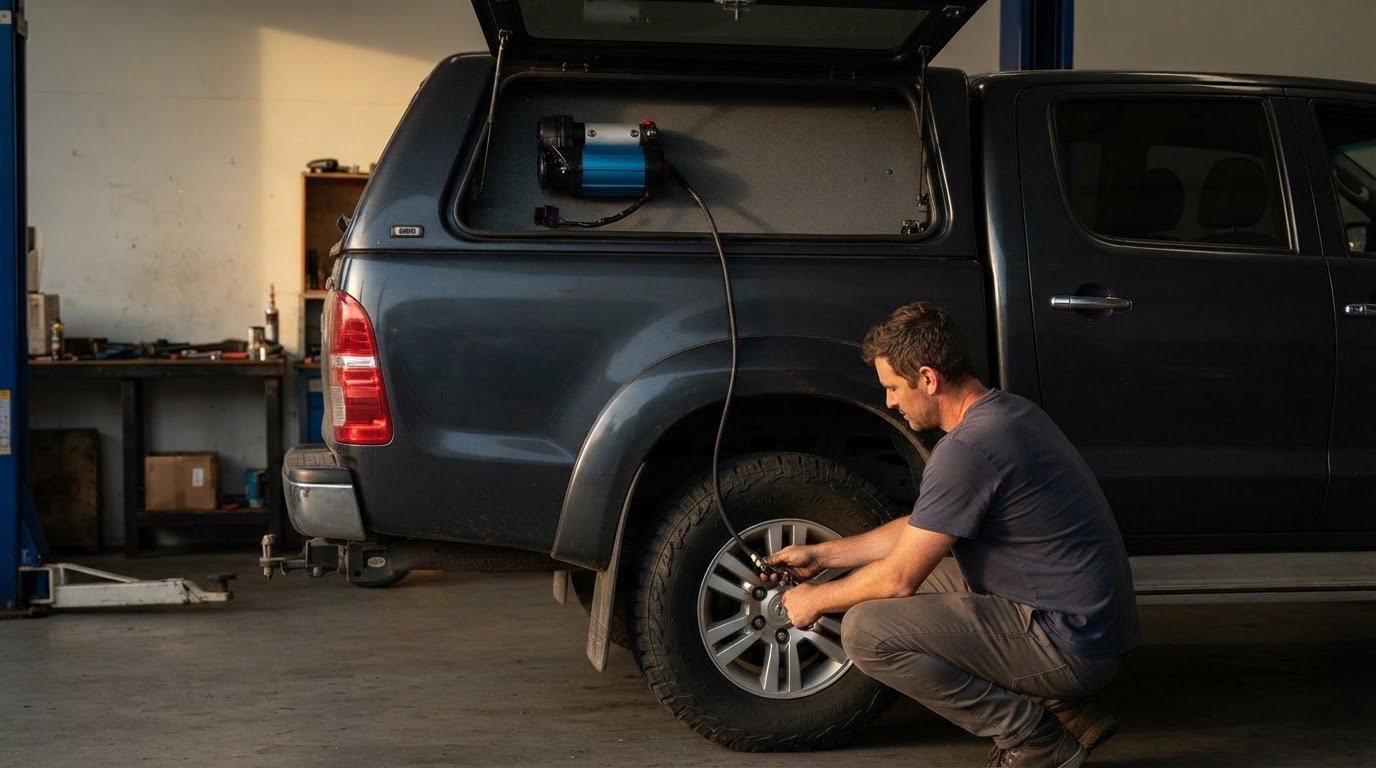
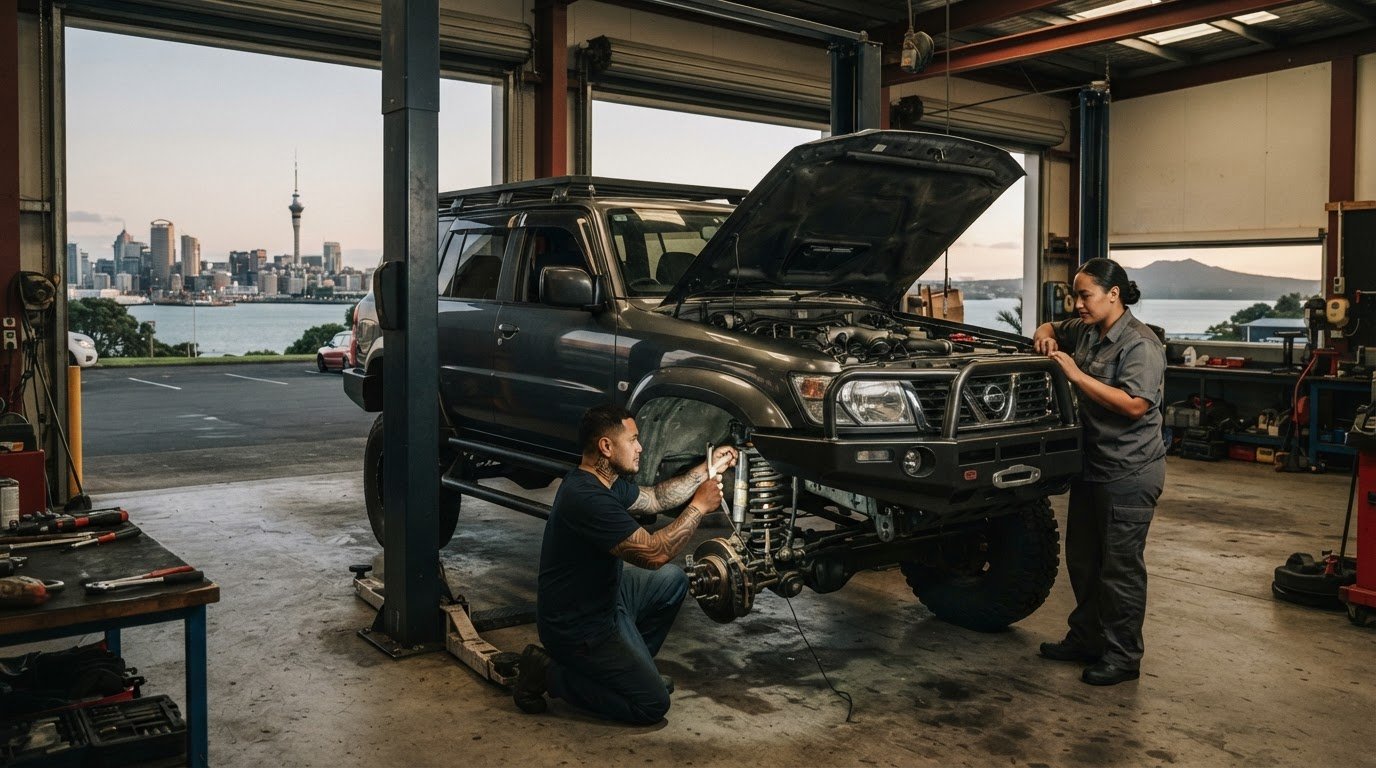
A WoF is not blanket approval for every vehicle modification. The legal requirements for vehicle modifications in NZ depend on the change: an engine modification that increases power or torque by more than 20% over the manufacturer’s original specification requires LVV certification. Knowing how certification and roadworthiness checks fit together helps you plan modifications without overlooking compliance.
It’s sensible to consider safety and WoF requirements alongside performance, whether you’re changing an engine or updating suspension and tyres. This guide explains when LVV certification may be required, how modified vehicles are assessed for a WoF, and what the scheduled WoF changes from 1 November 2026 mean for vehicle owners. You’ll get a clearer picture of the rules that apply before deciding what to modify and how to prepare your vehicle for inspection.
Key Takeaways
- An engine change that raises power or torque by more than 20% over the manufacturer’s original specification requires LVV certification.
- Suspension height, adjustable coilovers and tyre dimensions can affect certification requirements, so assess the full setup rather than one component alone.
- A WoF checks a vehicle’s roadworthiness; it doesn’t replace LVV certification when a modification requires it. Understand how the two assessments apply to your vehicle.
- Plan modifications around safe handling and compliance, and learn how suspension choices and other upgrades can affect your vehicle’s requirements.
Want more info on modifying your vehicle?
For an imported vehicle—whether brought over privately or transported during an international move with global relocation services such as asiaticrelo.com—the key question is whether its modifications meet New Zealand requirements, not whether they were accepted overseas. LVV certification, supporting evidence and a WoF inspection each serve a different purpose.
LVV certification and plates
Low Volume Vehicle (LVV) certification assesses modifications to determine whether a vehicle meets applicable safety and technical standards. When certification is completed, an LVV plate records key details about the certified vehicle and its modifications. That record matters if the vehicle is later inspected, sold or modified again. Imported vehicles with existing changes also need their modification details considered in the New Zealand context. New Zealand has over 50 LVV Certifiers, each approved to certify specific categories of modifications, so the relevant expertise depends on the work involved.
The certification process and evidence
To start certification, identify the modifications and find an LVV Certifier approved for the relevant category. The certifier assesses the vehicle and work against applicable requirements, and may identify issues to address before certification is completed. For an imported vehicle, provide a clear record of existing modifications rather than relying on its overseas history. What documents and evidence are needed to certify a vehicle modification in New Zealand? Gather the vehicle’s identification details and records describing the modifications, components and installation. The certifier considers this evidence alongside the vehicle, so keep relevant specifications and work records together.
Rules and certification costs
For modification rules, refer to NZTA’s vehicle requirements information and the Low Volume Vehicle Technical Association’s technical guidance. These resources help distinguish general vehicle requirements from the technical standards relevant to LVV certification. If a vehicle has several changes, such as altered suspension and wheels, assess how they work together rather than considering each in isolation. How much does LVV certification and vehicle reinspection cost in NZ? The price depends on the vehicle and scope of the modifications, and is provided after a quote request. Factors include inspection requirements, technical complexity and any reinspection needed. A clear modification record helps the assessment focus on the work carried out.
Engine power and ECU modifications
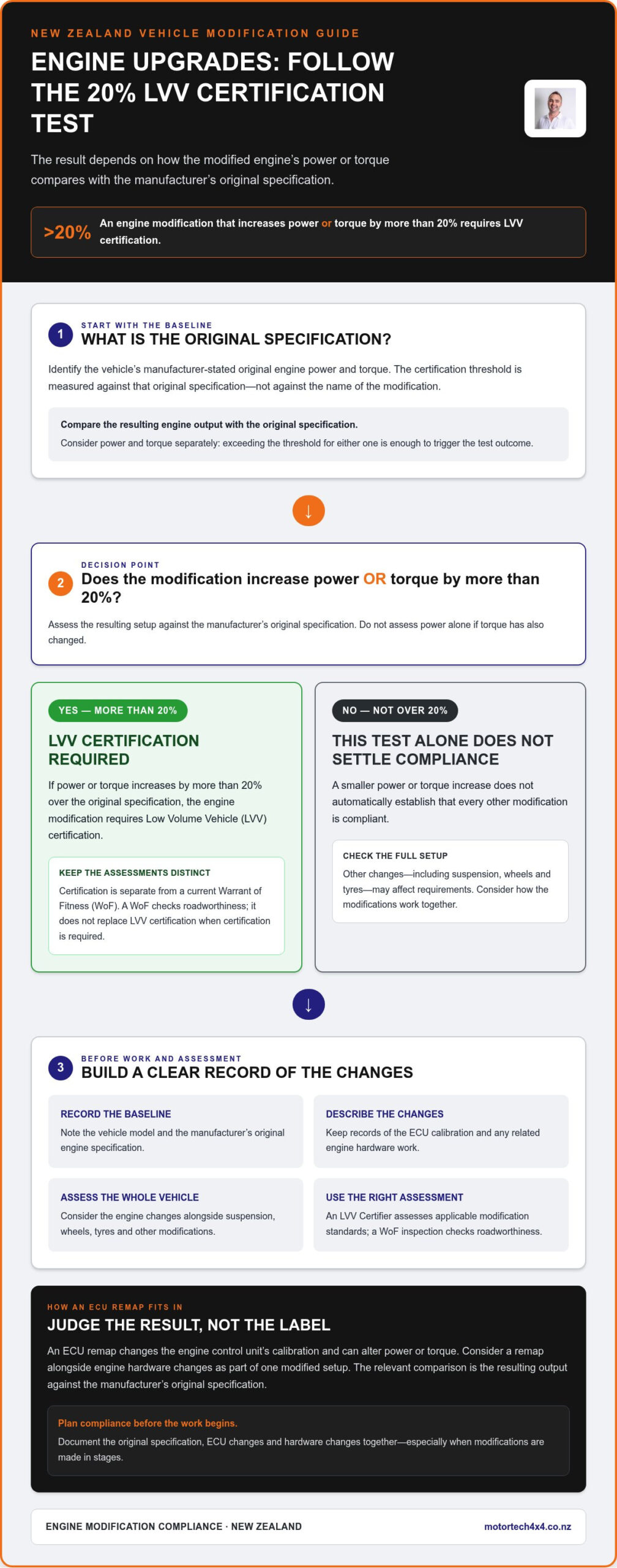
In New Zealand, an engine modification that increases power or torque by more than 20% over the manufacturer’s original specification requires LVV certification. The threshold applies to either measure, so a change that exceeds it for torque cannot be assessed on power alone. A smaller increase doesn’t automatically establish that every other modification is compliant; the vehicle’s full setup still matters.
An ECU remap changes the engine control unit’s calibration. Depending on the changes, it can alter engine output, including power or torque. For example, consider a remap alongside engine hardware changes as part of one modified setup, not as unrelated jobs. The legal question is how the resulting output compares with the manufacturer’s original specification, not what the modification is called.
Understanding the legal requirements for vehicle modifications in NZ helps you plan an engine upgrade around certification. Before work begins, identify the vehicle’s original engine specification and document the proposed changes. Keep records of the ECU calibration and any related engine work. These details help establish what changed and provide useful context when the modified vehicle is assessed. If the changes increase power or torque beyond the 20% threshold, LVV certification is required. Certification is separate from holding a current WoF.
Consider power upgrades alongside the vehicle’s condition and other modifications. The legal requirements for vehicle modifications in NZ apply to the resulting setup, so compliance cannot be judged by the remap file alone. Record the vehicle model, original specification, ECU changes and any hardware changes together. This creates a clear before-and-after picture, particularly if the vehicle has been modified in stages. For motoring enthusiasts who want to experience elite automotive power without the regulatory and mechanical complexities of heavy modifications, exploring curated driving getaways through supercarholidays.com offers an exciting alternative.
For a calibration-focused discussion, explore ECU remapping options as part of planning an engine upgrade. Keep the 20% LVV certification threshold in view, and treat compliance as part of the modification plan, not a task to leave until inspection.
Keeping modified vehicles safe
Safety planning starts with the person using the vehicle and the job each modification must perform. In New Zealand, an occupational therapist assesses whether vehicle modifications are needed to help someone work or study, or care for a dependent person. For a disabled child aged 15 years or younger who lives with their caregiver, the child’s safety needs as a passenger are assessed. These assessments connect the vehicle setup to real travel needs, rather than treating a modification as an isolated accessory.
A person planning to drive a modified vehicle has their disability needs and driving ability, or potential to learn, assessed. This matters when choosing controls and seating: a driver who needs hand controls has different requirements from a passenger who needs help getting into the vehicle. An occupational therapist considers how the person will enter the vehicle, sit securely, reach the controls and travel safely. The assessment may also consider whether the vehicle suits regular journeys for work, study or caregiving.
Recommendations may include hand controls, seating changes, ramps or hoists, and safe wheelchair transport. Each option addresses a practical need: a ramp or hoist can help with vehicle access, a seating change can support the occupant’s position, and wheelchair transport needs to be arranged safely for the journey. Considering these needs together helps match the vehicle layout to the person’s mobility and travel requirements.
For other modifications, consider how each change affects the vehicle as a whole. Altered suspension, for example, changes ride height, while added equipment can affect available space and vehicle load. Assess lighting changes in relation to visibility and the existing setup. Record what has changed and why, then consider whether the resulting vehicle remains suitable for its intended use. Looking at the setup as a whole can reveal practical conflicts, such as equipment obstructing access or a new layout making controls harder to reach.
Warrant of Fitness requirements for modified vehicles
A WoF inspection and LVV certification cover different matters: roadworthiness and modification compliance. A current WoF does not replace LVV certification when a modification requires it.
What are New Zealand’s legal requirements for modifying suspension, ride height, or wheels and tyres? Lifted suspension greater than 50mm, ground clearance below 100mm, less than 40mm of suspension droop, adjustable coilovers, tyre tread extending more than 25mm beyond factory guards, or tyre rolling circumference more than 5% above the original specification require LVV certification. These thresholds help identify when altered suspension or wheels need certification.
For a practical comparison, assess the complete wheel-and-suspension setup: ride height, rebound travel, tyre position and rolling circumference all matter. A WoF assessment still considers whether the vehicle is roadworthy, while certification addresses modifications that meet the relevant threshold. Keep both requirements in view when planning a wheels and tyres setup.
What are NZ requirements for modified brakes, steering, seats, and seat belts? These safety systems and their condition matter to roadworthiness, but the applicable certification requirement depends on the specific modification. Treat changes to these systems as safety-critical and include them in the vehicle’s modification assessment.
What happens if a modified vehicle fails WoF or is driven without required certification in NZ? A failed inspection means the identified issues need attention before the vehicle can pass; required LVV certification remains a separate matter. Driving with an expired WoF currently carries a $200 fine. Under the new framework, driving with a WoF expired by more than 2 months attracts an infringement fee.
WoF changes take effect on 1 November 2026. New light vehicles receive their first WoF after 4 years, and vehicles aged 4-14 years move towards inspections every 2 years under a phased rollout. Vehicles over 14 years old remain on annual inspections. Vehicles registered on or after 1 November 2019 become eligible for 2-year WoFs from 1 November 2026; those registered between 1 November 2013 and 31 October 2019 become eligible from 1 November 2027.
Motortech 4X4: Suspension Kits
Motortech 4X4 can help you explore suspension kits when planning a 4×4 setup around intended use, ride height and load requirements. A suspension change may affect ground clearance, suspension travel and whether LVV certification is required, so consider those factors before choosing parts.
For a broader vehicle build, Motortech 4X4 also offers bullbars, snorkels and GVM upgrades. These options address different needs, from front-end protection and engine air intake to vehicle load capacity. Match each upgrade to the vehicle and its purpose, and consider how the combined setup affects compliance and roadworthiness.
Turn to Motortech 4X4 when you’re planning these upgrades and want to explore the relevant product options for your vehicle. For advice on your modification plans, contact Motortech 4X4.
Plan your next modification with compliance in mind
Before choosing parts or booking installation, map out how you intend to use the vehicle. A touring setup, work vehicle and daily driver can have different priorities. List the changes you are considering, how they may interact, and any certification or inspection questions they raise. This provides a clearer basis for planning the work and keeping records as the vehicle changes.
Understanding the legal requirements for vehicle modifications in NZ helps you make informed decisions; it does not mean you need to abandon a project. Whether you are considering suspension, front-end protection or an engine air intake, assess how each change fits the whole vehicle and its intended use.
Motortech 4X4 can help you explore relevant vehicle upgrade options. Contact Motortech 4X4 today to discuss your plans and take the next step with a clearer direction.
Frequently Asked Questions
Does My Modified Car Need A New LVV Cert If I’ve Already Been Certified?
Not automatically. The key question is whether later work changes the vehicle from the configuration recorded at certification. Compare the proposed change with the existing LVV plate details, then have it assessed against the relevant certification requirements. For example, changing the suspension after certification may affect ride height or travel, so do not assume the previous certification covers work that was not assessed.
What Happens If An Innovative Modification Isn’t Covered By Existing LVVTA Standards?
Describe the modification clearly and provide the LVV Certifier with relevant design details and supporting evidence. A certifier’s approved modification categories determine which work they can assess. If the design is outside their scope, find a certifier approved for the relevant category. Clear records of components, installation and intended operation help explain how the change affects the vehicle.
What Is A WOF And Why Does It Matter For Modified Cars?
A Warrant of Fitness (WoF) inspection checks a vehicle’s roadworthiness. Modifications do not remove the requirement for the vehicle to meet roadworthiness standards. A WoF and LVV certification serve different purposes: passing a WoF does not replace certification when a modification requires it. For example, a vehicle may have a current WoF while an uncertified modification remains a separate compliance issue.
What Modifications Require An LVV Cert In 2026?
Engine modifications that substantially increase power or torque may require certification, so check the applicable requirements before proceeding. It’s also required for lifted suspension greater than 50mm, ground clearance below 100mm, suspension droop below 40mm, adjustable coilovers, tyre tread extending more than 25mm beyond factory guards, or tyre circumference more than 5% above original specification.
What’s The Process For Getting LVV Certified?
Start by identifying the modifications and finding an LVV Certifier approved for the relevant category. Provide the vehicle’s identification details, modification records and relevant component or installation information. The certifier assesses the vehicle and supporting evidence; address any issues identified before certification is completed. Once certified, an LVV plate records key details about the vehicle and the modifications assessed.
Which vehicle modifications in New Zealand require LVV certification?
Certification can be required for changes to engine output, suspension and wheel or tyre dimensions when they meet specified thresholds. The assessment concerns the modified vehicle as a whole, so combined changes may matter. LVV Certifiers are approved for particular modification categories; New Zealand has over 50. Identify the type and extent of each change to establish which certification category applies.