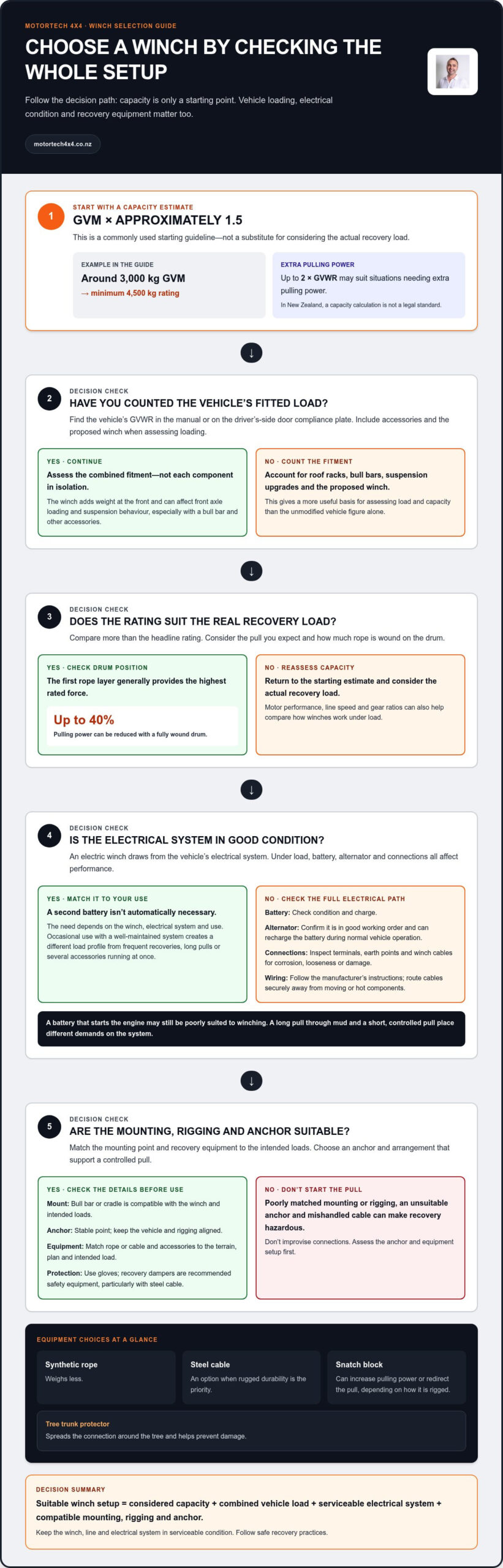
A winch adds weight to the front of a 4×4, affecting front axle loading and suspension behaviour. A commonly used starting point for choosing the right winch for your 4×4 is a rated pulling force of approximately 1.5 times the vehicle’s gross vehicle mass (GVM). The winch rating is only part of the decision, though: the vehicle’s existing load and how the winch performs under load matter too.
It’s easy to focus on pulling capacity alone, but a heavy winch can change how a modified vehicle carries weight, while battery condition and the recovery setup influence how effectively it operates. This guide explains how to account for accessories such as bull bars and roof racks, assess battery and alternator condition, and match recovery equipment and anchor points to the job. It also explores motor performance, line speed and gear ratios, so you can compare winches by more than their headline rating and understand the trade-offs that shape a suitable setup.
Key Takeaways
- Account for the winch and existing accessories when assessing front axle load and suspension behaviour.
- Winch performance relies on a battery and alternator in good condition; a second battery isn’t automatically necessary.
- Match the mounting point and recovery gear to the intended loads, and choose anchor arrangements that support a controlled pull.
- Compare motor performance, line speed and gear ratios alongside rated pulling capacity to understand how a winch will work under load.
Does a Winch Affect Vehicle Weight?
Yes. A winch adds weight to the front of the vehicle, so include it when assessing vehicle loading and pulling capacity.
Winch choice also depends on vehicle mass, fitment, electrical demand and the conditions you expect to recover in. Consider these factors together rather than in isolation.
Checking Vehicle Weight and Accessories
Checking vehicle weight means accounting for the 4×4 and its fitted equipment. Find the vehicle’s gross vehicle weight rating (GVWR) in the manual or on the driver’s-side door compliance plate. Then include added accessories such as roof racks, bull bars, suspension upgrades and the proposed winch. This gives a more useful basis for assessing load and capacity than the unmodified vehicle figure alone.
For a starting capacity estimate, use approximately 1.5 times the vehicle’s gross vehicle mass (GVM). For a 4×4 weighing around 3,000 kg, the recommended minimum is 4,500 kg. Treat this as a starting guideline, not a substitute for considering the actual recovery load.
Winch Weight and Vehicle Loading
Winch weight is the extra mass mounted at the front of the 4×4. It can affect front axle loading and suspension behaviour, particularly when combined with a bull bar and other accessories. Consider the combined fitment, not each component in isolation, when assessing how the vehicle will carry its load.
How much pulling capacity does a 4×4 need? A commonly used starting guideline is approximately 1.5 times GVM; up to 2 × GVWR may suit situations needing extra pulling power.
To calculate a starting capacity, multiply GVM by 1.5. A fully wound drum can reduce pulling power by up to 40%, while the first rope layer generally provides the highest rated force.
Electric or hydraulic winch: which is better? An electric winch draws power from the vehicle’s electrical system, while a hydraulic winch uses hydraulic power. The better option depends on the vehicle setup and intended use.
In New Zealand, a capacity calculation is not a legal standard. Choose compatible equipment, ensure the winch is mounted securely and follow safe recovery practices.
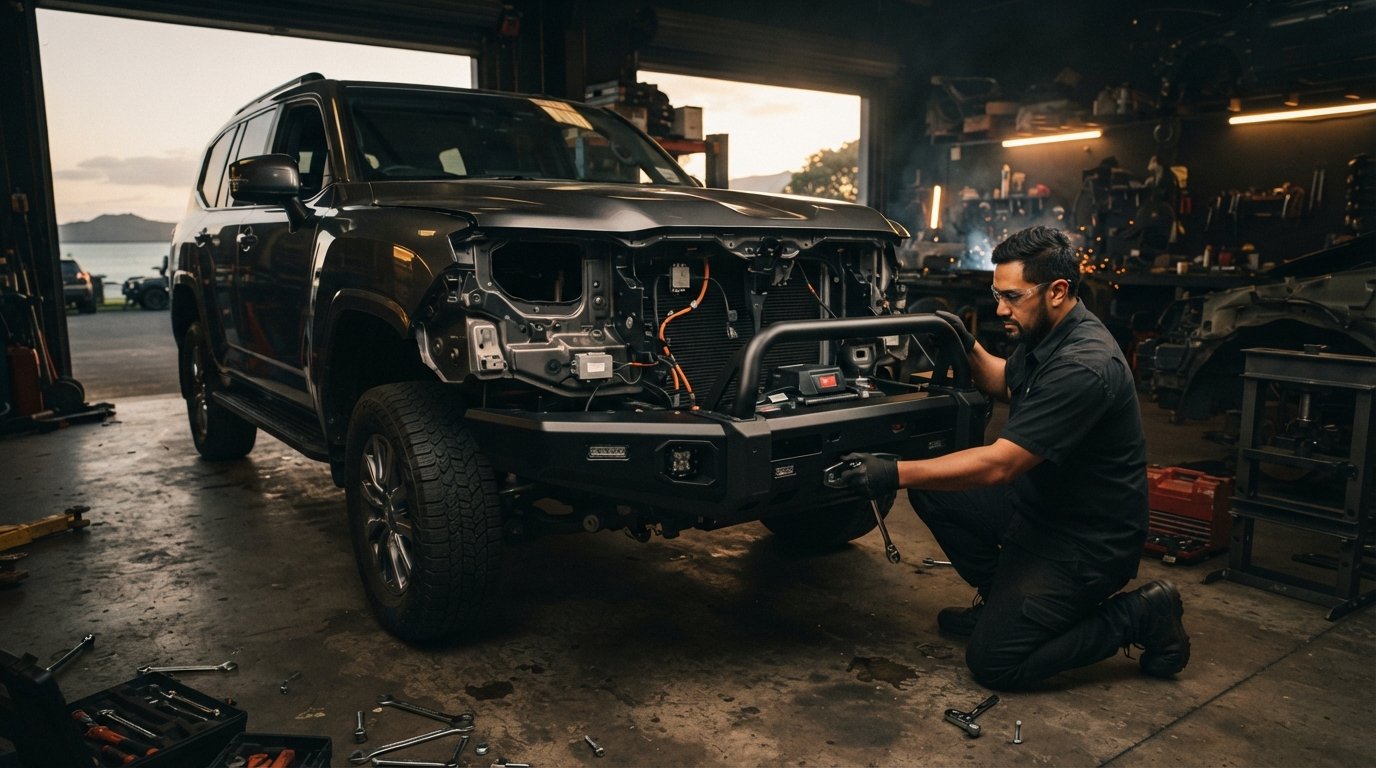
Check that the bull bar or mounting cradle is compatible with the winch and intended loads. Before use, inspect the rope or cable for wear and check electrical connections for damage or looseness. Keep the winch, line and electrical system in serviceable condition.
Electrical requirements and battery condition
An electric winch draws power from the 4×4’s electrical system, so battery and alternator condition affect its performance. A winch under load places a heavy demand on that system. A healthy battery, sound connections and effective charging support reliable operation; worn components can undermine performance even when the winch is correctly rated.
A second battery isn’t automatically necessary. The need depends on the winch, the vehicle’s electrical system and how you use the vehicle. Frequent recoveries, long pulls or running several electrical accessories at once increase demand. Occasional use with a well-maintained system creates a different load profile.
Assess the complete electrical path, not just the battery:
- Battery: Check its condition and charge. A weak battery may struggle to supply the winch’s demand during a pull.
- Alternator: Confirm it’s in good working order and can recharge the battery during normal vehicle operation.
- Connections: Inspect battery terminals, earth points and winch cables for corrosion, looseness or damage. Poor connections can restrict current flow.
- Wiring: Follow the winch manufacturer’s wiring instructions. Cable routing and secure connections matter, particularly where cables pass near moving or hot components.
Consider the recovery scenario, too. A long pull through mud can keep the motor working under load, while a short, controlled pull places a different demand on the system. Lights and other accessories running during recovery also use available electrical capacity. That’s why a battery that starts the engine may still be poorly suited to winching.
Before fitting a winch, assess the battery, alternator and cable condition as one system. A suitable winch option should match the vehicle and its electrical setup, not just the required pulling capacity.
Recovery equipment and safe anchor points
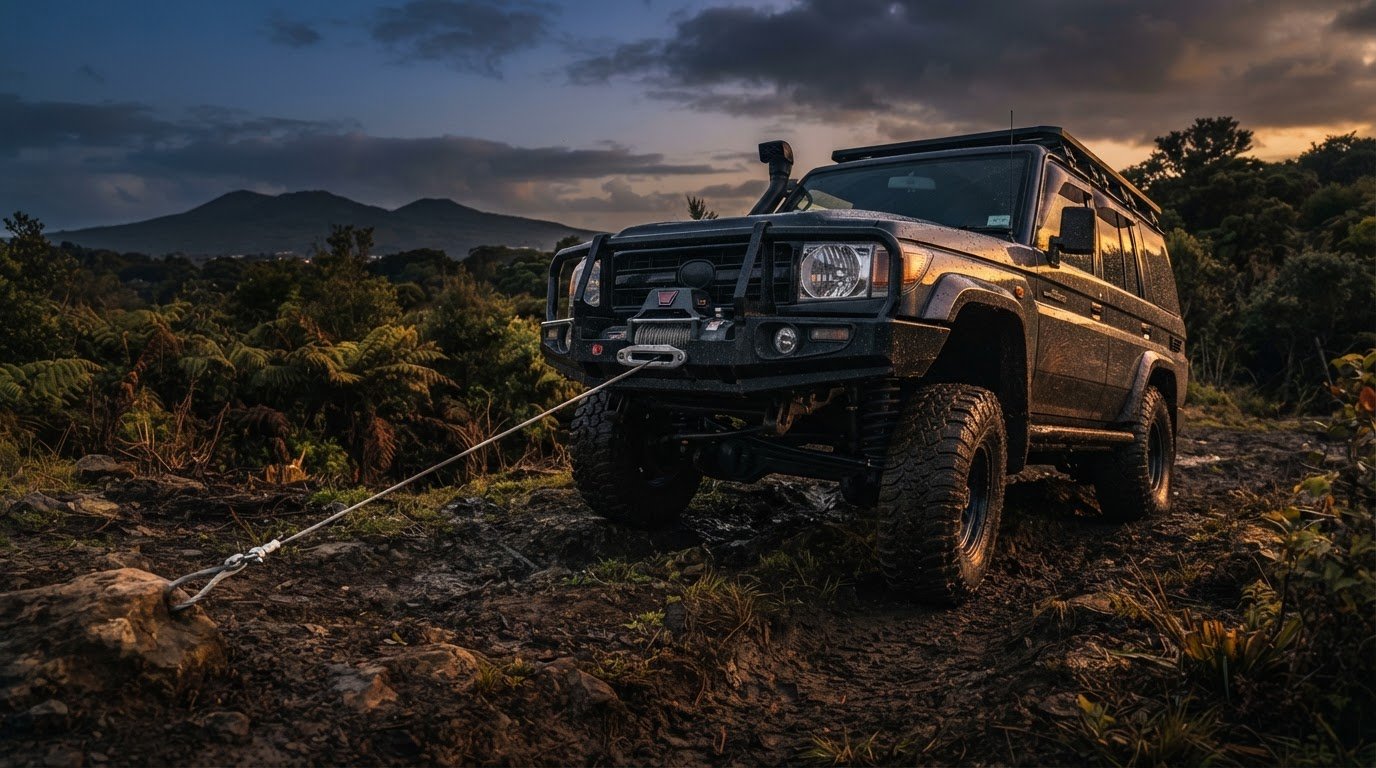
A winch recovery needs compatible mounting, suitable rigging and a secure anchor. The bull bar or mounting cradle must suit the selected winch and its intended loads. A winch may recover a vehicle without another 4×4, provided a suitable anchor point and safe recovery arrangement are available.
Choose the rope and accessories to suit the terrain and recovery plan. Synthetic rope weighs less, while steel cable is an option when rugged durability is the priority. A snatch block can increase pulling power or redirect the pull, depending on how it’s rigged. A tree trunk protector spreads the connection around the tree and helps prevent damage.
- Anchor: Select a stable point and arrange the pull so the vehicle and rigging remain aligned.
- Rigging: Match the winch, mounting, rope or cable, and recovery accessories to the intended load.
- Protection: Use gloves when handling rope or cable. Recovery dampers are recommended safety equipment, particularly with steel cable.
What are the risks of winching, and which common mistakes should you avoid? Poorly matched mounting or rigging, an unsuitable anchor and mishandled cable can make a recovery hazardous. Don’t improvise connections or start pulling before assessing the anchor and equipment setup.
Solo recovery is possible when a suitable anchor and safe arrangement are available; another 4×4 isn’t always needed. However, working alone leaves less room to manage changing conditions. Recovery training helps drivers understand equipment setup, rigging choices and how to conduct a controlled pull before facing difficult terrain.
Before winching, inspect the rope or cable and recovery gear for damage. Make sure the anchor, protector and snatch block suit the planned pull. Keep gloves and a damper available, particularly when using steel cable. Taking time to set up carefully helps prevent rushed decisions when a vehicle is stuck.
Motor performance, line speed and gear ratios
A winch’s rated pulling capacity doesn’t tell you everything about its performance. The motor, gearbox and drum work together, and their behaviour changes under load. Compare how the winch performs during a pull, not just the highest capacity on its label.
The motor converts electrical energy into rotation, while the gearbox adjusts speed and torque. During a difficult recovery, the motor must keep turning against resistance. A suitable battery and alternator support that demand, while the motor and gearing determine how power reaches the drum.
Line speed is how quickly rope moves onto or off the drum. A fast unloaded line can help deploy rope, but it doesn’t show how quickly the winch will pull a vehicle through mud. Under load, the motor works harder, and the rope’s position on the drum affects the force available. The first rope layer generally provides the winch’s highest rated pulling force.
Gear ratio describes the relationship between motor rotation and drum rotation. More gear reduction trades drum speed for greater mechanical advantage; less reduction allows the drum to turn faster but provides less torque multiplication. For demanding pulls, a winch with a slower loaded line speed may be a better fit than one chosen solely for rapid rope retrieval.
Compare the manufacturer’s specifications for loaded line speed, motor performance and gear ratio together. Then consider the recoveries you expect: pulling a vehicle on firm ground places different demands on a winch than recovering one bogged in soft terrain. Check the duty-cycle guidance as well. Repeated pulling can build heat in the motor, so recovery duration and cooling intervals matter.
- Compare: Look at loaded and unloaded line speed separately.
- Assess: Match motor and gearing to the expected recovery load.
- Plan: Follow the winch’s operating guidance during repeated pulls.
For a setup matched to your vehicle and recovery needs, explore the winch range.
Motortech 4X4: Suspension Kits
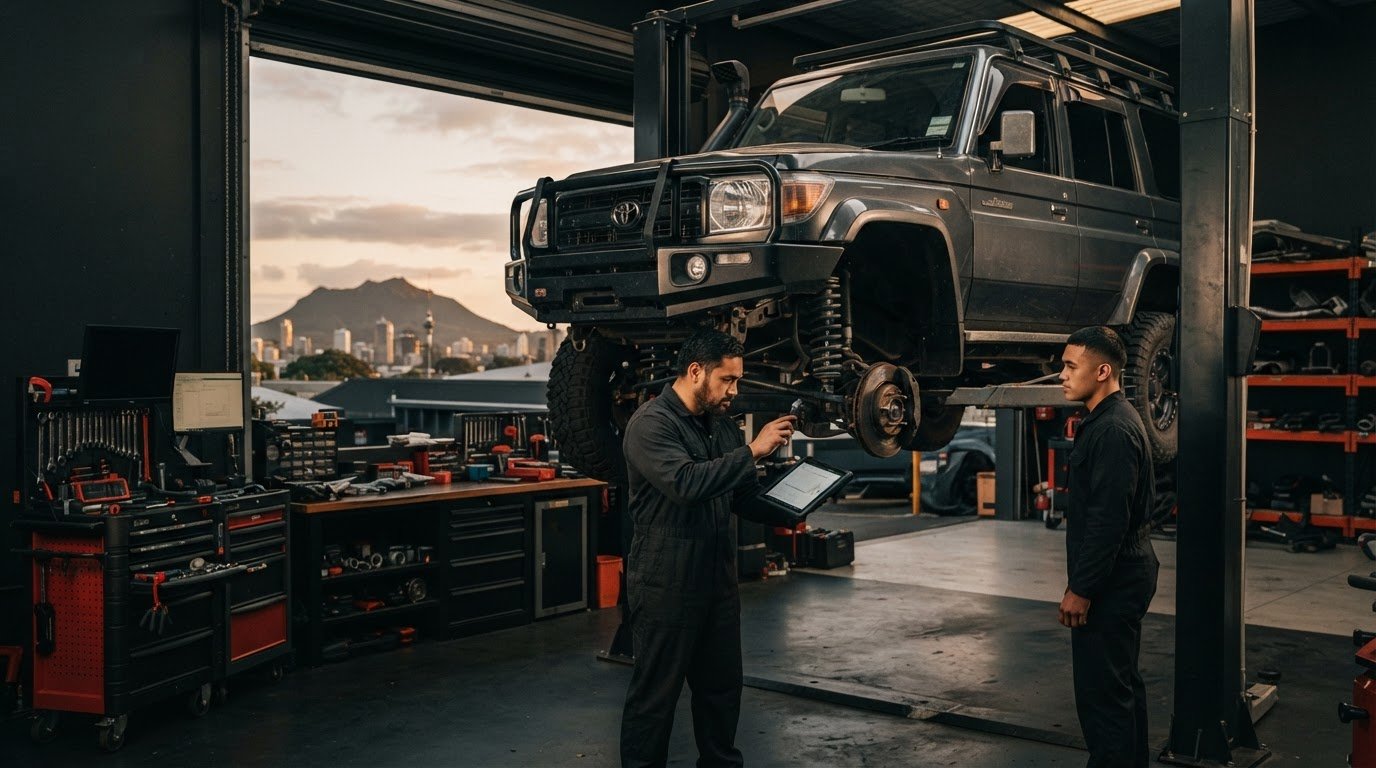
Motortech 4X4 can help you consider suspension and vehicle loading alongside your winch choice. A winch, bullbar and other accessories add front-end mass, so reviewing the vehicle’s overall setup matters when planning modifications.
Consider a Suspension Kit if added equipment changes how your 4×4 carries its load. Bullbars also form part of the winch mounting setup, so compatibility with the selected winch and intended loads is essential. For a vehicle carrying substantial equipment, a GVM Upgrade may also be relevant to your modification plans. Snorkels are another available 4×4 accessory, though they don’t determine winch capacity.
Bring your vehicle setup and intended use into the discussion when planning modifications. Visit motortech4x4.co.nz to get in touch with Motortech 4X4.
Plan the next step for your 4×4
A recovery setup is part of a vehicle’s wider build, not an isolated purchase. Before settling on a winch, think about how you use your 4×4 now and what you may add later. That wider view makes choosing the right winch for your 4×4 a more considered decision, particularly when future modifications could change the vehicle’s load or configuration.
Motortech 4X4 offers Suspension Kits, Bullbars and Snorkels, which can form part of a broader vehicle setup. If you’re planning upgrades alongside recovery equipment, considering them together helps keep the overall build in view. The right next step is to discuss the vehicle and your intended use, then shape a setup around those needs.
Contact Motortech 4X4 for advice about planning your 4×4 setup. A clear plan puts you in a stronger position to prepare for your next trip.
Frequently Asked Questions
Need Help Choosing the Right Winch?
For help choosing the right winch for your 4×4, start with your vehicle model, intended terrain, existing accessories and typical recovery situations. These details help frame the decision around how you’ll use the winch, rather than comparing capacity labels alone. Motortech 4X4 offers winches for Auckland 4×4 owners. The mounting arrangement and the vehicle’s intended use both matter when considering a suitable setup.
Synthetic Rope vs Steel Cable: Which Is Right for You?
Synthetic rope is a useful choice when reducing recovery equipment weight matters, while steel cable suits priorities around rugged durability. Your choice also depends on how you handle, store and inspect the line. Consider the terrain and check the rope’s condition after use, not just its material. Whichever you choose, use compatible fittings and follow the winch manufacturer’s care instructions.
What Are the Main Components?
A typical electric winch assembly includes a motor, gearbox, drum, rope or cable, fairlead, electrical controls and mounting structure. Each part has a distinct role: the motor drives the gearbox, which turns the drum and winds in the line. The fairlead guides the line as it moves. Because a fault or mismatch in one component can affect the whole system, assess the assembly as a unit.
What Does the Gear Ratio Tell You?
The gear ratio shows how the gearbox trades motor rotation for drum rotation. It helps explain the balance between line speed and mechanical advantage, but it isn’t a complete performance rating on its own. Compare it with the motor’s characteristics and loaded line speed. For slow, resistant pulls, the combination of gearing and motor behaviour matters more than unloaded speed alone.
What Else Impacts Winch Choice?
Consider where you drive, how often you expect recoveries and who will operate the winch. A vehicle used on remote tracks may need a different recovery plan from one driven mainly on formed roads. Think about rope storage, access to suitable anchors and the recovery gear you’ll carry, too. These details shape a practical setup beyond the winch’s headline capacity.
What winch line length, diameter and material should I choose: steel cable or synthetic rope?
Choosing the right winch for your 4×4 includes matching line length to likely anchor distances and recovery routing. Match diameter to the winch drum, fairlead and rated capacity, following the manufacturer’s specifications rather than guessing. Synthetic rope can reduce weight; steel cable is an option for rugged durability. Inspect the line regularly, and replace it if damage affects its condition or safe use.