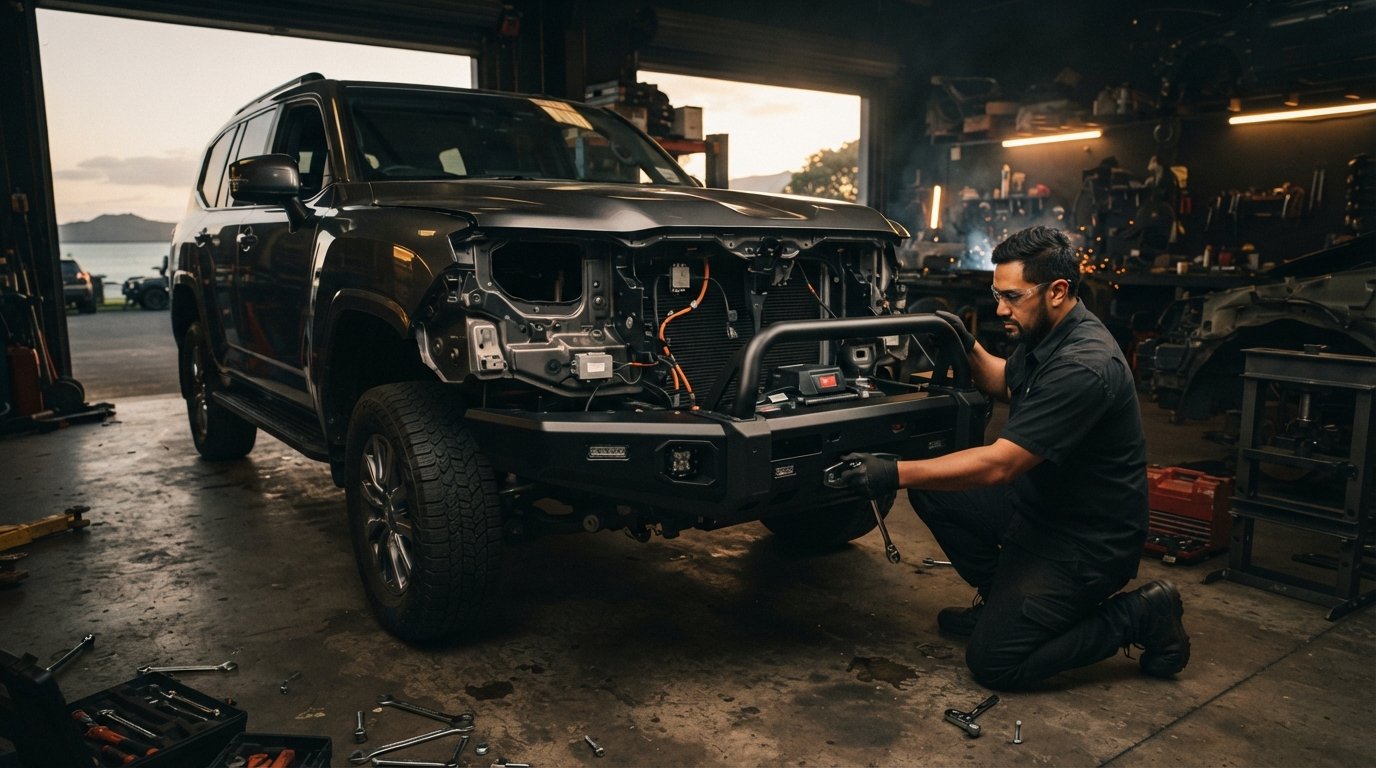
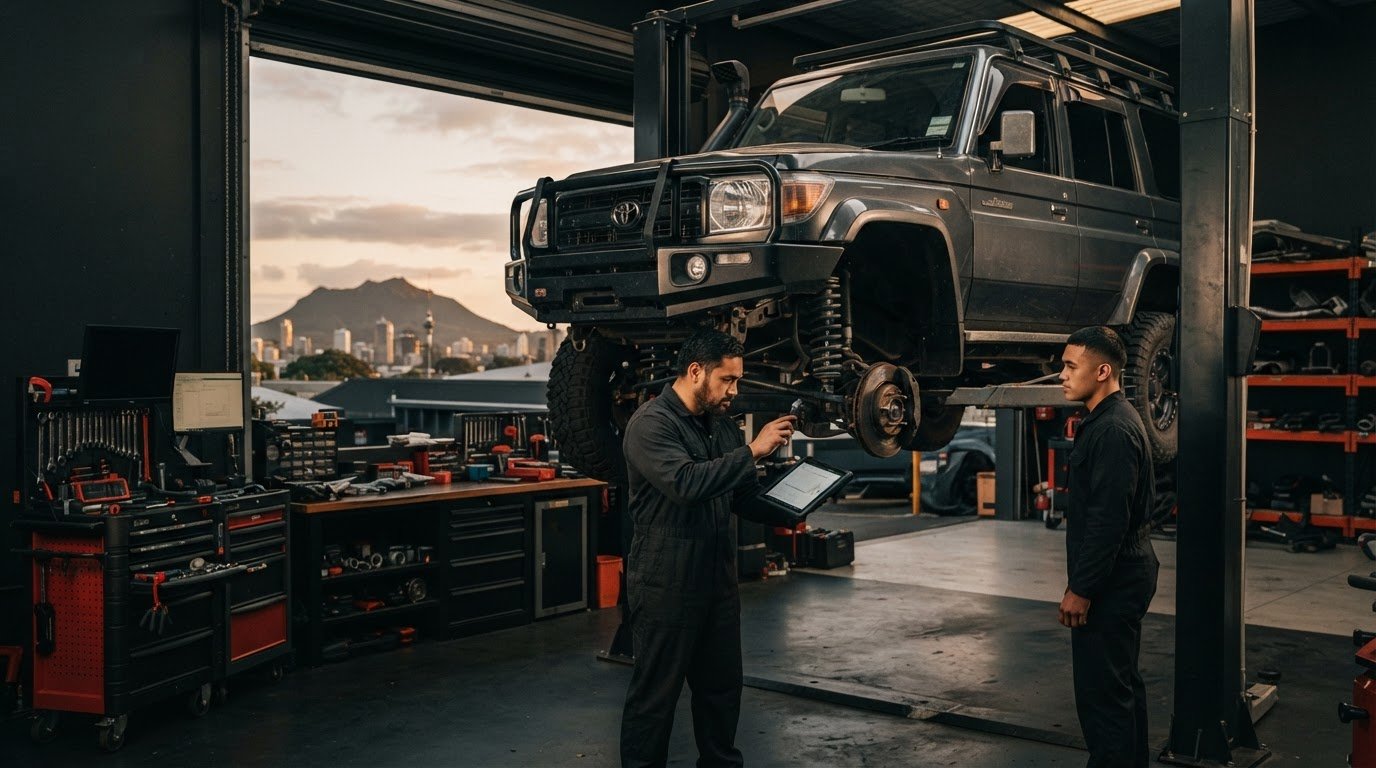
A car mechanic in Mt Wellington should explain their qualifications, the work they can carry out and the workshop’s opening hours. These details help you decide whether a mechanic is suited to your vehicle and the repair or servicing it needs.
It’s reasonable to want clear answers before booking, particularly when safety or an unfamiliar fault is involved. This guide covers what to look for in a mechanic, the types of repairs and servicing available, and how to plan around workshop hours.
Key Takeaways
- Learn what information about a fault can help a mechanic diagnose the repair and explain the work required.
- Understand how servicing and maintenance can be matched to your vehicle’s condition and use.
- Use workshop opening hours to plan when to arrange a visit and discuss the work.
- Know what to look for when assessing a mechanic’s qualifications and interpreting customer reviews.
- Explore when suspension kits, bullbars, snorkels or GVM upgrades may be relevant to a 4×4 vehicle.
Auto repairs
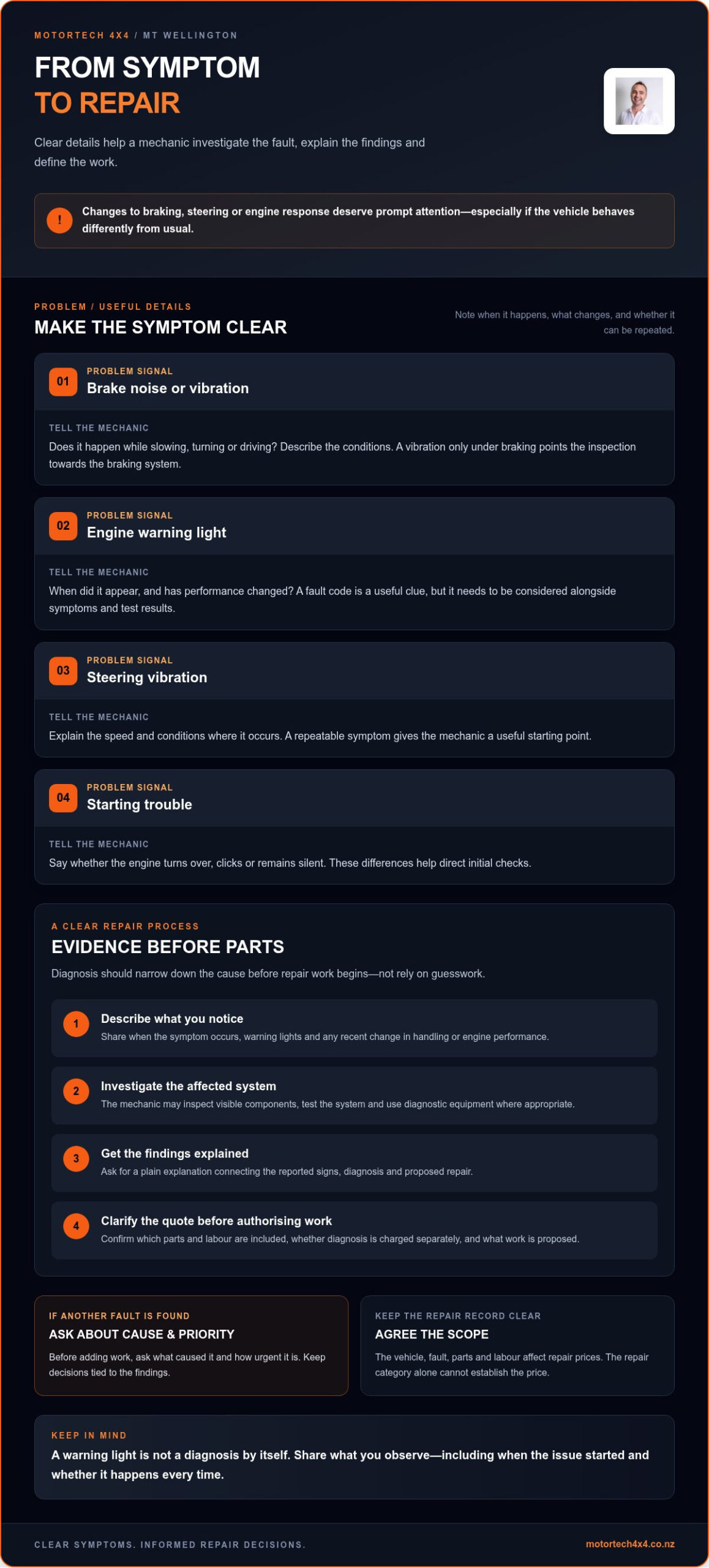
An accurate repair starts with a clear description of the symptom. Note when it occurs, such as during a cold start, braking or turning. Record dashboard warning lights and any recent changes in handling or engine performance. For example, a vibration only under braking points the inspection towards the braking system. These details help a mechanic reproduce the fault instead of replacing parts based on guesswork.
Diagnosis should narrow down the cause before repair work begins. A mechanic may inspect visible components, test the affected system and use diagnostic equipment where appropriate. An engine warning light, for instance, can have several causes. The fault code is a useful clue, but it needs to be assessed alongside the vehicle’s symptoms and test results. Ask for a plain explanation of the findings and proposed repair.
Repair prices depend on the vehicle, fault, parts and labour, and are provided after a quote request. A brake concern may involve pads, discs or another component, while a starting fault could involve the battery, starter or charging system. The diagnosis determines the work required, so the repair category alone cannot establish the price.
Before authorising a repair, clarify what the quote covers. Ask which parts and labour are included, whether diagnosis is charged separately, and what work is proposed. If an inspection reveals another fault, ask about its cause and priority before adding work. This keeps decisions tied to evidence and gives you a clear record of the agreed repair and any additional work discussed.
- Brake noise: Describe whether it happens while slowing, turning or driving. Ask the mechanic to identify the source before replacing components.
- Engine warning light: Note when it appeared and whether the vehicle’s performance changed. Share both details during diagnosis.
- Steering vibration: Explain the speed and conditions where it occurs. A repeatable symptom gives the mechanic a useful starting point.
- Starting trouble: Say whether the engine turns over, clicks or remains silent. These differences help direct initial checks.
Prioritise symptoms that affect vehicle control or reliable operation. Changes to braking, steering or engine response deserve prompt attention, especially if the vehicle behaves differently from usual. Don’t treat a warning light as a diagnosis by itself. Describe what you observe, including when the issue started and whether it happens every time.
When choosing a car mechanic in Mt Wellington, describe the symptom, when it occurs and what has changed. Keep relevant service or repair records handy, then compare the diagnosis with the reported signs. A clear explanation should connect the fault, proposed work and parts involved. That gives you a practical basis for deciding how to proceed.
Car servicing and maintenance
A scheduled service checks key systems before wear develops into a fault. The work should reflect the vehicle manufacturer’s maintenance schedule, current condition and driving pattern. For example, frequent short trips can place different demands on an engine than regular open-road driving. Bring the service history and note any new noises, warning lights or changes in performance.
A useful service record identifies the work completed, parts replaced and items that may need attention later. Ask for findings to be grouped by urgency. A worn wiper blade and a developing fluid leak aren’t the same priority. Clear notes help you plan maintenance and give another mechanic relevant information if the vehicle changes hands.
Before booking, provide the vehicle’s make, model, year and engine type. Include the registration or VIN where available, plus the distance travelled and last service date. These details help identify the correct maintenance requirements. For a 4×4, mention towing, off-road use or frequent loads, as these conditions affect what the mechanic should inspect.
WOF inspections and routine servicing are separate jobs, and availability and prices vary between workshops. Any repairs identified during a WOF inspection are separate work with separate costs.
Make-specific servicing is available across a range of workshops, while hybrid and electric vehicle work requires capability suited to the vehicle’s systems. Motortech 4X4 provides car servicing for different vehicle brands; the service task and vehicle technology determine the relevant maintenance approach.
Use this preparation list to make the booking more productive:
- Share the service history: Note the last oil change, scheduled maintenance and any incomplete repairs.
- Describe the driving pattern: Mention towing, stop-start trips, highway travel or regular 4×4 use.
- List current symptoms: Record changes such as unusual tyre wear, a new vibration or a warning light.
- Clarify the requested work: Separate routine maintenance from a specific fault or WOF inspection.
For example, a hybrid owner reporting reduced braking performance should describe when it happens, rather than assume the cause. A mechanic can then assess the vehicle’s systems and service records together. For a conventional petrol vehicle, a missed scheduled service and an oil warning light are also distinct details worth reporting. Specific information helps define the inspection and service scope.
For planned maintenance, car servicing is a practical starting point for routine vehicle care. Bring the details above so the service can be planned around the vehicle’s requirements and use.
Opening hours
Workshop hours vary in Mt Wellington. Check the specific workshop’s published hours before planning a drop-off or collection. A weekday service booking, WOF inspection and repair collection may need different arrangements. Match your visit to the work required instead of assuming every workshop keeps the same hours.
Plan around the vehicle’s expected time at the workshop. A routine service may need a different drop-off plan from a fault diagnosis requiring further testing. If you rely on the car for commuting, consider how you’ll travel after leaving it. For example, arrange a lift or public transport before handing over the keys.
Use these steps to make the visit fit your day:
- Read the opening schedule: Note the days and times shown for the workshop you intend to visit.
- Match the task: State whether you need servicing, a repair assessment or vehicle collection.
- Plan arrival: Allow time for check-in, keys and a clear description of the work.
- Plan collection: Arrange transport that suits the expected handover, especially after work.
A booking time and a workshop’s opening time are different things. An open workshop may have limited appointment capacity, while a booked job still needs a suitable drop-off arrangement. Arriving during published opening hours doesn’t necessarily mean a mechanic can start an unplanned repair immediately. Book ahead to align the job with the workshop’s schedule.
Plan for practical details at both ends of the visit. Bring the vehicle’s keys, registration details and service history, then explain any symptoms clearly. Before leaving, agree on the collection arrangements and how you’ll receive updates about the work. These steps help avoid confusion if the repair takes longer than a straightforward inspection.
Public holidays and changes to a workshop’s usual schedule can affect a planned visit. Check the relevant dates, particularly if you need the vehicle before a long weekend. A calendar reminder can help you distinguish a regular weekday from a public holiday. Avoid leaving a WOF inspection or service booking until the last day you need the vehicle.
For an early drop-off, confirm where to leave the vehicle and how the keys are handled. For a late collection, understand the workshop’s handover arrangements beforehand. These details matter if your workday ends after the workshop closes. If someone else is collecting the car, share the agreed plan and any instructions with them.
Use the published hours to choose a realistic visit window, then arrange the booking and transport around the job. A clear plan for arrival, updates and collection makes workshop hours easier to work with, whether you’re arranging routine maintenance or bringing in a vehicle with a developing fault.
Are your mechanics qualified?
A mechanic’s suitability depends on the vehicle and work required. Routine maintenance and electronic fault diagnosis, for example, call for different practical knowledge. Look for relevant training, experience with your vehicle type and an ability to explain the proposed diagnostic process. A qualification matters most when it matches the task.
Compare quotes by matching their scope, not just the total. The price depends on the vehicle, fault, required parts and labour, and is provided after a quote request. Check whether diagnosis, parts and labour are itemised, then compare the proposed repair steps and any exclusions. A quote for replacing a component isn’t directly comparable with one that includes further testing.
To assess a mechanic’s approach, focus on the reasoning behind the recommendation. A clear diagnosis connects the reported symptom with inspection findings and proposed work. For instance, a starting issue could involve the battery, starter or charging system. The explanation should show how the mechanic narrowed down the cause, rather than treating one symptom as proof.
Use this checklist when reviewing a quote or discussing a job:
- Relevant experience: Match the mechanic’s experience to your vehicle, such as a 4×4 or hybrid.
- Diagnostic process: Look for steps that explain how the fault will be assessed.
- Written scope: Compare parts, labour, diagnosis and any stated exclusions.
- Repair explanation: Check that the recommendation relates to the symptoms and findings.
- Communication: Expect a clear account of the work and any additional findings.
Warranties, courtesy cars and pickup or drop-off are separate workshop terms, not proof of a mechanic’s qualifications. Compare any written warranty conditions and transport arrangements alongside the repair scope. Don’t assume a courtesy vehicle or collection service is included with a repair booking. These details affect how you plan the visit, while training and diagnostic ability relate to the work itself.
For specialised work, relevant vehicle knowledge matters. A mechanic assessing a 4×4 used for towing, for example, needs to understand the vehicle’s operating demands. For an electronic fault, the diagnostic method and interpretation of results matter. A strong explanation links the vehicle, symptoms, test findings and proposed repair without overstating what the inspection has established.
Choose the quote that makes the work easiest to understand. If one proposal identifies the fault, lists the repair and explains what it excludes, compare it with the same details elsewhere. A lower total may cover a narrower job; a higher total may include further diagnosis or different parts. The scope, evidence and relevant experience together provide a sounder basis for choosing a car mechanic in Mt Wellington.
Which Mt Wellington mechanics have the best customer reviews and ratings?
A star rating alone can’t identify the best mechanic for every Mt Wellington driver. Reviews reflect individual jobs, vehicle types and customer expectations. Compare the written feedback and its relevance to your repair instead of choosing a workshop by score alone. A review about routine servicing may tell you little about complex fault diagnosis.
Start with recent reviews on platforms such as Google. Look for specific accounts of the booking, diagnosis, repair explanation and vehicle collection. A comment describing how a mechanic traced an intermittent starting fault offers more context than a brief statement that the service was great. Recent feedback can also indicate whether communication appears consistent.
Review volume matters alongside the average score. A high rating based on few comments gives you less feedback to compare. Read across the available reviews and notice recurring themes. For example, repeated praise for clear explanations is more useful than comments focused only on a convenient location.
Use this review checklist when comparing local workshops:
- Match the job: Look for feedback about the same type of repair or vehicle you have.
- Read the detail: Prioritise reviews explaining what the mechanic diagnosed and repaired.
- Check patterns: Notice repeated comments about communication, timing or unexpected work.
- Consider responses: See whether workshop replies address the customer’s specific concern professionally.
- Compare platforms: Check whether the same strengths or concerns appear in more than one place.
Context helps you interpret criticism. A complaint about a delayed repair may relate to parts supply, but the review should explain what happened. Look for whether the workshop communicated the delay and clarified the next step. One negative comment is less informative than a recurring pattern of poor updates or unclear invoices.
Reviews can’t verify a mechanic’s qualifications or prove that a repair will suit your vehicle. Use them as one part of your decision, then compare the workshop’s explanation, quote scope and relevant experience. For example, feedback about 4×4 servicing may be more relevant to a four-wheel-drive owner than reviews focused on general maintenance.
Ratings can change as customers add feedback. Check the date and content of reviews before relying on an older comment. If a listing shows an overall score but few detailed accounts, treat the score as a starting point, not a complete assessment. The strongest choice is the workshop whose experience and repair approach fit your needs.
Use customer reviews to shortlist Mt Wellington mechanics, then compare the evidence behind each rating. A useful review describes the work, communication and outcome. This gives you more to assess than a star total and helps you choose a mechanic whose experience aligns with your vehicle and repair.
Motortech 4X4: Suspension Kits
Motortech 4X4 can help match suspension kits to your vehicle and its intended use. If you’re planning a 4×4 setup or considering changes to your vehicle, discuss the requirements before choosing components. The right configuration depends on the vehicle and the equipment it needs to carry.
Other options include bullbars, snorkels and GVM upgrades. These modifications address different requirements, so consider them as part of the overall vehicle setup rather than isolated additions. A clear outline of your vehicle and planned use helps guide the discussion.
To discuss suspension kits or related 4×4 upgrades, contact Motortech 4X4.
Plan your vehicle’s next step
Choosing a car mechanic in Mt Wellington is one part of getting your vehicle ready for its next job. If you plan to tour, carry equipment or tackle rougher tracks, consider the setup as a whole before selecting modifications. Suspension, added front-end weight and air intake requirements each deserve careful consideration alongside how you use the vehicle.
Motortech 4X4 offers suspension kits, bullbars and snorkels for 4×4 owners planning that kind of setup. Start by outlining your vehicle, its intended use and the changes you’re considering. That gives the conversation a practical focus, without treating each component as an isolated decision.
For a 4×4 setup discussion or help with the next step, contact Motortech 4X4 today. A considered plan can help you move forward with confidence.
Frequently Asked Questions
How do I make an appointment?
Contact your chosen workshop through its booking channel and request a service or repair appointment. Include your vehicle’s make, model and registration, then describe the work needed. For example, say whether you need scheduled maintenance, a warning light diagnosed or a specific repair assessed. Mention any timing constraints when arranging the booking, so the workshop can discuss a suitable appointment and vehicle handover.
How much is a full service?
A full service has no single price because the cost depends on the vehicle, required maintenance, parts and labour. The price is provided after a quote request. Your vehicle’s service schedule and condition help determine the work included; a car needing additional repairs may require a separate scope from routine maintenance. Provide the make, model and service history to support a quote for the work required.
What car mechanics and auto repair shops are located in Mt Wellington, Auckland?
Motortech 4X4 is an Auckland automotive service centre based in Glenfield, on the North Shore, rather than Mt Wellington. It provides car servicing for different vehicle brands, alongside specialised 4×4 maintenance and fleet servicing. If you’re considering it from Mt Wellington, factor in the North Shore location when planning vehicle drop-off and collection. Its Auckland focus makes it a local option beyond the suburb itself.
What services do car mechanics in Mt Wellington offer?
Car mechanics may provide general servicing, fault diagnosis and repairs, while the exact work varies by workshop. Motortech 4X4 offers car servicing, 4×4 servicing and fleet servicing, plus technical work such as ADAS calibration, ECU remaps and transmission flushes. For example, a fleet operator can look at servicing alongside vehicle fit-outs. Match the workshop’s capabilities to the vehicle and the job you need done.
What are typical car servicing prices in Mt Wellington, Auckland?
Servicing prices depend on the vehicle, its maintenance requirements, parts and labour, and are provided after a quote request. Different makes and models can have different service schedules, while the vehicle’s condition affects what needs attention. To compare quotes, look at the work included rather than the total alone. Keep additional repairs separate from the scheduled servicing scope.
What are the opening hours and booking options for Mt Wellington mechanics?
Opening hours and appointment arrangements differ between workshops, so plan your booking around the relevant schedule. Arrange an appointment directly and provide the vehicle details, job required and preferred visit time. For example, say whether you need to leave the vehicle before work or collect it later. Allow time for a clear handover, and arrange transport if your car will remain at the workshop.