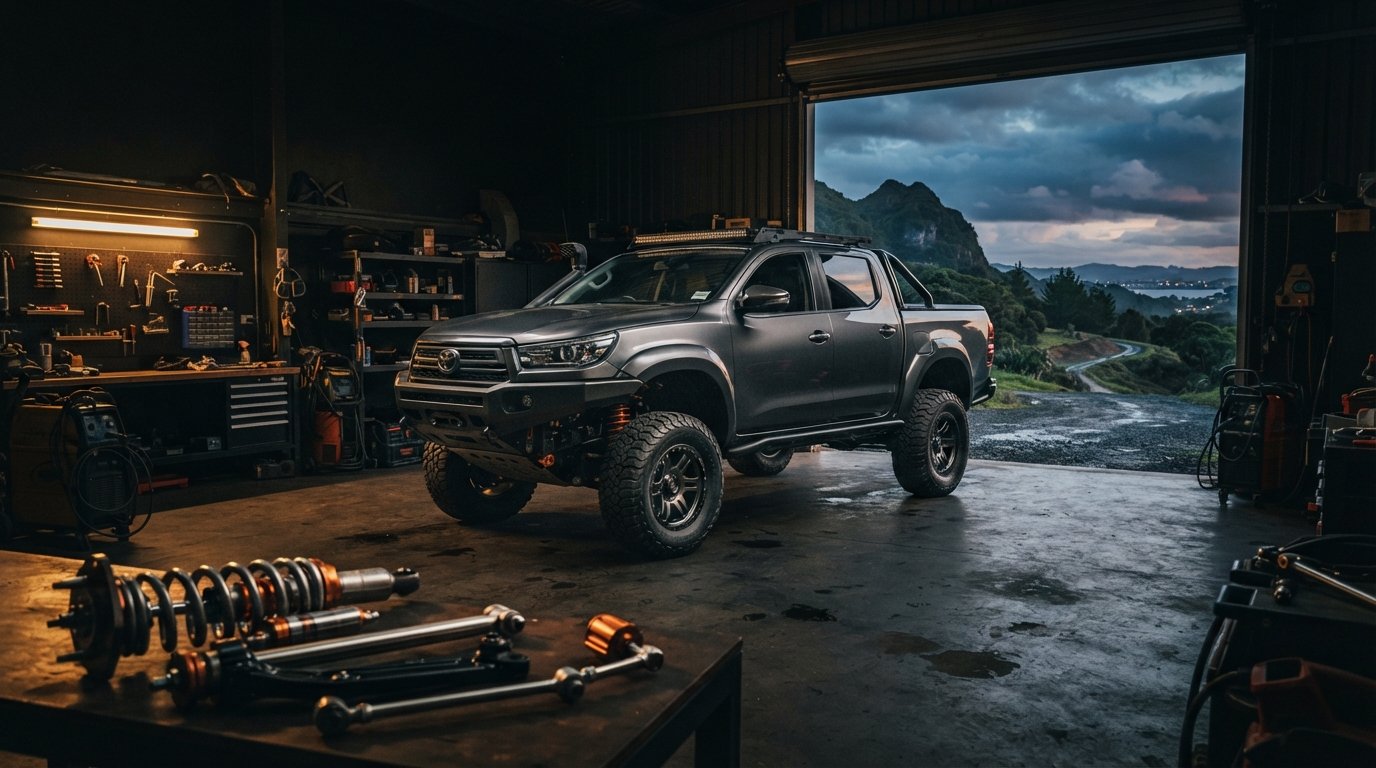
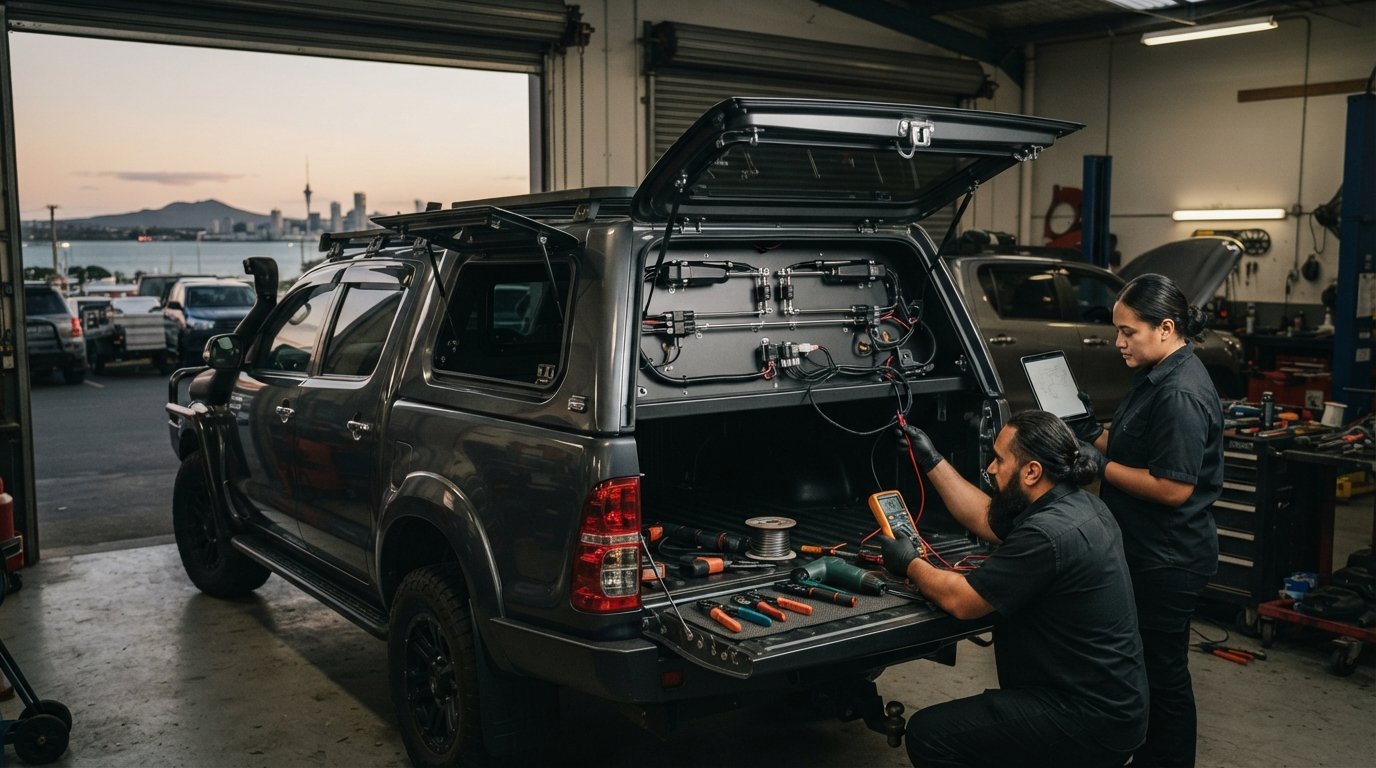
Juggling three separate canopy keys and a manual tailgate latch every working day isn’t just frustrating; it leaves thousands of dollars in gear vulnerable to opportunistic theft. Every tradie knows the sinking feeling of wondering whether they secured the kerbside window before walking away from the ute. Completing a proper ute canopy central locking installation eliminates this vulnerability permanently, synchronising your entire cargo area with your factory key fob at the push of a button.
You already know that total vehicle security shouldn’t require four manual checks every time you park. In this technical guide, you’ll learn how to successfully integrate canopy actuators and tailgate mechanisms into your factory wiring harness without risking sensitive Body Control Modules or causing CAN bus communication faults. We examine mechanical actuator calibration, weatherproof conduit routing built for rugged off-road vibration, and how to decide whether to tackle this job in your garage or partner with an Auckland auto-electrical specialist.
Key Takeaways
- Synchronise canopy side windows and the rear tailgate directly to your factory remote, securing your cargo area with a single click.
- Understand the critical stages of a reliable ute canopy central locking installation, focusing on actuator mounting, linkage calibration, and waterproof conduit routing.
- Protect modern vehicle electronics and sensitive Body Control Modules against voltage spikes by avoiding crude wire taps.
- Eliminate mechanical latch binding by adjusting rod geometry to account for body flex and compressed rubber weather seals.
- Determine whether your technical skill level suits a DIY approach or if your build warrants professional auto-electrical fitment in Auckland.
Why Integrate Central Locking into Your Ute Canopy?
Modern dual-cab utes serve dual roles across New Zealand: heavy-duty workhorses during the week and remote tourers on weekends. Carrying thousands of dollars in power tools, diagnostic equipment, or camping gear turns your tub into a primary target for opportunistic theft. Relying on manual barrel locks creates an operational bottleneck that compromises vehicle security through sheer inconvenience.
A comprehensive ute canopy central locking installation links the canopy’s rear access door, dual side-lift windows, and the factory tailgate latch directly into the vehicle’s electrical locking network. By integrating dedicated actuators, the cargo area locks and unlocks simultaneously with the passenger cabin, providing total perimeter protection without workflow disruption.
Tradie Security vs Touring Convenience
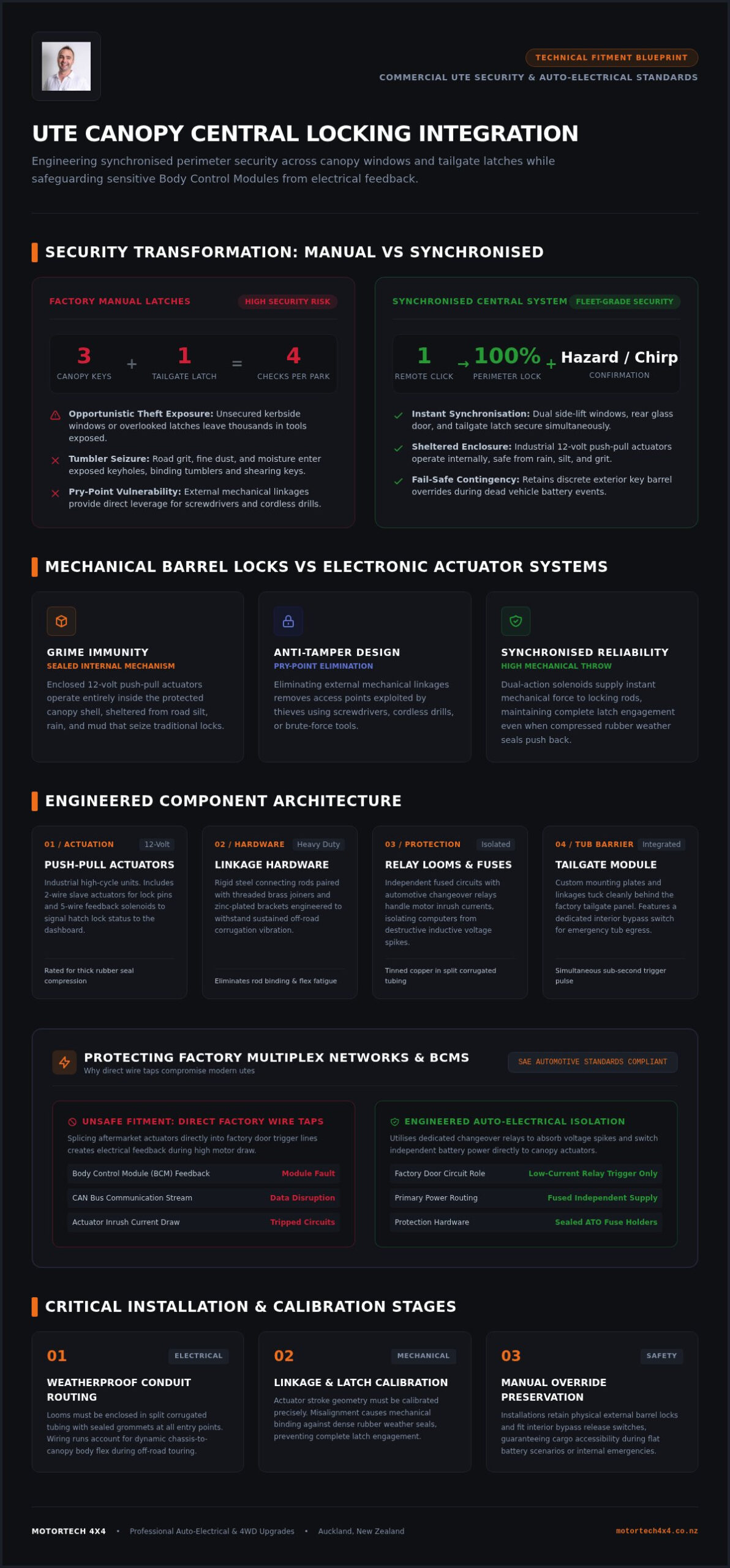
Securing four separate access points by hand every time you walk away from the vehicle isn’t practical on busy job sites. A single press of the factory key fob secures the entire vehicle, triggering an immediate visual confirmation via the hazard light flash and acoustic chirp. While automated power door lock systems eliminate everyday key management, professional installations retain discrete manual key overrides on the exterior handles, ensuring you retain cargo access during unexpected vehicle battery depletion.
Manual Barrel Locks vs Electronic Actuator Systems
Mechanical barrel locks fail predictably under rugged New Zealand conditions. Road grit, fine dust, and moisture enter exposed keyholes, causing tumblers to bind, seize, or shear keys over time. Electronic conversions eliminate these vulnerabilities by shifting the locking action inside the protected canopy shell.
- Grime immunity: Enclosed 12-volt push-pull actuators operate internally, sheltered from road silt, rain, and mud.
- Anti-tamper protection: Removing mechanical exterior linkages eliminates common pry points exploited by thieves using screwdrivers or cordless drills.
- Synchronised reliability: Dual-action solenoids supply instant mechanical throw to lock rods, ensuring complete latch engagement even when rubber weather seals resist door closure.
Upgrading to a synchronised actuator setup transforms your canopies and hardlids from a multi-key liability into a secure, fleet-grade storage system built to withstand extreme working environments.
Key Components of an Integrated Canopy Locking System
A dependable ute canopy central locking installation hinges on heavy-duty electrical components matched precisely to your utility’s factory power delivery. Cutting corners with budget solenoids or tapping bare wires directly into modern control networks risks severe electrical feedback, blown modules, and mechanical lock failure under off-road conditions.
Actuators, Solenoids, and Mechanical Linkages
Automating a canopy requires heavy-duty 12-volt push-pull actuators rated for high-cycle industrial use. While simple 2-wire slave actuators drive the locking pins, side hatches often incorporate 5-wire feedback solenoids to signal latch status to the dash. Actuators must produce adequate mechanical force to compress thick perimeter rubber dust seals without stalling. Rigid steel connecting rods, threaded brass joiners, and zinc-plated mounting brackets ensure the linkages survive persistent corrugation vibration without binding or loosening.
Wiring Harnesses, Relays, and Circuit Protection
Modern utes employ sensitive multiplexed networks. Connecting aftermarket actuators directly to factory door lines can trigger Body Control Module (BCM) faults or trip overcurrent protection. Proper installations incorporate independent fused circuits and automotive changeover relays designed to handle initial motor inrush currents while isolating vehicle computers from inductive voltage spikes. Professional looms utilise tinned copper wire sheathed in split corrugated tubing and sealed ATO fuse holders, strictly adhering to established automotive electrical standards to protect the vehicle’s primary chassis loom.
Tailgate Integration Modules
Completing the cargo security barrier requires integrating the manual tailgate alongside your canopy glass. Tailgate locking modules use custom mounting plates and custom-formed linkages that tuck behind the factory access panel. These modules synchronise trigger pulses across all latches simultaneously, securing the tub in a fraction of a second. Dedicated bypass switches ensure tradespeople and tourers maintain emergency interior egress from inside the bed. If you want seamless integration without risking factory electronics, choosing professional auto-electrical fitment guarantees clean cable management and long-term operating reliability.
Step-by-Step Ute Canopy Central Locking Installation
Executing an integrated ute canopy central locking installation demands systematic mechanical fitting combined with clean auto-electrical integration. Completing this installation correctly preserves structural door integrity, seals out road grime, and safeguards factory electrical modules from damage.
Mechanical Mounting and Linkage Alignment
Carefully unclip the internal canopy door trims using nylon pry tools to expose the internal framing without stressing fibreglass or aluminium welds. Mount the steel actuator brackets using vibration-resistant hardware. The linear push-pull throw of the actuator must sit dead-parallel to the existing lock rods; any angular deflection creates binding that burns out solenoids. Secure every fastener with medium-strength thread locker to prevent corrugated gravel roads from shaking the assembly loose over time.
Chassis Wiring Runs and Weatherproof Ingress
Route the multi-core harness forward from the tailgate and canopy down through the tub floor. Never drill unsealed holes; install IP68-rated automotive rubber grommets coated in polyurethane sealant to prevent moisture and dust ingress.
- Conduit protection: Encase all underbody runs in split corrugated conduit, securing the loom along the inner chassis rails high above exhaust heat shields.
- Vibration relief: Leave generous expansion loops at the canopy hinges and tub transition points to accommodate body twist.
- Modular disconnects: Fit weatherproof multi-pin Deutsch connectors inside the rear pillar, allowing canopy removal without cutting harness wires.
Locating Trigger Wires and Terminating Circuits
Gain access to the vehicle’s factory wiring harness, typically located inside the passenger-side sill channel or kick panel. Avoid piercing test lights that leave punctured copper strands prone to green corrosion. Use a digital multimeter to identify the factory lock and unlock pulse wires by monitoring momentary 12-volt polarity shifts when operating the factory remote.
Once verified, splice the trigger feeds using dual-wall adhesive heat-shrink butt crimps or mechanical solder joints rather than plastic insulation-displacement scotch locks. Connect the actuator circuits through an inline fused relay block fed straight from a dedicated battery circuit, isolating the ute’s Body Control Module from secondary electrical loads. Conclude by running thorough lock-cycle tests on every hatch, checking that exterior emergency keys still turn smoothly when the actuators are de-energised.
Troubleshooting and Common Installation Pitfalls to Avoid
Modern vehicle electronics leave little room for error. A rushed or poorly isolated ute canopy central locking installation often reveals itself through annoying mechanical glitches, intermittent operation, or dashboard fault lights. Pinpointing the root cause early prevents costly electrical diagnostics and ensures long-term operational integrity.
CAN Bus Interference and Electrical Faults
Factory Body Control Modules monitor circuit resistance continuously. When you splice secondary actuators directly into factory lines without proper isolation, the computer interprets the sudden current draw as a short circuit or an unexpected system load. This triggers immediate fault codes and can force the central locking module into a shutdown protection state.
Prevent inductive voltage kickback by integrating flyback diodes across relay coils. These components safely dissipate high-voltage reverse spikes when solenoids de-energise, keeping computer lines clean. Poor earth termination represents another frequent failure point. Never secure ground leads to painted interior tub panels or raw aluminium sheet metal. Strip the metal bare on the main chassis frame, use star washers to bite through surface oxidation, and seal the finished connection with protective dielectric grease to stop intermittent dropouts and parasitic battery drains.
Mechanical Binding and Thermal Expansion
Mechanical lock failure rarely stems from faulty motors; improper alignment and thermal movement are the real culprits. Fibreglass and aluminium canopy panels expand and flex significantly under direct summer heat, altering the mechanical tolerance between lock pawls and frame strikers.
- Travel calibration: Set the actuator linkage travel so the internal motor stroke completes fully without bottoming out against the latch stops. Incomplete strokes cause internal clutches to slip or draw continuous stall current.
- Gasket resistance: Heavy weather seals stiffen in cold weather and compress under heat. Adjust striker plates to maintain positive seal compression without forcing the actuator to strain against the catch.
- Correct lubrication: Never spray grease, WD-40, or liquid motor oil inside canopy latch cavities. Wet lubricants trap abrasive track dust and road grime, forming a grinding paste that rapidly binds linkages. Use dry PTFE or graphite sprays exclusively.
If you encounter persistent CAN bus communication faults or stubborn linkage binding that threatens your vehicle electronics, book your vehicle with Motortech 4X4 for comprehensive diagnostics and certified installation.
Professional Auto-Electrical Installation Services in Auckland
Modern dual-cab platforms feature sophisticated electrical networks that leave zero margin for installation error. Choosing a professional workshop for your ute canopy central locking installation ensures factory warranty preservation, watertight harness routing, and flawless integration into the vehicle’s primary multiplex network. Rather than dealing with loose interior trims or troubleshooting intermittent actuator faults yourself, professional workshop fitting guarantees absolute security from day one.
Fleet Vehicle Security and Compliance Standards
Commercial operators across New Zealand require absolute reliability to protect trade equipment and meet workplace health and safety compliance. Motortech 4X4 delivers standardised, fleet-grade installations across multi-vehicle operations throughout Auckland. Every wire run is mapped, fused, and sheathed in protective conduit to resist continuous mechanical abrasion. We integrate canopy lock circuits cleanly with secondary auxiliary battery setups, internal LED lighting strips, and external work lamps, ensuring your work fleet remains secure without placing unnecessary load on the starting battery.
The Motortech 4X4 Workshop Advantage
Our dedicated auto-electrical and mechanical fitting team in Auckland builds comprehensive utility solutions designed for demanding work and rugged off-road touring. We take a holistic approach to every fit-out:
- System-wide vehicle builds: We coordinate canopy and tailgate security with mechanical performance packages outlined in our Auckland 4×4 guide, covering suspension setups, GVM upgrades, and 4×4 servicing.
- Accessory compatibility: We plan cable runs carefully alongside heavy-duty roof racks NZ mounting hardware, ensuring wiring never chafes against structural brackets or roof channels.
- Canopies and hardlids expertise: Whether retrofitting an existing shell or outfitting a brand-new tub, our technicians ensure weather seals remain uncompromised and latches engage smoothly.
- Warranty-safe integration: We preserve factory electrical integrity using isolated relay networks, preventing Body Control Module fault codes or parasitic power draws.
Protect your investment with professional auto-electrical craftsmanship. Call our team directly or book your installation consultation online at our Auckland workshop facility to secure your vehicle today.
Secure Your Ute Tub with Precision Engineering
Synchronising your side windows, rear glass, and tailgate directly to your vehicle’s factory remote transforms your tub into a secure vault without adding daily key clutter. A successful ute canopy central locking installation demands more than basic wiring; it requires parallel mechanical alignment to stop latch binding, sealed underbody conduit to resist off-road grit, and relay isolation to safeguard sensitive factory modules from inductive voltage spikes.
When carrying high-value gear across New Zealand work sites, cutting corners with crude wire taps isn’t worth the risk to your vehicle electronics. Motortech 4X4 operates an Auckland specialist mechanical and auto-electrical workshop backed by commercial fleet fit-out capabilities across New Zealand. Our team guarantees comprehensive accessory installation and electrical compliance so your setup withstands years of heavy use. Protect your gear and streamline your daily routine: secure your ute with Motortech 4X4 expert canopy installation today.
Frequently Asked Questions
Can I install central locking on an older aftermarket ute canopy?
Yes, most older aftermarket canopies can be retrofitted with electronic actuators provided there is sufficient clearance behind the latch handles. Technicians mount custom brackets and link the actuator arms directly to the existing rotary or slam latches. If your older canopy suffers from worn key barrels, completing a ute canopy central locking installation restores full security without needing to replace the entire canopy shell.
Will tapping into my ute wiring void the vehicle manufacturer warranty?
No, a professional installation won’t void your factory vehicle warranty when carried out using isolated relays and dedicated fused circuits. Dealerships only reject warranty claims if an uncertified modification directly damages a factory module or wiring loom. Professional auto electricians isolate the trigger signals, ensuring your Body Control Module remains protected and your electrical system stays compliant with New Zealand standards.
What happens if my ute battery dies with electronic canopy locks installed?
You can still unlock and open your canopy manually using the physical key override on the exterior handles. Electronic actuators operate alongside the mechanical cylinders rather than replacing them completely. If your vehicle battery drops voltage or goes entirely flat, simply insert your physical key into the external lock barrel, turn the mechanism to disengage the pawl, and open the door normally.
Can central locking be fitted to both fibreglass and aluminium canopies?
Yes, central locking integrates seamlessly into both fibreglass shells and heavy-duty aluminium canopies. Fabricated aluminium doors offer rigid internal frames that make bracket mounting straightforward, whereas fibreglass shells require reinforced spreader plates to distribute actuator thrust evenly. Both canopy styles require accurate linkage alignment so natural body twist on corrugated roads won’t pull the locking pins out of true.
Does canopy central locking also lock the ute tailgate automatically?
Canopy central locking only locks the tailgate if a dedicated tailgate actuator kit is installed alongside the canopy wiring. Factory manual tailgates operate via an independent internal latch mechanism inside the drop-down tailgate skin. Integrating a synchronised tailgate solenoid into the primary canopy circuit ensures all side windows, rear glass doors, and the tailgate lock simultaneously from your key fob.
How long does a professional canopy central locking installation take?
A standard ute canopy central locking installation generally takes between four and six hours in an Auckland workshop. For complex custom fit-outs featuring integrated auxiliary power, internal LED work lights, or multi-vehicle fleet requirements, a full day is recommended. This duration ensures technicians can route protective underbody conduits, align linkages precisely, and perform rigorous lock-cycle testing before handover.
Why are my canopy locks sticking or refusing to unlock in cold weather?
Sticking locks in colder weather are usually caused by hardened rubber weather seals or congealed grease inside the latch assembly. Cold temperatures stiffen perimeter rubber dust seals, which increases resistance against the locking pawl and stalls the actuator. Flushing out old, dirt-heavy grease and applying a dry PTFE lubricant quickly restores smooth movement without attracting abrasive dust and road grit.