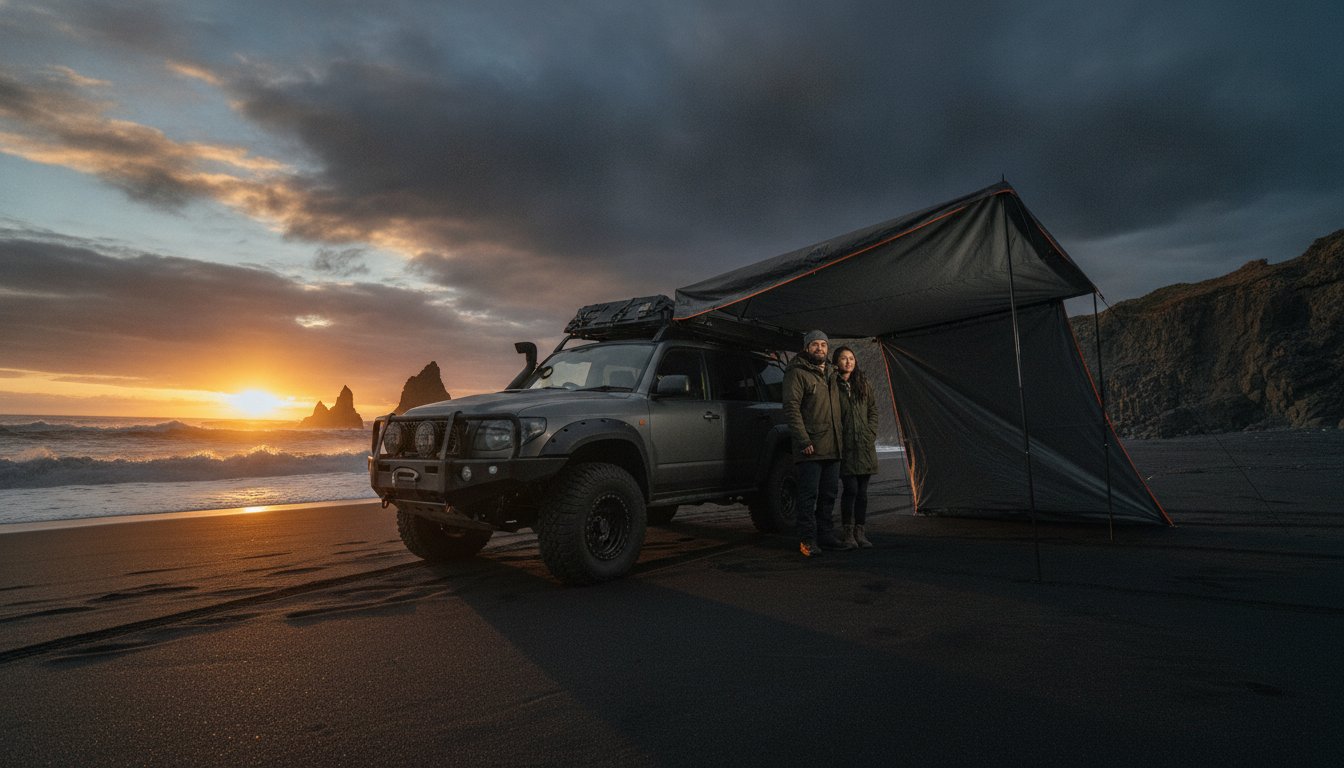
You have just pulled up at Muriwai Beach, the surf is pumping, and you’re ready to deploy your shade, but as the Tasman gusts pick up, that slight rattle in your roof rack suddenly feels like a major structural liability. It’s a common anxiety for many Auckland drivers who worry that a DIY fitting might lead to a buckled rack or a damaged vehicle pillar during a high-wind event. We understand that you want a setup that’s as rugged as the backcountry tracks you’re exploring, not something that requires constant tightening every time you hit the motorway.
Choosing the right 4×4 awning installation Auckland service ensures your rig is genuinely adventure-ready for the toughest coastal conditions and technical trails. This 2026 fitting guide provides the specialized knowledge you need to navigate the confusion of mounting brackets and brand compatibility. We’ll examine the technical requirements for different rack systems, explain how to ensure your setup remains road-legal under NZTA vehicle dimension regulations, and show you how professional calibration prevents the structural failures that often plague home-fitted accessories. By focusing on precision engineering and structural integrity, you can enjoy the outdoors with the confidence that your equipment is built to last.
Key Takeaways
- Understand why Auckland’s high-wind coastal environments require specialised mounting techniques to ensure long-term structural integrity and safety.
- Evaluate the weight and mounting requirements for 180 and 270-degree awnings to prevent exceeding your vehicle’s dynamic roof load limits.
- Learn how professional 4×4 awning installation Auckland ensures your hardware is correctly calibrated for both rugged off-road tracks and high-speed motorway travel.
- Master the “Golden Rule” of accessory mounting to prevent chassis flex damage when integrating awnings across separate components like cabs and canopies.
- Discover how to maintain compliance with NZTA vehicle dimension regulations while maximising your rig’s shelter and performance in the backcountry.
Why Professional 4×4 Awning Installation Matters in Auckland
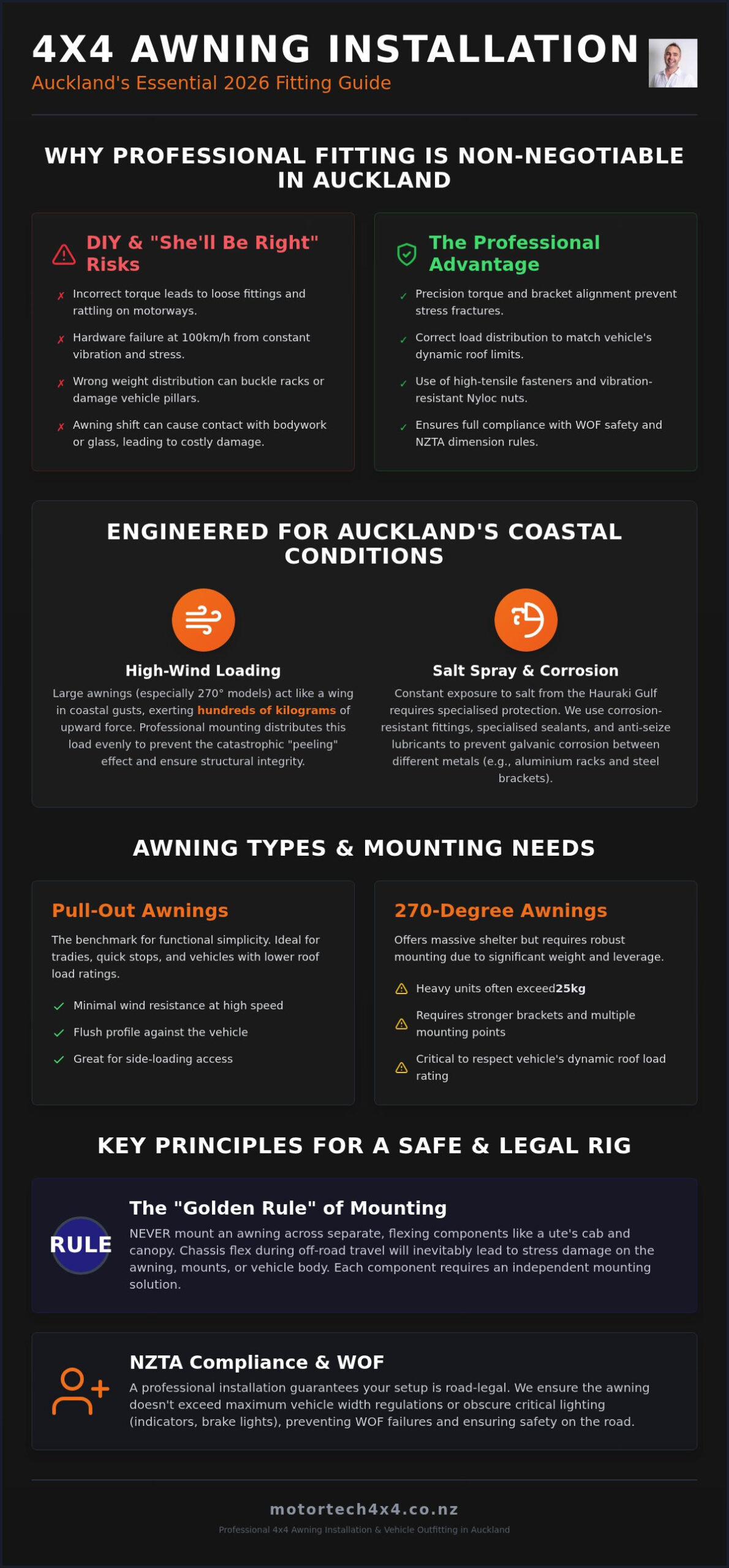
Professional 4×4 awning installation Auckland is more than just a basic bolting exercise. Modern roof racks feature specific dynamic load ratings that are easily compromised by incorrect weight distribution. A DIY approach often overlooks the precise torque requirements needed for vibration-heavy environments. Incorrectly seated channel nuts can vibrate loose over time, causing the awning to shift and potentially contact the vehicle’s bodywork or glass. When you’re cruising at 100km/h on the Southern Motorway, a “she’ll be right” attitude won’t prevent hardware failure. A professional fit-out involves assessing the vehicle’s structural pillars and ensuring the mounting brackets are perfectly aligned to prevent stress fractures in the rack itself.
Structural Integrity and Wind Loading
Large-surface-area accessories, particularly 270-degree models, effectively act as a wing in high-wind conditions. Without precise calibration, upward lift can exert hundreds of kilograms of force on your roof rack channels. We prioritise high-tensile fasteners over the standard hardware often supplied in generic retail kits. Vehicle and camping awnings require specific mounting point placement to distribute this load evenly across the rack’s internal structure. This is critical for heavy 270-degree units that often exceed 25kg, where the leverage on the outer edge of the rack is significant. This methodical approach extends the lifespan of your gear and prevents the catastrophic “peeling” effect seen when awnings aren’t secured against Auckland’s unpredictable coastal gusts.
Auckland Environmental Factors
The proximity to the Hauraki Gulf means salt spray is a constant threat to your vehicle’s exterior components. Professional installation includes the application of specialised sealants and the use of corrosion-resistant fittings to prevent rust from taking hold in hidden mounting channels. We focus on technical durability to ensure your setup handles both the humidity and the salt. Our process includes:
- Utilising vibration-resistant Nyloc nuts to ensure fittings don’t loosen during corrugated backcountry travel.
- Verifying that the awning’s footprint doesn’t obscure lighting or exceed maximum width limits for WOF compliance.
- Applying anti-seize lubricants to prevent galvanic corrosion between different metal types, such as aluminium racks and steel brackets.
Precision is the hallmark of a high-end mechanical workshop. By treating an awning as a structural modification rather than a simple add-on, we ensure your vehicle remains safe, legal, and ready for the most demanding Auckland conditions. Every fitting is checked against the manufacturer’s load specifications to maintain the vehicle’s centre of gravity and handling characteristics.
Types of 4×4 Awnings and Mounting Requirements
Selecting the correct hardware is the foundational step in a successful 4×4 awning installation Auckland. The choice between a lightweight pull-out model and a high-leverage 270-degree wing depends entirely on your vehicle’s dynamic roof load rating and intended application. Not all roof racks are engineered to handle the concentrated stress of a heavy awning, especially when navigating the corrugated tracks found in the Auckland backcountry. Adhering to an international safety standard for roof racks is essential to ensure your mounting system can withstand the forces generated by both weight and wind lift.
Modern vehicle configurations, particularly utes equipped with canopies, present unique challenges. Many fibreglass or ABS canopies lack the structural reinforcement required for direct mounting. Professional fit-outs often involve specific bracketry that ties into the ute’s internal support frames or utilizes specialized “no-drill” mounting points. For SUV owners, rear hatch and barn door clearance is a critical consideration. High-lift tailgates on late-model Land Cruisers or the barn doors of a Nissan Patrol require precise awning positioning to ensure the bag does not obstruct the door’s operational arc or cause paint rub over time.
Pull-out Awnings: The Tradie’s Choice
Pull-out models are the benchmark for functional simplicity and stability. These units are ideal for side-loading and provide rapid shade on the worksite or for quick lunch stops. Because the profile sits flush against the side of the vehicle, they offer minimal wind resistance. This characteristic makes them the most stable option during high-speed Auckland motorway travel, where crosswinds can be a factor. While they are compatible with standard roof bars, we recommend upgrading to heavy-duty platforms to provide a more rigid mounting surface that prevents the awning from flexing against the vehicle pillars.
270-Degree Wing Awnings: The Ultimate Touring Setup
For serious touring, 270-degree awnings provide massive wrap-around shade that covers both the side and the rear of the vehicle. This is the ultimate setup for protecting a rear kitchen area from the elements. However, these units often exceed 30kg and exert significant leverage on the outer rail of a roof rack. To manage these forces, we insist on a minimum of three heavy-duty mounting points using gusseted brackets. If you are unsure if your current setup is compatible, it is wise to consult our experts regarding roof rack load capacities and structural reinforcement options before proceeding with a wing installation.
Professional 4×4 awning installation Auckland involves a methodical engineering sequence that prioritises vehicle safety and component longevity. While retail kits often suggest a universal fit, our mechanical standards require a specific assessment of the mounting architecture before any hardware is attached. This process ensures that the added weight and wind resistance do not compromise the vehicle’s structural integrity or electronic safety systems. Every fitting we perform follows a structured workflow to guarantee the accessory remains secure under the most demanding conditions.
Step 1: Vehicle and Rack Assessment
Static load limits refer to the weight a roof can support when the vehicle is stationary; however, the dynamic load limit is the critical figure for Auckland 4×4 owners. A 25kg awning exerts significantly higher forces when the vehicle negotiates off-road washouts or sudden braking manoeuvres. We verify your rig’s capabilities against the manufacturer’s specifications and ensure compatibility with existing roof racks nz. Modern vehicles also require a clear field of view for ADAS cameras and sensors. We meticulously position the awning to prevent interference with lane-keep assist or emergency braking systems, a step often overlooked in DIY projects.
Step 2: Precision Mounting and Leveling
Precision mounting requires brand-specific hardware. We utilise specialised T-bolts and channel nuts designed for your specific rack profile, whether it’s a heavy-duty platform or traditional crossbars. Auckland’s winter rain necessitates an adjustment for vehicle rake. If an awning is mounted perfectly level on a vehicle that sits “nose-down”, water can pool in the canvas rather than shedding away. We calibrate the mounting height to facilitate natural runoff. To combat the coastal salt air, we apply high-grade anti-seize or thread-locker to every bolt. This prevents galvanic corrosion and ensures the hardware remains serviceable for years to come.
The final stage involves a comprehensive safety audit. We perform a torque test on every fastener to meet specific mechanical standards. Precision alignment is verified to minimise wind whistle and drag, ensuring your motorway travel remains as quiet as possible. This rigorous approach to 4×4 awning installation Auckland transforms a simple accessory into a permanent, reliable component of your adventure rig. We conclude with a final inspection of all clearances, ensuring barn doors and hatches operate without obstruction.
Integrating Awnings with Roof Racks and Canopies
A critical technical requirement for 4×4 awning installation Auckland is adhering to the “Golden Rule” of mounting. You must never bridge an awning across both the vehicle cab and the separate canopy. Chassis flex is a physical reality; the cab and the rear tub move independently as the vehicle traverses uneven terrain or navigates off-road washouts. Rigidly mounting an awning across these two separate components creates immense torsional stress. This inevitably leads to bracket failure, sheared bolts, or permanent structural damage to the roof rack channels. Every professional fit-out must respect these independent movement zones to maintain the vehicle’s structural integrity.
When mounting to a 4×4 canopy, maintaining the weather seal is paramount. Standard retail brackets often require drilling that, if not correctly managed, allows water ingress into your storage area. We utilise specialised compression seals and load-spreading plates to ensure the canopy remains watertight while supporting the static and dynamic loads of the awning. This is particularly vital for Auckland drivers who frequently encounter heavy coastal rain and high humidity.
Canopy vs Roof Rack Mounting
For vehicles equipped with a rear-kitchen setup, canopy mounting is often the superior choice. It places the shade directly over the workspace, providing better protection from the elements. However, standard fiberglass or ABS canopies are not designed to support heavy 270-degree awnings without significant reinforcement. We implement internal bracing systems, particularly for commercial-grade fleet fit-outs, to transfer the load from the canopy shell directly to the vehicle’s tub. This preventing the fiberglass from cracking under the weight of a 30kg+ accessory during high-vibration off-road travel.
Accessory Synergy
Your awning must coexist with other essential camping gear. We calibrate the mounting height to ensure clear access to recovery boards, shovels, and high-lift jacks. This process involves strategic cable routing for integrated LED lighting systems within the awning arms. By planning the entire layout before the first bolt is tightened, we ensure that deploying the awning doesn’t block access to side-opening windows or interfere with the ladder of a rooftop tent.
Managing weight distribution is vital for vehicle handling and safety. An awning mounted too high or too far to one side shifts the vehicle’s centre of gravity, which negatively affects cornering stability and braking performance. If you are planning a complex build with multiple accessories, book a consultation with our Auckland fit-out specialists to ensure your rig remains balanced and safe on the road. We provide the technical expertise to ensure your setup is both functional and structurally sound.
Book Your Professional Awning Fitting at Motortech 4X4 Auckland
Auckland drivers face a unique set of challenges, from the salt-heavy air of the Hauraki Gulf to the technical, muddy tracks of the Hunua Ranges. Choosing Motortech 4X4 for your 4×4 awning installation Auckland means partnering with specialists who understand these local conditions intimately. We don’t just bolt on accessories; we engineer solutions that survive the vibrations of corrugated backroads and the lift forces of coastal winds. Every project is backed by a professional warranty, giving you the confidence that your rig is structurally sound and road-legal. This commitment to quality ensures that your setup won’t fail when you’re miles from the nearest sealed road.
The Motortech 4X4 Difference
Our facility operates as a comprehensive mechanical service centre, not just a retail shop. This technical depth allows us to integrate your awning into a wider auckland 4×4 build with precision. If your modification plan includes heavy accessories like 4×4 bullbars Auckland or GVM upgrades, we manage the cumulative impact on your vehicle’s suspension and handling. A standout feature of our service is in-house ADAS calibration. Many modern 4x4s rely on cameras and sensors that can be obstructed or misaligned by new accessories. We ensure your safety technology remains fully functional after every modification, maintaining factory-standard protection. Our expertise extends from ECU remaps to complete fleet fit-outs, providing a “one-stop shop” experience that saves you time and ensures component compatibility across your entire vehicle.
How to Get Started
The consultation process for your 4×4 awning installation Auckland begins with a detailed assessment to match the correct profile to your vehicle and lifestyle. We examine your existing roof rack setup and discuss your typical usage, whether that’s weekend beach trips or long-haul touring. This ensures the weight distribution and mounting height are optimised for your specific needs. When you arrive for your installation appointment, please ensure your roof rack is clear of any temporary gear to allow our technicians immediate access to the mounting channels. We provide transparent, itemised quoting for everything from personal touring rigs to complex commercial builds. Our team focuses on using heavy-duty hardware and industry-leading brands to ensure your investment stands up to the rigours of the New Zealand outdoors. We take pride in delivering a finished product that is as reliable as it is functional, ensuring you’re ready for any track Auckland throws at you.
Prepare Your Rig for the Rugged North
Securing a high-performance awning involves more than just tightening a few bolts. It requires a deep understanding of weight distribution, wind loading, and the physical stresses of Auckland’s coastal environments. By prioritising structural integrity and respecting the “Golden Rule” of independent movement between cabs and canopies, you ensure your vehicle remains safe and road-legal. Professional calibration also guarantees that your ADAS safety systems continue to function correctly even after significant modifications. This methodical approach prevents the structural fatigue and hardware failures that often plague DIY setups during high-speed motorway travel.
As Auckland’s leading 4×4 modification specialists, Motortech 4X4 provides the technical expertise and mechanical precision needed for complex builds. Our expert technicians are authorised installers for premium off-road brands, ensuring every 4×4 awning installation Auckland is backed by a professional warranty and deep mechanical knowledge. Don’t leave your equipment’s safety to chance when heading into the backcountry. Get your rig adventure-ready—book your professional awning installation at Motortech 4X4 today. We’re here to ensure your next adventure is as secure as it is memorable.
Frequently Asked Questions
Do I need a specific roof rack for a 270-degree awning?
You require a heavy-duty roof rack system, such as a platform or reinforced crossbars, with a high dynamic load rating. 270-degree wing awnings often exceed 25kg and exert substantial leverage on the rack’s outer rail during travel and deployment. Standard factory bars are usually insufficient for these loads. We recommend systems that utilise multiple mounting points to distribute weight evenly and prevent structural fatigue on the vehicle’s pillars.
How much does it cost to have a 4×4 awning professionally installed in Auckland?
The cost of a 4×4 awning installation Auckland depends on the complexity of your vehicle’s setup and the type of hardware being fitted. A basic pull-out model on a standard rack is simpler than integrating a heavy 270-degree wing onto a canopy with internal bracing. We provide itemised quotes based on the specific bracketry and labour required for your unique build, ensuring all hardware meets professional mechanical standards.
Can I mount an awning to a factory roof rail setup?
We generally advise against mounting large awnings directly to factory-fitted roof rails. Most factory systems are designed for light loads and lack the structural rigidity to handle the torsional forces generated by a 4×4 awning. For a secure fit-out, we often recommend upgrading to an aftermarket heavy-duty rack system that can safely support the static and dynamic weight of your camping gear while navigating rugged tracks.
Will an awning affect my vehicle’s fuel consumption on the motorway?
Yes, any external accessory will increase aerodynamic drag and impact your fuel efficiency, especially at motorway speeds. The extent of the increase depends on the awning’s profile and positioning. Professional installation focuses on precision alignment to minimise wind resistance and noise. While a slight increase in consumption is expected, a well-calibrated setup ensures your vehicle remains as efficient as possible while carrying your essential adventure equipment.
Is it safe to leave my awning on the vehicle year-round in Auckland?
It is safe to leave your awning attached year-round provided it was fitted using corrosion-resistant hardware and professional sealants. Auckland’s coastal salt air can accelerate rust on standard steel fittings. We use high-grade fasteners and anti-seize lubricants to prevent galvanic corrosion. You should regularly inspect the mounting bolts for tightness and clean the outer bag to prevent mould growth during the damp and humid winter months.
Can a 4×4 awning be installed on a canopy instead of a roof rack?
You can definitely install an awning on a canopy, but it requires specific technical considerations. Fiberglass and ABS canopies often need internal bracing to support the weight of heavy 270-degree models. We specialise in canopy fit-outs that transfer the load directly to the vehicle’s tub. This ensures the canopy shell doesn’t crack under stress while providing a stable mounting point for your shade setup during off-road travel.
How do I maintain my awning after it’s been professionally fitted?
Maintenance involves regular inspections and basic cleaning. You should check the torque of all mounting fasteners every few months, especially after traversing corrugated tracks. Always ensure the canvas is completely dry before long-term storage to prevent mould. Rinsing the outer bag with fresh water after trips to Auckland beaches will help remove salt spray and extend the life of the zippers and heavy-duty fabric.
Do I need to worry about ADAS calibration when installing a large awning?
Yes, ADAS calibration is a critical step for modern 4×4 vehicles. Large awnings can potentially obstruct the field of view for lane-keep assist cameras or parking sensors. As part of a professional 4×4 awning installation Auckland, we check for sensor interference. If the new accessory affects your safety technology, we perform in-house calibration to ensure your vehicle’s emergency braking and driver-assist systems continue to operate within factory specifications.