In 2026, a bullbar is no longer just a structural shield; it’s a sophisticated electronic integration that can either save your vehicle or disable its most critical safety features. You want the rugged look and heavy-duty protection for weekend trips to Woodhill Sands, but you’re likely worried about how that extra weight affects your suspension or if your adaptive cruise control will ever work again. It’s a common concern because fitting 4×4 bullbars Auckland wide requires more than just a set of spanners; it demands technical precision.
We understand that you need a rig that looks the part and survives the Coromandel salt air while remaining fully compliant with New Zealand’s strict frontal impact standards. This guide will show you how to choose a bar that protects your vehicle without compromising its factory tech or legal standing. We’ll break down the latest ADAS-compatible designs, explain mandatory FIC tag requirements for a successful WOF, and help you select the right materials for your specific driving conditions.
Key Takeaways
- Understand why a bullbar serves as a critical sacrificial layer for both Auckland’s urban traffic and remote off-road expeditions.
- Compare the structural durability and weight implications of steel versus aluminium to maintain your vehicle’s GVM and suspension balance.
- Learn the mandatory technical requirements for ADAS calibration and WOF compliance when fitting 4×4 bullbars Auckland wide.
- Identify how professional mechanical integration ensures that airbags and factory safety sensors remain fully functional after a frontal modification.
- Discover the benefits of a specialised one-stop shop for seamless installation, from winch mounting to integrated vehicle lighting.
Why a 4×4 Bullbar is Essential for Auckland Rigs
For many Auckland drivers, the vehicle serves two masters. It’s a daily commuter navigating the tight car parks of the CBD and a weekend warrior tackling the soft sands of Woodhill or the clay tracks of the Coromandel. To understand what is a bullbar in a modern context, you must view it as a primary sacrificial layer. It is a structural component engineered to absorb energy and protect the vehicle’s chassis and occupants during a frontal impact. When sourcing 4×4 bullbars Auckland owners need a solution that provides maximum deflection without ruining the vehicle’s balance.
A bullbar isn’t just about looks; it’s a mechanical insurance policy. Modern utes are packed with sensitive components located right behind the plastic factory bumper. A minor impact that might only scuff a bullbar could easily write off a standard vehicle by piercing the cooling system or damaging the chassis rails. By installing a professional grade bar, you’re creating a robust perimeter that keeps the engine running even after a significant knock.
Animal Strikes and Front-End Protection
Driving the rural stretches of SH1 or SH16 at dawn or dusk carries a high risk of animal strikes. A collision with a stray sheep or a deer isn’t just a safety hazard; it’s a vehicle-ending event without the right protection. A high-quality bullbar shields the radiator, intercooler, and steering components from immediate failure. If these are punctured, you’re stranded. The financial logic is clear. The cost of a professional fitting is significantly lower than the combined price of insurance excesses, mechanical repairs, and the weeks of downtime while your rig is off the road.
Auckland Usage: From the North Shore to the Coromandel
Urban utility is just as important as off-road performance. In Auckland’s crowded streets, a bullbar provides a buffer against low-speed parking mishaps and minor collisions. However, the real value of 4×4 bullbars Auckland wide becomes apparent when you leave the tarmac. A well-designed bar improves approach angles. This allows you to clear steep obstacles at Woodhill Sands without burying your factory bumper in the dunes. It also provides the necessary structural mounting points for essential accessories. You can’t safely fit a recovery winch or a high-gain UHF antenna to a plastic factory shroud. For the urban tradie, a sleek bar balances this rugged functionality with a professional aesthetic that fits in at the job site and the boat ramp.
Choosing the Right Material and Style for Your Build
Selecting 4×4 bullbars Auckland wide involves more than just picking a brand from a catalogue. You must evaluate the structural material against your vehicle’s Gross Vehicle Mass (GVM) and intended use. Adding significant weight to the front end changes the vehicle’s centre of gravity. It directly impacts braking distance, tyre wear, and suspension travel. A professional build requires a calculated approach to ensure the added protection doesn’t compromise the vehicle’s mechanical integrity or handling characteristics.
Steel vs Alloy: The Great Weight Debate
Steel remains the industry standard for high-impact protection. It offers superior structural strength, making it the preferred choice for heavy-duty winch recoveries and maximum deflection during animal strikes. However, a steel bar can weigh between 60kg and 90kg. This mass puts immense pressure on factory front springs. If you’re conscious of your payload or fuel economy, aluminium alloy bars are a viable alternative. They provide excellent corrosion resistance, which is vital for Auckland’s coastal environment, while weighing significantly less than their steel counterparts. We help you calculate these payload trade-offs to ensure your rig remains within legal weight limits.
If you opt for a heavy steel bar and a winch, your factory front suspension will likely sag over time. This leads to poor wheel alignment and premature tyre wear. To maintain optimal handling and ride height, many owners choose to pair their new bar with a specialised suspension kit tailored to the new front-axle load. This ensures the vehicle remains level and responsive under all conditions.
Popular Styles: Hooped, Single-Loop, and Stealth
Protection levels vary based on the hoop configuration, and your choice should reflect where you drive most often.
- Triple-hoop bars: These provide the highest level of protection for headlights and radiators. They are essential for those frequently touring rural North Island roads where animal strikes are a genuine risk.
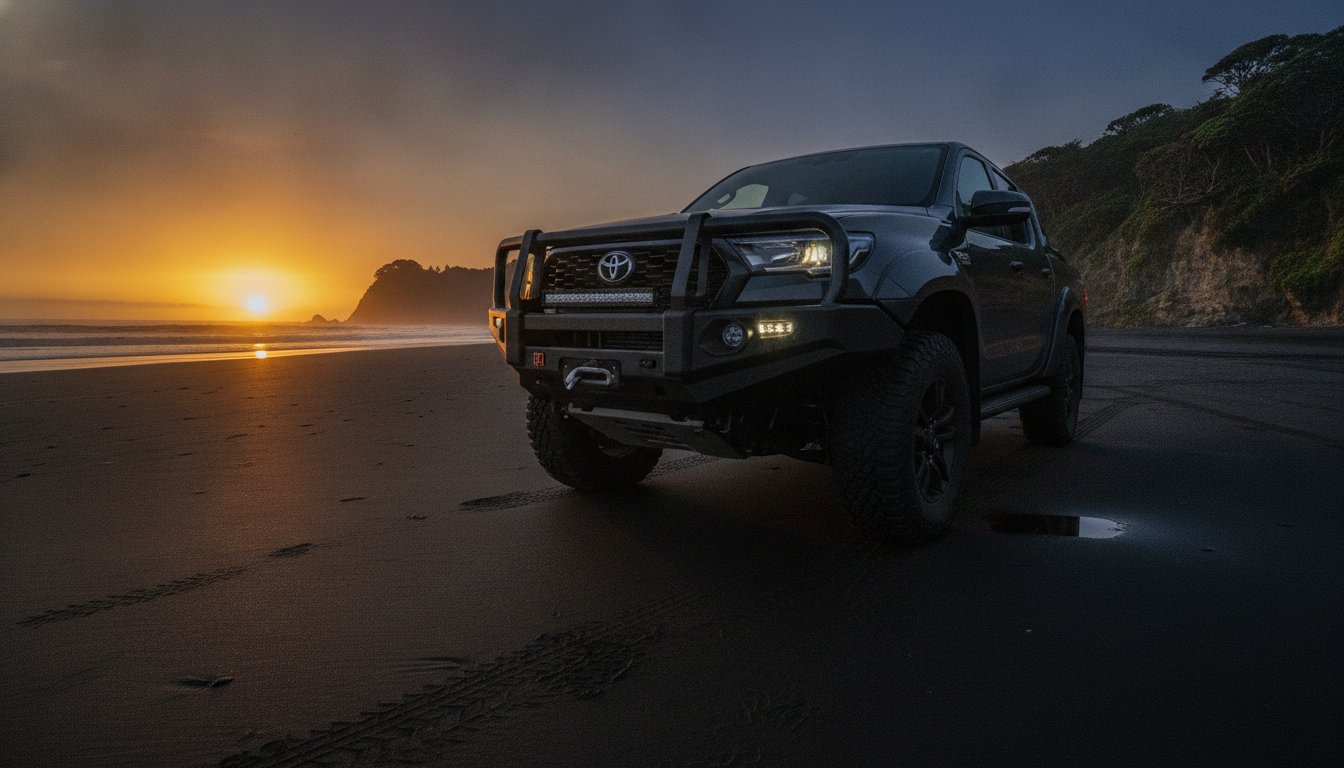
- Single-loop or Stealth bars: These offer a more integrated look that suits modern vehicle aesthetics. They are popular for the Next-Gen Ranger or Hilux where owners want a winch platform and recovery points without the bulk of a full hooped system.
Modern bar designs also feature dedicated mounting points for driving lights and antennas. A winch-compatible design isn’t just about a mounting plate; it’s about a reinforced internal cradle. This cradle must handle several tonnes of pulling force without twisting the vehicle’s chassis. Whether you’re building a dedicated tourer or a dual-purpose work truck, the style you choose must balance these recovery requirements with the practicalities of Auckland’s tight urban spaces.
Technical Integration: ADAS, Airbags, and WOF Compliance
Modern vehicle engineering has transformed the way we approach 4×4 bullbars Auckland wide. In 2026, a bullbar is no longer a simple steel bumper; it is a complex extension of the vehicle’s safety and electronic architecture. When you modify the front end of a late-model ute or SUV, you are altering the factory-set parameters for crash sensors and driver assistance systems. Ensuring these components communicate correctly after installation is the difference between a high-performance upgrade and a dangerous liability.
Warrant of Fitness (WOF) inspectors in New Zealand operate under strict criteria for frontal protection systems. To pass inspection, any bar fitted to a vehicle must be Frontal Impact Compliant (FIC) and display a permanent FIC tag. Inspectors will refuse a warrant if the bar slopes forward, has sharp edges, or is more than 100mm wider than the vehicle on either side. Attachment by welding is strictly prohibited; all compliant bars must be bolted using engineered mounting points that preserve the vehicle’s structural integrity.
The Critical Importance of ADAS Calibration
Advanced Driver Assistance Systems (ADAS) rely on radar units and cameras often housed behind the front grille or bumper. Fitting a bullbar can partially obstruct these sensors, leading to ghost braking or the total failure of Adaptive Cruise Control and Autonomous Emergency Braking (AEB). We address this by providing specialised ADAS Calibration as part of the installation process. Precise sensor alignment is the difference between an emergency braking system that saves lives and one that fails to engage when every millimetre counts. Our technicians use precision targets and diagnostic software to reset these systems to factory specifications, ensuring your tech remains a safety asset rather than a hazard.
Airbag and Crash Testing Standards
A bullbar must be engineered to work with your vehicle’s SRS airbag system, not against it. Modern bars utilise “crumple zone” mounting brackets designed to fold at a specific rate during a collision. This ensures the deceleration forces are high enough to trigger the airbags at the correct millisecond without being so rigid that they bypass the vehicle’s natural energy-absorption zones. Using an uncertified or poorly fitted bar can effectively void your ANCAP safety rating and compromise passenger protection. Professional installation is mandatory to ensure that every bolt and bracket aligns with ADR and NZ-standard crash testing requirements. By maintaining these standards, we ensure your vehicle remains road-legal and, more importantly, keeps you safe in a worst-case scenario.
Bullbar Roundup: Top Solutions for Auckland Drivers
Selecting the right hardware for your vehicle requires a clear understanding of its primary mission. In a market as diverse as New Zealand, choosing 4×4 bullbars Auckland wide means matching your protection level to the specific terrain you intend to conquer. Whether you are managing a fleet of work utes or preparing a family SUV for a tour of the South Island, the bar you select must provide a balance of structural integrity, weight management, and accessory compatibility.
The Tradie’s Choice: Functional and Durable
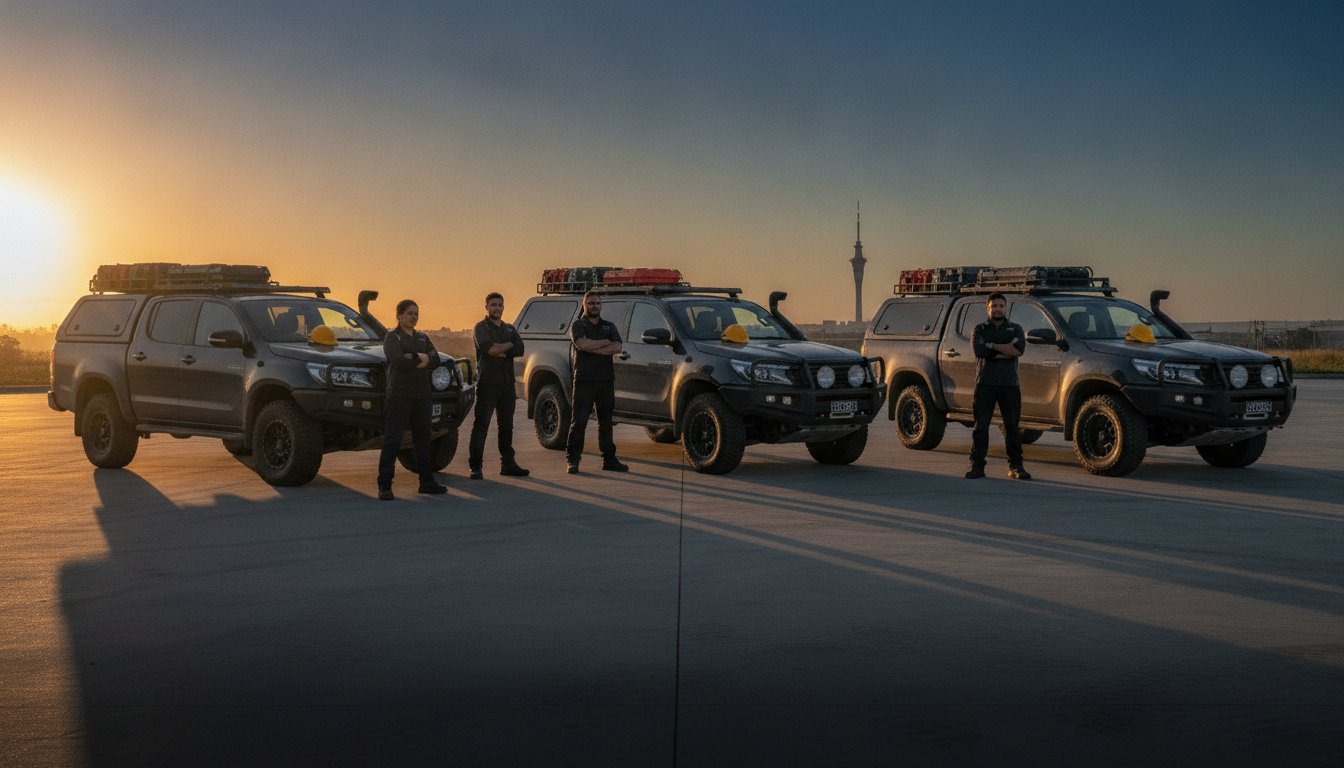
For commercial operators and tradespeople, a bullbar is a critical piece of site equipment. These bars must withstand the daily rigours of mud-caked construction sites and frequent low-speed maneuvering in tight Auckland car parks. We prioritise heavy-duty 3mm steel plate construction for these builds, ensuring the bar can handle minor knocks without deformation. Our fleet fit-outs often include bars with integrated steps and reinforced mounting points for beacons or high-gain antennas. A professional matte black powder coat finish provides the necessary corrosion resistance for vehicles parked near the coast while maintaining a clean, professional brand image for your business.
The Touring & Family Rig: Safety and Style
Touring bars are designed for the long haul, focusing on passenger safety and the integration of travel accessories. For the family rig, aesthetics are often just as important as protection. Modern “hoopless” or single-loop bars offer a sleek, integrated look that complements the factory lines of a Next-Gen Ranger or Hilux. These designs often feature integrated LED daytime running lights and fog lights, which improve visibility during those foggy morning drives through the Waikato. They also provide a stable foundation for mounting our range of camping gear, such as awnings or roof rack supports, ensuring your vehicle is ready for a weekend at the beach or a multi-day expedition.
For those who push their vehicles into more technical territory, off-road competition-style bars are the definitive solution. These bars are engineered for maximum clearance, often featuring swept-up wings that significantly improve your approach angles. While they provide less upper-grille protection than a traditional triple-loop bar, they offer the most robust foundation for high-capacity winches and rated recovery points. This is essential for self-recovery in the deep clay tracks of the Hunua Ranges. For a complete solution that includes professional installation and precision sensor calibration, visit our Auckland 4×4 service centre to discuss your specific build requirements.
The Motortech 4X4 Advantage: Expert Installation & Support
Choosing 4×4 bullbars Auckland wide often leads owners to generic retail outlets, but a professional build requires a deeper mechanical understanding. We don’t just bolt hardware to a chassis; we evaluate the entire vehicle system. Our Auckland based specialists understand the specific demands of local tracks, from the abrasive sands of Woodhill to the steep, greasy clay of the Hunua Ranges. This local expertise ensures your equipment is selected and tuned for the environment where you actually drive. We operate with a one-stop shop mentality, handling everything from technical accessory fitting to specialized mechanical servicing under one roof.
Beyond the Bar: Suspension and GVM
Adding a premium bar and winch can easily add 100kg to the front axle. This mass significantly alters the vehicle’s dynamic behaviour, especially under heavy braking or during off-road articulation. We assess your front spring rates as part of the installation process to ensure the vehicle remains balanced. For those carrying heavy payloads or towing, we can integrate the fitting into a comprehensive GVM upgrade. This ensures your vehicle remains road-legal and safe when fully loaded. By balancing the suspension to match the new hardware, we maintain the factory ride quality and prevent the nose-diving effect common in poorly planned builds.
Professional Fitting and Aftercare
Our installation process is methodical and thorough. We focus on the precision of every mounting point and the integrity of the electrical looms for integrated lighting and sensors. A professional fit-out includes more than just the initial labour; it includes the peace of mind that your vehicle’s structural integrity is preserved. We provide ongoing support to ensure the hardware remains secure through thousands of kilometres of corrugated roads. During regular 4×4 servicing, our technicians check mount tension and monitor the health of your ADAS sensors. This proactive approach prevents small vibrations from becoming major mechanical failures over time.
Our commitment to technical excellence means we don’t take shortcuts with your safety or your vehicle’s warranty. Every component we fit is checked against New Zealand compliance standards, ensuring your rig is as legal as it is capable. Book your bullbar consultation with the Auckland experts today to ensure your rig is professionally engineered for the road ahead.
Secure Your Build with Auckland’s 4×4 Specialists
Selecting the right frontal protection is a critical decision that impacts your vehicle’s safety, legal compliance, and off-road capability. A modern bar must do more than just deflect debris; it must seamlessly integrate with your vehicle’s complex electronic safety architecture. When you invest in 4×4 bullbars Auckland owners trust, you are choosing a solution that preserves your factory safety ratings and ensures your driver assistance tech remains fully functional on every track.
Our Auckland-owned and operated workshop provides a comprehensive technical service that generic retail shops cannot match. With specialist ADAS calibration on-site and an expert mechanical and fleet fit-out team, we handle the entire engineering process from structural mounting to final sensor reset. We ensure your suspension is correctly tuned for the added weight so your rig remains balanced and responsive in all conditions.
Don’t leave your vehicle’s performance and safety to chance. Enquire about Bullbar Fitting at Motortech 4X4 Auckland today and let our specialists engineer the perfect protection for your next expedition. We look forward to helping you build a more capable, compliant vehicle.
Frequently Asked Questions
Will fitting a bullbar affect my vehicle’s airbag deployment?
A compliant bullbar will not negatively affect airbag deployment if it is correctly engineered and fitted. Reputable manufacturers design their mounting systems with specific crumple zones that fold at precise rates during a collision. This ensures the deceleration forces trigger the SRS airbags at the intended millisecond. Using an uncertified bar or a poor installation can bypass these energy-absorption zones, which compromises passenger safety and potentially voids your vehicle’s safety rating.
Do I need to upgrade my suspension when I install a bullbar?
We recommend upgrading your front suspension when installing a bullbar. Adding significant weight to the front end causes factory springs to sag over time, which reduces ground clearance and alters your wheel alignment. This leads to premature tyre wear and poor braking performance. By installing a heavy-duty suspension kit tailored to the new axle load, you maintain a level ride height and ensure the vehicle remains responsive under all driving conditions.
Is ADAS calibration necessary after fitting a bullbar in Auckland?
ADAS calibration is mandatory for modern vehicles after fitting 4×4 bullbars Auckland wide. Advanced systems like Autonomous Emergency Braking and Adaptive Cruise Control rely on radar sensors and cameras that are easily obstructed or misaligned during a frontal modification. Even a shift of a few millimetres can cause the system to malfunction or fail entirely. We use precision diagnostic tools to reset these sensors to factory specifications, ensuring your safety tech continues to protect you.
Are bullbars legal for road use in New Zealand?
Bullbars are legal provided they meet New Zealand’s Frontal Impact Compliance (FIC) standards. For a vehicle to pass a WOF, the bar must display a permanent FIC tag and have no sharp edges or forward-sloping components. While Class NA vehicles like utes have more flexibility, Class MA, MB, and MC vehicles manufactured after 2003 must use bars that have been specifically crash-tested with that model. Professional installers ensure every fitting meets these strict legal requirements.
What is the difference between a winch-bar and a non-winch bar?
The primary difference lies in the internal structural reinforcement. A winch-ready bar features a heavy-duty steel cradle designed to handle several tonnes of pulling force without twisting the vehicle’s chassis. Non-winch bars lack this reinforced mounting platform and are generally lighter. If you plan on off-roading in technical areas like the Hunua Ranges, a winch-bar is essential to provide a safe and stable foundation for your recovery gear.
How much weight does a typical steel bullbar add to my 4×4?
A typical steel bullbar adds between 60kg and 90kg to your vehicle’s front end. The exact weight depends on the vehicle model and the style of the bar, such as a triple-loop versus a hoopless design. When you add a winch and driving lights, the total weight can exceed 120kg. This significant increase in mass is why we always assess your GVM and front suspension before completing a professional installation.
Can I fit a bullbar myself or should I use a professional installer?
We strongly advise against DIY installation due to the technical complexity involved. Modern 4×4 bullbars Auckland require precise mounting to ensure airbag compatibility and ADAS sensor alignment. A professional installer possesses the specialised diagnostic equipment needed for sensor calibration and the mechanical expertise to ensure the bar is securely bolted to engineered points. Furthermore, a professional fitment ensures your vehicle remains compliant with NZTA safety standards for a successful Warrant of Fitness.
Will a bullbar void my new vehicle warranty?
Fitting a bullbar generally does not void your entire vehicle warranty, but it may affect claims related to the front end or modified components. Under the New Zealand Consumer Guarantees Act, a manufacturer cannot simply cancel a warranty because of an aftermarket modification. However, if a fault is directly caused by the bullbar or its installation, the manufacturer may refuse that specific claim. Using a professional specialist ensures the work meets the highest technical standards.