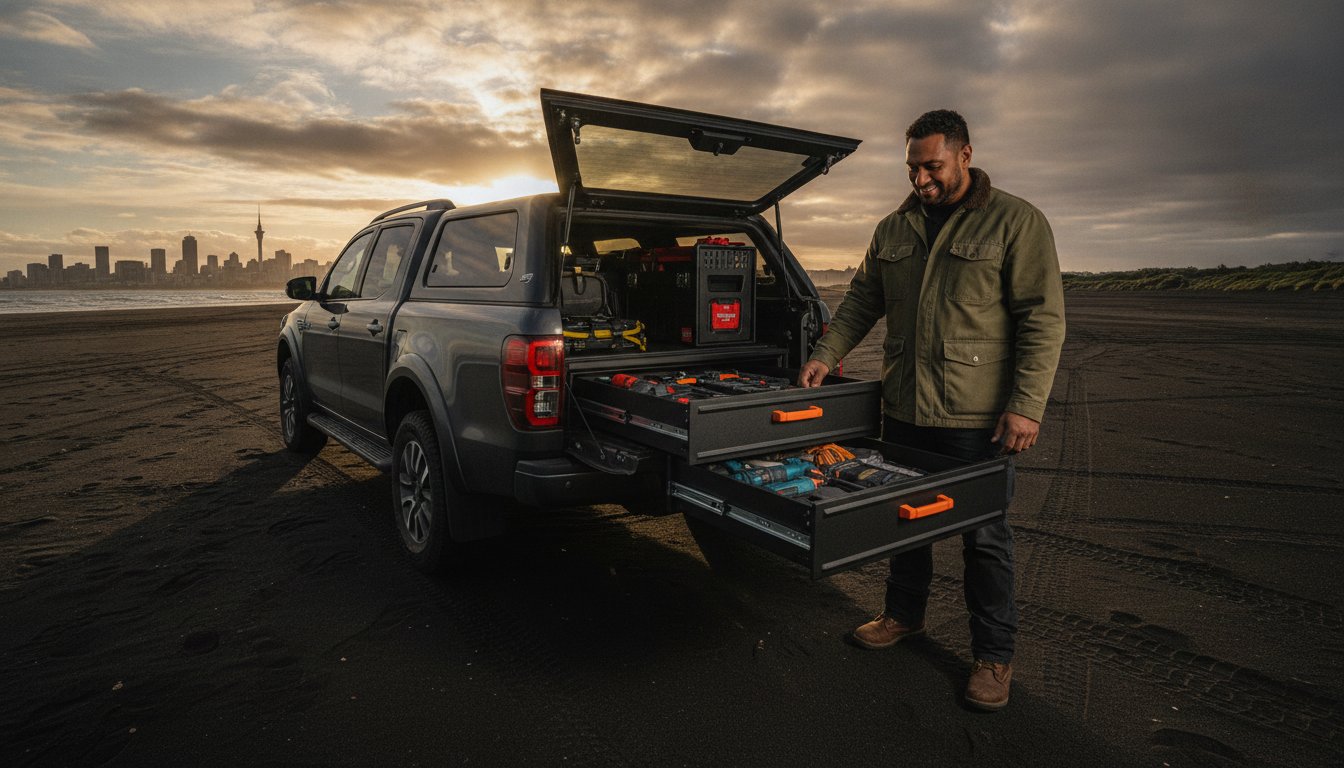

Owning a 4×4 is no guarantee that you will actually make it through the deep sand of a remote beach or the technical tracks of the high country. While modern vehicles are more capable than ever, the gap between having the hardware and knowing how to use it remains the biggest hurdle for most enthusiasts. You might feel overwhelmed by technical jargon like GVM, diff locks, and transfer cases; perhaps you worry that engaging the wrong mode will result in a costly drivetrain failure when you are miles from help.
We understand that the transition from tarmac to trail requires more than just a set of keys. It requires a professional level of mechanical understanding. This 2026 guide will deconstruct the complexities of four-wheel drive systems to help you master your vehicle and build genuine off-road confidence. You will learn the definitive mechanical differences between 4×4 and AWD systems, how to operate various driving modes without risking damage, and which specific upgrades, such as suspension kits or snorkels, are truly necessary for the unique demands of the NZ bush. By the end, you will have the expertise needed to ensure your vehicle performs reliably in the most challenging environments.
Key Takeaways
- Differentiate between total wheels and driven wheels to understand how a true 4×4 drivetrain manages torque in technical terrain.
- Identify the critical role of a low-range transfer case, the primary mechanical feature that separates genuine off-road vehicles from standard All-Wheel Drive systems.
- Select essential performance upgrades, such as specialised suspension kits and snorkels, based on whether your vehicle is built for touring or heavy-duty work.
- Understand the rigorous maintenance schedules and GVM upgrade requirements necessary to keep your modified vehicle reliable and compliant with New Zealand standards.
- Master the safe engagement of different driving modes to prevent drivetrain damage and maximise traction on challenging surfaces like sand and mud.
Understanding the 4×4: More Than Just Four Driven Wheels
A 4×4 is defined by its ability to provide torque to all four wheel ends simultaneously, ensuring that traction is maintained even when one or more tyres lose contact with a stable surface. The “four-by-four” designation itself is a simple mathematical breakdown. The first digit refers to the total number of wheels on the vehicle, while the second indicates how many of those wheels are driven by the engine. In the diverse terrain surrounding Auckland, this mechanical configuration is the literal backbone of both the local trade industry and the recreational culture.
For many New Zealanders, the appeal of these vehicles goes beyond simple transport. It’s about the freedom to explore the most remote corners of the North Island. Whether you are a tradie hauling a heavy trailer onto a muddy construction site or an adventurer heading to a secluded beach, the “go-anywhere” capability of a well-built rig provides a level of confidence that standard vehicles cannot match. This accessibility has made the 4×4 an essential part of the national identity, offering a unique blend of utility and adventure.
The Core Components of a 4×4 System
The journey of power begins at the engine and transmission, but the heart of any true off-road vehicle is the transfer case. This specialised component sits behind the transmission and is responsible for splitting torque between the front and rear axles. High-performance four-wheel drive systems often include a low-range gear set within the transfer case, allowing for significant torque multiplication during technical low-speed manoeuvres. Drive shafts and heavy-duty axles then deliver this power to the wheels, ensuring the vehicle can push through resistance that would stall a lesser drivetrain.
A Brief History of Off-Road Capability
Off-road technology has undergone a massive transformation since the days of spartan military utility vehicles. What were once loud, “agricultural” workhorses designed for the battlefield have evolved into sophisticated machines. Early four-wheel drive systems relied entirely on manual levers and mechanical linkages. Today, these foundations are augmented by electronic aids and terrain management software. This evolution has successfully bridged the gap between rugged durability and modern comfort, turning the modern ute into a versatile tool that is equally at home on the morning school run as it is deep in the NZ bush.
The Mechanics of Traction: How 4×4 Systems Actually Work
Traction is the effective conversion of engine torque into forward momentum. In a standard vehicle, power naturally follows the path of least resistance. If one tyre is suspended in the air or spinning in deep mud, the drivetrain sends all available energy to that wheel, leaving the vehicle stationary. A true 4×4 system is engineered to overcome this physical limitation by mechanically or electronically distributing torque to the wheels with the most purchase on the ground. Understanding How 4×4 systems work is essential for any driver looking to push their vehicle beyond the limits of the tarmac.
Modern off-roaders utilise a combination of mechanical hardware and sophisticated software to maintain progress. While traditional systems relied on the driver to manually engage hubs, contemporary rigs often use automated systems that “think” their way through obstacles. These systems monitor wheel speed hundreds of times per second, applying individual brakes to spinning wheels to redirect torque across the axle. However, these electronic aids are only as effective as their last calibration. When you modify a vehicle with larger tyres or lift kits, the factory sensors require professional 4×4 servicing to ensure the traction control and ADAS systems remain accurate and safe.
The Transfer Case: High Range vs. Low Range
The transfer case is a secondary gearbox that dictates how power is split between the front and rear axles. It typically offers three distinct modes:
- 2H (Two-Wheel Drive High): This is your default setting for daily driving on sealed Auckland roads. It sends power only to the rear wheels to maximise fuel efficiency and reduce drivetrain wear.
- 4H (Four-Wheel Drive High): This mode engages both axles at a 1:1 gear ratio. It is designed for higher speeds on loose surfaces like gravel tracks or during heavy rain where extra stability is required.
- 4L (Four-Wheel Drive Low): This is the powerhouse mode. It engages a reduction gear that multiplies engine torque significantly while lowering the vehicle’s speed. It provides the massive grunt needed for rock crawling, navigating deep sand, or recovering a bogged vehicle.
Differentials and Diff Locks Explained
An open differential is a standard mechanical requirement that allows wheels on the same axle to rotate at different speeds, which is vital for cornering on bitumen. Unfortunately, this same mechanism is a liability in the bush because it sends power to the wheel with the least resistance. A Locking Differential (Diff Lock) solves this by physically locking the two wheels on an axle together. This forces them to turn at the same speed regardless of whether one is in the air or buried in mud. While incredibly effective, diff locks should only be engaged on loose surfaces to avoid “driveline bind,” a condition where the internal components fight each other and eventually snap under the pressure of high-traction surfaces.
4X4 vs. AWD: Why the Distinction Matters for Off-Roading
Many Auckland drivers purchase an SUV believing it possesses the same capabilities as a dedicated off-road rig. However, the distinction between 4×4 and AWD is fundamental to vehicle performance and drivetrain longevity. While both systems can distribute power to all four wheels, the method and purpose of that distribution vary significantly. An All-Wheel Drive (AWD) system is primarily a safety feature for the road; a 4×4 is a specialised tool for the bush. Understanding this difference is the only way to avoid getting stuck or causing thousands of dollars in mechanical damage.
The core mechanical separator is the presence of a low-range transfer case. A true 4×4 allows the driver to manually engage a lower gear set that multiplies torque for technical manoeuvres. AWD systems lack this hardware. In deep sand or heavy mud, an AWD system often relies on “slip and grip” technology, which only sends power to the other axle after a wheel has already lost traction. This delay is often enough to bog the vehicle. Continuous slipping in high-resistance terrain causes rapid heat buildup in AWD clutch packs, which can lead to expensive transmission failures.
Drivers should also distinguish between part-time and full-time systems. Part-time systems require the driver to manually select 4WD only when off the tarmac to prevent “driveline bind” on high-traction surfaces. Conversely, sophisticated setups like Mitsubishi’s “Super Select” or Jeep’s “Quadra-Drive” allow for full-time operation on sealed roads while still providing a dedicated low-range mode for the heavy stuff. These hybrid systems offer the best of both worlds for New Zealand conditions.
All-Wheel Drive (AWD): Built for the Tarmac
AWD systems are engineered for urban Auckland life, providing confidence on wet motorways or light gravel driveways. They automatically shift power between axles to prevent slipping without any driver input. Because they lack low-range gears, these vehicles struggle with steep, technical climbs where slow-speed control is vital. Most compact SUVs and wagons fall into this category; they are “soft-roaders” designed for comfort and efficiency rather than rugged durability.
True 4×4: Built for the Track
A dedicated 4×4 features heavy-duty construction with drivetrain components designed to withstand extreme torque loads. These vehicles offer superior ground clearance and aggressive approach angles, which are essential for clearing rocks or deep ruts. For anyone planning to explore the remote coastlines of the Coromandel or the mud-slicked tracks of Northland, a 4×4 is a mandatory investment. The physical attributes of these vehicles, combined with their mechanical gear reduction, ensure they can return home from environments that would leave an AWD stranded.
Outfitting Your Rig: Essential 4×4 Accessories for Performance
Building a capable off-road vehicle requires a methodical approach to engineering rather than a random selection of parts. Your build philosophy should be dictated by your primary use case. A tradie operating a fleet vehicle in Auckland has vastly different requirements than a long-distance tourer heading for the South Island. Every modification you add changes the vehicle’s centre of gravity and total mass. It’s vital to understand that as you add heavy-duty accessories, you must also consider the legal and mechanical implications of your vehicle’s Gross Vehicle Mass (GVM).
Installing high-quality components ensures that your rig remains reliable when you’re miles from the nearest workshop. Cheap, unbranded gear often fails under the extreme stress of technical tracks, potentially leaving you stranded. Beyond durability, professional fitment is non-negotiable for safety. With the introduction of the ADAS Functionality & Integrity Act in 2026, ensuring that bullbars and suspension kits are correctly calibrated with your vehicle’s Advanced Driver-Assistance Systems is now a legal and functional necessity. For expert advice on selecting the right components for your specific needs, you should consult specialists in GVM Upgrades and 4×4 accessories.
Protection and Recovery: Bullbars and Winches
A bullbar is a critical piece of structural protection. While many enthusiasts appreciate the aggressive aesthetic, its primary function is to shield the radiator and engine from animal strikes or debris. This protection is essential for anyone driving rural NZ roads at dawn or dusk. Pair this with a winch to ensure you have a “get out of jail free” card during solo expeditions. A winch allows for self-recovery in deep mud or on steep inclines where traction is non-existent. Additionally, upgrading to high-output LED vehicle lighting significantly improves visibility, reducing driver fatigue during long night hauls through the Waikato or Northland.
Suspension and Snorkels: Conquering the Terrain
Quality suspension kits do more than just provide a taller stance. They’re designed to improve off-road articulation, allowing tyres to maintain contact with uneven ground, while also increasing the vehicle’s load-carrying capacity. This is particularly important if you’ve fitted a heavy canopy or hardlid to organise your tools and camping gear. To protect the engine’s internal components, a snorkel is a mandatory addition. It raises the air intake point to avoid water ingestion during river crossings and pulls cleaner, cooler air from above the dust cloud generated on gravel roads. These modifications work together to transform a standard 4×4 into a high-performance adventure machine.
Mastering the Build: Professional Servicing and Compliance
Owning a high-performance 4×4 requires a fundamental shift in how you approach vehicle care. Standard hatchbacks operate in relatively controlled environments, but an off-road vehicle faces constant exposure to abrasive dust, corrosive salt, and extreme mechanical loads. These conditions demand a more rigorous and specialised maintenance schedule. Neglecting these specific requirements doesn’t just reduce your vehicle’s resale value; it compromises the safety and longevity of your entire drivetrain. Professional servicing ensures that every component, from the wheel bearings to the breather lines, is prepared for the rigours of the trail.
Performance tuning has also become a cornerstone of the modern build. Many factory engines are tuned for a generic global market, often leaving significant power and efficiency on the table. A professional ECU remap can unlock substantial improvements in low-down torque, which is essential for hauling a boat or caravan through New Zealand’s hilly terrain. When paired with high-quality 4×4 servicing, these software adjustments provide a smoother power delivery and better fuel economy without sacrificing the reliability of the engine’s internal components.
Specialised 4×4 Maintenance
A transmission flush is one of the most critical services for any vehicle used for heavy towing or beach driving. High-resistance surfaces like soft sand generate immense heat within the transmission, which can degrade the fluid and lead to premature clutch failure. You must also consider differential and transfer case oil changes as part of your routine. These components are often overlooked during basic services, yet they are the parts most likely to be contaminated by water or silt during river crossings. Regular under-body inspections after every off-road excursion are the final piece of the puzzle. These checks allow a technician to identify damaged CV boots, bent steering components, or debris trapped in the braking system before they cause a major breakdown.
Compliance: GVM Upgrades and ADAS Calibration
Staying legal on NZ roads is a primary responsibility for any owner of a modified 4×4. Gross Vehicle Mass (GVM) is the maximum weight your vehicle can legally carry, including passengers, fuel, and all your accessories. It is incredibly easy to exceed this limit once you add a bullbar, winch, roof racks, and a canopy. A certified GVM upgrade ensures your suspension is legally rated for the extra load, protecting your insurance coverage and ensuring the vehicle remains safe to handle under full load. This is especially vital for fleet fit-outs where safety compliance is a non-negotiable requirement.
Safety technology has evolved rapidly, and by 2026, ADAS Calibration has become a mandatory requirement after any suspension modification. Advanced Driver-Assistance Systems like autonomous braking and lane-keep assist rely on sensors that are calibrated to a specific factory height. If you install a lift kit, these sensors will “see” the road incorrectly, potentially causing dangerous unintended braking or system errors. Choosing a specialist who can handle both the mechanical installation and the electronic calibration saves significant time and ensures your safety systems are fully operational. If you are ready to build your dream rig, contact the Motortech 4X4 team in Auckland today.
Building for the Future of Off-Roading
Mastering the mechanics of your 4×4 is the definitive step toward achieving true off-road independence. By understanding the critical distinction between a true four-wheel drive and a standard AWD system, you prevent unnecessary mechanical strain and ensure your vehicle is fit for the rugged NZ environment. Whether you are outfitting a new rig for touring or maintaining a fleet workhorse, the focus must remain on technical precision and legal compliance. Professional builds require more than just bolting on parts; they require a deep understanding of vehicle dynamics and engineering standards.
Navigating the complexities of GVM upgrades and ADAS calibration requires a specialised partner who understands the intersection of performance and safety. As Auckland-based 4×4 specialists and authorised GVM upgrade installers, we provide the comprehensive expertise needed to transform your vehicle into a reliable adventure machine. Our experts in ECU remaps and ADAS calibration ensure your build meets the highest mechanical and safety standards, keeping you legal and capable on every track.
Book your professional 4×4 service or fit-out at Motortech 4X4 Auckland to secure the reliability your next expedition deserves. We look forward to helping you unlock the full potential of your vehicle and seeing you out in the bush.
Frequently Asked Questions
What is the difference between 4WD and 4×4?
The terms are often used interchangeably, but a 4×4 specifically identifies a four-wheeled vehicle where all four wheels are driven. In the Australian and NZ markets, this designation typically refers to vehicles equipped with a transfer case and low-range gears. This distinguishes them from All-Wheel Drive systems that lack the mechanical gear reduction required for technical off-road terrain.
Can I drive in 4H on the motorway?
You should avoid using 4H on dry, sealed motorways to prevent significant mechanical damage. Engaging 4H locks the front and rear drive shafts together, which forces the wheels to turn at the same speed. On high-traction surfaces like bitumen, this prevents the necessary wheel speed differentiation during turns, leading to driveline bind and potential drivetrain failure.
Do I really need a lift kit for my 4×4?
A lift kit is essential if you intend to navigate technical tracks that require increased ground clearance and better approach angles. These specialised suspension kits allow you to clear larger obstacles and fit bigger tyres without the risk of rubbing. While not required for urban driving, they are a fundamental upgrade for anyone serious about exploring the NZ bush safely and effectively.
How often should I service my 4×4 if I go off-road?
Service intervals should be shortened to every 5,000 or 7,500 kilometres if you are regularly taking your vehicle off-road. The extreme conditions found in mud, sand, and water crossings put significantly more stress on lubricants and filters than standard road use. Frequent 4×4 servicing ensures that contaminants like silt or salt don’t cause premature wear on expensive drivetrain components.
What is a GVM upgrade and do I need one?
A GVM upgrade is a legal modification that increases the Gross Vehicle Mass rating of your vehicle. You require this upgrade if the total weight of your vehicle, including passengers and accessories like bullbars, winches, and canopies, exceeds the manufacturer’s original limit. It is a critical compliance step to ensure your vehicle remains safe, handles correctly, and stays within insurance requirements.
Will a snorkel actually let my car drive underwater?
A snorkel is designed to raise the air intake to prevent water ingestion during crossings, but it does not allow for total submersion. While it protects the engine from hydro-locking, other components such as the alternator, sensors, and interior are not waterproof. Its primary role is to provide a clean air source above the dust and water line during remote expeditions.
Why is my 4×4 making a binding noise when I turn on the tarmac?
A binding or “crow-hopping” noise during turns on tarmac usually indicates that your 4WD system is engaged on a high-traction surface. This occurs because the front and rear axles are locked together and cannot slip on the bitumen to account for different wheel speeds. You must disengage the system and return to 2H immediately to prevent snapping a half-shaft or damaging the transfer case.
What are the best 4×4 accessories for a new Ford Ranger or Toyota Hilux?
The most effective upgrades for these models include a combination of protection, performance, and storage. A bullbar and winch provide essential front-end safety and recovery capability, while an ECU remap improves torque for towing and heavy loads. For those using their rigs for work or touring, adding a snorkel and a canopy with a hardlid creates a versatile and protected setup for any environment.