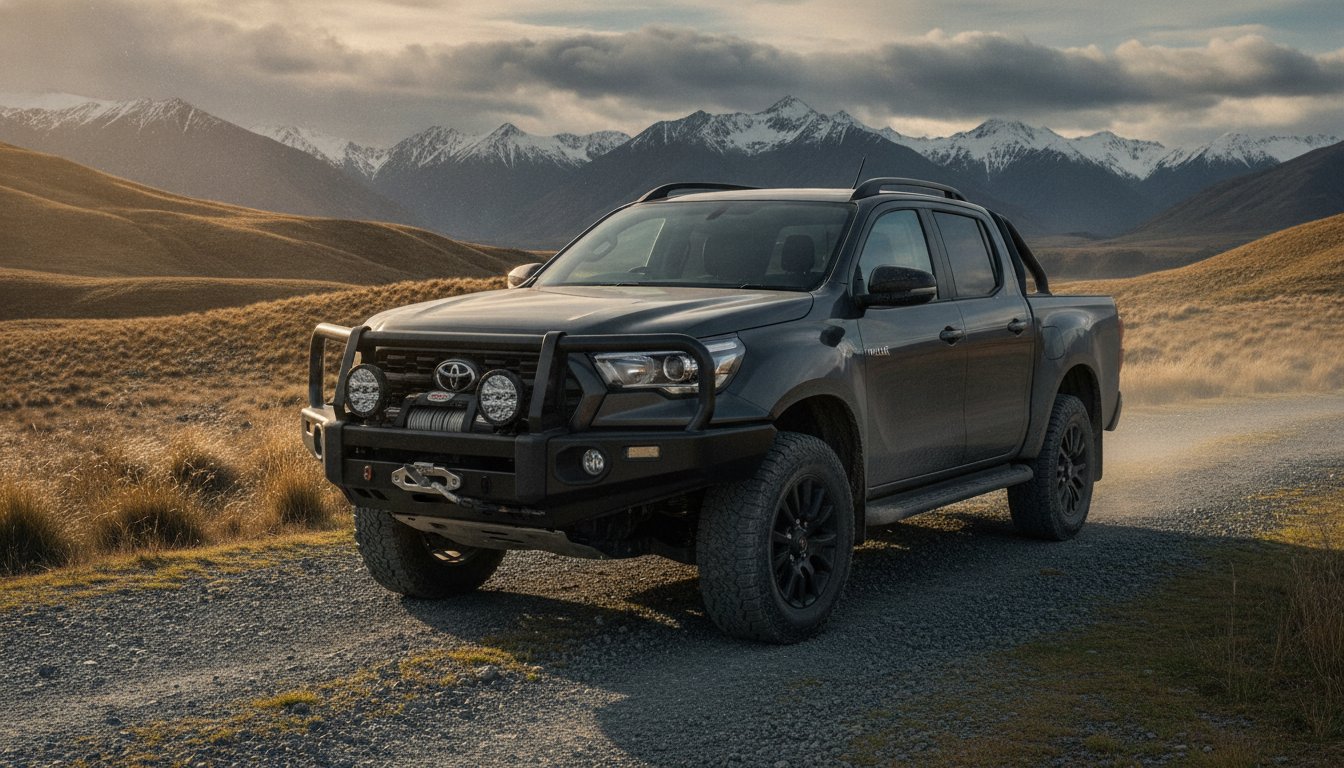
What if your vehicle’s factory bumper is actually the weakest link between a successful remote tour and a costly recovery operation in the middle of the Southern Alps? You’ve invested heavily in your rig, and the fear of a stray deer or a hidden obstacle ruining your engine’s vitals is a valid concern for any serious off-roader. Choosing an arb bullbar isn’t just about adding a rugged look to your front end; it’s about installing a precision-engineered safety system that protects your vehicle and its occupants.
Many owners feel a sense of hesitation when modifying modern vehicles, particularly regarding how heavy steel components might affect airbag timing or ADAS sensor performance. You’ll learn exactly why ARB remains the benchmark for engineering excellence and how to select a model that complements your vehicle’s lines. This guide previews the functional differences between the Summit and Sahara series, the importance of professional calibration for safety compliance, and how to integrate winches and driving lights for a complete, touring-ready solution.
Key Takeaways
- Learn why a premium arb bullbar functions as a fully integrated protection system rather than a simple bumper replacement, providing engineered mounting points for winches and lighting.
- Compare the flagship Summit MKII series with the low-profile Sahara models to identify the best aesthetic and functional match for your specific rig.
- Evaluate the performance benefits of steel, alloy, and polymer bars to determine which material suits your vehicle’s weight requirements and intended terrain.
- Understand the engineering behind airbag compatibility and ADAS sensor integration to ensure your modifications meet strict New Zealand frontal impact standards.
- Discover why professional fitment and ADAS calibration are essential for maintaining vehicle structural integrity and ensuring your safety tech operates correctly on the road.
Why ARB Bullbars are the Benchmark for NZ Off-Road Protection
An arb bullbar is a sophisticated engineering solution designed to integrate with your vehicle’s safety and structural systems. While many might ask what is a bullbar in the context of simple aesthetic upgrades, a genuine ARB unit serves as a comprehensive protection platform. It provides secure mounting points for essential recovery and communication gear, including winches, antennas, and driving lights. This “total solution” approach ensures that every accessory is mounted to a base engineered to handle the stresses of the rugged New Zealand landscape. Whether you’re navigating the soft sands of Northland beaches or the steep, shale-heavy tracks of the Southern Alps, the structural foundation of your rig depends on this integration.
The ARB Engineering Difference
ARB’s design process is exhaustive. It involves a five-fold methodology that prioritises vehicle safety and structural integrity above all else. Engineers calculate specific crush rates to ensure the bar doesn’t interfere with factory airbag triggers or ADAS sensor performance. They use high-strength steel and robotic welding to maintain consistent quality across every unit produced. Unlike “universal fit” alternatives, each bar is vehicle-specific. This means the mounting systems are tailored to the exact chassis rails of your ute or SUV. In the event of a major impact, ARB bars are designed to fold in a controlled manner. This protects the chassis and occupants rather than transferring the full force of the collision directly to the vehicle’s frame, which can often lead to a total loss in lesser designs.
Beyond Aesthetics: Functional Benefits
Practicality drives every design decision. A well-fitted bar significantly improves your vehicle’s approach angle. This allows you to tackle technical off-road obstacles without catching the front bumper on rocks or ruts. Beyond technical terrain, the bar acts as a vital shield for your radiator and cooling system. This is particularly crucial for remote NZ touring where animal strikes, especially deer, can cause catastrophic engine damage. A single impact can leave you stranded far from help with a punctured radiator. To clarify a common technical concern, airbag compatibility is defined as the replication of a vehicle’s factory crush pulse. This ensures the safety systems react exactly as the manufacturer intended during an accident. The goal is simple: protect the vehicle’s vitals while ensuring the safety tech remains uncompromised.
Navigating the ARB Range: Summit, Sahara, and Commercial
Selecting the right arb bullbar requires a calculated balance between protection levels, vehicle weight, and aesthetic preference. ARB does not offer a one-size-fits-all product; instead, they provide several distinct series engineered for specific operational environments. The flagship Summit MKII series represents the pinnacle of this range, featuring a full-hoop design that provides maximum protection for the headlights and radiator area. It is designed to complement the styling of modern utes and SUVs, offering a seamless look that mimics factory lines while providing a vastly superior structural foundation for accessories.
For owners who prefer a more refined or urban-friendly appearance, the Sahara bar offers a lower-profile, “hoopless” alternative. It retains the same high-strength steel construction and internal gusseting as the Summit series but removes the upper outer tubes. This results in a sleeker silhouette that often integrates better with city-based vehicles while still providing a robust platform for winch mounting and recovery points. Conversely, the Commercial bar is the preferred choice for fleet owners and tradies. This model prioritises function over form, omitting aesthetic features like colour-coding and integrated fog light surrounds to provide a cost-effective, heavy-duty protection solution for work vehicles.
Summit MKII vs. Summit Sahara
The primary difference between these two flagship models lies in the extent of their frontal coverage. The Summit MKII provides comprehensive protection across the entire front fascia, making it the superior choice for remote touring where animal strikes are a high risk. It also offers more expansive lighting integration, with dedicated housings for fog lights and indicators. The Sahara bar, while still extremely tough, is often chosen for its “stealth” look. It is particularly popular in Auckland for vehicles that split time between the job site and the school run. Both models are designed with a deep understanding of how modifications impact vehicle safety ratings, ensuring that parking sensors and adaptive cruise control systems remain fully functional after installation.
Specialist Bars: StealthBar and Alloy Options
Weight management is a critical factor for many modern builds. The StealthBar and SpartanBar ranges utilise advanced polymer materials to offer a lightweight alternative to traditional steel. These bars are specifically designed to be “pedestrian-friendly” while still offering significant protection from minor impacts and debris. They are an excellent choice for vehicles that must stay under strict GVM limits. For those living in coastal Auckland areas, Alloy bars provide a high-strength solution with natural resistance to corrosion. While steel remains the industry standard for sheer impact resistance, alloy offers a significant weight saving that can reduce the need for immediate suspension upgrades. Choosing the right material depends entirely on your vehicle’s intended use and your long-term maintenance preferences. If you are unsure which model suits your specific requirements, the team at Motortech 4X4 can provide a professional assessment based on your vehicle’s GVM and intended touring style.
Finding the Right Fit: Steel, Alloy, or Polymer Bars?
Selecting the material for your arb bullbar is a decision that dictates your vehicle’s front-axle weight, maintenance requirements, and impact resilience. While many off-roaders believe steel is the only viable choice for serious touring, the reality is more nuanced. Your choice should align with your specific terrain, such as the steep, muddy tracks of the Coromandel or the salt-heavy air of Auckland’s coastal suburbs. Every material offers a distinct set of engineering trade-offs that affect how your vehicle handles both on and off the road. Compliance is also a major factor, as all installations must adhere to NZ Transport Agency bullbar regulations to ensure the vehicle remains road-legal and safe for all road users.
Material Comparison Framework
- Steel: This remains the benchmark for maximum structural integrity. It is the preferred material for winch-heavy builds and remote touring where the risk of high-speed animal strikes is greatest. While it is the heaviest option, its ability to be repaired or reinforced makes it a permanent solution for rugged environments.
- Alloy: Constructed from high-strength aluminium, alloy bars are significantly lighter than their steel counterparts. They offer excellent natural resistance to corrosion, which is a major advantage for vehicles frequently exposed to coastal environments. The premium polished finish also provides a high-end aesthetic without the weight penalty.
- Polymer: Modern polymer bars, like the StealthBar, offer superior energy absorption. They are the lightest option available and are designed to flex upon impact, making them the most pedestrian-friendly choice. They are ideal for weight-conscious builds where front-end protection is still a priority.
Weight Management and GVM Considerations
Adding a 60kg steel bar to the very front of your chassis fundamentally changes your vehicle’s dynamics. This weight sits ahead of the front axle, creating a leverage effect that increases stress on factory springs and dampers. Over time, this leads to front-end sag, reduced ground clearance, and accelerated tyre wear. It is rare that a heavy-duty bar can be fitted without also installing a high-quality suspension kit to restore the vehicle’s ride height and handling characteristics.
Before bolting on heavy accessories, you must calculate your remaining payload. Every kilogram added to the front is a kilogram taken away from your available gear, passengers, or tow-ball weight. Motortech 4X4 provides specialized advice on weight distribution for Auckland fleets and private touring builds, ensuring that your arb bullbar selection doesn’t push your vehicle over its legal Gross Vehicle Mass (GVM). Balancing protection with performance requires a professional assessment of your total build weight to ensure the rig remains stable and compliant under all load conditions.
Safety and Compliance: Airbags, ADAS, and NZ Standards
The primary concern for many owners is whether fitting an arb bullbar will make their vehicle less safe in a collision. It’s a logical question. Modern vehicles are complex safety cells, and adding a heavy steel structure to the front can alter how that cell behaves. ARB addresses this through rigorous physical crash testing rather than relying solely on computer simulations. Their mounting systems are engineered with specific crush folds that ensure the vehicle’s factory crush pulse is maintained. This precision ensures that airbags deploy exactly when they should, maintaining the internal safety standards of your rig while providing essential external protection.
Integration extends beyond physical structures to the electronic safety suite. Modern utes feature parking sensors, adaptive cruise control, and autonomous emergency braking (AEB). ARB bars include dedicated mounting points for these sensors, ensuring they maintain a clear line of sight. However, the physical relocation is only half the battle. To maintain the accuracy of these systems, the electronic components must be synchronized with the new physical layout of the vehicle’s front end.
ADAS Calibration: The Modern Essential
Moving a radar sensor by a tiny fraction of a degree can cause it to see the road incorrectly. This misalignment often results in the system failing to detect obstacles or, conversely, detecting non-existent threats. Ignoring sensor calibration can lead to “phantom braking” or system failure, which is a significant safety risk on Auckland motorways. At Motortech 4X4, we utilize specialized diagnostic tools to perform comprehensive professional ADAS calibration. This professional step is non-negotiable for any vehicle equipped with modern driver-assist technology.
WOF and Legal Compliance in New Zealand
Compliance with NZTA standards is essential for passing your Warrant of Fitness. Regulations dictate that bullbars must not have sharp edges or forward-sloping protrusions that could endanger pedestrians. “Home-made” or uncertified bars are a common cause of WOF failure because they lack the engineering proof required to meet these safety benchmarks. Choosing a certified ARB bar provides the assurance that your vehicle meets all legal requirements. It also ensures that the structural integrity of your vehicle’s frontal impact zone remains intact, protecting your insurance coverage and your occupants’ safety. Peace of mind comes from knowing your modifications are fully compliant with New Zealand’s strict frontal impact standards.
Professional Bullbar Installation in Auckland: The Motortech Difference
Attempting a DIY installation for an arb bullbar might seem like a cost-saving measure, but it often compromises the vehicle’s structural integrity. Modern 4WD chassis are engineered with specific crumple zones and sensor arrays that require professional handling. A misplaced bolt or an incorrectly torqued mount can lead to vibration issues, accelerated wear, or, in the worst case, a failure of safety systems during an impact. At Motortech 4X4, we operate with a “complete build” philosophy. This means we don’t just bolt on a bar; we integrate a total solution that includes winches, lighting, and critical electronic calibration.
Our Auckland workshop serves as a one-stop shop for both large-scale fleet fit-outs and dedicated private builds. We understand that a bullbar is the foundation of your vehicle’s front-end setup. By choosing a professional fitment, you secure local support and a comprehensive warranty backup that DIY projects cannot match. We take responsibility for the entire system. This ensures that every component works in harmony with your vehicle’s existing electronics and mechanical systems.
Our Precision Fitting Process
Our technicians follow a methodical process to ensure every install meets factory standards. We begin with the careful removal of the factory bumper and the preparation of the chassis rails. Any surfaces that require cutting or drilling are treated with professional-grade rust prevention to protect against the salt-laden Auckland air. Once the arb bullbar is securely mounted, we conduct thorough sensor testing to ensure parking sensors and radar units are functioning correctly. We also perform load tests on winches and verify the beam patterns of driving lights, ensuring your rig is fully operational before it leaves our workshop.
Customising Your Build
Personalisation is a key part of our service. We offer professional colour-coding to match your new bar to your vehicle’s factory paint, providing a high-end, integrated look. This stage is also the ideal time to install other essential 4×4 accessories such as snorkels, recovery points, and under-vehicle protection. By grouping these modifications, we ensure that the front-end weight distribution and wiring looms are managed efficiently. Whether you are managing a commercial fleet or preparing a private touring rig, our Auckland-based team provides the expertise you need for long-term reliability. Book your ARB bullbar consultation with the Auckland experts at Motortech 4X4 today.
Secure Your Front End for the Long Haul
Investing in an arb bullbar is a decision that balances rugged protection with technical precision. These bars are far more than simple steel bumpers; they are fully integrated safety systems engineered to work alongside your vehicle’s airbags and modern ADAS sensors. Selecting the right model, whether it’s the full-coverage Summit or the sleek Sahara, depends on your specific touring needs and front-axle weight requirements. Professional fitment ensures that your rig remains compliant with New Zealand standards while maintaining its structural integrity on the toughest tracks.
At Motortech 4X4, we provide the expertise needed to turn a standard ute into a comprehensive touring machine. As a specialist ADAS calibration centre and an authorised stockist of leading 4×4 brands, our expert Auckland-based 4×4 mechanics handle every stage of the build process. From precision mounting to final electronic testing, we ensure your safety systems remain accurate and reliable. Get a Professional Bullbar Quote for Your Rig today. Your next adventure is waiting, and we’re here to ensure your vehicle is ready for whatever the NZ landscape throws at it.
Frequently Asked Questions
Do I need to upgrade my suspension when fitting an ARB bullbar?
Yes, fitting an arb bullbar typically necessitates a suspension upgrade. The additional weight of a steel bar sits ahead of the front axle, which can cause factory springs to sag and reduce ground clearance. Installing a matched suspension kit restores the vehicle’s geometry and ensures the handling remains predictable under load. This is a vital step for maintaining both comfort and safety on the road.
Will an ARB bullbar affect my vehicle’s airbag deployment?
An ARB bullbar will not negatively affect your vehicle’s airbag deployment if installed correctly. ARB uses vehicle-specific mounting systems with engineered crush folds designed to replicate the factory crush pulse. This ensures the airbag sensors receive the correct signal during an impact, maintaining the vehicle’s original safety rating. Professional installation is required to ensure these mounting systems are aligned precisely with the chassis rails.
Can I fit a winch to any ARB bullbar model?
Most ARB models are winch-compatible, but not every single bar is designed to house a winch. Some “non-winch” versions are manufactured for specific vehicles where weight saving is the priority. These models lack the internal structural reinforcement required to handle the immense pulling forces of a recovery. Always verify the specific model’s winch-loading capacity before purchase to ensure it matches your recovery gear requirements.
How much does it cost to have a bullbar professionally fitted in Auckland?
Professional fitting costs in Auckland vary based on the complexity of the vehicle’s front-end electronics and sensor arrays. Modern utes with extensive ADAS technology require more labour for sensor relocation and recalibration compared to older models. Because every build is unique, it’s best to contact a specialist workshop to discuss your vehicle’s specific requirements and receive a detailed quote for the installation work.
Are ARB bullbars legal for road use in New Zealand?
Yes, ARB bullbars are legal for road use in New Zealand provided they meet NZTA standards. These regulations require that the bar does not have sharp edges or forward-sloping protrusions that could increase pedestrian injury. Every ARB unit is engineered to comply with these safety benchmarks, ensuring your vehicle remains road-legal and WOF-compliant. This compliance is essential for maintaining your insurance coverage and vehicle safety rating.
What is the difference between a winch bar and a non-winch bar?
A winch bar features a reinforced internal cradle and a dedicated opening for the fairlead, whereas a non-winch bar lacks this structural support. You cannot simply bolt a winch to a non-winch bar, as the frame is not designed to withstand high-stress loads. Choosing a winch-ready model provides the necessary foundation for recovery gear while ensuring the bar remains securely attached to the chassis during use.
Will a bullbar interfere with my front parking sensors or adaptive cruise control?
A correctly fitted arb bullbar will not interfere with front parking sensors or adaptive cruise control. ARB designs include specific relocation points that maintain the sensor’s original field of view. However, professional ADAS calibration is essential after installation to ensure these electronic systems interpret the new physical layout of the front end accurately. Skipping this step can lead to system errors or unexpected braking events.
How do I maintain my bullbar to prevent rust or fading?
Regular maintenance involves washing the bar with mild soap and water to remove salt spray and road grime. For powder-coated finishes, applying a high-quality automotive wax every few months helps prevent fading from UV exposure. It is also good practice to periodically check the mounting bolts and recovery points for signs of movement or corrosion. These simple steps ensure your front-end protection remains structurally sound and aesthetically pleasing.