In Auckland, a true 4×4 is built in the workshop, not just driven off the showroom floor. You likely know that tackling the rugged tracks of the Hunua Ranges or the soft sands of Muriwai requires more than a factory-standard vehicle. It’s frustrating when general mechanics lack the technical depth to handle specialised off-road systems, or when you’re left guessing if your new lift kit meets NZ Transport Agency standards. Owning a high-performance auckland 4×4 should mean total confidence in your gear, not constant worry about legal compliance or mechanical failure.
This guide will help you professionally equip and maintain your vehicle for New Zealand’s unique terrain using expert advice on modifications and precision servicing. We’ll examine the specific LVV certification requirements for suspension and body kits to ensure your rig stays road-legal. You’ll also learn how an integrated approach to mechanical work and accessory fitting, from GVM upgrades to ADAS calibration, creates a safer and more reliable vehicle. We’ll cover everything from essential off-road gear to the technical maintenance schedules that keep your 4×4 performing at its peak.
- Identify why factory-standard vehicles often fall short on Auckland’s diverse terrain, from coastal sands to rugged clay tracks.
- Understand the critical role of specialised auckland 4×4 servicing in maintaining complex drivelines and high-performance components.
- Explore essential modifications like suspension kits and bullbars designed to improve clearance and protection in New Zealand conditions.
- Navigate the requirements for NZ safety standards and pre-WOF inspections to ensure your modified rig remains fully road-legal.
- Discover the advantages of a professional fit-out that integrates high-end retail accessories with expert mechanical engineering.
The Auckland 4×4 Landscape: Why Specialised Setup Matters
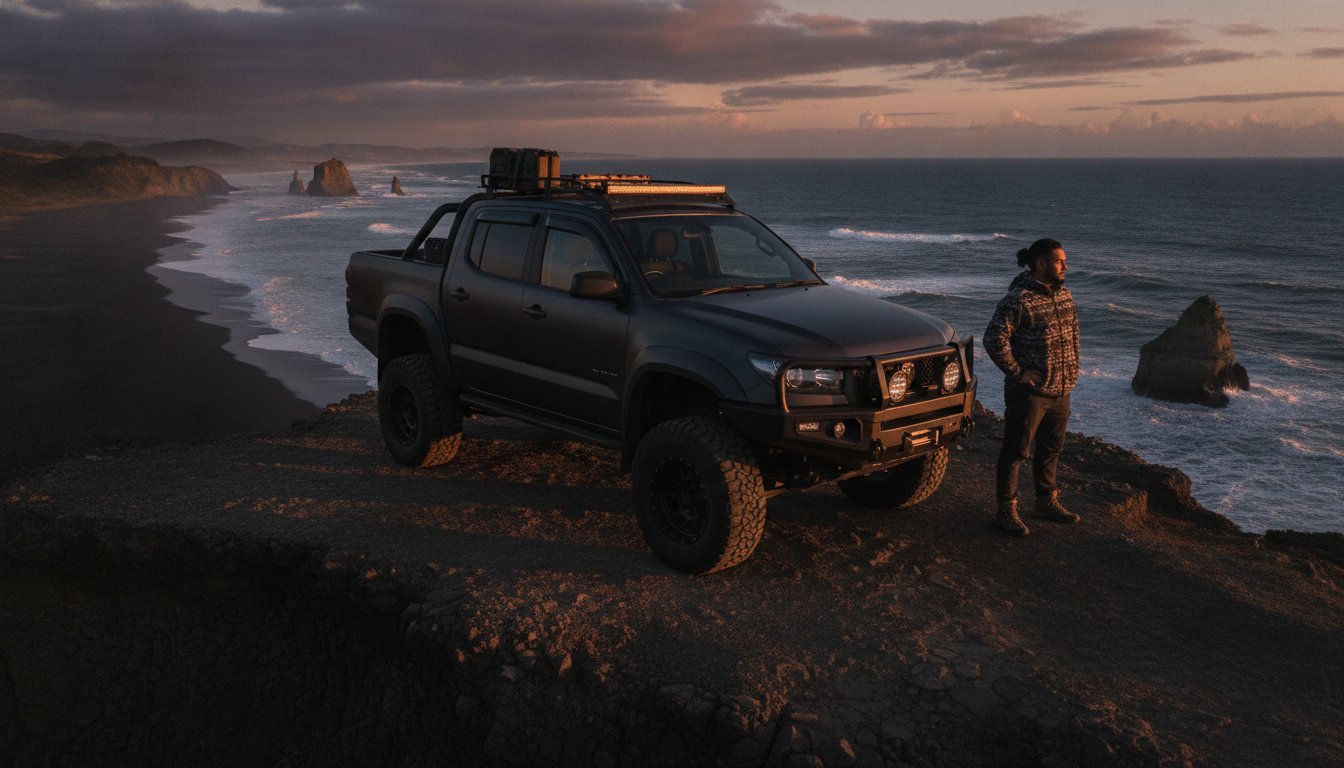
Auckland presents a unique challenge for any vehicle owner. You might spend your morning in stop-start traffic on the Southern Motorway and your afternoon navigating the shifting dunes of Muriwai Beach or the steep, clay-slicked tracks of the Waitakere Ranges. Most factory-standard utes are designed for a global average, not the specific, often brutal demands of the New Zealand backcountry. While a stock vehicle might handle a well-maintained gravel road, it often lacks the ground clearance, cooling capacity, and structural protection required for genuine off-road exploration.
Understanding the fundamental mechanics of a Four-wheel drive system is the first step toward building a capable rig. It isn’t just about having power at all four corners; it’s about how that power is managed through specialised differentials and suspension geometry when the terrain gets technical. Optimising an auckland 4×4 involves more than just aesthetics; it requires a deep understanding of how modifications affect the vehicle’s dynamics and safety systems.
There’s a massive difference between a vehicle that “looks the part” and one engineered for reliability. An auckland 4×4 needs to be more than a collection of bolt-on accessories. True performance engineering ensures that every modification, from a snorkel to a heavy-duty bullbar, works in harmony with the vehicle’s original chassis. This is why a “one-stop shop” philosophy is vital. You need a partner who understands both the retail side of accessories and the deep mechanical requirements of high-stress drivelines.
From City Commuting to North Island Adventure
Aucklanders often use their vehicles as daily drivers, which means your setup must balance motorway refinement with off-road durability. You don’t want a suspension so stiff it’s uncomfortable on the way to work, but you can’t afford a setup that bottoms out on a North Island track. Local conditions also include high humidity and salt-laden air. These environmental factors accelerate corrosion, making high-quality, treated gear a necessity for vehicle longevity and resale value.
Defining the Professional 4×4 Standard
A professional build prioritises function and safety over simple visual upgrades. This involves using industry-leading brands like ARB for protection and Safari for engine breathability. Professional installation is non-negotiable because it ensures that structural integrity isn’t compromised during the fitting process. Whether it’s a winch or a canopy, every component must be securely mounted to withstand the constant vibrations and impacts common in Kiwi off-roading.
Essential 4×4 Modifications for New Zealand Conditions
Equipping an auckland 4×4 for the diversity of New Zealand’s environment requires a methodical approach to hardware selection. Factory specifications are often a baseline, providing a platform that needs reinforcement to handle heavy permanent loads or technical off-road recovery. Every component added should serve a functional purpose, ensuring the vehicle remains balanced, capable, and compliant. Investing in high-quality gear ensures your auckland 4×4 is prepared for anything the North Island throws at it.
Suspension and GVM Upgrades Explained
When you add steel bullbars, winches, and canopies, you quickly approach the vehicle’s Gross Vehicle Mass (GVM) limit. A GVM upgrade is essential for maintaining safety and legal compliance while carrying these heavy permanent loads. Suspension kits do more than provide ground clearance; they manage weight distribution and improve articulation on uneven surfaces. It’s vital to stay within the law, as certain lift heights or structural changes require low volume vehicle (LVV) certification to pass a WOF. Professional installers ensure that your geometry remains correct, preventing premature tyre wear and handling issues.
Engine Performance and Protection
Performance isn’t just about speed; it’s about reliability under stress. Safari snorkels are a staple for a reason. While they provide peace of mind during water crossings, their primary benefit on Kiwi tracks is delivering clean, cool air to the engine, away from the dust kicked up by a convoy. For those towing heavy trailers or carrying significant gear, an ECU remap can unlock essential torque and improve fuel efficiency. Maintaining the EGR and DPF systems is also critical for the long-term health of modern diesel engines, preventing carbon build-up that can lead to costly repairs.
Key modifications for a capable build include:
- Suspension Kits: To manage increased loads and improve clearance.
- Bullbars: For structural protection and accessory mounting.
- Snorkels: To ensure a clean air supply in dusty or wet conditions.
- Canopies and Hardlids: For weather-proof storage and security.
- Wheels and Tyres: Selecting aggressive tread patterns for Auckland’s slick clay tracks.
Selecting the right wheels and tyres is paramount for traction. Auckland’s clay-heavy tracks become notoriously slick after rain, often requiring a more aggressive tread pattern than a standard highway-terrain tyre provides. If you’re unsure which setup suits your driving style, the team at Motortech 4X4 can help you select the right components for your specific needs.
Specialised 4×4 Servicing vs. General Mechanics
For many owners, a standard service at a local garage feels like enough. However, a hard-working 4WD operates under significantly higher thermal and mechanical stress than a standard passenger car. A basic oil change doesn’t account for the inspection of front and rear differentials, transfer cases, or the greasing of universal joints. When managing a high-performance auckland 4×4, you need a technician who understands how off-road use affects component longevity and structural integrity.
Transmission health is a primary concern. Heavy towing or technical low-range work generates immense heat, which degrades transmission fluid quickly. A professional transmission flush is essential to remove contaminants and ensure smooth shifting under load. Specialists also look for specific wear patterns in CV boots and suspension bushings that general shops might miss. Identifying these issues early prevents a minor leak from becoming a catastrophic failure on a remote track.
A comprehensive 4×4 service should include:
- Differential and transfer case oil replacement: Critical for vehicles that engage 4WD frequently.
- Greasing of chassis points: Protecting moving parts from water ingress and grit.
- Inspection of breather lines: Ensuring gearboxes and diffs don’t suck in water during crossings.
- Brake system evaluation: Checking for debris trapped in calipers after mud or sand driving.
- Full transmission flush: Essential for maintaining automatic gearbox reliability under stress.
The Technical Advantage of a 4×4 Specialist
Specialists have the diagnostic equipment required to interface with modern vehicle computers. This is critical for ADAS calibration after a lift kit installation or for managing electronic performance through ECU remaps. It’s about combining mechanical repairs with electronic tuning to ensure the vehicle’s safety systems and engine performance work in perfect unison. A general mechanic may lack the specific software or technical training to calibrate these complex systems correctly.
Preventative Maintenance for Auckland Drivers
Preparing Your Rig for the coastal Auckland environment involves addressing salt-water exposure immediately. If you frequently visit Muriwai or the Firth of Thames, your service intervals should be shorter to counter the corrosive effects of salt and sand. A specialised auckland 4×4 service plan focuses on these local factors, ensuring your vehicle remains reliable for long-distance touring across the North Island. This proactive approach protects your investment and provides peace of mind when you’re miles from the nearest town.
Preparing Your Rig for Safety and Compliance
Navigating the legalities of a modified auckland 4×4 requires more than just a passing grade at the testing station. It involves a systematic approach to ensuring every component is not only functional but also road-legal. Compliance protects your insurance coverage and guarantees that your vehicle’s safety systems operate as the manufacturer intended. Following a structured preparation process is the most effective way to maintain a high-performance, street-legal rig.
- Step 1: Pre-WOF Inspection: Conduct a thorough check to catch 4×4-specific failures like worn ball joints, perished bushings, or leaking dampers before the official test.
- Step 2: Standards Verification: Confirm that all fitted bullbars, snorkels, and suspension components meet New Zealand safety standards for pedestrian safety and structural integrity.
- Step 3: ADAS Calibration: Re-align safety sensors and cameras to account for changes in ride height and pitch after a suspension lift.
- Step 4: Load Rating Check: Ensure all wheels, tyres, and GVM upgrades are correctly rated for your vehicle’s specific axle loads.
- Step 5: Document Everything: Keep a detailed record of professional installations and certification papers to support insurance claims and future resale value.
ADAS Calibration: The Critical Post-Lift Step
Modern vehicles rely on Advanced Driver Assistance Systems (ADAS) to manage lane-keep assist and autonomous emergency braking. When you install a suspension lift on your auckland 4×4, you change the camera’s field of vision and the radar’s pitch. Even a small 50mm lift can significantly alter the calculation of stopping distances. Professional calibration is essential to reset these “eyes,” ensuring the sensors accurately interpret the road ahead. Ignoring this step doesn’t just trigger dashboard warnings; it compromises the active safety features designed to protect you in an emergency.
WOF Readiness and Legal Modifications
Many modified vehicles fail their Warrant of Fitness due to incorrect suspension geometry or tyres that protrude beyond the factory guards. In New Zealand, modifications that exceed specific thresholds, such as significant suspension lifts or structural changes, require Low Volume Vehicle (LVV) certification. This process involves an inspection by an authorised certifier who verifies the engineering integrity of the work. Professional fitting centres understand these boundaries, ensuring that your modifications are within legal limits or properly certified. This diligence keeps your rig on the road and avoids the frustration of a failed inspection.
Maintaining a compliant vehicle is a continuous process of inspection and adjustment. If you’ve recently upgraded your suspension or added heavy accessories, book an ADAS calibration or pre-WOF check at Motortech 4X4 to ensure your vehicle remains safe and legal.
Motortech 4X4: Auckland’s Authority in Vehicle Performance
Motortech 4X4 operates as a comprehensive hub for vehicle enhancement, combining a premium retail showroom with a specialised mechanical workshop. While many dealers focus solely on the sale, we prioritise the engineering required to make an auckland 4×4 truly capable. This “one-stop” approach ensures that every modification, from suspension kits to snorkels, is integrated with the vehicle’s existing systems by qualified technicians. Our commitment to technical excellence means your vehicle receives the precision of a high-end workshop alongside the rugged accessories needed for New Zealand conditions.
Commercial Fleet and Trade Solutions
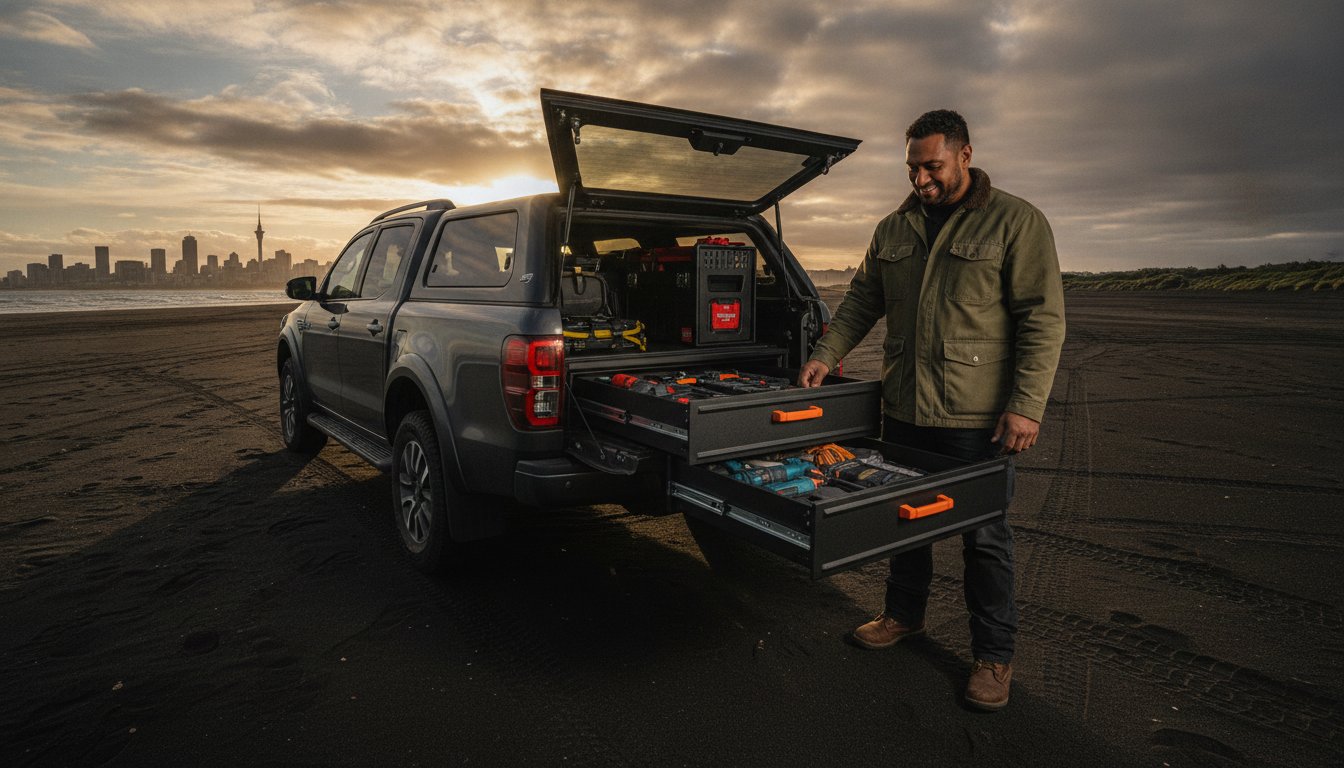
Commercial fleet and trade clients require more than just standard accessories. We deliver customised fit-outs for Auckland tradies, focusing on functional components like canopies, hardlids, and roof racks. These internal and external storage solutions are designed to withstand heavy daily use while protecting valuable tools and equipment. Structured fleet servicing and ECU remaps further enhance reliability, ensuring that your business vehicles operate at peak efficiency. By managing the entire fit-out and maintenance process under one roof, we significantly reduce vehicle downtime for our commercial partners.
Experience the Motortech Difference
The Motortech team brings a level of expertise that only comes from a deep involvement in the auckland 4×4 community. We handle everything from routine car servicing to complex structural builds, providing a versatile range of services including transmission flushes and ADAS calibration. This technical depth allows us to diagnose and resolve issues that often stump general mechanics. Whether you’re preparing for a North Island expedition or maintaining a daily driver, our focus remains on safety, performance, and legal compliance. We bridge the gap between a standard mechanical repair shop and a specialised performance centre, providing a comprehensive solution for every driver.
Book your 4×4 service or consultation with Motortech 4X4 today to discuss your next build or maintenance schedule with our expert team.
Ready Your Rig for the Road Ahead
Developing a capable and compliant vehicle involves more than just selecting the right accessories. It requires a precise combination of high-quality hardware and specialised mechanical engineering to handle Auckland’s clay tracks and coastal sands. By prioritising professional installation and regular technical maintenance, you ensure that your auckland 4×4 remains reliable under stress and stays on the right side of New Zealand’s safety regulations. Whether you’re managing a commercial fleet or preparing for a weekend expedition, the technical integrity of your build is what ultimately provides peace of mind.
Motortech 4X4 stands as a specialist 4×4 service centre and Auckland’s one-stop shop for fleet and off-road builds. We provide the expert GVM and suspension upgrades necessary to transform a factory ute into a high-performance machine. Don’t leave your safety to chance with general workshops that lack specific technical knowledge. Visit Motortech 4X4 for Professional Auckland 4×4 Services and Accessories and start your next adventure with a vehicle built to last.
Frequently Asked Questions
Do I need a GVM upgrade for my 4×4 in Auckland?
You need a GVM upgrade if the total weight of your accessories, passengers, and cargo exceeds the factory-set limit. Adding a steel bullbar, winch, and full canopy quickly consumes your available payload. A professional upgrade ensures your vehicle remains legal and safe during heavy-duty use. It also improves handling and braking performance when the rig is fully loaded for a North Island expedition or trade work.
Will fitting a lift kit void my vehicle’s manufacturer warranty?
Fitting an aftermarket lift kit doesn’t automatically void your entire manufacturer warranty. However, the manufacturer may decline claims for components directly affected by the modification, such as CV joints or steering racks. It’s important to use high-quality components and professional installers to minimise risk. Always check with your dealer or a specialist to understand how specific modifications might influence your coverage under New Zealand consumer law.
How often should I get a transmission flush for my 4WD?
You should consider a transmission flush every 40,000 to 50,000 kilometres if you frequently tow or drive in technical off-road conditions. High-stress environments generate excessive heat, which causes transmission fluid to break down and lose its lubricating properties. Regular flushes remove accumulated contaminants and old fluid. This preventative maintenance is essential for protecting the complex internals of your automatic gearbox and ensuring reliable performance.
What is ADAS calibration and why do I need it after a lift?
ADAS calibration is the process of re-aligning the cameras and radar sensors that power safety features like autonomous braking. When you increase the ride height of an auckland 4×4, the angle of these sensors changes. This can lead to incorrect distance calculations or system failures. Professional calibration ensures your vehicle’s “eyes” are correctly positioned to interpret the road, maintaining the integrity of your active safety systems.
Are bullbars legal for city driving in Auckland?
Bullbars are legal for city driving in Auckland as long as they meet NZ Transport Agency safety standards. The bar must be designed to minimise injury risk to pedestrians and shouldn’t have sharp edges or protruding parts. It must also be securely mounted to the vehicle’s chassis. Choosing a reputable brand like ARB ensures your frontal protection system is compliant with local regulations while providing essential protection on the track.
Can Motortech 4X4 handle fleet servicing for commercial utes?
Yes, Motortech 4X4 specialises in comprehensive fleet servicing and fit-outs for commercial operators. We understand that business vehicles need to be reliable and back on the road quickly. Our workshop handles everything from routine oil changes to full trade fit-outs, including canopies, roof racks, and internal storage. We provide a structured maintenance schedule that helps prevent unexpected repairs and extends the service life of your commercial fleet.
What is the difference between an ECU remap and a simple chip tune?
An ECU remap is a complete software update for the vehicle’s engine control unit, whereas a chip tune typically uses an external module to intercept sensor signals. Remapping allows for precise adjustments to fuel timing, boost pressure, and torque limits across the entire rev range. This results in a smoother, more reliable performance gain compared to basic plug-in chips, which can sometimes cause engine fault codes or inconsistent power delivery.
How do I prepare my modified 4×4 for a WOF inspection?
Preparing your modified auckland 4×4 for a WOF involves verifying that all upgrades are compliant with NZTA rules. Check that your tyres don’t protrude beyond the guards and that your suspension doesn’t exceed the height limits requiring LVV certification. A pre-WOF inspection at a specialist workshop is the best way to catch common failures early. This includes checking for worn steering components, perished bushes, and ensuring all auxiliary lighting is correctly wired.